A water heater that starts rumbling, popping, or banging can sound alarming. It may even make you wonder whether the tank is about to burst. The good news is that the noise is often caused by buildup inside the tank, not an immediate explosion risk.
That said, a noisy water heater is not something to ignore. Those sounds usually mean the unit is working harder than it should, and that can lead to higher energy bills, poor hot water performance, and eventually real damage. In some cases, the noise is simply annoying. In others, it is a warning sign that a plumber should inspect the system soon.
This guide explains what the sound means, the most common causes, how to tell whether the problem is serious, and what homeowners can do next. If your water heater sounds like boiling, popping, or rumbling, this is the place to start. Lets deep dive into ‘Why Is My Water Heater Rumbling Like It’s About to Explode?”
READ MORE: Hard Water Impact on Water Heater Lifespan — Signs, Fixes, and Costs

What Does a Rumbling Water Heater Mean?
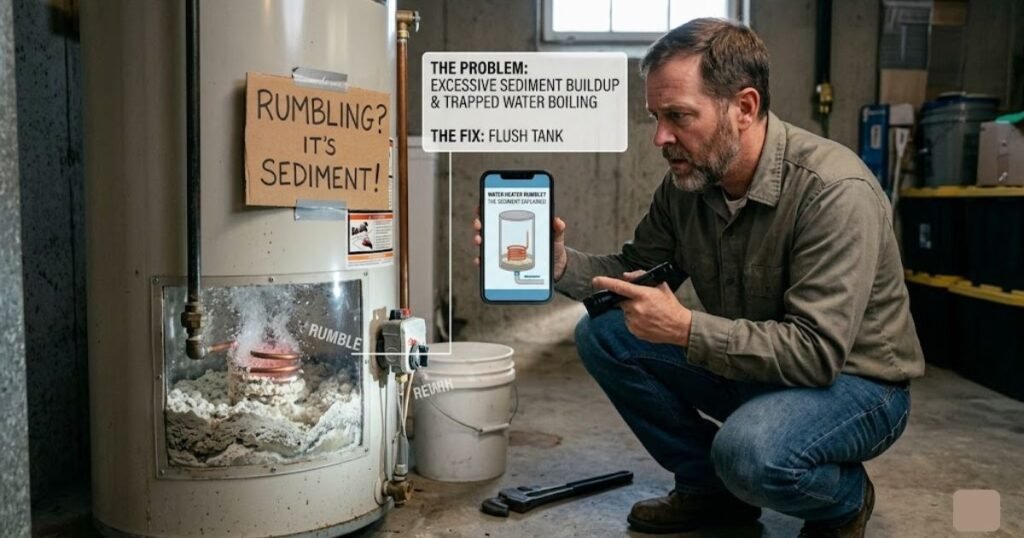
Think of your water heater as a giant kettle. Normally, cold water enters, heats up smoothly, and rises quietly via natural convection. But over time, the tank becomes a collection zone for mineral debris, turning that silent process into a physical struggle.
The alarming rumbling or popping you hear isn’t an imminent explosion—it’s trapped steam. When a thick layer of sediment settles at the bottom of the tank, water gets trapped underneath it, right above the intense heat source. This trapped water superheats, flashes into steam, and violently erupts through the sludge layer. When these steam bubbles hit the cooler water above, they collapse, creating mini underwater shockwaves that sound like banging or popping to your ears.
5 Reason Behind the Water Heater Rumbling
While trapped steam is the main mechanical cause, a few specific factors trigger the racket:
- Sediment Sludge: Microscopic sand and minerals from your water supply settle at the bottom, forming an insulating blanket that forces the burner to overheat.
- Hard Water Scale: In regions with hard water (like parts of the Southwest, Midwest, or Florida), calcium and magnesium bake into a rock-solid crust. This crust creates perfect pockets for water to trap and boil furiously.
- Scaly Electric Elements: In electric models, mineral scale encases the lower heating element like a sleeve. The element sizzles and pops inside this shell, eventually causing it to burn out.
- Loose Valves & Pressure Vibrations: High water pressure or thermal expansion can cause structural pipes to shake against your walls, or loose internal valve parts to rattle as water rushes past.
- Old Age Fatigue: As a tank nears the end of its 8–12 year lifespan, years of expanding and contracting cause the steel to warp, rust, and struggle with daily heating demands.
READ MORE: Why Is My Water Heater Temperature Fluctuating? Causes & Fixes
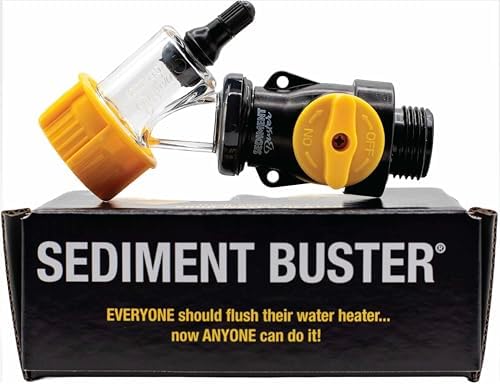
- UL Verified V699054 for heat & pressure
- Easy to use with instructions & videos
- Add years to the life of your water heater
Is a Rumbling Water Heater Dangerous?
The short answer is no, your water heater is not about to launch through the roof like a rocket. Modern units are equipped with a critical mechanical failsafe: the Temperature and Pressure (T&P) Relief Valve. Located near the top of the tank, this valve automatically springs open to vent excess steam and water if internal pressure spikes to hazardous levels. Because of this, actual water heater explosions are incredibly rare.
However, while you aren’t in immediate physical danger, a rumbling tank is a serious warning sign. The real threat isn’t a blast—it’s a catastrophic flood and a drained wallet.
The Chain Reaction of Sediment Damage
Leaving that rumbling sludge unresolved triggers a slow-motion destruction of your appliance:
- Overheating: The thick sediment layer forces the burner or elements to run hotter and longer to heat the water.
- Cracked Lining: This intense, localized thermal stress causes the tank’s internal protective glass lining to crack and flake off.
- Rust & Corrosion: With the glass barrier gone, water makes direct contact with the raw steel shell, causing it to rust rapidly.
- Tank Failure: The rusted metal eventually weakens until it bursts, unleashing a massive, costly room flood.

- MULTIPLE BENEFITS – Extend the lifetime of your water heater, improve its efficiency, reduce your energy bill, and incre…
- WORKS GREAT – Other flushing methods only remove small loose sediment particles where the Turbo Tank Cleaner physically …
- UNIVERSAL – Cleans all water heater tank types, gas and electric (not for tankless water heaters).
Warning Signs You Should Not Ignore
Some signs mean the problem is more than just a noisy tank. Call attention to these red flags:
- loud or worsening noise
- rust-colored or cloudy water
- water leaking around the base of the tank
- hot water that runs out too fast
- very inconsistent water temperature
- reduced water pressure from hot taps
- burning smell or unusual electrical odor
- visible corrosion on the tank, fittings, or valves
- water heater age that is already near the end of its normal life
- repeated repairs that do not seem to solve the issue
If your noisy water heater is also showing one or more of these signs, it is smart to stop treating it as a minor annoyance. The combination can point to serious wear inside the unit.
READ MORE: Best Whole House Water Softener System for Home — Top Picks & Buyer’s Guide
What Homeowners Can Check First
Before calling for service, there are a few safe, simple things a homeowner can observe. These checks do not require technical skill and can help you understand whether the issue seems minor or more serious.
1. Listen to when the noise happens
Pay attention to whether the sound happens only when the water heater is actively heating. That detail can help narrow down the cause.
If the noise appears during heating cycles, sediment or scale is a likely explanation. If it happens all the time, even when the system is not heating, another part may be involved.
2. Check for visible leaks or corrosion
Look around the tank, the base, the connections, and nearby piping. Any water on the floor, rust spots, or corrosion should be taken seriously.
A heater that is rumbling and leaking at the same time should be inspected quickly.
3. Notice whether hot water output has changed
Ask yourself whether the hot water takes longer to heat, runs out faster, or feels less consistent than before. A noisy water heater that is also underperforming often has sediment buildup or another internal issue.
4. Check the age of the unit
If your water heater is already old, the rumbling may be part of a larger pattern of wear. Tank-style water heaters often last about 8–12 years on average, though this varies by model, water quality, and maintenance.
If the unit is already in that range or older, the noise may be a sign to think about replacement rather than investing heavily in repairs.
5. Decide whether the problem seems minor or serious
A little noise during heating can happen. But if the sound is loud, repeated, or getting worse, that is usually a sign the heater needs service.
When in doubt, treat the issue seriously. Water heaters are not something to gamble with when the symptoms keep building.
READ MORE: How Often to Flush a Water Heater

How to Fix a Rumbling Water Heater
The right fix depends on the cause. Some solutions are simple maintenance steps. Others should be left to a plumber.
1. Flush or drain sediment from the tank
Flushing the tank is one of the most common ways to reduce rumbling caused by sediment buildup. This process removes loose debris from the bottom of the tank and may quiet the system down.
For some homeowners, a basic flush can help restore normal operation. For others, especially when buildup is heavy, the tank may need a more thorough cleaning by a professional.
If you are not comfortable working around hot water, gas, or electrical connections, it is better to leave this task to a plumber.
2. Have a plumber clean stubborn buildup
If the sediment has hardened or the tank has not been maintained in years, a professional cleaning may be needed. A plumber can inspect the system and determine whether flushing is enough or whether the buildup is too severe.
This is especially helpful when the heater still works but the noise keeps returning.
3. Check heating elements on electric models
For electric water heaters, a noisy unit may be related to scale-covered or failing heating elements. A plumber or qualified technician can test the elements and replace them if necessary.
This kind of repair may solve the noise and improve heating performance at the same time.
4. Replace failing parts when needed
Sometimes the issue is not the whole heater, but a single worn component. Valves, anode rods, heating elements, or controls can all contribute to unusual noises if they are failing.
Replacing the right part can sometimes extend the life of the water heater and prevent larger problems.
5. Consider replacement if the tank is old or heavily damaged
If the heater is old, heavily corroded, leaking, or repeatedly noisy, replacement may be the smarter choice. A tank with severe sediment buildup or internal damage may not be worth saving.
A new unit can be more efficient, quieter, and more reliable than repeatedly repairing an aging one.

READ MORE: How to Clean Sediment from a Water Heater
Prevention Tips
A little maintenance can go a long way in keeping a rumbling water heater from becoming a bigger problem.
- Flush the tank regularly to reduce sediment buildup.
- Schedule routine water heater maintenance.
- Watch for hard water scale if your home has mineral-heavy water.
- Replace aging parts before they fail completely.
- Pay attention to unusual sounds early, not after they become louder.
- Have the unit inspected if performance starts changing.
- Keep the area around the heater clear so leaks or rust are easier to spot.
These simple habits can help your water heater run more quietly and last longer.
When to Call a Plumber
While many homeowners feel perfectly comfortable hooking up a garden hose to perform a simple tank flush, there are several clear boundaries where DIY troubleshooting ends and professional expertise must begin. You should step away from the appliance and immediately call a licensed professional plumber if:
- The rumbling noise continues to happen with the exact same volume and intensity even after you have successfully performed a complete tank flush.
- You notice any moisture, damp insulation, or slow weeping leaks around the body, base, or control valves of the unit.
- You feel uncomfortable working around high-voltage electricity (240 volts for standard electric water heaters) or working with live gas lines and pilot assemblies.
- The drain valve is completely frozen, rusted shut, or made of cheap plastic that snaps or leaks when you attempt to open it.
- You suspect your gas water heater is backdrafting or failing to vent exhaust correctly, which poses an invisible, deadly risk of carbon monoxide poisoning to your household.
READ MORE: Why Is My Water Heater Making a Popping Noise? Causes & Fixes

- 【Efficient Scale Inhibition】Food-grade polyphosphates, included in the Waterdrop scale inhibitor, can fundamentally inhi…
- 【Energy Conservation】This scale inhibitor can protect your water heater, dishwasher, boilers, downstream plumbing fixtur…
- 【High Flow Rate】3/4 ” NPT inlet/outlet ensures high flow rate of 10 GPM to keep stable water pressure. This scale inhibi…
Replacement vs. Repair
When you are faced with a noisy water heater, you will inevitably have to make a choice: do you keep paying for water heater repair and part replacements, or is it time to cut your losses and buy a completely new unit?
To make this decision easier, keep the standard 8–12 year rule of thumb in mind. Traditional tank-style water heaters are simply not designed to last forever. They are subject to immense thermal stress and water pressure every minute of every day.
| Factor | When Repair / Flushing Makes Sense | When Replacement Is the Smarter Option |
| Appliance Age | The unit is young (under 6 or 7 years old). | The unit is old (8 to 12+ years old). |
| Noise Levels | Minor popping or sizzling that just started recently. | Heavy, violent metallic banging and deep structural shaking. |
| Tank Condition | Completely dry exterior with no signs of rust or leaks. | Active leaking, pooling water, or rust-colored hot water. |
| Financial Cost | A simple flush or a quick $150 heating element replacement. | Multiple repairs needed on an old unit exceeding 50% of replacement cost. |
| Energy Impact | Utility bills are normal; the tank heats water quickly. | High monthly bills due to massive, calcified interior rock scale. |
As tank-style water heaters get older, they become increasingly inefficient. If you have an aging tank that has suffered through years of heavy sediment neglect, the steel floor or internal elements have likely sustained permanent structural damage.
Frequently Asked Questions (FAQs)
Why is my water heater rumbling when the hot water is on?
A water heater often rumbles when it is actively heating water, especially if sediment has built up at the bottom of the tank. The heat causes water trapped under the sediment layer to move, pop, or boil in small bursts.
Is a rumbling water heater dangerous?
Not always right away. In many homes, the sound is caused by sediment or mineral scale rather than a sudden emergency. The heater may still work, but it is not operating as efficiently as it should.
What causes a water heater to make popping or banging noises?
Popping and banging usually happen when water heats beneath sediment, mineral scale, or debris inside the tank. As the trapped water turns to steam or shifts through the buildup, it makes noise.
Can flushing a water heater stop the rumbling sound?
Yes, flushing the tank can often reduce or stop the rumbling if sediment buildup is the main cause. Removing the debris allows the water to heat more evenly and quietly.
When should I replace a noisy water heater instead of repairing it?
Replacement makes more sense when the unit is old, leaking, corroded, or repeatedly noisy even after maintenance. If the tank is already near the end of its typical life and repair costs keep adding up, a new heater is often the better investment.
Final Thoughts
A rumbling water heater usually points to buildup, scale, or another internal issue rather than an immediate emergency. Still, it is not something to ignore.
The sound may be harmless for a while, but it often means the system is working harder than it should. Simple maintenance can sometimes solve the problem, especially if sediment is the main cause. If the noise keeps coming back, gets louder, or comes with leaks, rusty water, or poor performance, a professional inspection is the wise next step.

