This is one of those HVAC problems that feels confusing fast. You expect cool air. Instead, the vents feel warm or just not cool enough. That can make a homeowner think the whole system is failing. In many cases, though, the fix is much smaller than it seems. A heat pump depends on several parts working together. When one part is off, the air coming from your vents can feel wrong even if the system is still running.
The good news is that some checks are safe and simple. You can look at the thermostat, change the filter, and check the outdoor unit for debris. If those do not help, the issue may be inside the system and need a pro. Lets deep dive into “Why Is My Heat Pump Blowing Warm Air? Causes, Fix, and Costs”
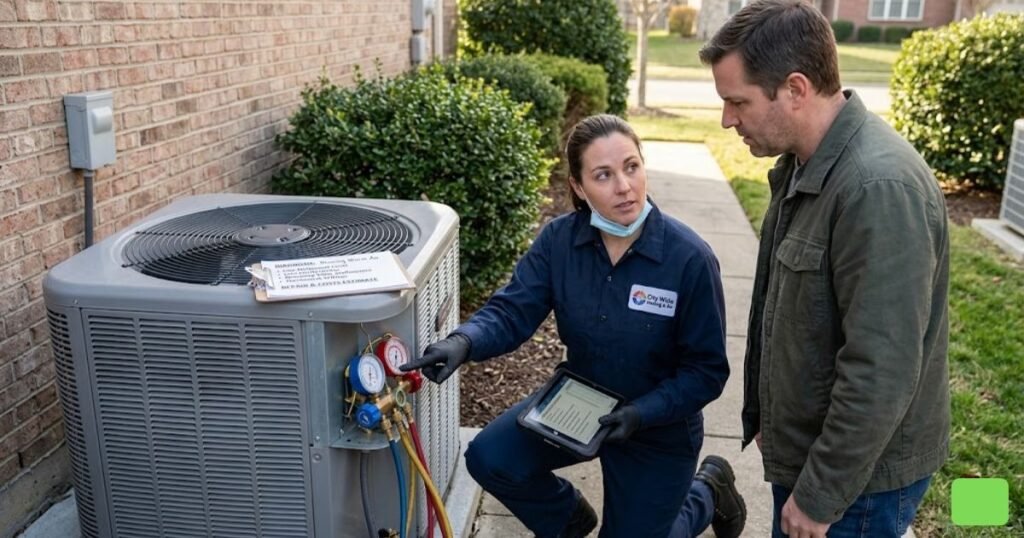
READ MORE: Emergency Heat Pump Repair: Signs, Costs & What to Do
The Quick Answer: Why Is My Heat Pump Blowing Warm Air?
If you are looking for a fast answer, here are the most likely reasons your heat pump has lost its cool:
- Wrong Thermostat Settings: It might be set to “Heat” or the fan is set to “On” instead of “Auto.”
- Dirty Air Filter: A clogged filter chokes the system and stops it from cooling.
- Thermostat Batteries: Weak batteries can cause the brain of your HVAC to glitch.
- Tripped Breaker: The outdoor unit might have lost power while the indoor fan is still running.
- Dirty Outdoor Coil: If the outside unit is covered in grass or dirt, it can’t dump heat.
- Refrigerant Leak: Your system might be low on the “coolant” it needs to move heat.
- Reversing Valve Failure: This is the part that tells the heat pump whether to heat or cool. If it gets stuck, you get heat.
Understanding Your Heat Pump: How It Actually Works
Before we dive into the problems, let’s talk about what a heat pump actually does. Most people think a heat pump “creates” cold air. In reality, it just moves heat from one place to another.
In the summer, it gathers the heat from inside your house and pumps it outdoors. In the winter, it finds heat outside (yes, even in the cold) and brings it inside.
When your heat pump blows warm air in cooling mode, it means something is preventing that heat transfer. The “heat” is staying inside your house, or the system is accidentally pulling more heat in from the outside.
READ MORE: Heat Pump Service Cost: 2026 Pricing Guide for U.S. Homeowners
Common Causes of Warm Air (And How to Fix Them)
1. Thermostat Mistakes and Glitches
It sounds silly, but this is the cause of about 25% of service calls. Sometimes, a family member bumps the thermostat, or a power flicker resets the settings.
- Check the Mode: Make sure it is set to “Cool.” If it’s on “Heat” or “Emergency Heat,” that’s your problem.
- The Fan Setting: This is a big one. If your fan is set to “ON,” the blower motor will run 24/7, even when the system isn’t cooling. When the cooling cycle pauses, the fan just moves room-temperature air around. Switch it to “AUTO” so the fan only blows when the air is actually being chilled.
- The Batteries: If your thermostat has a screen that is fading or flickering, change the batteries. A low-voltage thermostat can send “ghost” signals to your heat pump.
2. The Infamous Dirty Air Filter
Your heat pump needs to breathe. When the air filter is packed with dust, pet hair, and dander, the air can’t get through.
When airflow is restricted, the indoor evaporator coil gets too cold and can actually freeze into a block of ice. Once that happens, the system can’t absorb any more heat from your home. The air coming out of your vents will feel warm because the system is struggling to do anything at all.
The Fix: Check your filter. If it looks grey or fuzzy, swap it out. You should be doing this every 30 to 90 days.
3. Outdoor Unit Blockage
Go outside and look at your heat pump. Is it surrounded by tall weeds? Is there a pile of grass clippings stuck to the sides? Did you put a fence or a decorative cover too close to it?
The outdoor unit (the condenser) needs to release the heat it gathered from inside your home. If it is boxed in or dirty, that heat has nowhere to go. It stays in the refrigerant loop and ends up back in your house.
The Fix: Keep a two-foot “clear zone” around your outdoor unit. Use a garden hose (gentle pressure only!) to spray off dirt and debris from the metal fins.
4. Tripped Circuit Breakers
Your heat pump has two main parts: the indoor air handler and the outdoor compressor. They usually run on separate breakers.
If the outdoor breaker trips, the indoor fan will keep blowing. However, since the outdoor unit isn’t running, the air isn’t being cooled. It’s just moving unconditioned air through the house.
The Fix: Check your electrical panel. If a breaker is “tripped” (sitting in the middle), flip it all the way off and then back on. If it trips again immediately, stop. That is a sign of an electrical short, and you need a pro.
5. Refrigerant Issues
Refrigerant is the liquid/gas that carries heat. If your system has a tiny hole or a loose fitting, the refrigerant leaks out.
Without enough refrigerant, the system can’t “grab” the heat from your indoor air. This leads to lukewarm air and, eventually, a frozen-over system.
The Sign: Listen for a hissing or bubbling sound near the unit. You might also notice ice on the copper lines connecting the indoor and outdoor units.
6. The Reversing Valve
This is the “magic” part of a heat pump. It is a valve that flips the flow of refrigerant. If it gets stuck in the “Heat” position, your heat pump will blow hot air even if your thermostat says “Cool.”
This is usually a mechanical failure or a bad solenoid (the electrical part that moves the valve). This is not a DIY fix, but it is a very common reason for warm air.
7. Blower Motor Problems
Sometimes the fan that pushes the air through your vents starts to fail. It might be spinning too slowly, or it might be overheating and shutting off. If the air is moving very slowly, it will feel warm by the time it reaches your vents.
8. Ductwork Issues
If your ducts have holes or have come disconnected in the attic or crawlspace, the system might be sucking in 120-degree air from your attic and blowing it into your living room. You’ll feel warm air even if the heat pump itself is working perfectly.
READ MORE: Heat Pump Not Cooling? Causes, Fixes & Homeowner Troubleshooting
When Is Warm Air Normal? (The Defrost Cycle)
If it is winter and your heat pump occasionally blows cool or lukewarm air for about 10 minutes, don’t panic. This is likely the Defrost Cycle.
When it’s cold outside, ice can build up on the outdoor coils. To melt that ice, the heat pump temporarily switches into “Cooling Mode.” This makes the outdoor coil hot to melt the ice.
To prevent your house from getting freezing cold during this process, most systems turn on “Heat Strips” (electric backup heat). However, there is often a 30-second to 1-minute gap where the air might feel a bit cool or “not hot.” This is totally normal. If it lasts more than 15 minutes, then you have a problem.
Easy Checks: What Homeowners Can Do Safely
Before you spend money on a service call, run through this checklist:
- Check the Thermostat: Set to “Cool” and “Auto.”
- Inspect the Filter: If it’s dirty, replace it.
- Check the Breaker: Ensure both the indoor and outdoor units have power.
- Look for Ice: If you see ice on the lines, turn the system OFF at the thermostat. It needs to thaw before a tech can even look at it.
- Clear the Debris: Make sure the outdoor unit isn’t suffocating under leaves or snow.
- Verify the Vents: Make sure your supply and return vents aren’t blocked by furniture or curtains.
Real Repair Costs: What to Expect in the U.S.
When the DIY checks don’t work, it’s time to talk about the wallet. HVAC repairs can be stressful because the prices vary so much. Here is a breakdown of what U.S. homeowners are currently paying to fix heat pump issues.
General Repair Ranges
- Typical Repair: Most homeowners spend between $160 and $660.
- The National Average: The average cost for a heat pump repair sits right around $409.
- Broader Estimates: Depending on the severity, you might see bills ranging from $150 to $950.
Specific Service Costs
| Service Item | Estimated Cost (U.S. Average) |
| Diagnostic/Service Call | $75 – $200 |
| Refrigerant Recharge (Pounds + Labor) | $200 – $600 |
| Refrigerant Leak Repair | $200 – $1,500 |
| Thermostat Replacement | $150 – $500 |
| Blower Motor Repair/Replace | $300 – $900 |
| Reversing Valve Replacement | $500 – $1,200 |
| Capacitor Replacement | $120 – $300 |
| Circuit Board Replacement | $200 – $700 |
Note on Costs: These prices can change based on where you live. If you live in a high-cost-of-living area like New York or California, expect to pay more. Also, “Emergency” or “After-Hours” calls on weekends or holidays will usually add a $100–$200 premium to the diagnostic fee.
READ MORE: Heat Pump vs AC: Which Is Better for U.S. Homeowners?
Minor vs. Serious: How to Tell the Difference
How do you know if you’re looking at a $150 fix or a $1,500 nightmare? Here are some signs.
Signs It Is a Minor Issue
- The system was working fine until you changed a setting.
- The air is lukewarm, but not “hot.”
- The system just needs a new filter or a quick cleaning.
- A breaker tripped once but stays on after being reset.
Signs It Is a Serious Problem
- Grinding or Screeching: This usually means a motor is dying.
- The “Burning” Smell: This points to electrical shorts or a seized compressor.
- Constant Tripping: If the breaker trips every time the unit turns on, you have a major electrical fault.
- The Hissing Sound: This almost always means a significant refrigerant leak.
- Age of the Unit: If your unit is over 12–15 years old, a “warm air” issue might be the sign that the entire system is reaching the end of its life.
READ MORE: Carrier Heat Pump Reviews (2026) — Models, Costs, Pros & Cons
When Is It Time to Call a Professional?
We all love to save money, but HVAC systems involve high-voltage electricity and pressurized chemicals (refrigerant). Some things should only be handled by a pro.
Call a technician if:
- You suspect a leak. You cannot buy refrigerant at the hardware store. It requires a license to handle.
- The compressor won’t start. If the outdoor fan is spinning but the unit isn’t “humming,” the compressor might be dead.
- You smell smoke. Turn the power off immediately and call for help.
- The system is “short-cycling.” This is when it turns on and off every few minutes without cooling the house.
- You’ve done the DIY checks and nothing changed. Don’t keep running a broken system; you could turn a small repair into a total system replacement.
How to Prevent Warm Air Problems from Coming Back
The best way to deal with a broken heat pump is to make sure it never breaks in the first place. Here is how to keep your system blowing cold for years to come.
1. The 90-Day Rule
Change your air filters every 90 days at a minimum. If you have pets (especially long-haired dogs or cats), check them every 30 days. This is the single most important thing you can do for your HVAC health.
2. Seasonal Maintenance
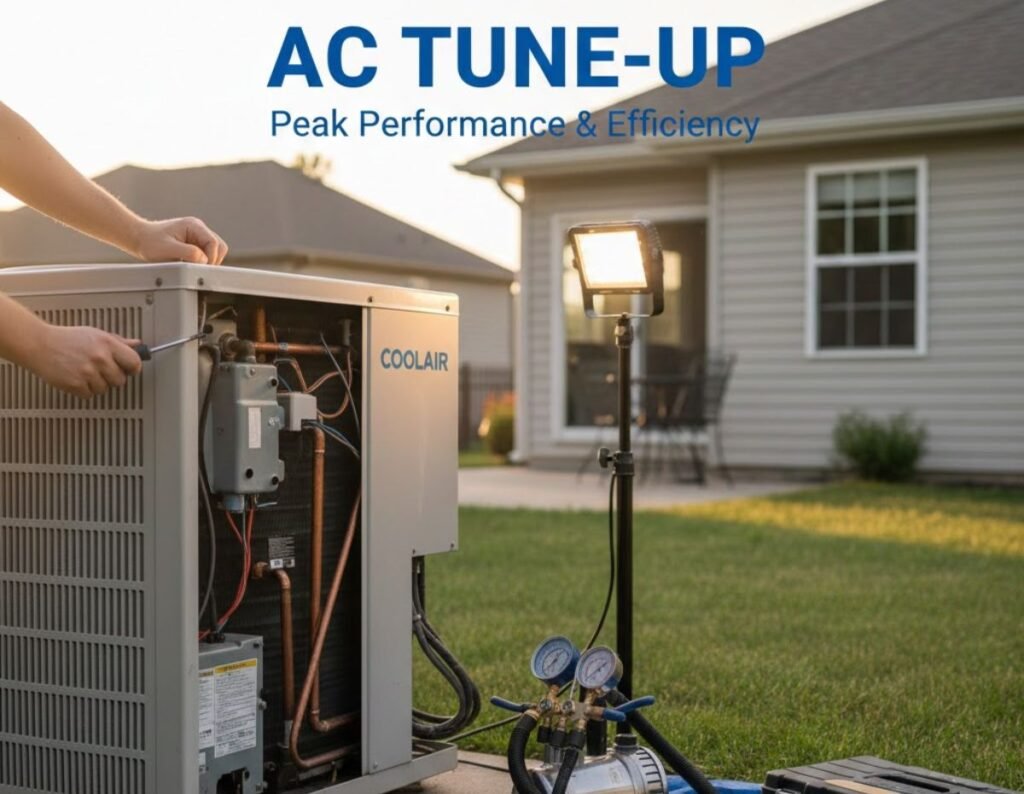
In the U.S., most HVAC companies offer “Tune-Up” specials. Have a tech come out in the Spring (before the cooling season) and the Fall (before the heating season). They will clean the coils, check the refrigerant levels, and tighten electrical connections.
3. Keep the Area Clean
Don’t let mulch, leaves, or snow pile up around the outdoor unit. If you use a lawnmower near the unit, make sure the side discharge isn’t blowing grass clippings directly into the metal fins.
4. Upgrade Your Thermostat
If you still have an old-school dial thermostat, consider upgrading to a modern, programmable one. They are more accurate and provide better control over your system’s “cycles,” which reduces wear and tear.
READ MORE: Fujitsu Heat Pump Reviews (2026): Models, Costs & Real-World Pros & Cons
Frequently Asked Questions (FAQ)
Why is my heat pump blowing warm air instead of cold air?
The most common reasons are wrong thermostat settings, a dirty filter, blocked outdoor airflow, refrigerant issues, electrical problems, or a blower motor problem.
Is it normal for a heat pump to blow warm air sometimes?
Yes, it can be normal during the defrost cycle in cold weather or when auxiliary heat is running. If it keeps happening in cooling mode, it is not normal.
How much does it cost to fix a heat pump that blows warm air?
Many homeowners pay about $161 to $661, with an average around $409. Broader repair estimates often fall between $150 and $950, and refrigerant leak repairs can run $200 to $1,500.
Can a dirty filter make my heat pump blow warm air?
Yes. A dirty filter restricts airflow, which can reduce cooling and make the home feel warm or uneven.
When should I call an HVAC technician for this problem?
Call a technician if the thermostat, filter, vents, and outdoor unit check out but the heat pump still blows warm air. Also call if the unit freezes, trips breakers, makes strange noises, or has weak airflow.
The Takeaway for Homeowners
Finding out your heat pump is blowing warm air is frustrating, but it isn’t always a reason to panic. Start with the basics: check your thermostat settings and swap out that air filter. You’d be surprised how often a $20 filter or a simple “Auto” setting change can solve the problem.
However, if those easy checks don’t do the trick, don’t wait. Running a struggling heat pump can cause permanent damage to the compressor—which is the most expensive part of the system.
Keep an eye on those repair costs, stay on top of your seasonal maintenance, and remember: a well-cared-for heat pump can keep your American home comfortable for 15 years or more. If things feel “off,” it’s always better to catch a small $160 problem today than a $5,000 replacement problem tomorrow.
Pingback: AC Not Blowing Cold Air? Causes, DIY Fixes & When to Call a Pro - Plumbing Guider