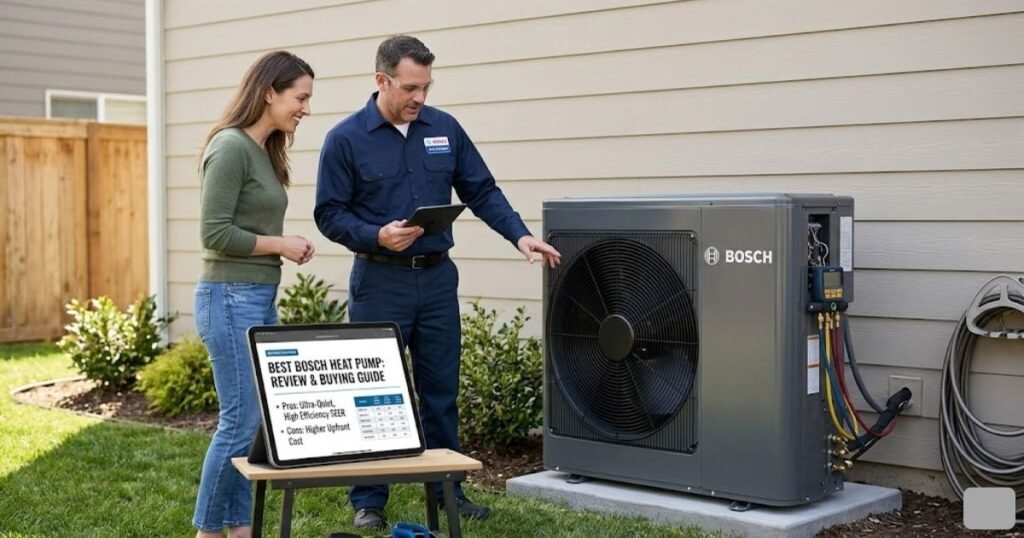
If your energy bills keep climbing, your home feels too hot in one room and too cold in another, or you are ready for one system that can handle both heating and cooling, a Bosch heat pump air conditioner may be worth a closer look. Bosch has built a strong name in HVAC, especially for homeowners who want efficient comfort, lower noise, and modern inverter technology.
But is it the right choice for your home?
That depends on your climate, your budget, your ductwork, and how much you care about long-term comfort versus the lowest upfront price. This guide explains Bosch heat pump air conditioners in plain language so you can understand what they do, how they work, what they cost, and how they compare with brands like Carrier, Fujitsu, Goodman, and Lennox. Lets deep dive into “Best Bosch Heat Pump Air Conditioner: Review, Comparison & Buying Guide”
READ MORE: Weil‑McLain Boiler Reviews (2026) — Models, Costs, Pros & Cons
What Is a Bosch Heat Pump Air Conditioner?
At its simplest, a Bosch heat pump is a two-in-one system. It handles your cooling in the summer and your heating in the winter.
Most people are surprised to learn that a heat pump doesn’t actually “create” heat the way a space heater or a furnace does. Instead, it moves heat. In the summer, it pulls heat out of your house and dumps it outside. In the winter, it finds heat in the outdoor air (even when it’s cold!) and pumps it into your home.
Why Bosch is Different
While many brands make heat pumps, Bosch is famous for its Inverter Ducted Split (IDS) technology. Historically, heat pumps were either “on” or “off.” Think of it like a car that only has two speeds: stopped or 100 mph. That leads to big temperature swings and a lot of noise.
Bosch systems use an “inverter” compressor, which is more like a dimmer switch. It can speed up or slow down in tiny increments to match exactly how much cooling or heating your home needs at that moment.
Ducted vs. Ductless
Bosch offers two main ways to get this comfort into your home:
- Ducted Systems: These hook up to your existing vents and registers. If you’re replacing an old central AC and furnace, this is likely what you’re looking for.
- Ductless (Mini-Splits): If you have a home without ductwork, or a new addition like a sunroom or garage, Bosch offers “indoor heads” that mount on the wall and connect to an outdoor unit.
READ MORE: Best Cold Climate Heat Pump Review 2026: Top Picks & Buying Guide

- This listing includes Goodman 2 Ton 14 SEER Heat Pump, Goodman 2 Ton Multi Position Air Handler
- This comes with a 10-year parts limited provided it is installed by a qualified installer and registered online
- Accessories such as Linesets, thermostats, LP conversion kits, Sold Separately
How a Bosch Heat Pump Works
To understand why these systems are so efficient, it helps to know what’s happening under the hood. You don’t need an engineering degree, but knowing the basics helps you talk to contractors with confidence.
The Main Components
- The Outdoor Unit: This is the big metal box in your yard. It contains the compressor (the “heart” of the system) and a large fan.
- The Indoor Air Handler: This sits in your attic, basement, or closet. It houses the coil and the blower fan that pushes air through your vents.
- The Refrigerant Cycle: A chemical called refrigerant loops between the indoor and outdoor units. It changes from liquid to gas and back again, absorbing and releasing heat along the way.
Heating vs. Cooling Mode
In Cooling Mode, the system acts just like a standard air conditioner. It sucks the heat out of your living room and sends it outside.
In Heating Mode, the process reverses. A “reversing valve” flips the flow of refrigerant. The outdoor unit becomes the “cold” side, absorbing energy from the outdoor air, and the indoor unit becomes the “hot” side, warming up your home.

- Includes 35-foot pre-charged line set with Quick Connect technology, streamlining professional installation process and …
- Premium energy efficient operation with 15.2-18.8 SEER2 rating (depending on model) and DC inverter technology, deliveri…
- Advanced multiposition installation capabilities supporting upflow, downflow, and horizontal configurations, making it i…
Why Inverter Technology is the Secret Sauce
The real magic of a Bosch inverter heat pump is how it manages its workload. Because the inverter can run at low speeds for long periods, it:
- Saves Energy: It doesn’t waste power with frequent “hard starts.”
- Removes Humidity: By running longer at a lower speed, it pulls much more moisture out of the air in the summer.
- Stays Quiet: You won’t hear that loud THUNK every time the system turns on.
READ MORE: Best Cold Climate Heat Pump Review 2026: Top Picks & Buying Guide

- Accessories such as Linesets, thermostats, LP conversion kits, Sold Separately
- ACCESSORIES – Sold separately unless specified in this listing
- Uses the HKSC/HKSX series of heat kits; NOT the HKR series
Bosch Heat Pump Models: Which One Is Right for You?
Bosch has simplified their lineup into the IDS (Inverter Ducted Split) family. Here is a breakdown of the five models you’ll likely encounter when getting quotes.
1. IDS Light
- Best Use Case: Budget-conscious homeowners who still want inverter technology.
- Efficiency: Up to 15 SEER2.
- Comfort Level: Solid, but with fewer “bells and whistles.”
- Noise Level: Quiet, but slightly louder than the premium models.
- Who it’s for: People replacing a basic, older AC who want an affordable entry into the world of heat pumps.
2. IDS Plus
- Best Use Case: The “sweet spot” for most U.S. suburban homes.
- Efficiency: Up to 18 SEER2.
- Comfort Level: High. It balances humidity and temperature very effectively.
- Noise Level: Very quiet.
- Who it’s for: Homeowners looking for the best balance of upfront cost and long-term monthly savings.

- CENTRAL AC EFFICIENCY: Transform your existing central air conditioning system into a highly efficient mini-split setup …
- POWERFUL CENTRAL AIR CONDITIONING: Experience efficient and reliable cooling with our 24,000 BTU unit, designed to quick…
- UNBEATABLE CENTRAL AIR HEATING: Don’t let extreme cold compromise your comfort. Our Inverter Heat Pump technology delive…
3. IDS Premium
- Best Use Case: Families who prioritize total silence and maximum efficiency.
- Efficiency: Up to 20 SEER2.
- Comfort Level: Exceptional. It has the most precise temperature control.
- Noise Level: Whisper quiet (often as low as 56 decibels—about the level of a quiet conversation).
- Who it’s for: People in high-utility-cost areas or those whose outdoor unit is right next to a patio or bedroom window.
4. IDS Premium Connected
- Best Use Case: Tech-savvy homeowners who want data.
- Efficiency: Same as the Premium (20 SEER2).
- Comfort Level: Exceptional.
- Features: This model includes built-in Wi-Fi and connects to the Bosch EasyAir app. It allows you and your contractor to monitor the system’s health and energy usage remotely.
- Who it’s for: Someone who travels a lot or wants peace of mind knowing their contractor can see if there’s a problem before it causes a breakdown.
5. IDS Ultra
- Best Use Case: Cold climates where temperatures regularly drop below freezing.
- Efficiency: High-efficiency heating even in extreme cold.
- Comfort Level: Warm and cozy even when it’s 0°F outside.
- Who it’s for: Homeowners in the Northern U.S. who want to ditch their backup furnace entirely or minimize its use. This is Bosch’s answer to the “cold climate” heat pump challenge.
READ MORE: Mitsubishi Heat Pump Buying Guide 2026: Comparison, Models & Costs
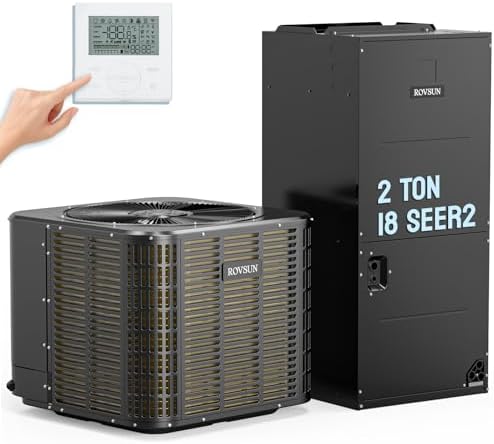
- Powerful Heating & Cooling Performance: 24,000 BTU of fast, consistent cooling and heating for large rooms. ECM variable…
- Advanced Inverter + High Efficiency Savings: Full inverter technology eliminates stop-start waste, holds precise tempera…
- Flexible Installation, Anywhere You Need It: Indoor unit mounts vertically or horizontally—fits basements, attics, close…
Bosch vs. Carrier vs. Goodman vs. Lennox vs. Fujitsu
Choosing an HVAC brand can feel like picking a truck—everyone has an opinion. To help you decide, here is how Bosch stacks up against other major brands you might be considering.
| Brand | Best For | Price Range | Efficiency | Noise | Best Climate Type | Installation Flexibility | Ideal Homeowner |
| Bosch | Inverter-driven ducted comfort and efficient whole-home systems | Mid to premium | High | Very quiet | Mild to moderate, and cold climate with the right setup | Good for ducted and some ductless options | Homeowners who want efficient comfort and good value in a premium-feel system |
| Carrier | Premium comfort and advanced control options | Premium | High to very high | Quiet | Many climates | Strong installation options | Buyers who want advanced features and a top brand name |
| Fujitsu | Ductless mini-split flexibility | Mid to premium | High | Very quiet | Great for zoning and mixed-use spaces | Excellent for ductless setups | Homeowners who need room-by-room comfort without ducts |
| Goodman | Budget-conscious homeowners | Lower to mid | Moderate to good | Moderate | Varied, depending on model | Good, especially for standard replacements | Buyers who want a lower upfront price |
| Lennox | Premium performance and quiet operation | Premium | High to very high | Very quiet | Good in many regions | Strong for ducted systems | Homeowners who want top-tier performance and quiet comfort |
A Deeper Look:
- Bosch: Their biggest advantage is that their outdoor unit is “self-adjusting.” It can work with almost any indoor thermostat or air handler. This makes them incredibly flexible for retrofitting older homes.
- Carrier: Often more expensive, but they offer the “Infinity” series, which has some of the best communicating controls in the industry.
- Fujitsu: If you don’t have ducts, Fujitsu is a powerhouse. They specialize in multi-zone ductless systems that are incredibly efficient.
- Goodman: If you need the lowest possible price to get the air back on, Goodman is the go-to. They are “no-frills” but get the job done.
- Lennox: These are the “Teslas” of the HVAC world. They are amazingly quiet and efficient but require specialized parts and can be very expensive to repair out of warranty.
READ MORE: Air to Water Heat Pump — Complete 2026 Buyer’s Guide (costs, brands, pros & cons)

- CERTIFIED ACiQ SELLERS: Everything you need for reliable HVAC solutions!
- HEAT PUMP CONDENSER: Offers efficient heating and central air conditioner unit, ensuring year-round comfort. Its simple …
- AIR HANDLER: Features cost-effective performance with its ECM blower motor and durable design, along with an all-aluminu…
How Much Does a Bosch Heat Pump Air Conditioner Cost?
Let’s talk numbers. It is impossible to give a single price because every house is different, but we can look at the typical ranges for U.S. homeowners in 2026.
The Breakdown
- Equipment Price: For the Bosch outdoor unit and indoor air handler, you can expect to pay between $5,000 and $9,000 depending on the model (Light vs. Premium).
- Installation Labor: This is often the biggest variable. A quality installation requires electrical work, refrigerant line sets, and sometimes ductwork modifications. This usually adds $5,000 to $10,000.
- Total Installed Cost: Most homeowners find their total project cost falls between $10,000 and $18,000.
What Affects the Price?
- Home Size: A 3,000 sq. ft. home needs a larger (more expensive) unit than a 1,200 sq. ft. bungalow.
- Ductwork Condition: If your old ducts are leaking or too small for a modern high-efficiency system, they’ll need to be repaired or replaced.
- Climate: If you live in a very cold area, you may need the IDS Ultra or a “dual-fuel” setup (adding a gas furnace as a backup), which increases the cost.
- Local Labor Rates: Installation in New York City or San Francisco will cost significantly more than in rural Ohio.
Don’t Forget the Discounts!
One of the best things about buying a Bosch HVAC heat pump right now is the financial help available.
- Federal Tax Credits: Under the Inflation Reduction Act (25C tax credit), many homeowners can claim up to $2,000 off their federal taxes for installing an eligible heat pump.
- Utility Rebates: Many local power companies offer “instant rebates” ranging from $500 to $3,000 because heat pumps take the strain off the electrical grid.
READ MORE: Best 3-Ton Heat Pumps of 2026: Reviews, Prices & Comparison
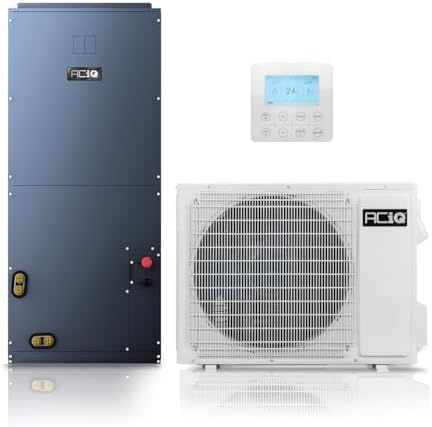
- CERTIFIED ACiQ SELLERS: Everything you need for reliable HVAC solutions!
- INVERTER TECHNOLOGY: This inverter ductless air conditioner and heat pump adjusts power based on demand, providing preci…
- HEATING & COOLING: Enjoy powerful AC and heat pump with cooling operation from 5°F – 125°F and heat pump heating from 5°…
The Benefits of Going with Bosch
Why are so many people switching? Here are the primary perks:
- Consistent Temperature: No more “hot and cold spots.” The inverter keeps the temperature within about 1 degree of your setting.
- Lower Utility Bills: Because the system spends most of its time running at low power, your monthly electric bill will likely drop significantly compared to an old “single-stage” AC.
- Humidity Control: By running longer, more air passes over the cold coils, removing that sticky, “swampy” feeling inside during August.
- Quiet Operation: You can actually have a conversation on your deck without shouting over the air conditioner.
- Modern Features: Bosch units look sleek and are built with high-quality components that resist rust and corrosion.
Possible Drawbacks to Consider
No system is perfect for everyone. Here are the “honest” downsides you should know:
- Upfront Cost: A Bosch system will cost more than a basic, “contractor-grade” AC unit. You have to view it as a long-term investment.
- Installation Sensitivity: Because these are high-tech machines, they must be installed correctly. If a contractor cuts corners on the refrigerant charge or the wiring, the inverter won’t work properly, and you’ll lose all that efficiency.
- Cold Weather Limits: While the IDS Ultra is great, standard heat pumps can struggle when it hits sub-zero temperatures. If you live in a place like Minnesota, you’ll still want a backup heating source.
- Parts Availability: While Bosch is a massive global brand, some local shops may not stock every proprietary inverter board, which could lead to a slightly longer wait for repairs compared to a “dumb” old-school unit.
What Homeowners Should Know Before Buying
Before you sign a contract, keep these practical tips in mind:
Get a “Manual J” Load Calculation
Don’t let a contractor just look at your old unit and say, “Yep, you need a 3-ton.” A Manual J calculation takes into account your windows, insulation, and home orientation. Since Bosch systems are inverters, sizing is critical to getting the best performance.
Ask About the Indoor Unit
The outdoor heat pump is only half the story. You also need a compatible indoor air handler. Bosch makes their own, but their outdoor units are also famous for being able to “talk” to other brands’ indoor equipment. However, for the best warranty and performance, a “matched” Bosch system is usually best.
Questions to Ask Your Contractor:
- Are you “Bosch Certified”? (This often extends the warranty).
- Does my current ductwork need to be sealed or cleaned?
- What local utility rebates are available right now?
- Do I need a “heat strip” (electric backup) for the coldest days of the year?
READ MORE: Trane Heat Pump Review 2026 — Comparison, Pros, Cons & Costs
Keeping Your Bosch System Happy: Maintenance Tips
A Bosch heat pump is a precision machine. You wouldn’t buy a Porsche and never change the oil; the same logic applies here.
- Replace Filters Regularly: Check them every 30 days. A clogged filter makes the inverter work twice as hard and can lead to a frozen coil.
- Keep the Perimeter Clear: Make sure there are no weeds, bushes, or snow drifts within two feet of the outdoor unit. It needs to “breathe” to move heat.
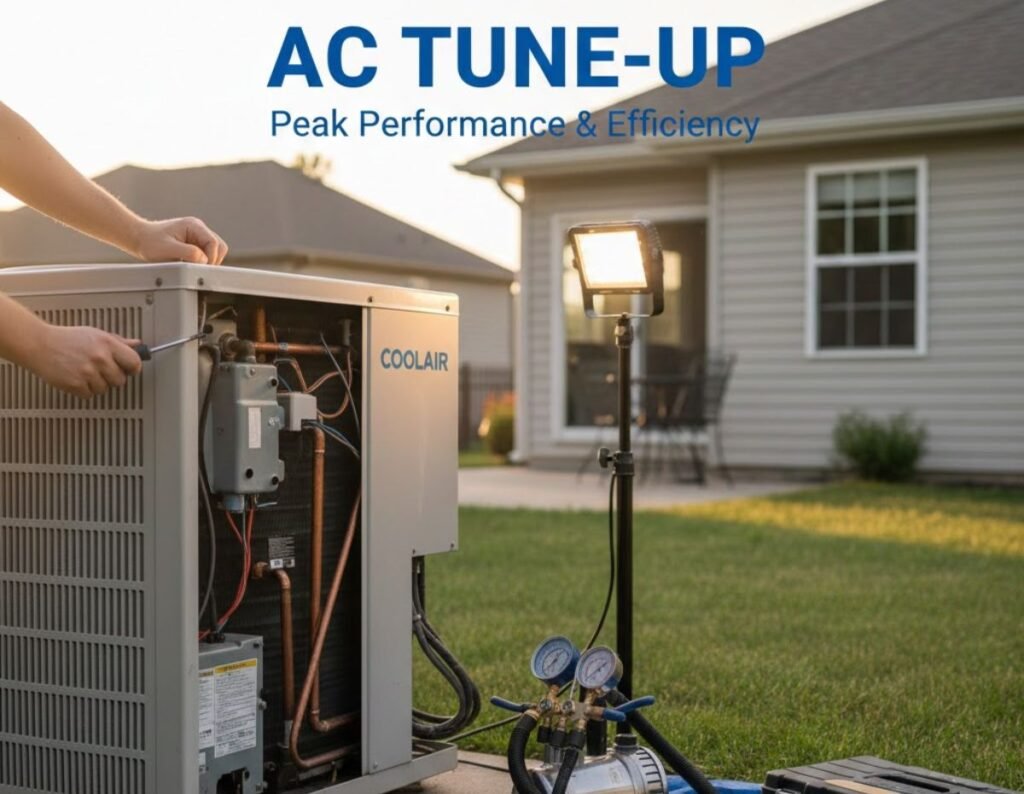
- Schedule Annual Tune-ups: Have a pro check the refrigerant levels and clean the coils once a year. This prevents small issues from becoming $2,000 repairs.
- Check the Drain Line: Ensure the condensation drain isn’t clogged. If it is, you might end up with a puddle in your attic or closet.
Who Is Bosch Best For?
So, after all that, is a Bosch heat pump right for you? It’s likely a great fit if:
- You want a premium, quiet experience but don’t want to pay the highest price on the market.
- You are currently using electric baseboard heat or propane, which are very expensive to run.
- You value indoor comfort and want a system that handles humidity like a pro.
- You live in a mild to moderate climate (though the Ultra model has changed the game for colder regions).
- You are planning on staying in your home for at least 5 to 10 years to see the return on your investment through energy savings.
Frequently Asked Questions (FAQ)
What is a Bosch heat pump air conditioner?
It is a high-efficiency heating and cooling system that uses inverter technology to move heat into or out of your home. Unlike traditional units that are either “all on” or “all off,” a Bosch system adjusts its speed to provide steady, quiet comfort year-round.
How much does a Bosch heat pump air conditioner cost installed?
On average, a full installation costs between $10,000 and $18,000. This includes the equipment, labor, and necessary materials. The final price depends on your home’s size, your location, and whether you choose the Light, Plus, or Premium model.
Is Bosch better than Carrier, Fujitsu, Goodman, or Lennox?
“Better” depends on your goals. Bosch is often considered the best value for inverter-driven ducted comfort. Carrier and Lennox offer slightly higher peak efficiency but at a much higher price. Goodman is better for those on a strict budget, and Fujitsu is the leader for ductless “mini-split” applications.
Which Bosch heat pump is best for cold weather?
The Bosch IDS Ultra is specifically designed for cold climates. It can provide 100% of its heating capacity down to 5°F and continues to operate efficiently even when temperatures drop as low as -13°F.
How long does a Bosch heat pump air conditioner last?
With proper maintenance, you can expect a Bosch heat pump to last 15 to 20 years. Because the inverter technology prevents the “hard starts” that wear out traditional compressors, these systems are built for long-term durability.
Conclusion
Choosing a new HVAC system is one of the biggest decisions you’ll make for your home. The Bosch heat pump air conditioner has earned its reputation by offering high-end, quiet, and efficient performance at a price point that makes sense for the average American family.
Whether you go with the budget-friendly IDS Light or the high-tech IDS Premium Connected, the key to happiness is the installation. Make sure you find a contractor who understands inverter technology and takes the time to size the system correctly for your specific house.
Pingback: Best Eemax Water Heater: Top 5 Reviewed & Compared (2026 Guide) - Plumbing Guider
Pingback: Samsung Heat Pump: Best Models, Reviews, Cost & Comparison - Plumbing Guider