The arrival of summer across the United States brings a lot to look forward to backyard barbecues, pool days, long evenings, and family vacations. But for millions of American homeowners, renters, and seniors, the season also brings a familiar sense of dread: opening the monthly utility statement.
Fortunately, managing your home’s temperature doesn’t have to be a choice between melting in your own living room or emptying your bank account. By understanding how heat enters your home and adopting a few smart, practical habits, you can significantly drop your energy consumption. Small, intentional changes to your daily routine and home maintenance can lead to massive savings over the course of the season.
This comprehensive guide will explore the best strategies on how to lower summer cooling bills while keeping your living spaces cool, airy, and completely comfortable. Whether you live in a historic Midwestern farmhouse, a modern suburban home in Texas, or a cozy apartment in New England, these tips will help you regain control over your summer utility costs. Lets deep dive into “How to Lower Summer Cooling Bills: Smart Ways to Save Money at Home”
READ MORE: Best Energy Star Smart Thermostats: Reviews, Comparison, and Buying Guide
Why Summer Cooling Bills Get So High
Summer bills rise for a few simple reasons. When temperatures outside stay high for hours at a time, your cooling system has to work harder and longer. If your home also leaks air, traps heat, or has an older air conditioner, the cost goes up even more.
Here are some of the most common reasons homeowners pay more in summer:
- High outdoor temperatures force the AC to run more often.
- Poor insulation lets cooled air escape and hot air move in.
- Air leaks around windows, doors, and attic spaces make the system work harder.
- Old or inefficient AC units use more electricity to do the same job.
- Thermostat settings that are too low can drive up usage fast.
- Dirty air filters reduce airflow and make the system less efficient.
- Heat from ovens, dryers, lights, and appliances adds more strain.
- Sunlight through windows can warm rooms quickly, especially in the afternoon.
The more of these issues your home has, the harder your AC has to work. That is why even small changes can make a noticeable difference in how to reduce AC bill costs during hot weather.
Best Ways to Lower Summer Cooling Bills
Now that we know exactly why costs skyrocket, let’s focus on actionable, real-world solutions. You don’t need a massive budget or a degree in engineering to implement these strategies. Here are the most effective ways to reduce air conditioning costs and optimize your home for summer comfort.
1. Set Your Thermostat Wisely
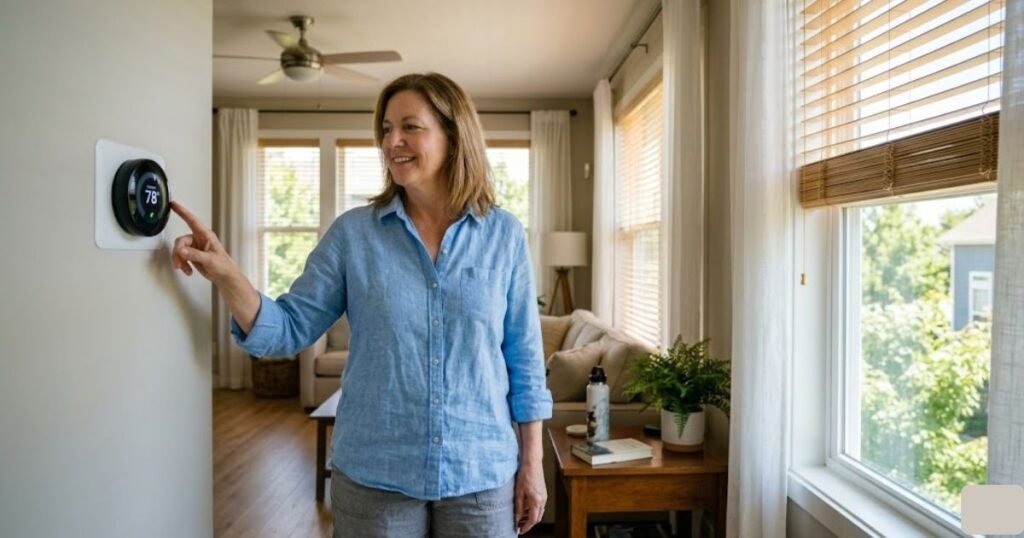
The U.S. Department of Energy recommends setting your thermostat to 78 degrees Fahrenheit when you are at home and awake. While 78 degrees might sound warm initially, you can bridge the comfort gap easily by managing indoor humidity and using fans.
When you leave for work or head out for the weekend, avoid leaving the AC at your standard comfort setting. Instead, raise the thermostat by 7 to 10 degrees. Keeping the interior temperature closer to the outdoor temperature actually slows down the rate at which heat enters your home, making it easier and cheaper to cool down when you return.
2. Use Ceiling Fans the Right Way
Ceiling fans are an incredible tool to save money on cooling, but they must be used correctly. First, ensure your fan is rotating counter-clockwise for the summer. This direction creates a downward breeze, generating a “wind-chill effect” on your skin. It won’t actually lower the ambient temperature of the room, but it makes the air feel roughly 4 degrees cooler than it actually is.
Important Fan Rule: Fans cool people, not rooms. Because they rely on evaporative cooling on your skin, running a fan in an empty room is a complete waste of electricity. Always turn them off when you leave the room.
READ MORE: Best ecobee Smart Thermostat Review: Essential vs Enhanced vs Premium
3. Close Blinds and Curtains During Peak Hours
Direct sunlight streaming through your windows is a major driver of indoor heat gain. Windows facing east and west are particularly problematic, as they catch the low, intense rays of the morning and afternoon sun.
Get into the habit of closing your blinds, shades, or drapes before you leave for work, especially on the sunny sides of your house. Highly reflective window treatments or blackout curtains can reject a massive amount of solar heat, keeping your rooms naturally cooler and giving your air conditioner a much-needed break.
4. Seal Household Air Leaks
To keep your cool air inside where it belongs, spend an afternoon inspecting your home for air leaks. Check the perimeters of your windows and exterior doors. If you can see daylight around a door frame or feel a draft, you are losing money.
Pick up a few rolls of affordable weatherstripping and a tube of exterior silicone caulk from your local hardware store. Seal up gaps around window casings, apply new weatherstripping to doors, and use foam outlet sealers behind electrical plates on exterior walls. This simple weekend project can drastically cut electric bill in summer costs.
5. Replace Dirty Air Filters Regularly
This is arguably the easiest and most overlooked home maintenance task. Check your air filter every single month during the high-use summer season. If you have pets or a large family, you will likely need to replace it every 30 to 60 days.
A clean filter ensures smooth, unrestricted airflow, allowing your AC to cool your home efficiently without drawing excess power. It also protects your expensive system components from dirt buildup and improves your indoor air quality.
[Dirty Filter: Restricts Airflow -> Motor Works Harder -> Bills Spike]
VS
[Clean Filter: Smooth Airflow -> System Runs Efficiently -> Bills Drop]
6. Shift Appliance Use to Cooler Hours
Your clothes dryer, dishwasher, and kitchen oven generate an incredible amount of ambient heat and humidity. If you run these appliances at 2:00 PM on a July afternoon, your air conditioner has to work twice as hard to neutralize that extra heat.
Instead, shift these chores to the early morning or late evening hours when outdoor temperatures are lower. Better yet, embrace summer traditions by cooking outside on an outdoor grill and line-drying your clothes when possible.
READ MORE: Is a Google Nest Thermostat Worth It? Review, Comparison & Buyer Guide
7. Switch to Energy-Efficient Lighting
If you are still using older incandescent or halogen lightbulbs, it is time for an upgrade. These bulbs run incredibly hot to produce light. Replacing them with modern LED bulbs is an excellent energy-saving home tips strategy. LEDs use a fraction of the electricity, last for decades, and run completely cool to the touch, preventing unnecessary heat buildup inside your rooms.
8. Schedule an Annual AC Tune-Up
Just like a car, your air conditioning system needs regular maintenance to run at peak efficiency. Consider hiring a licensed HVAC professional to service your system before the peak of summer hits.
They will clean the condenser coils, check the refrigerant levels, inspect the electrical connections, and ensure the entire system operates optimally. A well-maintained system can run up to 15 percent more efficiently than a neglected one, saving you money all summer long and preventing unexpected, costly breakdowns.
9. Improve Your Attic Insulation
If your home struggles to maintain a consistent temperature or if the upper floors feel like a sauna, your attic insulation is likely insufficient. Adding more insulation such as blown-in cellulose or fiberglass batt insulation creates a powerful barrier against the radiant heat coming off your roof.
While this requires an upfront investment, it is one of the most effective ways to achieve permanent, year-round savings on both your heating and cooling expenses.
10. Upgrade to a Smart Thermostat
If you frequently forget to adjust the thermostat before leaving the house, a smart or programmable thermostat is a game-changer. These devices learn your daily schedule and automatically adjust the temperature based on whether you are home, asleep, or away.
Many smart models allow you to monitor and control your home’s temperature from your smartphone, providing detailed energy usage reports that help you pinpoint exactly how to reduce AC bill amounts over time.
11. Keep Air Vents Clear and Open
It can be tempting to close vents in unoccupied rooms to try to save money, but this is actually a counter-productive myth for modern central HVAC systems. Closing too many vents alters the static pressure within your ductwork, forcing the system’s blower motor to work harder and potentially causing the cooling coils to freeze over.
Walk through your home and ensure that all supply and return vents are fully open and completely unblocked by furniture, heavy drapes, or rugs. Good air circulation is vital for home cooling efficiency.
12. Discover Smarter Ways to Cook
Using your kitchen stove or oven can quickly raise the temperature of your kitchen by several degrees. During the peak of summer, rethink your cooking strategies.
Rely on smaller, energy-efficient countertop appliances that contain their heat, such as microwaves, toaster ovens, air fryers, slow cookers, or instant pots. Preparing cool meals like salads, wraps, and sandwiches is another excellent way to stay fed without warming up your house.
READ MORE: Solar Powered Heat Pump Cost: USA Homeowner Guide to Savings
Comparison Table
To help you decide where to focus your time and money, here is a quick breakdown of popular cooling-saving methods, including their expected costs, effort levels, and long-term financial impacts.
| Cooling Tip | Estimated Cost | Difficulty Level | Possible Savings | Best For |
| Change air filters regularly | Low | Easy | Moderate | All homeowners & renters |
| Use ceiling fans | Low | Easy | Moderate | Bedrooms and living rooms |
| Install a smart thermostat | Medium | Easy | High | Busy families & tech-focused homes |
| Seal windows and doors | Low to Medium | Easy to Moderate | High | Older homes & drafty properties |
| Add insulation or shade | Medium to High | Moderate | High | Long-term savings & hot climates |
| Schedule AC maintenance | Medium | Easy (Hire Pro) | High | System longevity & efficiency |
READ MORE: Carrier Heat Pump Reviews (2026) — Models, Costs, Pros & Cons
Cheapest Quick Fixes vs. Bigger Home Improvements
When you want to lower summer energy bills, it helps to categorize your options into instant, low-cost fixes and larger, long-term investments. This helps you map out an energy strategy that fits your current budget.
Low-Cost Quick Fixes ($0 to $50)
These are simple tasks that cost very little but offer immediate relief on your upcoming utility statement.
- Adjusting habits: Raising your thermostat when you are away costs absolutely nothing and saves money instantly.
- Window management: Closing your existing blinds and curtains during the sunniest hours takes seconds and creates a noticeable difference in room comfort.
- DIY Air Sealing: A single roll of weatherstripping and a tube of caulk can patch up the worst leaks around your primary entry doors.
- Basic Maintenance: Buying a multi-pack of basic air filters keeps your system breathing easily for months.
Medium-Cost Upgrades ($50 to $250)
These projects require a modest financial investment but pay for themselves quickly over the course of one or two summers.
- Smart Thermostats: Upgrading to a programmable or smart thermostat gives you precise control over your energy habits.
- Window Treatments: Installing cellular shades, solar window films, or heavy thermal blackout curtains blocks far more solar heat than basic plastic blinds.
- Professional Tune-Up: Paying an HVAC technician for a seasonal maintenance visit ensures your unit operates at peak performance.
Long-Term Improvements ($500 and Up)
These are significant home improvement projects that require planning and capital but fundamentally alter your home’s energy profile for decades.
- Attic Insulation: Upgrading your attic’s insulation to modern standards is one of the highest-return investments a homeowner can make.
- Duct Work Repair: Hiring a professional to seal and insulate leaky air ducts in your crawlspace or attic ensures all your cold air actually reaches your living areas.
- High-Efficiency AC Replacement: If your old system is near the end of its life, replacing it with a modern, high-SEER2 system will cut your seasonal electricity consumption dramatically.
READ MORE: AC Running but Not Cooling? Here’s Why and What to Do
How to Use Your AC More Efficiently
Many people think saving on cooling means using the AC less. In reality, it often means using it more wisely.
Set one comfortable temperature
Instead of constantly adjusting the thermostat, choose a temperature that feels comfortable and let the system work steadily. Frequent changes can make cooling less efficient.
Do not set the AC too low
Setting the temperature far below what is needed will not cool the house instantly. It usually just makes the system run longer. A modest setting is often enough when fans and window coverings are working too.
Clean and check filters
A clean filter helps air move freely. This simple habit supports better cooling, better comfort, and lower energy waste.
Keep doors closed
If you are trying to cool only part of the home, keep interior doors closed in the rooms you are not using. This helps direct cool air where it is needed most.
Use fans with AC
Fans and AC work well together. The fan helps you feel cooler, so you may be able to keep the thermostat a little higher.
Cool only occupied rooms when possible
If your home layout allows it, focus cooling on the rooms in use. That can be especially helpful in larger homes, during the day, or when part of the household is asleep.
READ MORE: 8 Best DREO Smart Tower Fans 2026: Review & Comparison
Smart Home Habits to Reduce Cooling Costs
A few daily habits can make a real difference in how much your home heats up.
Try these practical ideas:
- Run ovens, dryers, and dishwashers in the early morning or late evening.
- Turn off lights and electronics when they are not needed.
- Keep blinds closed on the sunniest side of the house.
- Use bathroom exhaust fans during and after showers to remove warm, humid air.
- Check weather stripping and caulking each season.
- Avoid opening exterior doors more than necessary.
- Take advantage of cooler morning and evening air when possible.
These energy-saving home tips may sound small, but together they help reduce the overall strain on your cooling system.
Mistakes That Make Cooling Bills Higher
Sometimes, the best way to move forward is to stop doing things that hold you back. Avoid these common, expensive cooling mistakes:
- Cooling an Empty House All Day: Leaving your AC blasting at 71 degrees while everyone is away at work, school, or on vacation is a massive waste of energy.
- Leaving Windows Unprotected: Leaving your southern and western windows completely bare without blinds or solar film allows direct radiant heat to bypass your cooling efforts.
- Neglecting Filter Changes: Forgetting to change your filter causes your system to work longer and harder, driving up costs and risking a system breakdown.
- Placing Electronics Near the Thermostat: Putting heat-emitting items like lamps, televisions, or computers right below your wall thermostat tricks the sensor into thinking your house is much hotter than it actually is, causing the AC to run unnecessarily.
- Ignoring Annual Maintenance: Waiting until your AC stops working completely on a 100-degree weekend to call a technician will cost you significantly more in emergency repair fees than an annual maintenance tune-up would.
READ MORE: Ultra Quietest Heat Pump for Your Home: Review, Comparison & Cost
When It May Be Time to Upgrade Your AC
Despite your best efforts with DIY tips and behavioral changes, there comes a point where an old, failing air conditioning system simply cannot deliver efficiency. If your cooling system is more than fifteen years old, it likely operates on outdated technology and uses older refrigerants that are increasingly expensive to service.
[Signs It’s Time for an Upgrade]
/ | \
/ | \
Frequent & Costly Rising Bills Uneven Cooling
Repairs with Same & Non-Stop
Weather Running
Consider upgrading to a modern system if you notice:
- Your monthly electric bills keep climbing year after year, even though your usage habits haven’t changed.
- The system requires frequent, expensive repairs to survive each summer.
- The unit runs continuously but struggles to keep the house comfortably cool on moderately warm days.
- The air conditioner uses R-22 refrigerant, which has been phased out and is incredibly expensive to replace during leaks.
Modern air conditioning units are built to meet rigorous new federal energy efficiency guidelines (known as SEER2 ratings). Upgrading to a modern, high-efficiency system or a versatile air-source heat pump can cut your cooling energy consumption by 20 to 50 percent overnight.
Final Money-Saving Checklist
Print out or save this quick checklist to ensure your home is fully optimized for the summer heat:
- [ ] Set the thermostat to 78°F when home and raise it to 85°F when away.
- [ ] Check and replace your air filter if it has been more than 30–60 days.
- [ ] Confirm all ceiling fans are rotating counter-clockwise (blowing air down).
- [ ] Close all blinds, curtains, and shades before the sun hits your windows.
- [ ] Walk the house and verify that all air vents are completely clear and unblocked.
- [ ] Inspect exterior doors for daylight and replace worn weatherstripping.
- [ ] Seal gaps around window frames with exterior silicone caulk.
- [ ] Keep the outdoor condenser unit free of weeds, leaves, and debris.
- [ ] Shift major appliance usage (dryer, dishwasher) to early morning or late evening.
- [ ] Swap out any remaining incandescent lightbulbs for energy-efficient LEDs.
FAQ Section
What is the best temperature to set my AC in summer to save money?
A comfortable setting in the mid- to upper-70s is a common starting point for many homes. The best number depends on your comfort, humidity, and whether you use fans. Even a small temperature increase can help lower cooling costs.
How can I lower my electric bill without turning off the air conditioner?
Use ceiling fans, close blinds during the hottest part of the day, change air filters regularly, seal air leaks, and avoid running heat-producing appliances in the afternoon. A smart thermostat can also help manage cooling more efficiently.
Do ceiling fans really help reduce cooling costs?
Yes, ceiling fans can help you feel cooler so you can raise the thermostat a little without losing comfort. They do not cool the air itself, but they can reduce how hard your AC needs to work.
Is it cheaper to leave the AC on all day or turn it off when leaving?
For most homes, it is usually cheaper to adjust the temperature when the house is empty instead of cooling it at full strength all day. A programmable or smart thermostat makes this easier and more efficient.
What are the fastest ways to reduce summer cooling bills at home?
The quickest wins are changing dirty filters, closing blinds, using ceiling fans, sealing obvious air leaks, and setting the thermostat a few degrees higher. These are simple steps that can help cut electric bill in summer without major expense.
Conclusion
Managing your summer utility costs doesn’t mean you have to sweat through the season in misery. By treating your home as a smart, efficient system, you can easily outsmart the summer heatwaves. Simple habits like closing your blinds before work, keeping your air filters pristine, and letting your ceiling fans do the heavy lifting add up to substantial, real-world savings over time.

