It is one of the most frustrating problems a homeowner can face on a hot day: the air conditioner is clearly running, the fan is on, and you can hear the system working, but the house still feels warm. Maybe the air from the vents is barely cool. Maybe it is room temperature. Or maybe the system seems to run nonstop without ever making the home comfortable.
If your AC is running but not cooling, you are not alone. This is a very common problem, and the good news is that it does not always mean a major breakdown. In many cases, the issue comes down to something simple, like a dirty filter, a thermostat setting, a blocked vent, or a dirty outdoor unit.
In other cases, the problem may be more serious and need professional repair. The key is knowing what to check first, what you can safely handle yourself, and when it is time to call an HVAC technician.
This guide breaks everything down in plain language so you can figure out why your air conditioner is running but not cooling and what to do next. Lets deep dive into “AC Running but Not Cooling? Here’s Why and What to Do”
READ MORE: Best Energy Star Smart Thermostats: Reviews, Comparison, and Buying Guide
What It Means When the AC Is Running but Not Cooling
When we say an air conditioner is “running,” we usually mean the mechanical components like the blower fan inside and the condenser fan outside are powered on. However, cooling a home is a complex process of heat exchange, not just “blowing cold.”
Think of your AC like a professional relay team. The indoor unit’s job is to soak up the heat from your indoor air using a cold chemical called refrigerant. The outdoor unit’s job is to take that heat and dump it into the outside air. If any member of that team trips or stops running, the “relay” fails.
When your air conditioner is running but not cooling, it means the mechanical “will” is there, but the thermal “way” is blocked. The fans are spinning, but the heat isn’t being moved out of your house. This could be due to a lack of airflow, a mechanical failure in the compressor, or an issue with the refrigerant that acts as the “courier” for the heat.
READ MORE: How Much Does Air Conditioner Capacitor Replacement Cost?
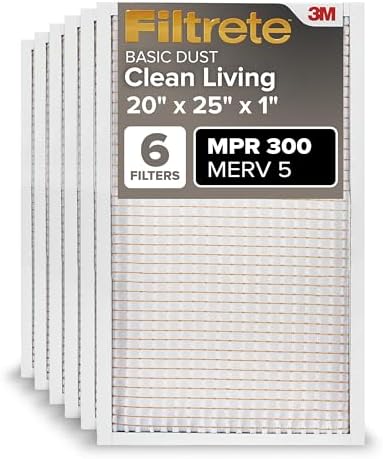
- 20x25x1 AIR FILTER FOR FURNACE & AC SYSTEMS – Filtrete MERV 5 furnace filters designed for standard HVAC systems. Each 6…
- MAKE YOUR HOME YOUR SANCTUARY: 6-pack of 3-month pleated Filtrete 20x25x1 MPR 300 AC Furnace Air Filter helps capture un…
- DIFFERENT FROM NOMINAL SIZE: Slightly different from the nominal size, this air filter’s exact dimensions are 19.69 x 24…
Common Reasons an AC Runs but Does Not Cool
Understanding the “why” is the first step toward a fix. Here are the most frequent culprits behind a central air conditioner running but not cooling.
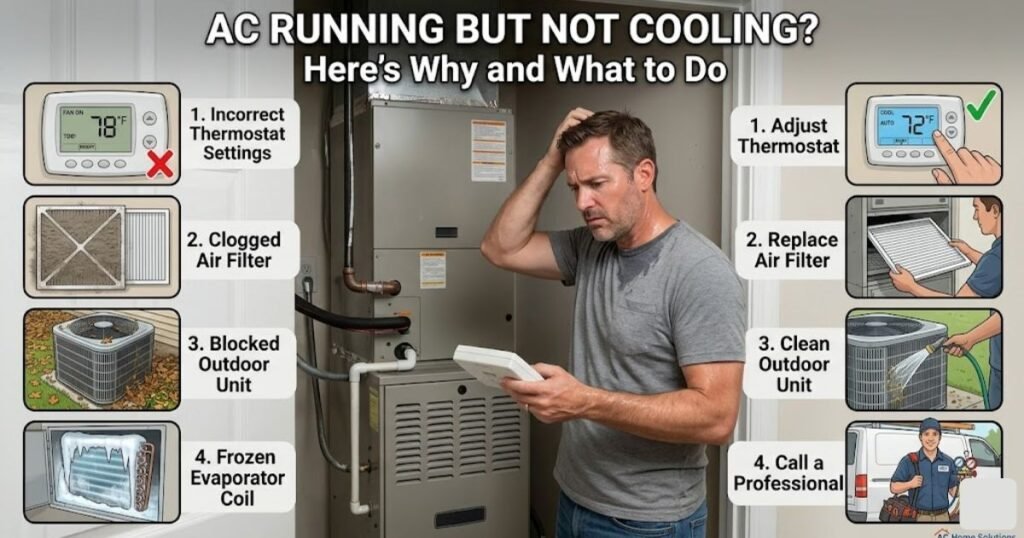
1. Dirty Air Filters
This is the “Have you tried turning it off and on again?” of the HVAC world. A clogged air filter is the number one cause of AC performance issues. If the filter is caked in dust, pet hair, and dander, the blower fan can’t pull enough air through the cooling coils. Without enough air to cool, the system can actually freeze up or simply stop effectively lowering the temperature.
2. Thermostat Settings Problems
It sounds silly, but check your thermostat. Sometimes, someone in the house might have accidentally switched the fan setting from “Auto” to “On.”
- Auto: The fan only blows when the AC is actively cooling the air.
- On: The fan blows 24/7, even when the cooling cycle is off. If it’s set to “On,” you might just be feeling room-temperature air being recirculated between cooling cycles.
3. Low Refrigerant (The “Freon” Issue)
Refrigerant is the lifeblood of your AC. Unlike gas in a car, refrigerant isn’t “used up.” If you are low on refrigerant, it means you have a leak. When levels are low, the AC can’t absorb enough heat from your home, leading to a system that runs constantly but never reaches the target temperature.
4. Dirty Condenser Coils (The Outdoor Unit)
Your outdoor unit is exposed to the elements grass clippings, cottonwood seeds, dirt, and spiderwebs. If the metal fins on that outdoor box are covered in grime, the unit can’t “release” the heat it gathered from inside. It’s like trying to run a marathon in a heavy winter coat; the system overheats and loses its ability to cool.

- HVAC PROFESSIONAL FORMULA: Supercharge your coil cleaning with the HVAC Guys Foam Blaster penetrating evaporator and con…
- POWERFUL ACTIVE EXPANDING FOAM ACTION: The Foam Blaster works by using a high pressure spray that penetrates deep into t…
- FOR EVAPORATORS (NO-RINSE) AND CONDENSERS: The Foam Blaster is made for both evaporators (no rinsing required) and conde…
READ MORE: How to Clean AC Filters: A Simple Guide to Better Airflow
5. Blocked or Closed Vents
If you’ve recently rearranged furniture or closed off vents in “unused” rooms to save money, you might be hurting your AC. Your system is designed for a specific amount of “breathable” space. Closing too many vents increases pressure and reduces airflow, which can lead to the AC not blowing cold air.
6. Frozen Evaporator Coils
If you see ice forming on the copper pipes near your indoor unit, you have a problem. This usually happens because of restricted airflow (dirty filter) or low refrigerant. Once the coils turn into a block of ice, they can no longer absorb heat from your home.
7. Faulty Compressor
The compressor is the “heart” of the AC, located in the outdoor unit. It pumps the refrigerant through the system. If the compressor fails or isn’t getting enough power (due to a bad capacitor), the fans will spin, but no cooling will happen. This is a major repair that requires an expert.
8. Leaky or Damaged Ductwork
You could have the most powerful AC in the world, but if your ducts are torn or disconnected in the attic or crawlspace, that cold air is cooling your squirrels instead of your bedroom. Leaky ducts can lose up to 30% of cooling energy.
9. Electrical Issues
A tripped breaker or a blown fuse can sometimes shut down the outdoor condenser while the indoor blower keeps running. In this case, you’ll feel “air,” but it won’t be “conditioned.”
10. Incorrect AC Size
If your AC is too small for your home’s square footage, it will run non-stop on a hot day and never catch up. If it’s too large, it will “short cycle,” turning off before it has a chance to properly dehumidify and cool the space.
READ MORE: Carrier Heat Pump Reviews (2026) — Models, Costs, Pros & Cons

- MAKE YOUR HOME YOUR SANCTUARY: 4-pack of 3-month pleated Filtrete 16x25x1 MERV 11 MPR 1000 AC Furnace Air Filter helps c…
- EXCLUSIVE TECHNOLOGY: Designed with Filtrete 3-in-1 technology to pull in and trap unwanted particles, allowing cleaner …
- COUNTLESS MICROPARTICLES: With a 1000 MPR and MERV 11 rating, your Filtrete Filter will help capture many microparticles…
Why Airflow Is Everything
Before we dive into the fixes, let’s talk about airflow. If there is one thing you should understand about your HVAC system, it’s that it needs to breathe.
When your home AC is not cooling, the issue is almost always a breakdown in the “inhale” or the “exhale.”
- The Inhale: Your system pulls warm air in through the return vents. If the filter is dirty or the return is blocked by a couch, the “inhale” is weak.
- The Exhale: The system pushes cold air out through the registers. If ducts are leaky or vents are closed, the “exhale” is weak.
If the airflow is restricted, the internal temperature of the unit drops too low, the coils freeze, and the cooling process stops. Always start your troubleshooting by looking for things that might be “choking” your AC.

- PREMIUM MATERIAL – The mini split cleaning bag is made of high-quality thickened PVC material, waterproof, wear-resistan…
- 2L HIGH PRESSURE SPRAYER – Mini-split cleaning kit includes: 1 mini split cleaning cover, 2L high-pressure sprayer with …
- ENHANCE ENERGY EFFICIENCY, SAVE MONEY, IMPROVE AIR QUALITY – Dirty mini-split units can lead to an increase in power con…
Easy Troubleshooting Steps Homeowners Can Try
Before you spend $100+ on a service call, try these AC troubleshooting tips. You can do most of these in under 15 minutes.
- Check the Thermostat: Make sure it’s set to “Cool” and the temperature is at least 5 degrees below the current room temperature. Ensure the fan is set to “Auto.” If the screen is blank, replace the batteries.
- Inspect the Air Filter: Pull the filter out and hold it up to a light. If you can’t see light through it, it’s time for a new one. This is the most common reason for why is my AC running but not cooling.
- Clear the Outdoor Unit: Walk outside and look at your condenser. Remove any leaves, tall grass, or debris within two feet of the unit. If the fins look muddy, you can gently spray them with a garden hose (don’t use a pressure washer, as it can bend the delicate fins).
- Check Your Vents: Walk through every room in your house. Ensure the supply vents (the ones blowing air) are open and not covered by rugs or furniture. Do the same for your large return air grilles.
- Check the Circuit Breaker: Go to your electrical panel. Look for the switch labeled “AC” or “HVAC.” Even if it looks like it’s in the “On” position, flip it all the way to “Off” and then back to “On” to ensure it isn’t tripped.
- Look for Ice: Check the indoor unit (usually in a closet, basement, or attic) and the outdoor copper lines. If you see white frost or ice, turn the AC off immediately at the thermostat but leave the fan on “On.” This allows the ice to melt so a technician can actually work on it later.
- Reset the System: Some modern units have a reset button on the outdoor unit. If yours doesn’t, you can try “resetting” it by turning it off at the breaker for 30 minutes and then turning it back on.
READ MORE: Air Conditioner Replacement Cost 2026: What USA Homeowners Should Expect

- SAFEGUARD AGAINST DRAIN CLOGS – Don’t let clogged AC drain lines lead to property damage. Our Flow Treat tablets provide…
- FRESH AIR, EFFECTIVE ODOR CONTROL – Experience the benefits of clean, fresh air with our HVAC drain pan tablets, special…
- PROFESSIONAL-GRADE MAINTENANCE – Trusted by fellow HVAC professionals, our drain cleaner tablets are designed for centra…
Quick Fixes Before Calling for Repair
If you’ve done the troubleshooting and still have no luck, try these “last-ditch” quick checks:
- Check the Drain Line: Most ACs have a safety switch that shuts off the cooling if the condensation drain line is clogged. If you see water in the emergency pan under your indoor unit, use a shop-vac to clear the PVC drain pipe outside.
- The “Hand Test”: Put your hand over the top of the outdoor unit while it’s running. Is the air coming out of the top hot? It should be. If the air coming out of the top is cool or room temperature, the compressor isn’t engaged, or you’re out of refrigerant.
- Check for Blown Fuses: Many outdoor units have a “disconnect box” mounted on the wall nearby. Inside, there are often two large fuses. If you’re comfortable with a multimeter, you can check them, but this is usually where most homeowners should stop and call a pro.
Signs the Problem Needs Professional HVAC Repair
Some things just can’t be fixed with a YouTube tutorial. If you notice these HVAC repair signs, it’s time to call a licensed technician:
- Warm Air is Consistently Blowing: If the air coming out of the vents is actually warm (not just “not cold enough”), it usually points to a compressor or refrigerant issue.
- Strange Noises: Do you hear grinding, screeching, or loud clanging? This could be a failing motor or a broken compressor valve.
- Hissing or Bubbling Sounds: This is the classic sound of a refrigerant leak. Since refrigerant is a chemical regulated by the EPA, only pros can handle it.
- A “Burning” Smell: This usually indicates an electrical component is melting or shorting out. Turn the power off immediately.
- Short Cycling: If the unit turns on for two minutes, shuts off, and then turns back on again, it’s likely overheating or has a failing sensor.
- Spiking Utility Bills: If your electric bill doubled but your house is still warm, your system is working way too hard for zero results. This inefficiency is a major red flag.
READ MORE: How Much Does Air Conditioner Coil Replacement Cost in 2026?
How to Prevent AC Cooling Problems in the Future
The best way to fix an air conditioner running but not cooling is to make sure it never happens in the first place. Maintenance is the key to longevity.
Schedule Annual Tune-Ups
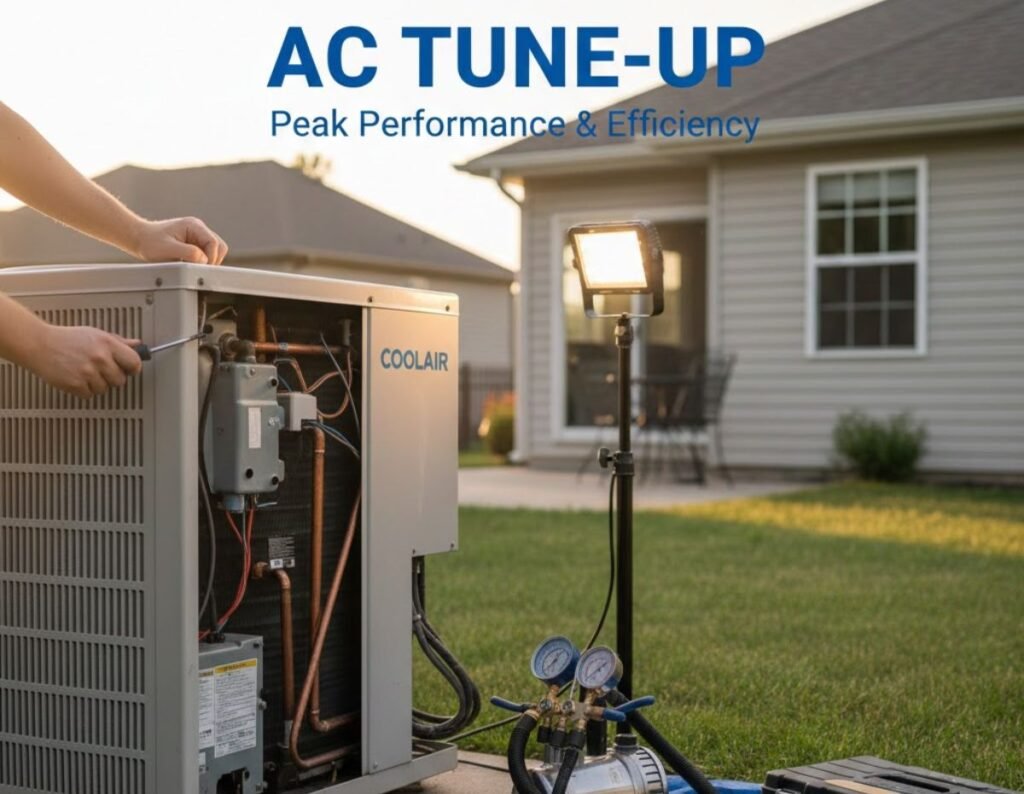
Think of an HVAC tune-up like an oil change for your car. A technician will clean the coils, check refrigerant levels, tighten electrical connections, and catch small problems before they become $2,000 disasters. Spring is the best time for this.
Change Filters Regularly
In the USA, most standard 1-inch filters should be changed every 30 to 90 days. If you have pets or allergies, aim for every 30 days during the peak of summer.
Keep the “Zone” Clear
Don’t plant shrubs or build fences too close to your outdoor unit. It needs a 2-foot “dead zone” around it to breathe properly. Also, keep the area clear of “mulch mountains” that can trap moisture and debris against the unit.
Seal Your Ducts
If you have an older home, consider having a professional perform a duct leakage test. Sealing gaps with mastic or specialized tape can significantly improve the amount of cold air that actually reaches your living spaces.
Use Your Thermostat Wisely
Avoid “cranking it down” to 60°F when you get home. An AC doesn’t work like a blowtorch; it doesn’t cool “faster” just because the setting is lower. It cools at one steady rate. Setting it too low just puts unnecessary stress on the system.
READ MORE: Solar Powered Heat Pump Cost: USA Homeowner Guide to Savings
Energy Efficiency and Your Wallet
When an AC is running but not cooling, it isn’t just a comfort issue—it’s a financial one. An AC that runs 24/7 without cooling the house is essentially a giant heater for your wallet. It’s consuming massive amounts of electricity while providing zero value.
By addressing these issues early even if it means paying for a repair you are saving money in the long run. A well-tuned AC uses less power, lasts years longer, and keeps your monthly utility bills predictable.
When to Call an HVAC Technician
We live in a DIY era, but HVAC systems are sophisticated. You should call a professional if:
- You suspect a refrigerant leak. This requires specialized gauges and a license to handle the chemicals.
- The compressor isn’t starting. This involves high-voltage electricity and expensive parts.
- The coils are frozen. While you can melt the ice yourself, a pro needs to find out why it froze so it doesn’t happen again tomorrow.
- You have electrical issues. If you’re blowing fuses or tripping breakers, there’s a short circuit somewhere that could be a fire hazard.
FAQ:
Why is my AC running but not cooling the house?
The most common reasons include a clogged air filter, a dirty outdoor condenser unit, or a refrigerant leak. Essentially, the system is moving air, but it cannot effectively remove the heat from that air.
What should I check first when my AC is not cooling?
Start with the air filter and the thermostat settings. Ensure the filter is clean and the thermostat is set to “Cool” and “Auto.” Then, check your circuit breaker to ensure the outdoor unit has power.
Can a dirty air filter cause AC to stop cooling?
Yes! A dirty filter blocks airflow. When airflow is restricted, the indoor evaporator coil can get too cold and freeze into a block of ice, which stops the cooling process entirely.
Why is my AC blowing warm air instead of cold air?
This often happens if the outdoor unit (the condenser) has lost power while the indoor unit is still running. It can also be caused by a failed compressor or a complete loss of refrigerant.
When should I call a technician for an AC that is running but not cooling?
If you’ve changed the filter, checked the breaker, and cleared the outdoor unit of debris, but the air is still warm, it’s time to call a pro. Issues involving refrigerant, electrical wiring, or the compressor require expert tools and training.
READ MORE: Ultra Quietest Heat Pump for Your Home: Review, Comparison & Cost
Final Thoughts
Dealing with an AC running but not cooling is undeniably frustrating, especially during a heatwave. However, remember that many of the fixes are within your reach. By staying on top of your air filters and keeping your outdoor unit clean, you can prevent the majority of these “warm air” emergencies.
If the simple fixes don’t work, don’t hesitate to call an expert. Your home is your sanctuary, and staying cool is essential for your comfort and health. Catching a small problem today like a tiny refrigerant leak or a worn-out capacitor can save you from having to replace the entire system tomorrow.