When the peak of summer hits in the USA, your home’s comfort depends entirely on one thing: a reliable cooling system. In recent years, Hisense air conditioners have surged in popularity, moving from a budget-friendly alternative to a top-tier contender that challenges legacy brands. For many homeowners, the question isn’t just about finding any AC unit, but finding one that balances energy efficiency, smart features, and whisper-quiet operation.
Whether you are trying to cool a small home office in Seattle or a humid sunroom in Florida, Hisense offers a range of window and portable units designed for modern living. This comprehensive guide will walk you through the top-rated Hisense models of 2026, explain the revolutionary benefits of inverter technology, and provide a practical buying guide to ensure you don’t waste a penny on the wrong unit. Lets deep dive into “Hisense Air Conditioner Review: Best Models, Comparison & Buying Guide”
READ MORE: Carrier Heat Pump Reviews (2026) — Models, Costs, Pros & Cons
What Is a Hisense Air Conditioner?
Hisense is a global electronics giant that has spent the last decade perfecting its “Air Products” line for the North American market. Unlike traditional air conditioners that simply turn on and off, modern Hisense units focus on intelligent cooling.
The Hisense Range
The brand primarily focuses on two categories for homeowners:
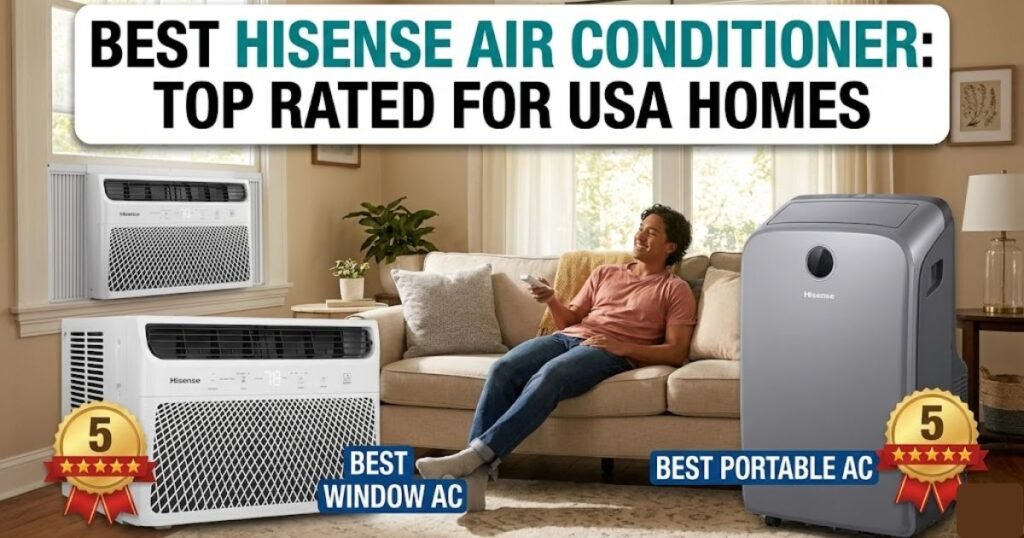
- Window Air Conditioners: These are semi-permanent units that sit in your window frame. Hisense has pioneered “Inverter” window units that are significantly quieter and more efficient than the “rattle-and-hum” models of the past.
- Portable Air Conditioners: These stand-alone units are on wheels and vent through a flexible hose. They are the go-to choice for renters or rooms where window configurations don’t allow for a traditional mount.
Why the “Inverter” Label Matters
You will see the word “Inverter” frequently in Hisense reviews. In simple terms, a standard AC compressor is either 100% on or 100% off. An inverter compressor can slow down or speed up. This allows the unit to maintain a perfectly steady temperature while using up to 30-40% less electricity. For a USA homeowner, this translates to lower monthly utility bills and a much quieter environment.
Common features you’ll find across the Hisense lineup include:
- ConnectLife App Support: Control your AC from your smartphone before you even get home.
- Multi-Mode Functionality: Most units act as a cooler, a fan, and a dehumidifier.
- Eco-Friendly Refrigerants: Using the latest standards to minimize environmental impact.
- High CEER Ratings: Ensuring you get the most cooling power for every watt of energy.
READ MORE: Ultra Quietest Heat Pump for Your Home: Review, Comparison & Cost
Why Homeowners Consider Hisense
If you walk into a major retailer like Best Buy or Lowe’s today, Hisense units often occupy the “Sweet Spot” of the aisle. They aren’t the cheapest “no-name” brands, but they are significantly more affordable than the premium flagship models from competitors like LG or Mitsubishi, despite offering many of the same high-end features.
1. Smart Home Integration
Most Hisense models are “Smart” by default. They integrate with Amazon Alexa and Google Assistant. For a busy homeowner, being able to say, “Hey Google, set the bedroom AC to 72 degrees,” is more than just a gimmick—it’s a genuine convenience.
2. Quiet Operation for Sleep
Noise is a major complaint for window AC users. Hisense has focused heavily on “Ultra-Quiet” designs. Some of their inverter models operate at decibel levels lower than a typical conversation, making them perfect for nurseries or home offices where focus is required.
3. Space-Saving Aesthetics
Gone are the days of bulky, beige boxes. The 2026 Hisense lineup features slim profiles and modern white or charcoal finishes that don’t an eyesore in your living room.
READ MORE: Best Ductless Mini Split Air Conditioner 2026: Review, Comparison, Cost & Buying Guide
Best Hisense Air Conditioner Review
Choosing the right model depends on your specific room size and installation needs. Below are the five best-performing Hisense air conditioners currently available for USA homeowners.
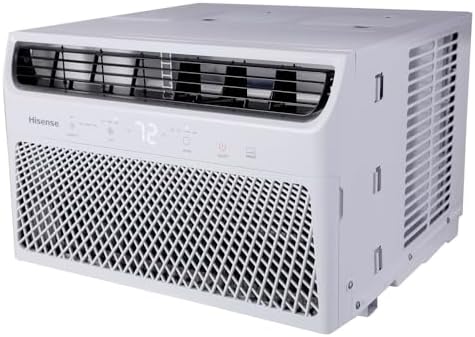
1: Hisense 8,000 BTU Smart Window Inverter Air Conditioner
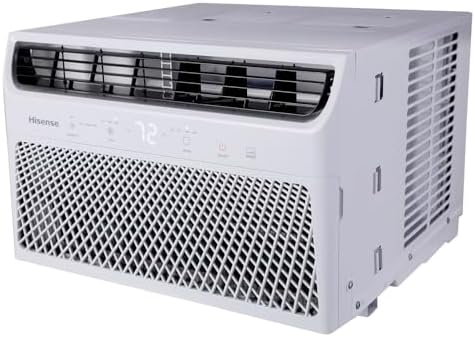
The 8,000 BTU unit is the “Goldilocks” of the Hisense window lineup. It is designed to cool spaces up to 350 square feet, making it the ideal choice for a primary bedroom or a large home office.
This model features the high-efficiency inverter compressor, which allows it to run at a very low frequency once the room reaches the target temperature. This prevents the “clunking” sound of the compressor kicking in, which often wakes light sleepers.
- Best for: Bedrooms and medium-sized home offices.
- Key features: ConnectLife App control, 4-way auto-swing louvers, and a CEER rating of 15.0.
- Strengths: Incredibly quiet operation; very low energy consumption during overnight use.
- Possible drawbacks: Installation requires a standard double-hung window; may feel underpowered for rooms with high ceilings or lots of direct sunlight.
Overall verdict: This is arguably the best-valued smart window AC for bedrooms on the market.
2: Hisense 10,000 BTU Smart Portable Inverter Air Conditioner
Portable units are notorious for being loud and inefficient, but Hisense has flipped the script with this inverter-driven portable AC. Rated for rooms up to 550 square feet, it provides a heavy-duty cooling punch without the permanent commitment of a window installation.
Because it uses inverter technology, it doesn’t just blast cold air; it modulates its output. This makes it much more comfortable for a living room where you might be watching TV and don’t want a loud fan drowning out the sound.
- Best for: Renters and rooms with non-traditional window shapes.
- Key features: 3-in-1 (Cool, Dry, Fan), easy-glide wheels, and Alexa/Google voice control.
- Strengths: Extremely easy to set up; portable enough to move between the living room by day and bedroom by night.
- Possible drawbacks: Like all portable units, it takes up floor space and requires a window vent; the drainage tank may need occasional emptying in extremely humid climates.
Overall verdict: The best choice for those who need flexibility and high-tech cooling without cutting into their window view.

READ MORE: Best MRCOOL Mini Split Air Conditioners and Heat Pumps: Review & Comparison
3: Hisense 14,000 BTU Smart Window Air Conditioner
When you need to cool a large “Great Room” or an open-concept living and dining area, the 14,000 BTU model is the heavy hitter. It is designed to handle up to 700 square feet with ease.
While larger units are often criticized for being “power hogs,” this model utilizes Energy Star-certified components to keep costs manageable. The smart features are particularly useful here—you can schedule the unit to start cooling your large living area 30 minutes before you arrive home from work, ensuring the space is comfortable without running the AC all day.
- Best for: Large living rooms, open-concept apartments, or studio lofts.
- Key features: High-capacity cooling, robust window mounting kit, and washable “Easy-Clean” filters.
- Strengths: Rapidly lowers the temperature in large spaces; surprisingly slim for its power level.
- Possible drawbacks: It is heavy (requires two people for safe installation); the 14,000 BTU draw may require a dedicated or high-amp circuit in older homes.
Overall verdict: A powerhouse cooling solution for large American homes that want smart control and fast results.

4: Hisense 12,000 BTU Smart UltraSlim Inverter Window AC
The 12,000 BTU model is Hisense’s premium offering for medium-to-large rooms (up to 550 square feet). This specific “UltraSlim” version is famous for having the lowest indoor profile on the market.
What makes this model stand out is the “Quick-Install” bracket. Unlike traditional units that feel like they might fall out of the window during setup, this uses a secure 3-step bracket system that allows you to keep your window functional—meaning you can still open the window for fresh air without removing the AC.
- Best for: Homeowners who prioritize aesthetics and want to keep their window functionality.
- Key features: UltraSlim design, Matter-certified for smart home integration, and 4-way airflow.
- Strengths: The most modern-looking window AC available; very easy 10-minute installation.
- Possible drawbacks: Higher price point than the standard 12,000 BTU models; the slim design requires specific window widths.
Overall verdict: The perfect blend of high-end design and high-performance cooling for a modern home.

5: Hisense 10,000 BTU Inverter Window Air Conditioner
This is the standard-bearer for the Hisense window line. Covering up to 450 square feet, it is the versatile choice for “average” American rooms, secondary bedrooms, larger kitchens, or small apartments.
It features the signature Hisense inverter technology, focusing on temperature stability. While older ACs often make the room feel “too cold” then “too warm” as they cycle, this unit keeps the temperature within a fraction of a degree of your setting.
- Best for: Medium rooms, apartments, and dining areas.
- Key features: Inverter compressor, energy reporting via the app, and a “Quiet Mode.”
- Strengths: Very balanced price-to-performance ratio; excellent dehumidification (Dry Mode).
- Possible drawbacks: Lacks the “UltraSlim” look of the premium 12k model; remote control is functional but basic.
Overall verdict: A reliable, “set-it-and-forget-it” air conditioner that provides maximum comfort for a mid-range budget.
READ MORE: Best Bosch Heat Pump Air Conditioner: Review, Comparison & Buying Guide
Comparison Table: Hisense Air Conditioner Models
| Model Type | BTU Rating | Max Room Size | Inverter Tech? | Smart Features | Best Use Case |
| Smart Window | 8,000 | 350 sq. ft. | Yes | ConnectLife App | Small Bedrooms / Offices |
| Portable | 10,000 | 550 sq. ft. | Yes | Voice + App | Renters / Flexible Cooling |
| Smart Window | 14,000 | 700 sq. ft. | Yes | ConnectLife App | Large Living Rooms |
| UltraSlim Window | 12,000 | 550 sq. ft. | Yes | Matter / App | Modern Homes / Design Focus |
| Standard Window | 10,000 | 450 sq. ft. | Yes | ConnectLife App | Medium Rooms / Apartments |
Comparison Summary:
- For the Quietest Sleep: Choose the 8,000 BTU Window Inverter. Its small size and inverter tech make it nearly silent.
- For Large Spaces: The 14,000 BTU model is the clear winner for open floor plans.
- For the Tech-Savvy: The 12,000 BTU UltraSlim is Matter-certified, making it the most future-proof smart home choice.
- For No-Hassle Setup: The 10,000 BTU Portable allows you to stay cool without lifting a heavy unit into a window frame.
READ MORE: Best Portable AC Unit Review: Comparison, Top Picks & Buying Guide
Pros and Cons of Hisense Air Conditioners
Before making a purchase, it is important to look at the brand as a whole. Hisense has carved out a specific niche, but like any brand, it has its trade-offs.
The Pros:
- Unbeatable Value: You often get “Inverter” technology and “Smart” features for the price of a “Dumb” AC from other brands.
- Leading-Edge App: The ConnectLife app is surprisingly stable and offers deep features like energy usage tracking.
- Whisper-Quiet Inverters: Their inverter compressors are among the best in the consumer market for noise reduction.
- Modern Designs: They look much better in a window than the industrial-looking units of the 2010s.
The Cons:
- Customer Support: While improving, Hisense’s support network in the USA isn’t as vast as a company like LG or GE.
- Weight: Their high-quality window units are built sturdily, which means they can be heavy and difficult for one person to install alone.
- App Setup: Some users report that syncing the AC to Wi-Fi for the first time can be a bit finicky if your router is far away.
Hisense Air Conditioner Buying Guide
Buying an air conditioner is more than just picking the one with the highest number on the box. If you buy a unit that is too small, it will run constantly and never cool the room. If you buy one that is too large, it will cool the room so fast that it doesn’t have time to remove the humidity, leaving you feeling “cold and clammy.”
1. Calculate Your Square Footage
Measure the length and width of your room. Multiply them (L x W) to get the square footage.
- 150 – 250 sq. ft.: 5,000 – 6,000 BTU
- 250 – 350 sq. ft.: 8,000 BTU
- 350 – 550 sq. ft.: 10,000 – 12,000 BTU
- 550 – 700 sq. ft.: 14,000 BTU
2. Window vs. Portable
- Choose Window if: You want maximum efficiency, don’t want to lose floor space, and have a standard window.
- Choose Portable if: You have “crank” (casement) windows, you are a renter who can’t modify the window, or you need to move the unit between rooms.
3. Look for “Inverter” and “SEER2/CEER”
In 2026, there is almost no reason to buy a non-inverter AC unless your budget is extremely tight. The energy savings alone will often pay for the price difference within two summers. Look for a CEER (Combined Energy Efficiency Ratio) of 12.0 or higher.
4. Smart Connectivity
If you have a smart thermostat like Nest or Ecobee, you might want an AC that also connects to your home network. Hisense units are excellent for this, allowing you to create “Scenes” where the AC turns off automatically when you leave the house.
READ MORE: Solar Powered Heat Pump Cost: USA Homeowner Guide to Savings
Which Hisense Air Conditioner Is Best for You?
Still undecided? Let’s narrow it down by your living situation:
- The “Work-From-Home” Choice: If you spend 8 hours a day in a 10×12 office, the 8,000 BTU Window Inverter is your best friend. It’s quiet enough for Zoom calls and keeps the room perfectly steady.
- The Apartment Dweller: The 10,000 BTU Portable is the most versatile. If you move apartments, you just pack it in its box—no need to worry about if it will fit the new windows.
- The Family Living Room: The 14,000 BTU Smart Window unit. It can handle the heat generated by multiple people, electronics, and large windows.
- The Efficiency Enthusiast: The 12,000 BTU UltraSlim. It uses the latest inverter tech and smart sensors to ensure not a single watt of energy is wasted.
Hisense Air Conditioner Installation and Maintenance Tips
To get the most out of your Hisense AC, follow these practical homeowner tips:
Installation
- The “Tilt” Rule: Most window ACs need a very slight tilt toward the outside (about 1/4 inch) to ensure condensation drains away from your house and doesn’t rot your window sill. (Note: Many modern Hisense units have built-in “slinger” fans that use the water to cool the coils, so check your manual first!)
- Seal the Gaps: Use the provided foam weather stripping. Air leaks are the #1 cause of high electricity bills. If the included curtains aren’t enough, a bit of “AC Weatherstrip Tape” from the hardware store goes a long way.
Maintenance
- Clean the Filter Every 2-4 Weeks: A dusty filter forces the motor to work harder, which can lead to premature failure. Hisense filters are usually washable just rinse with warm water and let them air dry completely.
- End-of-Season Storage: If you have a portable unit, make sure to drain all the water from the internal tank before storing it for winter. This prevents mold and mildew from growing inside the machine.
- Check the Coils: Once a year, check the outdoor fins for debris like leaves or cottonwood. A quick spray with a garden hose (with the unit turned off!) can keep it running like new.
READ MORE: Rheem Heat Pump Buying Guide: 2026 Costs, Reviews & Brand Comparisons
FAQs
Are Hisense air conditioners good for home use?
Yes. In 2026, Hisense is considered one of the top “Value-Premium” brands. They are particularly well-regarded for their inverter technology, which makes them much quieter and more efficient than older, traditional AC units. They are a great choice for homeowners who want modern features without the $800+ price tag of high-end split systems.
What size Hisense air conditioner do I need for my room?
The general rule is 20 BTUs per square foot. However, you should “size up” if you have high ceilings, live in a very sunny climate, or are cooling a kitchen. For a standard 12×15 bedroom (180 sq. ft.), an 8,000 BTU unit is perfect as it provides enough “headroom” to cool down quickly.
Is a Hisense inverter air conditioner energy efficient?
Absolutely. Hisense inverter models are some of the most efficient in their class. By varying the speed of the compressor rather than just turning it on and off, they use significantly less power to maintain a constant temperature. Most of these models are Energy Star certified.
What is the difference between Hisense window and portable air conditioners?
Window units are more energy-efficient and don’t take up any floor space, but they are heavy to install and block part of your window. Portable units are easier to set up and can be moved around, but they take up floor space and are generally a bit louder because the entire machine (including the compressor) is inside the room with you.
How long does a Hisense air conditioner last?
With proper maintenance (cleaning filters and keeping the coils clear), a Hisense air conditioner typically lasts 8 to 12 years. Their inverter models are designed with fewer “harsh” start-stop cycles, which can theoretically extend the life of the compressor compared to traditional models.
Final Verdict: Is a Hisense Air Conditioner Worth It?
For the vast majority of USA homeowners, the answer is a resounding yes.
Hisense has successfully bridged the gap between “cheap” and “high-end.” By focusing on Inverter Technology, they have solved the two biggest complaints about room air conditioners: noise and high electricity bills. While you might find slightly more “refined” customer service from a premium brand like LG, the actual cooling performance and smart features of a Hisense unit are often identical if not better for a lower price.