For millions of homeowners across the United States, wastewater management happens quietly beneath the backyard lawn. Because a private onsite wastewater treatment system operates out of sight, it is easy to overlook until slow drains, unpleasant odors, or yard puddles demand immediate attention. Scheduling routine septic tank pumping services is the single most effective step you can take to keep your household plumbing flowing smoothly, protect groundwater quality, and avoid five-figure drainfield replacements.
When a septic tank goes years without professional servicing, heavy solids and floating grease accumulate beyond the tank’s safe operating capacity. Once those solids escape into the drainfield (also called the leach field), they clog the soil pores that absorb and filter wastewater. Hiring a qualified, licensed septic professional ensures that accumulated waste is safely extracted, critical internal components are inspected, and septage is transported to an approved treatment facility in compliance with state and local environmental regulations. Lets deep dive into “Septic Tank Pumping Services: Costs, Signs & Complete Guide”
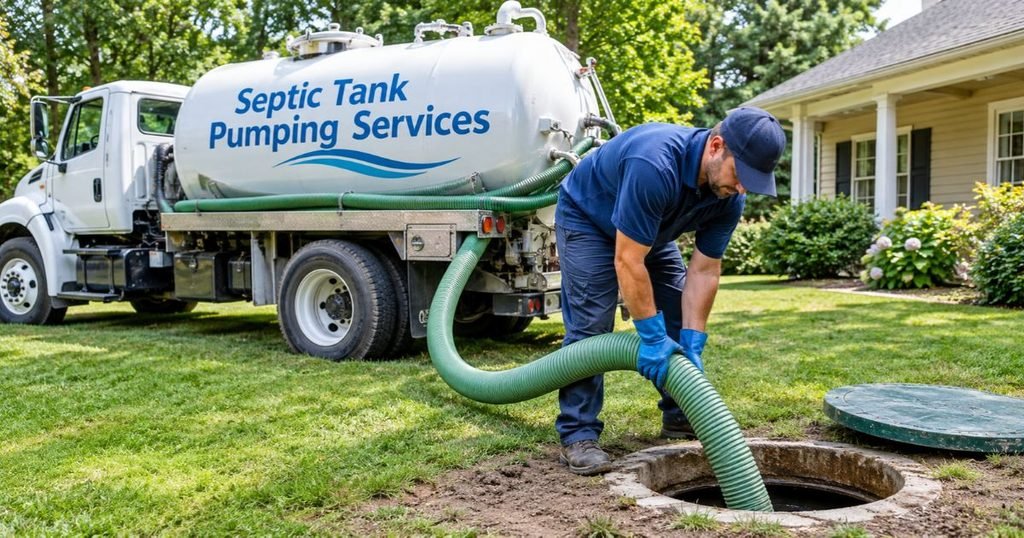
What Are Septic Tank Pumping Services?
Septic tank pumping services involve using specialized commercial vacuum equipment to remove accumulated solids, grease, and liquid wastewater from a residential or commercial septic tank. While many homeowners use the terms pumping and cleaning interchangeably, understanding how a septic system works clarifies what a thorough service visit actually accomplishes.
How a Residential Septic System Works
A conventional gravity-fed septic system consists of two primary components: the septic tank and the drainfield. Every time you flush a toilet, run the washing machine, or rinse dishes, wastewater flows out of your home through the main sewer line into an underground watertight tank—typically made of concrete, fiberglass, or polyethylene.
Inside the tank, natural anaerobic bacteria begin breaking down organic matter. As wastewater sits in the tank, it separates into three distinct layers:
- Scum Layer (Top): Oils, grease, fats, and soap residue float to the surface, forming a thick crust.
- Effluent Layer (Middle): Partially clarified liquid wastewater sits between the top scum and bottom solids.
- Sludge Layer (Bottom): Heavy inorganic grit, food particles, and digested organic solids sink to the floor of the tank.
As new wastewater enters the tank, the clarified middle layer called effluent flows out through an outlet baffle or effluent filter into perforated pipes buried in the drainfield. There, gravel and soil microbes naturally filter out remaining pathogens and nutrients before the water safely percolates back into the groundwater table.
READ MORE: How to Measure Sludge Levels in a Septic Tank — DIY & Pro Guide
Why Sludge and Scum Must Be Removed
Bacteria inside your tank digest a portion of the organic waste, reducing its volume, but they cannot eliminate everything. Over months and years, the bottom sludge layer grows thicker and the top scum layer expands. If the combined thickness of the sludge and scum exceeds roughly one-third of the tank’s total liquid depth, the tank no longer has enough retention time for solids to settle properly.
Without timely septic tank cleaning services, suspended solids get pushed out into the drainfield pipes. Once solid waste coats the surrounding soil creating an impermeable layer known as a biomat the drainfield can no longer absorb water, leading to sewage backups inside the house or surfacing effluent in the yard.
Pumping vs. Cleaning vs. Inspection vs. Maintenance
Homeowners shopping for residential septic pumping often encounter several overlapping service terms:
- Septic Tank Pumping: Extracting the liquid effluent along with the bulk of the floating scum and settled sludge using a vacuum hose.
- Septic Tank Cleaning: A more thorough removal process where the technician agitates (backflushes) the tank contents and washes down interior walls to remove compacted solids left behind after basic pumping.
- Septic Tank Inspection: A visual and mechanical evaluation of the tank’s structural integrity, liquid levels, inlet/outlet baffles, effluent filter, and drainfield condition. Real estate transactions often require an even deeper diagnostic inspection.
- Septic System Maintenance: Ongoing preventative care that combines periodic pumping, effluent filter cleaning, water conservation habits, and for aerobic or alternative systems routine mechanical servicing of pumps, aerators, and alarms.
How Do Professional Septic Tank Pumping Services Work?
Knowing what happens during a professional service call removes the guesswork and helps you verify that your contractor is doing a complete job rather than simply skimming liquids off the top. While exact procedures vary slightly depending on tank design and local codes, a standard visit for professional septic tank pumping follows nine distinct steps.
- Locating the Septic Tank and Access Points: If you do not have ground-level risers installed, the technician uses property records, an “as-built” site map, a metal detector, or a soil probe rod to locate the buried tank and its main access lids.
- Inspecting the Surrounding Area and Tank Condition: Before opening the tank, the technician walks the yard around the tank and drainfield to look for soggy soil, lush grass strips, sunken ground, or structural cracks near the surface.
- Opening the Access Covers Safely: After carefully uncovering buried lids (if necessary), the contractor removes the concrete, plastic, or fiberglass covers. Modern tanks typically have two compartments with separate access ports both must be opened to pump the tank properly.
- Measuring Sludge and Scum Levels: Before disturbing the tank’s contents, experienced technicians often use a clear measuring tool (such as a “Sludge Judge”) to check the depth of the scum and sludge layers. Measuring levels helps establish an accurate future pumping schedule for your household.
- Removing Wastewater and Solids via Vacuum Truck: The technician lowers a large-diameter suction hose from the vacuum pumper truck into the tank. As the vacuum pump draws out liquids and solids, the operator uses a long mixing tool or water jet to break up the dense scum crust and stir settled sludge so the tank is emptied thoroughly.
- Checking Baffles, Tees, and Effluent Filters: Once the tank is empty, the technician inspects the inlet and outlet baffles (sanitary tees) to confirm they are intact and securely attached. If your tank has a removable effluent filter on the outlet pipe, the technician pulls it out, rinses it clean, and reinstalls it.
- Identifying Visible Structural Issues: With the interior walls exposed, the contractor checks for hairline cracks, root intrusion, deteriorated concrete, or signs that groundwater is leaking into the tank—or wastewater is leaking out.
- Transporting and Disposing of Septage Legally: The collected waste (known as septage) is sealed inside the tanker truck and hauled to a licensed municipal wastewater treatment plant, land-application site, or septage processing facility. Reputable contractors provide manifest documentation proving legal disposal.
- Providing Service Documentation and Recommendations: Finally, the technician secures all lids, backfills any excavated soil, and provides a written service receipt detailing the gallons pumped, component conditions, and a recommended date for your next septic system maintenance visit.
A routine visit typically takes 45 minutes to 90 minutes, though digging up deeply buried lids can add extra time.
READ MORE: Main Sewage Line Clogged: Signs, Causes & Solutions
Signs Your Septic Tank Needs Pumping
Most septic tanks should be pumped on a proactive schedule before trouble starts. However, if you recently moved into a home with an unknown service history or experienced a surge in household water use, your system may give you early warnings that the tank is reaching capacity.
Common Warning Signs to Watch For
- Slow-Draining Sinks, Showers, and Bathtubs: When multiple drains throughout the house slow down at the same time, especially on the lowest floor, restricted flow in the main line or an overfull septic tank is often the culprit.
- Toilets That Flush Sluggishly: A toilet that struggles to clear or requires multiple flushes even when there is no obvious clog in the bowl points toward downstream pressure in the septic system.
- Gurgling Sounds in Plumbing Pipes: Bubbling or gurgling noises coming from drains or toilets when you run the washing machine or empty a sink indicate trapped air caused by restricted wastewater flow.
- Sewage Odors Inside or Outside the House: A persistent rotten-egg or sulfur smell near basement drains, around the septic tank lids, or over the drainfield signals escaping sewer gases or surfacing effluent.
- Wastewater Backing Up into Household Drains: Raw sewage backing up into a basement floor drain, shower stall, or downstairs toilet is an urgent sign that wastewater has nowhere else to go.
- Standing Water Around the Tank or Drainfield: Puddles or chronically muddy patches near your septic components during dry weather indicate that liquid is overflowing from the tank or failing to absorb into the drainfield.
- Unusually Green or Spongy Grass Over the Drainfield: While healthy grass is normal, a bright green, fast-growing strip directly over the leach lines suggests nutrient-rich wastewater is rising too close to the soil surface.
Full Tank vs. Failing System: Why Diagnosis Matters
It is critical to understand that these warning signs do not automatically mean your tank simply needs pumping. Similar symptoms can stem from several distinct issues:
- A Main Sewer Line Blockage: Tree roots, flushed wipes, or a collapsed pipe between your house and the septic tank can cause backups even when the tank itself is half empty.
- A Clogged Effluent Filter: Many newer tanks feature a plastic filter at the outlet pipe. If that filter becomes clogged with lint and grease, wastewater backs up into the house—often requiring a simple filter cleaning rather than a full pump-out.
- Drainfield Saturation or Failure: If soil compaction, heavy rainfall, or years of neglected pumping have ruined the drainfield, pumping the tank will only buy you a few days of relief before the tank refills and backs up again.
A qualified technician can quickly pinpoint whether the issue is a full tank, a localized pipe clog, or a larger drainfield problem.
READ MORE: Sewage Smell in Bathroom: Causes, Fixes & When to Call a Plumber
How Often Should You Schedule Septic Tank Pumping?
According to the U.S. Environmental Protection Agency (EPA), the average household septic system should be inspected at least every 1 to 3 years and pumped every 3 to 5 years. However, treating the 3-to-5-year window as a rigid rule can be risky. Every household generates wastewater differently, and tank sizes vary widely across older and newer homes.
Key Factors That Influence Pumping Frequency
- Household Size: More people living in the home means more daily showers, toilet flushes, and laundry loads, accelerating sludge accumulation. A family of five living in a home with a 1,000-gallon tank may need pumping every 1 to 2 years, whereas a retired couple with the same tank might comfortably go 4 to 5 years.
- Septic Tank Capacity: Residential tanks generally range from 750 gallons (in older properties) to 1,500 gallons or more for modern four- and five-bedroom homes. Smaller tanks fill up much faster and leave less margin for error.
- Garbage Disposal Usage: Using an in-sink garbage disposal adds finely ground food scraps directly into the septic tank. Because raw food waste breaks down slowly in anaerobic environments, heavy garbage disposal use can increase the volume of solids in a septic tank by up to 50 percent, often requiring annual or biennial pumping.
- Water Usage Habits: High-volume water use such as running back-to-back laundry loads, long showers, or unfixed running toilets pushes wastewater through the tank too quickly, preventing solids from settling properly.
- System Type: Alternative or advanced treatment systems such as aerobic treatment units (ATUs), mound systems, or sand filters contain mechanical pumps, floats, and aerators. Under EPA guidelines and most state regulations, alternative systems require annual inspections and may require more frequent sludge removal.
Septic Tank Pumping Frequency Reference Guide
| Household Size | 750-Gallon Tank | 1,000-Gallon Tank | 1,250-Gallon Tank | 1,500-Gallon Tank |
| 1–2 People | Every 2–3 years | Every 3–5 years | Every 4–5 years | Every 5+ years |
| 3–4 People | Every 1–2 years | Every 2–3 years | Every 3–4 years | Every 4–5 years |
| 5–6 People | Every 1 year | Every 1.5–2 years | Every 2–3 years | Every 3–4 years |
| 7+ People | Annually | Every 1–1.5 years | Every 1.5–2 years | Every 2–3 years |
Note: Estimates above assume standard residential water use without heavy garbage disposal usage. Always base your actual maintenance schedule on professional sludge-level measurements and local county health department guidelines.
Septic Tank Pumping Cost:
When researching septic tank cleaning cost, homeowners quickly notice that prices vary considerably depending on where they live and how accessible their system is. Across the United States, routine residential septic tank pumping generally costs between $300 and $700, with many standard service calls falling in the $350 to $550 range. However, complex jobs involving large tanks, deep digging, or emergency dispatch can exceed $800 to $1,000+.
Factors That Affect Septic Pumping Prices
- Septic Tank Size: Larger tanks hold more septage, require more time on site, and generate higher disposal fees at the treatment facility. Pumping a 1,500-gallon tank costs more than pumping a standard 1,000-gallon tank.
- Geographic Location and Regional Labor Rates: Operating costs, fuel prices, and municipal septage tipping fees differ dramatically between rural counties in the Midwest and high-cost coastal suburbs in the Northeast or Pacific Northwest.
- Accessibility of the Tank: If your septic tank has surface-level risers, the technician can begin pumping within minutes. If the lids are buried under 12 to 24 inches of packed dirt, landscaping rocks, or heavy turf, expect to pay an extra $75 to $250+ for manual excavation or even more if locating the tank requires electronic probing.
- Amount of Accumulated Waste: Tanks that have not been pumped in 8 to 10 years often develop a rock-hard scum layer and compacted sludge that require extra water jetting, agitation, and labor time.
- Emergency or After-Hours Service: Calling for emergency septic pumping on a weekend, holiday, or late at night typically adds an after-hours dispatch fee of $100 to $300 on top of base pumping rates.
- Additional Inspections or Repairs: Standard pumping includes a visual check of the tank interior, but formal real estate inspections, camera scopes, effluent filter replacements, or damaged baffle repairs carry separate charges.
Estimated Septic Service Cost Comparison
| Service Type | Estimated Price Range (USA) | What Is Typically Included |
| Standard Tank Pumping (1,000–1,250 gal) | $300 – $600 | Pumping liquid and solids, basic visual check of baffles, legal waste disposal |
| Large Tank Pumping (1,500+ gal) | $450 – $750+ | Full extraction for higher-capacity residential tanks, disposal fees |
| Digging / Uncovering Buried Lids | $75 – $250+ | Locating and hand-digging buried concrete/plastic tank access covers |
| Comprehensive Septic Inspection | $150 – $400+ | Detailed component testing, flow test, sludge measurement, written report |
| Effluent Filter Cleaning / Replacement | $50 – $150 | Removing and washing existing filter or installing a new outlet filter |
| Riser Installation (Per Access Port) | $200 – $500+ | Installing watertight PVC/poly risers so future lids sit at ground level |
| Emergency / After-Hours Pumping | $500 – $1,000+ | Priority dispatch during evenings, weekends, or holidays for active backups |
Disclaimer: All figures above are estimated U.S. ranges for educational planning and vary by state, county disposal regulations, and site conditions.
READ MORE: Sewer Line Camera Inspection Cost
Why You Should Request Written Quotes
Before authorizing work, ask local septic service companies for a clear, itemized written estimate. Some low-ball advertisements advertise a cheap base rate such as “$199 septic pumping” but add mandatory charges on site for “gallonage overages,” “environmental disposal fees,” “lid removal,” or “second compartment access.” Getting an upfront quote that specifies tank capacity, digging fees, and disposal charges prevents unpleasant surprises when the bill arrives.
Benefits of Hiring Professional Septic Tank Pumping Services
Routine maintenance is far less expensive than emergency restoration. Investing a few hundred dollars every few years delivers measurable financial, environmental, and practical benefits:
- Helps Prevent Messy Sewage Backups: Keeping tank capacity well below threshold levels drastically reduces the likelihood of raw wastewater backing up into tubs, toilets, and basement drains.
- Protects Your Drainfield from Premature Failure: Replacing a failed drainfield is one of the costliest home repairs a property owner can face, frequently ranging from $10,000 to $30,000+ depending on soil conditions and system design. Routine pumping keeps solids trapped in the tank where they belong.
- Supports Efficient System Operation: Removing excess sludge restores the tank’s intended liquid volume, giving anaerobic bacteria enough retention time to break down waste naturally.
- Catches Minor Component Wear Early: Having a trained technician inspect baffles, seals, and effluent filters during each pump-out lets you fix a $150 cracked tee before it causes thousands of dollars in downstream damage.
- Safeguards Property Value and Curb Appeal: Well-documented septic system maintenance reassures future homebuyers and prevents foul odors or soggy patches in your yard.
- Protects Local Water Quality: Properly functioning septic systems filter pathogens, nitrogen, and phosphorus before wastewater reaches nearby wells, streams, or lakes.
While regular pumping cannot prevent damage caused by tree roots, heavy vehicles driving over the yard, or natural wear in decades-old drainfields, it remains the foundation of long-term system health.
DIY Septic Tank Pumping vs. Professional Septic Pumping
Handy homeowners often tackle plumbing repairs around the house, which occasionally leads to questions about whether septic tank pumping or inspection can be done as a DIY project. In short: septic tank pumping is never a safe or legal DIY job.
CRITICAL SAFETY WARNING: Never enter a septic tank or lean your head inside an open access port. Septic tanks generate lethal concentrations of toxic gases—including hydrogen sulfide, methane, ammonia, and carbon dioxide—and often contain oxygen-deficient air. According to occupational safety records, individuals who enter septic tanks without industrial confined-space breathing apparatus can lose consciousness within seconds, and well-meaning family members who attempt a rescue frequently suffer the same fate. Leave all tank openings, interior inspections, and pumping strictly to trained professionals.
READ MORE: What to Do When Sewage Backs Up: Emergency Steps & Cleanup
Side-by-Side Comparison: DIY vs. Professional Service
| Factor | DIY Attempt | Professional Septic Pumping Service |
| Safety | Extremely dangerous; high risk of toxic gas inhalation, asphyxiation, and falling into the tank. | Technicians follow strict safety protocols and never enter tanks without confined-space gear. |
| Equipment | Household shop vacs or utility pumps cannot lift heavy sludge and will clog or burn out immediately. | Commercial vacuum trucks generate high-suction airflow capable of removing dense sludge and scum. |
| Waste Disposal | Illegal in virtually all U.S. jurisdictions to dump septage onto yards, ditches, or storm drains. | Licensed haulers transport waste directly to permitted municipal treatment facilities. |
| Inspection Capability | Homeowners lack training to spot failing baffles, subtle structural leaks, or early drainfield stress. | Experienced technicians identify worn parts, root intrusion, and hydraulic issues on the spot. |
| Legal & Regulatory Compliance | Violates state environmental codes and county health ordinances; carries heavy fines. | Meets state licensing, manifests, and local health department reporting requirements. |
| Overall Reliability | Leaves thick sludge behind, risking immediate drainfield contamination. | Thoroughly empties both tank compartments and restores normal operating capacity. |
How to Choose the Best Septic Tank Pumping Company
When searching online for “septic tank pumping services near me,” you will likely find dozens of providers ranging from single-truck family operators to regional environmental companies. Use the following checklist to evaluate and compare local septic tank pumping companies before booking:
- Verify State and Local Licensing: Licensing requirements vary across the United States. Many states require septic haulers and inspectors to hold active licenses or certifications through the state environmental agency, department of health, or organizations such as the National Onsite Wastewater Recycling Association (NOWRA). Ask for their license or registration number.
- Confirm Liability and Workers’ Compensation Insurance: Reputable contractors carry commercial general liability insurance (to protect your driveway, lawn, and underground utilities) and workers’ compensation coverage.
- Ask About Dual-Compartment Pumping: Many residential tanks have two chambers separated by a baffle wall. Confirm that the company opens and pumps both compartments, not just the inlet side.
- Check Waste Disposal Practices: Ask where the company disposes of collected septage. Legitimate operators use permitted treatment plants and maintain disposal manifests.
- Look for Transparent, Itemized Pricing: Choose a provider willing to explain their base rate, per-gallon charges (if applicable), digging fees, and filter cleaning costs upfront.
- Review Local Reputation and Experience: Read recent Google, Better Business Bureau (BBB), or local community reviews to see how a company handles punctuality, yard cleanup, and unexpected findings.
- Ensure You Receive Written Service Records: Good contractors provide a detailed invoice or inspection summary after every visit—a document you will need if you ever refinance or sell your home.
Emergency Septic Tank Pumping Services: When Should You Call?
Some septic issues can wait a few days for a scheduled appointment, while others pose immediate sanitation and property hazards that require emergency septic pumping.
Situations Requiring Urgent Attention
- Raw sewage is backing up through floor drains, toilets, or lower-level tubs.
- Wastewater is actively overflowing from the septic tank lids onto your lawn.
- Strong sewage odors suddenly appear inside your living space alongside gurgling drains.
- Standing, foul-smelling liquid pools over your drainfield during dry weather.
Immediate Precautions Homeowners Should Take
If you suspect a septic overflow or backup, take these steps immediately while waiting for a technician:
- Stop or Minimize All Water Usage: Do not flush toilets, run showers, use the dishwasher, or wash laundry. Every gallon sent down the drain adds directly to the backup.
- Keep Children and Pets Away: Untreated sewage carries harmful bacteria, viruses, and parasites. Block off any wet or muddy areas in the yard.
- Avoid Direct Contact with Sewage: If wastewater has entered a basement or bathroom, wear waterproof boots and gloves before touching affected items, and keep electrical appliances unplugged near standing water.
- Never Drive or Park Over Affected Areas: Saturated soil over a septic tank or drainfield can collapse under vehicle weight, crushing buried pipes or tank lids.
- Call a Qualified Septic Contractor: Explain the exact symptoms so the dispatcher can send the appropriate truck and diagnostic equipment.
- Notify Local Health Authorities if Needed: If surfacing sewage threatens a nearby drinking water well, stream, or neighboring property, contact your county health department for guidance on containment and cleanup.
Keep in mind that while emergency pumping relieves immediate pressure inside the tank, pumping alone will not fix a crushed sewer pipe, a frozen line, or a saturated drainfield. Once the tank is emptied, your technician will help determine whether further repairs are necessary.
READ MORE: Cost to Replace Toilet Wax Ring
How to Maintain Your Septic System After Pumping
Once your tank has been freshly pumped, smart everyday habits will keep your system running trouble-free for years and extend the time between service visits.
- Schedule Routine Inspections: Have your system checked every 1 to 3 years so a professional can measure sludge levels before problems develop.
- Use Water Efficiently: Install high-efficiency showerheads and low-flow toilets, and turn off faucets while brushing your teeth or scrubbing dishes.
- Fix Leaks Promptly: A single running toilet or dripping faucet can dump hundreds of extra gallons of water into your septic tank each day, disrupting solids separation.
- Spread Out Laundry Loads: Instead of washing five loads of laundry on Saturday morning, space them out across the week so your drainfield has time to absorb effluent gradually.
- Watch What Goes Down the Toilet: Only flush human waste and septic-safe toilet paper. Never flush “flushable” wipes, paper towels, feminine hygiene products, cotton swabs, dental floss, or cat litter—these items do not break down and quickly clog baffles and pumps.
- Keep Grease and Harsh Chemicals Out of Drains: Pour cooking oils and bacon grease into a disposable container rather than down the sink. Avoid dumping paint, solvents, bleach in excessive quantities, automotive fluids, or expired medications into your plumbing.
- Minimize Garbage Disposal Use: Scrape food scraps into the trash or a compost bin instead of grinding them down the sink.
- Protect Your Drainfield: Never park cars, boats, or RVs on the drainfield, and do not build patios, sheds, or pools over septic components.
- Keep Deep-Rooted Trees Away: Plant only grass over your drainfield. Keep willow, maple, poplar, and other aggressive-root trees well away from tanks and leach lines.
- Keep Accurate Service Records: Save every pumping receipt, inspection report, and system diagram in a dedicated home maintenance folder.
Are Septic Additives Necessary?
Homeowners frequently see packets of bacteria or enzymes sold in hardware stores claiming to eliminate the need for pumping. According to the U.S. Environmental Protection Agency (EPA) and university extension programs across the country, commercial septic tank additives are not necessary and some chemical additives can actually harm your system by killing beneficial bacteria, corroding concrete tanks, or stirring up sludge so it flows into and clogs your drainfield. Healthy household wastewater already contains all the natural bacteria your septic tank needs to function properly.
Final Thoughts:
For anyone living on a property with a private septic system, regular septic tank pumping services are one of the highest-return maintenance investments you can make. Spending a few hundred dollars every three to five years prevents raw sewage backups, protects your property value, safeguards local groundwater, and helps you avoid a drainfield replacement that can easily cost ten to twenty times more than decades of routine care.
If you cannot remember the last time your septic tank was serviced—or if you recently moved into a home with an undocumented maintenance history—now is the right time to act. Reach out to a licensed, reputable local septic service provider in your area to request a written quote, schedule a thorough tank pumping and inspection, and give your household peace of mind for years to come.
Frequently Asked Questions
How much does septic tank pumping cost in the USA?
Across the United States, standard residential septic tank pumping typically costs between $300 and $700, with most routine visits falling around $350 to $550. Final pricing depends on your tank’s gallon capacity, regional disposal fees, whether buried lids need to be dug up, and whether you require emergency after-hours service.
How often should a septic tank be pumped?
The U.S. Environmental Protection Agency (EPA) recommends inspecting your septic system every 1 to 3 years and pumping the tank every 3 to 5 years. However, smaller tanks, larger families, and heavy garbage disposal use may require pumping every 1 to 2 years.
What are the signs that your septic tank is full?
Common signs of a full septic tank include slow-draining sinks and tubs across the home, sluggish toilets, gurgling sounds in plumbing pipes, foul sewage odors indoors or in the yard, unusually lush green grass over the drainfield, and standing water or sewage backups. Because blocked pipes and drainfield issues cause similar symptoms, a professional inspection is the safest way to confirm the cause.
How long does it take to pump a septic tank?
A routine septic tank pumping appointment generally takes 45 to 90 minutes from arrival to cleanup. If your tank lids are deeply buried without ground-level risers, or if the tank contains heavily compacted solids requiring extra agitation, the visit may take two hours or longer.
What happens if you don’t pump your septic tank?
If you skip regular pumping, accumulated sludge and floating grease eventually exceed the tank’s safe capacity and spill out into the drainfield. Those solids clog the surrounding soil so wastewater can no longer filter downward, resulting in sewage backing up into your home, contaminated groundwater, and costly drainfield failure.

