A puddle of water pooling around the base of your toilet is one of the most immediate signs of a household plumbing issue. While a leaking toilet can be alarming, the root cause is frequently a failed toilet wax ring. This small, inexpensive component creates a watertight and gastight seal between the bottom of your toilet and your home’s drainage system.
When a wax ring fails, wastewater can seep out onto your bathroom floor every time you flush, and hazardous sewer gas can leak into your living space. Fortunately, replacing a wax ring is a standard repair. The job itself is relatively straightforward when your toilet flange and surrounding subfloor are in good condition, but labor rates, accessibility, and hidden structural damage can significantly influence your final bill. Lets deep dive into “Cost to Replace Toilet Wax Ring (2026 Price Guide)”
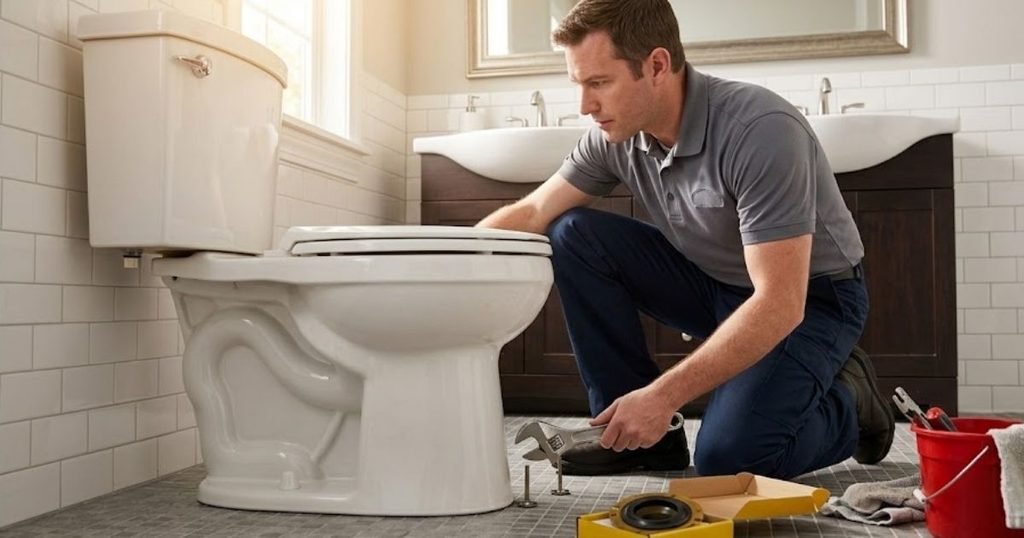
Toilet Wax Ring Replacement Cost Snapshot
For homeowners looking for an immediate financial breakdown, the cost to replace a toilet wax ring depends heavily on whether you choose a simple DIY repair or hire a licensed professional plumber.
| Repair Service / Component | Typical U.S. Cost Range (2026) | Primary Cost Factors |
| Wax Ring Material Only | $5 – $15 | Basic wax, wax-free seal, or extra-thick wax kit |
| DIY Materials & Basic Tools | $25 – $60 | Includes seal, closet bolts, caulk, putty knife, and shims |
| Professional Wax Ring Replacement | $120 – $275 | Standard labor charge, removing old wax, resetting toilet |
| Toilet Removal and Reset (Basic) | $150 – $300 | Disconnecting, lifting, cleaning flange, and re-mounting |
| Toilet Flange Repair (Minor) | $125 – $225 | Installing a repair ring or closet bolt extender |
| Toilet Flange Replacement (Complete) | $175 – $350 | Cutting out broken flange and solvent-welding a new fitting |
| Emergency Plumber Service Call | $250 – $500+ | After-hours, weekend, or holiday dispatch fees |
Note: The figures listed above represent estimated national averages based on aggregated industry cost data from sources like Angi and HomeAdvisor. These figures are estimates rather than guaranteed prices. Labor costs account for roughly 60% to 75% of the total bill for standard residential toilet repairs.
READ MORE: What to Do When a Toilet Overflows: Step-by-Step Fixes
What Is a Toilet Wax Ring?
A toilet wax ring also referred to as a toilet wax seal or closet gasket is a thick ring of molded paraffin wax (often blended with petroleum additives and polymers) that rests directly on top of the toilet flange. The toilet flange (closet flange) is the pipe fitting mounted flush with or slightly above your bathroom floor that connects the toilet to your drain pipe.
When a toilet is installed, it is lowered directly onto the wax ring. The weight of the fixture compresses the pliable wax, molding it tightly against both the porcelain outlet (the horn) beneath the toilet bowl and the top rim of the closet flange. This creates a custom, airtight seal.
Primary Functions of a Wax Seal
- Prevents Wastewater Leaks: It funnels liquid and solid waste directly into the drain pipe during every flush without letting liquid escape under the base.
- Blocks Sewer Gases: It acts as a physical barrier against toxic, foul-smelling gases such as hydrogen sulfide and methane rising up from the municipal sewer system or septic tank.
- Compensates for Imperfections: Because wax is malleable, it adapts to minor irregularities in the surface of both the porcelain bowl and the mounting flange.
Because the wax ring is compressed between the fixture and the floor, a traditional wax ring cannot be reused once a toilet has been lifted or shifted. If you pull a toilet up to clear a drain clog or replace flooring, you must install a fresh seal.
Common Types of Toilet Seals
- Standard Wax Rings: The traditional choice made entirely of molded wax. Best suited for flat, level floors where the closet flange sits roughly $1/4$ inch above the finished floor level.
- Wax Rings with Polyethylene Horns: Feature a built-in plastic funnel (horn) that extends down into the drain pipe. The horn helps guide waste downward and offers extra protection against leaks.
- Extra-Thick (Reinforced) Wax Rings: Contain up to 40% more wax than standard models. These are designed for situations where new tile or vinyl flooring has been installed over an old subfloor, leaving the flange sitting flush with or slightly below the floor line.
- Wax-Free Toilet Seals: Synthetic rubber or foam gaskets designed to seal without sticky wax. Rubber seals adjust well to floor vibrations, can often be repositioned during installation, and do not melt if exposed to high ambient temperatures.
- Wax Ring and Bolt Kits: All-in-one packages that include the wax ring, new brass closet bolts, plastic washers, retainer nuts, and bolt caps.
READ MORE: Toilet Replacement Cost in USA: Prices, Labor & More
How Much Does It Cost to Replace a Toilet Wax Ring?
When analyzing the overall cost to replace a toilet wax ring, it helps to distinguish between material expenses and professional service charges.
The physical wax ring is one of the least expensive replacement parts in your entire home, usually costing between $5 and $15 at home improvement stores like Home Depot or Lowe’s. However, the true expense of professional repair lies in the specialized labor required to remove, clean, and reset the fixture safely.
Labor Breakdown
A professional plumber typically charges anywhere from $75 to $150 per hour, with minimum service charges ranging between $100 and $200 just for entering the home and evaluating the problem.
Replacing a wax ring is rarely an isolated action; it is a full remove-and-reset operation. A standard professional service call encompasses several step-by-step tasks:
- Diagnostic & Setup: Shutting off the local water supply valve and checking the surrounding floor for structural stability.
- Draining: Siphoning water out of the toilet tank and bowl to minimize spillage.
- Disconnection: Unthreading the flexible water supply line from the fill valve.
- Unmounting: Removing decorative bolt caps and unscrewing corroded closet nuts.
- Fixture Removal: Carefully lifting the 50-to-100-pound porcelain fixture off its mounting bolts and moving it to a safe working surface.
- Scraping & Cleaning: Scraping old, sticky, degraded wax off the closet flange and toilet outlet using a putty knife.
- Flange Inspection: Checking the PVC, ABS, or cast-iron flange for cracks, corrosion, missing slots, or improper height relative to the finished floor.
- Installation & Resetting: Placing a new wax ring, setting the toilet squarely over the floor bolts, pressing down evenly to compress the wax, and securing the hardware.
- Testing: Reconnecting the water line, filling the tank, flushing multiple times, and performing leak checks.
Most standard wax ring replacements take an experienced plumber between 1 to 2 hours to complete. If unexpected issues arise—such as a cracked mounting flange or rotted floor framing—the project duration can easily extend to 3 or 4 hours.
Comprehensive Cost Factors Breakdown
Understanding the individual variables that drive the price up or down helps homeowners evaluate quotes accurately and avoid unexpected charges.
| Cost Factor | Estimated Retail / Service Range | Structural / Operational Impact |
| Standard Wax Seal Ring | $5 – $12 | Basic replacement part with or without plastic horn |
| Wax-Free Synthetic Seal | $10 – $20 | Premium rubber/foam alternative; easier installation |
| New Brass Closet Bolts | $4 – $8 | Essential for secure anchoring; resists future corrosion |
| Toilet Flange Repair Kit | $15 – $35 | Metal spanner ring or flange extender to correct floor height |
| Complete Flange Replacement | $145 – $250 | Involves cutting pipe or removing old cast-iron fittings |
| Toilet Removal & Reset Labor | $120 – $250 | Standard non-emergency professional labor charge |
| Emergency / After-Hours Call | $150 – $300+ | Surcharge added for night, weekend, or holiday service |
| Subfloor / Floor Repair | $300 – $1,200+ | Carpenter/contractor work to replace water-damaged subfloor |
READ MORE: How to Fix Loud Banging in Pipes After Flushing Toilet?
What Affects the Cost of Toilet Wax Ring Replacement?
No two plumbing jobs are identical. While an initial quote might seem straightforward over the phone, several key site conditions can adjust the final cost:
1. Regional Plumbing Labor Rates
Plumbing labor costs directly mirror the local cost of living. Homeowners in major metropolitan areas (such as New York, San Francisco, or Chicago) can expect plumber hourly rates between $120 and $200 per hour. Conversely, homeowners in suburban or rural regions in the Midwest or South may see rates between $65 and $110 per hour.
2. Toilet Type and Design
- Two-Piece Toilets: The most common design in North America. The tank and bowl are separate, making the fixture lighter and easier to maneuver.
- One-Piece Toilets: The tank and bowl are molded together as a single unit. These units can weigh between 80 and 120 pounds, making them heavy and awkward to balance without risk of cracking the porcelain.
- Wall-Hung Toilets: These do not rest on the floor or utilize a standard floor-mounted wax ring. They feature an in-wall carrier system with specialized rubber gaskets, which requires significantly more labor to service.
- Smart Toilets / Bidet Integrated Units: Require electrical disconnection and delicate handling, increasing total labor time.
3. Bathroom Accessibility and Space Constraints
Working in a tiny powder room or half-bath with limited clearance around the bowl requires extra caution and time. If a plumber has difficulty maneuvering around vanity cabinets or clawfoot tubs, labor time increases.
4. Flange Height and Condition
The closet flange must be positioned securely on top of the finished floor for a standard wax ring to form an effective seal. If past home renovations installed tile over existing vinyl without raising the flange, the flange will sit too low. The plumber will need to install an extra-thick wax ring, stack wax rings (though using flange extenders is preferable), or install a permanent flange extension kit, adding $30 to $100 to the service bill.
5. Hidden Subfloor Damage
If a wax ring has been leaking slowly over several months or years, moisture will saturate the underlayment, plywood subfloor, and ceiling joists below. Fixing rotted wooden subflooring is outside the scope of basic plumbing and may require a general contractor or carpenter, adding anywhere from $300 to $1,200+ to total restoration expenses.
6. Corroded or Frozen Mounting Bolts
If water has leaked around the base for an extended period, the steel or brass closet bolts holding the toilet down may be rusted solid. Plumbers often have to cut these bolts off using a mini-hacksaw or oscillating multi-tool, adding time and hardware replacement costs.
Toilet Wax Ring vs. Toilet Flange: What’s the Difference?
Homeowners often confuse the toilet wax ring with the toilet flange, but they perform distinct roles within your bathroom’s plumbing system:
- The Toilet Wax Ring is a flexible, consumable gasket made of soft wax or rubber. Its sole job is to fill the micro-gaps between porcelain and plastic to prevent fluid and gas migration.
- The Toilet Flange is a rigid structural fitting made of PVC, ABS, plastic, brass, or cast iron. It is glued or mechanically fastened to the main sewage drain pipe and screwed directly into the subfloor. It holds the toilet securely in place using two opposing T-bolts.
Signs of a Damaged Closet Flange
Replacing the wax ring will not fix a leak if the underlying flange is broken. Common indicators that your flange needs repair or replacement include:
- The slots holding the closet bolts are cracked, snapped, or corroded, allowing the bolts to pull free.
- The plastic body of the flange has split due to house settling or over-tightening.
- The flange sits loose and wobbles because the mounting screws holding it to the subfloor have pulled out of rotted wood.
- The flange is mounted crooked or sits more than $1/4$ inch below the finished floor.
Replacing a damaged flange typically costs between $145 and $250 when handled by a plumber during a wax ring replacement, depending on whether it requires solvent welding or cast-iron mechanical lead joint repairs.
READ MORE: How Much Does a Plumber Charge to Install a Toilet
Signs of a Bad Toilet Wax Ring
Wax rings can deteriorate over time due to age, house settling, floor flex, or thermal expansion. Knowing the warning signs allows you to address the issue before severe water damage develops.
- Water Pooling at the Base: Clear or contaminated water appearing on the bathroom floor around the rim of the toilet, especially right after flushing.
- Persistent Sewer Gas Smell: A stubborn, bad odor in the bathroom that persists even after thorough cleaning. This occurs when the airtight wax seal breaks, letting sewer fumes enter the room.
- Wobbly or Rocking Toilet: If a toilet rocks back and forth when sat on, the movement will break the wax seal. A compressed wax ring lacks the elasticity to bounce back once flattened; any movement creates permanent gaps in the wax.
- Water Stains on the Ceiling Below: If the toilet is located on a second floor or above a finished basement, dark water stains or dripping water on the ceiling directly below the bathroom often indicate a leaking wax seal.
- Spongy, Discolored Flooring: Linoleum, vinyl plank, or tile around the base of the toilet that feels soft, yields underfoot, or exhibits dark staining along grout lines.
Excluding Other Potential Leak Sources
Before assuming the wax ring is bad, rule out higher-level water leaks:
- Condensation (Toilet Sweating): In humid weather, cold water filling the tank causes moisture to condense on the outside of the porcelain and drip down to the floor.
- Leaking Supply Line: Water dripping from the chrome shutoff valve, flexible braided hose, or plastic fill valve shank connection.
- Tank-to-Bowl Gasket Failure: Water leaking from between the upper tank and lower bowl during a flush cycle.
How Much Does It Cost to Replace a Toilet Wax Ring Yourself?
For a handy homeowner comfortable with basic plumbing, replacing a wax ring DIY is one of the most cost-effective home maintenance projects available.
Necessary DIY Tools and Materials
- New wax ring (or wax-free seal) with brass bolts: $5 – $15
- Heavy-duty nitrile or rubber gloves: $3 – $6
- Putty knife or scraper: $5 – $8
- Adjustable wrench or deep socket set: $8 – $15
- Sponge, bucket, and small siphon pump: $5 – $10
- Plastic toilet shims: $3 – $5
- 100% silicone or tub-and-tile caulk: $6 – $10
Total DIY out-of-pocket expenses usually hover between $25 and $60, offering substantial savings compared to hiring a professional.
Important DIY Safety Warnings
Toilets are heavy porcelain fixtures that weigh between 50 and 100+ pounds. They break easily if dropped or over-tightened. According to installation guidance from major retailers like Home Depot, it is strongly advised to have a second person assist you when lifting and maneuvering the porcelain bowl to prevent back strain or accidental breakage.
READ MORE: How to Repair a Toilet that Keeps Running: Step by Step
How to Replace a Toilet Wax Ring: Overview
While a step-by-step DIY guide is useful, understanding the general mechanical sequence helps homeowners oversee professional work or attempt the repair themselves safely.
- Isolate the Water Supply: Turn the local shutoff valve behind the toilet clockwise until fully closed.
- Empty the Fixture: Flush the toilet and hold the handle down to drain the tank. Sponge out remaining standing water from both the tank and bowl.
- Disconnect the Water Line: Unthread the coupling nut connecting the supply line to the bottom of the fill valve using channel locks or an adjustable wrench.
- Remove Base Hardware: Pop off the decorative plastic bolt caps at the base and unscrew the closet nuts using a socket or open-end wrench.
- Lift the Toilet: Straddle the toilet, grip it by the rim of the bowl (never by the tank, as the tank-to-bowl seals may strain), lift straight up to clear the bolts, and place it gently on a padded surface or old towels.
- Clean Old Wax: Use a flexible putty knife to scrape all old, sticky wax clean off both the toilet’s bottom horn and the floor flange. Wipe clean with paper towels.
- Inspect and Repair Flange: Verify that the closet flange is intact, secure, and clean. Replace rusted bolts with fresh solid-brass bolts.
- Set the New Wax Seal: Position the new wax ring firmly onto the bottom outlet horn of the toilet, OR align it centered directly over the closet flange on the floor.
Critical Installation Rule: Moving, twisting, or rocking the toilet after setting it down onto a fresh wax ring can fracture the wax seal. If the toilet is misaligned and needs to be re-lifted, the wax ring must be discarded and replaced with a brand-new one.
- Reset the Fixture: Align the mounting holes in the toilet base over the floor bolts and lower the toilet straight down. Press down evenly with your body weight to compress the wax.
- Secure Hardware: Install washers and nuts onto the closet bolts. Hand-tighten, then snug them gently with a wrench alternating sides. Do not over-tighten, or you will crack the porcelain base.
- Reconnect and Test: Reattach the supply line, open the water valve, allow the tank to fill, and flush several times while watching the base closely with a flashlight for any signs of water.
- Grout/Caulk Base: Apply a neat bead of caulk around the front and sides of the base, leaving a small gap at the back open so any future leaks can drain out onto the floor rather than pooling invisibly under the bowl.
When Should You Call a Plumber?
While replacing a wax ring can be a DIY task, certain conditions call for the expertise, specialized tools, and professional liability coverage of a licensed plumber:
- Broken or Corroded Closet Flange: If the plastic or cast-iron flange is cracked, missing bolt slots, or free-floating, a plumber must repair or replace the fitting.
- Rotted or Soft Subfloor: If the floor underneath feels soft, springy, or shows visible mold, structural repairs are required before reinstalling the toilet.
- Cast-Iron Plumbing Systems: Older homes with cast-iron drain lines require special lead-and-oakum or mechanical transition couplings that are difficult for DIYers to install safely.
- Inability to Sit Level: If the bathroom floor is unlevel and the toilet rocks significantly, a professional can shim and anchor the fixture securely without blowing out the new wax seal.
- Persistent Leaks or Sewer Gas: If you have replaced the wax seal yourself and the base continues to leak water or smell like sewer gas, underlying piping issues or hairline porcelain cracks may be present.
Hidden Costs to Watch Out For
When budgeting for a professional repair, ensure your written estimate accounts for potential hidden fees that can inflate the final price:
- Plumber Service-Call / Diagnostic Fee: Many plumbing contractors charge a flat fee ($50 to $125) to dispatch a technician to your home. This fee is often waived if you authorize the recommended repairs on the spot.
- Emergency or After-Hours Rates: Calling a plumber outside standard business hours (nights, weekends, or holidays) usually adds a 50% to 100% markup on labor.
- Hardware & Miscellaneous Parts Fees: Some contractors bill separately for closet bolts, flange repair plates, flex lines, or toilet shims.
- Haul-Away and Disposal Fees: If the job reveals that your toilet is cracked and needs replacement, plumbers may charge $30 to $75 to haul away and dispose of the old fixture.
Can a Bad Toilet Wax Ring Cause Water Damage?
Yes. A compromised toilet wax seal is a primary cause of hidden bathroom water damage. Because the leak occurs underneath the porcelain base, small amounts of wastewater can escape undetected beneath your floor covering every time the toilet is flushed.
Over time, this moisture can cause extensive damage:
- Subfloor Rot: Subfloor plywood absorbs water, swells, delaminates, and loses its structural integrity, creating a hazardous soft spot around the toilet.
- Structural Framing Damage: Water can seep down into floor joists and wall plates, leading to dry rot and structural compromise.
- Ceiling Damage Below: If the bathroom is located on an upper level, water can ruin drywall ceilings, peel paint, and damage light fixtures in the room below.
- Mold and Mildew Growth: Dark, damp spaces under bathroom flooring create an ideal breeding ground for toxic black mold (Stachybotrys chartarum) and mildew.
Catching and fixing a leaking wax ring early prevents minor maintenance from turning into a major structural restoration project.
How Long Does a Toilet Wax Ring Last?
A properly installed toilet wax ring can last 20 to 30+ years under ideal conditions. Because paraffin wax does not dry out, crumble, or decay on its own, a wax seal can easily outlast the toilet fixture itself.
However, several real-world factors can drastically shorten a wax seal’s lifespan:
Factors Influencing Wax Ring Lifespan
- Stable floor + tight bolts: Lasts 20 – 30+ years under proper installation and stable conditions.
- Rocking toilet or floor flex: Reduces lifespan to 1 – 5 years as movement breaks the airtight wax seal.
- Radiant floor heat / high temperatures: Poses a melt risk, leading to premature seal degradation or failure.
- Snagging drain augers/snakes: Causes immediate damage if severe plunging or drain clearing tears the wax.
How to Save Money on Toilet Wax Ring Replacement
Homeowners can keep their plumbing costs manageable without sacrificing quality by following a few practical strategies:
- Get Multiple Itemized Estimates: Contact at least two or three licensed local plumbers to compare pricing structures (flat-rate vs. hourly) for a standard toilet remove-and-reset service.
- Avoid Emergency Dispatch Calls: If your toilet is leaking slightly at the base, shut off its local water valve and use a secondary bathroom if available. Scheduling a standard service call during regular business hours avoids weekend or late-night surcharges.
- Clear the Work Area in Advance: Move bath mats, trash cans, and cleaning supplies out of the bathroom before the plumber arrives. Ensuring clear access saves billable labor time.
- Bundle Plumbing Repairs: If you have other minor plumbing issues in your home—such as a dripping faucet, a slow sink drain, or a noisy flapper—have the plumber address them during the same service call to avoid paying multiple travel fees.
- Investigate Synthetic Wax-Free Seals: If your floor flexes slightly or you have radiant floor heating, consider asking your plumber to install a high-quality rubber or foam seal instead of standard wax to avoid future repeat failures.
Frequently Asked Questions (FAQs)
How much does it cost to replace a toilet wax ring?
On average, hiring a licensed plumber to replace a toilet wax ring in the U.S. costs between $50 and $200 for a simple repair, with standard remove-and-reset jobs averaging around $120 to $275. DIY material costs range from $5 to $20. Prices vary based on local labor rates and whether additional repairs such as flange replacement or subfloor restoration are required.
How do I know if my toilet wax ring is leaking?
Key indicators of a failing toilet wax ring include water pooling around the outer base of the toilet after flushing, a persistent sewer gas odor in the bathroom, a wobbly or rocking toilet bowl, spongy or water-damaged flooring near the fixture, or dark water stains on the ceiling directly beneath the bathroom.
Can I replace a toilet wax ring myself?
Yes, replacing a toilet wax ring can be a manageable DIY task for homeowners comfortable with basic tools and lifting heavy objects. The materials cost under $30. However, because toilets weigh 50 to 100+ pounds and improper positioning can damage the new seal or crack the porcelain base, many homeowners prefer hiring a professional plumber.
How long does it take to replace a toilet wax ring?
A professional plumber can typically complete a standard toilet wax ring replacement in 1 to 2 hours. If the project requires repairing a broken closet flange, replacing rotted subflooring, or modifying drain piping, the repair time can extend to 3 to 5 hours or more.
Does a plumber need to replace the toilet flange when replacing the wax ring?
Not always. The closet flange only needs replacement if it is cracked, broken, corroded, loose, or sitting at an incorrect height relative to your finished floor. Plumbers inspect the flange once the toilet is lifted; if the flange is undamaged, they simply scrape off the old wax and install the new seal.
Summary & Final Advice
Replacing a toilet wax ring is a fundamental plumbing repair that protects your bathroom from costly structural water damage and health hazards caused by sewer gas leaks. While the physical wax ring is an inexpensive component costing under $15, professional replacement usually ranges from $120 to $275 because it requires draining, lifting, cleaning, inspecting, and re-securing the heavy porcelain fixture.
If you notice water around your toilet base or a persistent sewer odor, do not ignore the issue. Addressing a bad wax seal early prevents minor plumbing maintenance from turning into a major subfloor and ceiling restoration project.

