The toilet flange also commonly known as a closet flange is the essential pipe fitting that secures your toilet to the bathroom floor and connects the toilet’s horn to the underlying drain system. Because it sits entirely hidden beneath the porcelain base, most homeowners never think about the flange until something goes wrong.
When a flange cracks, corrodes, or breaks, the watertight seal created by the toilet wax ring fails. Left unaddressed, a bad flange can turn a simple plumbing issue into an expensive nightmare involving rotted subfloors, ruined ceiling drywall below, and structural wood decay.
In this comprehensive guide, we will break down professional labor charges, material costs by flange type, hidden expenses that catch homeowners off guard, DIY instructions versus professional plumbing help, and how to know when a simple repair ring will suffice. Lets deep dive into “Cost to Replace Toilet Flange: Price & DIY Guide”
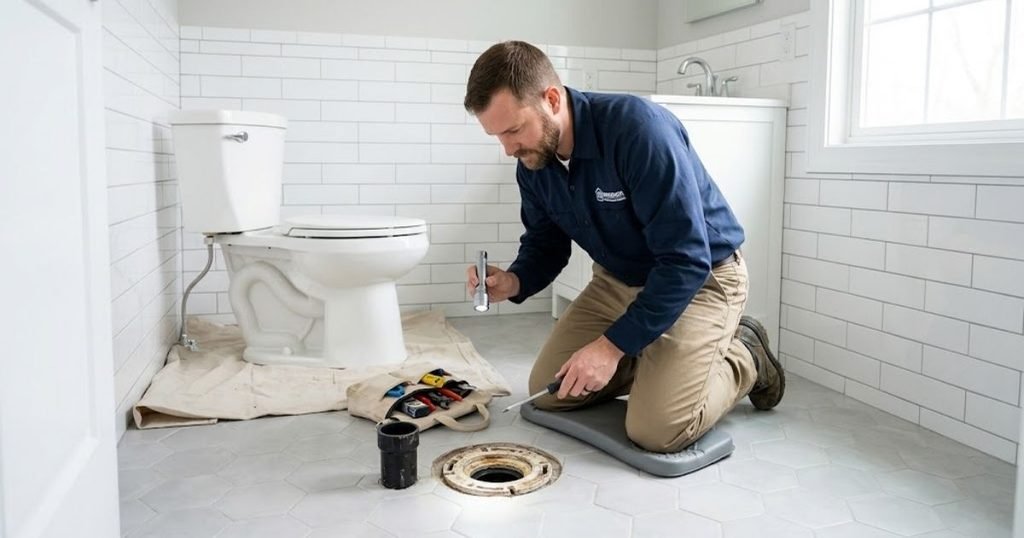
How Much Does It Cost to Replace a Toilet Flange?
When estimating the cost to replace a toilet flange, it helps to understand that the replacement hardware itself is remarkably inexpensive. The vast majority of what you pay a professional plumber covers their technical expertise, licensing, overhead, physical labor, and the liability involved in lifting heavy porcelain fixtures without breaking them or damaging your home’s drainage network.
For a standard, modern home with a accessible PVC or ABS drainage pipe, a licensed plumber can usually complete a flange replacement in 1 to 2 hours. However, plumbing services usually carry a minimum service-call fee or a flat-rate charge for standard diagnostic and repair work.
Here is a breakdown of average nationwide costs for replacing a toilet flange in 2026:
| Cost Factor | Low Estimate | Average Cost | High Estimate |
| Replacement Toilet Flange | $7 | $15 – $25 | $50+ (Cast Iron/Brass) |
| New Wax Ring & Closet Bolts | $5 | $10 – $15 | $25 (Waxless Seals) |
| Plumber Labor & Service Fee | $90 | $120 – $180 | $350+ |
| Typical Professional Total | $100 | $145 – $220 | $425 |
| Complex Repairs (Subfloor/Cast Iron) | $300 | $500 – $800 | $1,500+ |
Note: The prices above reflect national averages. Actual costs will vary based on regional labor rates, emergency scheduling, and unexpected subfloor repairs.
READ MORE: Cost to Replace Toilet Wax Ring
Toilet Flange Replacement Cost Breakdown
To better understand your final invoice, let’s take a closer look at where every dollar goes during a closet flange replacement cost estimate.
Cost of the Toilet Flange
The flange component itself is relatively cheap, but its price depends heavily on the material required for your specific plumbing setup.
- PVC and ABS Plastic Flanges: $7 to $20
- Stainless Steel Ring Flanges: $15 to $30
- Brass and Copper Flanges: $30 to $60
- Cast-Iron Deep-Seal/Compression Flanges: $35 to $70
Modern homes built within the last few decades almost exclusively use PVC (white) or ABS (black) plastic piping, which keeps material costs low. Older homes with heavy cast-iron stack pipes require specialized mechanical or cast-iron flange hardware, which increases component costs.
Labor Cost
Labor makes up 70% to 90% of a standard plumber toilet flange replacement cost. In the United States, professional plumbers charge anywhere from $45 to $200 per hour, with the national average hovering around $85 to $150 per hour.
Many plumbing contractors use flat-rate pricing rather than hourly billing for standard tasks. A flat rate for resetting a toilet and replacing a flange typically ranges from $150 to $300. This rate accounts for:
- Turning off the water supply and draining the tank and bowl.
- Disconnecting the flexible supply line and unbolting the toilet.
- Lifting and setting aside the heavy porcelain toilet.
- Scraping away the old, messy wax seal.
- Removing the damaged flange and preparing the drainpipe.
- Installing, solvent-welding, or securing the new toilet drain flange.
- Installing fresh closet bolts and a brand-new wax ring or rubber seal.
- Resetting the toilet, securing it down, reconnecting the water, and testing for leaks.
Wax Ring and Closet Bolts
When a toilet is lifted off its base, the existing wax ring compresses and tears, permanently losing its airtight and watertight seal. An old wax ring can never be reused.
Fortunately, replacing the wax ring and closet bolts adds very little to the overall bill. A standard toilet wax ring with a plastic sleeve costs between $5 and $12, while a set of brass closet bolts costs $3 to $8. Plumbers almost always include new closet bolts and a new wax ring as standard items in their toilet flange replacement quotes.
READ MORE: What to Do When a Toilet Overflows: Step-by-Step Fixes
What Factors Affect Toilet Flange Replacement Cost?
No two plumbing jobs are completely identical. While a neighbor might pay $140 for a quick 45-minute repair, your final bill could look different depending on several critical variables.
Type of Flange and Pipe Material
Matching the replacement flange to your existing plumbing system dictates both material expense and labor time. Solvent-welding a new PVC flange onto a clean plastic drain pipe is straightforward. In contrast, removing a rusted 70-year-old cast-iron flange secured with lead and oakum requires specialized cutting tools, safety precautions, and mechanical compression fittings.
Access to the Plumbing
Is your bathroom located on a ground-floor slab, or does it sit over an accessible basement or crawlspace?
When a plumber can access the underside of the floor joists via an open basement ceiling, cutting out old pipe sections and fitting a new toilet flange is considerably faster. However, if the toilet sits directly on a concrete slab, the plumber must work entirely from above—which might require breaking concrete or installing an internal expansion flange, driving up labor complexity.
Damaged Subfloor
A leaking toilet flange often allows small amounts of water to seep into the floor every time the toilet is flushed. Because this water is trapped beneath porcelain and flooring materials, homeowners rarely notice the leak until the subfloor degrades.
If the subfloor is soft, rotted, or crumbling, a plumber cannot simply screw a new flange down. The rotted wood must be cut out, structurally reinforced, and patched before the flange can be securely mounted.
Corroded or Broken Closet Bolt Slots
Sometimes the main body of the plastic flange is fine, but the thin slots holding the metal closet bolts have snapped off. When the bolts lose their anchor point, the toilet wobbles, breaking the wax seal. Depending on whether the main drain connection is intact, a plumber might choose a quick repair bracket ($15–$30) or opt for a complete flange tear-out ($150–$250).
Geographic Location
Plumbing rates mirror the local cost of living. Urban centers like New York City, San Francisco, or Chicago carry higher hourly labor rates ($120–$200+/hr) compared to rural areas across the Midwest or Southern states ($60–$100/hr).
Signs You Need to Replace a Toilet Flange
Because the flange is hidden underneath the toilet, you cannot inspect it visually without removing the fixture. However, your toilet will exhibit clear warning signs when the flange is failing.
- The Toilet Rocks or Moves: If the toilet wobbles when you sit down, either the closet bolts have pulled through a broken flange slot, or the subfloor beneath the flange has rotted away.
- Water Leaking Around the Base: Water pooling around the bathroom floor tile after a flush often indicates that a broken flange has compromised the wax seal.
- Sewer Odors in the Bathroom: A properly sealed toilet keeps dangerous, foul-smelling sewer gases out of your home. If you notice a persistent sewer gas smell, the wax seal and flange alignment have likely failed.
- Repeated Wax-Ring Failures: If you replaced your toilet wax ring recently and it started leaking again a few weeks later, a cracked or misaligned flange is likely flexing beneath the toilet and destroying the seal.
- Spongy or Discolored Flooring: Soft spots in vinyl flooring, discolored grout lines near the base, or warped wood flooring signal long-term water seepage from a bad flange.
READ MORE: Toilet Replacement Cost in USA: Prices, Labor & More
Can You Repair a Toilet Flange Instead of Replacing It?
Not every damaged flange requires a complete tear-out. Plumbers utilize several repair accessories that can save homeowners hundreds of dollars when total replacement isn’t strictly necessary.
Flange Repair Rings and Split Plates
If the PVC or cast-iron flange body is structurally sound, but the outer metal ring or bolt slots have rusted or snapped off, you can install a toilet flange repair ring or split metal repair plate. These heavy-duty stainless steel or brass plates slide under or over the existing flange rim and screw directly into the subfloor, providing brand-new, durable slots for your closet bolts.
- Cost for repair ring parts: $10 to $25
- Professional installation cost: $100 to $175
Flange Extension Rings
If you recently installed new hardwood, laminate, or tile directly over your old bathroom floor, your old toilet flange might now sit too low—sunken below the height of the new finished floor.
A flange that sits below floor level cannot make a proper seal with a standard wax ring. Instead of ripping out the old plumbing, a plumber can stack toilet flange extenders (plastic spacers) on top of the original flange, secured with silicone sealant and longer closet bolts, to bring the flange height up to the correct level.
- Cost for extender kit: $8 to $20
- Professional installation cost: $100 to $150
Toilet Flange Height and Why It Matters
Getting the flange height right relative to your finished bathroom floor is critical for preventing leaks.
According to guidelines from the International Plumbing Code (IPC) and leading manufacturer instructions, the ideal position for a toilet flange is resting on top of the finished floor, not flush with it and certainly not recessed below it.
- Flange Sits Above Floor (Ideal): The bottom rim of the flange rests flat on top of the tile or vinyl, elevating the sealing lip about 1/4 inch above the finished floor. This allows the toilet horn to compress the wax ring perfectly.
- Flange Flush with Floor: Acceptable, but usually requires a thick wax ring or an extra wax ring with a rubber sleeve to ensure a tight, lasting seal.
- Flange Below Floor Level: Unacceptable. A recessed flange leaves an excessive gap that standard wax rings cannot fill, leading to guaranteed leaks over time. Extender rings must be used.
- Flange Too High: If the flange sits more than 1/2 inch above the finished floor, the toilet will sit on the flange rather than the floor, creating a severe wobble that will snap the porcelain base or break closet bolts.
Cost to Replace a Toilet Flange by Flange Material
The choice of material heavily dictates the cost of parts and the labor complexity needed for installation.
| Flange Material | Typical Material Cost | Key Advantages | Potential Drawbacks |
| PVC Plastic | $7 – $15 | Highly affordable, completely rustproof, smooth solvent weld. | Can crack if closet bolts are overtightened. |
| ABS Plastic | $8 – $18 | Lightweight, durable, impact-resistant in cold temperatures. | Requires specific ABS solvent cement; restricted by local codes in some areas. |
| Stainless Steel Ring (Hybrid) | $15 – $30 | Plastic hub with an ultra-strong stainless metal ring that won’t snap under bolt tension. | Slightly more expensive than all-plastic flanges. |
| Solid Brass | $30 – $60 | Exceptional strength, indefinite lifespan, corrosion resistance. | Higher upfront cost; less common in modern residential builds. |
| Cast Iron | $35 – $70 | Heavy-duty durability; direct compatibility with legacy cast-iron systems. | Difficult and time-consuming to install; susceptible to rust over decades. |
READ MORE: How to Fix Loud Banging in Pipes After Flushing Toilet?
DIY Toilet Flange Replacement vs. Hiring a Plumber
Replacing a toilet flange is a very common target for skilled DIY homeowners, but it does carry significant risks if done incorrectly.
| Factor | DIY Replacement | Professional Plumber |
| Upfront Cost | $20 – $50 (Parts & Wax Seal) | $145 – $300+ (Parts & Labor) |
| Tools Required | Hacksaw, Drill, Screwdriver, Putty Knife, Wrench | Fully equipped with specialty cutters, expanders, & seals |
| Skill Level | Intermediate | Professional |
| Physical Effort | High (Lifting 60–120 lb porcelain toilet) | Low (Handled entirely by the plumber) |
| Risk of Damage | High (Cracking porcelain, improper drain seal, floor leaks) | Very Low (Insured against accidental property damage) |
| Time Required | 3 to 6 Hours | 1 to 2 Hours |
| Work Guarantee | None | Typically 30 days to 1 year labor warranty |
The General DIY Sequence
If you have home repair experience, basic hand tools, and a healthy back, here is how a standard PVC toilet flange replacement DIY project works:
1.Shut Off Water and Empty the Toilet:Crucial step to prevent bathroom flooding. Turn off the shut-off valve behind the toilet. Flush the toilet and hold the handle down to drain the tank. Sponge out remaining water from both the tank and the bowl.
2.Remove the Toilet:Handle heavy porcelain with extreme care. Disconnect the water supply tube. Remove the bolt covers and unbolt the closet nuts at the base. Carefully lift the toilet off its mount and place it onto old towels or cardboard to avoid scratching your floor.
3.Clean and Inspect the Area:Block sewer gas immediately. Stuff a large rag or sponge into the open drainpipe to prevent sewer gases from entering your home and to catch dropped tools. Use a putty knife to scrape away the old wax ring.
4.Remove the Damaged Flange: Method depends on pipe material. For a broken plastic flange glued inside a pipe, use an internal pipe cutter tool or carefully slice and chisel out the old flange hub without puncturing the main drain line.
5.Install the New Flange:Verify height before securing. Apply the appropriate PVC/ABS primer and cement, then slide the new flange over or inside the drainpipe until its lip rests flat on top of the finished floor. Align the bolt slots properly and secure the flange to the subfloor using stainless steel screws.
6.Reset and Test the Toilet:Always use a brand-new seal. Set a brand-new wax ring over the flange or toilet horn. Lower the toilet onto the new closet bolts, apply even bodyweight to compress the wax, tighten the nuts evenly (do not overtighten!), reconnect the water line, and test for leaks with several flushes.
When to Stop and Call a Pro: If you pull up your toilet and discover a cracked cast-iron stack, an ovalized drainpipe, or subfloor joists rotting beneath the flange, stop immediately. Attempting to force a quick DIY fix onto a structurally damaged drain system often leads to major flooding inside your walls.
READ MORE: How Much Does a Plumber Charge to Install a Toilet
Hidden Costs That Can Increase the Final Price
When budgeting for a toilet flange replacement, keep in mind that uncovering a hidden plumbing problem can quickly expand the scope of work.
- Subfloor and Flooring Repair: If long-term water leaks have rotted the plywood subfloor, expect to pay $300 to $800 extra for subfloor replacement or structural framing reinforcement.
- Drain Line Unclogging: If a failing flange allowed debris, paper, or excess wax to drop down and block the drain line, a plumber may need to snake the line for an additional $150 to $250.
- Replacing the Toilet: If your old toilet is cracked, outdated, or inefficient, installing a brand-new fixture while the plumbing is exposed is cost-effective. A new toilet costs $120 to $300, with labor adding roughly $100 to $200.
- Emergency Service Fees: If your toilet leaks violently on a weekend, holiday, or late at night, emergency plumbing calls carry dispatch premiums ranging from $100 to $300 above standard labor rates.
Cost to Replace Toilet Flange and Wax Ring
Homeowners often ask specifically about the combined cost to replace toilet flange and wax ring.
It is important to remember that replacing a toilet flange always requires replacing the wax ring. Because removing the toilet breaks the sticky air seal created by compressed wax, a plumber will never reinstall a toilet over a new flange using the old wax ring.
When you receive a professional estimate for replacing a closet flange, the price almost universally covers:
- The new flange component
- A new wax ring (or waxless rubber seal)
- New brass closet bolts and washers
- All labor to unmount, lift, repair, reset, and re-test the toilet
Therefore, the combined national average remains $145 to $165 for straightforward replacements, up to $300+ for more difficult jobs.
How to Save Money on Toilet Flange Replacement
- Get 2 to 3 Written Quotes: Ask local licensed plumbers for itemized estimates that explicitly detail whether toilet removal, new wax rings, closet bolts, and disposal fees are included in the upfront price.
- Fix Leaks Immediately: The moment you notice a rocking toilet or water around the base, address it. A $150 flange repair today prevents a $1,500 subfloor restoration project six months from now.
- Schedule During Normal Hours: Avoid weekend or late-night service calls whenever possible to skip heavy emergency dispatch surcharges.
- Bundle Plumbing Repairs: If you have other small jobs like a dripping faucet or a running toilet valve in another bathroom combine them into a single service visit to maximize the value of the plumber’s service fee.
How to Choose a Plumber for Toilet Flange Replacement
When hiring a contractor to repair or replace your closet flange, ask these essential qualifying questions:
- Are you licensed, bonded, and insured in this state? (Protects you if a plumber accidentally damages your flooring or plumbing lines).
- Does your estimate include pulling and resetting the toilet? (Ensures no hidden charges appear on your final invoice).
- What happens if you discover subfloor rot underneath the flange? (Clarifies whether they can perform minor wood repairs or if you will need a separate contractor).
- Do you provide a labor warranty on the installation? (Reputable plumbers guarantee their leak-free installation for at least 30 to 90 days).
How Long Does It Take to Replace a Toilet Flange?
Under normal conditions, a professional plumber can pull a toilet, replace a standard PVC/ABS flange, replace the wax seal, and reinstall the toilet in 1 to 2 hours.
However, the timeline expands depending on job complexity:
- Standard PVC/ABS Replacement: 1 to 2 hours
- Cast-Iron Flange Repair: 2 to 3 hours
- Minor Subfloor Repair / Patching: 3 to 5 hours
- Major Subfloor Structural Framing Repair: 1 to 2 days (often requiring a carpentry contractor)
When Should You Replace the Toilet Instead?
While you have the toilet disconnected to fix the flange, ask yourself if it makes sense to replace the porcelain fixture entirely. Consider buying a new toilet if:
- The Porcelain is Cracked: Cracks in the tank or bowl pose severe flooding risks and cannot be reliably repaired.
- The Toilet Flushes Poorly: Older toilets (pre-1994) consume up to 3.5 to 5 gallons per flush while offering poor flushing power compared to modern high-efficiency models (1.28 gallons per flush).
- The Toilet is Stained or Outdated: Replacing an old, discolored, round-front toilet with a modern, comfortable, elongated-bowl model adds immediate comfort and aesthetic value to your bathroom.
Since the labor to remove and reset the toilet is already being paid for during the flange repair, adding a new $150–$250 toilet fixture to the project is very cost-effective.
Frequently Asked Questions
How much does it cost to replace a toilet flange?
The average professional cost to replace a toilet flange ranges from $145 to $165, with most straightforward jobs landing between $100 and $300. If the work involves cast-iron piping, direct concrete slab work, or extensive subfloor rot repair, total costs can rise to $500 to $800+.
How much does a plumber charge to replace a toilet flange?
A licensed plumber typically charges a flat rate between $150 and $300 to replace a toilet flange. This fee covers removing the toilet, scraping off the old wax seal, replacing the flange, installing new bolts and a fresh wax ring, and resetting the toilet. If billed hourly, labor runs $85 to $150 per hour, usually taking 1 to 2 hours.
Can I replace a toilet flange myself?
Yes, a homeowner with intermediate DIY skills can replace a standard PVC or ABS toilet flange for around $20 to $50 in materials. However, the job requires lifting a heavy porcelain toilet, handling sewage pipes safely, and ensuring a 100% watertight seal. If your home has cast-iron pipes or a rotted subfloor, hiring a professional plumber is strongly recommended.
Does a toilet flange need to be replaced when replacing a wax ring?
No, you do not need to replace the flange every time you replace a wax ring. If the existing flange is securely anchored, level, and free of cracks or broken bolt slots, you only need to clean off the old wax and install a new ring. However, if the flange is damaged or sitting below floor level, it should be repaired or replaced while the toilet is off.
What are the signs of a bad or broken toilet flange?
Common signs include a toilet that rocks or wobbles when sat upon, water pooling around the toilet base after flushing, persistent sewer gas odors in the bathroom, spongy or water-damaged flooring near the toilet, and recurring wax-ring failures despite recent repairs.
Final Thoughts
A broken toilet flange might seem like a minor nuisance, but ignoring it can quickly cause severe water damage, rotted subflooring, and health risks from sewer gas leaks.
While the average professional toilet flange replacement cost of $145 to $165 is relatively affordable, taking swift action at the first sign of a rocking toilet or base leak is what prevents a minor plumbing bill from ballooning into a multi-thousand-dollar bathroom renovation.
If you aren’t comfortable lifting heavy porcelain or working directly with waste drainage lines, reach out to two or three licensed local plumbers to get detailed, itemized estimates for your repair.

