When winter temperatures drop or a specific room in your house refuses to stay warm, finding a reliable supplemental heating solution becomes a top priority. Central heating systems are great for keeping an entire house at a baseline temperature, but running them at high capacity just to warm up a single chilly home office, bedroom, or basement can drive up monthly utility bills.
This is where modern portable electric space heating comes into play, and among the most popular options on the market today is the PTC heater. Lets deep dive into “PTC Heater Guide: How It Works, Benefits & Efficiency”
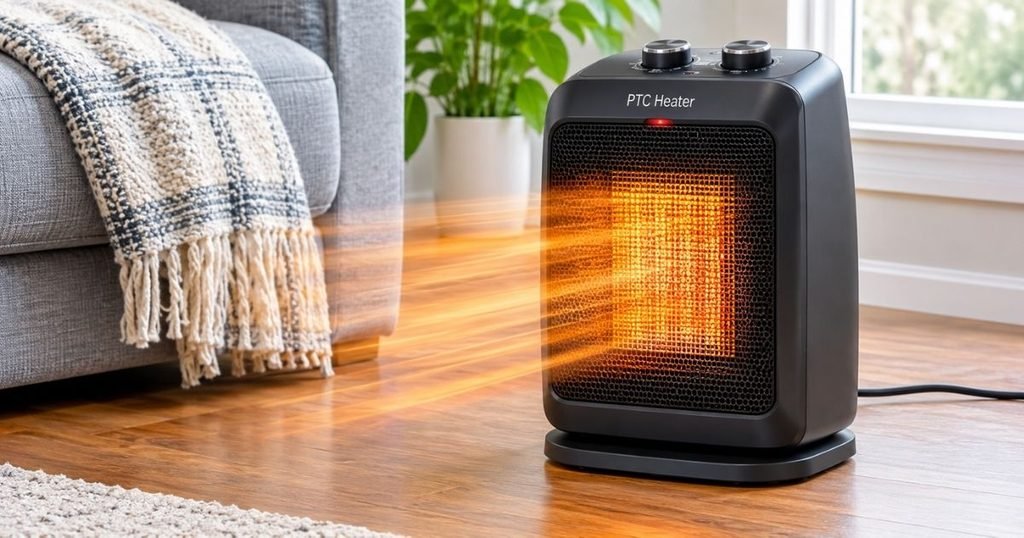
What Is a PTC Heater?
To understand why a PTC heater has become a staple in modern households, it helps to break down the technology behind it. PTC stands for Positive Temperature Coefficient. In simple terms, this refers to a unique physical property found in specialized semiconductor ceramic materials used inside the heating element.
A PTC ceramic heating element is typically composed of barium titanate combined with specialized additives, fired at high temperatures to create a matrix of tiny stone-like stones or disks. Unlike traditional metallic heating wires—which become hotter as more electrical current passes through them without any built-in resistance ceiling PTC materials behave in the exact opposite way.
As a PTC heating element reaches a certain designed threshold temperature, its internal electrical resistance spikes dramatically. This spike restricts the flow of electrical current through the stone, effectively slowing down heat generation. When the element cools down, its resistance drops again, allowing more current to flow and restoring heat output. This self-regulating behavior is the defining characteristic of any true self-regulating heater.
Real-Life Analogy
Think of a PTC heating element like a crowd-control gate at a popular venue. When the room is empty (cold), the gate opens wide, letting everyone rush in quickly (rapid heat generation). As the room fills up and reaches maximum comfortable capacity (target temperature), sensors and material resistance act like ushers slowing down entry, ensuring the space never becomes dangerously overcrowded or overheated.
READ MORE: Heat Storm Heater Review & Comparison: Cost, Pros & Cons
How Does a PTC Heater Work?
The operation of a PTC heater is an elegant marriage of physics, materials science, and clever engineering. While the physics happen at a microscopic level inside the ceramic stones, the overall appliance workflow is straightforward:
- Electricity enters the heating element: When you plug the heater into a standard 120V household outlet and switch it on, electric current flows directly into the PTC ceramic stones.
- The ceramic element begins generating heat: Electrical energy encounters resistance within the ceramic material, rapidly converting electrical energy into thermal energy.
- Electrical resistance increases: As the temperature of the ceramic stone rises toward its Curie point (the critical temperature where material properties shift), its internal resistance increases sharply.
- Current flow and heat generation become limited: Because resistance increases, the amount of electrical current passing through the element levels off.
- Thermal equilibrium is reached: The element reaches a stable operating temperature plateau. It will not continue heating indefinitely on its own.
- Dynamic adjustment: If a cool breeze hits the element such as when a fan blows across it or room air circulates the stone cools slightly, its resistance drops, and it draws slightly more current to maintain steady warmth.
Core Component Breakdown
- PTC Ceramic Elements: The heart of the appliance, responsible for safe, self-limiting heat generation.
- Aluminum Fins: Glued or bonded tightly to the ceramic stones. Aluminum is an exceptional thermal conductor, rapidly pulling heat away from the ceramic core and transferring it into the surrounding air.
- Honeycomb Heating Structures: Many modern units arrange the ceramic and aluminum assembly into a matrix that maximizes surface area, allowing air to pass through freely while absorbing maximum warmth.
- Internal Fans: Electric axial or centrifugal fans force room air through the honeycomb matrix, quickly circulating warm air into the living space.
- Thermostats and Electronic Controls: User-adjustable dials or digital thermostats that monitor ambient room temperature and cycle the heater or fan on and off to maintain desired comfort levels.
It is important to remember that while the ceramic element is self-regulating, it does not eliminate the need for independent safety controls. High-quality appliances still require mechanical thermal cutoffs, fuses, and tip-over switches to guarantee complete household safety.
Different Types of PTC Heaters
Manufacturers package PTC technology into several distinct designs to suit various room layouts, aesthetic preferences, and heating needs.
PTC Ceramic Fan Heaters
These are the most common portable models found in American homes. They combine a PTC heating matrix with a motorized fan that actively blows air across the elements, dispersing heat rapidly across bedrooms, living rooms, and offices.
PTC Aluminum Fin Heaters
Often utilized in baseboard installations or specialized convective heaters, these models rely less on forced air and more on natural convection. Warm air rises naturally through vertical aluminum fins, creating silent, steady background heat.
PTC Honeycomb Heaters
Featuring a dense, mesh-like ceramic structure, these units maximize heat exchange efficiency. They are prized for their ability to deliver instant warmth right as the appliance is powered on.
Portable PTC Space Heaters
Compact, lightweight, and equipped with integrated carrying handles, these are designed for temporary room heating. They can easily be moved from a chilly home office during the day to a basement workshop or bedroom at night.
Comparison of PTC Heater Designs
| Design Type | Primary Heating Method | Typical Applications | Important Considerations |
| Ceramic Fan Heater | Forced Convection (Fan + Element) | Bedrooms, Home Offices, Living Rooms | Fan creates minor operating noise; fast directional warmth. |
| Aluminum Fin Heater | Natural Convection | Quiet Bedrooms, Hallways, Nurseries | Slower initial heat distribution; completely silent operation. |
| Honeycomb Heater | Forced / Convective Hybrid | Garages, Workshops, Small Studios | High surface area heat output; verify environmental ratings. |
| Portable Space Heater | Versatile (Fan-Assisted) | General Supplemental Room Heating | Requires careful placement; keep away from water and wet areas. |
READ MORE: Best DREO Smart Wall Heater: Review, Cost & Comparison
Benefits of PTC Heaters
There are several compelling reasons why homeowners favor PTC ceramic heating technology over older resistive wire models.
- Self-Regulating Heating Behavior: Because the ceramic stone increases its electrical resistance as it heats up, the unit naturally resists overheating at the material level, providing an inherent layer of thermal stability.
- Relatively Quick Heat Generation: Thanks to the high thermal conductivity of aluminum fins paired with ceramic stones, these units start pumping out noticeable warmth within seconds of powering on.
- Compact Design: PTC heating matrices are remarkably space-efficient, allowing manufacturers to build sleek, lightweight portable heaters that do not take up excessive floor space.
- No Combustion: Unlike kerosene or propane space heaters, electric units produce no carbon monoxide or indoor air combustion byproducts during normal operation.
- Consistent Heating Characteristics: Under stable operating conditions, the self-limiting nature prevents wild temperature spikes inside the appliance casing.
- Reduced Overheating Risk at the Element Level: The material’s physical property makes runaway thermal escalation extremely difficult under normal operating parameters.
- Ideal for Supplemental Heating: Perfect for taking the chill off rooms that lack adequate ductwork or proper insulation.
Disadvantages of PTC Heaters
While the technology is advanced, it is essential to maintain realistic expectations. PTC heaters are not magical devices that defy the laws of physics.
- Electricity Consumption Can Be Substantial: Like all electric resistance heaters, converting electricity directly into heat requires significant wattage (typically 1,000W to 1,500W), which can impact your utility bills if run continuously.
- Not Cheaper to Operate Than Other Electric Heaters: Operating cost is dictated by wattage and run time, not the type of heating element. A 1,500W PTC heater costs the exact same to run per hour as a 1,500W traditional coil heater.
- Limited Heating Coverage: Portable space heaters are designed for single rooms or localized zones, not open-concept multi-room layouts.
- Fan Noise: Fan-assisted ceramic models produce audible whirring sounds, which may disturb light sleepers in quiet bedrooms.
- Dry Air Perception: Rapidly circulating warmed air can make ambient humidity feel lower, leading to dry skin or sinuses, though the heater itself does not chemically remove moisture from the room.
- Limited Thermostat Precision: Cheaper models may feature basic mechanical thermostats that click on and off with wide temperature swings rather than holding an exact digital degree.
- Variable Build Quality: The market is flooded with budget options; build quality, plastics, and safety mechanisms vary wildly between reputable brands and generic imports.
READ MORE: Top 6 Electric Tower Heaters for Home
Are PTC Heaters Energy Efficient?
A common point of confusion among consumers is whether PTC heater energy efficiency differs significantly from traditional electric heaters.
In the realm of electric resistance heating, all portable heaters achieve nearly 100% efficiency in terms of energy conversion meaning virtually every watt of electricity drawn from the wall is successfully converted into heat. However, 100% conversion efficiency does not mean low operating costs.
Because electric resistance heating is one of the most expensive ways to heat a home compared to heat pumps or natural gas furnaces, homeowners must be strategic. The self-regulating nature of a self-regulating heater means that as the room warms up and the ceramic stones reach their optimal operating temperature, they may draw slightly less power than their peak wattage rating to maintain equilibrium. While this is a clever thermodynamic feature, it does not magically slash your monthly electricity bill in half.
Actual energy usage depends heavily on:
- The wattage setting selected (e.g., 750W vs. 1,500W).
- How long the appliance runs continuously.
- Room size and ceiling height.
- Home insulation quality and windows.
- Outdoor ambient temperature.
How Much Electricity Does a PTC Heater Use?
To accurately estimate your PTC heater electricity consumption, you can use a simple mathematical formula based on the appliance’s power rating and run time.
ElectricityConsumption(kWh)=HeaterWattage1,000OperatingHours
Full-Power Electricity Consumption Estimates
| Heater Wattage | 1 Hour | 5 Hours | 8 Hours |
| 500W | 0.5 kWh | 2.5 kWh | 4.0 kWh |
| 750W | 0.75 kWh | 3.75 kWh | 6.0 kWh |
| 1,000W | 1.0 kWh | 5.0 kWh | 8.0 kWh |
| 1,500W | 1.5 kWh | 7.5 kWh | 12.0 kWh |
Note: These figures represent maximum theoretical power consumption at full continuous draw. Actual usage is frequently lower because internal thermostats and self-regulating elements cycle power down once the target temperature is approached.
Calculating Operating Costs
To determine what this means for your budget, multiply your total kilowatt-hours (kWh) consumed by your local utility electricity rate.
For example, suppose you run a standard 1,500W high-setting portable heater for 5 hours a day during a cold snap.
- Daily energy use: 1.5kW5hours=7.5kWh.
- Using an illustrative electricity rate of $0.17 per kWh (note: this is a hypothetical example for calculation purposes and does not reflect a guaranteed nationwide average):
- Daily cost: $7.5 \text{ kWh} \times \$0.17 = \$1.275$ per day.
- Monthly cost (running 20 days out of the month): $\$1.275 \times 20 = \$25.50$ added to your utility bill for supplemental heating in one room.
READ MORE: Best Convector Heater Review: Best Models & Comparison
PTC Heater vs. Traditional Electric Heater
When shopping for an electric space heater, consumers often debate whether to buy a modern ceramic model or a traditional wire-coil or oil-filled radiator.
| Feature | PTC Ceramic Heater | Traditional Wire-Coil Heater | Oil-Filled Radiant Heater |
| Heating Element | PTC Ceramic stones + aluminum fins | Exposed or enclosed metal resistance wire | Sealed diathermic oil heated by internal element |
| Temperature Regulation | Self-regulating via material resistance | None (relies entirely on external thermostat) | Retains heat long after power is switched off |
| Heat Distribution | Fast (often fan-forced) | Fast (fan or radiant) | Slow, steady radiant warmth |
| Surface Temperature | Moderate (safer exterior casing) | Can get extremely hot | Very hot exterior fins during operation |
| Energy Consumption | Standard electric resistance (~1,500W max) | Standard electric resistance (~1,500W max) | Standard electric resistance (~1,500W max) |
| Maintenance | Dust filtering / vent cleaning | Dust removal / delicate coils | Zero maintenance |
| Best Used For | Quick personal warmth in specific rooms | Rapid spot heating | Quiet, sustained background heating |
It is a common misconception that PTC heaters are inherently safer or cheaper than every traditional heater on earth. While the ceramic core offers better thermal stability than exposed glowing red wires, all high-wattage electric appliances require rigorous safety practices.
PTC Heater vs. Ceramic Heater: What’s the Difference?
A frequent point of confusion in appliance aisles is sorting out the terminology between a generic ceramic heater and a PTC ceramic heater.
In reality, the two terms heavily overlap. Almost all modern ceramic space heaters sold today utilize PTC ceramic heating elements because of their superior safety and self-regulating properties. However, it helps to remember:
- PTC describes the specific electrical resistance characteristic (Positive Temperature Coefficient).
- Ceramic describes the physical material and element construction.
- Marketing variations: Not every budget product marketed broadly as a “ceramic heater” explicitly highlights its PTC curve in consumer documentation, though the underlying physics are usually present in reputable units. When shopping, look for explicit mentions of PTC technology in the specifications to ensure you are getting self-regulating performance.
Is a PTC Heater Safe for Home Use?
Safety is the #1 concern for American homeowners using portable appliances. According to the U.S. Consumer Product Safety Commission (CPSC), portable space heaters are involved in thousands of residential fires every year, largely due to improper placement or overloaded electrical circuits.
While a self-regulating heater offers excellent internal safeguards, it is not fireproof. To ensure safe indoor operation, follow these golden rules:
- Look for Independent Certifications: Only purchase units that are UL-listed (Underwriters Laboratories) or certified by another recognized Nationally Recognized Testing Laboratory (NRTL) like ETL or CSA.
- Check for Safety Features: Ensure the unit includes automatic tip-over protection (which shuts the heater off if knocked over) and independent overheat protection (thermal cutoffs).
- Plug Directly Into Wall Outlets: Never plug a high-wattage space heater into an extension cord, power strip, or multi-outlet adapter, as these can overheat and start electrical fires.
- Maintain Clearance: Keep combustible materials—such as curtains, bedding, rugs, papers, and furniture—at least 3 feet away from the front, sides, and rear of the heater.
- Keep Away from Water: Never operate a portable electric heater in bathrooms, laundry rooms, or damp areas unless the specific model is explicitly rated for wet or humid environments.
- Never Leave Unattended: Always turn off and unplug your heater when leaving the room or going to sleep.
READ MORE: EdenPURE Heaters Review— Prices & Comparison
How to Choose the Best PTC Heater for Your Home
Selecting the right unit requires balancing your room’s dimensions, your comfort preferences, and essential safety features. Keep this practical buyer checklist in mind:
Homeowner Buying Checklist
- [ ] Wattage & Heating Capacity: Match the wattage to your room size (rule of thumb: roughly 10 watts per square foot for standard insulation).
- [ ] Adjustable Thermostat: Look for digital or precise rotary thermostats rather than simple on/off switches.
- [ ] Multiple Heat Settings: Choose models with low, high, and fan-only modes for versatile year-round use.
- [ ] Noise Level: Check user reviews for fan decibel levels if you plan to use the unit in a quiet bedroom or office.
- [ ] Tip-Over & Overheat Cutoffs: Verify that these critical safety mechanisms are built-in and tested.
- [ ] Safety Certification: Confirm UL, ETL, or CSA listing on the packaging or product manual.
- [ ] Portability: Check weight, handle design, and cord length if you plan to move the unit between rooms frequently.
- [ ] Warranty & Support: Look for reputable brands offering at least a 1-year limited warranty.
Where Can You Use a PTC Heater?
Portable electric heaters are remarkably versatile when deployed correctly. Appropriate residential applications include:
- Bedrooms: Taking the chill off before bedtime (turn off before sleeping).
- Home Offices: Providing direct directional warmth under a desk during long workday hours.
- Small Living Areas: Supplementing central heat in drafty sunrooms or converted living spaces.
- Workshops and Garages: Providing spot heating, provided the unit is ruggedized, dust-resistant, and rated specifically for garage environments.
Where NOT to use them: Avoid using standard portable indoor heaters in bathrooms (due to moisture and slip hazards), outdoors, or in damp crawlspaces unless specifically certified for those harsh environments.
How to Maintain a PTC Heater
Proper maintenance ensures your appliance runs efficiently and safely for years:
- Clean Vents Regularly: Unplug the heater and use a soft brush attachment on your vacuum cleaner to remove dust and pet hair from the intake and exhaust grills.
- Inspect Cords: Periodically check the power cord and plug for fraying, cracking, or discoloration. If the plug feels excessively hot during operation, stop using the unit immediately.
- Keep Airflow Clear: Never block intake or outlet vents with clothing, blankets, or furniture.
- Proper Off-Season Storage: Clean the unit thoroughly, coil the cord securely, and store it in its original box in a cool, dry place during summer months.
- When to Replace: If your heater produces a persistent burning plastic smell, sparks, or trips your circuit breaker repeatedly, retire the appliance and replace it.
Is a PTC Heater Worth Buying?
For homeowners looking for efficient, rapid, and targeted supplemental heat in specific rooms, a PTC heater is well worth the investment. They offer superior internal thermal stability compared to archaic wire-coil models, heat up remarkably fast, and provide compact comfort without the complexities of central HVAC modifications.
However, they are not a replacement for whole-house heating systems, nor will they magically eliminate high winter electricity bills if run carelessly. By understanding their power consumption, adhering strictly to CPSC safety guidelines, and matching the right wattage to your room size, a quality ceramic space heater can keep your home cozy all winter long.
FAQs
What is a PTC heater and how does it work?
A PTC heater is an electric space heater utilizing a Positive Temperature Coefficient ceramic heating element. When electricity flows through the ceramic stones, they generate heat. As the temperature rises, the internal electrical resistance of the ceramic material naturally increases, limiting current flow and stabilizing heat output without overheating.
Are PTC heaters energy efficient?
Like all electric resistance heaters, PTC heaters convert almost 100% of incoming electrical energy into heat. While their self-regulating ceramic elements help stabilize internal temperatures and prevent overheating, they consume the same amount of electricity per watt as traditional heaters and should be used strategically to manage utility costs.
Do PTC heaters use a lot of electricity?
Yes, standard portable models typically draw between 1,000 and 1,500 watts on high settings. Running a 1,500W heater continuously for several hours consumes significant kilowatt-hours (kWh). Using lower wattage settings or relying on built-in thermostats helps moderate overall electricity consumption.
Are PTC ceramic heaters safe to use indoors?
Yes, when used responsibly according to manufacturer instructions. Reputable models feature independent overheat protection, tip-over shutoff switches, and UL or ETL safety certifications. Homeowners must still follow safety rules, such as plugging them directly into wall outlets and maintaining a 3-foot clearance from combustibles.
What is the difference between a PTC heater and a regular ceramic heater?
In practice, most modern ceramic space heaters already use PTC ceramic heating elements. “PTC” describes the self-regulating electrical resistance property of the ceramic stones, while “ceramic” describes the material used in the heating element construction. Always check product specifications to confirm self-regulating features.