Enter the Truma tankless water heater. As the undisputed gold standard for on-demand hot water in the North American recreational vehicle market, the Truma AquaGo water heater line has transformed how campers experience travel. Whether you are living the full-time RV lifestyle or planning weekend getaways with the family, upgrading to a continuous hot water system changes everything from dishwashing to post-hike showers.
In this comprehensive guide, we will break down everything you need to know about the Truma RV tankless water heater, including how it works, the differences between popular models, real-world pricing, installation insights, troubleshooting, and whether it is truly worth the investment for your rig. Lets deep dive into “Truma Tankless Water Heater: Features, Cost & Buying Guide”
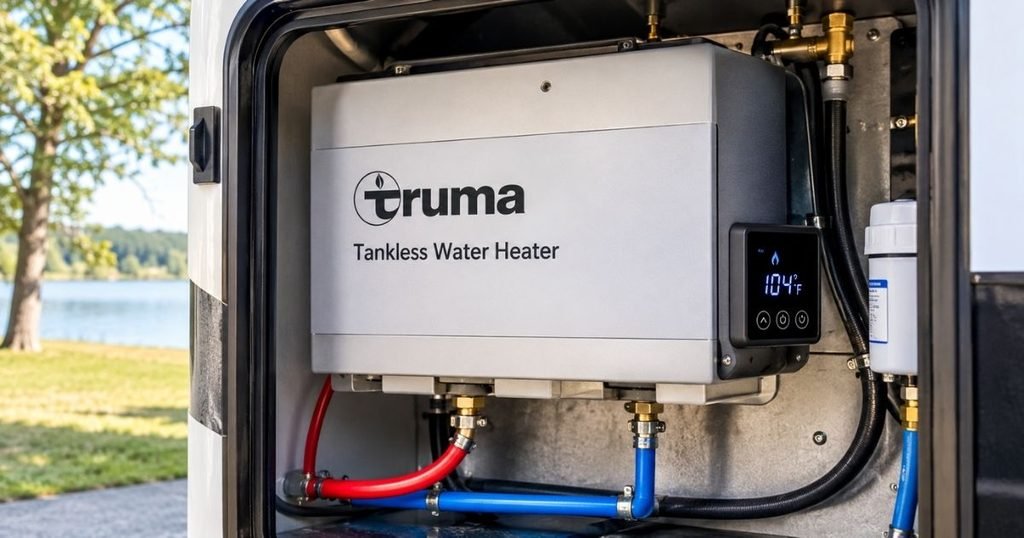
What Is a Truma Tankless Water Heater?
At its core, a Truma tankless water heater is an on-demand liquid propane (LP) gas appliance designed specifically for recreational vehicles. Unlike traditional tank water heaters that continuously store and heat 6 to 10 gallons of water around the clock, a tankless system heats water instantly only when a hot water faucet or shower is opened.
The primary product family behind this technology is the Truma AquaGo, engineered by Truma, a German company with decades of global expertise in RV heating and climate systems. The AquaGo series was purpose-built to tackle the traditional headaches associated with RV water heating, such as temperature spikes, inadequate flow rates, and complex winterization procedures.
It is important to note that the Truma AquaGo is engineered strictly for mobile recreational vehicle applications (such as motorhomes, travel trailers, fifth wheels, and camper vans) rather than permanent residential home installations. It integrates directly into your RV’s 12V electrical system and propane supply, utilizing specialized ventilation grilles flush-mounted to the exterior sidewall of your coach.
READ MORE: AO Smith vs. Rheem Water Heaters: Comparison & Expert Reviews
How Does the Truma AquaGo Water Heater Work?
Understanding how an on-demand system operates helps demystify why it feels so different from a conventional tank. When you turn on a hot water tap in your RV, the process unfolds in milliseconds through a sophisticated blend of mechanical engineering and computerized microprocessors.
- Volume Flow Detection: A sensitive water flow sensor inside the unit detects when a hot water faucet or shower is opened, activating once the flow rate exceeds approximately 0.4 gallons per minute (1.5 liters per minute).
- Automated Ignition: Once flow is verified, the electronic control unit opens the gas valve and automatically ignites the propane burner.
- Stepless Burner Management: Unlike older tankless systems that blast water with full heat or cycle awkwardly between hot and cold, the Truma AquaGo uses microprocessor-controlled, stepless burner management. It dynamically modulates its heating output between 20,000 and 60,000 BTU depending on the incoming water temperature and flow rate.
- Hybrid Temperature Stabilization: The AquaGo features a built-in mechanical temperature stabilizer (a small mixing chamber) that blends water streams to eliminate the dreaded “cold sandwich effect”—that brief burst of scalding water followed by freezing water common in lesser tankless heaters.
- Recirculation Technology (Select Models): Higher-end models feature integrated circulation loops that keep warm water moving near the fixtures, drastically reducing wait times and water waste while dry camping.
Truma AquaGo Models and Differences
The Truma AquaGo lineup is broken down into three core models tailored to different comfort preferences, budget points, and plumbing architectures.
- Truma AquaGo Basic: The entry-level model providing instant hot water at standard flow rates. It features manual winterization via Truma’s signature Easy Drain Lever but lacks advanced recirculation capabilities.
- Truma AquaGo Comfort: The most popular choice among RV owners. It adds an automated recirculation pump that keeps water warm inside the lines, minimizing water waste.
- Truma AquaGo Comfort Plus: The ultimate luxury tier. It includes a dedicated third recirculation line connected directly to fixtures, delivering virtually instant hot water at the tap with advanced digital wall-plate controls.
Comparison Table: Truma AquaGo Model Lineup
| Feature / Specification | Truma AquaGo Basic | Truma AquaGo Comfort | Truma AquaGo Comfort Plus |
| Hot Water Delivery | On-demand instant | On-demand instant | Instant with rapid tap delivery |
| Recirculation Pump | No | Yes (Internal pump) | Yes (Dedicated return line loop) |
| BTU Rating | 20,000 – 60,000 BTU | 20,000 – 60,000 BTU | 20,000 – 60,000 BTU |
| Low-Flow Activation | Below 0.4 GPM | Below 0.4 GPM | Below 0.4 GPM |
| Winterization | Easy Drain Lever | Easy Drain Lever | Easy Drain Lever & Decalcification Port |
| Control Interface | Rotary interior dial / Eco mode | Rotary interior dial / Comfort mode | Truma CP plus digital integration |
READ MORE: State Select Water Heater Review & Comparison
Key Features of the Truma Tankless Water Heater
When evaluating Truma water heater reviews across major RV forums and owner groups, several standout engineering features consistently earn high praise from travelers.
- Endless Hot Water Supply: As long as you have an adequate propane supply and fresh water hookup, the unit delivers continuous hot water without thermal depletion.
- Compact Footprint: The AquaGo is engineered to fit into standard RV water heater cutouts, making replacement straightforward without requiring extensive exterior body modification.
- Smart Eco and Comfort Modes: The Comfort and Comfort Plus models maintain standing water temperatures in eco-friendly intervals, ensuring that when you call for hot water, it arrives rapidly without dumping gallons of cold water down your grey tank.
- Frost Protection and Antifreeze Kits: Optional 12V electric antifreeze kits can be integrated into the unit, protecting sensitive components against freezing temperatures down to restrictive winter thresholds when properly powered.
- Easy Drain Lever: A tool-free, pull-down lever drains the internal 1.3-liter water container instantly, routing water away from the coach chassis to prevent staining and simplify winterization.
Benefits of Using a Truma AquaGo Water Heater
Switching to an RV on-demand water heater provides distinct operational advantages for life on the road.
- Zero Standing Tank Weight: Traditional 6-to-10 gallon water heaters carry substantial dead weight when full. Eliminating the standing tank lightens your total towable payload.
- Propane Efficiency: Because the burner only fires when water is actively moving through the heat exchanger, you burn LP gas strictly on demand rather than keeping a large reservoir hot all day and night.
- Scalable Family Comfort: Multiple campers can shower back-to-back without anyone drawing the short straw of a lukewarm rinse.
Understanding the Limitations
To maintain an unbiased perspective, it is vital to acknowledge potential drawbacks. Tankless systems depend entirely on steady water pressure and consistent propane flow. If you camp at primitive boondocking sites with low water pump pressure, or if your propane tanks run low, ignition performance can be impacted. Furthermore, initial equipment costs are higher than standard tank replacements.
READ MORE: Best Eemax Water Heater: Top 5 Reviewed & Compared
Truma Tankless Water Heater: Price and Installation Cost
Budgeting for an upgrade requires separating equipment expenses from labor fees.
- Product Pricing: Depending on the specific model tier (Basic, Comfort, or Comfort Plus), the standalone unit typically ranges from $1,300 to $1,850 through authorized U.S. marine and RV distributors.
- Installation and Labor Costs: Professional installation by a certified RV technician generally runs between $300 and $800, depending on whether your coach requires custom plumbing retrofits, electrical harness routing, or custom exterior door adapters.
- Total Investment: Expect a total out-of-pocket project cost between $1,600 and $2,600 when purchasing through dealership service networks or certified mobile RV repair specialists. Prices vary based on regional labor rates and specific RV chassis configurations.
Truma AquaGo Installation: What RV Owners Should Know
Replacing an existing water heater with a Truma system requires careful technical execution. While adventurous DIYers frequently tackle upgrades, professional installation is strongly recommended to maintain warranty compliance and ensure strict safety standards for gas and electrical connections.
- Cutout and Door Compatibility: Truma provides standard and XS access door kits to match existing cutouts from brands like Atwood or Suburban, ensuring a clean, weather-tight exterior finish.
- Electrical and Gas Requirements: The unit requires a stable 12V DC power supply (< 2.5 A operating draw) and an uncompromised propane supply delivering correct manifold pressure (typically 10.5 in. w.c.).
- Exhaust Clearance: Proper exterior ventilation and clearance are mandatory. Never install or operate the unit where exhaust gases can accumulate near enclosed slide-outs or unventilated awnings.
Truma Tankless Water Heater Pros and Cons
A balanced look at the pros and cons helps clarify whether this system aligns with your camping style.
Comparison Table: Pros & Cons
| Advantages (Pros) | Limitations (Cons) |
| Continuous, endless hot water capacity | Higher initial purchase price than traditional tanks |
| Compact, lightweight space-saving design | Requires stable 12V electrical power and steady LP pressure |
| Advanced temperature stabilization | Periodic decalcification maintenance needed in hard-water regions |
| Simple tool-free winterization drain lever | Potential flow sensitivity on low-output campground water spigots |
| Seamless integration with digital control panels | Professional installation recommended for gas line safety |
READ MORE: How Often to Flush a Water Heater
Truma Tankless Water Heater vs. Traditional RV Water Heater
To help visualize the operational differences, here is a direct side-by-side comparison between modern tankless units and legacy tank-style heaters.
Comparison Table: Truma Tankless vs. Traditional RV Water Heater
| Evaluation Metric | Truma Tankless (AquaGo) | Traditional Tank Water Heater |
| Heating Method | On-demand gas burner | Continuous standing pilot/electronic pilot tank heating |
| Hot Water Capacity | Endless (unlimited under correct conditions) | Limited to 6 to 10 gallons per cycle |
| Waiting Time | Instant to minimal (seconds) | 20 to 30 minutes between full tank reheats |
| Space Requirements | Compact wall-mounted chassis | Bulky interior floor/cabinet cutout for tank |
| Energy Use | Efficient propane burn strictly during active flow | Constant standby energy consumption to keep tank hot |
| Maintenance | Annual decalcification & filter checks | Anode rod replacement & tank flushing |
| Purchase Cost | Premium ($1,300 – $1,850 unit price) | Moderate ($400 – $800 unit price) |
| Best-Use Scenarios | Full-time RVing, large families, heavy shower use | Weekend camping, budget-conscious occasional travelers |
Truma Tankless Water Heater Troubleshooting
Even premium appliances encounter minor operational hiccups on the road. Here are common symptoms and safe, practical checks to perform before calling a technician.
Troubleshooting Quick Reference Table
| Symptom | Probable Cause | Safe Next Steps |
| Unit fails to ignite | Low 12V voltage, closed LP tank valve, or air in gas lines | Verify 12V battery voltage (>10V), open propane tank fully, bleed gas lines. |
| Water temperature fluctuates | Water flow rate too low or fluctuating city water pressure | Increase faucet flow rate above 0.4 GPM; check freshwater pressure regulator. |
| Red error LED flashing | Fault lock-out, low voltage, or blocked exhaust grid | Power-cycle the exterior unit switch off for 30 seconds, then turn back on. |
| Low hot water flow | Clogged water inlet filter or mineral scale buildup | Inspect and clean the reusable water inlet filter cartridge. |
Truma Water Heater Maintenance Tips
Proper upkeep ensures your investment lasts for years of reliable travel.
- Clean the Water Inlet Filter: Periodically remove and rinse the reusable mesh filter cartridge located near the Easy Drain Lever to prevent particulate clogs.
- Perform Periodic Decalcification: If you travel through regions with hard water, scale deposits can accumulate on the heat exchanger. Use Truma’s semi-automatic decalcification procedure with approved cleaning tablets via the interior control panel prompts.
- Proper Winterization: Always drain the system completely using the Easy Drain Lever before freezing weather hits, and verify that all residual water is cleared from plumbing lines.
- Inspect Exterior Grille: Keep the exterior combustion air inlet and exhaust vent free of insect nests, leaves, and road grime.
Is the Truma AquaGo Worth It?
Deciding whether the upgrade is justified depends entirely on your travel habits.
If you are a full-time RVer, a digital nomad, or a traveling family that routinely exhausts standard 6-gallon tanks, the Truma AquaGo is easily worth every penny. The convenience of unlimited hot water and elimination of shower anxiety dramatically enhances day-to-day comfort. However, if you only take your travel trailer out two weekends a year and strictly camp at full-hookup state parks, the higher upfront cost may make a traditional tank system a more practical financial fit.
READ MORE: How to Turn On a Hot Water Heater: Step by Step
Buying Guide: What to Check Before Purchasing
Before pulling the trigger on a purchase, run through this practical buyer checklist:
- Measure Your Cutout: Confirm whether your existing water heater cutout matches standard Truma dimensions or requires an adapter plate.
- Evaluate Electrical & Gas Capacity: Ensure your RV’s 12V electrical bus and propane regulator deliver stable operating parameters.
- Select Your Model Tier: Decide whether you need standard instant hot water (Basic), eco-circulating comfort (Comfort), or rapid tap recirculation (Comfort Plus).
- Verify Warranty & Support: Purchase through authorized dealers to secure full manufacturer warranty coverage and access to certified service technicians.
Final Verdict
The Truma tankless water heater represents a monumental leap forward in mobile comfort. By pairing reliable on-demand propane heating with smart temperature stabilization and easy maintenance, it solves the historic limitations of RV water heating. While the initial financial investment is higher than conventional tanks, the reward is a seamless, luxurious camping experience where endless hot water is always ready at the turn of a handle.
Frequently Asked Questions
Is the Truma AquaGo a good tankless water heater for an RV?
Yes, the Truma AquaGo is widely regarded as one of the best RV tankless water heaters on the market. It is specifically engineered for mobile recreational use, featuring advanced temperature stabilization to prevent scalding and robust construction designed to withstand road vibrations and varied weather conditions.
How much does a Truma tankless water heater cost?
Standalone units typically range from $1,300 to $1,850 depending on the model tier (Basic, Comfort, or Comfort Plus). When factoring in professional installation, labor, and possible plumbing adapters, total project costs generally fall between $1,600 and $2,600.
Does the Truma AquaGo provide unlimited hot water?
Yes, the system delivers continuous, endless hot water on demand. Unlike traditional tanks that store a fixed volume, the AquaGo heats water instantly as it flows through the unit, meaning your hot water will not run out as long as you have propane and a fresh water supply.
Why is my Truma tankless water heater not producing hot water?
Common causes include low 12V DC voltage, closed propane tank valves, air bubbles in the gas supply lines, or a tripped fault code. Check your battery voltage, verify propane flow, and power-cycle the exterior unit switch to clear minor lockouts.
How long does a Truma AquaGo water heater last?
With routine annual maintenance—such as cleaning the water inlet filter and performing periodic decalcifications in hard-water areas—a Truma AquaGo water heater is built to provide many years of dependable service on the road.