A water trough heater (often referred to interchangeably as a stock tank heater or livestock waterer) is an electrically powered device designed to keep water open and accessible during freezing weather. Without proper winterization, outdoor stock tanks quickly freeze solid, forming inches or even feet of hard ice. Breaking ice manually several times a day is exhausting, labor-intensive, and ultimately ineffective because water refreezes rapidly in sub-zero wind chills.
Access to clean, liquid water is vital for animal health and farm productivity. Livestock require abundant water to regulate their body temperature, digest fibrous winter forages, and maintain milk production. When water freezes over, animals drink less. Reduced water intake directly leads to decreased feed consumption, rapid weight loss, digestive impaction (such as winter colic in horses), and a higher susceptibility to illness.
Common problems caused by frozen stock tanks include:
- Dehydration and Reduced Feed Intake: Animals consume less dry hay and grain when they cannot drink enough water, causing them to lose condition during the coldest months.
- Cracked and Damaged Tanks: Expanding ice frequently cracks plastic, rubber, and even metal stock tanks, leading to costly replacements in the spring.
- Excessive Labor and Injury Risks: Hauling buckets of warm water across icy pastures increases the risk of slips, falls, and muscle strains for farmers and ranchers.
To combat these challenges, manufacturers offer several solutions, including floating electric de-icers, fully submersible heaters, drain-plug heaters, and energy-free watering systems. By investing in the right water trough heater, you protect your livestock, safeguard your infrastructure, and save countless hours of grueling manual labor. Lets deep dive into “Best Water Trough Heater Guide: Types, Costs & Safety”
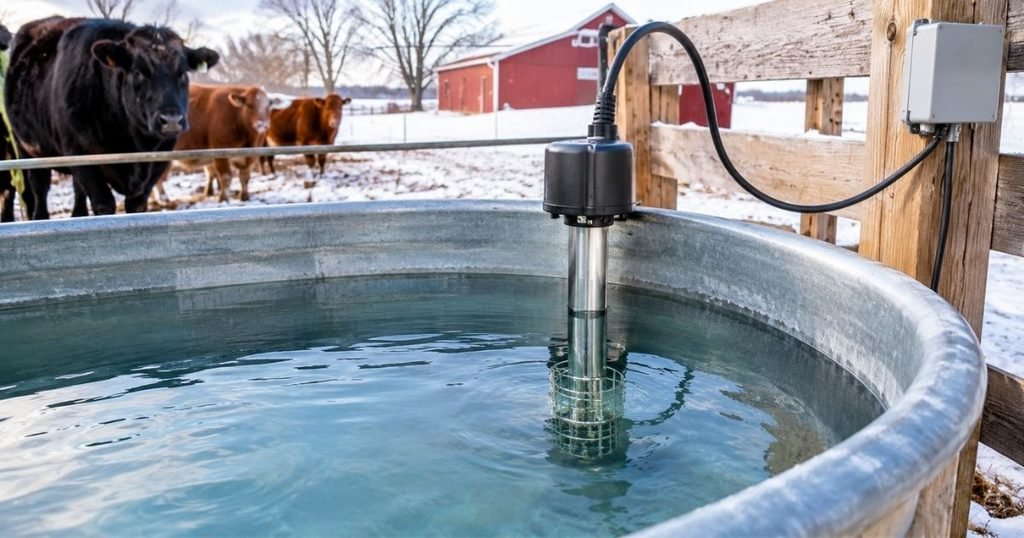
What Is a Water Trough Heater and How Does It Work?
A water trough heater is a specialized agricultural heating appliance engineered to prevent ice formation in outdoor livestock watering tanks. At its core, the device utilizes an enclosed electrical heating element that safely transfers thermal energy into the surrounding water.
How Heating Elements Work
Inside a durable housing typically constructed from heavy-duty cast aluminum, stainless steel, or high-impact polymer resides a high-resistance electrical heating wire. When plugged into a power source, electrical current flows through the resistor, generating controlled heat. This heat warms the metal or polymer casing, which in turn warms the water immediately surrounding the unit and creates an open “polynya” or circle of liquid water in the tank.
Thermostatic Controls and Energy Efficiency
Modern electric water trough heaters feature built-in or adjustable thermostats. A thermostat acts as an automatic switch that monitors water temperature.
- When water is warm: The thermostat keeps the circuit open, meaning the heater draws zero electricity when freezing is not a threat.
- When water approaches freezing (usually around 35°F to 38°F): The thermostat automatically closes the circuit, activating the heating element.
- Once ice prevention is achieved: The heater cycles off, preventing overheating and minimizing unnecessary electricity consumption.
Heating Water vs. Keeping It Ice-Free
It is a common misconception that stock tank heaters are designed to turn cold outdoor water into warm, comfortable spa water for livestock. In reality, most standard water trough heaters and stock tank de-icers are engineered strictly to keep water ice-free, maintaining temperatures just above freezing (typically between 38°F and 45°F).
Livestock actually prefer cool, refreshing water over warm water, and keeping water moderately cool encourages proper daily hydration without wasting electricity on unnecessary heating. Animals that graze outdoors in winter are well-adapted to drinking cold water, provided it is accessible and free of thick ice sheets.
READ MORE: Best Immersion Water Heater: Review, Safety & Top Picks
Different Types of Water Trough Heaters
Choosing the right equipment depends heavily on your tank type, herd size, power availability, and local winter climate. Below are the primary types of water trough heaters available on the market today.
A. Floating Water Trough Heater
Floating stock tank heaters are among the most popular and versatile options for small to medium-sized farms.
- How it works: The heating element is housed within a heavy, buoyant plastic or metal float that sits directly on the water surface.
- Installation: Simply drop it into the tank, position it away from the tank walls if specified by the manufacturer, and plug it into a GFCI-protected outlet.
- Advantages: Easy to install, remove, and relocate. Excellent for open stock tanks.
- Disadvantages: Can be nudged, chewed on, or pushed underwater by curious livestock, potentially exposing cords or damaging the unit if not properly guarded.
- Suitable Applications: Ideal for medium stock tanks (100 to 300 gallons) housing horses or cattle that do not habitually play with floating objects.
B. Submersible Water Trough Heater
Submersible heaters rest entirely on the bottom of the stock tank.
- How it works: Heavy-duty heating elements are encased in cast aluminum or stainless steel housings designed to sit flat on the floor of the tank. Many models feature protective cages or heavy-weight designs to keep them anchored.
- Advantages: Completely out of sight and harder for animals to tamper with. Highly effective in shallow tanks or regions with extreme sub-zero weather because heat rises from the bottom of the column.
- Disadvantages: Harder to clean around; can accumulate heavy mineral scale (lime and calcium) directly on the heating surface. Requires extreme care regarding tank material compatibility, as some submersible units can scorch plastic or rubber if they shift against the wall.
- Suitable Applications: Large cattle tanks, rural multi-animal pastures, and areas prone to severe, prolonged freezing temperatures.
C. Drain Plug Water Trough Heater
Drain-plug heaters offer a clever engineering solution that keeps all electrical components completely outside the animal’s reach.
- How it works: The heating unit threads directly into the standard 3/4-inch or 1-inch threaded drain hole found on many poly and structural foam stock tanks.
- Advantages: Zero risk of livestock coming into contact with the heating element or power cord inside the drinking area. Keeps the tank interior completely unobstructed.
- Disadvantages: Limited to specific tank models that feature compatible threaded drain plugs. Generally lower wattage, making them best suited for mild to moderate winter climates.
- Suitable Applications: Polyethylene stock tanks (such as Rubbermaid structural foam tanks) in regions with moderate winter freezes.
D. Immersion Water Trough Heater
Immersion heaters are sometimes confused with standard livestock de-icers, but buyers must exercise caution.
- Important Distinction: Household, aquarium, or bucket immersion heaters are not automatically suitable for outdoor livestock water troughs. Livestock can easily crush standard plastic immersion heaters, and household units lack the rugged, weather-resistant, weather-sealed construction required for farm life. Always purchase heaters specifically rated for agricultural livestock applications.
E. Built-In Heated Water Trough
For permanent setups, built-in heated waterers represent the gold standard in agricultural water management.
- How it works: These are self-contained watering systems featuring insulated double-wall polyethylene construction, integrated heating elements, and precise thermostatic controls.
- Advantages: Highly energy-efficient due to superior insulation. Excellent protection against freezing even in brutal northern winters. Extremely safe because all wiring is enclosed within the unit housing.
- Disadvantages: Significant upfront purchase price and requires permanent installation, plumbing, and electrical trenching.
- Suitable Applications: Commercial livestock operations, permanent horse barns, and large beef or dairy cattle yards.
F. Solar-Powered and Energy-Efficient Alternatives
For remote pastures without access to grid electricity, farmers often explore alternatives:
- Solar-Assisted Heating: Photovoltaic panels can power low-wattage DC heating elements, though their effectiveness is severely limited during short winter days and extended overcast weather.
- Insulated Stock Tanks and Covers: Using rigid foam insulation around standard tanks or installing insulated ball-closure lids significantly reduces heat loss.
- Ground-Source and Geothermal Waterers: Utilizing earth tubes to draw in naturally warmer ground-water temperature helps keep water ice-free without electricity.
READ MORE: Submersible Water Heater Guide: Types, Safety & Uses
Water Trough Heater Comparison Table
| Heater Type | How It Works | Main Advantage | Potential Drawback | Best Application |
| Floating Heater | Floats on the water surface; heats water from the top down. | Easy to install, move, and maintain. | Can be shifted, licked, or damaged by livestock. | Medium stock tanks (100–300 gal) in moderate-to-severe climates. |
| Submersible Heater | Rests on the tank bottom; heats water from the bottom up. | Out of animal reach; highly effective in deep tanks. | Can accumulate heavy mineral scale; requires careful tank placement. | Large cattle tanks and severe sub-zero winter regions. |
| Drain Plug Heater | Threads directly into the tank’s built-in drain port. | Keeps all heating elements outside the drinking zone. | Limited to specific tank models with matching drain threads. | Polyethylene stock tanks in mild-to-moderate winter zones. |
| Built-In Heated Trough | Fully integrated heating element inside an insulated multi-wall shell. | Maximum energy efficiency and durability. | High upfront cost; requires permanent installation and plumbing. | Permanent barns, commercial feedlots, and large family farms. |
| Solar-Assisted System | Uses solar panels to power low-voltage heating or circulation. | Zero grid electricity costs; great for remote pastures. | Limited heating capacity during cloudy winter days. | Remote pastures with minimal shade and moderate winter freezes. |
How to Choose the Right Water Trough Heater
Selecting the correct livestock water trough heater requires evaluating several physical and environmental variables. Purchasing a heater that is too small leaves your animals with frozen water, while buying an oversized unit wastes electricity and risks overheating the tank.
- Water Trough Capacity in Gallons: Measure your tank volume accurately. A 50-gallon horse tank requires vastly less wattage than a 1,500-gallon cattle stock tank.
- Tank Dimensions and Material: Metal tanks (galvanized steel) conduct heat differently than plastic (polyethylene) or structural foam rubber tanks. Plastic tanks require heaters designed specifically not to melt or warp the polymer lining.
- Local Climate and Wind Exposure: A ranch in central Texas faces entirely different winter conditions than a homestead in northern Minnesota or the Colorado Rockies. High winds accelerate evaporative cooling and freezing, requiring higher wattage ratings.
- Livestock Type and Number of Animals: Heavy cattle drinking frequently help keep water stirred, but fewer animals mean water sits still longer and freezes faster. Furthermore, active animals like horses require more robust hardware protection.
- Required Wattage and Voltage: Standard residential agricultural heaters operate on 120V household current, with wattages ranging from 250W to 1,500W. Ensure your electrical circuit can handle the load.
- Thermostat Availability: Always choose a thermostatically controlled model. Uncontrolled heaters run 24/7, driving up your power bill and shortening the lifespan of the heating element.
- Safety Certifications: Look for independent testing lab certifications such as UL (Underwriters Laboratories) or ETL, which verify that the appliance meets rigorous electrical safety standards for farm use.
- Warranty and Lifespan: Quality agricultural heaters typically feature a 1-to-3-year manufacturer warranty. Check user reviews for real-world durability against mineral corrosion.
READ MORE: 60 Gallon Water Heater: Best Models, Prices, and Comparison
Best Water Trough Heater Features to Look For
When shopping for an electric water trough heater, keep an eye out for these premium features that enhance safety, longevity, and ease of use:
- Automatic Thermostat: Essential for energy savings and preventing water from boiling or overheating.
- Overheating Protection (Thermal Cut-Off): Automatically shuts the unit down if the water level drops too low and the heating element is exposed to air.
- Protective Heating Element Cage: Heavy-duty wire or polymer guards prevent livestock from coming into direct contact with hot surfaces.
- Corrosion-Resistant Construction: Look for marine-grade stainless steel or porcelain-coated aluminum that resists rust and mineral scale buildup.
- Livestock-Resistant Cord Protection: Heavy-duty, anti-chew steel spring guards or heavy rubber conduit around the power cord protect against curious horses and goats.
- Compatibility with Plastic and Rubber Tanks: Ensure the manufacturer explicitly approves the unit for poly stock tanks to prevent melting or fire hazards.
- Replaceable Parts: Premium commercial units allow you to replace thermostats or cords rather than discarding the entire appliance when a single component fails.
How Much Does a Water Trough Heater Cost?
Understanding the upfront investment helps you budget effectively for farm winterization. Prices vary based on brand, wattage, build quality, and retail supplier.
- Basic Floating De-icers (250W–500W): Typically range from $40 to $70. Best for smaller hobby farm tanks.
- Submersible Stock Tank Heaters (1,000W–1,500W): Generally cost between $75 and $150. Built for heavy-duty winter performance in large tanks.
- Drain-Plug Heaters: Usually priced between $50 and $90.
- Premium Livestock Water Heating Systems: Commercial-grade floating or submersible units range from $150 to $250.
- Built-In Heated Water Troughs: Complete insulated watering systems range from $300 to $900+, excluding freight and plumbing.
- Professional Electrical Installation: If you need a licensed electrician to run outdoor UF-B cable, install a weatherproof box, and add a dedicated GFCI breaker, expect professional labor and materials costs between $150 and $500.
Approximate USA Price Comparison Table
| Product Category | Typical Purchase Price Range | Professional Installation Cost (If Required) | Total Estimated Investment |
| Basic Floating De-icer | $40 – $70 | $0 (DIY plug-in) | $40 – $70 |
| Heavy-Duty Submersible Heater | $75 – $150 | $0 to $250 (if outdoor outlet needed) | $75 – $400 |
| Drain-Plug Heater | $50 – $90 | $0 (DIY plug-in) | $50 – $90 |
| Built-In Heated Water Trough | $300 – $900+ | $200 – $600 (plumbing & electrical) | $500 – $1,500+ |
READ MORE: Rheem Marathon Electric Water Heater Review
How Much Electricity Does a Water Trough Heater Use?
A common concern for homesteaders and farmers is the impact of winter heating appliances on monthly electric bills. Water trough heaters are high-wattage devices, but their actual energy consumption depends heavily on ambient outdoor temperatures, wind chill, tank insulation, and most importantly thermostat cycling.
The Electricity Calculation Formula
To calculate estimated electrical consumption, use the following standard formula:
ElectricityCost=Watts1,000OperatingHoursElectricityRate
Illustrative Example
Suppose you operate a 1,000-watt submersible stock tank heater during a freezing winter month. On bitter winter days, the thermostat cycles on and off, resulting in an average cumulative runtime of 12 hours per day. Assuming a national average residential electricity rate of $0.15 per kWh:
- Daily Energy Use: (1,0001,000)12hours=12kWhperday
- Daily Cost: $12 \text{ kWh} \times \$0.15 = \$1.80 \text{ per day}$
- Monthly Cost (30 Days): $\$1.80 \times 30 = \$54.00 \text{ per month}$
Note: In milder weather or with an insulated tank, runtime drops significantly, lowering your monthly expense. Conversely, prolonged sub-zero blasts increase runtime and cost.
Estimated Electricity Cost Comparison Table (Based on $0.15 / kWh)
| Heater Wattage | Daily Runtime (Hours) | Daily Energy Use (kWh) | Estimated Daily Cost | Estimated Monthly Cost (30 Days) |
| 500 Watts | 8 Hours | 4.0 kWh | $0.60 | $18.00 |
| 500 Watts | 16 Hours | 8.0 kWh | $1.20 | $36.00 |
| 1,000 Watts | 8 Hours | 8.0 kWh | $1.20 | $36.00 |
| 1,000 Watts | 16 Hours | 16.0 kWh | $2.40 | $72.00 |
| 1,500 Watts | 12 Hours | 18.0 kWh | $2.70 | $81.00 |
How to Install a Water Trough Heater Safely
Proper installation protects both your valuable livestock and your farm property from electrical hazards. Follow these nine essential steps when setting up your water trough heater:
- Read Manufacturer Instructions: Always review the specific owner’s manual for your exact model before installation.
- Confirm Tank Compatibility: Ensure the heater is approved for your specific tank material (plastic, rubber, or galvanized steel).
- Position the Heater Correctly: Place floating heaters securely in the water away from walls if recommended. Position submersibles flat on the bottom.
- Ensure Adequate Water Coverage: Never plug in or operate a heating element unless it is completely submerged in water. Running dry destroys the unit and creates a severe fire hazard.
- Protect Electrical Cords: Route all power cords through heavy-duty conduit, steel springs, or PVC piping to prevent livestock from chewing or rubbing on the wire.
- Use Grounded, Outdoor-Rated Power Supplies: Plug the unit exclusively into a weather-resistant, outdoor-rated electrical outlet.
- Ensure GFCI Protection: Verify that the circuit is protected by a Ground Fault Circuit Interrupter (GFCI) breaker or receptacle to prevent electrocution. Have a qualified electrician install one if necessary.
- Check Electrical Connections: Inspect all plugs, receptacles, and junction boxes for moisture, corrosion, or wear before powering on.
- Test the Heater: Plug the unit in and monitor it for proper thermostatic operation over the first 24 hours.
Important Safety Note: Never attempt to perform DIY electrical wiring of permanent 240V circuits or modify heating elements. Always hire a licensed electrician for outdoor wiring and dedicated circuit installations.
READ MORE: Best AO Smith Electric Water Heater: Review, Cost & Comparison
Water Trough Heater Safety Tips for Livestock Owners
Electricity and water are a hazardous combination. Farm animals are naturally curious and powerful, making safety paramount.
- GFCI Protection is Non-Negotiable: A GFCI outlet instantly cuts power if a ground fault or electrical leak is detected, saving animals and humans from fatal shocks.
- Grounding and Bonding: Ensure your stock tank and electrical system are properly grounded according to the National Electrical Code (NEC). Stray voltage in livestock waterers can cause animals to refuse water or suffer painful shocks.
- Guard Against Chewing: Horses, goats, and pigs frequently chew on rubber and plastic cord casings. Use chew-proof steel armored cable guards.
- Monitor Water Levels Daily: Stock tanks evaporate and animals drink. If the water level drops and exposes the heating element, it can overheat, melt plastic tanks, or start a fire.
- Avoid Extension Cords: Never use standard household extension cords for water trough heaters. They cause voltage drops, overheat, and invite moisture infiltration. Plug the heater directly into an outdoor GFCI outlet, or use a heavy-duty, weather-rated outdoor cord approved by the manufacturer.
- Unplug Before Servicing: Always disconnect the power supply before reaching into the tank to clean, adjust, or remove the heater.
Common Water Trough Heater Problems and How to Fix Them
| Problem | Possible Cause | Recommended Action |
| Water still freezes | Insufficient wattage for tank size or extreme wind chill. | Check heater sizing chart; add insulation around the tank or upgrade to a higher-wattage unit. |
| Heater does not turn on | Thermostat setting issue, faulty outlet, or tripped breaker. | Test the outlet with another appliance; check the GFCI breaker; consult manufacturer manual. |
| GFCI keeps tripping | Moisture inside the plug, damaged cord, or internal heating element fault. | Disconnect power immediately. Inspect cord and unit. Replace damaged equipment; do not bypass the GFCI. |
| Heater overheats | Low water level or improper positioning against tank walls. | Top off water level immediately; reposition heater according to instructions. |
| Electricity bills spike | Heater running continuously due to poor insulation or extreme cold. | Add insulation jackets around the tank; check if thermostat is stuck closed. |
| Cord becomes damaged | Animal chewing, physical wear, or machinery contact. | Disconnect power immediately, take the heater out of service, and replace the cord or unit. |
How to Maintain a Water Trough Heater
Regular maintenance extends the lifespan of your equipment and ensures safe, reliable operation all winter long.
- Pre-Winter Inspection: Before freezing weather sets in, inspect the power cord, plug prongs, and heating housing for cracks, rust, or damage.
- Remove Mineral Buildup: Hard water leaves calcium and lime deposits on heating elements, acting as insulation that reduces efficiency. Clean elements periodically using a solution of white vinegar or a manufacturer-approved descaler.
- Clean the Trough Regularly: Algae, dirt, and organic debris accumulate in stock tanks. Drain and scrub the tank monthly, unplugging the heater beforehand.
- Monitor Thermostat Operation: Periodically verify that the heater turns off when water is warm and turns on when cold.
- Inspect Protective Cages: Ensure mounting brackets and protective wire cages remain secure and free of sharp edges.
- Off-Season Storage: When spring arrives, unplug the heater, clean and dry it thoroughly, coil the cord safely, and store it in a dry barn or shed away from direct sunlight and rodents.
READ MORE: Best .95 UEF Tankless Water Heater: Review, Comparison & Cost
Water Trough Heater vs. Heated Water Bucket vs. Freeze-Proof Waterer
| System Type | Main Purpose | Typical Application | Heating Method | Installation Requirements | Main Advantage | Limitation | Best Use Case |
| Water Trough Heater | Keep large livestock tanks ice-free. | Pastures with horses, cattle, and large herds. | Floating or submersible electric element. | Plugs into outdoor GFCI outlet. | Keeps large volumes of water open. | Requires electricity and tank management. | Medium to large outdoor livestock herds. |
| Heated Water Bucket | Provide individual heated water for stalls. | Horse stalls, small goat pens, and poultry coops. | Internal heating element molded into bucket base. | Plugs into protected indoor outlet. | Portable and ideal for individual animal monitoring. | Low capacity (typically 5–16 gallons); requires daily refilling. | Stabled horses and small penned animals. |
| Freeze-Proof Waterer | Keep water open year-round without electricity. | Remote pastures and rotational grazing setups. | Earth insulation, geothermal warmth, or ball-closure lids. | Trenching, buried water lines, and concrete pads. | Zero electricity costs and highly reliable. | Expensive upfront installation and excavation. | Remote pastures with reliable winter water lines. |
Are Water Trough Heaters Safe for Horses, Cattle, and Other Livestock?
When installed correctly with appropriate safety measures, water trough heaters are exceptionally safe and beneficial for farm animals. However, different species present unique management challenges:
- Horses: Highly inquisitive animals prone to investigating floating objects and playing with power cords. Always use steel-armored cord conduits and submersible or flush-mounted heaters to prevent horses from pulling on cords.
- Cattle: Large, heavy animals that can displace floating heaters or step on submersible units. Secure heaters firmly and ensure heavy-duty protective cages are used.
- Goats and Sheep: Agile and curious, goats love to climb and chew. Cords must be completely encased in rigid PVC or steel conduit well out of their reach.
- Pigs: Known for rooting and chewing. Extra-heavy-duty mounting and protective barriers are essential in swine lots.
Veterinary Disclaimer: Always consult your livestock veterinarian or local agricultural extension specialist if you notice animals refusing water or exhibiting signs of water-related stress during winter.
Ways to Prevent Water Troughs from Freezing Without a Heater
If you want to minimize electricity usage or manage remote pastures without grid power, several practical techniques help prevent freezing:
- Insulate Your Stock Tanks: Wrap the exterior of plastic or metal tanks with rigid foam board insulation or surround them with straw bales to trap geothermal ground heat.
- Windbreaks: Position stock tanks in sunny, wind-protected areas (such as south-facing barn walls or evergreen windbreaks) to reduce wind chill.
- Insulated Floating Covers: Use insulated ball-closure lids or floating foam circles that allow animals to push down a flap to drink while sealing out cold air.
- Frequent Water Turnover: In high-volume operations, running automatic fill valves with fresh well water (which typically emerges at 50°F–55°F) keeps water moving and prevents freezing.
- Solar-Powered Circulation: Using small 12V solar pumps keeps water moving, as moving water resists ice formation much longer than stagnant water.
Frequently Asked Questions
What is the best water trough heater for livestock?
The best water trough heater depends on your tank size, animal type, and power availability. Heavy-duty cast aluminum submersible heaters are ideal for large cattle tanks in severe winter regions, while floating heaters work exceptionally well for medium horse tanks. Always look for rugged construction, automatic thermostatic controls, and UL safety certification.
How many watts does a water trough heater need?
Heater wattage depends on your tank’s gallon capacity and local winter temperatures. Small tanks (under 100 gallons) generally require 250 to 500 watts, medium tanks (100–300 gallons) need 500 to 1,000 watts, and large stock tanks (over 300 gallons) in sub-zero climates often require 1,000 to 1,500 watts.
Can you use a water trough heater in a plastic stock tank?
Yes, you can use a water trough heater in a plastic or structural foam stock tank, provided the manufacturer explicitly approves the unit for plastic tanks. Always ensure the heating element does not rest directly against the plastic wall to prevent melting or damage, and consider using drain-plug heaters or protected submersibles.
How much electricity does a stock tank heater use?
Electricity consumption depends on wattage and runtime. A 1,000-watt heater running 12 hours a day through a thermostat consumes about 12 kWh daily. At an average rate of $0.15 per kWh, this costs roughly $1.80 per day or $54 per month. Proper tank insulation significantly reduces operating hours and electricity costs.
Are water trough heaters safe for horses and cattle?
Yes, water trough heaters are safe when installed correctly. They must be plugged into a weather-resistant, GFCI-protected outlet with proper grounding. To prevent horses and cattle from chewing or damaging power cords, always route cords through heavy-duty steel conduit or chew-resistant protective guards.
Conclusion:
Providing reliable, unfrozen drinking water during freezing winter months is essential for the health, hydration, and productivity of your livestock. Whether you choose a floating de-icer, a heavy-duty submersible heater, or a permanent built-in system, proper sizing, tank compatibility, and strict adherence to electrical safety standards are key to a successful winter season.
By investing in a quality water trough heater, protecting your power cords, and performing routine maintenance, you eliminate back-breaking ice chopping and ensure your animals thrive all winter long. Compare reputable agricultural models, check your wattage requirements, and verify your outdoor electrical setup today to prepare your farm for the cold weather ahead.
Sources & References
- USDA and Natural Resources Conservation Service (NRCS): Livestock Watering Guidelines and Winter Infrastructure Management.
- University Cooperative Extension Publications: Winter Livestock Hydration and Stock Tank Management (South Dakota State University Extension & Kansas State University Research and Extension).
- American Society of Agricultural and Biological Engineers (ASABE): Standards for Agricultural Electrical Safety and Livestock Housing Equipment.
- National Electrical Code (NEC): Outdoor Farm Wiring and GFCI Protection Standards.
- Manufacturer Specifications: Miller Manufacturing, Allied Precision Industries (API), and Farm Innovators product manuals.
Safety Disclaimer: Electrical installations, outdoor wiring, and GFCI breaker installations around livestock water systems should always be performed by a qualified, licensed electrician in accordance with local electrical codes and manufacturer instructions. Never operate electrical heating equipment in or near water without verified ground-fault protection.