Modern American households rely heavily on centralized tank and tankless water-heating systems to deliver a steady stream of hot water for showers, dishwashing, and laundry. However, everyday plumbing does not always extend everywhere you might need warmth. Whether you are washing equipment in an unheated detached garage, managing livestock in a winter barn, setting up a temporary washing station during a home renovation, or camping off-grid, traditional plumbing solutions are often impractical.
This is where portable heating technology steps in. A submersible water heater provides a straightforward, highly effective way to raise the temperature of localized water volumes without requiring complex pipe installation or remodeling.
Throughout this comprehensive guide, you will learn exactly what a submersible water heater is, how electrical resistance transforms into thermal energy, the various product categories available on the market, key safety protocols, operating costs, and how to select the right model for your specific household or workshop needs. Electrical safety and proper appliance handling are paramount, so we will also cover critical precautions to protect your home, family, and equipment. Lets deep dive into “Submersible Water Heater Guide: Types, Safety & Uses “
What Is a Submersible Water Heater?
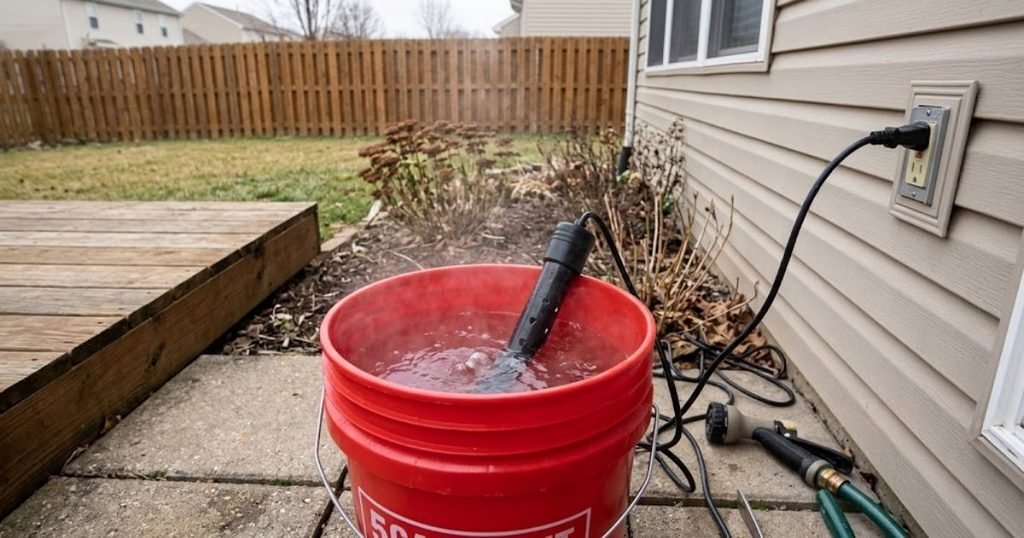
A submersible water heater is a portable electrical device featuring a protected heating element that is placed directly into a liquid container to rapidly heat water. Unlike traditional tank or tankless systems, it offers mobile, on-demand heating for small volumes of water without permanent plumbing installation.
At its core, a submersible water heater is designed for mobility and localized application. To truly understand its place in home and utility management, it helps to compare it directly against standard home water-heating appliances.
- Traditional Tank Water Heaters: These stationary appliances store anywhere from 30 to 80 gallons of water in an insulated steel tank, keeping it continuously hot using gas burners or electric heating elements. They serve the entire home plumbing network but require permanent installation, dedicated electrical circuits or gas lines, and regular maintenance.
- Electric Tankless Water Heaters: These units heat water on demand as it flows through a specialized heat exchanger unit plumbed directly into your home’s water supply lines. While highly energy-efficient for whole-house use, they demand significant electrical amperage and professional installation.
- Submersible Water Heaters: In contrast, a portable submersible water heater is an independent unit that you drop directly into a bucket, tub, trough, or specialized container. It does not connect to your household water pipes. Instead, it heats the water right where it sits.
READ MORE: Best Immersion Water Heater: Review, Safety & Top Picks
Common Household and Utility Applications
Homeowners, DIYers, hobbyists, and homesteaders use these devices for various tasks, including:
- Washing vehicles, outdoor gear, or pets with warm water during colder months.
- Heating water for construction, painting, or masonry work in unheated garages or outdoor spaces.
- Preventing livestock water troughs from freezing during harsh winter weather.
- Providing supplemental warm water for temporary washing stations or cleaning chores.
It is important to emphasize that different products have vastly different intended applications. A heavy-duty electric bucket water heater used on a farm or workshop is engineered differently from a decorative aquarium heater or a specialized bathing unit. Never assume an industrial or agricultural immersion heater is suitable for personal bathing unless explicitly certified and rated by the manufacturer for human use.
How Does a Submersible Water Heater Work?
Understanding the underlying mechanics of an electric submersible water heater helps demystify how electrical energy converts into thermal output. The process relies on fundamental physics and electrical engineering principles.
The Heating Process Explained Step-by-Step
- Electrical Current Flow: When you plug the unit into a properly grounded, GFCI-protected electrical outlet, household current flows down the insulated power cord and into the internal wiring of the heating unit.
- Electrical Resistance Heating: The current passes through a specialized submersible heating element typically made from high-resistance metal alloys (such as nickel-chromium wire) encased within a metal sheath (frequently copper or stainless steel). As electricity forces its way through this high-resistance wire, electrical energy encounters friction and converts directly into heat.
- Thermal Transfer: The metal sheath surrounding the resistance wire absorbs this heat and rapidly transfers it outward to the surrounding water molecules via direct conduction.
- Water Circulation and Convection: As water immediately adjacent to the heating element warms up, it becomes less dense and rises, creating natural convective currents within the container. This circulates cooler water down toward the element until the entire volume reaches a uniform temperature.
- Thermostatic Control and Automatic Shutoff: Advanced models feature built-in thermostats or high-limit safety switches. Once the water hits the preset temperature or if the water level drops dangerously low the thermostat cuts power to the element, preventing overheating, boiling, or thermal runaway.
The Role of Wattage and Heating Time
The speed and efficiency of the heating process depend heavily on submersible water heater wattage. Standard portable models typically range from 300 watts for small buckets up to 1,500 or 2,000 watts for heavy-duty containers and stock tanks.
A higher-wattage water heating element transfers thermal energy much faster than a low-wattage model, but it also places a heavier load on your electrical circuit. Heating time is governed by simple thermodynamics: warming 5 gallons of water takes significantly less time and energy than warming 50 gallons. Starting water temperature and container insulation also play major roles in how long the process takes.
READ MORE: Best Rheem Electric Tankless Water Heater: Reviews, Cost & Comparison
Different Types of Submersible Water Heaters
The market offers a wide variety of immersion devices tailored to specific tasks. Choosing the correct variety ensures safety, efficiency, and equipment longevity.
1. Portable Electric Immersion Heaters
These versatile, lightweight devices are designed for general-purpose utility use. They typically feature a guarded heating coil attached to a long handle or hanging hook, allowing you to submerge the active element safely into buckets or plastic tubs. They are popular among DIYers and homeowners looking for a quick mobile heating solution.
2. Bucket Water Heaters
An electric bucket water heater is specifically shaped to fit comfortably inside standard 5-gallon buckets or utility tubs. Many feature side clips or hanging brackets to keep the heating element suspended away from the plastic walls of the container, preventing accidental melting or scorching.
3. Stainless Steel Immersion Heaters
Corrosion is the primary enemy of metal heating elements. A stainless steel immersion heater utilizes high-grade stainless steel for its outer sheath, offering superior resistance to rust, mineral scale buildup, and chemical corrosion. These models are ideal for hard water or frequent utility use.
4. Thermostatically Controlled Immersion Heaters
Basic immersion heaters run continuously until unplugged, which can lead to boiling water if left unattended. Thermostatically controlled units allow users to dial in a specific target temperature. Once the water hits that target, the unit cycles off or maintains the temperature automatically.
5. Industrial and Commercial Immersion Heaters
Heavy-duty industrial heaters are designed for large volumes, commercial workshops, or agricultural stock tanks. They operate at higher voltages and wattages and are built to withstand rigorous daily use in harsh outdoor environments. They should never be plugged into standard residential household extension cords.
6. Aquarium and Specialty Tank Heaters
Aquarium heaters are low-wattage, precision-controlled devices built exclusively to maintain stable temperatures for fish habitats. They are entirely different from high-output utility water heaters. Never treat aquarium heaters and household utility immersion heaters as interchangeable; attempting to heat a 5-gallon bucket of cleaning water with an aquarium heater will fail entirely, while using a heavy-duty bucket heater in an aquarium would quickly boil the water and harm aquatic life.
Benefits of Using a Submersible Water Heater
When applied correctly within their design parameters, portable immersion heaters offer distinct advantages for homeowners and DIY enthusiasts.
- Compact and Portable Design: Unlike bulky water tanks, these units take up minimal storage space in a garage cabinet or toolbox and can be transported easily wherever hot water is needed.
- Convenient Small-Volume Heating: They eliminate the need to haul boiling pots of water from a kitchen stove to a garage, basement, or outdoor workspace.
- Simple Operation: Most units require nothing more than submerging the element to the correct depth and plugging them into a power source.
- No Permanent Plumbing Required: Because they operate independently of your home’s water supply lines, you can use them in remote areas, sheds, or temporary outdoor setups.
- Flexible Wattage Options: Homeowners can choose between lower-wattage units that draw less electrical current and higher-wattage models designed for rapid heating.
- Cost-Effective Supplemental Solution: For infrequent or localized heating tasks, buying a portable immersion heater is far less expensive than installing a secondary plumbed water heater.
READ MORE: Tankless Gas vs Electric Water Heater: Which Is Right for Your Home?
Disadvantages and Limitations
While handy, portable water heaters come with clear limitations that every homeowner must understand before making a purchase.
- Electrical Shock Risks: Combining electricity and water always carries inherent risks. Improper handling or damaged insulation can lead to severe electrical shock.
- Fire and Overheating Hazards: Running a heater without adequate water coverage can cause the element to overheat rapidly, melting containers or starting fires.
- Limited Water Capacity: These units are designed for small-to-moderate volumes. They cannot compete with a whole-house water heater.
- Uneven Heating: Without natural or mechanical circulation, water near the heating element can become very hot while water at the edges remains cold.
- Electrical Supply Constraints: High-wattage units can easily trip residential circuit breakers, especially if shared with other heavy appliances on the same circuit.
- Corrosion and Mineral Buildup: Hard water minerals (calcium and magnesium) deposit quickly onto hot metal surfaces, reducing heating efficiency over time.
- Lack of Automatic Shutoff on Basic Models: Budget-friendly immersion heaters lack thermostats, meaning the user must actively monitor heating progress.
How Much Electricity Does a Submersible Water Heater Use?
Energy consumption is a practical concern for any homeowner. Operating costs depend directly on the wattage of the appliance and how long it remains energized.
Understanding Watts, Kilowatts, and Kilowatt-Hours (kWh)
Electricity is billed by kilowatt-hours (kWh). One kilowatt equals 1,000 watts. If you run a 1,000-watt appliance for one full hour, it consumes 1 kWh of electricity.
Electricity Consumption Reference Table
| Heater Wattage | Electricity Used Per Hour at Full Power |
| 300 Watts | 0.3 kWh |
| 500 Watts | 0.5 kWh |
| 1,000 Watts | 1.0 kWh |
| 1,500 Watts | 1.5 kWh |
| 2,000 Watts | 2.0 kWh |
Estimating Operating Costs: A Practical Example
Suppose you own a 1,500-watt electric submersible water heater and use it for 30 minutes (0.5 hours) to heat a bucket of water for washing outdoor equipment.
- Energy consumed: 1.5kW0.5hours=0.75kWh.
- If your local utility provider charges an average residential rate of $0.16 per kWh, the cost for that heating session is:
$$0.75\text{ kWh} \times \$0.16 = \$0.12$$
Keep in mind that actual heating times depend on starting water temperature, ambient air temperature, container insulation, and water volume. Thermostatically controlled heaters cycle on and off once the target temperature is reached, meaning they do not necessarily draw continuous power throughout the entire soaking period.
READ MORE: Best Eemax Water Heater: Top 5 Reviewed & Compared
Is a Submersible Water Heater Safe?
Because water and electricity are a potentially lethal combination, safety is the single most important factor when operating any portable submersible water heater. Never treat these devices casually.
Essential Electrical and Operational Safety Guidelines
- GFCI Protection is Mandatory: Always plug your immersion heater into an electrical outlet protected by a Ground-Fault Circuit Interrupter (GFCI). A GFCI instantly cuts power if it detects an electrical current leaking into the water, preventing severe shock.
- Verify Proper Grounding: Never bypass the grounding prong on a three-prong power plug, and never use ungrounded two-prong adapters.
- Independent Safety Certifications: Look for recognized independent safety listings, such as an applicable UL listing or certification from another nationally recognized testing laboratory (NRTL). This ensures the appliance has undergone rigorous electrical and thermal safety testing.
- Inspect Cords and Elements: Before every use, inspect the power cord for cracks, fraying, or exposed wires. Check the heating element for dents, cracks, or heavy corrosion. Never use a damaged appliance.
- Prevent Dry Operation: The heating element must be fully submerged in water before plugging it into the wall. Energizing an element in open air causes it to reach extreme temperatures almost instantly, destroying the unit and creating severe fire and burn hazards.
- Observe Minimum Water Levels: Always maintain the manufacturer’s specified minimum water depth during operation.
- Keep Away from Children and Pets: Portable heaters should never be left within reach of children or curious pets.
- Never Touch the Water While Energized: This is a vital rule. Always unplug the heater from the electrical outlet and wait a few minutes for the element to cool before touching the water, removing the heater, or dipping your hands into the container.
- Avoid Extension Cords: Whenever possible, plug the unit directly into a wall receptacle. If an extension cord must be used, it must be a heavy-duty, outdoor-rated cord matching or exceeding the electrical wire gauge (AWG) of the heater’s plug.
If you are uncertain about the capacity of your home’s electrical wiring or whether an outdoor outlet is properly grounded, consult a qualified, licensed electrician before operating high-wattage heating equipment.
How to Choose the Best Submersible Water Heater for Your Home
Selecting the right device requires evaluating your specific needs against equipment specifications. Consider the following ten factors before purchasing:
- Wattage Requirements: Match the wattage to your container size and electrical circuit capacity. A standard 15-amp household circuit should generally not support continuous loads exceeding 1,440 to 1,800 watts.
- Water Capacity and Intended Application: Determine whether you are heating a 2-gallon bucket or a 50-gallon livestock tank. Choose a model rated specifically for that volume.
- Heating Element Material: Opt for corrosion-resistant materials like stainless steel, especially if your home has hard water rich in dissolved minerals.
- Thermostat and Temperature Controls: Decide whether you want a basic manual unit or a thermostatically controlled model that prevents overheating.
- Automatic Shutoff and Overheat Protection: Ensure the unit includes built-in thermal fuses or dry-run protection to guard against accidental water evaporation.
- Electrical Compatibility: Check voltage requirements (most residential units are 120V, while heavy industrial units require 240V).
- Cord and Plug Quality: Look for heavy-duty, water-resistant power cords and robust molded plugs.
- Independent Safety Certification: Verify that the product carries legitimate safety certifications like UL listing.
- Manufacturer Warranty: A reliable warranty reflects manufacturer confidence in build quality and heating element durability.
- Price and Long-Term Operating Costs: Balance the initial purchase price against energy efficiency and expected lifespan.
READ MORE: Best Instant Hot Water Heater: Review, Cost & Comparison
Submersible Water Heater vs. Traditional Water Heater
To clarify how these two technologies differ, review the comparison below:
| Feature | Submersible Water Heater | Traditional Water Heater |
| Design | Portable or application-specific | Permanent installation |
| Water Capacity | Usually limited (buckets, tubs, troughs) | Larger household supply (30–80 gallons) |
| Installation | Plug-and-play (depends on model) | Professional installation often needed |
| Portability | Highly portable models available | Stationary and fixed in place |
| Primary Use | Small-volume or specialty utility heating | Daily household hot-water supply |
| Controls | Vary by basic or thermostatic model | Built-in adjustable thermostats and valves |
| Best For | Specific temporary or utility heating needs | Daily household hot water (showers, sinks) |
As shown, these appliances serve completely different purposes and are never direct substitutes for one another.
How to Maintain a Submersible Water Heater
Proper maintenance extends the lifespan of your appliance and ensures safe, efficient operation.
- Inspect the Heating Element: Regularly check the metal sheath for mineral scale buildup, discoloration, or pitting.
- Check the Power Cord and Plug: Look for cuts, melting, or loose prongs. Discard any unit with compromised electrical insulation.
- Clean Mineral Deposits Promptly: Hard water scale acts as an insulator, forcing the element to work harder and run hotter. Soak the cooled element in a solution of equal parts water and white vinegar to dissolve calcium scale, then rinse thoroughly.
- Prevent Corrosion: Dry the unit completely before storing it after use.
- Proper Storage: Store the heater in a dry, protected indoor location where the power cord will not be pinched, kinked, or chewed by rodents.
- Know When to Replace: If an element shows deep pitting, electrical resistance failure, or cracked housing seams, retire and replace the unit immediately.
Common Mistakes to Avoid
Avoiding common pitfalls ensures safe and trouble-free operation:
- Running Without Water: Never energize an immersion heater in open air or let water levels drop below the minimum immersion line.
- Ignoring Manufacturer Instructions: Always read and follow the specific usage guidelines provided in the product manual.
- Touching Energized Water: Dipping your hands into water while the heater is plugged in creates a severe shock hazard. Always unplug first.
- Using Damaged Components: Operating a unit with a frayed cord or bent element invites electrical failure.
- Choosing Unsuitable Wattage: Using an underpowered heater wastes time, while an overpowered unit can overload standard household circuits.
- Confusing Application Types: Assuming an aquarium heater can heat a utility bucket or using a livestock heater for personal bathing leads to equipment failure or safety hazards.
- Leaving Heaters Unattended: Unless the manufacturer explicitly rates the unit for unattended operation with fail-safe thermostats, never leave an immersion heater running completely unsupervised.
Who Should Buy a Submersible Water Heater?
Portable immersion heaters are ideal for homeowners, DIY enthusiasts, gardeners, and rural property owners who require flexible, on-demand warmth for small water volumes. They are particularly useful in workshops, unheated garages, barns, and during seasonal outdoor chores.
Conversely, anyone seeking whole-house hot water, daily bathing supplies, or permanent plumbing solutions should invest in a traditional tank or tankless water-heating system instead.
Frequently Asked Questions
What is a submersible water heater used for?
A submersible water heater is used to rapidly warm small-to-moderate volumes of water in portable containers such as buckets, utility tubs, livestock troughs, or specialized DIY setups. Homeowners and workers rely on them for cleaning, washing equipment, masonry work, and preventing outdoor water sources from freezing during cold winter weather.
Are submersible water heaters safe for home use?
Yes, they can be safe for home use provided you follow strict safety protocols. Always plug the unit into a GFCI-protected outlet, verify independent safety certifications like a UL listing, and never touch the water or remove the heater while it remains plugged in. Inspecting the power cord and heating element before every use ensures that damaged equipment is never accidentally energized in or around water.
How long does a submersible water heater take to heat water?
The heating time depends heavily on the wattage of the unit, the total volume of water, the starting temperature, and how well the container is insulated. For example, a standard 1,000-watt to 1,500-watt immersion heater can typically warm a standard 5-gallon bucket of cold tap water to a warm temperature in roughly 15 to 30 minutes.
How much electricity does a 1,500-watt immersion heater use?
A 1,500-watt immersion heater consumes 1.5 kilowatt-hours (kWh) of electricity for every full hour it operates continuously. If you run it for 30 minutes, it uses 0.75 kWh. To calculate the exact operating cost, multiply the total kWh consumed by your local utility company’s electricity rate per kilowatt-hour listed on your monthly home energy bill.
Can you use a submersible water heater to heat water for bathing?
Most standard utility immersion heaters are not designed, tested, or certified for personal bathing water. Doing so introduces severe electrical shock risks if safety measures fail. If you need portable bathing water for camping or emergencies, always purchase a specialized, manufacturer-certified portable water-heating system specifically engineered and approved for human contact and personal hygiene use.
Final Thoughts:
A submersible water heater is a remarkably handy tool for anyone needing portable, on-demand warmth in places where standard plumbing does not reach. Whether you are washing equipment in an unheated garage, keeping livestock troughs clear of ice, or tackling a DIY project, these devices offer unmatched mobility and convenience.
However, because they involve electricity interacting directly with water, safety must always come first. By evaluating your water volume requirements, choosing an appropriate wattage, verifying independent safety certifications like UL listings, and strictly following manufacturer instructions, you can safely enjoy the reliable warmth these versatile heating elements provide. Take time to compare product specifications and review your electrical setup before making your final purchase.
Sources Consulted
- UL Solutions: Product safety certification standards for immersion heaters and heating appliances.
- U.S. Consumer Product Safety Commission (CPSC): Electrical safety, grounding, and household appliance guidelines.
- Electrical Safety Foundation International (ESFI): GFCI protection and residential electrical safety protocols.
- National Fire Protection Association (NFPA): Electrical safety and hazard prevention standards.
- U.S. Department of Energy (DOE): Water-heating energy consumption and efficiency principles.
- Manufacturer Technical Documentation: Operational guidelines, wattage specifications, and safety manuals for portable immersion water heaters.
Disclaimer
This article is provided for informational and educational purposes only. Electrical and water-heating equipment must always be selected, installed, and operated strictly in accordance with manufacturer instructions, applicable national and local electrical codes, and safety standards. If you are uncertain about electrical circuit capacity, outlet suitability, or safe appliance operation, consult a qualified, licensed electrician or plumbing professional before use.