When winter temperatures drop across the United States, homeowners rely heavily on their heating systems to keep their living spaces warm, safe, and comfortable. Among the elite tiers of residential hydronic heating equipment, Buderus boiler systems hold a stellar reputation for engineering excellence, rugged durability, and high thermal efficiency. Originally established in Germany over 270 years ago and now operating under the global backing of Bosch Thermotechnology, Buderus has long been a favorite among master heating contractors and discerning homeowners alike.
Whether you are replacing an aging cast-iron unit, converting from oil to gas, or designing a brand-new radiant floor heating system from scratch, understanding what makes Buderus boilers unique is essential. This comprehensive guide explores Buderus boiler models, key features, energy efficiency ratings, realistic U.S. pricing, advantages, potential drawbacks, maintenance tips, and troubleshooting steps to help you make an informed decision. Lets deep dive into “Best Buderus Boiler Models: Review & Costs”
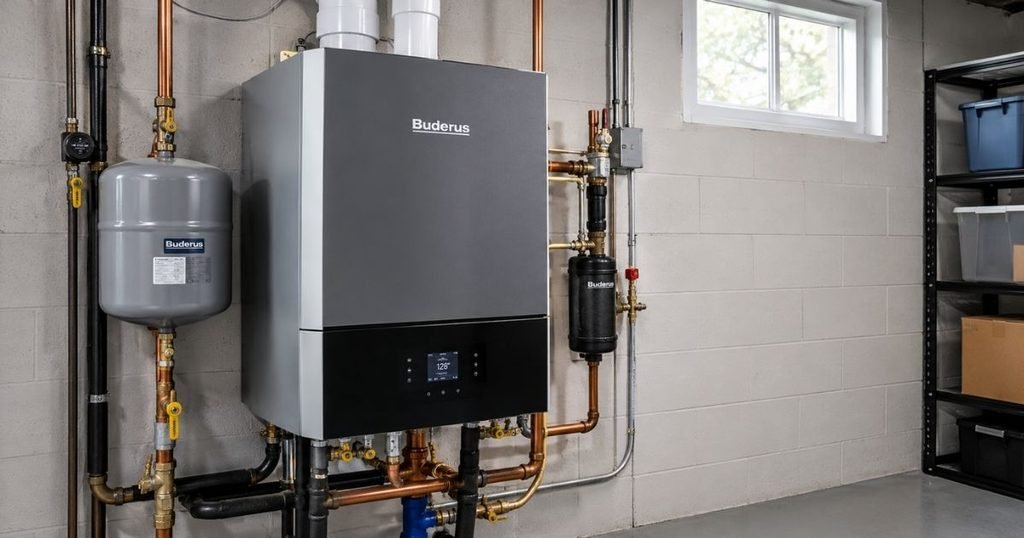
What Is a Buderus Boiler?
A Buderus boiler is a high-performance hydronic heating appliance designed to heat water or generate steam in specific commercial applications which is then circulated throughout a home to provide indoor warmth. Unlike forced-air furnaces that blow warm air through ductwork, hydronic heating systems utilize closed-loop water circuits.
In a typical Buderus setup, water is heated inside the boiler combustion chamber or heat exchanger and pumped through a network of pipes to:
- Cast-iron or steel panel radiators
- Baseboard fin-tube convectors
- Underfloor radiant PEX tubing
- Indirect domestic hot water storage tanks
The Bosch Connection
Buderus is a core brand under Bosch Thermotechnology, a division of the global Bosch Group. This integration means that modern Buderus boilers benefit from advanced German engineering paired with robust North American distribution, readily available replacement parts, and compliance with strict U.S. safety and environmental standards (such as ENERGY STAR certifications and ASME boiler codes).
While Buderus manufactures equipment for both residential and commercial scales, residential units are specifically engineered for single-family homes, townhouses, and multi-family properties, balancing compact footprints with high heating outputs.
Read More: Weil‑McLain Boiler Reviews— Models, Costs, Pros & Cons
Types of Buderus Boilers
Buderus offers a diverse lineup of heating appliances tailored to various fuel sources, installation spaces, and heating demands. Understanding the primary categories helps narrow down the right equipment for your property:
1. Gas-Fired Boilers
Operating on natural gas or liquid propane (LP), gas boilers are popular across North America due to clean burning, reliable municipal supply, and high potential efficiency. Modern gas Buderus units often feature advanced electronic ignition and modulating burners.
2. Oil-Fired Boilers
For homes located outside municipal natural gas utility lines, Buderus oil-fired boilers (such as the legendary Logano series) provide powerful, dependable warmth using heating oil. These units are celebrated for their thick cast-iron sectional heat exchangers and quiet operation.
3. Condensing Boilers
Condensing boilers extract latent heat from water vapor in the flue gases before they escape through the exhaust vent. By condensing this water vapor, these units achieve ultra-high Annual Fuel Utilization Efficiency (AFUE) ratings exceeding 90% to 95%.
4. Non-Condensing Boilers
Traditional non-condensing boilers expel hot exhaust gases directly up the chimney. While their AFUE ratings are lower (typically 82% to 87%), they are often simpler to retrofit into older homes with existing traditional metal chimneys or gravity-vented setups.
5. Cast-Iron vs. Wall-Mounted (Aluminum/Stainless Steel)
- Cast-Iron Floor-Standing Boilers: Built with heavy sectional cast-iron heat exchangers, these units offer exceptional thermal mass and extreme longevity, often lasting 30+ years with proper maintenance.
- Wall-Mounted Condensing Units: Compact, lightweight units featuring high-grade aluminum-silicon or stainless steel heat exchangers designed for space-saving utility room or basement installations.
READ MORE: Luxaire Furnace Review: Prices, Efficiency & Comparison
Popular Buderus Boiler Models and Their Features
Over the decades, Buderus has produced several benchmark residential boilers. While some legacy models have evolved or transitioned to newer Bosch-branded iterations, thousands of these units remain operational in U.S. homes, and many current variants remain staples of hydronic design.
1. Buderus GB142 (Legacy Condensing Model)
- Boiler Type: Wall-mounted condensing boiler
- Fuel Type: Natural Gas / Propane
- Heat Exchanger Material: Cast aluminum-silicon
- AFUE Efficiency Rating: Approx. 95%
- Overview: A pioneering wall-hung condensing boiler that introduced many American homeowners to European-style high-efficiency heating. Known for its compact footprint and fully modulating premix burner.
2. Buderus GB162 (High-Capacity Residential / Light Commercial)
- Boiler Type: Wall-mounted high-efficiency condensing boiler
- Fuel Type: Natural Gas / Propane
- Heat Exchanger Material: ALU-plus cast aluminum
- AFUE Efficiency Rating: Up to 92.2%
- Overview: Designed for larger residential homes or multi-zone setups. It can be cascaded (linked together) to deliver massive heating capacity in a remarkably small wall space.
3. Buderus Logano G115WS (Cast-Iron Oil Boiler)
- Boiler Type: Floor-standing non-condensing / high-efficiency oil boiler
- Fuel Type: Heating Oil (can accept Beckett or Riello gas/oil burners)
- Heat Exchanger Material: Specialized GL-180 cast-iron
- AFUE Efficiency Rating: 86% to 87%
- Overview: A titan in the oil heating sector. Its three-pass thermal design ensures maximum heat absorption from combustion gases before they exit the flue. Highly resistant to thermal shock and corrosion.
4. Buderus Logano plus KB195i / GB192i Series
- Boiler Type: Floor-standing or wall-mounted intelligent condensing boilers
- Fuel Type: Natural Gas / Propane
- Heat Exchanger Material: Cast aluminum / stainless steel
- AFUE Efficiency Rating: Up to 95%+
- Overview: Modern flagships featuring sleek glass front panels (titanium glass), advanced Logamatic digital controls, weather-compensating outdoor reset, and smart home integration capabilities.
Buderus Boiler Specifications Comparison Table
| Model Series | Boiler Type | Fuel Type | Heat Exchanger | AFUE Rating | Installation Type | Availability Status |
| Logano G115WS | Floor-Standing | Oil / Gas | Cast-Iron | 86% – 87% | Floor | Current / Active Support |
| GB142 | Wall-Mounted | Natural Gas / LP | Aluminum-Silicon | ~95% | Wall-Hung | Legacy / Discontinued (Parts Available) |
| GB162 | Wall-Mounted | Natural Gas / LP | ALU-plus Aluminum | Up to 92.2% | Wall-Hung | Transitioned / Supported |
| Logano plus KB195i | Floor-Standing Condensing | Natural Gas / LP | Cast Aluminum | Up to 95% | Floor | Current / Active |
| Logano GB192i | Wall-Mounted Condensing | Natural Gas / LP | Titanium-blended Aluminum | Up to 95%+ | Wall-Hung | Current / Active |
READ MORE: Best Natural Gas Boilers for Home Heating: Review & Comparison
How Energy Efficient Are Buderus Boilers?
Energy efficiency is one of the primary reasons U.S. homeowners invest in a Buderus heating system. To evaluate how well these units convert fuel into usable indoor heat, several technical factors come into play:
1. AFUE (Annual Fuel Utilization Efficiency)
AFUE measures the percentage of fuel converted into heat over the course of a typical heating season. Standard older boilers often operate at 60% to 70% efficiency, wasting 30% to 40% of fuel up the chimney. Modern Buderus condensing boilers achieve AFUE ratings of 92% to 95%+, meaning nearly all consumed fuel directly heats your home.
2. Condensing Technology and Return-Water Temperature
For a condensing Buderus boiler to achieve peak efficiency, the return-water temperature from your heating loops must drop below approximately 130°F (54°C). When cool return water enters the secondary heat exchanger, it triggers the condensation of water vapor, releasing latent heat that would otherwise be wasted. This makes Buderus condensing boilers exceptionally efficient when paired with low-temperature emitters like radiant floor heating or oversized panel radiators.
3. Modulating Burners and Outdoor Reset
Unlike old-school single-stage boilers that operate exclusively at 100% capacity whenever calling for heat, modern Buderus boilers feature modulating burners that ramp output up or down (e.g., from 20% to 100%) to match exact real-time heating loads. Combined with outdoor reset controls which automatically adjust boiler water temperature based on outside weather conditions this prevents overheating and slashes fuel consumption.
How Much Does a Buderus Boiler Cost in the USA?
Investing in a high-end European-engineered boiler involves a substantial upfront financial commitment. However, superior efficiency and durability often offset the initial expense over the equipment’s lifecycle.
Cost Breakdown Components
- Boiler Equipment Unit: $3,500 – $8,500+ (depending on BTU capacity and whether it is an oil cast-iron block or a wall-hung condensing unit).
- Professional Labor & Installation: $2,500 – $5,500+ (varies significantly by geographic region, local contractor rates, and wiring complexity).
- Venting & Piping Modifications: $500 – $2,000 (condensing units require specialized PVC, CPVC, or polypropylene venting; older chimneys may need stainless steel liners).
- Circulator Pumps, Expansion Tanks, & Controls: $400 – $1,200.
- Permits, Inspection, & Old Unit Removal: $300 – $800.
Estimated Total Installed Cost Table
| Boiler Category | Equipment Price Range | Total Installed Cost Range (U.S.) |
| Cast-Iron Oil Boiler (e.g., G115WS) | $3,800 – $6,500 | $7,500 – $12,500 |
| Wall-Hung Condensing Gas (e.g., GB192i) | $4,000 – $7,500 | $8,000 – $13,500 |
| High-Capacity / Multi-Zone Systems | $6,000 – $10,000+ | $12,000 – $18,000+ |
Note: Actual project costs depend heavily on your local market labor rates, whether you are converting fuel types (e.g., oil to gas), and the condition of your existing hydronic distribution piping.
READ MORE: Best 5 High Efficiency Condensing Boiler: Review, Cost & Comparison
Advantages of Buderus Boilers
Homeowners and HVAC professionals frequently choose Buderus for several distinct advantages:
- Superior Heating Comfort: Hydronic heating creates gentle, radiant warmth without the dry air, drafts, or allergen circulation associated with forced-air gas furnaces.
- Exceptional Durability: Proprietary cast-iron metallurgy (such as GL-180 iron) and high-grade aluminum heat exchangers resist thermal shock and corrosion, ensuring decades of reliable service.
- High Thermal Efficiency: Advanced three-pass combustion chambers and condensing technology maximize fuel utilization, leading to lower monthly utility bills.
- Flexible Configuration: Available in multiple fuel configurations, outputs, and footprints suitable for historic homes, suburban properties, and custom architectural builds.
- Smart Integration: Modern Logamatic controls allow for precise multi-zone temperature management, outdoor temperature compensation, and remote monitoring.
Disadvantages of Buderus Boilers
Despite their stellar reputation, Buderus boilers come with a few considerations that homeowners should weigh:
- Higher Upfront Investment: Buderus units and their proprietary parts generally command a higher initial price tag than standard builder-grade entry-level boilers.
- Specialized Technician Requirement: These precision German-engineered units require trained hydronic heating professionals for proper setup, combustion tuning, and annual servicing.
- Water Quality Sensitivity: Modern high-efficiency wall-hung boilers with aluminum heat exchangers have strict water pH and hardness tolerances. Poor water quality without proper glycol or inhibitor treatment can lead to premature scaling or corrosion.
- Parts Availability in Rural Areas: While major metropolitan hubs have robust supply chains, homeowners in remote rural areas may experience slight delays if specific electronic control boards or proprietary replacement components must be ordered.
Buderus Boiler vs. Other Boiler Brands
When shopping for a residential boiler, comparing Buderus against other top-tier brands helps clarify your options.
| Comparison Feature | Buderus | Weil-McLain | Viessmann | Lochinvar |
| Primary Strengths | Cast-iron longevity & high-efficiency condensing units | Ubiquitous parts availability, rugged cast-iron | Premium German engineering & stainless steel exchangers | Commercial-grade reliability scaled for large residences |
| Efficiency Options | Excellent (up to 95%+ AFUE) | Good to High (82% to 95% AFUE) | Exceptional (up to 98% AFUE) | Exceptional modulating condensing |
| Heat Exchanger | Proprietary Cast-Iron / Aluminum-Silicon | Cast-Iron / Stainless Steel | Inox-Radial Stainless Steel | Stainless Steel |
| Parts & Tech Availability | Good across authorized HVAC networks | Excellent nationwide | Good in urban/suburban markets | Excellent commercial & residential networks |
| Price Positioning | Premium mid-to-high | Budget-friendly to mid-tier | Premium high-end | Premium high-end |
Verdict: Choose Weil-McLain if local technician familiarity and instant part availability are your top priorities. Choose Buderus if you want a perfect fusion of legendary cast-iron ruggedness or advanced condensing efficiency with top-tier heating comfort.
READ MORE: Boiler Leaking Water: Causes, Fixes, Costs & When to Call a Pro
Buderus Boiler Installation: What Homeowners Should Know
Installing a hydronic boiler is not a DIY weekend project; it is a complex engineering task requiring licensed mechanical contractors. Key installation steps include:
- Heat-Loss Calculations (Manual J): A qualified technician must calculate your home’s exact heating load based on square footage, insulation, windows, and climate zone to prevent oversizing or undersizing the boiler.
- Hydraulic Separation & Piping: Proper piping configuration (such as primary-secondary loops or low-loss headers) ensures balanced water flow across multiple heating zones.
- Venting & Combustion Air: Condensing boilers require dedicated PVC/CPVC or polypropylene intake and exhaust venting, safely routed through exterior walls or roofs.
- Electrical and Safety Controls: Integration of low-voltage thermostat wiring, emergency shut-off switches, low-water cut-offs, and ASME pressure relief valves.
- Commissioning & Combustion Analysis: Using digital flue gas analyzers to adjust the air-fuel ratio for optimal combustion efficiency and safety compliance before handing the system over to the homeowner.
Buderus Boiler Maintenance Tips
To ensure your Buderus boiler operates safely and efficiently year after year, adhere to a proactive maintenance schedule:
- Annual Professional Tune-Up: Schedule an inspection every fall with a certified technician to clean burners, check electrodes, test safety controls, and perform a combustion efficiency test.
- Monitor System Pressure: Check the pressure gauge regularly. Closed hydronic systems typically maintain between 12 and 18 psi when cold. Sudden drops indicate leaks or expansion tank issues.
- Inspect Venting and Air Intakes: Ensure outside intake and exhaust terminals remain free of snow, ice, leaves, and bird nests.
- Bleed Radiators: If certain rooms feel lukewarm while others are hot, trapped air in the baseboards or radiators may require bleeding using a radiator key.
- Water Treatment Checks: Ensure your technician verifies inhibitor levels and water pH, especially in aluminum heat-exchanger models, to prevent internal corrosion.
Common Buderus Boiler Problems and Troubleshooting
While Buderus boilers are exceptionally reliable, occasional glitches can occur. Here is how to diagnose common issues safely:
1. Boiler Fails to Ignite / Lockout Error Code
- Symptoms: The boiler attempts to start, locks out, and displays an error code on the digital display.
- Possible Causes: Gas supply interruption, dirty flame sensor, ignition electrode wear, or blocked condensate trap.
- Homeowner Action: Check that the gas valve is open and reset the boiler once following manual instructions. If it faults again, call an HVAC technician. Do not tamper with gas lines.
2. Low Water Pressure
- Symptoms: The heating system is cold, and the pressure gauge reads below 10 psi.
- Possible Causes: A slow system leak, a faulty automatic fill valve, or a waterlogged expansion tank.
- Homeowner Action: Locate the pressure-reducing fill valve and check if the system needs water. If pressure drops repeatedly, a professional must check for hidden pipe leaks.
3. Strange Noises (Bumping, Gurgling, or Kettling)
- Symptoms: Loud banging sounds or rumbling noises coming from a cast-iron boiler.
- Possible Causes: Limescale buildup inside cast-iron sections, trapped air pockets, or restricted water circulation.
- Homeowner Action: Bleed radiators to remove trapped air. If kettling persists due to mineral scaling, professional flushing or chemical descaling is required.
READ MORE: Why Boiler Pressure Drops: Causes & Fixes
How Long Does a Buderus Boiler Last?
The lifespan of a Buderus boiler depends heavily on its construction type, installation quality, and ongoing maintenance:
- Cast-Iron Models (e.g., Logano G115WS): These robust units frequently last 25 to 35+ years due to the incredible durability of thick cast-iron sections.
- Wall-Mounted Condensing Models (e.g., GB series): Typically deliver a reliable service lifespan of 15 to 20+ years, matching industry standards for complex electronics and heat exchangers.
Signs It Is Time to Replace: Frequent component failures (e.g., repeated control board or gas valve replacements), heat exchanger leaks, or a sharp drop in overall heating efficiency in a unit over 20 years old.
Is A Buderus Boiler Worth Buying?
For homeowners seeking top-tier heating performance, exceptional build quality, and long-term energy savings, yes, a Buderus boiler is well worth the investment in 2026.
If you live in a colder northern climate, rely on oil or natural gas, and want a heating system that prioritizes comfort and durability over cheap initial cost, Buderus stands out as an industry leader. However, always prioritize getting multiple detailed installation quotes from local factory-trained contractors who understand proper hydronic system design and local water conditions.
Frequently Asked Questions
Are Buderus boilers any good?
Yes. Buderus is widely regarded as a premier heating manufacturer, celebrated for robust German engineering, heavy-duty cast-iron durability, and high-efficiency condensing technology.
How much does a Buderus boiler cost?
A complete Buderus boiler replacement typically ranges between $7,500 and $14,000+ installed, depending on whether you choose an oil cast-iron unit or a high-efficiency wall-hung gas condensing model.
How long does a Buderus boiler last?
Cast-iron Buderus oil and gas boilers often last between 25 and 35 years, while wall-mounted condensing models average 15 to 20+ years with proper annual maintenance.
What is the most efficient Buderus boiler?
Modern condensing models like the Logano GB192i and KB195i achieve thermal efficiencies of 95% AFUE or higher when paired with low-temperature return water loops.
Who makes Buderus boilers?
Buderus boilers are manufactured by Bosch Thermotechnology, a division of the global Bosch Group, ensuring world-class engineering standards and dependable North American parts support.
Final Verdict
Buderus boilers represent the pinnacle of residential hydronic heating engineering. By combining durable heat exchanger metallurgy, intelligent modulating controls, and high AFUE efficiency ratings, they provide unmatched indoor comfort during freezing winter months. While upfront equipment and professional installation costs sit at the higher end of the market, their long-term reliability, quiet operation, and fuel savings make them a stellar choice for homeowners who view home heating as a long-term investment in comfort and property value.
Sources
- Bosch Thermotechnology / Buderus USA Official Product Documentation & Engineering Manuals
- U.S. Department of Energy (DOE) – Residential Heating Efficiency Guidelines
- ENERGY STAR Technical Criteria for Residential Boilers
- HVAC Industry Technical Standards and Hydronic Heating Design Best Practices
Homeowner Safety Disclaimer
Disclaimer: This article is for informational and educational purposes only. Hydronic heating systems involve high-voltage electricity, combustible fuels (natural gas, propane, heating oil), and pressurized hot water. All installation, gas line connections, combustion tuning, electrical wiring, and major repairs must be performed by a licensed, certified HVAC professional in accordance with local building codes and manufacturer specifications. Never attempt to service gas components or bypass safety controls yourself.