When winter temperatures drop across the United States, a reliable home heating system becomes essential for indoor comfort and safety. Homeowners replacing an aging furnace or upgrading their home climate control system often evaluate multiple brands to find the best balance of energy efficiency, upfront cost, and long-term reliability. Among the prominent residential HVAC names available on the market, the Luxaire furnace lineup is frequently recommended by heating and cooling contractors.
This comprehensive guide is designed for American homeowners, first-time furnace buyers, and those comparing HVAC brands. Whether you are researching a Luxaire furnace replacement, trying to understand Luxaire furnace prices, or evaluating different Luxaire furnace models, this article provides the detailed, independent insights you need to make an informed decision. Lets deep dive into ‘Luxaire Furnace Review: Prices, Efficiency & Comparison”
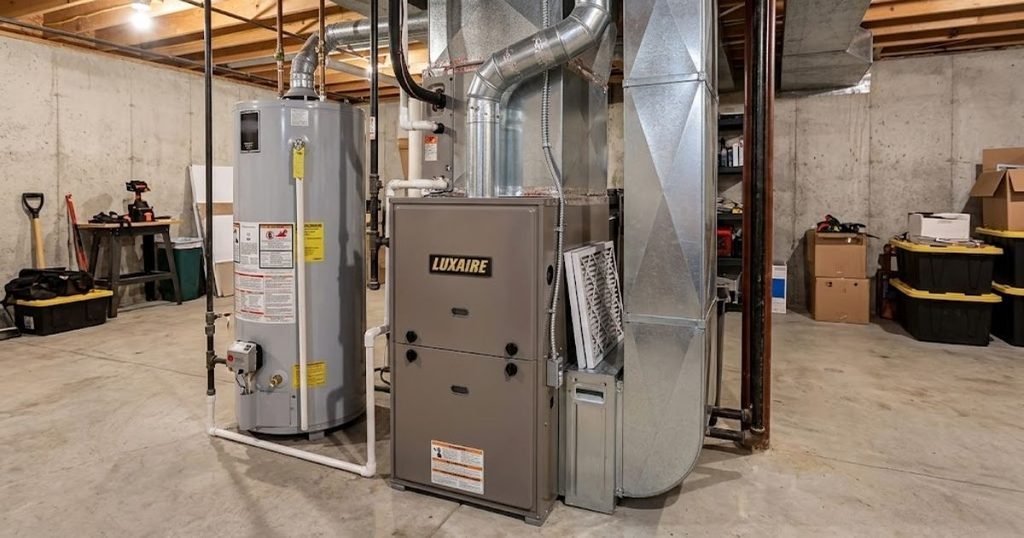
What Is a Luxaire Furnace?
Luxaire is a recognized brand of residential and commercial heating, ventilation, and air conditioning (HVAC) equipment. Manufactured by Johnson Controls, Luxaire offers a complete range of residential gas furnaces, air conditioners, heat pumps, and indoor air quality accessories. Within the U.S. HVAC market, Luxaire is positioned as a reputable, mid-to-high-tier brand known for robust manufacturing standards, advanced blower and burner technologies, and strong warranties.
It is important to understand the distinction between the Luxaire brand as a whole and an individual Luxaire gas furnace model. While the brand sets the baseline for engineering, component quality, and factory support, your actual heating experience depends heavily on the specific model tier you select, the quality of the installation, and local dealer support.
Professional installation by a qualified HVAC contractor is critical. Even the highest-rated Luxaire high-efficiency furnace can underperform, break down prematurely, or fail safety checks if it is improperly sized, incorrectly wired, or improperly vented. When compared to competing brands, Luxaire systems often stand out for their robust cabinet design, quiet operating features, and tiered efficiency offerings that cater to various regional climate zones in the United States.
READ MORE: Carrier Heat Pump Reviews — Models, Costs, Pros & Cons
Is a Luxaire Furnace Choice?
Before investing in a new heating system, homeowners should evaluate several key factors to determine if this brand aligns with their household needs, climate, and budget.
Potential Advantages
- Diverse Efficiency Levels: Options range from standard 80% AFUE furnace units suitable for mild climates or existing B-vent chimneys up to 96% AFUE furnace and 98% AFUE furnace condensing models.
- Flexible Staging Options: Homeowners can choose between single-stage, two-stage, and modulating heating operation for precise indoor temperature control.
- Advanced Blower Technology: Selected models feature variable-speed ECM blower motors that enhance SEER ratings for matched AC units, reduce noise, and improve humidity control.
- Competitive Warranty Coverage: Strong factory warranties provide peace of mind when units are properly registered.
- Authorized Dealer Network: A widespread network of independent dealers ensures access to professional installation and factory-authorized Luxaire furnace maintenance and repair services.
Potential Limitations
- Dealer Availability: Depending on your specific zip code in the U.S., authorized Luxaire dealers may be less numerous than brands with ubiquitous retail distribution.
- Feature Gaps in Entry-Tier Models: Basic single-stage models lack the whisper-quiet operation and superior temperature balancing found in variable-speed or modulating units.
- Upfront Investment: High-efficiency and modulating models command a higher initial Luxaire furnace installation cost compared to standard builder-grade equipment.
- Contractor Dependency: Equipment performance relies heavily on proper sizing and installation craftsmanship.
The Verdict: Homeowners who prioritize quiet comfort, high energy efficiency, and dependable long-term performance will find Luxaire to be a compelling option. Those seeking the absolute lowest upfront installation cost without regard for energy bills may want to compare standard entry-level tiers across multiple brands.
READ MORE: Lennox Heat Pump Review: Prices, Pros, Cons & Comparison
Best Luxaire Furnace Models to Consider
The current Luxaire lineup includes several distinct series tailored to different heating demands and budgets. Below are five prominent models and series frequently evaluated in Luxaire furnace reviews.
1. Luxaire Z9VT (High-Efficiency, Two-Stage, Variable-Speed)
- Overview: The Z9VT is a premier choice for homeowners seeking an optimal blend of energy savings and enhanced indoor comfort.
- Published AFUE: Approximately 96%.
- Heating Operation: Two-stage heating. It runs on low capacity for mild winter days and shifts to high capacity during severe cold snaps.
- Blower Technology: Equipped with a variable-speed ECM blower motor.
- Comfort & Operation: Provides exceptionally even heat distribution, reduces hot and cold spots, and works quietly.
- Advantages & Disadvantages: High efficiency and quiet operation; higher equipment and installation cost than single-stage alternatives.
- Installation Considerations: Requires PVC venting for high-efficiency condensing operation and professional electrical/gas setup.
- Warranty: Standard 10-year parts limited warranty and lifetime heat exchanger limited warranty upon timely registration.
- Who Should Consider It: Homeowners in northern or midwestern U.S. climates wanting lower gas bills and superior comfort.
2. Luxaire Z9ET (High-Efficiency, Two-Stage)
- Overview: A dependable high-efficiency option that offers two-stage heating without the added cost of a fully variable-speed blower motor.
- Published AFUE: Approximately 96%.
- Heating Operation: Two-stage heating.
- Blower Technology: Multi-speed or constant-torque blower motor.
- Comfort & Operation: Better temperature consistency than single-stage furnaces, maintaining steady airflow across various operating cycles.
- Advantages & Disadvantages: Excellent energy efficiency and two-stage comfort at a lower price point than variable-speed models; slightly less precise airflow tuning.
- Installation Considerations: Condensing furnace installation requiring proper condensate drainage and PVC venting.
- Warranty: Standard 10-year parts and lifetime heat exchanger limited warranties with registration.
- Who Should Consider It: Budget-conscious homeowners who want a 96% AFUE furnace with two-stage comfort benefits.
3. Luxaire Z9ES (High-Efficiency, Single-Stage)
- Overview: The entry point into high-efficiency condensing gas furnaces for households with simpler heating requirements.
- Published AFUE: Approximately 96%.
- Heating Operation: Single-stage (operates at 100% capacity whenever it cycles on).
- Blower Technology: Multi-speed ECM or constant-torque blower.
- Comfort & Operation: Reliable, straightforward heating, though temperature swings may be slightly more noticeable than multi-stage systems.
- Advantages & Disadvantages: High energy efficiency and lower purchase price; lacks the nuanced staging of two-stage or modulating units.
- Installation Considerations: Standard condensing setup with dedicated PVC intake and exhaust pipes.
- Warranty: 10-year parts and 20-year or lifetime heat exchanger limited warranty (model-specific verification required).
- Who Should Consider It: Homeowners in moderate heating climates seeking significant energy savings without paying for advanced multi-stage features.
4. Luxaire Z8VT (Standard-Efficiency, Two-Stage)
- Overview: Designed specifically for homes with existing masonry or metal B-vent chimneys that cannot easily accommodate PVC condensing vent retrofits.
- Published AFUE: 80% AFUE.
- Heating Operation: Two-stage heating.
- Blower Technology: Variable-speed or multi-speed blower motor depending on configuration.
- Comfort & Operation: Delivers improved temperature control compared to older single-stage 80% models.
- Advantages & Disadvantages: Eliminates the need for expensive venting retrofits in older homes; lower overall fuel efficiency than 90%+ condensing models.
- Installation Considerations: Connects directly to existing B-vent or masonry chimney systems.
- Warranty: Standard manufacturer parts and heat exchanger coverage upon registration.
- Who Should Consider It: Homeowners replacing an older 80% Luxaire gas furnace where retrofitting PVC venting through walls or roofs is impractical.
5. Luxaire LP9C (Modulating High-Efficiency Furnace)
- Overview: The flagship luxury offering in the Luxaire catalog, designed for ultimate heating precision and maximum fuel economy.
- Published AFUE: Up to 98% AFUE.
- Heating Operation: Fully modulating burner that adjusts heating output in small percentage increments (often between 35% and 100%).
- Blower Technology: Advanced variable-speed ECM blower.
- Comfort & Operation: Virtually eliminates temperature fluctuations by matching heating output precisely to outdoor weather conditions.
- Advantages & Disadvantages: Maximum possible energy efficiency, whisper-quiet operation, and supreme comfort; highest upfront equipment and Luxaire furnace installation cost.
- Installation Considerations: Requires precise commissioning, meticulous venting, and compatibility with advanced communicating thermostats.
- Warranty: Premium factory warranty coverage including registration-backed parts and heat exchanger protections.
- Who Should Consider It: Homeowners demanding uncompromising comfort, maximum energy savings, and cutting-edge HVAC technology.
READ MORE: Trane Heat Pump Review — Comparison, Pros, Cons & Costs
Luxaire Furnace Comparison Table
| Model / Series | AFUE Efficiency | Heating Operation | Blower Technology | Feature Tier | Warranty Term | Best Suited For | Price Availability |
| Luxaire Z9VT | ~96% | Two-stage | Variable-speed ECM | Premium Mid-Tier | 10-Yr Parts / Lifetime Heat Exchanger* | Balanced comfort & efficiency | Request local quote |
| Luxaire Z9ET | ~96% | Two-stage | Multi-speed / Torque | Mid-Tier | 10-Yr Parts / Lifetime Heat Exchanger* | Budget-friendly high efficiency | Request local quote |
| Luxaire Z9ES | ~96% | Single-stage | Multi-speed ECM | Entry High-Efficiency | 10-Yr Parts / Lifetime Heat Exchanger* | Simple high-efficiency heating | Request local quote |
| Luxaire Z8VT | 80% | Two-stage | Variable / Multi-speed | Standard Efficiency | 10-Yr Parts / Lifetime Heat Exchanger* | Homes with existing B-vent chimneys | Request local quote |
| Luxaire LP9C | Up to 98% | Modulating | Variable-speed ECM | Flagship Luxury | 10-Yr Parts / Lifetime Heat Exchanger* | Maximum comfort & efficiency seekers | Request local quote |
*Note: Warranties require online product registration within statutory deadlines (typically 90 days of installation) where applicable by state law; otherwise, standard 5-year parts coverage applies.
Luxaire Furnace Prices: How Much Does One Cost?
Understanding financial commitments is crucial when planning a Luxaire furnace replacement. Homeowners must distinguish between equipment-only costs and the total installed price.
Equipment Cost vs. Total Installed Cost
Buying the furnace chassis is only part of the equation. A complete professional installation includes labor, electrical wiring, gas line connections, custom sheet metal transition work, condensate drain lines, safety switches, and permit fees. Furthermore, removing and safely disposing of your old furnace is included in professional quotes.
Estimated Price Breakdown
While actual prices vary significantly by geographic location, home square footage, installation complexity, and local contractor pricing structures, typical total installed costs for a Luxaire furnace generally fall within the following ranges:
- Standard-Efficiency 80% AFUE Models (e.g., Z8VT): $3,500 – $5,500 installed.
- High-Efficiency 96% AFUE Single- or Two-Stage Models (e.g., Z9ES, Z9ET, Z9VT): $4,500 – $7,500 installed.
- Premium Modulating Models (e.g., LP9C): $6,500 – $9,500+ installed.
Financial Assistance and Incentives
Homeowners can often reduce their net investment by exploring:
- Federal Energy Efficiency Tax Credits: Section 25C tax credits may apply to qualifying high-efficiency gas furnaces equipped with eligible advanced blower motors.
- Local Utility Rebates: Many electric and gas utility providers offer cash-back incentives for upgrading to ENERGY STAR-certified heating equipment.
- Dealer Financing: Authorized contractors frequently offer promotional financing plans with approved credit.
Tip: Always obtain at least three itemized quotes from reputable local HVAC contractors to compare labor warranties, equipment tiers, and overall value.
READ MORE: Best Cold Climate Heat Pump Review: Top Picks & Buying Guide
Understanding Luxaire Furnace AFUE Ratings
AFUE stands for Annual Fuel Utilization Efficiency. It represents the percentage of heat energy produced by the furnace that is successfully converted into usable heat for your home over the course of a typical heating season.
- 80% AFUE: For every $100 spent on natural gas, $80 warms your home, while $20 escapes up the chimney as exhaust gas.
- 96% to 98% AFUE: High-efficiency condensing furnaces capture extra heat from exhaust gases using a secondary heat exchanger, venting cooler gases safely through PVC pipes. Only 2% to 4% of the fuel energy is lost.
Important Factors Beyond the Rating
- Climate and Run Hours: Homeowners in cold northern U.S. states (such as Minnesota, Wisconsin, or New England) save significantly more money with a Luxaire high-efficiency furnace than homeowners in mild southern regions (like Florida or Texas) where the furnace rarely runs.
- Proper Sizing: An oversized furnace cycles on and off too frequently (short-cycling), reducing efficiency and causing premature wear, regardless of its AFUE rating.
- Ductwork Integrity: Leaky or uninsulated ductwork can waste up to 30% of heated air before it ever reaches your living spaces.
Luxaire Furnace Warranty:
Protecting your investment requires understanding factory warranty terms. Luxaire offers robust protection plans, provided specific conditions are met.
Warranty Structure
- Parts Limited Warranty: Typically covers internal components (such as control boards, inducer motors, and gas valves) for 10 years upon registration.
- Heat Exchanger Limited Warranty: Often provides lifetime coverage on the primary and secondary heat exchangers for the original registered homeowner.
- Unregistered Equipment: If a furnace is not registered within the manufacturer’s specified window (usually 60 to 90 days post-installation), warranty terms default to shorter periods (often 5 years for parts).
Maintenance Obligations
Warranties require regular, documented maintenance. Failing to clean or replace air filters, ignoring professional annual tune-ups, or allowing technician-preventable damage can void warranty claims. Always retain your original installation invoice, permit sign-off, and registration confirmation.
Luxaire Furnace Installation: What to Expect
A successful heating upgrade follows a rigorous professional protocol:
- Manual J Heating-Load Calculation: The contractor calculates your home’s exact heat loss based on square footage, insulation levels, window placement, and local climate data.
- Equipment Sizing: Selecting the correct BTU capacity (e.g., 40,000 to 120,000 BTUs) to prevent under- or overheating.
- Duct and Vent Inspection: Verifying existing ductwork capacity and planning proper venting (B-vent or PVC).
- Old Unit Removal: Safe disconnection and disposal of the old furnace, complying with environmental and refrigerant regulations if heat pumps/AC units are connected.
- Mechanical Installation: Positioning the new Luxaire cabinet, leveling the unit, connecting gas lines, electrical supplies, condensate drainage, and venting.
- Commissioning and Testing: Measuring gas manifold pressure, checking temperature rise, testing safety switches, and verifying proper thermostat communication.
- Homeowner Walkthrough: Explaining filter replacement locations, thermostat programming, and routine maintenance best practices.
Safety Warning: Never attempt DIY gas-line installation, electrical wiring, or combustion venting. Improper installation can result in carbon monoxide leaks, fire hazards, or fatal explosions.
READ MORE: Weil‑McLain Boiler Reviews— Models, Costs, Pros & Cons
Common Luxaire Furnace Problems and Troubleshooting
While Luxaire units are engineered for reliability, mechanical systems occasionally encounter operational hiccups. Here are common symptoms, basic homeowner checks, and when to call a professional.
1. Furnace Will Not Turn On
- Homeowner Check: Verify that the thermostat is set to “Heat” with the target temperature set above room temperature. Check the main circuit breaker and the furnace’s emergency switch.
- Professional Service Needed: Faulty control board, blown internal fuse, or defective igniter.
2. Furnace Blows Cold Air
- Homeowner Check: Inspect the air filter. A severely clogged filter can cause the limit switch to trip, shutting off burners while the blower keeps running to prevent overheating.
- Professional Service Needed: Flame sensor failure, gas valve issue, or blocked flue.
3. Frequent Cycling (Short-Cycling)
- Homeowner Check: Check for restricted airflow caused by dirty filters or closed supply registers.
- Professional Service Needed: Oversized furnace installation, faulty thermostat placement, or a failing flame rollout switch.
4. Unusual Operating Noises (Squealing, Banging, Rattle)
- Homeowner Check: Check panels to ensure they are securely latched.
- Professional Service Needed: Worn blower motor bearings, loose blower wheel, or delayed ignition issues.
Safety Emergency Warning
If a carbon monoxide alarm activates, or if anyone in the home experiences dizziness, nausea, or flu-like symptoms while the heating system is running, leave the building immediately and call 911 or your local emergency services from a safe location. If you smell natural gas (rotten egg odor), evacuate immediately, avoid flipping electrical switches, and contact your gas utility provider.
Luxaire Furnace Maintenance Tips
Maximizing the lifespan of your heating system requires consistent care:
- Filter Management: Inspect disposable or washable air filters monthly during heating season; replace every 1 to 3 months.
- Keep Vents Clear: Ensure rugs, furniture, or curtains do not block supply and return registers.
- Clear Outdoor Terminations: In areas with heavy snowfall, keep intake and exhaust PVC pipes clear of snowdrifts, ice, and debris.
- Annual Professional Tune-Up: Schedule an inspection with a licensed HVAC technician every autumn to clean burners, test safety controls, check electrical connections, and measure combustion efficiency.
- Maintain Service Logs: Keep all maintenance receipts in a dedicated folder to preserve warranty eligibility.
Luxaire vs. Other Furnace Brands
When comparing brands during a Luxaire furnace replacement, homeowners frequently evaluate competitors such as York, Coleman, and Carrier.
- Luxaire vs. York: Both brands are manufactured by Johnson Controls and share identical internal mechanical platforms, core heat exchangers, and blower assemblies. Differences are primarily cosmetic, branding-related, and tied to specific independent dealer networks.
- Luxaire vs. Coleman: Coleman (another Johnson Controls brand) shares similar manufacturing roots. Luxaire is often marketed with slightly different aesthetic trims and dealer incentive structures, but reliability and performance tiers are largely parallel.
- Carrier: Carrier is an industry giant known for high-end Infinity series modulating units and extensive national brand recognition. While Carrier units command strong consumer loyalty, Luxaire often provides comparable efficiency and technology at competitive price points through local regional dealers.
How to Choose the Right Luxaire Furnace for Your Home
Selecting the ideal heating system involves a step-by-step evaluation:
- Calculate Heating Load: Insist on a professional Manual J load calculation rather than rule-of-thumb square footage estimates.
- Evaluate Climate Needs: If you live in the Upper Midwest or Northeast, invest in a 96% AFUE furnace or 98% AFUE furnace. If you reside in the South, an 80% AFUE furnace or entry-level single-stage unit may suffice.
- Choose Your Comfort Level: Decide whether you prefer basic single-stage heating, the enhanced temperature balance of two-stage staging, or the supreme whisper-quiet precision of modulating technology with variable-speed airflow.
- Verify Venting Compatibility: Confirm whether your home can accommodate PVC venting for condensing units or if you must retain B-venting.
- Compare Contractor Bids: Gather written quotes from three licensed local contractors, prioritizing installation quality, warranty support, and clear itemized pricing over brand name alone.
Final Verdict: Is a Luxaire Furnace Worth Buying?
For American homeowners navigating a heating upgrade, a Luxaire furnace represents a dependable, technologically advanced, and efficient choice. Backed by robust Johnson Controls engineering, tiered efficiency options ranging from standard 80% models to ultra-efficient 98% modulating units, and competitive factory warranties, Luxaire successfully competes with industry leaders.
While equipment pricing and performance depend heavily on professional sizing and installation craftsmanship, homeowners who partner with qualified local HVAC contractors will find that Luxaire delivers excellent long-term comfort, reliability, and energy savings. Your best next step is to schedule home consultations with local HVAC professionals to secure detailed, itemized installation quotes tailored to your home’s unique heating demands.
Frequently Asked Questions
Is Luxaire a good brand for furnaces?
Yes, Luxaire is a well-respected brand manufactured by Johnson Controls. They offer reliable heating equipment across multiple efficiency tiers, backed by competitive warranties and modern blower and burner technologies. However, overall satisfaction depends heavily on professional installation and proper equipment sizing.
How much does a Luxaire furnace cost installed?
Total installed costs typically range from $3,500 to $9,500+, depending on the model’s efficiency (80% vs. 98% AFUE), staging (single-stage vs. modulating), local labor rates, and any required ductwork or venting modifications. Homeowners should request itemized local quotes.
How long does a Luxaire furnace last?
With proper annual maintenance, timely filter replacements, and professional installation, a modern Luxaire gas furnace typically lasts between 15 and 20 years. Lifespan is heavily influenced by operating hours, local climate severity, and maintenance consistency.
What is the warranty on a Luxaire furnace?
When registered online within the manufacturer’s required window (typically 60 to 90 days of installation), Luxaire furnaces generally feature a 10-year parts limited warranty and a lifetime heat exchanger limited warranty. Unregistered units typically default to a 5-year parts warranty.
Which Luxaire furnace is the most energy-efficient?
The flagship Luxaire LP9C modulating gas furnace is the most efficient model in the current lineup, offering published efficiency ratings up to 98% AFUE alongside advanced variable-speed blower technology for maximum energy savings.
Sources and Disclaimer
Sources Consulted
- Official Luxaire Residential Gas Furnaces Documentation and Product Lineups.
- Johnson Controls HVAC Warranty and Registration Guidelines.
- U.S. Department of Energy (DOE) and ENERGY STAR Energy Efficiency Standards.
- Independent HVAC Industry Publications and Technical Specifications (2025–2026).
Disclaimer
Equipment specifications, published AFUE ratings, warranty terms, government tax credits, utility rebates, and installation pricing are subject to change without notice. Actual installed prices vary based on geographical location, home layout, ductwork condition, and contractor labor rates. Homeowners should verify exact product specifications with the manufacturer and consult a licensed, qualified local HVAC professional before purchasing or installing any heating equipment.