If your current heating system is reaching the 15-to-20-year mark, starting to break down, or leaving your utility bills uncomfortably high, researching a high efficiency gas furnace is a smart step. Modern heating technology has advanced significantly, moving past older, drafty, and wasteful systems into precision-engineered equipment designed to maximize comfort while minimizing fuel waste.
Homeowners typically consider a gas furnace replacement when chasing lower operating noise, more consistent room-to-room temperatures, and reduced monthly energy consumption. However, choosing the right energy efficient gas furnace is not a one-size-fits-all decision. The ideal system for your home depends heavily on your local climate, the square footage and insulation of your house, local natural gas prices, installation quality, and your upfront budget.
To help you navigate your options, this guide explores how these systems operate, what you can expect to pay for a gas furnace installation cost, how to evaluate gas furnace efficiency ratings, and detailed reviews of five top models. Lets deep dive into “Best High Efficiency Gas Furnace: Review, Cost & Comparison”
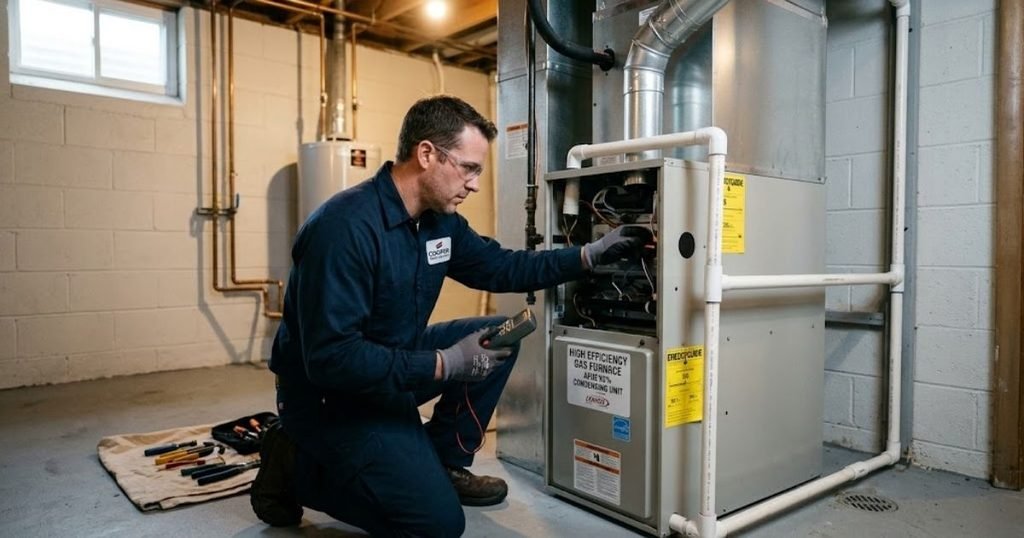
What Is a High Efficiency Gas Furnace?
At its core, a high efficiency gas furnace is a central heating appliance that burns natural gas or propane to warm air, which is then circulated through a home via ductwork. Unlike older models that vent a large portion of their heat straight out the chimney, modern high-efficiency systems are categorized as condensing furnaces.
The Condensing Advantage
The primary differentiator between a standard furnace and a high-efficiency model is the presence of a secondary heat exchanger.
- Primary Heat Exchanger: Natural gas is burned in burners, and the hot combustion gases pass through the primary heat exchanger, transferring the bulk of their heat to the air blown across it.
- Secondary Heat Exchanger: In a high-efficiency condensing system, the exhaust gases pass through a second, corrosion-resistant heat exchanger. Here, the exhaust is cooled to the point where water vapor and carbon dioxide condense into liquid water. This extraction process captures latent heat that would otherwise escape outdoors.
Because this exhaust is cooled significantly, it cannot rise naturally through a traditional metal chimney. Instead, high-efficiency models utilize sealed combustion and dedicated PVC or CPVC piping to vent exhaust horizontally or vertically through an exterior wall or roof, drawing fresh outdoor air directly into the combustion chamber rather than consuming conditioned indoor air.
Understanding AFUE
Furnace efficiency is measured using Annual Fuel Utilization Efficiency (AFUE). AFUE represents the percentage of fuel energy converted into heat over the course of a typical heating season.
Example: A 96% AFUE gas furnace converts approximately 96% of its annual fuel energy into useful heat under standardized testing methods, while approximately 4% is lost through combustion and exhaust processes.
It is important to remember that AFUE measures appliance efficiency, not total system efficiency. Duct leaks, uninsulated crawlspaces, and electrical energy consumed by blower motors can still affect overall home heating efficiency.
READ MORE: Goodman Heat Pump Review | Efficiency, Cost, Pros & Cons
How Much Does a High Efficiency Gas Furnace Cost?
Budgeting for a high efficiency furnace cost requires looking at more than just the price tag of the metal box sitting in the showroom. A complete installation involves equipment, labor, permits, and necessary structural modifications to your home’s infrastructure.
Cost Breakdown Components
- Furnace Equipment: Varies by brand, heating capacity (measured in BTUs), efficiency tier (such as a 96% AFUE gas furnace or 98% AFUE gas furnace), and internal technology (single-stage, two-stage, or modulating).
- Professional Installation Labor: Covers the time, expertise, and licensing of certified HVAC technicians.
- Removal and Disposal: Safe disconnection and haul-away of your old, outdated furnace.
- Venting and Drainage: Condensing furnaces require PVC venting and dedicated condensate drain lines, which may require new wall penetrations.
- Ductwork Modifications: Adjustments required if your existing duct system is undersized or improperly sealed.
- Gas-line, Electrical, or Combustion-Air Adjustments: Upgrades to meet modern building codes and electrical safety standards.
- Permits and Inspections: Local municipal fees ensuring the installation complies with safety regulations.
- Accessories: Upgrades like communicating smart thermostats, electronic air cleaners, or media filters.
Installation Cost Factors Table
| Cost Category | What Homeowners Should Understand |
| Furnace equipment | Depends on brand, heating capacity, efficiency tier, and modulating features. |
| Standard replacement labor | Depends on technician hours, home accessibility, and job complexity. |
| Venting and drainage | Condensing equipment requires new PVC flues and condensate removal lines. |
| Ductwork modifications | Depends on the physical condition and sizing of your home’s existing duct system. |
| Permits and inspections | Mandatory municipal fees that vary by local county and state jurisdiction. |
| Total installed price | Requires a property-specific, in-person written contractor estimate. |
While replacing an existing high-efficiency condensing furnace with a new model is relatively straightforward, converting an old, non-condensing 80% AFUE system to a high efficiency natural gas furnace often carries higher upfront labor costs due to the need to run new venting and electrical lines. Complete installed prices across the United States typically range from $4,000 to over $10,000 depending on region, equipment tier, and home complexity. Always obtain multiple itemized written quotes from licensed local contractors.
READ MORE: American Standard Heat Pump: Models, Costs & Buying Guide
Best High Efficiency Gas Furnace: Review, Cost & Comparison
When researching the best high efficiency gas furnace for your property, evaluating manufacturer specifications side-by-side helps clarify which features align with your comfort goals. Below are detailed reviews of five prominent models available in the U.S. residential market.
1. Lennox SLP99V Variable-Capacity Gas Furnace
Overview
The Lennox SLP99V sits at the pinnacle of Lennox’s residential heating lineup, designed for homeowners who prioritize ultra-precise temperature control, whisper-quiet operation, and maximum energy efficiency.
Key Specifications
- AFUE Rating: Up to 99%
- Heating Operation: Variable-capacity (adjusts in increments as small as 1%)
- Blower Type: Variable-speed
- Fuel Compatibility: Natural gas (propane conversion kits available)
- Key Features: SilentComfort technology, communicating iComfort/S30 thermostat compatibility.
Main Advantages
The SLP99V delivers exceptionally steady indoor temperatures, eliminating the hot and cold swings common with older single-stage equipment. Its variable-speed blower operates at low, quiet speeds for much of the day, filtering air continuously while minimizing background noise.
Potential Drawbacks
This is a premium, highly complex piece of machinery. It carries a high initial purchase price, requires compatible communicating controls, and demands specialized technician expertise for maintenance and repairs.
Efficiency and Operating Costs
Operating at up to 99% AFUE, this model extracts nearly all usable heat from the fuel consumed, making it a strong contender for homeowners facing severe winters with high natural gas rates.
Who Should Consider It
Homeowners planning to stay in their homes long-term who value quiet operation, flawless temperature balancing, and top-tier efficiency ratings.
Verdict
An exceptional, feature-rich variable-speed gas furnace, provided your budget accommodates the premium upfront equipment and installation costs.
2. Carrier Infinity 98 Gas Furnace — Model 59MN7
Overview
Carrier’s Infinity 98 model 59MN7 is a flagship heating solution engineered to integrate seamlessly into Carrier’s Infinity smart home ecosystem, offering elite modulation and dehumidification control.
Key Specifications
- AFUE Rating: Up to 98.5%
- Heating Operation: Modulating (operates between 35% and 100% capacity)
- Blower Type: Variable-speed ECM
- Fuel Compatibility: Natural gas
- Key Features: Infinity Touch control compatibility, Greenspeed intelligence, low-constant fan energy usage.
Main Advantages
Greenspeed intelligence allows the gas valve and blower to adapt dynamically to real-time weather conditions, ensuring your home receives only the exact amount of heat required. It also excels at summertime humidity removal when paired with a matching Carrier air conditioner or heat pump.
Potential Drawbacks
Advanced modulating technology requires the proprietary Infinity thermostat to unlock its full capabilities. Improper initial setup or lack of certified dealer support can complicate troubleshooting.
Efficiency and Operating Costs
With an AFUE rating reaching 98.5%, fuel waste is minimized. Real-world savings will depend on local gas utility rates and whether the system is properly sized for your home’s heating load.
Who Should Consider It
Homeowners in colder northern climates who want maximum comfort, superior humidity control, and a fully communicating HVAC ecosystem.
Verdict
A top-tier 98% AFUE gas furnace that offers some of the most refined comfort management available in the residential HVAC industry.
READ MORE: Fujitsu Heat Pump Reviews: Models, Costs & Real-World Pros & Cons
3. Trane 96 Modulating Variable-Speed Gas Furnace
Overview
Trane is renowned for robust mechanical engineering, and its modulating variable-speed line brings durable construction together with high-efficiency heating performance.
Key Specifications
- AFUE Rating: Up to 97% (depending on specific model configuration)
- Heating Operation: Modulating gas valve
- Blower Type: Variable-speed comfort-ramping blower
- Fuel Compatibility: Natural gas / Propane convertible
- Key Features: Vortica II blower design, heavy-gauge steel primary heat exchanger, rugged cabinet construction.
Main Advantages
Trane builds its equipment with durability in mind, utilizing robust internal components designed to withstand rigorous heating seasons. The modulating design ensures smooth, gradual transitions in heating output rather than abrupt blasts of hot air.
Potential Drawbacks
Trane equipment is typically sold and installed exclusively through certified independent dealers, which can limit shopping flexibility. Upfront equipment and installation expenses are on the higher end of the market.
Efficiency and Operating Costs
By matching heating output down to fractional increments, the system avoids short-cycling, optimizing fuel consumption and reducing electrical draw during long heating cycles.
Who Should Consider It
Homeowners seeking a durable, heavy-duty heating system backed by an established nationwide network of certified professional installers.
Verdict
A reliable, high-performing energy efficient gas furnace that bridges the gap between rugged durability and modern comfort technology.
4. Bryant Evolution 98 Variable-Speed Modulating Gas Furnace — Model 987M
Overview
The Bryant Evolution 98 (Model 987M) shares architectural DNA with Carrier’s top-tier lineup, offering exceptional efficiency and quiet operation under Bryant’s trusted brand banner.
Key Specifications
- AFUE Rating: Up to 98.5%
- Heating Operation: Perfect Heat technology modulating gas valve
- Blower Type: Variable-speed ECM
- Fuel Compatibility: Natural gas
- Key Features: Evolution Connex control compatibility, Fan On Plus technology, exceptionally quiet sound ratings.
Main Advantages
The modulating design maintains ultra-consistent indoor temperatures by making subtle adjustments to fuel flow and fan speed. Homeowners frequently note the quiet sound profile during operation compared to older single-stage systems.
Potential Drawbacks
Like other ultra-high-efficiency communicating systems, utilizing the full range of modulating features requires the proprietary Evolution control wall thermostat, increasing initial investment.
Efficiency and Operating Costs
Reaching up to 98.5% AFUE, this unit ranks among the most efficient heating appliances on the market, substantially cutting wasted fuel during extended winter months.
Who Should Consider It
Homeowners looking for Carrier-level engineering performance through Bryant’s extensive independent dealer network.
Verdict
A phenomenal choice for those prioritizing quiet operation, precise temperature control, and a high-efficiency gas furnace replacement.
5. Lennox EL297V Two-Stage Variable-Speed Gas Furnace
Overview
For homeowners who want high efficiency and improved comfort without paying top dollar for fully modulating equipment, the Lennox EL297V offers a balanced mid-to-high tier alternative.
Key Specifications
- AFUE Rating: Up to 97%
- Heating Operation: Two-stage heating (Low fire ~65%, High fire 100%)
- Blower Type: Variable-speed
- Fuel Compatibility: Natural gas
- Key Features: Duralok Plus heat exchanger, robust steel cabinet, standard thermostat compatibility.
Main Advantages
Unlike single-stage furnaces that run at 100% capacity every time they click on, a two-stage gas furnace utilizes low fire for mild chilly days, running quieter and using less fuel. It also provides better compatibility with standard thermostats than complex modulating units.
Potential Drawbacks
While more efficient than standard units, it does not achieve the fractional, continuous modulation of top-tier 98%+ models.
Efficiency and Operating Costs
With an AFUE rating up to 97%, the EL297V delivers substantial fuel savings over older 80% systems while keeping equipment acquisition costs lower than fully modulating flagships.
Who Should Consider It
Homeowners seeking an optimal balance between advanced comfort features, high efficiency, and moderate upfront investment.
Verdict
An excellent, reliable mid-tier choice that delivers strong energy performance without the premium price tag of fully modulating systems.
READ MORE: Ultra Quietest Heat Pump for Your Home: Review, Comparison & Cost
Comparison Table: Best High Efficiency Gas Furnaces
| Furnace Model | Maximum AFUE | Heating Operation | Blower Type | Main Advantage | Potential Drawback | Best For |
| Lennox SLP99V | Up to 99% | Variable-Capacity | Variable-Speed | Ultimate efficiency and quietness | High equipment and control cost | Long-term homeowners wanting peak performance |
| Carrier Infinity 98 (59MN7) | Up to 98.5% | Modulating | Variable-Speed | Greenspeed humidity and comfort control | Requires proprietary thermostat | Colder climates and smart-home integration |
| Trane 96 Modulating | Up to 97% | Modulating | Variable-Speed | Rugged, durable internal build quality | Dealer-exclusive sales network | Durability and robust mechanical reliability |
| Bryant Evolution 98 (987M) | Up to 98.5% | Modulating | Variable-Speed | Exceptional temperature consistency | Premium upfront investment | Homeowners wanting Carrier-tier tech via Bryant dealers |
| Lennox EL297V | Up to 97% | Two-Stage | Variable-Speed | Great balance of cost and efficiency | Lacks continuous modulation | Value-focused buyers wanting high efficiency |
Buying Verdict Summary
- Best Premium-Efficiency Option: Lennox SLP99V (for maximum AFUE potential).
- Best Option for Advanced Comfort Features: Carrier Infinity 98 or Bryant Evolution 98.
- Best Option for Two-Stage vs. Modulating Comparison: Choose the Lennox EL297V if you want robust two-stage savings without paying for complex modulation.
- Best Overall Choice: The right choice depends heavily on your local contractor network, home size, and whether your household prioritizes upfront budget control or elite comfort features.
How to Choose the Right High Efficiency Gas Furnace
Selecting the right heating system involves balancing several technical and practical criteria.
AFUE Rating Considerations
While chasing a 98% AFUE gas furnace is tempting, evaluate whether the incremental fuel savings justify the higher equipment cost compared to a 96% AFUE gas furnace. In milder southern or coastal U.S. climates, a 95% or 96% model often provides optimal value. In harsh northern states with prolonged sub-freezing winters, higher AFUE ratings pay off faster.
Single-Stage, Two-Stage, and Modulating Heating
- Single-Stage: On or off at 100% capacity. Tends to cause temperature swings and noticeable drafts.
- Two-Stage: Operates on low (approx. 65%) for milder weather and switches to high when severe cold hits.
- Modulating: Adjusts heating output continuously across dozens of increments, matching your home’s heat loss down to the exact percentage required.
Furnace Sizing and Manual J Calculation
Never let an installer size a furnace simply by looking at your home’s square footage or replacing your old unit with one of identical BTU capacity. A professional HVAC contractor should perform a Manual J heating-load calculation, factoring in local climate data, window placement, insulation levels, ceiling height, and air leakage. An oversized furnace will short-cycle, wearing out components prematurely, while an undersized unit will run constantly on bitter cold days.
Blower Motor Technology
Modern variable-speed gas furnace models utilize Electronically Commutated Motors (ECMs). These motors use significantly less electricity than older permanent split capacitor (PSC) motors, adjust airflow dynamically to maintain proper static pressure, and improve indoor air filtration.
READ MORE: Best Heat Pump Brands Comparison, Reviews, and Buying Guide
High Efficiency Gas Furnace vs. Standard Efficiency Furnace
| Feature | Standard Efficiency Furnace | High Efficiency Condensing Furnace |
| Typical AFUE Range | Around 80% | 90% to 99% |
| Initial Purchase & Installation | Lower upfront equipment and labor cost | Higher equipment cost and complex installation |
| Venting Requirements | Metal B-venting through roof chimney | PVC or CPVC pipe through sidewall or roof |
| Condensate Drainage | None required (exhaust stays hot as gas) | Requires dedicated condensate drain and trap |
| Comfort Features | Mostly single-stage, standard blowers | Available in two-stage and modulating with variable speed |
| Maintenance | Standard filter changes and burner checks | Filter changes, burner checks, and condensate trap cleaning |
| Climate Suitability | Adequate for mild southern climates | Ideal for moderate to severe northern winters |
As shown, upgrading from a standard 80% model to a high-efficiency condensing system changes how your home handles exhaust venting and moisture drainage. Old metal flues cannot be reused for condensing furnaces, as the acidic water vapor would corrode them.
How Much Can a High Efficiency Gas Furnace Save?
Homeowners often ask how much money a new heating system will save on monthly utility bills. While theoretical calculations demonstrate fuel reduction, actual bill savings depend on multiple real-world variables.
Illustrative Fuel-Input Comparison
Consider the math required to deliver a constant amount of useful heat (for example, 80 million BTUs of heat required per winter):
- 80% AFUE Furnace: Requires 800.80=100 million BTUs of natural gas input.
- 96% AFUE Furnace: Requires 800.96=83.3 million BTUs of natural gas input.
This comparison estimates a roughly 16.7% reduction in fuel input to produce the exact same amount of warmth. However, your actual financial savings depend on local natural gas utility rates, winter severity, thermostat habits, and how well your home is insulated and air-sealed. Always review written estimates comparing projected annual fuel costs before making your final purchasing decision.
Rebates, Tax Credits, and Financing
Upgrading your heating system can represent a significant financial investment, but various programs help offset the cost.
- Utility Rebates: Many local natural gas utility companies offer financial rebates for homeowners installing high-efficiency equipment meeting specific AFUE thresholds. Check with your utility provider before signing an installation contract.
- Federal Tax Credits: Federal energy-efficiency incentives can help reduce tax liability for qualifying heating equipment upgrades. Always verify current federal requirements and product qualification standards using official IRS and government energy resources before purchase.
- Financing Options: Many reputable HVAC dealers offer promotional financing, low-interest installment plans, or zero-down financing options. Evaluate the total cost of borrowing when comparing financing offers against cash purchases.
Installation, Maintenance, and Safety
A premium furnace will underperform if installed incorrectly. Proper commissioning including gas pressure adjustment, combustion analysis, airflow balancing, and static pressure testing is vital.
Practical Maintenance Checklist
- Air Filters: Inspect and replace or clean your air filters every 1 to 3 months depending on filter type and household dust/pets.
- Clear Vents: Ensure supply registers and return-air grilles inside your home are never blocked by furniture, rugs, or drapes.
- Professional Tune-Ups: Schedule an annual pre-season maintenance check with a qualified HVAC technician to inspect burners, flame sensors, and heat exchangers.
- Condensate Lines: Keep condensate drain tubes clear of algae or clogs to prevent water backup and safety switch shutdowns.
- Carbon Monoxide Alarms: Install and test carbon monoxide detectors on every level of your home, especially near sleeping areas.
Safety Warning: Never bypass internal furnace safety switches, attempt DIY gas-line adjustments, or tamper with combustion assemblies. If a carbon monoxide alarm sounds or occupants experience dizziness or nausea, evacuate the home immediately and contact emergency services from a safe location.
Common High Efficiency Gas Furnace Buying Mistakes
To ensure a smooth replacement process, avoid these common pitfalls:
- Choosing the highest AFUE rating blindly without calculating whether the extra equipment cost is justified by your local gas rates.
- Buying an incorrectly sized unit without a formal Manual J load calculation.
- Comparing equipment-only online prices with complete turnkey professional installation quotes.
- Forgetting to verify local venting and electrical requirements for condensing equipment.
- Overlooking manufacturer warranty registration requirements (many brands require registration within 60 days of installation to secure full parts coverage).
- Failing to verify contractor licensing, insurance, and local standing.
Frequently Asked Questions
What Is the Most Efficient Gas Furnace for a Home?
Models achieving up to 98% to 99% AFUE, such as the Lennox SLP99V or Carrier Infinity 98, represent the peak of residential efficiency. However, the “most efficient” choice for your specific home also depends on proper sizing, climate, and professional installation quality.
Is a 96% AFUE Gas Furnace Worth the Money?
For most homes in regions with cold winters, a 96% AFUE gas furnace provides an excellent balance between upfront equipment cost and ongoing fuel savings compared to older 80% models.
How Much Does a High Efficiency Gas Furnace Cost to Install?
Complete professional installations typically range from $4,000 to over $10,000. Final pricing depends heavily on your geographic location, furnace capacity, necessary ductwork modifications, and local labor rates.
What Is the Difference Between a 95% and 98% AFUE Furnace?
A 98% AFUE furnace extracts slightly more heat from combustion gases than a 95% model. However, the small efficiency difference may not translate into massive dollar savings unless local gas prices are exceptionally high or your heating demand is very heavy.
How Long Does a High Efficiency Gas Furnace Last?
A well-maintained high-efficiency gas furnace typically lasts between 15 and 20 years. Longevity depends heavily on proper initial installation, regular annual maintenance, filter changes, and operating environment.
Conclusion
Investing in a high efficiency gas furnace is one of the most impactful ways to enhance your home’s winter comfort, reduce fuel waste, and lower long-term heating costs. By weighing AFUE ratings, modulating versus two-stage performance, and proper equipment sizing, you can find a heating system tailored precisely to your household’s needs.
Take the next step toward reliable winter warmth by reviewing the top models discussed in this guide and reaching out to certified, reputable local HVAC professionals to request itemized, in-home installation estimates and energy consultations today.