When water starts leaking beneath your home’s concrete foundation, the quiet drip can quickly turn into an expensive homeowner concern. Unlike an exposed pipe under your kitchen sink, a line running below a concrete slab is hidden from plain view and structurally locked in place. Even a minor pinhole leak in a subterranean hot or cold water pipe can gradually wash away supporting soil, compromise your foundation, damage hardwood or carpet, and send monthly utility bills skyrocketing.
Understanding the breakdown of pricing ranges helps you make informed choices, avoid unfair contractor markups, and protect your home’s structural integrity. Lets deep dive into “How Much Does a Slab Leak Cost to Repair?”
How Much Does a Slab Leak Cost to Repair?
The cost to repair a slab leak depends heavily on the chosen access method, how early the problem was detected, and whether you are repairing a single localized pipe section or bypassing an aging plumbing line. Below is a snapshot of current U.S. pricing ranges for slab leak services:
| Slab Leak Service | Typical U.S. Cost Range | Key Scope & Factors |
| Leak Detection | $150 – $600 | Electronic, acoustic, pressure, or thermal inspection to pin down exact location. |
| Basic / Spot Pipe Repair | $600 – $2,000 | Direct patch or replacement of a small isolated pipe section. |
| Direct Slab Access Repair | $600 – $4,000+ | Jackhammering through concrete, fixing pipe, and patching slab. |
| Pipe Rerouting | $600 – $4,000+ | Running a new line above ground (attic/walls), bypassing the slab line. |
| Under-Slab Tunneling | $1,500 – $5,000+ | Digging under the foundation perimeter without disturbing indoor flooring. |
| Water Damage Restoration | $1,000 – $5,000+ | Water extraction, drying, drywall repair, and flooring replacement. |
| Extensive Line Repiping | $4,000 – $15,000 | Full-home plumbing reroute for old, severely corroded piping systems. |
READ MORE: Slab Leak Detection Cost
What Is a Slab Leak?
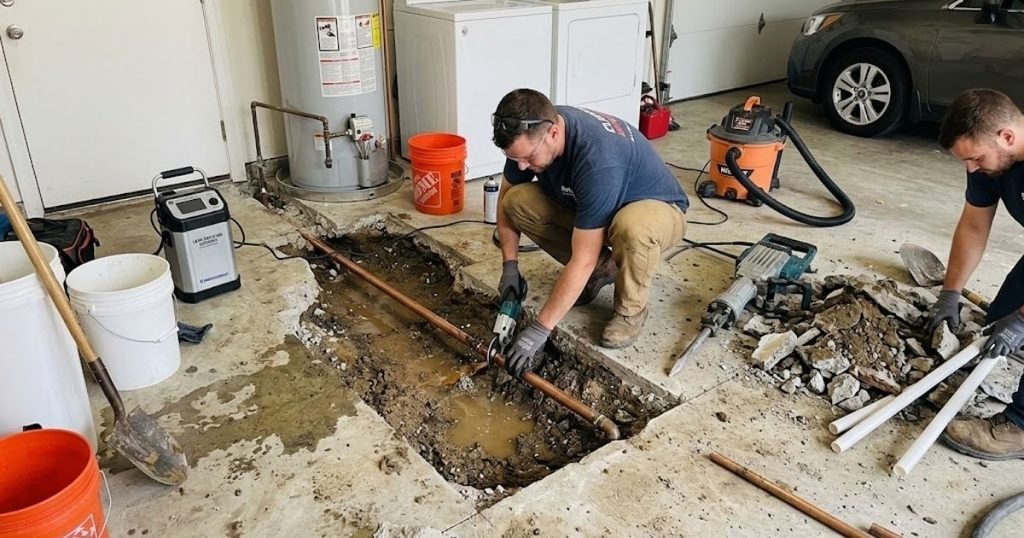
A concrete slab foundation is a thick, solid layer of concrete poured directly over prepared soil or gravel to form the structural base of a home. During construction, plumbers install main water supply lines, hot water distribution pipes, and drain lines either within or directly beneath this concrete foundation.
A slab leak occurs when one of these subterranean supply or drainage pipes develops a hole, crack, or loose connection, letting pressurized water escape continuously into the surrounding soil or up through the concrete slab.
Common Causes of Slab Leaks
- Soil Shifting & Ground Settlement: Expansive clay soils swell when wet and shrink when dry, putting intense physical strain on underlying plumbing.
- Chemical Corrosion: Acidic water or soil minerals can wear down metal supply lines over time. Copper pipes in older homes are particularly susceptible to pit corrosion.
- Friction & Abrasion: As warm water expands and contracts copper pipes against coarse gravel or concrete edges, the constant rubbing wears down pipe walls.
- High Water Pressure: Excess municipal pressure puts constant strain on fittings, joints, and aging pipe walls.
- Poor Installation: Improperly bent pipes, unprotected stub-outs, or poor soldering during initial construction can shorten pipe lifespan.
Unlike standard plumbing leaks under sinks or behind drywall, slab leaks are hidden beneath dense concrete, making visual inspection impossible without specialized diagnostic tools.
READ MORE: Main Water Line Replacement Cost
Signs You May Have a Slab Leak
Because slab leaks remain hidden underground, you must watch for subtle behavioral and physical clues in your home.
- Unexplained Spike in Water Bills: A sudden increase in monthly water consumption without changing household habits is often the first indicator of a continuous leak.
- Sound of Running Water: Hearing water running or whistling through pipes when every faucet, shower, and appliance is completely turned off.
- Hot Spots on Your Floor: If a hot water supply line ruptures under the slab, warmth transfers through the concrete, creating distinct warm patches under tile, vinyl, or wood floors.
- Damp, Buckling, or Discolored Flooring: Unexplained moisture under carpets, warped hardwood planks, or damp baseboards along interior walls.
- Low Water Pressure: A noticeable drop in water pressure across multiple home fixtures can indicate significant volume loss before water reaches your faucets.
- Hot Water Heater Running Constantly: If a hot water slab leak occurs, your water heater works nonstop to reheat fresh cold water entering the system.
- Cracks in Walls or Foundations: Ongoing water saturation can erode soil beneath the foundation, causing localized settling that creates hairline fractures in drywall or concrete slabs.
- Musty Odors: Trapped underground moisture rising through subflooring promotes hidden mildew growth under carpets or behind baseboards.
Note: These symptoms do not automatically prove you have a slab leak. A running toilet, broken irrigation valve, or leaking main supply line outside the slab can produce similar signs. Professional leak detection ensures you don’t cut into concrete unnecessarily.
How Much Does Slab Leak Detection Cost?
Before breaking through concrete or cutting open drywall, a plumber must pinpoint the precise leak location. Professional slab leak detection costs between $150 and $600, with most homeowners paying around $250 to $400.
Plumbers utilize several non-invasive technologies to locate hidden leaks:
- Acoustic / Electronic Amplification Equipment: High-frequency listening devices amplify the sound of pressurized water escaping from underground pipes.
- Thermal Imaging Cameras: Infrared technology detects temperature variations on floor surfaces, pointing out hot water leaks immediately.
- Pressure Testing & Line Isolation: Plumbers pressurize isolated sections of piping with air or water to confirm pressure drops and narrow down which line is leaking.
- Endoscopic / Video Inspection: Small fiber-optic cameras inserted into drain lines help locate leaks in waste and sewer pipes under the slab.
Many licensed plumbing companies will credit a portion (or all) of the leak detection fee toward your final bill if you hire them to execute the repair work.
READ MORE: How to Find a Hidden Water Leak in Your Wall: Step by Step DIY Guide
What Factors Affect Slab Leak Repair Cost?
The final estimate for slab leak repairs can vary significantly depending on key project variables:
1. Location of the Leak
A leak located under open garage concrete or an unfinished utility closet is simpler and less expensive to access than one beneath expensive marble tile, custom kitchen cabinetry, or supporting load-bearing walls.
2. Type and Condition of Pipe
Older copper and galvanized steel lines are prone to corrosion and can be brittle to work on, whereas newer PEX (cross-linked polyethylene) lines are more flexible. If neighboring pipe sections show signs of advanced wear, a spot repair may only provide a temporary solution before another leak occurs.
3. Severity and Extent of Damage
A localized pinhole leak in a supply line requires far less labor than a burst pipe or multiple failing joints along an extended underground run.
4. Selected Repair Method
Choosing between direct concrete breakout, pipe rerouting through attic spaces, or under-slab tunneling dramatically alters the breakdown between plumbing labor, excavation, and structural restoration costs.
5. Local Labor Rates
Plumbing labor rates across the U.S. generally range from $75 to $200 per hour, with major metropolitan regions charging premium rates due to higher overhead and licensing standards.
6. Flooring and Concrete Demolition
Removing finished hardwood, tile, or stone flooring, combined with pneumatic concrete jackhammering, adds labor hours and restoration costs once the plumbing work is completed.
7. Secondary Water Damage & Restoration
Water that has saturated subflooring, carpet padding, drywall, or baseboards requires structural drying, water removal, and potentially mold remediation.
8. Municipal Permits & Inspections
Most jurisdictions require building or plumbing permits for foundation modifications or line repiping, which can add $50 to $300 to the final bill.
Slab Leak Repair Methods and Their Costs
Understanding the main repair methods helps you evaluate your plumber’s recommendation effectively.
| Repair Method | How It Works | Typical Cost Range | Best Used When… |
| Spot Repair (Direct Slab Access) | Plumbers jackhammer through the floor slab directly over the leak, replace the bad section, and patch the concrete. | $600 – $3,000 | The home is relatively new, the pipe is in good condition overall, and the leak location is easily accessible. |
| Pipe Rerouting (Bypassing) | The damaged underground pipe is capped and abandoned. A new PEX line is routed through walls/attics. | $600 – $4,000+ | The pipe is beneath expensive flooring/cabinets, or the underground line shows signs of widespread corrosion. |
| Pipe Lining (Epoxy Coating) | An epoxy liner is pulled through the inside of the cleaned pipe to seal pinholes non-invasively. | $500 – $2,000 | The pipe structural integrity is intact, straight runs exist, and breaking concrete is undesirable. |
| Under-Slab Tunneling | Contractors excavate a tunnel under the foundation perimeter to access and repair pipes from below. | $1,500 – $5,000+ | You want to avoid breaking indoor finished flooring or disturbing living spaces inside the home. |
| Whole-House Repiping | All domestic water supply lines are replaced throughout the structure with new PEX or copper piping. | $4,000 – $15,000+ | The plumbing system is old, corroded, or has suffered multiple previous slab leaks. |
READ MORE: Signs Your Pipes Need Replacing — When to Repair vs. Replace & Costs
Spot Repair
A spot repair involves breaking open a small hole in the concrete directly over the leak. The plumber removes the failed section of pipe, solders or crimps in new copper or PEX tubing, pressure tests the assembly, and backfills the opening before pouring fresh concrete. While this resolves the immediate issue, it introduces the risk of future leaks on the remaining original pipe.
Pipe Rerouting
Pipe rerouting bypasses the broken under-slab line entirely. Plumbers disconnect the damaged line, cap both ends beneath the floor, and install a brand-new water line through accessible interior walls, closets, or attic space. This method avoids jackhammering inside your living space, preserving your floors.
Epoxy Pipe Lining
Trenchless pipe lining involves cleaning the inner pipe wall and coating it with an epoxy resin that hardens into a smooth interior seal. While minimally invasive, this option is not suitable for collapsed pipes, crushed lines, or pipes with sharp bends.
Under-Slab Tunneling
For homes with high-end interior finishes, tunneling provides access to plumbing from outside the home’s perimeter. Workers dig a trench under the concrete slab, allowing the plumber to complete repairs from below without disturbing interior floors. However, manual excavation adds notable labor costs.
Slab Leak Repair Cost vs. Rerouting Cost
Deciding between fixing a pipe in place or rerouting a new line requires weighing upfront costs against long-term reliability.
- When Spot Repair Makes Sense: Best for newer construction (under 10–15 years old) where the surrounding pipe is in good condition, and the leak is located under easily replaceable carpet or subflooring.
- When Pipe Rerouting Makes Sense: Ideal for older homes with aging copper pipes, or when leaks occur directly beneath expensive hardwood, custom tile, or kitchen islands. Rerouting eliminates future under-slab leaks along that line.
How Much Does It Cost to Repair Water Damage From a Slab Leak?
Fixing the pipe itself resolves the plumbing issue, but addressing water damage is often a separate restoration project.
- Concrete Patching & Floor Repair: $250 to $1,000 for basic concrete fill and minor flooring replacement.
- Water Extraction & Moisture Drying: $500 to $2,500 depending on the volume of standing water and how long moisture soaked into structural subfloors.
- Drywall & Baseboard Restoration: $300 to $1,500 for repairing wall sections cut during pipe rerouting or damaged by rising dampness.
- Mold Remediation: $1,100 to $3,300+ if water remained undetected long enough for mold colonies to develop behind baseboards or beneath subflooring.
Addressing water accumulation quickly helps minimize overall restoration expenses.
READ MORE: Water Leak Repair Near Me
Does Homeowners Insurance Cover Slab Leak Repair?
Insurance coverage for slab leaks depends heavily on your specific policy and the cause of the leak.
- The Failed Pipe Itself: Standard HO-3 homeowners insurance policies generally view aging, corroded, or worn plumbing lines as normal home maintenance, meaning the cost of the actual plumbing repair is usually paid out-of-pocket.
- Tear-Out and Access Costs: Many standard policies cover the cost to break through the slab or open walls to access the leaking pipe if the leak was sudden and accidental.
- Secondary Water Damage: Coverage typically applies to water damage affecting covered parts of your home, such as ruined carpet, warped flooring, damaged baseboards, or saturated drywall.
Always document water damage with clear photographs, save all diagnostic reports from your licensed plumber, and consult your insurance agent before approving major demolition work.
Can You Repair a Slab Leak Yourself?
No. Slab leak repairs should always be handled by a licensed, insured plumbing professional.
Attempting a DIY repair on a concrete foundation carries significant structural and financial risks:
- Structural Damage: Indiscriminate jackhammering can cut into post-tension cables or post-tensioned steel strands embedded inside modern slabs, creating severe safety hazards and foundation damage.
- Exacerbating Pipe Damage: Misidentifying pipe materials or improperly soldering copper lines beneath concrete can lead to immediate joint failures under standard water pressure.
- Permit Violations: Plumbing repairs inside slab foundations often require municipal inspection approvals to verify compliance with local building codes.
Safe DIY Step: Homeowners can safely confirm suspected leaks by conducting a water meter test. Turn off all indoor water fixtures, check your water meter, wait 30 minutes without using water, and check the meter again. If the meter dial moves, water is actively escaping somewhere in your system.
How Long Does Slab Leak Repair Take?
A standard slab leak project typically takes 1 to 3 days from initial diagnosis to project completion, depending on complexity:
- Step 1: Leak Detection & Diagnosis: 1 to 3 hours.
- Step 2: Excavation / Rerouting Work: 4 to 8 hours for direct access or single-line reroutes.
- Step 3: Concrete Backfill & Patching: 2 to 4 hours (plus 24 hours cure time).
- Step 4: Flooring Restoration & Drying: 1 to 3 additional days if extensive water drying or new flooring installation is required.
How to Save Money on Slab Leak Repair
- Act Promptly: Addressing low-pressure issues or unexplained water bills early helps prevent secondary water damage, mold growth, or soil erosion beneath your foundation.
- Confirm Detection Fee Credits: Ask plumbing contractors if their leak detection fee will be applied toward the total cost of the repair.
- Get Multiple Itemized Estimates: Compare quotes from at least 2 or 3 licensed plumbers. Ensure every estimate clearly breaks down detection, excavation, pipe work, patching, and cleanup fees.
- Consider Rerouting Over Concrete Breaking: Bypassing lines through attic spaces often saves on floor restoration costs compared to jackhammering through high-end tile or hardwood.
- Verify Contractor Warranties: Ensure your plumber offers a written warranty covering parts and labor.
Questions to Ask a Plumber Before Approving Repairs
Before signing a contract, ask candidate plumbers these essential questions:
- [ ] How did you confirm the precise location of the leak?
- [ ] Which repair method do you recommend for my situation, and why?
- [ ] Does your quote include concrete backfilling and slab patching?
- [ ] Will my detection fee be credited toward the repair cost?
- [ ] Do you pull the required municipal permits for this job?
- [ ] Are you fully licensed, bonded, and insured in this state?
- [ ] What length and type of warranty is provided on the new pipe and fittings?
When Is a Slab Leak an Emergency?
While all slab leaks require prompt attention, call a 24/7 emergency plumber immediately if you observe:
Critical Emergency Indicators
- Rapidly rising water through floor coverings
- Water pooling near electrical panels or outlets
- Complete, sudden drop in home water pressure
- Visible, expanding foundation wall cracks
- Inability to shut off the main water valve
If you encounter any of these issues, shut off your home’s main water valve immediately to prevent further damage while waiting for professional help.
How to Compare Slab Leak Repair Estimates
Comparing plumbing estimates requires ensuring all quotes reflect identical project scopes.
Estimate Comparison Checklist
- Diagnostic Detection Fee: [ ] Yes [ ] No
- Concrete Access/Demolition: [ ] Yes [ ] No
- Pipe Repair/Reroute Labor: [ ] Yes [ ] No
- Materials (Copper/PEX): [ ] Yes [ ] No
- Concrete Patching: [ ] Yes [ ] No
- Water Drying/Restoration: [ ] Yes [ ] No
- Flooring Replacement: [ ] Yes [ ] No
- Permits & Licensing Fees: [ ] Yes [ ] No
- Written Parts/Labor Scope: [ ] Yes [ ] No
A significantly lower bid often indicates that concrete backfilling, permit fees, or floor restoration were excluded from the estimate rather than discounted.
Frequently Asked Questions
How much does it cost to repair a slab leak?
Most U.S. homeowners pay between $630 and $4,400 to repair a slab leak, with the national average landing around $2,280 to $2,500. Simple spot repairs start around $600, while complex pipe rerouting or jobs requiring structural water restoration can cost $4,000 to $15,000.
How much does it cost to detect a slab leak?
Professional slab leak detection typically costs $150 to $600. Technicians use acoustic sensors, thermal cameras, and pressure isolation testing to locate leaks non-invasively. Many plumbers credit this fee toward the final bill if you hire them for the repair.
Does homeowners insurance cover slab leak repair?
Insurance typically covers secondary water damage (ruined flooring or drywall) and the tear-out costs to access the pipe. However, standard policies usually exclude the cost of repairing the plumbing pipe itself, viewing it as routine home maintenance.
Can a slab leak be repaired without breaking the concrete?
Yes. Plumbers can reroute new PEX water lines through interior walls, cabinets, or attic spaces, abandoning the broken under-slab line entirely. Alternatively, epoxy pipe lining or under-slab tunneling can resolve issues without jackhammering inside your living space.
How long does it take to fix a slab leak?
Most active plumbing repairs take 1 to 2 days to complete. Simple spot repairs or overhead reroutes can be finished in a single day, while projects involving concrete cure times or water restoration may take 3 to 5 days.
Final Thoughts
A slab leak can be stressful, but understanding your repair options keeps you in control. Because total project pricing depends on leak location, accessibility, pipe material, repair method, and restoration requirements, securing a precise diagnosis is always the best first step.
If you suspect a leak under your concrete foundation, schedule a professional leak detection service promptly. Confirming the location of the leak early helps protect your home’s foundation and prevents minor plumbing issues from turning into major structural repairs.

