Unlike a visible drip under the kitchen sink, a hot water line leak under a slab foundation happens out of sight, buried beneath inches of poured concrete and gravel. Fixing it involves more than just swapping out a worn fitting; it requires specialized leak detection equipment, careful structural evaluation, and strategically choosing between breaking through concrete, rerouting pipes, or lining existing lines.
Because of these variables, the total hot water slab leak repair cost varies widely. Minor localized repairs in easily accessible locations might cost a few hundred dollars, whereas complex rerouting or extensive flooring restoration across a large home can reach several thousand dollars.
To help you navigate contractor estimates and plan your budget, this comprehensive guide covers typical repair pricing, key cost factors, repair methods, insurance coverage, and practical steps to take if you suspect a leak in your foundation. Lets deep dive into “Hot Water Slab Leak Repair Cost”
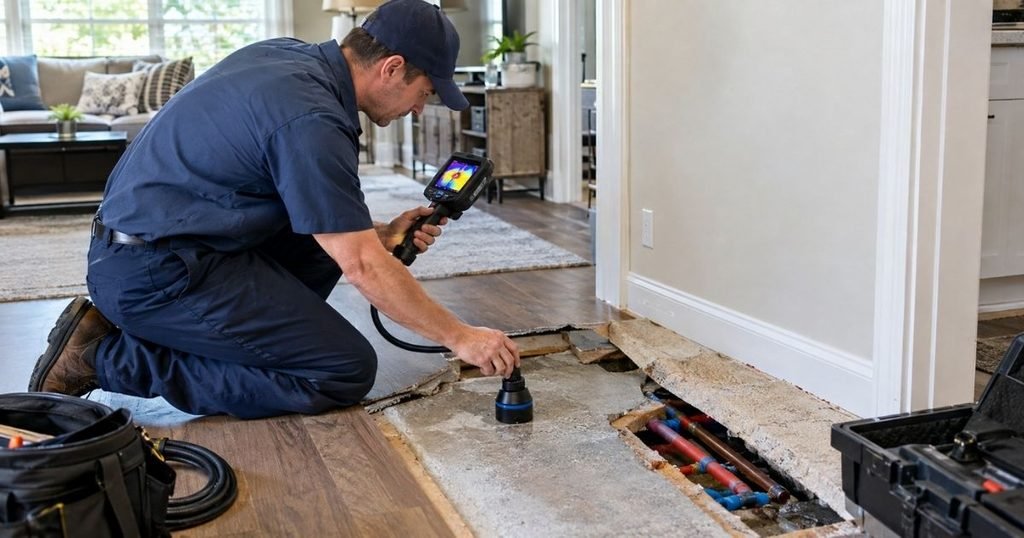
How Much Does a Hot Water Slab Leak Repair Cost?
Across the United States, general slab leak repair estimates typically range between $630 and $4,400, with many current industry cost guides reporting a national average around $2,300. However, hot-water-specific leaks often land on the middle-to-higher end of that spectrum or even exceed it due to thermal stresses on surrounding concrete, potential flooring damage, and the extra labor required to locate thermal anomalies.
For a standard residential project, the overall cost is rarely a single flat fee. Instead, it represents a combination of separate services: leak detection, plumbing labor, foundation access, and post-repair restoration.
Here is a breakdown of estimated cost ranges for each phase of a hot water slab leak project:
Estimated Hot Water Slab Leak Cost Breakdown
| Service / Project Component | Typical Cost Range (U.S.) | Key Factors Influencing Price |
| Slab Leak Detection | $150 – $600 | Technology used (acoustic, thermal imaging), ease of property access. |
| Localized Pipe Repair (Direct Spot Patch) | $500 – $2,000 | Depth of pipe, pipe material, accessibility through concrete. |
| Concrete Access & Removal (Jackhammering) | $300 – $1,200 | Thickness of slab, dust containment needs, reinforcement wire/rebar. |
| Pipe Rerouting (Overhead / Wall Bypass) | $1,500 – $5,000 | Length of new run, accessibility of attic/walls, number of fixtures connected. |
| Trenchless / Pipe Lining (Epoxy Coating) | $2,000 – $6,000 | Pipe diameter, overall line condition, availability of local specialists. |
| Flooring & Concrete Restoration | $500 – $3,500+ | Material type (hardwood, tile, carpet), subfloor drying requirements. |
| Extensive Whole-House Repiping | $4,000 – $12,000+ | Home square footage, number of bathrooms, multi-story layouts. |
Note: The figures listed above represent typical national estimates. Actual contractor quotes will vary based on regional labor rates, local building codes, permit fees, and individual property conditions.
READ MORE: Concrete Slab Leak Repair Cost: Price Guide for Homeowners
What Is a Hot Water Slab Leak?
A slab foundation is a thick layer of poured concrete typically 4 to 6 inches deep poured directly onto grade or a prepared gravel bed. During construction, builders frequently run primary water supply pipes underneath or directly through this concrete matrix before laying down finish flooring.
A hot water slab leak occurs when a pressurized hot water supply line beneath or within the foundation deck develops a crack, pinhole, or loose fitting, allowing heated water to escape under pressure into the soil, gravel, or concrete slab itself.
Why Hot Water Leaks Are Unique
Hot water line leaks present unique challenges compared to cold water line leaks:
- Thermal Expansion and Contraction: As heated water flows through a pipe, the metal or plastic expands. When the water cools, the pipe contracts. Over years of daily heating and cooling cycles, this constant movement against surrounding concrete or abrasive gravel can wear down the outer wall of the pipe.
- Water Travel: Heated water lowers concrete’s resistance and expands through pores rapidly. Because water follows the path of least resistance, a hot water slab leak might originate in the hallway, but dampness or floor warm spots may show up several feet away in a bedroom or closet.
- Energy Loss: In addition to wasting gallons of treated water, a hot water slab leak forces your water heater to run continuously, driving up both your gas or electric utility bills and your water bill.
Hot Water Slab Leak vs. Cold Water Slab Leak
| Feature | Hot Water Slab Leak | Cold Water Slab Leak |
| Primary Warning Sign | Unexplained warm spots on floor; water heater runs constantly | Cold wet spots; high water bill without thermal changes |
| Piping Material Stress | High (frequent thermal expansion cycles) | Moderate (primarily hydrostatic pressure stress) |
| Utility Bill Impact | High (increases both water and gas/electric bills) | Moderate to High (increases water bill only) |
| Detection Complexity | Easier thermal visual trace; acoustic challenges due to steam/heat | Relies heavily on acoustic listening and pressure tests |
| Secondary Risk | Accelerated subfloor wood rot from trapped humidity | Soil erosion, foundation settling, mold growth |
READ MORE: How Much Does a Slab Leak Cost to Repair?
Signs You May Have a Hot Water Slab Leak
Detecting a leak buried beneath concrete can be difficult, but hot water lines leave several distinct warning signs. Recognizing these early can mean the difference between a simple pipe repair and a major foundation or structural overhaul.
Look out for these common indicators:
- Warm or Hot Spots on Flooring: Walking barefoot across tile, vinyl, or carpet and noticing an unusually warm patch is often the first visible symptom of a hot water line breach below.
- Unexplained Increases in Utility Bills: A sudden spike in your monthly water bill, combined with a rising gas or electric bill, strongly points to heated water escaping constantly.
- Sound of Running or Hissing Water: Hearing water rushing or hissing when all faucets, showers, and water-using appliances are turned off indicates pressurized water escaping somewhere in the system.
- Damp, Warped, or Discolored Flooring: Trapped moisture rising through slab capillaries can buckle hardwood, cause vinyl tiles to peel, or leave damp spots on carpets.
- Musty Odors and Mold Growth: Persistent subterranean moisture creates an ideal environment for mold and mildew under baseboards, carpets, or bottom floor cabinets.
- Decreased Water Pressure: A significant pressure drop in hot water taps throughout the house can happen when a line breaches beneath the foundation.
- Water Pooling Around the Exterior Foundation: Excess water escaping under the slab may eventually force its way out around the exterior perimeter of the foundation.
- Water Heater Running Continuously: If your tankless system never shuts off or your traditional tank water heater seems to be constantly heating, water is likely leaking out faster than the tank can hold it.
Water Efficiency Tip: Guidelines from the U.S. Environmental Protection Agency (EPA) WaterSense program emphasize monitoring utility meters regularly. Unexplained water movement on your meter when no fixtures are active is one of the most reliable indicators of a concealed household leak.
What Causes Hot Water Slab Leaks?
Understanding why a hot water pipe fails under concrete helps you choose the right repair strategy and prevent future leaks in other parts of your foundation.
1. Aging Pipes
Older homes built with galvanized iron or early copper supply lines are naturally prone to wear. Over decades, water chemistry and friction thin the pipe walls until pinhole leaks emerge.
2. Corrosion
Corrosion can happen from the inside out or the outside in. Chemical reactions between aggressive soil minerals, concrete compounds, and hot water can lead to galvanic or pitting corrosion, particularly in copper pipes.
3. Poor Installation
Pipes that were kinked during installation, improperly soldered at joints, or laid directly against jagged rocks without adequate sand bedding are vulnerable to early failure under constant water pressure.
4. Soil Movement
Expansive clay soils common across many regions of the U.S. expand when wet and shrink when dry. This soil movement shifts the concrete slab slightly, placing immense strain on embedded plumbing lines.
5. High Water Pressure
Water pressure consistently exceeding 80 PSI (pounds per square inch) stresses pipe walls and joints, accelerating wear on hot water lines that are already weakened by thermal expansion.
6. Pipe Abrasion
Because metal expands when heated, hot water pipes expand and contract inside the concrete slab multiple times a day. If a pipe rubs against concrete, metal rebar, or rough gravel without protective sleeving, the constant friction eventually wears a hole in the pipe wall.
7. Temperature and Environmental Factors
Extreme seasonal temperature swings can cause surrounding ground movement or thermal shocks within water lines, exacerbating minor hairline fractures into major breaches.
8. Deteriorated Pipe Connections
Fittings, elbows, and soldered tees buried under concrete are common failure points. High temperatures accelerate the breakdown of weaker soldered joints or aged crimp rings.
READ MORE: What to Do When a Pipe Bursts: 10 Emergency Steps
What Affects Hot Water Slab Leak Repair Cost?
When a plumber provides an estimate for fixing a hot water line leak under a concrete slab, several key factors influence the final price.
1. Leak Detection
Before any repair begins, a plumber must pinpoint the leak’s location beneath the concrete. Professional plumbers use specialized electronic listening devices, line-tracing equipment, moisture meters, and thermal imaging cameras. Leak detection typically adds $150 to $600 to the total invoice.
2. Leak Location
A leak under an open hallway or vinyl-floored utility room is far easier—and cheaper to access than one located directly beneath custom kitchen cabinetry, tiled master showers, or weight-bearing load walls. The harder it is to reach the pipe, the higher the labor and restoration costs will be.
3. Pipe Material
Repairing a standard copper pipe involves different fittings, soldiering equipment, or press tool couplings than fixing PEX (cross-linked polyethylene) or CPVC lines. The age, size, and general condition of the pipe material shape the labor involved.
4. Concrete Removal
If your plumber needs to break through the slab (direct access), they must use electric jackhammers or concrete saws, deploy dust-containment barriers, and haul away heavy concrete debris. This labor-intensive work adds $300 to $1,200 to the project.
5. Repair Method
The approach you and your plumber choose—direct slab breaking, pipe rerouting through walls/attics, tunneling, or epoxy lining—is often the single largest factor shaping the total cost. Rerouting longer distances requires more piping materials, while trenchless methods require specialized lining equipment.
6. Flooring Replacement
Plumbing quotes usually cover accessing and fixing the pipe, but they rarely include installing brand-new carpet, tile, or hardwood over the repaired slab area. Replacing high-end flooring can easily equal or exceed the cost of the plumbing work itself.
7. Water Damage Remediation
If hot water has been running under your slab for weeks, subfloor moisture may require commercial dehumidifiers, drywall cutting, baseboard replacement, or mold remediation. Drying out a home can add $500 to $3,000+ depending on severity.
8. Labor Rates
Plumbing labor rates vary across the country. Rates in major metropolitan areas or states with a high cost of living (such as California, New York, or Washington) can range from $120 to $220+ per hour, whereas rural or midwestern markets may range from $75 to $130 per hour.
9. Emergency or After-Hours Service
If a hot water line bursts suddenly and requires an urgent late-night, weekend, or holiday response, emergency dispatch fees and premium labor rates (often 1.5x to 2x normal hourly rates) will apply.
READ MORE: Plumber Hourly Rate : What Do Plumbers Charge?
Hot Water Slab Leak Repair Methods
Plumbers use four primary methods to fix a hot water pipe leak under a concrete slab. The right choice depends on the pipe’s condition, the leak’s location, your budget, and how much disruption you are willing to tolerate in your living space.
1. Breaking Through the Slab (Direct Access Spot Repair)
- How It Works: A plumber uses jackhammers or concrete saws to dig a hole directly through the flooring and concrete slab above the pinpointed leak location. Once the pipe is exposed, the damaged section is cut out and replaced with a new section of copper or PEX using durable fittings. The hole is then backfilled, capped with fresh concrete, and prepared for flooring restoration.
- When It Makes Sense: Ideal when the leak is clearly isolated, easily accessible, located away from structural walls or high-end flooring, and the rest of the under-slab piping is in good condition.
- Pros: Directly addresses the problem spot without modifying hot water pipe routes elsewhere in the house; often cheaper up front for a single, accessible leak.
- Cons: Loud, dusty, and messy; carries a risk of accidentally damaging nearby utilities; leaves a concrete patch that must dry before flooring can be replaced.
2. Pipe Rerouting (Above-Slab Bypass)
- How It Works: Instead of breaking open the concrete foundation, the plumber abandons the damaged line under the slab altogether. They cap off both ends of the leaking pipe and run a brand-new PEX or copper line above the slab—routing it through interior walls, floor joists, attic spaces, or behind baseboards to reconnect the hot water supply to fixtures.
- When It Makes Sense: Best when under-slab pipes are old, corroded, or hard to reach (e.g., beneath kitchen islands or tiled showers), or when you want to avoid mess inside your living space.
- Pros: Avoids jackhammering concrete; leaves the foundation intact; permanently removes the vulnerable pipe from under the slab.
- Cons: Requires opening sections of drywall or ceiling plaster to run new pipes; may require insulation in attic spaces to prevent heat loss or freezing; can carry higher initial plumbing labor costs.
3. Tunneling Under the Slab
- How It Works: Crews excavate an entry pit outside your home’s perimeter and dig a horizontal tunnel underneath the concrete foundation directly to the leak site. Plumbers then access and repair the pipe from below, after which the tunnel is backfilled and soil is compacted to preserve structural support.
- When It Makes Sense: Used when you want to protect expensive interior flooring, custom tile, or high-end finish work inside the home.
- Pros: Preserves all interior flooring, rugs, and finishes; all dirty excavation work happens outside the house.
- Cons: Labor-intensive and expensive; requires specialized excavation crews; risk of soil settling if the backfill isn’t properly compacted.
4. Trenchless or Pipe Lining Methods (Epoxy Coating)
- How It Works: Plumbers drain the damaged hot water line, clean its interior walls using air pressure or mechanical tools, and blow an epoxy resin coating through the pipe. Once cured, this epoxy sleeve creates a smooth, seamless inner lining that seals pinholes and minor cracks.
- When It Makes Sense: Useful for straight, accessible pipe runs with localized pinholes where digging or rerouting would be difficult.
- Pros: Minimal digging or destruction of concrete and flooring; completed relatively quickly.
- Cons: Not suitable for crushed, collapsed, heavily corroded, or severely displaced pipes; requires specialized equipment and trained technicians; can be expensive; limited availability in some regions.
5. Whole-House Repiping
- How It Works: If an older home experiences multiple slab leaks over a short period, spot repairs often become an ongoing game of “whack-a-mole.” In these cases, plumbers recommend abandoning all under-slab water lines and running an entirely new PEX or copper plumbing system through the attic, walls, and crawlspaces.
- When It Makes Sense: Older homes (30+ years) with recurring slab leaks or widespread copper pipe corrosion.
- Pros: Permanently solves under-slab plumbing vulnerabilities; increases home value; usually comes with comprehensive system warranties.
- Cons: Highest upfront investment ($4,000–$12,000+); requires widespread drywall patching and painting throughout the home.
Hot Water Slab Leak Repair Cost vs. Rerouting Cost
When deciding between jackhammering through the slab for a spot repair and rerouting the hot water line above ground, comparing the pros, cons, and typical price levels helps clarify the best path forward.
Repair Strategy Comparison Table
| Option | Typical Cost Level | Concrete Work Required | Best Used When… | Primary Long-Term Concern |
| Localized Repair (Direct Spot Patch) | Low to Moderate ($800 – $2,500) | Moderate to High (Jackhammering hole) | You have a single, easy-to-access leak and the remaining plumbing is young and healthy. | Other aging sections of under-slab pipe may fail later. |
| Pipe Rerouting (Above-Slab Bypass) | Moderate to High ($1,500 – $5,000) | None (Leaves slab untouched) | The leak is under expensive tile/cabinets, or under-slab pipes show widespread wear. | Drywall repair, wall painting, and attic insulation work needed. |
| Tunneling Under Foundation | High ($2,500 – $6,000+) | None indoors (Outside pit/tunnel) | Protecting high-end interior finishes is your top priority. | High excavation costs; potential soil settling if backfilling is poor. |
| Epoxy Pipe Lining (Trenchless) | Moderate to High ($2,000 – $5,500) | Minimal to None | Line is structurally sound except for isolated pinholes. | Not suited for collapsed pipes or high-stress structural joints. |
| Whole-House Repiping | High ($4,000 – $12,000+) | None (Abandons under-slab grid) | Multiple slab leaks have occurred or lines are severely corroded. | Higher initial cost and property-wide drywall cutting. |
READ MORE: Main Water Line Replacement Cost
Does Homeowners Insurance Cover a Hot Water Slab Leak?
Understanding how insurance handles slab leaks is crucial for managing your out-of-pocket costs. Insurance policies treat the cause of the leak differently from the damage it causes.
What Is Usually Covered
- Resulting Water Damage: Most standard HO-3 home insurance policies cover sudden and accidental water damage. If a hot water pipe bursts beneath your slab and ruins carpets, hardwood flooring, drywall, or baseboards, insurance often covers the drying and restoration costs.
- Tear-Out and Access Costs: Many policies include coverage for opening up the foundation or walls to access the leaking pipe (“tear-out” coverage) and restoring the concrete afterward.
What Is Usually Excluded
- The Pipe Repair Itself: Insurance policies generally treat the actual piece of failed pipe as a maintenance item. The $50 to $150 plumbing cost to patch or weld the broken pipe section is typically paid out of pocket.
- Wear, Tear, and Gradual Corrosion: If the insurer determines the leak was caused by decades of neglected maintenance or slow, ongoing corrosion that went unaddressed for months, they may deny the entire claim.
Recommended Steps for Insurance Claims
- Shut Off Water Safely: Stop active water flow immediately to mitigate secondary structural damage.
- Document Everything: Take clear photos and videos of warm spots, damaged flooring, water meter readings, and the plumber uncovering the leak.
- Save Itemized Invoices: Request an estimate from your plumber that clearly separates leak detection, slab access/tear-out, plumbing repair, and restoration/drywall work.
- Review Your Policy: Read your home insurance contract or speak directly with your agent to confirm your deductible and coverage limits for “tear-out and replacement.”
Can You Repair a Hot Water Slab Leak Yourself?
While DIY home improvement can save money on basic fixes, a hot water slab leak is strictly a job for licensed professionals.
Attempting a DIY repair on a slab leak carries significant risks:
- Structural Foundation Damage: Using a heavy jackhammer without structural knowledge can weaken load-bearing slab sections, crack surrounding concrete, or break nearby gas, drain, or electrical lines embedded in the foundation.
- Scalding and High-Pressure Hazards: Hot water lines operate under pressure and hold dangerous water temperatures (often 120°F to 140°F). Cutting into a live line can cause severe burns.
- Permits and Code Violations: Most municipalities require plumbing permits and official inspections for foundation-level supply repairs. DIY work can complicate future home sales or void your insurance policy.
Safe DIY Actions Homeowners Can Take
- Monitor your water meter to confirm hidden water usage.
- Use a handheld infrared thermometer to mark warm spots on your floor for the plumber.
- Turn off the main water valve or the hot water heater’s cold inlet valve to stop active leaks.
- Move furniture, rugs, and valuables away from damp floor areas.
What to Do When You Suspect a Hot Water Slab Leak
If you suspect hot water is escaping under your foundation, follow this practical checklist:
- [ ] Step 1: Perform a Water Meter Test. Turn off all taps, showers, washing machines, and dishwashers. Check your outdoor water meter. If the leak indicator dial or digital display is moving, water is escaping somewhere in your system.
- [ ] Step 2: Check the Water Heater. Locate your water heater. Listen for constant burner activity or hums. Feel the hot water outlet pipe; if it’s hot and vibrating when no fixtures are in use, a hot water line is running continuously.
- [ ] Step 3: Shut Off the Hot Water Supply. If safe to do so, close the shutoff valve on the cold water inlet pipe feeding your water heater. This stops hot water from flowing under the slab while keeping cold water available for household toilets.
- [ ] Step 4: Document the Area. Take photos and videos of warm floor spots, warped wood, buckled tile, or moisture beads along baseboards.
- [ ] Step 5: Call a Licensed Plumber. Contact a local plumbing contractor who specializes in electronic slab leak detection and under-foundation repair.
- [ ] Step 6: Request Specialized Leak Detection. Ensure the plumber uses non-invasive acoustic sensors or thermal imaging cameras to pinpoint the leak before breaking any concrete.
- [ ] Step 7: Compare Repair Quotes. Request an itemized breakdown comparing direct slab access versus an above-ground pipe reroute.
- [ ] Step 8: Contact Your Insurance Agent. If significant water damage is present, start a claim and share your plumber’s itemized detection report.
- [ ] Step 9: Address Structural Drying Promptly. Hire a certified water restoration contractor to set up industrial dehumidifiers and air movers to prevent mold growth beneath subfloors.
READ MORE: Sewer Line Replacement Cost
How to Save Money on Hot Water Slab Leak Repair
Fixing a foundation leak is a significant investment, but strategic planning can help keep your costs manageable:
- Get Multiple Written Estimates: Obtain 2 to 3 detailed estimates from licensed, insured plumbing companies. Comparing itemized quotes ensures you are paying fair market rates for both labor and materials.
- Compare Spot Repair vs. Rerouting: Ask your plumber to price both direct slab access and pipe rerouting. In many cases, rerouting a line through walls or attic spaces costs less overall than breaking through concrete and restoring high-end interior tile or hardwood.
- Confirm What Is Included: Verify whether the plumbing estimate covers leak detection, concrete backfilling, and debris removal. Asking up front prevents unexpected add-on charges on your final invoice.
- Inquire About Long-Term Warranties: Choose a contractor that offers a solid warranty on both labor and materials (e.g., 1 to 10 years depending on whether it’s a patch or a full reroute). Paying slightly more for a warrantied installation protects you from future failures.
- Act Quickly: Delaying repairs allows hot water to saturate your subfloor, leading to warped flooring, drywall damage, mold growth, and higher structural drying costs.
- Verify Licensing and Insurance: Always hire licensed master plumbers. Cheap quotes from unlicensed handymen can result in improper repairs, code violations, and costly foundation damage down the road.
Questions to Ask a Plumber Before Approving the Repair
Before signing a contract or authorizing work under your foundation, ask these essential questions:
- How did you confirm the leak is on the hot water line rather than the cold line or drain?
- What specific leak detection technology did you use to pinpoint the location?
- Can you show me thermal imaging photos or acoustic test results verifying the leak site?
- Do you recommend breaking through the slab or rerouting the pipe overhead, and why?
- Does your estimate include the initial leak detection fee, or is that billed separately?
- Who is responsible for hauling away removed concrete and filling the hole?
- Does this quote include repairing my subfloor, tile, hardwood, or drywall?
- Will my property require local plumbing permits and municipal inspections?
- What length and scope of warranty do you provide on this repair work?
- How long will my home’s water supply be shut off during the project?
- Are the rest of my under-slab pipes in good condition, or do you see signs of systemic corrosion?
How Long Does Hot Water Slab Leak Repair Take?
Project timelines vary based on the repair method you choose, the accessibility of the pipe, and the extent of any resulting water damage:
- Leak Detection Phase: 1 to 3 hours using acoustic devices and thermal visual inspection.
- Direct Access Spot Repair (Slab Breaking): 1 to 2 days. This includes jackhammering, replacing the pipe section, pressure testing, backfilling, and pouring new concrete.
- Pipe Rerouting (Above-Slab Bypass): 1 to 3 days. This covers running new lines through walls or attics, connecting fixtures, and patching opened drywall sections.
- Trenchless Epoxy Lining: 1 to 2 days for drying, cleaning, injecting resin, and curing.
- Flooring and Drywall Restoration: 3 to 7+ days. Fresh concrete requires time to cure fully before hardwood, tile, or carpet can be safely reinstalled.
Is Hot Water Slab Leak Repair Worth It?
Ignoring a hot water slab leak is never a viable option. What begins as a small pinhole leak in a copper line can quickly evolve into an expensive home disaster.
Consider these long-term factors when evaluating repair costs:
- Utility Savings: A hot water leak wasting just 2 gallons per minute can waste over 80,000 gallons of water a month—adding hundreds of dollars to your water and energy bills every billing cycle.
- Foundation Protection: Continuous hot water under a slab erodes supporting soil, creates subfloor voids, and causes concrete heaving or cracking that can cost tens of thousands of dollars to repair structurally.
- Preventing Mold and Health Hazards: Trapped subterranean heat and moisture create an ideal environment for toxic mold underneath carpets and inside wall cavities.
- Property Resale Value: Home sales require seller disclosures regarding foundation and plumbing defects. Resolving slab leaks with warrantied repairs protects your property’s resale value and equity.
If your home is over 25 years old and experiencing its second or third slab leak, investing in an above-ground pipe reroute or whole-house repipe is far more cost-effective over time than repeatedly paying to jackhammer through your concrete foundation.
Frequently Asked Questions
How much does it cost to repair a hot water slab leak?
On average, homeowners across the U.S. spend between $630 and $4,400 to locate and repair a hot water slab leak, with an average overall cost around $2,300. Simple localized repairs on easily accessible pipes fall on the lower end, while complex pipe reroutes, trenchless lining, or extensive flooring restoration can drive total costs between $3,000 and $6,000+.
How do you fix a hot water pipe leak under a concrete slab?
Plumbers fix under-slab leaks using four main approaches: direct access (jackhammering through the slab to patch the pipe), pipe rerouting (capping the damaged line and installing a new line above ground through walls or attic spaces), tunneling under the foundation from outside, or installing an epoxy trenchless lining inside the line.
Does homeowners insurance cover a hot water slab leak?
Most standard homeowners insurance policies cover the cost of tearing out the slab to reach the pipe (“tear-out coverage”) and repairing secondary water damage to flooring, drywall, and baseboards caused by a sudden leak. However, policies rarely cover the physical plumbing repair or the cost of replacing the worn section of pipe itself.
Is it better to repair or reroute a slab leak?
Rerouting is generally the better option if your plumbing is older, if you have had previous slab leaks, or if the leak sits under expensive flooring or built-in cabinetry. Rerouting avoids messy concrete demolition, preserves foundation integrity, and permanently removes the vulnerable pipe from beneath the concrete.
How can I tell if I have a hot water slab leak?
Key warning signs include unusually warm spots on tiled or carpeted floors, a sudden spike in water or heating fuel bills, the sound of water running or hissing when all taps are off, low hot water pressure, and a water heater that runs continuously without stopping.
Conclusion
Facing a hot water slab leak can feel overwhelming, but understanding your repair options and potential costs puts you back in control. Because every foundation, flooring type, and plumbing system is unique, average price ranges ($630 to $4,400+) serve as a guide rather than a fixed estimate.
To protect your home and wallet, have any suspected leak professionally located using thermal and acoustic equipment before approving major concrete demolition. Request an itemized estimate that clearly separates leak detection, plumbing labor, concrete work, and subfloor restoration and consider an above-ground pipe reroute if your under-slab lines are showing their age.

