Seeing dark, foul-smelling wastewater coming back up through your basement floor drain, shower, or toilet is one of the most stressful situations you can face as a homeowner. It is messy, it smells terrible, and your initial instinct might be to panic or immediately grab a plunger and start plunging frantically.
Take a deep breath. While a sewage backup is a critical home emergency, handling it step-by-step will protect your household’s health, prevent unnecessary property damage, and save you thousands of dollars in improper repairs.
Your immediate priorities right now are straightforward: protect your family and pets from contaminated water, stop adding more water to your plumbing system, identify whether the issue is inside your house or out in the street, and get the right professionals on site. This guide walks you through every single step of the process from emergency response to safe remediation, cost expectations, insurance coverage, and long-term prevention. Lets deep dive into “What to Do When Sewage Backs Up: Emergency Steps & Cleanup”
READ MORE: Why Does My Laundry Room Smell Like Sewage Gas?
What Should You Do Immediately When Sewage Backs Up?
If you are dealing with an active backup right now, stop reading the long-term advice and follow this emergency checklist immediately.
Step 1: Stop Using Water Instantly
The very first thing you must do is turn off all running faucets and stop using every plumbing fixture in your home. Every time you flush a toilet, run a sink, take a shower, or run the dishwasher or washing machine, that wastewater has nowhere to go. Because your main sewer line is blocked, any water sent down drains upstairs will simply take the path of least resistance and force its way out of the lowest drains in your home, usually basement floor drains, ground-floor showers, or low-lying toilets.
If you suspect a fixture is running automatically or a pipe is leaking continuously, shut off your home’s main water supply valve to prevent anyone in the house from accidentally using water.
Step 2: Keep People and Pets Away
Raw sewage (often referred to in the restoration industry as “black water” or Category 3 water) contains dangerous human waste, bacteria, viruses, and environmental contaminants. Keep children, elderly family members, pets, and anyone with compromised immune systems or open wounds completely away from the affected areas. Lock basement doors or block off hallway entry points to prevent accidental exposure.
Step 3: Avoid Direct Contact
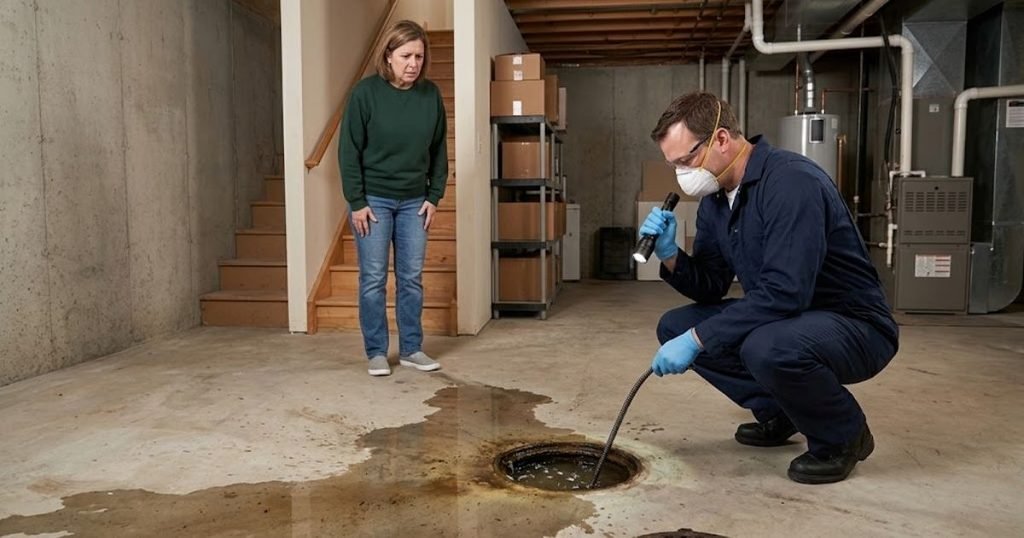
If you must enter the immediate vicinity of the backup to assess the situation, never do so bare-skinned. Put on personal protective equipment (PPE) consistent with Centers for Disease Control and Prevention (CDC) guidelines for environmental contamination:
- Heavy-duty rubber boots with thick soles
- Thick waterproof rubber gloves (such as heavy nitrile or industrial rubber)
- Eye protection or safety goggles if wastewater is actively splashing or bubbling
- An N95 mask to avoid inhaling airborne droplets or aerosolized contaminants
- Long sleeves and pants (which should be washed immediately in hot water or discarded after use)
If you have any open cuts, scrapes, or sores, cover them with waterproof bandages before going anywhere near the affected area.
Step 4: Be Careful Around Electricity
Water and electricity are a lethal combination. If standing sewage has reached electrical outlets, baseboard heaters, extension cords, major appliances (like your washer, dryer, or water heater), or your main circuit breaker panel, do not step into the water.
Do not try to walk through standing wastewater just to reach the electrical panel to turn off breakers. If electrical equipment is submerged or near the water line, step back and contact your local electric utility provider or a licensed electrician immediately to safely disconnect power to the affected zone from outside the property.
Step 5: Contact the Right People
Who you call first depends on where the sewage is coming from and how far it has spread:
- Your Local Municipal Sewer/Public Works Department: Call them first if you suspect the main city sewer line on your street is clogged or if your neighbors are experiencing backups at the exact same time.
- A Licensed Plumbing Professional: Call a local plumber if the backup is limited to your property and your neighbors’ drains are running fine.
- A Professional Sewage Cleanup & Restoration Company: Call a certified water damage restoration firm if raw sewage has covered porous materials like carpets, drywall, insulation, or large floor areas.
- Your Homeowners Insurance Carrier: Contact your insurance representative to report the incident, confirm whether you have a water/sewer backup endorsement, and start a claim record before removing structural materials.
READ MORE: What to Do When a Toilet Overflows: Step-by-Step Fixes
Is Sewage Backup Dangerous?
Yes, a sewage backup poses genuine health and structural risks, but understanding those risks allows you to manage them calmly and safely without panic.
Biological and Health Risks
Raw sewage contains a dangerous cocktail of microorganisms. According to the U.S. Environmental Protection Agency (EPA) and the CDC, untreated wastewater harbors biological hazards including:
- Bacteria: Such as Escherichia coli (E. coli), Salmonella, Campylobacter, and Shigella, which cause severe gastroenteritis, cramps, fever, and dehydration.
- Viruses: Including Hepatitis A, Norovirus, and Rotavirus.
- Parasites: Such as Giardia lamblia and Cryptosporidium, which cause prolonged intestinal illness.
These pathogens enter the body primarily through accidental ingestion (hand-to-mouth contact after touching contaminated surfaces), inhalation of aerosolized droplets, or direct entry through broken skin.
Structural and Environmental Hazards
Beyond direct health risks, standing wastewater quickly causes compound structural damage inside a home:
- Subfloor and Joist Saturation: Wastewater easily seeps under vinyl, laminate, and hardwood flooring, soaking into wooden subflooring and structural support joists.
- Drywall Wicking: Drywall acts like a sponge. Water drawing up drywall panels creates structural instability and breeds toxic mold within 24 to 48 hours.
- Air Quality Degradation: Trapped sewage water releases harsh organic gases (including hydrogen sulfide, which creates a classic rotten-egg odor) that penetrate soft furnishings, ductwork, and structural framing.
Why Does Sewage Back Up Into a House?
Sewer lines operate entirely on gravity. Wastewater flows down from your sinks, showers, and toilets into your home’s main drain stack, out through your private sewer lateral (the underground pipe running under your yard), and into the municipal sewer main beneath the street (or into your private septic tank). When something restricts or blocks this flow, gravity forces incoming wastewater back up through the lowest available opening in your home. Here are the primary causes of sewer line backups:
1. Clogged Main Sewer Line
Over time, daily household waste builds up on the internal walls of your main sewer lateral. Hair, soap scum, heavy toilet paper accumulation, and small debris bind together, steadily narrowing the pipe until waste can no longer pass through freely.
2. Tree Roots in the Sewer Line
Tree roots are one of the most frequent causes of main sewer line failures in older homes. Roots naturally seek out moisture and nutrients. They penetrate tiny hairline cracks, loose joints, or aging seals in clay, cast iron, or concrete sewer pipes. Once inside, the roots thrive, growing into thick, brush-like mats that catch toilet paper and solid waste, completely choking off the pipe.
3. Grease and Fat Buildup (FOG)
Fats, Oils, and Grease commonly referred to in the plumbing trade as FOG should never be poured down kitchen sinks or garbage disposals. Liquid grease cools as it travels down your drainage system, hardening into a thick, waxy lining along the walls of your underground pipes. Over months and years, this grease coating thickens, catching food scraps and creating an impenetrable barrier.
4. Flushed Wipes and Non-Flushable Items
Despite what product packaging might claim, there is no such thing as a truly flushable wipe. Personal cleansing wipes, baby wipes, paper towels, facial tissues, feminine hygiene products, dental floss, and shop rags do not break down in water the way standard toilet paper does. They catch on minor pipe imperfections or tree roots, forming massive blockages known in municipal systems as “fatbergs.”
5. Broken, Collapsed, or Sagged Sewer Pipes
Sewer pipes do not last forever. Older materials like clay tile, cast iron, or orangeburg (tar paper) pipes degrade with age:
- Cast Iron: Corrodes internally, creating rough surfaces that snag waste, and eventually rusts through along the bottom.
- Clay: Cracks under ground pressure or tree root expansion.
- Orangeburg: Crumbles and collapses under soil weight.
- Pipe Sagging (Belly): Ground movement or improper initial installation can cause a section of pipe to sink, creating a low spot (belly) where standing water and solids accumulate instead of draining away.
6. Heavy Rain and Stormwater Infiltration
During severe weather events, massive amounts of rainwater can enter municipal sanitary sewer systems through cracked public pipes, unsealed manholes, or illegal home connections (such as sump pumps routed directly into the sewer system). When municipal mains fill beyond their capacity, surcharge water backs up through private sewer laterals into low-lying residential basements.
7. Municipal Sewer Main Blockages
Occasionally, the problem has nothing to do with your private plumbing line. If a main public sewer pipe under your street becomes blocked by debris, a collapsed main, or a pump station failure, wastewater will back up into every lower-lying home connected to that specific municipal branch.
8. Septic System Failures
If your home relies on an on-site septic system rather than a municipal sewer connection, a backup usually indicates one of four issues:
- A full septic tank that requires routine pumping.
- A clogged inlet or outlet baffle inside the tank.
- A saturated or failed drainfield (leach field) unable to absorb liquid effluent.
- A failed effluent pump in elevated or mound-type systems.
READ MORE: Sewer Line Replacement Cost: Pricing Guide
How to Tell Where the Sewer Backup Is Coming From
Identifying whether a blockage is isolated to a single fixture or located deep inside your main sewer line helps you make smart decisions about who to call and what to do next.
Key Diagnostic Clues
- One Fixture Backing Up: If water rises in your bathroom sink when you run the tap, but your toilet flushes fine and the shower drains easily, the problem is a localized clog in that sink’s P-trap or branch pipe.
- Multiple Fixtures Affected: If flushing a main-floor toilet causes dirty water to gurgle or rise in the adjacent bathtub or basement floor drain, you are dealing with a main sewer line blockage.
- Toilet Bubbling or Gurgling: A distinct gurgling sound coming from your toilet or shower drain when your washing machine drains indicates trapped air caused by a main line restriction.
- Basement Floor Drain Overflowing: Because the basement floor drain sits at the lowest physical elevation in your entire plumbing system, it is almost always the first place a main line sewer backup manifests.
- Neighbor Involvement: If you step outside and notice municipal utility crews or see that several neighbors on your street are having identical floor drain backups, the issue is likely within the city’s main infrastructure.
Quick Troubleshooting Reference
| What You Notice | Possible Cause | Urgency Level | Recommended Action |
| One single toilet or sink drains slowly | Local drain or fixture clog | Low / Moderate | Use a standard plunger or drain snake. |
| Flushing toilet causes water to rise in tub | Main line branch restriction | High | Stop using water; call a licensed plumber. |
| Basement floor drain bubbling or overflowing | Main sewer line clog or sag | Emergency | Shut off water; call a plumber immediately. |
| Backup occurs strictly during heavy rainfall | Municipal main surcharge | Emergency | Call city public works and a plumber; install backwater valve later. |
| Multiple homes on street experiencing backups | Public sewer main blockage | Emergency | Contact municipal water/sewer authority immediately. |
| Sewage smells outdoors + wet grass near tank | Septic tank or drainfield failure | Emergency | Call a certified septic service contractor. |
Note: These symptoms serve as operational clues rather than a final diagnostic assessment. A professional video pipe inspection is required to confirm the precise location and cause of a main sewer line failure.
Should You Try to Unclog a Sewer Backup Yourself?
The answer depends entirely on the location and scale of the blockage.
When DIY Effort Is Reasonable
If a single toilet or bathroom sink is draining slowly or clogged, and no other fixtures are showing symptoms, using a standard flange plunger or a short hand-held drain auger (snake) is perfectly safe and reasonable.
When You MUST Call a Professional
If sewage is actively coming up through floor drains, tub drains, or multiple fixtures, stop immediately. Do not attempt to clear a main sewer line backup yourself with small home equipment for several critical reasons:
- Inadequate Tool Size: A standard hand auger cannot clear tree roots, thick grease, or collapsed pipe sections located 40 to 100 feet away from the home.
- Risk of Pipe Damage: Incorrectly feeding rental sewer snakes through cleanouts can puncture aged pipes, crack brittle cast iron, or lodge the metal cable inside the sewer line, dramatically increasing repair costs.
- Chemical Drain Cleaners Are Dangerous: Never pour chemical drain cleaners down a backed-up sewer line. Liquid chemical drain openers rely on caustic chemical reactions (such as sodium hydroxide or sulfuric acid) that generate intense heat. They rarely work on deep main-line blockages, and they leave your plumbing system filled with highly toxic, burning chemical wastewater. This creates an extreme hazard for the plumber who must come in later to cable the line.
READ MORE: What to Do When a Pipe Bursts: 10 Emergency Steps
When Should You Call a Plumber?
Call a licensed plumbing contractor immediately if you encounter any of the following red flags:
- Wastewater coming up through basement floor drains or lower-level shower stalls.
- Running one appliance (like a washing machine) forces water into an unrelated fixture.
- Drain line backups that return shortly after being plunged or snaked.
- Persistent, strong sewer gas smells coming from multiple drains throughout the house.
- Noticeable soggy patches or unusually lush, green strips of grass in your yard directly over your buried sewer lateral line.
How Professional Plumbers Diagnose and Clear Sewer Backups
When a professional plumber arrives at your home during a sewage emergency, they use specialized commercial equipment to diagnose and resolve the issue:
- In-Line Video Camera Inspection: A waterproof, high-definition camera attached to a flexible fiber-optic cable is pushed through your cleanout access point. This allows the plumber to view the interior of your underground pipe in real-time, identifying exact blockages, cracked sections, root penetrations, or pipe collapses without digging up your yard.
- Motorized Drain Augers (Rooters): Heavy-duty commercial snakes featuring rotating steel blades cut through tough tree root invasions and break apart solid debris blockages.
- Hydro Jetting: High-pressure water jetting blasts multi-directional streams of water (up to 4,000 PSI) inside the sewer lateral. Hydro jetting strips away grease accumulation, tree roots, scale buildup, and flushed debris, restoring the pipe’s internal diameter to like-new condition.
- Trenchless Pipe Repair: If the camera inspection reveals structural damage, modern plumbers often perform trenchless repairs such as cured-in-place pipe (CIPP) lining or pipe bursting allowing them to rehabilitate damaged pipes underground without excavating your lawn, driveway, or basement floor.
How to Clean Up Sewage After a Backup
Once your plumbing professional clears the main line restriction, the vital work of sanitization and structural restoration begins. Cleaning up raw sewage requires extreme care to protect your health and preserve your home’s structural integrity.
Before Starting Cleanup
- Document Everything First: Before moving items or washing surfaces, take clear, well-lit photos and video recordings of all affected areas, standing water levels, damaged structural materials, and ruined personal property. This documentation is critical for your insurance claim.
- Establish Air Circulation Safely: Open windows and exterior doors to ventilate the area and lower internal humidity levels. However, if you have a central HVAC heating and cooling system, turn it off completely so contaminated spores and odors are not pulled into your ductwork and distributed across unaffected rooms.
- Determine Remediation Scale: If standing sewage covers more than a small, isolated area (e.g., more than 10 square feet) or has soaked into porous building materials, hire a professional, certified water damage restoration contractor (such as those certified by the Institute of Inspection, Cleaning and Restoration Certification – IICRC).
Professional Cleanup Protocol (CDC & EPA Compliant)
When cleaning non-porous surfaces yourself or working with restoration technicians, strictly follow these safety and sanitization steps:
- Step 1: Water Extraction: Use commercial-grade wet vacuums or trash pumps equipped with HEPA filtration to extract all free-standing wastewater.
- Step 2: Removal of Irreparable Materials: Remove and safely dispose of all heavily contaminated, highly porous materials (see details in the section below).
- Step 3: Washing Hard Surfaces: Scrub all non-porous surfaces (such as concrete floors, tiled walls, and sealed metal fixtures) with hot water and heavy-duty unscented household detergent.
- Step 4: Disinfection: After cleaning away organic soil, apply a EPA-registered disinfectant or a fresh bleach solution (1 cup of liquid household bleach per 1 gallon of clean water) to non-porous surfaces. Allow a contact time of at least 10 minutes before wiping or drying.
Caution: Never mix bleach with ammonia or acid-based cleaning products, as doing so releases deadly chloramine gas. - Step 5: Structural Drying: Set up commercial air movers and industrial low-grain refrigerant (LGR) dehumidifiers to dry remaining structural framing, concrete, and subflooring completely within 24 to 48 hours to prevent toxic mold propagation.
What Materials Can Be Saved vs. What MUST Be Thrown Away
The decision to restore or discard items is based on material porosity, level of contamination, and the total time the material remained in contact with wastewater:
- Carpet and Padding: Sewage-contaminated carpet padding must always be discarded. Wall-to-wall carpeting exposed to Category 3 sewage water should almost always be removed and thrown away, as it is virtually impossible to extract pathogens completely from carpet backing and fibers.
- Drywall and Insulation: Drywall that has come into direct contact with sewage must be cut out and discarded at least 12 inches above the highest water mark. Saturated fiberglass or cellulose insulation inside wall cavities must be completely removed and replaced.
- Solid Wood vs. Engineered Wood: Solid wood structural framing studs can usually be saved if thoroughly cleaned, disinfected, and dried rapidly. However, furniture or cabinetry constructed from particle board, MDF, or thin laminate swells quickly when exposed to wastewater, trapping bacteria inside the glued wood fibers; these materials must be discarded.
READ MORE: Plumber Hourly Rate: What Do Plumbers Charge?
How Much Does Sewage Backup Cleanup and Repair Cost?
The cost to handle a sewage backup varies widely depending on whether the incident requires a simple drain cleaning or extensive structural restoration and pipe replacement.
Note: All monetary ranges provided below represent estimated national averages for the USA residential market. Actual costs vary significantly based on geographic region, regional labor rates, property accessibility, local disposal fees, and emergency after-hours dispatch premiums.
Estimated Cost Breakdown Table
| Category | Service / Repair Item | Estimated Cost Range (USD) | Key Price Factors |
| Plumbing Services | Standard Service Call / Diagnosis | $150 – $350 | Local labor rates, emergency/weekend dispatch. |
| Video Camera Pipe Inspection | $250 – $600 | Depth, access point availability, pipe length. | |
| Main Sewer Line Cabling (Snaking) | $300 – $650 | Distance of blockage, severity of root growth. | |
| Hydro Jetting Service | $450 – $1,000 | Pipe diameter, grease severity, time required. | |
| Water Remediation | Sewage Water Extraction & Drying | $1,500 – $4,500 | Square footage affected, depth of standing water. |
| Antimicrobial Sanitization & Cleanup | $1,000 – $3,000 | Extent of organic contamination, labor hours. | |
| Structural Repairs | Drywall Cutout & Sheetrock Replacement | $1,200 – $3,500 | Linear footage damaged, finishing level/paint. |
| Flooring Replacement (Carpet, LVP, Tile) | $1,500 – $6,000 | Square footage, material tier selection. | |
| Major Pipe Repairs | Spot Excavation / Sectional Pipe Repair | $1,500 – $4,000 | Pipe depth, soil condition, utility locations. |
| Trenchless Pipe Lining (CIPP) | $80 – $250 per linear foot | Length of sewer lateral, pipe diameter ($4k–$12k total). | |
| Full Underground Sewer Line Replacement | $3,000 – $12,000 | Depth of main, excavation access, repaving needed. |
Does Homeowners Insurance Cover Sewage Backup?
This is one of the most important and most frequently misunderstood aspects of a sewage emergency. Standard homeowners insurance policies (HO-3 policies) almost NEVER automatically cover damage caused by sewer or drain backups.
Understanding Policy Coverage
- The Standard Exclusion: Most basic policies explicitly exclude damage caused by water or sewage that backs up through sewers, drains, or sump pump pits.
- The Water Backup Endorsement: To be covered, you must have previously added an optional rider to your policy, commonly called a Water Backup and Sump Overflow Endorsement. This endorsement is usually inexpensive (typically $30 to $100 per year), but it provides a specific limit of coverage (often ranging from $5,000 to $25,000) for cleanup, structural repair, and contents replacement.
- Neglect vs. Sudden Accidental Loss: Even if you have a sewer backup endorsement, your insurer may deny a claim if the investigation proves the backup was caused by long-term homeowner neglect (such as ignoring known root intrusions for years or failing to maintain a aging pipe) rather than a sudden, unexpected blockage.
- Flood Insurance vs. Sewer Backup: Flood insurance (offered through the National Flood Insurance Program – NFIP) covers surface water entering your home from overflowing rivers, storm surges, or heavy rainfall. It does not cover internal plumbing or sewer laterals unless a general body-of-water flooding event caused the backup.
Critical Insurance Claim Steps
If you have coverage and plan to file an insurance claim:
- Contact your insurance agent immediately to report the loss.
- Take extensive photographic and video evidence of all damage before cleanup crews remove materials.
- Keep itemized receipts for every expense, including emergency plumber invoices, restoration company bills, hotel stays, and personal protective equipment purchases.
- Do not discard expensive damaged items (like appliances or high-end electronics) until the insurance adjuster inspects them personally.
READ MORE: Grundfos Circulation Pump: Cost, Comparison, Install & Troubleshooting
What to Do If the City Sewer Is Responsible
If you discover that the backup originated within the municipal main line under the street or if multiple homes in your neighborhood flooded simultaneously the municipality may be involved.
Determining Responsibility
In most USA jurisdictions, homeowners are legally responsible for maintaining and repairing their entire private sewer lateral, the underground pipe that runs from the home’s foundation all the way to the connection point at the city main line in the street (or to the property line, depending on local municipal ordinances).
If the blockage occurs inside your lateral, you are responsible for the repair costs. However, if the blockage occurs inside the city’s main collector pipe, the municipal public works department is responsible for clearing the street main.
Steps to Take with Municipal Issues
- Notify Public Works Instantly: Call your city or county sewer department’s emergency line immediately. Municipalities dispatch crews 24/7 to clear main line blockages.
- File a Formal Municipal Claim: If the city sewer main surcharged into your basement, request a formal damage claim form from your city clerk or risk management department.
- Understand Government Immunity Laws: Be aware that under many state laws, municipalities enjoy governmental immunity against property claims unless you can legally prove the city had prior written notice of a main line blockage or was demonstrably negligent in performing routine main line maintenance. Work closely with your private insurance carrier, who may pursue subrogation against the city on your behalf.
What If You Have a Septic System?
If your home uses a private septic tank and drainfield rather than a municipal sewer, a sewage backup requires a distinct approach.
Common Septic System Warning Signs
- Gurgling sounds in your plumbing system when water runs.
- Wastewater backing up into basement floor drains or ground-floor toilets.
- Spongy, bright green grass or standing wastewater pooling on the lawn directly over the septic tank or leach field area.
- Foul sewage odors outdoors around the tank perimeter.
Safety and Action Plan for Septic Backups
- Stop Water Use Immediately: Continuous water use will overflow an already saturated septic tank or failed drainfield, worsening internal backups.
- Call a Licensed Septic Service Contractor: Do not attempt to open a septic tank lid yourself. Septic tanks produce toxic, odorless gases (such as methane and hydrogen sulfide) that can cause immediate asphyxiation.
- Never Pump a Flooded Septic Tank During a Storm: If your backyard is completely saturated with floodwaters or heavy rain, pumping the septic tank can cause the entire tank to float or shift out of the ground due to surrounding hydrostatic soil pressure, destroying your main sewer pipe connections. Wait until groundwater levels subside before having the tank pumped.
How to Prevent a Sewage Backup in the Future
Once you have resolved a sewer emergency, taking proactive measures will ensure you never have to experience it again.
1. Adopt Safe Drain Habits
- Trash the Wipes: Dispose of all personal wipes, paper towels, facial tissues, and sanitary products in the bathroom trash can—never flush them down the toilet.
- Cool and Can Cooking Grease: Pour hot cooking fats, oils, and pan drippings into a tin can or glass jar. Allow them to cool completely, then toss them into the solid trash.
- Use Strainers: Place mesh drain catchers in all shower and tub drains to trap hair and soap chips before they enter your waste stack.
2. Install a Backwater Valve
A backwater valve (or backflow preventer) is a mechanical device installed on your main sewer lateral inside your basement floor or outside your foundation. It features a one-way flapper door. Wastewater flowing out of your house pushes the flapper open easily. However, if wastewater from a clogged street main tries to flow back into your house, the reverse pressure closes the flapper tightly, sealing your home off from incoming sewage.
3. Maintain Your Sewer Line
- Schedule Periodic Inspections: If your home is more than 40 years old or if you have large mature trees in your front yard, hire a plumber to perform a video camera inspection every 2 to 3 years. Catching minor root intrusions or pipe cracks early prevents sudden emergency collapses.
- Consider Preventative Root Treatment: Plumbers can apply professional-grade, EPA-approved foaming rooticides (such as dichlobenil) to your sewer line annually to inhibit root growth without harming nearby trees or landscape plants.
- Locate and Protect Your Cleanout: Ensure your exterior sewer line cleanout pipe (a threaded PVC or cast iron cap popping up near your foundation or yard) is accessible, clearly marked, and never buried under dirt, mulch, or concrete.
10 Things You Should NOT Do During a Sewage Backup
Avoid these common mistakes during a sewage emergency to stay safe and minimize damage:
- DON’T keep flushing the toilet. Repeating flushes will not push past a main sewer line blockage; it will only force gallons of dirty water onto your bathroom floor.
- DON’T run sinks, showers, or laundry appliances. Every drop of water sent down any drain upper-level or lower-level will rise out of your lowest floor drains.
- DON’T walk through standing sewage bare-skinned. Always wear protective rubber boots, gloves, and eye protection to prevent serious biological infection.
- DON’T step into standing sewage if outlets or appliances are submerged. Water conducts electricity; stepping into electrified wastewater can cause severe shock or electrocution.
- DON’T pour caustic chemical drain cleaners into a backed-up main line. Caustic chemicals will not clear deep roots or collapsed pipes, and they create a hazardous chemical environment for repair technicians.
- DON’T allow children or pets near the affected area. Block access immediately to prevent accidental ingestion of toxic pathogens.
- DON’T turn on your central HVAC system. Running central heating or air conditioning can draw sewer gas spores, bacteria, and harsh odors into your return air ducts, contaminating your entire house.
- DON’T attempt to clear a main sewer line with an undersized hand snake. Small hand tools cannot clear main lateral blockages and can get stuck or damage your pipes.
- DON’T discard damaged personal property before photographing it. Your insurance adjuster requires clear photographic evidence of every damaged item to process your claim.
- DON’T ignore recurring slow drains or bubbling toilets. Minor gurgling sounds in your plumbing are early warning signs of a developing main line failure. Addressing them early prevents a major disaster.
Frequently Asked Questions
What should I do when sewage backs up into my house?
When sewage backs up into your home, your immediate priorities are stopping all water use, keeping family and pets away, and avoiding direct skin contact with wastewater. Turn off your main water valve and check for submerged electrical outlets before entering the area. Contact a licensed plumber to inspect your main sewer line with a video camera.
Is sewage backup covered by homeowners insurance?
Sewage backup is generally not covered by a standard homeowners insurance policy (HO-3). Most basic policies explicitly exclude damage caused by water or sewage backing up through drains, sewers, or sump pumps. To be protected, you must purchase an optional policy rider called a “Water Backup and Sump Overflow Endorsement.”
How do you clean up sewage after a sewer backup?
Cleaning up after a sewer backup requires strict safety measures. Always wear rubber boots, heavy waterproof gloves, eye protection, and an N95 mask. Extract standing water using commercial wet vacuums. Throw away non-restorable porous materials like carpet padding, saturated drywall, and particle board furniture.
What causes sewage to back up into a house?
Sewage backs up when wastewater flowing out through your home’s underground sewer lateral meets a restriction or blockage. The most common causes include tree roots penetrating pipe joints, thick grease accumulation (FOG), flushed non-flushable items like wipes and paper towels, cracked or collapsed aging sewer pipes, and sagging low spots in the line.
How do I prevent sewer backups in my home?
To prevent future sewer backups, practice safe plumbing habits: never flush wipes, paper towels, or feminine hygiene products, and never pour cooking grease down sinks or garbage disposals. Install a professional backwater valve on your main sewer line to automatically block municipal sewage from flowing backward into your basement.
Final Thoughts
A sewage backup is undeniably one of the most unpleasant emergencies a homeowner can experience, but it is entirely manageable when you approach it with a clear, step-by-step plan.
Remember: Safety always comes first. Protect your family from biological and electrical hazards, stop adding water to your system, and get the right professionals involved quickly. By combining immediate emergency action with long-term preventative upgrades like installing a backwater valve and keeping wipes and grease out of your drains you can keep your plumbing system running smoothly and protect your home for years to come.

