Natural gas is an invisible, highly efficient energy source that powers millions of homes across the United States. From heating your home during freezing winter nights to fueling your kitchen stove, hot water heater, clothes dryer, and backyard grill, natural gas plays an essential role in daily American domestic life. However, because natural gas is combustible and pressurized, any breach in your home’s gas supply system creates a serious safety concern that demands immediate attention.
Even a suspected gas leak should never be ignored, minimized, or postponed. A minor leak can rapidly escalate into a catastrophic fire, explosion, or carbon monoxide hazard if left unaddressed. When homeowners face problems with their gas supply lines, knowing when to call emergency responders, your local utility company, or a qualified plumbing professional is critical for safeguarding your family and property. Lets deep dive into “Expert Gas Leak Plumber: Detection, Repairs & Costs”
CRITICAL EMERGENCY SAFETY WARNING:
If you smell gas, hear a hissing sound near your gas lines, or suspect an active natural gas leak in or around your home, leave the building immediately and take everyone with you. Do not operate lights, electrical switches, garage doors, telephones, or electronic devices inside the suspected area. Do not smoke, light matches, or create any sparks or flames. Once you are safely away from the building, call 911 and your natural gas utility company immediately. Never search for a gas leak inside a building or attempt DIY repairs.
Understanding the role of a licensed gas leak plumber, recognizing early warning signs, knowing what to do in an emergency, and understanding repair expectations can empower American homeowners to protect their properties with confidence.
READ MORE: Heat Pump vs. Gas Furnace: Which Is Better for Your Home?
What Does a Gas Leak Plumber Do?
A qualified gas leak plumber is a specialized, licensed plumbing professional with advanced training, certifications, and state or local licensing specifically authorized to work on residential fuel gas piping systems. While many general plumbers focus primarily on water supply and drainage, a certified gas line professional possesses specialized expertise in working with natural gas and liquid propane (LP) systems.
The core responsibilities and services provided by a professional gas leak plumber include:
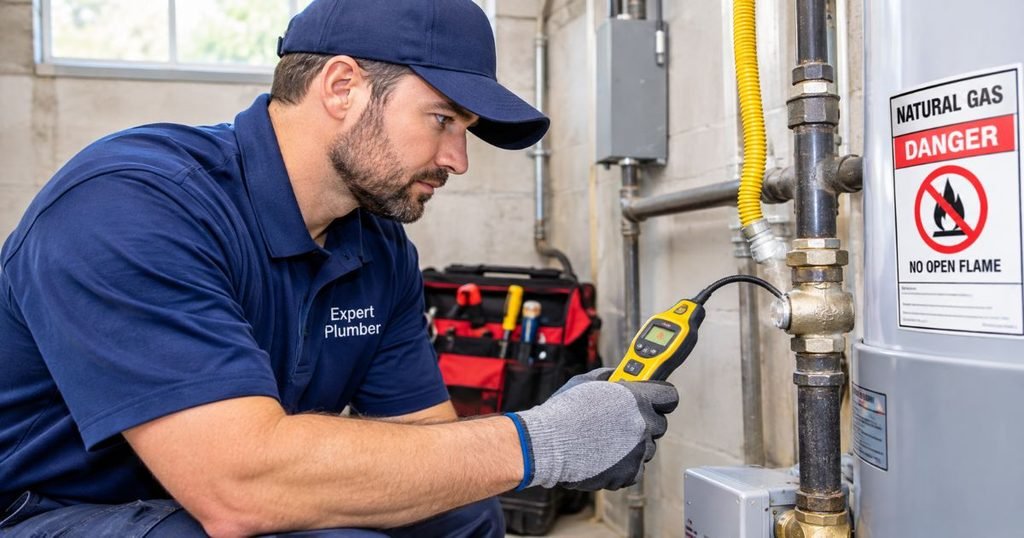
- Gas Leak Detection and Diagnosis: Utilizing specialized electronic gas sniffors, pressure gauges, and approved bubble solutions to pinpoint the exact location of underground or interior leaks.
- Residential Gas Pipe Inspection: Thoroughly examining entire gas distribution networks, visible fittings, shut-off valves, and structural connections for wear, corrosion, or mechanical stress.
- Gas Line Repair and Replacement: Safely cutting out damaged pipe segments, threading or welding new steel, copper, or corrugated stainless steel tubing (CSST), and securing sound connections.
- Gas Appliance Connection Inspection: Checking flexible connectors and hard-piped hookups serving ranges, ovens, water heaters, furnaces, and boilers.
- Gas Line Installation and Modification: Designing and installing new gas piping to accommodate kitchen upgrades, home additions, standby backup generators, patio heaters, or outdoor fire pits.
- Gas Pressure Testing: Conducting rigorous pressure tests on closed gas systems to verify integrity and ensure zero pressure loss before returning systems to service.
- Identifying Corroded or Deteriorating Pipes: Spotting early signs of material fatigue, galvanic corrosion, or substandard historical installations.
Understanding Professional Distinctions
It is important for homeowners to understand the distinctions between different trades and service providers:
- General Plumber: Licensed for water and waste, but may or may not hold specific endorsements or local licensing for fuel gas work.
- Gas-Line Professional: Holds dedicated training and local licensing permitting installation, testing, and repair of fuel gas systems.
- HVAC Technician: Often certified to service and connect gas-fired heating and cooling equipment (furnaces, boilers) but typically limited to appliance-level connections rather than whole-house distribution piping.
- Gas Utility Technician: Employed by the local utility company to maintain transmission mains, service drops, regulators, and utility-owned meters. They do not typically repair interior customer-owned house piping.
Licensing requirements vary significantly across US states, counties, and municipalities, reinforcing the importance of verifying that any hired contractor holds active credentials for gas piping work in your specific jurisdiction.
READ MORE: Best High Efficiency Gas Furnace: Review, Cost & Comparison
Warning Signs of a Gas Leak in Your Home
Because natural gas is inherently colorless and odorless in its raw state, utility companies artificially infuse it with an odorant called mercaptan, a harmless chemical compound that smells distinctively like rotten eggs or sulfur. This ensures that even a trace amount in the air can be detected by human senses. However, homeowners should never rely solely on smell to detect a hazard.
1. Rotten Egg or Sulfur-Like Smell
The most familiar indicator of a natural gas or propane leak is a sharp, unpleasant sulfur or rotten egg odor. If you notice this smell indoors or near outdoor gas equipment, treat it as an active emergency until proven otherwise.
2. Hissing, Whistling, or Roaring Sounds Near Gas Pipes
High-pressure gas escaping from a cracked pipe, loose fitting, or damaged valve often generates an audible hiss, whistle, or faint roaring sound. If you hear unusual whistling near your water heater, furnace, or gas meter when appliances are idle, investigate cautiously or evacuate.
3. Unexplained Dead or Discolored Vegetation Near Underground Gas Lines
If an underground residential gas line develops a slow leak, it displaces oxygen in the surrounding soil. This suffocates lawn roots and plants, resulting in patches of dead grass, withered shrubs, or unusually discolored vegetation directly above the buried pipe path.
4. Bubbling in Standing Water Near an Outdoor Gas Line
Following heavy rain or lawn irrigation, if you observe persistent bubbling in puddles, damp soil, or standing water near your outdoor gas meter, underground service line, or backyard appliance stub, escaping gas is likely displacing water and creating visible bubbles.
5. Dirt or Dust Blowing from the Ground
An underground gas leak under pressure can agitate surrounding soil, causing dirt, dust, or small debris to blow upward or form a small crater-like disturbance in landscaped areas.
6. Damaged Gas Appliance Connections
Corroded, kinked, stretched, or visibly damaged flexible gas connectors behind kitchen ranges, clothes dryers, or room heaters represent immediate leak risks. Even minor physical trauma during appliance cleaning can compromise threaded or flared fittings.
7. Unusual Gas-Related Appliance Problems
If your gas stove burners produce excessively yellow, flickering flames instead of a crisp, steady blue flame, or if your gas furnace repeatedly shuts down unexpectedly or emits soot, it may indicate improper combustion, ventilation issues, or a localized gas supply fluctuation.
What Should You Do If You Suspect a Gas Leak?
When dealing with a potential gas leak, decisive action is vital for personal safety. Follow these nine critical steps immediately:
- Stop What You Are Doing: Cease cooking, working, or operating any machinery immediately.
- Leave the Building Immediately: Evacuate all human occupants and household pets from the structure without delay.
- Do Not Operate Electrical Equipment: Leave light switches, ceiling fans, garage door openers, thermostats, and electrical appliances strictly alone. Do not turn lights on or off.
- Avoid Open Flames and Sparks: Do not smoke, strike matches, light candles, or use any equipment that could generate a spark or ignition source.
- Do Not Attempt to Locate or Repair the Leak: Leave troubleshooting and technical diagnostics entirely to trained professionals equipped with specialized safety gear.
- Do Not Operate Gas Valves: Unless specifically directed to do so in an urgent instruction by authorized emergency personnel or your utility company, leave household gas shut-off valves untouched.
- Move a Safe Distance Away: Walk well away from the building to a safe outdoor gathering point upwind from the suspected leak source.
- Call 911 and Your Gas Utility: From a safe location using a mobile phone or neighbor’s phone, report the situation immediately to emergency responders (911) and your local natural gas utility’s emergency dispatch line.
- Do Not Re-Enter Until Cleared: Remain outside until firefighters, utility technicians, or a licensed emergency gas leak plumber inspects the premises and explicitly confirms that the building is completely safe for re-entry.
READ MORE: Gas Water Heater Troubleshooting: Common Problems and Fixes
Common Causes of Gas Leaks in Residential Properties
Understanding why residential gas leaks occur can help homeowners implement preventative habits and catch vulnerabilities early. Common causes include:
- Aging or Corroded Gas Pipes: Steel and iron pipes naturally degrade over decades due to moisture, humidity, and chemical oxidation, eventually developing pinhole leaks.
- Loose or Damaged Pipe Fittings: Thermal expansion and contraction cycles over years can cause threaded joints and unions to loosen.
- Worn Gas Appliance Connectors: Older brass or uncoated flexible appliance connectors become brittle, crack, or suffer rubber seal degradation.
- Improper Gas Line Installation: Substandard workmanship by unlicensed handymen, incorrect pipe sizing, or failure to apply approved thread sealant can cause premature leaks.
- Poor-Quality Previous Repairs: Temporary tape or makeshift patches applied to gas lines will inevitably fail under line pressure.
- Physical Damage During Home Renovation: Driving nails, drilling into wall studs, or remodeling kitchens and basements can accidentally puncture hidden gas lines.
- Accidental Underground Gas Line Damage: Unmarked excavation, landscaping trenching, or fence post installation without calling 811 can sever buried lines.
- Natural Disasters, Flooding, and Soil Movement: Earthquakes, severe ground settling, landslides, or heavy flooding can stress and snap rigid gas piping.
- Deteriorating Connections Around Gas Appliances: Constant vibration from clothes washers, dryers, and HVAC blowers can weaken nearby gas joints.
Where Do Gas Leaks Commonly Occur?
Gas leaks can develop anywhere fuel gas travels throughout a property. Recognizing typical trouble spots helps homeowners monitor their home’s safety effectively.
Kitchen Gas Stove and Oven Connections
The flexible connector linking the kitchen wall stub to the rear of a gas range is subject to movement when appliances are pulled out for cleaning. Thread wear and connector fatigue frequently occur here.
Water Heater Gas Connections
Tank-type and tankless water heaters feature rigid piping and sediment traps (drip legs) subject to damp basement conditions, increasing the likelihood of external corrosion over time.
Furnace Gas Supply Lines
High-efficiency forced-air furnaces experience frequent thermal cycling and internal vibration, placing continuous mechanical stress on gas valves, pilot assemblies, and supply manifolds.
Gas fireplace Connections
Direct-vent and B-vent gas fireplaces feature hidden logs, pilot valves, and shut-off valves behind decorative panels where dust buildup and valve wear can lead to minor leaks.
Outdoor Gas Grills
Patio grills connected to permanent natural gas stub-outs use flexible outdoor-rated hoses that endure weathering, UV exposure, ultraviolet degradation, and animal chewing.
Underground Residential Gas Lines
Buried service lines running from the street meter to detached garages, pool heaters, fire pits, or guesthouses are vulnerable to soil shifting, root intrusion, and accidental digging.
Gas Meter and Service Connections
Regulators, meters, and exterior service risers maintained by the utility company can occasionally develop seal leaks around mechanical joints.
Basement and Utility Room Gas Piping
Long runs of black iron piping traversing unfinished basements, crawlspaces, and utility corridors often feature multiple threaded joints where condensation or humidity promotes rust.
READ MORE: Plumber Hourly Rate: What Do Plumbers Charge?
How Does a Professional Gas Leak Plumber Find a Gas Leak?
Pinpointing a gas leak safely requires professional-grade equipment and methodical testing protocols. Licensed plumbers employ several advanced techniques:
- Electronic Combustible Gas Detectors: Highly sensitive portable sensors scan ambient air and trace microscopic concentrations of methane or propane, pinpointing leaks down to the exact joint.
- Approved Gas Leak Detection Solutions: Specialized non-corrosive bubbling liquids are brushed onto pipe threads, valves, and fittings. Escaping gas forms immediate, distinct foam bubbles.
- Gas Piping Pressure Testing: When a leak is suspected in concealed walls or ceilings, plumbers isolate the section, attach a precision pressure gauge, and pressurize the line with air or inert gas to measure pressure loss over a set duration.
- Visual Inspection of Accessible Connections: Experienced eyes examine pipe hangers, corrosion spots, thread engagement, and support spacing to identify structural weaknesses.
- Appliance Manifold Testing: Technicians check control valves, burner manifolds, and safety shut-offs on all connected gas appliances.
Gas Leak Repair Process: What Should Homeowners Expect?
When you hire a licensed gas leak repair service to resolve a gas line issue, they follow a structured, code-compliant workflow:
- Initial Emergency Assessment and Utility Clearance: Verifying that the main gas supply is safely shut off and coordinating with the local utility if meter-side intervention is required.
- Ownership Determination: Establishing whether the compromised pipe belongs to the utility or the homeowner’s private property.
- Comprehensive System Inspection: Inspecting the affected branch and surrounding piping to ensure no secondary leaks exist.
- Determining Repair vs. Replacement: Deciding whether a specific fitting can be re-threaded and sealed or if an entire pipe run must be replaced.
- Permitting and Code Compliance: Pulling local municipal permits when required by local building and fuel gas codes.
- Executing the Repair: Safely cutting out damaged segments, installing new black iron, copper, or approved CSST piping, and applying certified thread sealants.
- Pressure Testing and Safety Verification: Conducting mandatory pressure drop tests to verify absolute system tightness.
- Inspection Sign-Off: Arranging for municipal building inspectors to review the work where local law dictates.
- Utility Coordination and Relighting: Restoring gas service, purging air from lines, and safely relighting appliance pilot lights and burners.
How Much Does a Gas Leak Plumber Cost in the USA?
Gas leak repair costs vary depending on the severity of the leak, the location of the pipe, local labor rates, and whether emergency dispatch is required. Below is a comprehensive overview of estimated national pricing for US homeowners in 2026.
Estimated US Cost Breakdown Table
| Service Category | Estimated US Cost Range |
| Gas leak inspection | $150 – $350 |
| Emergency plumbing visit (after-hours callout) | $200 – $500 |
| Minor gas pipe repair (fitting / sealing) | $250 – $600 |
| Gas pipe replacement (per section / run) | $500 – $2,000+ |
| Gas appliance connector replacement | $75 – $200 |
| New gas line installation (appliance / extension) | $300 – $1,500+ |
| Municipal permit and inspection fees | $50 – $200 |
Note: These figures represent national averages and estimated ranges. Actual costs depend heavily on regional labor markets, job complexity, and material accessibility.
READ MORE: How to Stop a Leak Until the Plumber Arrives: A Homeowner’s Guide
Factors Affecting Final Repair Pricing
- Location and Regional Labor Rates: Urban markets with higher living costs typically feature higher hourly plumber rates than rural areas.
- Accessibility of Gas Piping: Exposed basement pipes are inexpensive to access, whereas pipes hidden inside finished walls, concrete slabs, or underground trenches require costly opening or excavation.
- Type and Size of Gas Pipe: Steel pipe threading, CSST installation, and underground polyethylene (PE) piping require different materials and labor inputs.
- Extent of Damage: A single loose fitting is inexpensive to fix; extensive corrosion requiring a complete repipe of a branch line increases costs.
- Emergency Service Requirements: Dispatching a technician at midnight, on weekends, or during holidays incurs emergency dispatch and overtime premiums.
- Permits and Inspection Requirements: Mandatory local permitting adds administrative and inspection fees to the final invoice.
How to Choose the Right Gas Leak Plumber
Selecting a qualified professional for gas line work is not a decision to be rushed. Use this practical buying guide to evaluate potential contractors:
- Verify State and Local Licensing: Ensure the plumber holds an active, verified plumbing license with specific endorsements for fuel gas work in your state or municipality.
- Check Insurance and Bonding: Confirm the contractor carries adequate general liability insurance and workers’ compensation coverage to protect your property against accidents.
- Inquire About Gas Line Specialization: Ask how frequently their team handles residential gas leak detection and gas pipe replacement.
- Confirm Emergency Availability: Verify whether they offer 24-hour emergency plumbing services for urgent situations.
- Demand Transparent Written Estimates: Request itemized written quotes before authorizing non-emergency repairs, detailing labor, materials, and permit costs.
- Check Code Knowledge: Ensure they are fully conversant with the International Fuel Gas Code (IFGC) or local municipal building codes.
- Review Customer Reputation: Look for consistent positive reviews regarding reliability, honesty, cleanliness, and safety standards.
- Inquire About Workmanship Warranties: Reputable plumbers stand behind their repairs with a solid warranty on labor and parts.
Essential Questions to Ask Before Hiring
- “Are you fully licensed and insured to work on residential fuel gas lines in my specific city/county?”
- “Do you provide 24-hour emergency gas line repair services?”
- “Will you test the entire affected gas branch, not just the single suspected leak spot?”
- “Are municipal permits and follow-up inspections included in your quote?”
- “Will you handle pressure testing and appliance relighting after the repair?”
- “What type of warranty do you provide on your gas pipe repairs?”
Gas Utility vs. Gas Leak Plumber: Who Should You Call?
Knowing who is responsible for what part of your gas system prevents confusion during an incident.
| Entity / Professional | Primary Responsibilities | When to Contact |
| Natural Gas Utility Company | Transmission mains, street service drops, outdoor gas meters, and utility regulators. | Immediately if you smell gas or suspect an active leak anywhere. |
| Emergency Responders (911 / Fire Department) | Scene safety, evacuation assistance, gas shut-off in extreme emergencies. | Active gas leaks, explosions, fires, or medical emergencies. |
| Licensed Gas Leak Plumber | Customer-owned interior gas piping, branch lines, appliance shut-offs, and connector replacements. | Non-emergency inspections, appliance installations, and verified interior repairs after utility clearance. |
| Qualified HVAC Technician | Gas-fired furnaces, boilers, water heaters, and internal appliance combustion tuning. | Routine heating maintenance, furnace gas valve repairs, or appliance efficiency checks. |
READ MORE: When to Use Plumber’s Putty vs Silicone Sealant
Emergency Gas Leak Plumber: When Should You Call?
While routine appointments can be scheduled during normal business hours, certain scenarios require immediate professional intervention:
- Suspected Active Gas Leak: Any unresolved sulfur odor or hissing sound after utility technicians have shut off the gas meter.
- Damaged Gas Pipe: A pipe struck during renovation, landscaping, or furniture movement.
- Gas Odor Around Specific Appliances: A persistent smell when operating your stove, oven, or water heater.
- Damaged or Kinked Gas Connector: A visible tear, stretch, or corrosion spot on a flexible appliance hose.
- Underground Gas Line Concern: Sunken soil, dead grass patches, or bubbling water near buried outdoor lines.
- Recurring Gas Odor After Previous Work: Any return of gas odors shortly after a previous repair or appliance installation.
Never wait until the next business day if you suspect an active leak. Prioritize immediate evacuation and emergency utility notification.
How to Prevent Gas Leaks in Your Home
While not every gas leak can be anticipated, proactive maintenance significantly reduces your risk:
- Schedule Professional Inspections: Have your home’s gas piping and connected appliances inspected by a qualified professional every few years, especially in older homes.
- Maintain Gas Appliances: Service your furnace, water heater, and stove annually according to manufacturer specifications.
- Replace Aging Connectors: Swap out old rubber or uncoated brass gas appliance connectors every 10 years or whenever appliances are replaced.
- Avoid Unauthorized Modifications: Never attempt DIY alterations, extensions, or improvisations on fuel gas piping.
- Call 811 Before Digging: Always dial 811 (Call Before You Dig) at least a few days prior to any landscaping, trenching, or fence installation on your property.
- Protect Accessible Pipes: Keep storage boxes, heavy furniture, and tools away from exposed basement gas lines to prevent accidental impacts.
- Inspect After Remodeling: Have your gas system checked by a licensed plumber after major home remodeling or seismic events.
- Install Listed Gas Detectors: Consider placing certified explosive gas alarms in utility rooms or kitchens according to manufacturer guidelines as an extra layer of awareness.
Gas Leak Plumber vs. DIY Gas Line Repair
Some home improvement projects lend themselves well to do-it-yourself (DIY) execution, but residential gas line work is never one of them. Attempting DIY gas repairs introduces severe hazards:
- Explosion and Fire Hazards: A single microscopic flaw in a DIY threaded joint can allow gas to accumulate in wall voids, triggering a devastating explosion from a household spark.
- Carbon Monoxide Risks: Improperly connected or adjusted gas appliances can generate lethal carbon monoxide (CO) gas without warning.
- Incorrect Pipe Connections: Using incorrect pipe joint compound, failing to torque fittings properly, or mixing incompatible metals leads to galvanic corrosion and rapid failure.
- Code Violations: Unpermitted, amateur gas work violates local building and fuel gas codes, endangering your insurance coverage and future home resale value.
- Lack of Professional Testing: Homeowners lack the calibrated electronic sniffors and precision pressure gauges necessary to verify absolute system integrity.
The Golden Rule: Always leave natural gas installation, modification, and repair to a licensed, insured professional.
Frequently Asked Questions
Who should I call if I smell gas in my house?
If you smell gas, immediately leave the building with everyone inside, avoid operating any electrical switches, appliances, or phones, and call 911 and your local natural gas utility from a safe location outdoors. Do not re-enter until authorities confirm it is safe.
Can a plumber fix a natural gas leak?
Yes. A properly licensed and qualified gas-line plumber is fully authorized to locate, repair, and replace customer-owned residential gas piping, subject to local building codes and utility safety regulations.
How much does it cost to hire a gas leak plumber?
Gas leak inspections typically cost between $150 and $350, while minor pipe repairs range from $250 to $600. Emergency callouts, major pipe replacements, and permit fees will influence the final total.
How do plumbers detect gas leaks?
Plumbers use a combination of advanced electronic combustible gas detectors, approved bubble leak-detection solutions, visual inspections of accessible connections, and closed-system pressure testing.
Is a gas leak considered a plumbing emergency?
Yes. Any suspected active gas leak requires immediate evacuation and emergency utility or 911 notification. Routine plumbing appointments should only be scheduled after emergency responders or utility technicians have cleared the property.
Conclusion:
Natural gas provides unmatched comfort and convenience for American households, but it demands absolute respect and vigilance. Recognizing the warning signs of a gas leak, knowing how to evacuate safely, and understanding the vital role played by emergency responders, gas utilities, and qualified professionals are essential responsibilities for every homeowner.
When your home requires gas line inspection, maintenance, or repair, never compromise safety to save on costs. Partnering with a licensed, experienced gas leak plumber ensures your gas system operates safely, efficiently, and in full compliance with local building codes.
Protect your family and home today by keeping emergency utility numbers accessible and trusting qualified local professionals for all your residential gas line needs.
Sources
- Pipeline and Hazardous Materials Safety Administration (PHMSA): Federal pipeline safety guidance and natural gas awareness.
- Consumer Product Safety Commission (CPSC): Residential gas appliance safety and carbon monoxide prevention standards.
- National Fire Protection Association (NFPA): NFPA 54 National Fuel Gas Code guidelines for piping installation and testing.
- American Gas Association (AGA): Safe natural gas utilization and utility service boundaries.
Disclaimer
This article is published strictly for general educational and informational purposes. It is not intended to substitute for professional emergency services, official gas utility instructions, licensed plumbing inspections, or local municipal building code compliance. If you suspect an active natural gas leak, evacuate immediately and contact 911 and your local natural gas utility provider.


Pingback: 24 Hour Emergency Plumber Near Me: Urgent Plumbing Help & Costs - Plumbing Guider