If you are searching for gas water heater troubleshooting advice, you are likely looking for clear, reliable answers on how to diagnose the issue, what you can safely check yourself, and when it is time to call in a professional.
Gas water heater problems generally stem from a few core culprits: ignition or pilot light failures, incorrect thermostat settings, mineral sediment buildup inside the tank, inadequate combustion ventilation, or worn internal components like gas control valves and thermocouples.
In this comprehensive guide, we will walk you through safe, step-by-step diagnostic procedures, break down common symptoms and their potential causes, compare tank and tankless models, and outline realistic repair costs in the United States. Lets deep dive into ‘Gas Water Heater Troubleshooting: Common Problems and Fixes”
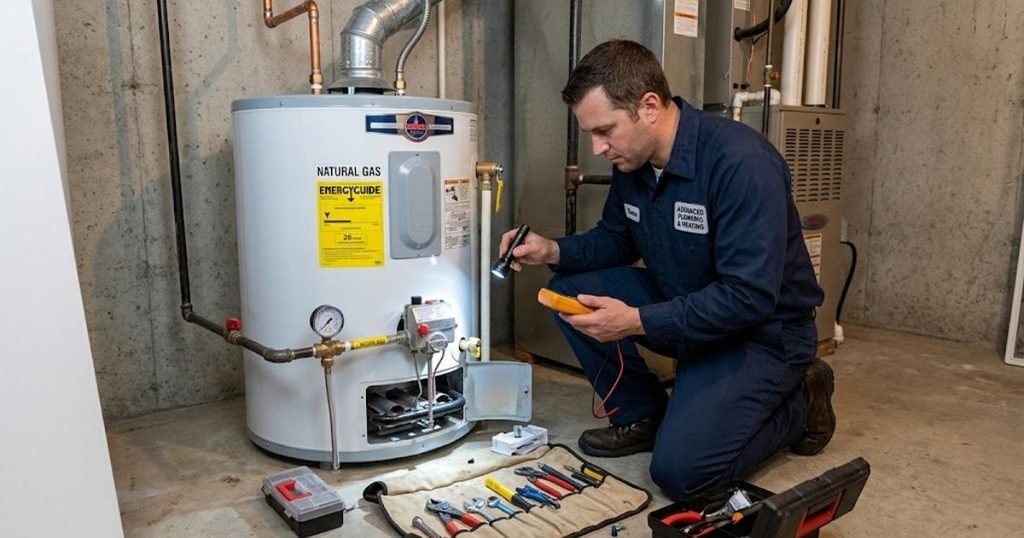
(Disclaimer: This guide is intended for educational and informational purposes only. It does not replace model-specific manufacturer instructions, local building codes, or professional plumbing diagnosis.)
Quick Gas Water Heater Troubleshooting Checklist
Before diving into complex diagnostics, use this quick-reference table to match your water heater’s symptoms with possible causes and safe first steps.
| Problem | Possible Cause | Safe First Step |
| No hot water | Pilot or ignition problem, gas supply interruption, or control issue | Check the displayed status and manufacturer instructions |
| Water is not hot enough | Temperature setting, sediment, or heating issue | Check the temperature setting |
| Pilot light keeps going out | Draft, sensor issue, or another combustion problem | Follow the manufacturer’s troubleshooting instructions |
| Burner will not ignite | Ignition, gas supply, or control fault | Observe the status indicator without opening sealed compartments |
| Hot water runs out quickly | High demand, sediment, or tank-capacity issue | Consider recent water use and the heater’s capacity |
| Popping or rumbling noises | Sediment buildup or overheating | Arrange maintenance if the noise persists |
| Water leaking near the heater | Plumbing connection, valve, or tank failure | Identify the visible source without touching hot or pressurized components |
Note: Symptoms can have multiple underlying causes. This table serves as an initial diagnostic starting point rather than a definitive diagnosis.
READ MORE: Gas Water Heater Not Working: Causes, Fixes & When to Call a Pro
Safety Precautions Before Troubleshooting a Gas Water Heater
Gas water heaters combine natural gas or propane, open flames or electronic ignition, electrical connections, and pressurized hot water. Because of this, safety must always come first. Before attempting any troubleshooting steps, review these crucial safety guidelines recommended by the U.S. Consumer Product Safety Commission and major manufacturers:
- If you smell gas or suspect a gas leak, evacuate the building immediately. Do not operate electrical switches, use a telephone inside, light matches, or attempt any repairs. From a safe location away from the building, call 911 or your local emergency services, and contact your gas utility provider immediately.
- If a carbon monoxide alarm sounds, move everyone outside to fresh air instantly and contact emergency services. Do not re-enter the home until emergency responders or utility technicians declare the area safe.
- Never bypass safety devices, such as safety switches, high-limit switches, flame sensors, or thermocouples. These components are designed to prevent fires, explosions, and carbon monoxide poisoning.
- Never dismantle a gas valve, adjust internal gas pressures, modify burner assemblies, or disconnect exhaust venting as a DIY project.
- Never operate the water heater with a blocked, disconnected, or damaged exhaust vent. Proper venting is critical to safely exhausting toxic combustion gases outdoors.
- Do not remove sealed combustion covers or open burner compartments unless the manufacturer’s official manual specifically identifies that exact procedure as homeowner-safe.
- Keep flammable materials, liquids, and aerosols (such as gasoline, paint thinners, and cleaning products) well away from the water heater.
- Always follow the exact operating and relighting instructions printed on the appliance’s rating plate or in the manufacturer’s manual.
Gas water heaters present real fire, explosion, scalding, and carbon monoxide risks. Never attempt repairs that exceed your comfort level or technical capability.
READ MORE: Why Is My Gas Water Heater Pilot Light Not Staying Lit? Causes & Fixes
How to Troubleshoot a Gas Water Heater Step by Step
To diagnose a malfunctioning water heater efficiently, follow a structured, logical sequence beginning with external observations.
Step 1: Identify Your Water Heater Type
Before looking for solutions, determine whether you have a traditional tank-style gas water heater or a gas tankless water heater. Locate the rating plate (usually a silver or black sticker on the side of the tank or unit) to find the exact brand, model number, and serial number. Also note whether your unit uses a traditional standing pilot light (where you manually light a small flame) or a modern electronic ignition system powered by a battery or electrical connection.
Step 2: Check the Temperature Setting and Operating Mode
An incorrect temperature setting or an accidental switch to “Vacation” mode is a surprisingly common reason for lukewarm water. Check the temperature dial on the gas control valve or digital display. According to the U.S. Department of Energy, setting your water heater to 120°F provides comfortable hot water while minimizing energy use and reducing scalding risks. Consult your owner’s manual before making adjustments, and never set residential water heaters to dangerously high temperatures.
Step 3: Observe the Pilot Light or Status Indicator
Inspect the status indicator window at the base of the heater. On standing pilot models, verify whether the pilot flame is burning. On modern electronic ignition units, look for flashing LED error codes on the control module. Manufacturer manuals include specific code charts explaining what each blink sequence means. Do not attempt repetitive relighting cycles if the unit repeatedly fails to hold a flame.
Step 4: Check for Visible Venting or Airflow Problems
Gas water heaters rely on a steady supply of combustion air and clear exhaust venting. Visually inspect accessible exterior vent pipes and draft hoods from a safe vantage point to ensure they are free from bird nests, debris, leaves, or physical damage. If you notice black soot marks around the appliance, unusual exhaust odors, disconnected vent pipes, or signs of water condensation dripping from the vent, shut off the appliance and call a professional immediately.
Step 5: Look for Visible Leaks or Water Damage
Examine the floor and surrounding plumbing connections for moisture. Determine whether the water is coming from a loose water supply line, condensation, the temperature-and-pressure (T&P) relief valve, or a crack in the tank body itself. Never touch pressurized relief valves or scalding hot water pipes.
Common Gas Water Heater Problems and How to Fix Them
1. Gas Water Heater Has No Hot Water
- Symptoms: Complete loss of hot water throughout the home, with water remaining cold or ambient temperature.
- Possible Causes: Extinguished pilot light, tripped electronic ignition control, interrupted gas supply line, faulty gas control valve, or safety lockout triggered by a venting failure.
- Safe Homeowner Checks: Verify that the gas supply shut-off valve is fully open. Check the status indicator or pilot light. Review error code guides in the manual.
- When to Call a Professional: If the gas supply is verified but the burner fails to ignite, or if the gas control valve or electronic module is defective, contact a licensed plumber or gas technician.
2. Gas Water Heater Is Not Getting Hot Enough
- Symptoms: Water gets warm or lukewarm, but never reaches a comfortable hot temperature, or hot water depletes much faster than normal.
- Possible Causes: Thermostat set too low, heavy household hot water demand exceeding capacity, heavy mineral sediment accumulation insulating the water from the burner, or a malfunctioning control thermostat.
- Safe Homeowner Checks: Check the temperature dial to ensure it is set properly (typically around 120°F). Evaluate whether simultaneous water usage (e.g., dishwasher and shower running together) is overloading the system.
- When to Call a Professional: If adjusting the thermostat yields no improvement, or if heavy sediment buildup requires tank flushing, professional service is recommended.
3. Gas Water Heater Pilot Light Keeps Going Out
- Symptoms: You relight the pilot, but it goes out again hours or days later.
- Possible Causes: A faulty thermocouple or thermopile (in older units), a failing flame sensor, strong drafts near the installation site, combustion air supply restrictions, or a failing gas valve.
- Safe Homeowner Checks: Ensure nearby doors or windows aren’t creating heavy drafts that blow out the pilot. Check for dust or lint blocking the air intake screen at the base of the unit.
- When to Call a Professional: Never attempt to clean, adjust, or replace a thermocouple or gas valve yourself. A qualified technician must test and replace faulty flame-sensing components.
4. Gas Water Heater Burner Will Not Ignite
- Symptoms: The pilot light is lit or the igniter clicks, but the main burner refuses to engage and heat the water.
- Possible Causes: Defective igniter, faulty gas control valve, low gas pressure, or an active safety switch lockout.
- Safe Homeowner Checks: Verify that the gas control knob is turned firmly to the “ON” position rather than “PILOT.” Check for active error codes on electronic models.
- When to Call a Professional: Internal burner testing, gas pressure adjustments, and electronic control diagnostics require specialized tools and technical expertise.
5. Gas Water Heater Keeps Shutting Off
- Symptoms: The unit operates briefly, then shuts down entirely, requiring repeated manual resets.
- Possible Causes: Overheating, blocked combustion air intakes, improper venting causing rollout or backdrafting, or a failing high-limit safety switch.
- Safe Homeowner Checks: Inspect the lower air intake screen for lint and dust buildup. Ensure nothing is blocking airflow around the base of the heater.
- When to Call a Professional: Never repeatedly reset a water heater that keeps shutting down. Repeated shutdowns indicate a serious safety hazard, such as improper venting or overheating, requiring immediate professional inspection.
6. Gas Water Heater Makes Popping, Rumbling, or Banging Noises
- Symptoms: Loud popping, rumbling, or knocking sounds echoing from inside the tank while the burner is active.
- Possible Causes: Hard water mineral sediment settling at the bottom of the tank. When water trapped beneath the sediment boils, it creates steam bubbles that burst upward, causing loud popping noises.
- Safe Homeowner Checks: Listen to determine if the noise occurs only during heating cycles. Check the age of the water heater.
- When to Call a Professional: Flushing a water heater tank removes sediment, but if the heater is older than 8–10 years or the drain valve is corroded, attempting a DIY flush can cause leaks. Call a plumber for professional tank flushing.
7. Gas Water Heater Is Leaking Water
- Symptoms: Puddles of water pooling around the base of the tank or moisture dripping down the sides.
- Possible Causes: Loose inlet/outlet plumbing connections, a failing temperature-and-pressure (T&P) relief valve, condensation, or internal tank corrosion and seam failure.
- Safe Homeowner Checks: Feel the pipes above the tank to see if fittings are loose. Check if the moisture is simple condensation from high humidity or cold inlet water.
- When to Call a Professional: Never plug or cap a T&P relief valve. If water is leaking from the steel tank body itself, the tank has suffered structural failure and must be replaced.
8. Gas Water Heater Produces Rusty or Smelly Hot Water
- Symptoms: Discolored reddish-brown water coming from hot taps, or a distinct rotten-egg sulfur odor when running hot water.
- Possible Causes: Internal tank corrosion, a degrading anode rod, or harmless sulfate-reducing bacteria reacting inside the tank.
- Safe Homeowner Checks: Check if the rusty water appears only on hot taps (indicating a water heater issue) or on cold taps as well (indicating main plumbing or municipal supply rust).
- When to Call a Professional: If a rotten-egg odor persists, or if anode rod replacement and professional flushing are needed, contact a licensed plumber. (Note: If you smell gas anywhere near the appliance, treat it as an emergency gas leak and evacuate.)
READ MORE: Gas Water Heater Replacement Cost — What Homeowners Pay & Why
Gas Water Heater Troubleshooting by Symptom
This quick diagnostic reference connects common symptoms with likely causes and recommended next actions.
| Symptom | Likely Cause | Recommended Next Action |
| No hot water | Pilot failure, gas interruption, valve fault | Check gas supply and pilot/error status; call plumber if unresolved |
| Pilot will not stay lit | Defective thermocouple, draft, sensor issue | Inspect for drafts/lint; professional repair needed for sensor components |
| Burner does not ignite | Ignition fault, control valve issue, lockout | Verify control settings; call professional for ignition diagnostics |
| Water takes too long to heat | Sediment buildup, undersized tank, low thermostat | Flush tank sediment or check household water demand |
| Hot water runs out quickly | High household usage, sediment volume | Stagger hot water usage or consider tank capacity upgrade |
| Heater shuts off unexpectedly | Overheating, blocked intake, venting issue | Stop resetting the unit and call a professional immediately |
| Popping or rumbling sounds | Mineral sediment accumulation at tank bottom | Schedule professional tank flushing or maintenance |
| Water around the tank | Loose fitting, relief valve discharge, tank leak | Inspect fitting connections; replace tank if body is leaking |
| Unusual exhaust or combustion signs | Blocked vent, soot, backdrafting | Shut off unit immediately and call a qualified technician |
Gas Tank Water Heater vs. Tankless Gas Water Heater Troubleshooting
While both traditional tank-style heaters and modern tankless gas water heaters use gas burners to heat water, their internal designs and troubleshooting requirements differ significantly.
| Feature | Traditional Tank Gas Water Heater | Gas Tankless Water Heater |
| Ignition Issues | Standing pilot or electronic spark igniter | Electronic spark ignition system with automated safety checks |
| Sediment Buildup | Heavy sediment collects at the bottom of the storage tank | Scale buildup on internal heat exchangers |
| Venting Requirements | Standard metal draft hood or power vent | Specialized PVC, CPVC, or stainless steel direct-vent piping |
| Flow & Temperature | Stores hot water ready for use; subject to depletion | Heats water on demand based on flow rate sensors |
| Error Codes / Diagnostics | Blinking status lights on control valve module | Digital error code display panel on the unit front |
| Maintenance Needs | Annual flushing and anode rod inspection | Annual descaling / flushing of heat exchanger |
Tankless gas water heaters rely heavily on electronic flow sensors, computerized control boards, and dedicated error codes (such as ignition failure codes or maintenance reminders). When troubleshooting a tankless unit, always refer to the specific manufacturer’s manual (such as Bosch, Navien, or Rinnai documentation) to interpret error codes accurately.
When Should You Call a Professional?
Knowing your DIY limits is essential for protecting your home and personal safety.
Homeowners can safely perform these steps:
- Reading the manufacturer rating plate and owner’s manual.
- Checking and adjusting accessible external temperature settings.
- Observing status indicator lights and checking displayed error codes.
- Inspecting the exterior for visible water leaks or pooling.
- Visually checking accessible exterior vent terminations from a safe position.
Professional service is required for:
- A pilot light that repeatedly goes out despite clean surroundings.
- A main burner that refuses to ignite.
- Suspected gas control valve, thermocouple, or flame-sensor malfunctions.
- Gas line pressure testing or internal gas component repairs.
- Damaged, disconnected, or blocked exhaust venting.
- Repeated safety shutdowns or flame rollouts.
- Persistent water leaks or cracked tank bodies.
Remember that suspected natural gas leaks and carbon monoxide alarms require immediate emergency evacuation and professional utility intervention, not a standard plumbing repair appointment.
How Much Does Gas Water Heater Repair Cost?
When deciding whether to repair or replace a failing gas water heater, understanding current U.S. pricing helps guide your decision. Repair costs vary depending on your geographic region, local labor rates, unit age, and specific model.
| Repair or Service Type | Typical U.S. Cost Range | Details |
| Diagnostic / Service Call Fee | $100 – $250 | Covers technician travel and initial diagnosis time |
| Thermocouple / Flame Sensor Repair | $150 – $350 | Includes parts and labor for safety sensor replacement |
| Ignition System / Igniter Repair | $200 – $450 | Replacing electronic igniters or control modules |
| Gas Control Valve Replacement | $300 – $700 | Replacing the main gas control assembly |
| Sediment Maintenance / Flushing | $150 – $300 | Professional tank flush and sediment removal |
| Full Water Heater Replacement | $1,500 – $3,500+ | Complete removal and installation of a new tank unit (varies by tank size and labor) |
Disclaimer: These figures are general estimates for informational purposes. Actual quotes from licensed plumbers in your area may vary based on job complexity and parts availability.
How to Prevent Future Gas Water Heater Problems
Proactive maintenance extends the lifespan of your gas water heater and minimizes unexpected breakdowns:
- Follow the manufacturer’s recommended maintenance schedule outlined in your owner’s manual.
- Schedule periodic professional inspections, especially for units over five years old.
- Keep accessible air intake louvers and exhaust vent terminals completely unobstructed.
- Regularly check the base of the unit for early signs of moisture, rust, or corrosion.
- Monitor your water heater for unusual popping noises or recurring error codes.
- Test your carbon monoxide detectors monthly and replace batteries annually.
- Address minor ignition glitches or lukewarm water issues promptly before they escalate into complete system failures.
Frequently Asked Questions
Why Is My Gas Water Heater Not Working?
A gas water heater may stop working due to a blown pilot light, an interrupted gas supply, a tripped electronic control module, or a safety shutdown triggered by poor ventilation. First, check your gas supply valve, observe the status indicator light, and consult your owner’s manual. If the burner still fails to ignite, contact a licensed professional for safe diagnosis.
Why Won’t My Gas Water Heater Pilot Light Stay Lit?
When a pilot light refuses to stay lit, it is frequently caused by a failing thermocouple or flame-sensing rod, a disrupted gas supply, or a drafty installation location. Never attempt to modify or replace gas safety parts yourself. If clearing external dust and checking for strong drafts does not resolve the issue, call a qualified technician to service the safety controls.
Why Is My Gas Water Heater Not Heating the Water?
Insufficient heating can stem from an incorrect thermostat setting, heavy household water demand, heavy sediment accumulation insulating the tank bottom, or a faulty burner control. Check your temperature setting first. If the setting is correct and hot water remains limited, sediment buildup or an internal component failure is likely responsible, requiring professional inspection.
How Do I Reset a Gas Water Heater?
Reset procedures vary significantly depending on whether your model features a standing pilot valve or a digital electronic control board. Always consult the specific manufacturer instructions printed on the unit’s rating plate. Never repeatedly reset a water heater that continues to shut down, as frequent lockouts indicate a dangerous underlying issue such as restricted combustion air or venting failure.
When Should I Replace My Gas Water Heater Instead of Repairing It?
You should consider replacing your gas water heater if the storage tank itself is leaking due to rust and corrosion, if the unit is over 10 to 12 years old, or if repair costs approach the price of a brand-new installation. While minor component failures like thermocouples or valves are usually worth repairing, a compromised tank body cannot be fixed and requires full replacement.
Final Thoughts
Troubleshooting a gas water heater does not have to be an overwhelming experience. By identifying the specific symptom, inspecting safe external components, consulting your manufacturer’s manual, and knowing your limits, you can address minor issues confidently while keeping your household safe. When faced with complex internal repairs, persistent gas problems, or tank leaks, always rely on a qualified plumbing professional.
Explore our other helpful guides on Plumbing Guider to learn more about maintaining your home’s plumbing systems, or reach out to a trusted local plumber when you need expert assistance.
Source
- U.S. Department of Energy (DOE)
- U.S. Consumer Product Safety Commission (CPSC)
- Rheem Manufacturing Company
- A. O. Smith Corporation
- Bradford White Corporation
- Whirlpool Water Heaters
- Bosch Home Comfort

