Few things are more frustrating than walking into the shower expecting hot water and getting hit with a blast of cold instead. If your gas water heater is not working, you’re not alone. It’s one of the most common home complaints, and it can range from a quick fix to a sign of something more serious.
Whether you’re getting no hot water at all, water that barely warms up, or a heater that keeps cycling off unexpectedly, this guide will walk you through exactly what might be going wrong and what you can do about it. We’ll cover everything from simple checks you can do yourself in minutes to warning signs that mean it’s time to call a professional.
The good news? Most gas water heater problems have clear causes and once you know what to look for, it’s much easier to decide whether to grab a wrench or pick up the phone. Lets deep dive into “Gas Water Heater Not Working: Causes, Fixes & When to Call a Pro“
Quick Summary (The Short Version)
If you are standing in front of your appliance right now trying to figure out why your hot water abruptly cut out, here is a fast reference list of the most probable culprits:
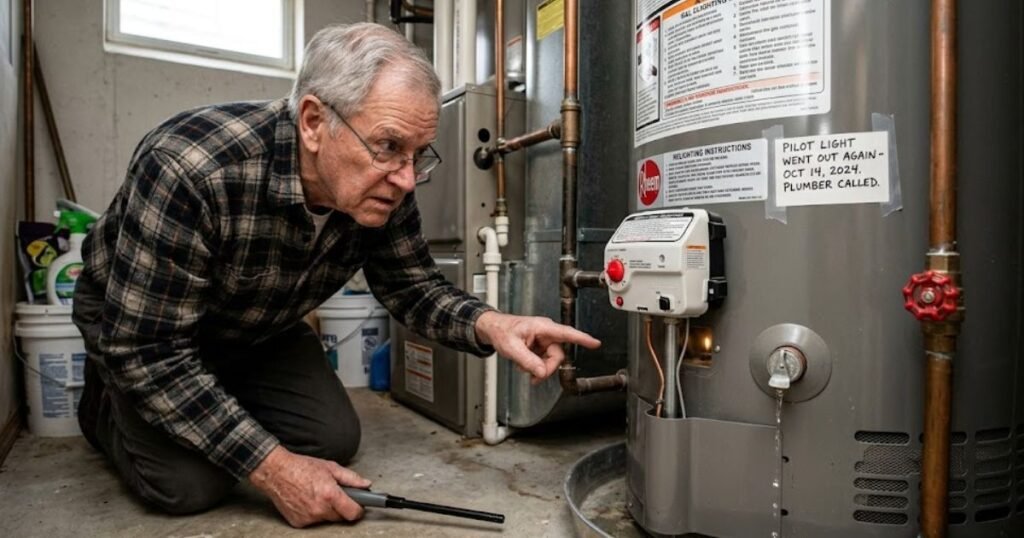
- The Pilot Light Went Out: The absolute most common reason for a sudden loss of hot water.
- A Faulty Thermocouple: If your pilot light will turn on but goes out the second you let go of the knob, this tiny copper safety sensor is usually dead.
- Gas Supply Cutoff: The gas valve on the line might be bumped shut, or your local utility company might have a temporary disruption.
- Severe Sediment Layering: If you hear deep rumbling or popping sounds before the water goes cold, thick mineral crust is choking out the burner.
READ MORE: Gas Water Heater Replacement Cost — What Homeowners Pay & Why

How a Gas Water Heater Works
Before jumping into troubleshooting, it helps to understand the basics of how your unit actually works.
Here’s the short version:
- Cold water enters the tank through a dip tube at the top, pushing down to the bottom of the tank
- The gas burner at the bottom heats the water using a flame ignited by the pilot light or electronic ignition
- A thermostat monitors the water temperature and tells the burner when to kick on or off
- Hot water rises to the top and travels through pipes to your faucets, shower, dishwasher, and washing machine
When any part of this system breaks down the ignition, the gas supply, the thermostat, the venting you end up with cold water or no hot water at all. Let’s look at what can go wrong.
READ MORE: Why Is My Gas Water Heater Pilot Light Not Staying Lit? Causes & Fixes
Common Reasons a Gas Water Heater Is Not Working
There are quite a few things that can cause a gas water heater to stop doing its job. Here are the most common culprits:
1. Pilot Light Is Out
The pilot light is the small, continuous flame that ignites the main burner. If it goes out which can happen from a draft, a gas supply interruption, or simple wear your heater won’t produce hot water. This is one of the most common and easiest fixes.
2. Gas Supply Issue
If the gas valve is turned off or the gas supply to your home has been interrupted, the burner can’t ignite. Check whether other gas appliances (like your stove or furnace) are working. If they’re not, the problem may be with your gas supply rather than the heater itself.

3. Faulty Thermocouple or Flame Sensor
The thermocouple is a safety device that detects whether the pilot light is burning. If it’s worn out or dirty, it may mistakenly signal that the pilot is off and shut down the gas valve as a safety precaution. A bad thermocouple is one of the top reasons for a pilot light not staying lit.
4. Burner Problems
If the pilot light is on but the main burner won’t ignite, the burner assembly itself may be clogged or faulty. You might hear a clicking sound without ignition, or the burner may light but then go out quickly.
5. Sediment Buildup in the Tank
Over time, minerals from hard water settle at the bottom of the tank, forming a layer of sediment. This insulates the water from the burner, making your heater work harder and heat less efficiently. You might notice a popping or rumbling noise that’s a classic sign of sediment buildup.
6. Thermostat Failure
The water heater thermostat controls when the burner fires up. If it’s set too low, malfunctioning, or failed entirely, you’ll get water that’s lukewarm at best or no heat at all.
7. Broken Dip Tube
The dip tube sends cold incoming water to the bottom of the tank so it doesn’t mix with the hot water at the top. When it breaks, cold and hot water mix near the outlet, which makes it feel like you’re running out of hot water quickly.
8. Tripped Safety Shutoff (Thermal Cutoff)
Most gas water heaters have a thermal cutoff device that trips if the unit overheats. If it’s triggered, the heater won’t run until the reset button is pressed.
9. Old or Damaged Water Heater
Water heaters don’t last forever. If yours is 10–15 years old and keeps breaking down, it may simply be at the end of its life.
10. Venting Problems
Gas water heaters vent combustion gases outside. A blocked or damaged vent pipe can cause poor combustion, carbon monoxide buildup, and automatic shutoffs all serious issues.
11. Leaks or Pressure Issues
A leaking tank or faulty pressure relief valve can cause hot water loss and, in some cases, trigger safety shutoffs.
READ MORE: Best Tankless Gas Water Heater Reviews & Comparison — buying guide

Step-by-Step Gas Water Heater Troubleshooting Guide
Before calling a plumber, try these basic checks. Many gas water heater problems have simple solutions.
Safety Note: If you smell gas at any point during this process, stop immediately. Don’t flip any switches, use your phone near the heater, or attempt any repairs. Leave the house and call your gas company right away.
Step 1: Check the Pilot Light
Look through the sight glass (a small window near the bottom of the unit) or remove the access panel. Is the pilot flame burning? If not, follow the relight instructions on the label of your water heater. Most models have clear step-by-step directions printed right on the unit.
Step 2: Make Sure the Gas Valve Is Open
Find the gas shutoff valve on the supply line running to your heater. It should be parallel to the pipe (open), not perpendicular (closed). If it’s shut, turn it to the open position.
Step 3: Check for Error Codes
Many modern gas water heaters have a status light that blinks in a pattern to indicate an error. Count the blinks and compare to the chart in your owner’s manual to identify the issue.
Step 4: Look for Leaks or Rust
Walk around the heater and check the base, connections, and the top of the tank for any wet spots, corrosion, or puddles. Water pooling at the base is always a red flag.
Step 5: Check the Thermostat Setting
The thermostat dial is usually located on the front of the unit. The recommended setting is 120°F. If someone turned it down too low, your water will feel cold. Try raising the setting and giving the heater 30–60 minutes to respond.
Step 6: Listen for Burner Ignition
Turn up the thermostat slightly and listen near the base of the heater. You should hear a clicking sound followed by a low whoosh as the burner ignites. No sound at all may point to an igniter or gas supply issue.
Step 7: Test Other Gas Appliances
Turn on your gas stove or check your furnace. If they’re also not working, your gas supply may be off or disrupted — contact your gas utility company.
Step 8: Check the Vent for Blockages
If you have access to the vent pipe, visually inspect it for blockages like bird nests, debris, or visible damage. A blocked vent is a safety hazard and requires professional attention.
Step 9: Reset the Unit
Some models have a reset button (often red) near the thermostat. Press and hold it for a few seconds. This can clear a tripped thermal cutoff. Wait 30 minutes and test for hot water.
Safe vs. Not Safe to DIY
| Task | Safe for Homeowners? |
| Relighting the pilot light | ✅ Yes — follow label instructions |
| Adjusting the thermostat setting | ✅ Yes |
| Checking the gas valve position | ✅ Yes |
| Pressing the reset button | ✅ Yes |
| Flushing sediment from the tank | ✅ Yes (with care) |
| Replacing the thermocouple | ⚠️ Maybe — basic skill needed |
| Replacing the burner assembly | ❌ No — call a pro |
| Repairing gas line connections | ❌ No — licensed plumber only |
| Inspecting/repairing vent pipes | ❌ No — licensed HVAC tech |
| Addressing gas leaks | ❌ No — call gas company immediately |
READ MORE: Does a Gas Water Heater Need Electricity?

Signs Your Water Heater Needs Repair or Replacement
It can be difficult to determine whether your gas water heater not working simply needs a quick, cheap fix or if you are throwing good money after bad on an appliance that is already past its prime. Keep a close eye out for these specific physical warning signs:
| Physical Symptom | What It Generally Means | Recommended Action |
| Water is completely cold, but pilot stays lit | Broken thermostat control box or a failed internal safety ECO switch. | Schedule professional gas water heater repair to swap the control box. |
| Hot water runs out in under 5 minutes | The internal plastic dip tube has broken off or cracked inside the tank. | Replace the dip tube if the tank is young; replace the heater if old. |
| Loud, aggressive popping or rumbling noises | Heavy, hardened layers of mineral sediment are trapping water underneath. | Perform a deep system flush; if noise persists, the tank shell may be damaged. |
| Water coming from taps looks red, rusty, or muddy | The sacrificial anode rod has dissolved completely, and the inner tank is rusting. | Immediate replacement is recommended before a catastrophic blowout occurs. |
| Active water pooling directly around the bottom base | The inner steel tank shell has officially fractured from corrosion. | Unfixable. Turn off the water and gas lines immediately and schedule a full replacement. |
| The pilot light repeatedly fails every few days | A heavily corroded or failed thermocouple, or a choked pilot burner orifice. | Clean or replace the thermocouple assembly. |

What Homeowners Can Safely Check Themselves
Even if you’re not handy, there are several things you can look at before calling anyone:
- Confirm the gas supply is on — check that the valve is open and other appliances work
- Check the thermostat setting — make sure it’s set to at least 120°F
- Inspect for visible leaks — look around the base and connection points
- Note any unusual smells — a faint rotten-egg odor near the unit can signal a gas leak
- Read the user manual — most issues are addressed in the troubleshooting section
- Check for error codes — look for a blinking status light and compare to your manual
- Make sure the area around the heater is clear — combustibles stored nearby can be dangerous and can restrict airflow
Important Safety Reminder: Gas appliances require extra caution. If you ever smell gas even faintly don’t attempt any repairs yourself. Turn off the gas supply if it’s safe to do so, leave the home immediately, and call your gas company’s emergency line.
READ MORE: How to Tell if Water Heater is Gas or Electric

- INSTANT VISUAL LEAK DETECTION: Stop guessing and start seeing. Our fastest-acting formula creates high-visibility, long-…
- ALL-WEATHER & NON-FREEZING: Engineered for year-round reliability, Leak Bubbles Yellow is a non-freezing formula that pe…
- MULTI-GAS COMPATIBILITY: One spray does it all. Safely detect leaks in Natural Gas, Propane, Nitrogen, Air, CO2, and all…
Common Mistakes Homeowners Make
Avoid these errors when dealing with a water heater problem:
- Repeatedly relighting the pilot without finding the root cause — if it keeps going out, something else is wrong
- Turning the thermostat all the way up to get faster hot water — this is a scalding risk and won’t solve the real problem
- Ignoring small puddles or rust spots — these get worse quickly
- Putting off repairs for months — small issues become expensive ones
- Assuming the gas supply is fine without checking — a partially closed valve is easy to miss
- Trying to repair gas lines without a license — this is genuinely dangerous and often illegal without proper certification
When to Call a Licensed Professional
Some situations are simply not safe for DIY. Call a licensed plumber or HVAC technician right away if:
- You suspect a gas leak (smell rotten eggs or sulfur)
- There’s visible damage to the gas line
- The pilot light won’t stay lit even after replacing the thermocouple
- The burner assembly is faulty or corroded
- There are strange smells coming from the flue or exhaust vent
- You’ve done all the basic checks and still have no hot water
- The tank itself is leaking
- You have venting or exhaust concerns — this involves potential carbon monoxide risk
A licensed pro can safely diagnose and fix these issues and often save you money by catching a bigger problem before it gets worse.
READ MORE: Cost to Replace Heating Element in an Older Electric Water Heater
Gas Water Heater Repair: What Does It Typically Cost?
Repair costs in the USA vary quite a bit depending on several factors:
- The type of problem — a thermocouple replacement is cheap; a burner assembly or control valve replacement costs more
- Labor charges — typically range from $75 to $150 per hour depending on your region
- Cost of replacement parts — thermocouples often run $10–$25; gas valves or burner assemblies can be $150–$500+
- Your local market — rates in major cities tend to run higher than in rural areas
- Age and condition of the unit — older heaters may require hard-to-find parts, which drives up cost
As a general rule of thumb, if a repair costs more than half the price of a new heater and your unit is already 8 or more years old replacement is usually the smarter long-term investment.
How to Prevent Future Gas Water Heater Problems
A little maintenance goes a long way. Here’s how to keep your heater running smoothly:
- Flush the tank once a year to remove sediment buildup — this keeps the burner efficient and extends tank life
- Inspect the pilot light and burner periodically for soot buildup or unusual flame color (it should be blue, not yellow or orange)
- Keep the thermostat at 120°F — hot enough for safe use, cool enough to avoid overheating and wear
- Schedule a professional inspection every 1–2 years, especially for units over 8 years old
- Keep the area around the heater clean and dry — clutter restricts airflow and poses fire risks
- Replace aging parts proactively — don’t wait for the thermocouple or anode rod to fail completely
- Check the anode rod every 3–5 years — this sacrificial rod prevents tank corrosion; replacing it when it’s depleted can add years to your heater’s life
- Test the pressure relief valve annually — lift the lever briefly to make sure it’s not stuck (keep a bucket handy)
READ MORE: AO Smith vs. Rheem Water Heaters: Comparison & Expert Reviews
When Replacement Makes More Sense Than Repair
There comes a point where pouring money into repairs just doesn’t make financial sense. Consider replacing your water heater when:
- It’s 12 or more years old — the average lifespan is 8–12 years for a tank-style gas heater
- Repairs are becoming frequent or expensive — two or three repairs within a year is a warning sign
- The tank is visibly rusting or leaking — a corroded tank can’t be reliably repaired
- Energy bills are climbing — older units lose efficiency and cost more to run month after month
- You want better reliability and safety — a new unit comes with modern safety features, better efficiency ratings, and a full warranty
Replacing an aging heater with a new high-efficiency model can save $100 or more per year on energy costs while giving you peace of mind.
Frequently Asked Questions
Why is my gas water heater not working but the pilot light is on?
If the pilot is on but you’re getting no hot water, the problem is likely with the main burner it’s not igniting. This can be caused by a faulty gas control valve, a dirty burner orifice, or a malfunctioning thermostat.
What should I do if my gas water heater is not making hot water?
Start with the basics: check that the pilot is lit, the gas valve is fully open, and the thermostat is set to at least 120°F. If everything looks right but you’re still getting no hot water from your gas water heater, press the reset button and wait an hour.
Why does my gas water heater keep going out?
A pilot light that won’t stay lit is almost always caused by a worn or dirty thermocouple. This small sensor sits in the pilot flame and tells the gas valve to stay open. When it fails, the valve shuts off as a safety measure, extinguishing the pilot.
How do I reset a gas water heater?
Locate the red reset button, usually found near or behind the thermostat access panel on the front of the unit. Press and hold it firmly for 3–5 seconds. You may hear a click. Replace the access panel and wait 30–60 minutes to see if the heater begins heating again.
When should I replace a gas water heater instead of repairing it?
If your heater is 12 or more years old, has a leaking or rusty tank, or keeps requiring repairs, replacement is usually the wiser choice. As a simple rule: if the repair cost exceeds 50% of the cost of a new unit and the heater is already past its best years, invest in a new one.
Conclusion:
A gas water heater that’s not working isn’t just an inconvenience it can also be a sign of a developing safety issue if left unaddressed. The good news is that most hot water heater problems have clear causes, many of which you can investigate yourself in just a few minutes.
Start simple: check the pilot light, gas valve, thermostat setting, and error codes. If those basic checks don’t solve the problem, or if you notice anything involving a gas smell, leaking water, or persistent failures, reach out to a licensed professional. Gas appliances need to be handled carefully, and the risk simply isn’t worth cutting corners.