Deciding between an electric heat pump vs. natural gas furnace is not just about picking a piece of machinery; it is about balancing upfront installation expenses, monthly utility bills, local winter weather extremes, environmental impact, and long-term home value. A gas furnace has long been the gold standard of cozy, intense winter heat across many parts of the United States. Meanwhile, modern heat pump technology has advanced by leaps and bounds, offering incredible energy efficiency, dual-season climate control (both heating and cooling from a single unit), and attractive federal tax credits.
So, heat pump or gas furnace which is better? The honest answer is: it depends entirely on your climate, your local utility rates, your existing ductwork, and your personal comfort preferences. In this comprehensive guide, we will break down everything you need to know about how both systems work, their true costs, efficiency ratings, pros and cons, and how to determine which setup will deliver the best performance and value for your home. Lets deep dive into “Heat Pump vs. Gas Furnace: Which Is Better for Your Home?”
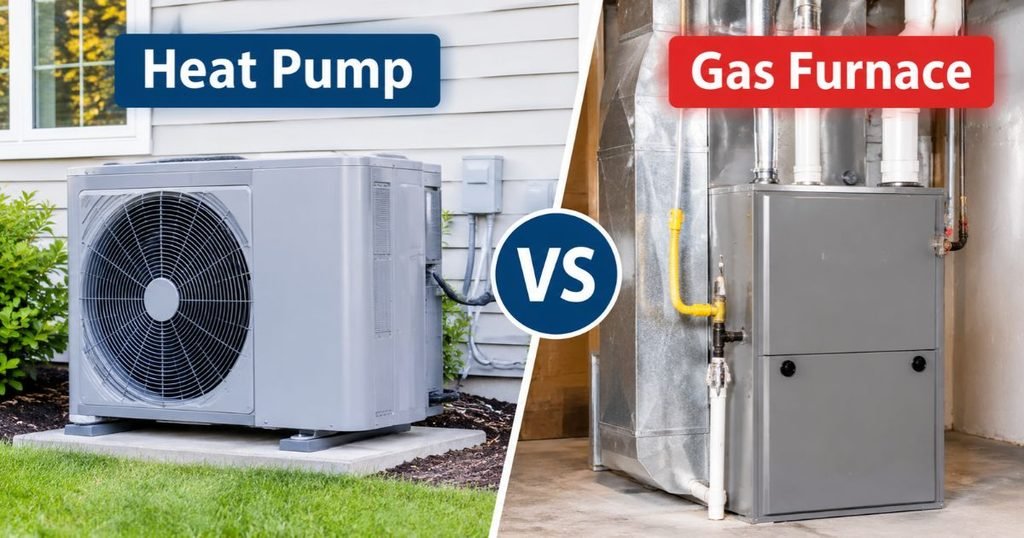
What Is a Heat Pump and How Does It Work?
At its core, a heat pump heating system is a marvel of thermodynamic engineering. Unlike a traditional furnace that creates heat by burning fuel, a heat pump transfers heat from one place to another. Even when outdoor winter temperatures feel freezing cold to you, ambient air contains thermal energy.
The Heat Transfer Cycle
A heat pump operates on the exact same principle as your household refrigerator. It uses a closed-loop system filled with specialized refrigerant liquid that circulates between an outdoor compressor unit and an indoor air handler.
- Absorbing Heat: In the heating mode, liquid refrigerant in the outdoor coil absorbs heat from the outside air, causing it to evaporate into a low-pressure gas.
- Compressing and Heating: The compressor pressurizes the refrigerant gas, which dramatically raises its temperature.
- Releasing Heat: This hot gas flows through the indoor coil, where a blower fan pushes air across the coil and distributes the warmed air through your home’s ductwork.
- The Reversing Valve: One of the greatest advantages of a heat pump is its reversing valve. By simply reversing the flow of refrigerant, the exact same system extracts heat from inside your home and dumps it outdoors during the summer, providing central air conditioning.
Modern Cold-Climate Technology
For decades, older heat pumps struggled when outdoor temperatures dropped below freezing, requiring inefficient electric resistance backup heat strips. However, modern cold-climate heat pumps utilize advanced variable-speed inverter compressors and enhanced vapor injection (EVI) technology. These modern units can extract thermal energy efficiently even when outdoor temperatures plunge well below zero, making them viable across the vast majority of the United States.
READ MORE: Carrier Heat Pump Reviews — Models, Costs, Pros & Cons
What Is a Gas Furnace and How Does It Work?
For generations, the gas furnace has been the undisputed workhorse of American residential heating. Whether powered by municipal natural gas or delivered propane, a gas furnace is a forced-air combustion heating system designed to deliver fast, intense warmth regardless of how freezing it gets outside.
The Combustion Process
When your thermostat calls for heat, a sequence of events occurs inside the metal cabinet of your furnace:
- Ignition: The gas valve opens, and an electronic ignitor (or a standing pilot light in older units) lights the burners inside the combustion chamber.
- Heat Exchange: The burning gas creates hot combustion gases that pass through a series of metal tubes known as the heat exchanger.
- Blower Distribution: A powerful blower motor pulls cool air from your home’s return ducts, forces it across the hot exterior surface of the heat exchanger, and blows the heated air back through your supply ducts into every room.
- Venting Exhaust: The dangerous byproducts of combustion (carbon monoxide and moisture vapor) are safely vented outside your home through a dedicated PVC or metal flue pipe.
Standard-Efficiency vs. High-Efficiency Furnaces
Furnaces are rated by AFUE (Annual Fuel Utilization Efficiency).
- Standard-Efficiency Furnaces (80% AFUE): These traditional models vent exhaust gases directly through a metal chimney. For every dollar you spend on gas, 80 cents becomes heat, while 20 cents escapes up the flue.
- High-Efficiency Condensing Furnaces (90% to 98% AFUE): These advanced units feature a secondary heat exchanger that extracts extra heat from exhaust gases before they escape. Because the exhaust cools down so much that it condenses into liquid water, these furnaces require PVC venting routed out through a side wall and a condensate drain line.
Heat Pump vs. Gas Furnace: Key Differences at a Glance
To give you a clear, side-by-side comparison of how these two systems stack up, review the summary table below based on typical U.S. residential market conditions.
| Feature | Heat Pump | Gas Furnace |
| Heating Method | Transfers existing heat from outdoor air | Generates heat via gas combustion |
| Energy Source | Electricity | Natural Gas or Propane |
| Cooling Capability | Yes (Provides both heating and cooling) | No (Requires a separate AC unit or heat pump) |
| Energy Efficiency | Extremely high (300%–400% COP under optimal conditions) | High (Up to 98% AFUE for condensing models) |
| Installation Cost (Average) | $9,000 – $18,000 (Equipment + Labor) | $5,000 – $10,000 (Furnace only) |
| Operating Cost | Depends heavily on local electricity vs. gas rates | Often competitive in regions with cheap natural gas |
| Cold-Weather Performance | Varies by model; cold-climate units excel down to sub-zero temps | Unmatched performance in extreme, sub-zero cold |
| Maintenance Requirements | Filter changes, coil cleaning, outdoor unit clearance | Filter changes, burner cleaning, heat exchanger checks |
| Expected Lifespan | 12 to 15 years (runs year-round for heating & cooling) | 15 to 20 years (used primarily in winter) |
| Environmental Impact | Zero direct emissions; cleaner as the electrical grid greens | Direct carbon emissions from fossil fuel combustion |
| Best Climate | Moderate climates & cold climates with cold-climate models | Very cold northern climates with cheap gas access |
| Overall Comfort | Even, gentle, continuous heating (inverter models) | Warm, fast blasts of high-temperature air |
Note: Actual costs and performance metrics vary significantly based on geographic location, equipment capacity, home insulation levels, utility pricing, and professional installation quality.
READ MORE: Weil‑McLain Boiler Reviews— Models, Costs, Pros & Cons
Heat Pump vs. Gas Furnace: Installation Costs
When comparing heat pump vs gas furnace cost, it is essential to understand that upfront expenses involve more than just the sticker price of the equipment. Labor, electrical requirements, and ductwork modifications all play a major role.
Average Installation Expenses in the USA
- Gas Furnace: Installing a replacement gas furnace typically ranges from $5,000 to $10,000 for equipment and professional labor. If you already have a gas line and compatible venting in place, a straight swap is relatively straightforward.
- Heat Pump: Installing a complete split-system air-source heat pump generally ranges from $9,000 to $18,000. Because a heat pump handles both heating and cooling, replacing an aging furnace and old air conditioner with a single heat pump system often consolidates equipment expenses.
Key Cost Drivers
- Ductwork Condition: Both systems rely on clean, sealed ductwork. If your home lacks ducts or requires extensive modifications, installation costs will rise.
- Electrical Upgrades: Heat pumps run entirely on electricity. If your electrical panel is outdated (e.g., a 100-amp service), you may need a 200-amp panel upgrade or a dedicated 240V circuit run to support the heat pump and any auxiliary electric heat strips.
- Gas Line and Venting: Installing a new gas furnace where none existed requires running a dedicated gas line and installing specialized flue venting, which adds substantial labor costs.
- Equipment Tier: Standard single-stage systems cost less upfront, while high-end variable-speed inverter heat pumps or modulating condensing furnaces carry higher equipment costs but deliver superior comfort and efficiency.
Which System Is More Energy Efficient?
Evaluating heat pump vs furnace efficiency requires looking at two entirely different measurement systems, because one creates energy from fuel while the other moves thermal energy using electricity.
Understanding Efficiency Ratings
- Furnaces use AFUE (Annual Fuel Utilization Efficiency): Expressed as a percentage, AFUE measures how much fuel is successfully converted into indoor heat. A 96% AFUE furnace converts 96% of the natural gas energy into heat, while 4% is lost.
- Heat Pumps use HSPF2 (Heating Seasonal Performance Factor 2) and COP (Coefficient of Performance): HSPF2 measures heating efficiency over an entire season under updated federal testing procedures. COP measures instantaneous efficiency. For example, a heat pump with a COP of 3.0 delivers 3 units of thermal energy for every 1 unit of electrical energy consumed. This is why heat pumps can achieve efficiencies exceeding 300% to 400%, whereas combustion appliances can never exceed 100%.
How Outdoor Temperatures Affect Efficiency
While a high-efficiency gas furnace maintains its 96% AFUE rating whether it is 50°F or -10°F outside, a standard heat pump’s efficiency drops as outdoor temperatures fall. When it gets freezing outside, the heat pump has to work harder to extract heat from frigid air, lowering its COP. However, modern cold-climate heat pumps maintain high efficiency ratings even as outdoor thermometers plummet.
READ MORE: Luxaire Furnace Review: Prices, Efficiency & Comparison
Monthly Operating Costs: Heat Pump vs. Gas Furnace
The ongoing heat pump vs gas furnace operating cost is often the deciding factor for budget-conscious homeowners. Your monthly bills will depend heavily on the prevailing utility rates in your specific region of the United States.
Electricity vs. Natural Gas Pricing
- Natural Gas Pricing: In regions with abundant natural gas supplies and mild winter utility rates, running a gas furnace can be quite economical.
- Electricity Pricing: In areas where electricity is relatively inexpensive (often regions powered by hydroelectric, wind, or nuclear energy), a heat pump is exceptionally affordable to run. Conversely, in regions with very high electricity rates, a heat pump’s operating savings can narrow during peak winter months.
A Realistic Operating Comparison
Consider an average 2,000-square-foot American home experiencing a standard winter.
- In a moderate climate (like the Mid-Atlantic or Pacific Northwest), a high-efficiency heat pump typically costs less to operate over the course of a year than a gas furnace, largely because the heat pump also provides extremely efficient summer cooling.
- In an extremely cold northern climate (like the upper Midwest or New England), a dual-fuel system or a gas furnace may result in lower peak winter heating bills if natural gas prices are favorable compared to winter electricity rates.
To estimate your own operating costs accurately, look at your local utility bills to find your cost per kilowatt-hour (kWh) for electricity and your cost per therm or CCF for natural gas, then consult with a local HVAC professional who understands regional load profiles.
Heat Pump vs. Gas Furnace in Cold Climates
For decades, the standard wisdom was simple: heat pumps belong in the South, and gas furnaces belong in the North. Today, heat pump vs gas furnace in cold climates is a much more nuanced debate thanks to engineering breakthroughs.
How Freezing Temperatures Impact Heat Pumps
As outdoor temperatures drop below freezing, frost can accumulate on the outdoor coil of a heat pump. The system periodically enters a “defrost cycle,” temporarily reversing into cooling mode to melt the frost, during which time it may blow slightly cooler air indoors. Furthermore, when temperatures drop below the system’s balance point (often between 5°F and 15°F for older models, or -5°F to -15°F for modern cold-climate models), the heat pump may require auxiliary electric heat strips to supplement indoor warmth.
The Gas Furnace Advantage in Extreme Cold
A gas furnace does not care how cold it is outside. Whether it is 40°F or 25°F below zero, a gas furnace fires up its burners and delivers a steady, high-temperature blast of air that warms a freezing house in minutes. For homeowners in brutal northern winters who want absolute peace of mind during polar vortex events, the gas furnace remains a comforting choice.
READ MORE: Tempstar Furnace Review: Models, Prices & Efficiency
Pros and Cons of a Heat Pump
Weighing the heat pump pros and cons helps clarify why so many homeowners are making the switch.
Advantages of a Heat Pump
- Year-Round Comfort: One system provides both high-efficiency heating in the winter and powerful air conditioning in the summer.
- Exceptional Efficiency: Delivering up to 3–4 units of heat per unit of electricity, they consume remarkably little energy under normal conditions.
- No On-Site Combustion: Because there is no burning of fossil fuels, there is zero risk of carbon monoxide leaks inside your living space.
- Decarbonization: Running on electricity means your home heating footprint shrinks as your local utility grid incorporates more renewable energy sources.
- Financial Incentives: Generous federal tax credits and local utility rebates make upgrades highly affordable.
Disadvantages of a Heat Pump
- Higher Upfront Investment: Premium cold-climate equipment and installation can carry higher initial costs.
- Extreme Cold Limitations: Standard units lose capacity in deep freezes, requiring backup resistance heat that drives up heat pump vs furnace electricity usage.
- Outdoor Unit Clearance: The outdoor condenser must be kept clear of heavy snow drifts, falling ice, and autumn debris to maintain proper airflow.
Pros and Cons of a Gas Furnace
Evaluating gas furnace pros and cons reveals why this technology has remained a staple of American residential heating for nearly a century.
Advantages of a Gas Furnace
- Unmatched Cold-Weather Heating: Delivers intense, rapid heat even during the most severe winter storms.
- Familiar Technology: Nearly every HVAC technician in the country is intimately familiar with servicing and repairing gas furnaces.
- Lower Replacement Costs: If you already have a functional gas furnace setup and venting, swapping in a new unit is often faster and less expensive.
- High Heat-Delivery Temperature: Furnaces supply air that feels hot right out of the vents, which many homeowners prefer over the gentle, lukewarm warmth of a traditional heat pump.
Disadvantages of a Gas Furnace
- Fossil Fuel Dependency: Requires an active natural gas line or a large outdoor propane storage tank.
- No Cooling Function: A gas furnace only provides heat; you must install a separate central air conditioner or heat pump to cool your home in the summer.
- Combustion Safety: Involves burning gas on-site, requiring annual safety checks of the heat exchanger to prevent dangerous carbon monoxide leaks.
- Direct Emissions: Burns fossil fuels directly in your home, generating carbon emissions.
READ MORE: Lochinvar Boiler Review: Best Models, Prices & Buying Guide
Maintenance and Lifespan: Which System Is Easier to Maintain?
Keeping your HVAC equipment running smoothly requires regular upkeep. Here is how maintenance and longevity compare.
Routine Maintenance Requirements
- Air Filters: Both heat pumps and gas furnaces require monthly air filter inspections and replacements (or cleaning for washable filters) to maintain proper airflow and efficiency.
- Heat Pump Maintenance: Requires keeping the outdoor condenser coil clean, removing leaves and grass clippings, ensuring unobstructed airflow around the unit, and scheduling professional spring tune-ups for the cooling season and fall tune-ups for heating.
- Gas Furnace Maintenance: Requires professional annual checks of the burners, flame sensor, blower motor, electrical connections, and most importantly, the heat exchanger to check for cracks that could leak carbon monoxide.
Expected Equipment Lifespan
- Gas Furnaces typically last 15 to 20 years because they operate seasonally (primarily during winter months).
- Heat Pumps typically last 12 to 15 years. Because heat pumps operate year-round providing cooling all summer and heating all winter their compressors and electrical components experience more total run-time.
Heat Pump vs. Gas Furnace: Which Is Better for Different Homeowners?
To summarize which system fits specific real-world scenarios:
- Mild Climates (South, Southwest, Pacific Coast): A heat pump is almost always the superior choice, providing efficient cooling in summer and mild heating in winter without needing gas infrastructure.
- Extremely Cold Climates (Upper Midwest, New England, Mountain States): Homeowners often prefer a high-efficiency gas furnace or a modern cold-climate hybrid dual-fuel system for maximum reliability during sub-zero cold snaps.
- Homes with Existing Gas Lines: If you already have an intact gas line and functional venting, replacing an old furnace with a high-efficiency gas model is often straightforward and cost-effective.
- Homes Lacking Natural Gas: If your property relies on expensive heating oil, propane, or electric baseboard heat, switching to an electric heat pump will dramatically slash your monthly utility expenses.
Can You Combine a Heat Pump and Gas Furnace?
If you cannot decide between the two, you don’t necessarily have to choose. A dual-fuel or hybrid HVAC system combines both technologies into one cohesive setup.
How a Hybrid System Works
A dual-fuel system pairs an electric heat pump with a high-efficiency gas furnace. A smart thermostat manages the system based on outdoor temperatures:
- During moderate winter weather, the heat pump runs efficiently to heat your home.
- When outdoor temperatures drop below a predetermined “balance point” (e.g., 30°F), the smart thermostat locks out the heat pump and automatically switches on the gas furnace.
This gives you the best of both worlds: maximum energy savings and lower utility bills during milder weather, paired with the robust, reliable heating power of natural gas when the polar vortex hits.
READ MORE: American Standard Heat Pump: Models, Costs & Buying Guide
Available Rebates, Tax Credits, and Incentives
Upgrading your heating system can represent a significant financial investment, but federal, state, and utility programs help offset the cost—particularly for heat pumps.
- Federal Tax Credits: Under federal energy legislation (such as the Energy Efficient Home Improvement Credit), qualifying high-efficiency heat pump installations can be eligible for substantial tax credits (often up to 30% of project costs, up to specified annual caps).
- State and Utility Rebates: Local electric and gas utility providers frequently offer generous cash-back rebates for upgrading to ENERGY STAR-certified heat pumps or high-efficiency condensing furnaces.
- Important Note: Incentive programs change frequently, have strict equipment efficiency thresholds (such as minimum SEER2 and HSPF2 ratings), and may include household income limitations. Never assume you automatically qualify; always verify current eligibility requirements through official government websites (like ENERGY STAR or the Department of Energy) or your local utility provider before purchasing equipment.
How to Choose Between a Heat Pump and Gas Furnace
To make your final decision, walk through this practical homeowner checklist:
- Local Winter Temperatures: How frequently do winter temperatures drop below freezing in your area?
- Utility Rates: What are your local electricity rates compared to natural gas prices?
- Existing HVAC Setup: What fuel lines, electrical panels, and ductwork are already installed in your home?
- Home Insulation & Air Sealing: Is your home well-insulated, or does it leak heat rapidly?
- Cooling Needs: Do you need central air conditioning anyway? If so, installing a heat pump solves both heating and cooling needs at once.
- Budget: What is your upfront investment budget vs. long-term operating cost goal?
The Importance of a Professional Manual J Calculation
Never let an HVAC contractor guess the size of your heating system based solely on your home’s square footage. Insist on a professional Manual J load calculation. This engineering assessment evaluates your home’s square footage, window placement, insulation levels, local climate data, and duct layout to ensure your new heat pump or gas furnace is correctly sized. An oversized or undersized system will short-cycle, waste energy, and fail to keep your family comfortable.
Final Verdict:
When all is said and done, neither system is universally “better” than the other—they are simply engineered for different homes, climates, and budgets.
- Choose a heat pump if you live in a moderate to moderately cold climate, want a single system for both heating and cooling, value high energy efficiency, and want to reduce your household’s direct carbon emissions.
- Choose a gas furnace if you live in a harsh northern climate with freezing winters, have access to affordable natural gas, and prioritize fast, high-temperature heating performance during extreme cold snaps.
- Choose a hybrid dual-fuel system if you want ultimate flexibility, combining electric heat pump efficiency with gas furnace power.
Before signing a contract, always obtain at least three written, itemized installation quotes from licensed local HVAC professionals. Ask each contractor to provide an estimated annual operating cost breakdown so you can make an informed, confident decision for your home.
Frequently Asked Questions
Is a heat pump cheaper to run than a gas furnace?
In many cases, yes—especially in moderate climates and areas with favorable electricity rates. Because modern heat pumps transfer heat rather than create it through combustion, they deliver multiple units of energy for every unit of electricity consumed. However, in regions with very high electricity rates and cheap natural gas, a gas furnace may still offer lower monthly operating costs during peak winter months.
Is a heat pump better than a gas furnace in cold climates?
Historically, gas furnaces dominated cold climates because older heat pumps struggled in sub-zero temperatures. Today, modern cold-climate heat pumps utilize advanced variable-speed inverter compressors that maintain heating capacity and efficiency well below freezing. For extreme northern climates, many homeowners choose either a high-efficiency gas furnace or a hybrid dual-fuel system for ultimate peace of mind.
How much does it cost to install a heat pump vs. a gas furnace?
A replacement gas furnace typically costs between $5,000 and $10,000 including professional installation. A complete split-system heat pump generally ranges from $9,000 to $18,000. Keep in mind that because a heat pump provides both heating and cooling, replacing an aging furnace and old air conditioner with a single heat pump system often consolidates overall equipment expenses.
Can a heat pump replace a gas furnace completely?
Yes. Millions of homeowners across the United States use heat pumps as their sole heating and cooling source. Modern cold-climate heat pumps can heat homes efficiently without needing a gas backup, though some installations in very cold regions retain electric resistance heating strips or a dual-fuel gas furnace for extreme weather backup.
How many years does a heat pump last compared with a gas furnace?
A gas furnace typically lasts 15 to 20 years because it operates seasonally, primarily during winter months. A heat pump typically lasts 12 to 15 years. Because heat pumps operate year-round providing cooling all summer and heating all winter their compressors and internal components experience more total run-time.


Pingback: Complete Guide to Dual Fuel Heat Pump Installation: Costs & Process - Plumbing Guider