When winter temperatures drop across much of the United States, keeping your home warm without seeing your utility bills skyrocket becomes a top priority. For many American homeowners, navigating heating options can feel overwhelming. If you are exploring energy-efficient heating alternatives, dual fuel heat pump installation has quickly become one of the most popular and versatile home upgrades available today.
A dual fuel system often referred to as a hybrid heating system combines an electric air-source heat pump with a traditional gas or propane furnace. This setup gives you the best of both worlds: highly efficient electric heating during mild and moderate weather, and powerful, reliable gas heat when freezing temperatures set in. However, because this setup integrates two distinct heating technologies, proper planning, sizing, and professional execution are essential.
In this comprehensive guide, we will break down everything you need to know about dual fuel heating and cooling systems, including how they work, installation requirements, step-by-step processes, costs, and how to choose the right professional for the job. Lets deep dive into “Complete Guide to Dual Fuel Heat Pump Installation: Costs & Process”
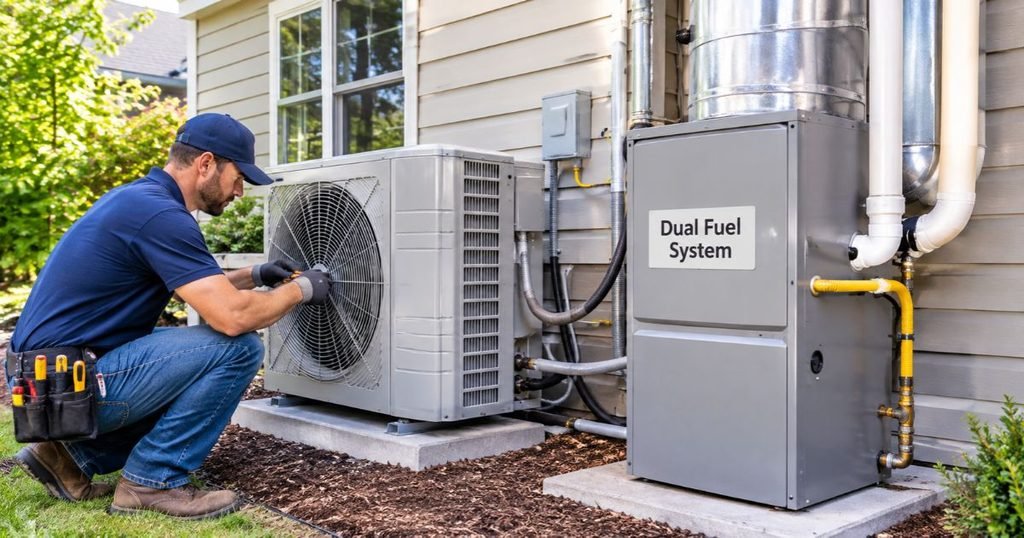
What Is a Dual Fuel Heat Pump System?
To understand why dual fuel HVAC system installation is gaining traction, it helps to look at how the individual components function together.
A standard air-source heat pump extracts thermal energy from the outdoor air (even when it feels cold outside) and transfers it inside your home to provide heating. In the summer, the process reverses to pull heat out of your home and release it outdoors, functioning just like a conventional air conditioner.
However, as outdoor temperatures drop into the teens or single digits, a traditional heat pump has to work much harder, and its heating efficiency (measured by HSPF2) and heating capacity decline.
A dual fuel system solves this limitation by pairing the heat pump with a gas or propane furnace. Instead of relying solely on electric resistance backup heat which can be expensive to run, the system utilizes your gas furnace when outdoor temperatures fall below a specific threshold.
Key Components of a Dual Fuel Setup:
- Outdoor Heat Pump Unit: Handles cooling in the summer and primary heating during milder winter months.
- Indoor Gas Furnace: Provides supplemental or backup heating during severe cold snaps.
- Indoor Evaporator Coil: Sits atop the furnace to facilitate heat transfer during heat pump operation.
- Smart or Dual-Fuel Thermostat: Manages system operation and automatically switches between the heat pump and the gas furnace based on outdoor temperatures.
- Outdoor Temperature Sensor: Measures ambient outdoor conditions to help the thermostat determine the most efficient heating source.
READ MORE: Heat Pump vs. Gas Furnace: Which Is Better for Your Home?
How Does a Dual Fuel Heat Pump Work?
The defining feature of a dual fuel heating system is its ability to automatically select the most cost-effective and efficient heating source in real time.
During spring, fall, and mild winter days, the electric heat pump runs exclusively. Because heat pumps move heat rather than create it through combustion, they can achieve efficiencies well over 300% under favorable conditions, making them remarkably cost-effective.
As the weather turns colder, the heat pump’s capacity diminishes. When outdoor temperatures drop past a predetermined setting known as the changeover temperature or balance point, the system shifts gears. The heat pump turns off, the gas valve on the furnace opens, and the furnace takes over to deliver warm, high-temperature air throughout your home.
During the summer months, the gas furnace remains completely dormant while the outdoor heat pump handles all your home cooling needs.
The Role of the Changeover Temperature
The changeover temperature is not a one-size-fits-all number. It depends heavily on:
- Your specific heat pump and furnace equipment specifications.
- Local climate and typical winter lows in your region of the United States.
- Current local utility rates for electricity versus natural gas or propane.
- Your home’s insulation levels and overall energy efficiency.
A properly configured system balances these factors so you never have to manually adjust your thermostat when a cold front moves through.
Is Your Home Suitable for Dual Fuel Heat Pump Installation?
Before committing to a hybrid heating upgrade, a qualified HVAC technician must evaluate your home’s existing infrastructure. While dual fuel HVAC replacement is straightforward in many homes, several critical factors must be verified:
- Existing Fuel Supply: You must have an established natural gas line or an active propane supply to fuel the backup furnace.
- Ductwork Condition: Heat pumps move large volumes of air to heat effectively. Your existing ductwork must be clean, properly sized, and sealed to handle adequate airflow without excessive static pressure.
- Electrical Service: Heat pumps require dedicated electrical circuits and heavy-gauge wiring. Your home’s electrical panel must have sufficient amperage capacity to support both the outdoor unit and indoor blower.
- Outdoor Unit Placement: The outdoor compressor needs adequate clearance from walls, fences, and landscaping to allow proper airflow and drainage during defrost cycles.
- Indoor Air Handler or Furnace Compatibility: You cannot simply pair any outdoor heat pump with any older gas furnace. The equipment must be certified as a compatible matched system.
- Home Insulation: A tightly sealed, well-insulated home retains heat better, allowing the heat pump to handle a broader range of winter temperatures before needing the gas furnace.
READ MORE: Carrier Heat Pump Reviews— Models, Costs, Pros & Cons
Dual Fuel Heat Pump Installation Requirements
Executing a successful heat pump and gas furnace installation requires strict adherence to manufacturer specifications, local building codes, and industry best practices. Skipping these technical requirements can lead to poor performance, high utility bills, and shortened equipment lifespans.
1. Manual J Load Calculations
Every professional installation should begin with a Manual J load calculation. This mathematical assessment evaluates your home’s square footage, window types, orientation, local climate zone, insulation values, and duct layout to determine the exact heating and cooling capacity required. Guesswork or “rule of thumb” sizing leads to oversized equipment that short-cycles or undersized equipment that fails to keep you comfortable.
2. Equipment Matching and AHRI Certification
Your heat pump and indoor coil must be AHRI (Air-Conditioning, Heating, and Refrigeration Institute) certified as a matched set. Mismatched components can result in reduced efficiency ratings, system errors, and voided manufacturer warranties.
3. Electrical and Wiring Specifications
Dual fuel heat pump wiring requires precision. Technicians must install a dedicated electrical disconnect box near the outdoor unit, run correct-gauge copper wiring from the main breaker panel, and integrate specialized low-voltage control wiring between the thermostat, outdoor sensor, heat pump, and furnace control board.
4. Refrigerant Line Management
The copper refrigerant lines connecting the indoor coil to the outdoor unit must be properly sized, cleaned, pressure-tested with nitrogen, and evacuated with a vacuum pump to eliminate moisture before releasing refrigerant into the system.
5. Gas Piping and Combustion Safety
Because a dual fuel system incorporates a gas furnace, certified technicians must inspect gas supply lines, verify proper gas pressure, test shut-off valves, and ensure the venting system (flue or PVC pipe depending on efficiency) is completely secure and free of leaks.
6. Code Compliance and Permits
Most local municipalities across the United States require mechanical and electrical permits for HVAC replacements. Professional installations must pass local building and safety inspections to ensure compliance with current residential codes.
Step-by-Step Dual Fuel Heat Pump Installation Process
To give you a clear picture of what to expect on installation day, here is a breakdown of the standard professional workflow for a dual fuel system installation process:
Step 1: Home Inspection and HVAC Assessment
The installation crew reviews your existing equipment, measures clearances, inspects the electrical panel, and checks the physical condition of the ductwork and gas lines.
Step 2: Heating and Cooling Load Calculation
Technicians verify the home’s thermal load requirements to ensure the selected heat pump and furnace combination matches your exact heating and cooling needs.
Step 3: Equipment Selection and Delivery
The contractor delivers the matched heat pump, indoor coil, gas furnace, and smart thermostat, ensuring all factory specifications align with your home layout.
Step 4: Site Preparation and Old Equipment Removal
Power and gas supplies are safely shut off. The old indoor and outdoor units are disconnected, recovered of refrigerant according to EPA regulations, and hauled away for recycling.
Step 5: Positioning the Outdoor Heat Pump
A sturdy composite pad or mounting brackets are leveled in a strategic outdoor location. The outdoor unit is secured, minimizing vibration and ensuring proper clearance for winter snowfall or ice runoff.
Step 6: Installing the Indoor Furnace and Coil
The new gas furnace is positioned in the utility closet, basement, or attic. The matching indoor evaporator coil is installed securely above the furnace and connected to the main supply plenum.
Step 7: Refrigerant Lines and Duct Connection
New or flushed existing copper refrigerant lines are brazed to the service valves. Sheet metal transitions and canvas connectors are sealed tightly to the ductwork to prevent air leaks.
Step 8: Electrical and Control Wiring
Electricians run power to the outdoor disconnect and indoor air handler. Low-voltage thermostat wires and the outdoor ambient temperature sensor are hooked up, enabling seamless hybrid communication.
Step 9: Gas Piping and Safety Verification
Gas lines are connected using approved pipe sealant and tested for pressure integrity. The technician checks the burners, flame sensor, electronic ignition, and venting pathways.
Step 10: System Commissioning and Calibration
The system is charged with the precise amount of refrigerant. Technicians test both cooling and heating modes, calibrate the dual-fuel changeover settings on the thermostat, and verify that the system transitions smoothly between electric and gas heat. Finally, the homeowner is walked through system operation, filter replacement schedules, and thermostat programming.
READ MORE: Luxaire Furnace Review: Prices, Efficiency & Comparison
How Much Does Dual Fuel Heat Pump Installation Cost?
Pricing is one of the most common concerns for homeowners considering dual fuel heat pump installation. Because every home has unique structural and mechanical needs, costs vary significantly.
In the United States, a complete professional dual fuel HVAC replacement including a high-efficiency heat pump, a new compatible gas furnace, indoor coil, labor, electrical updates, and permits typically ranges from $9,000 to $18,000+. Premium high-capacity or variable-speed inverter systems in larger homes can exceed this range.
Cost Breakdown Factors
| Expense Category | Estimated Cost Range | Factors Affecting Price |
| Outdoor Heat Pump Equipment | $3,500 – $7,500 | SEER2 rating, inverter technology, brand, cooling capacity (tonnage). |
| Gas Furnace Equipment | $2,000 – $4,500 | AFUE efficiency rating (e.g., 80% vs. 96%), single-stage vs. modulating. |
| Labor and Installation | $2,500 – $5,000 | Crew size, regional labor rates, complexity of removal and installation. |
| Electrical Upgrades | $300 – $1,200 | Need for a new breaker, heavier wiring, or outdoor disconnect box. |
| Ductwork Modifications | $500 – $2,000 | Repairing, sealing, or resizing duct runs to ensure proper airflow. |
| Permits and Inspections | $150 – $500 | Local municipal fees and code compliance requirements. |
Note: Always request detailed, itemized written estimates from licensed contractors that clearly distinguish between equipment expenses and labor.
How Long Does Dual Fuel Heat Pump Installation Take?
For a standard, straightforward system replacement where ductwork and electrical services are already up to code, a professional crew can complete the installation in 1 to 2 days.
However, timeframes can expand if:
- Extensive ductwork modifications or repairs are required.
- Electrical panel upgrades or heavy rewiring must be performed by a licensed electrician.
- Municipal permit approval and inspection scheduling introduce administrative delays.
- Unseasonal weather conditions interrupt outdoor lifting or testing.
Benefits of Installing a Dual Fuel Heat Pump System
Choosing a hybrid system offers several distinct advantages for American households:
- Exceptional Energy Efficiency: During mild and moderate weather, the electric heat pump provides low-cost heating, significantly cutting down fossil fuel consumption.
- Reliable Backup Heat: When temperatures plunge into the single digits, the gas furnace delivers high-temperature air instantly, ensuring your home stays warm regardless of outdoor conditions.
- Integrated Comfort: One unified thermostat controls both heating modes seamlessly, maintaining consistent indoor temperatures without cold drafts.
- Utility Rate Flexibility: Homeowners can program their thermostats or balance points to favor electricity or gas depending on local utility pricing fluctuations.
- Extended Equipment Life: Because the heating workload is shared between two different systems, neither unit runs continuously at maximum stress, which can extend overall longevity.
READ MORE: Weil‑McLain Boiler Reviews— Models, Costs, Pros & Cons
Potential Disadvantages and Installation Challenges
While dual fuel systems are highly efficient, they are not ideal for every scenario. Keep these potential challenges in mind:
- Higher Upfront Investment: Purchasing both a heat pump and a new gas furnace simultaneously requires a higher initial financial commitment than replacing a single appliance.
- Dual Utility Dependency: You must maintain active connections and pay service fees for both electricity and natural gas (or propane).
- System Complexity: Because electronic controls, outdoor sensors, and gas valves must communicate flawlessly, troubleshooting occasional error codes may require specialized technician expertise.
- Maintenance Requirements: You are maintaining two complex mechanical systems instead of one, which means two separate annual tune-up checklists.
Dual Fuel Heat Pump Installation vs. Traditional Heat Pump Installation
To help you determine whether adding a gas furnace backup is necessary for your climate, review the comparison below:
| Feature | Dual Fuel Heat Pump System | Traditional Heat Pump (with Electric Strip Heat) |
| Primary Heating | Electric heat pump | Electric heat pump |
| Backup Heating | Gas or propane furnace | Electric resistance heat strips |
| Cold-Weather Performance | Excellent; high-heat gas backup | Moderate to good; electric strips consume high wattage |
| Operating Cost in Deep Freeze | Moderate (relies on gas rates) | High (electric resistance strips draw heavy power) |
| Initial Installation Cost | Higher (two major appliances) | Lower (heat pump + air handler) |
| Fuel Requirements | Electricity + Gas/Propane | Electricity only |
| Best Suited For | Regions with freezing winters & fluctuating energy rates | Milder southern climates or areas without gas lines |
Common Dual Fuel Heat Pump Installation Mistakes to Avoid
Avoiding common pitfalls during installation ensures your system operates at peak efficiency:
- Incorrect Sizing: Installing an oversized or undersized heat pump leads to temperature swings, humidity issues, and premature wear.
- Mismatched Equipment: Pairing mismatched brands or non-certified coils reduces efficiency and voids manufacturer warranties.
- Improper Changeover Settings: Setting the balance point too high wastes cheap electric heating; setting it too low leaves the home chilly during deep freezes.
- Ignoring Duct Restrictions: Forcing high airflow through undersized ducts creates loud whistling noises and restricts heat transfer.
- Skipping Permits: Failing to pull local permits can complicate future home sales and violate local residential codes.
- Hiring Unqualified Installers: Choosing an uncertified handyman instead of an experienced HVAC specialist often results in refrigerant leaks and wiring errors.
READ MORE: Goodman Heat Pump Review | Efficiency, Cost, Pros & Cons
How to Choose the Right HVAC Contractor
The success of your heating system depends as much on the quality of the installation as it does on the equipment brand. When interviewing contractors, use this checklist:
- Are you fully licensed, bonded, and insured in this state?
- Do your technicians have specific certifications for heat pump and gas furnace integration?
- Will you perform a comprehensive Manual J load calculation before recommending equipment?
- Are the proposed heat pump and furnace AHRI-matched?
- Will you inspect and test our existing ductwork and airflow?
- Who handles local building permits and coordinates inspections?
- Do you test automatic changeover operation during system commissioning?
- What warranties cover labor craftsmanship and equipment parts?
- Can you provide a detailed, written itemized estimate?
Tip: Always compare at least three written estimates. Avoid contractors who quote prices over the phone without visiting your home to inspect the mechanical setup.
Maintenance Tips After Dual Fuel Heat Pump Installation
Protect your investment with a consistent maintenance routine:
- Replace or Clean Filters: Check your air filters every 1 to 3 months to maintain unobstructed airflow.
- Keep Outdoor Unit Clear: Remove fallen leaves, twigs, grass clippings, and snow drift at least two feet around the outdoor compressor.
- Schedule Bi-Annual Tune-Ups: Have an HVAC professional service the heat pump in the spring and inspect the gas furnace and burner assembly in the fall.
- Monitor Condensate Drains: Ensure indoor and outdoor condensate drain lines remain clear to prevent water overflow and system shutdowns.
- Listen for Changes: Pay attention to unusual grinding noises, rattling panels, or strange odors, and call a technician promptly if performance drops.
Is Dual Fuel Heat Pump Installation Worth It?
For many homeowners across the United States particularly in regions with cold winters and fluctuating gas-to-electric utility rates dual fuel heating is an outstanding investment. It delivers exceptional comfort, lowers energy consumption during milder weather, and provides reliable warmth when freezing temperatures strike.
However, if you live in a very mild climate where freezing temperatures are rare, a traditional heat pump without gas backup is usually sufficient. Conversely, if your area suffers from extremely high electricity costs relative to natural gas, a dual fuel setup offers the perfect buffer to keep your monthly bills manageable.
Frequently Asked Questions
How much does it cost to install a dual fuel heat pump system?
A complete professional installation generally ranges from $9,000 to $18,000+. Total expenses depend on equipment efficiency ratings, whether you need a new gas furnace, electrical upgrades, ductwork modifications, and local labor rates.
Can you add a heat pump to an existing gas furnace?
Yes, provided your existing gas furnace is relatively new, compatible with a matching evaporator coil, and capable of handling the required airflow. A technician must inspect the equipment to verify compatibility before installation.
How long does dual fuel heat pump installation take?
Most standard replacements take between 1 to 2 days. Projects requiring extensive electrical panel upgrades, new gas line runs, or complex ductwork modifications may take slightly longer.
What temperature should a dual fuel heat pump switch to gas?
The changeover temperature typically falls between 30°F and 35°F, but it varies based on equipment specifications, local utility rates, and home insulation. Your technician will program the optimal balance point during setup.
Is a dual fuel heat pump system worth installing in cold climates?
Yes. In cold climates where traditional heat pumps struggle with efficiency during sub-freezing weather, the gas furnace backup ensures continuous warmth without relying on expensive electric resistance heat strips.
Conclusion
Navigating home heating upgrades requires balancing upfront investment, energy efficiency, and long-term comfort. Dual fuel heat pump installation offers an intelligent solution for American homeowners looking to maximize energy savings without sacrificing reliability during harsh winter weather.
By prioritizing correct equipment sizing, AHRI-matched components, and professional installation and commissioning, you ensure your hybrid system performs at its best for years to come. Take time to evaluate your local climate, compare multiple written contractor estimates, and consult a qualified HVAC specialist to determine the ideal setup for your home.
Sources & Disclaimer
Sources:
- U.S. Department of Energy (DOE) – Heating and Cooling Technologies Guide
- ENERGY STAR® – Heat Pump and Dual Fuel System Specifications
- Air Conditioning Contractors of America (ACCA) – Manual J Residential Load Calculation Standards
- Manufacturer technical manuals and installation guidelines (Carrier, Trane, Lennox, Daikin)
Disclaimer:
This article is provided for informational and educational purposes only. HVAC installation costs, local building codes, electrical requirements, and fuel regulations vary significantly by geographic location, equipment brand, and home specifications. Homeowners should always consult a licensed, insured, and qualified HVAC professional to perform an on-site evaluation before purchasing or installing heating and cooling equipment.

