Choosing the right GE electric water heater for your home is a major decision that directly impacts your daily comfort, household energy consumption, and long-term utility expenses. Hot water is an essential utility for everything from morning showers and laundry cycles to daily kitchen cleanup, meaning that an undersized or inefficient water heater can quickly become a daily source of frustration.
Selecting the ideal model depends heavily on your household’s specific hot-water demand, incoming groundwater temperatures, available electrical capacity, physical installation space, and overall budget. Throughout this article, we will examine each model individually, compare their core specifications side by side, and provide an in-depth electric water heater buying guide to help you make an informed investment. Lets deep dive into “Best GE Electric Water Heater: Review, Cost & Comparison”
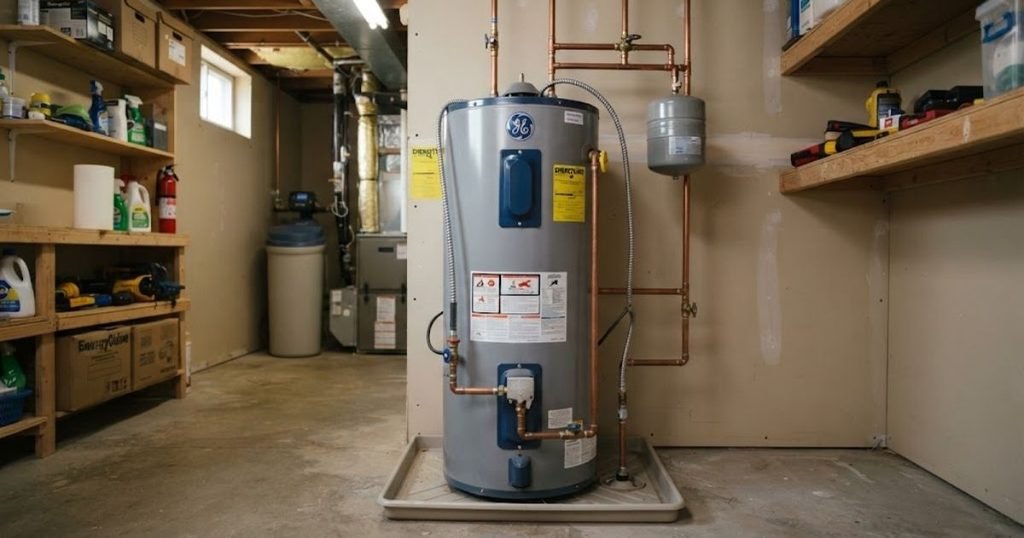
What Is a GE Electric Water Heater?
A GE electric water heater is a residential appliance designed to raise the temperature of incoming tap water using electricity, delivering reliable hot water for household fixtures and appliances. Understanding how these systems operate helps clarify why certain models are suited for specific homes while others fall short.
How Electric Resistance Heating Elements Work
Conventional storage-tank and mini-tank models utilize internal electric resistance heating elements submerged directly inside the water tank. When the thermostat detects that water temperatures have fallen below the set threshold, electrical current flows through these metal elements, generating heat that warms the surrounding water. Most standard storage tanks feature dual elements (upper and lower) working sequentially to heat water efficiently.
Storage-Tank vs. Mini-Tank vs. Tankless Electric Water Heaters
- Storage-Tank Models: These units heat and continuously store a specific volume of water (such as 30 or 50 gallons) in an insulated tank, ready for immediate delivery whenever a faucet is opened.
- Mini-Tank Models: Compact, low-capacity storage units (such as 6, 10, or 18 gallons) designed primarily for point-of-use applications or supplementary installation near remote fixtures.
- Tankless Electric Models: These units eliminate the storage tank entirely, employing powerful heating coils that activate instantly upon water flow to heat water on demand.
Understanding Key Performance Metrics
When evaluating a GE water heater, several technical factors dictate real-world performance:
- Tank Capacity: The physical volume of water the tank holds, measured in gallons.
- Heating-Element Wattage: Determines how fast the unit can generate heat. Higher wattage elements recover hot water faster.
- First-Hour Rating (FHR): A crucial rating for storage tanks indicating the maximum number of gallons of hot water the heater can supply per hour starting with a full tank.
- Flow Rate: Measured in gallons per minute (GPM) for tankless units, indicating how many fixtures can be supplied simultaneously at a given temperature rise.
Household size, simultaneous hot-water use habits, and local electrical service capacities must all be factored into your selection. Never assume that any given water heater can be dropped into an existing space without verifying electrical breaker sizing and wiring compatibility first.
READ MORE: Best Tankless Water Heater — Top Picks, Costs & Buyer’s Guide
Review of the 6 GE Electric Water Heaters
1. GE Appliances 18 Gallon Versatile Plug and Play Electric Water Heater
Product Overview
The GE 18-gallon versatile plug-and-play electric water heater is engineered to bridge the gap between tiny point-of-use mini-tanks and full-scale residential storage water heaters. It serves smaller living spaces, accessory dwelling units (ADUs), workshops, or specific high-demand rooms.
Verified Specifications
- Tank Capacity: 18 gallons nominal storage.
- Electrical Requirements: Standard configuration varies by exact sub-model, with some units designed for standard 120V household outlets while others require dedicated low-amperage lines; always verify local nameplate data.
- Dimensions: Compact vertical design suited for tight utility closets, under counters, or wall-hanging brackets depending on mounting kits.
- Tank Construction: Glass-lined steel tank with sacrificial anode rod protection.
Key Features and Practical Benefits
This model provides a practical buffer of hot water larger than a standard under-sink mini-tank, allowing for light kitchen duties, handwashing stations, or isolated bathroom fixtures without requiring a massive footprint.
Installation and Electrical Considerations
Despite the “plug and play” moniker, buyers must carefully check manufacturer installation instructions. Depending on the exact wattage drawing of the heating elements, plugging into an ordinary circuit loaded with other appliances can trip breakers. A dedicated circuit is frequently recommended.
Advantages
- Offers greater capacity than 6-gallon or 10-gallon mini-tanks.
- Flexible placement in tight utility rooms or auxiliary buildings.
- Relatively straightforward installation compared to heavy 240V whole-house tanks.
Disadvantages
- Insufficient hot-water volume for full family showers or heavy laundry loads.
- Recovery time is slower than high-wattage 240V systems.
- Physical dimensions require more clearance than ultra-compact mini-tanks.
Best Use Cases
- Accessory dwelling units (ADUs) or studio apartments with modest fixture counts.
- Outbuildings, detached workshops, or pool houses needing reliable handwashing and utility hot water.
Who Should Avoid It
- Standard multi-person families or households with multiple bathrooms operating simultaneously.
Final Verdict
The GE 18-gallon model is a highly capable niche appliance that solves moderate hot-water deficits in small footprints, provided expectations regarding capacity are managed correctly.

2. GE Appliances 10 Gallon Versatile Plug and Play Electric Water Heater
Product Overview
The GE 10-gallon versatile plug-and-play electric water heater is a compact storage solution tailored for restricted spaces where a standard 30-to-50-gallon tank is physically impossible to install.
Verified Specifications
- Tank Capacity: 10 gallons.
- Electrical Requirements: 120V plug-in capability on designated models, requiring careful verification of circuit load limits.
- Dimensions: Low-profile, compact height and width designed for tight cabinetry or small closets.
Key Features and Practical Benefits
Positioned directly at or near point-of-use locations, this unit reduces wait times for hot water to travel from a distant basement water heater, minimizing water waste.
Installation and Electrical Considerations
While marketed for simple setup, verify whether your installation location requires professional electrical modification or a dedicated outlet to handle heating loads safely.
Advantages
- Saves valuable floor space.
- Reduces water wait times at distant taps.
- Simple maintenance access.
Disadvantages
- Very limited hot water supply; cannot sustain continuous showers.
- Higher cost per gallon of capacity compared to standard whole-house tanks.
Best Use Cases
- Remote wet bars, salon sinks, or isolated kitchenette installations.
- Supplementary hot water boosts for specific household zones.
Who Should Avoid It
- Anyone seeking a primary water heater for showers and daily residential sanitation.
Final Verdict
An excellent secondary booster or point-of-use storage unit for specialized applications, but strictly limited in overall capacity.

3. GE Appliances 18 kW Large Tankless Electric Water Heater, 240V
Product Overview
The GE 18 kW large tankless electric water heater represents an on-demand, continuous hot water alternative to bulky storage-tank systems, designed to heat water instantly as it flows through internal heating coils.
Verified Specifications
- Power Rating: 18 kW.
- Electrical Requirements: 240V dedicated electrical service, requiring heavy-gauge wiring and multiple circuit breakers based on manufacturer specifications.
- Mounting: Compact wall-hung configuration.
Key Features and Practical Benefits
By eliminating standby energy losses associated with storing heated water, tankless units can save energy. The 18 kW capacity provides robust on-demand performance for moderate incoming groundwater temperatures.
Installation and Electrical Considerations
This unit demands significant electrical infrastructure. Homeowners must verify that their main electrical panel has sufficient amperage headroom and physical breaker spaces available before purchase. Professional electrician installation is mandatory.
Advantages
- Space-saving wall-mounted footprint.
- Eliminates standby tank heat loss.
- Provides continuous hot water within its rated temperature-rise and flow parameters.
Disadvantages
- High initial electrical upgrade costs if the home’s panel is undersized.
- Flow rates are constrained by incoming groundwater temperatures (colder winter ground temperatures reduce effective GPM).
Best Use Cases
- Homes with moderate hot-water demand and modern 240V electrical service upgrades.
- Locations where physical floor space for a storage tank does not exist.
Who Should Avoid It
- Homes with older 100-amp electrical panels lacking upgrade capacity.
- Large households running multiple high-flow showers and appliances simultaneously in cold-climate regions.
Final Verdict
A powerful and efficient on-demand choice for homes with compatible electrical service, though thorough pre-purchase electrical inspection is essential.

4. GE Appliances Smart 50 Gallon Tall 5500W Electric Water Heater
Product Overview
The GE Smart 50-gallon tall 5500W electric water heater is a traditional whole-house storage unit equipped with robust heating elements and modern smart-connectivity features.
Verified Specifications
- Tank Capacity: 50 gallons.
- Heating Elements: Dual 5500W elements.
- Electrical Requirements: 240V dedicated circuit.
- Smart Integration: Wi-Fi enabled with SmartHQ app compatibility on select smart-tier models.
Key Features and Practical Benefits
Featuring high-wattage elements for rapid recovery and a high first-hour rating, this model handles family morning routines with ease. Integrated smart controls allow users to monitor energy usage, set vacation modes, and receive maintenance alerts directly via smartphone.
Installation and Electrical Considerations
Requires standard tall-tank vertical clearance, a dedicated 240V electrical connection, and adherence to local plumbing codes regarding thermal expansion tanks and drain pans.
Advantages
- Ample capacity for typical 3-to-4-person households.
- Rapid recovery rate thanks to dual 5500W elements.
- Convenient smartphone monitoring and control capabilities.
Disadvantages
- Large physical footprint requires dedicated floor space and vertical clearance.
- Heavier unit weight requires careful positioning during installation.
Best Use Cases
- Standard family homes, suburban residences, and households with moderate-to-high daily hot water requirements.
Who Should Avoid It
- Tiny homes, apartments with severe space constraints, or homes lacking 240V electrical service.
Final Verdict
The benchmark choice for family-sized residential water heating, balancing dependable storage capacity with modern smart diagnostics.

5. GE Appliances 6 Gallon, Versatile Mini Tank Electric Water Heater
Product Overview
The GE 6-gallon versatile mini tank electric water heater is a dedicated point-of-use appliance engineered to supply instant hot water directly underneath or adjacent to isolated fixtures.
Verified Specifications
- Capacity: 6 gallons.
- Electrical Requirements: Standard 120V plug-in connection.
- Mounting: Floor or wall-mounted under-sink design.
Key Features and Practical Benefits
Eliminates long hot-water delivery delays from a main basement heater to distant bathrooms or kitchens, conserving both water and energy.
Installation and Electrical Considerations
Plugs into standard household receptacles while requiring basic plumbing tee connections to supply the cold water inlet and hot water outlet lines.
Advantages
- Ultra-compact size fits easily inside standard sink cabinets.
- Plug-and-play 120V convenience.
- Low standby heat loss due to small water volume.
Disadvantages
- Strictly limited to single-fixture or low-volume supplementary roles.
- Cannot provide enough water for bathing or showering.
Best Use Cases
- Remote office kitchenettes, garage utility sinks, or distant powder rooms.
Who Should Avoid It
- Anyone needing a primary water heating source for bathing, washing machines, or multi-fixture homes.
Final Verdict
An exceptionally useful problem-solver for eliminating cold water lag at distant taps.

6. GE Appliances 30 Gallon Electric Water Heater
Product Overview
The GE 30-gallon electric water heater is a compact storage-tank model designed for smaller households, cabins, or apartments where space is limited but whole-house storage capability is still required.
Verified Specifications
- Capacity: 30 gallons.
- Electrical Requirements: 240V dedicated circuit.
- Configuration: Available in tall or short profiles depending on specific sub-model availability.
Key Features and Practical Benefits
Strikes a balance between the tiny capacity of mini-tanks and the bulky footprint of 50-gallon giants, providing reliable daily hot water for 1-to-2 occupants without demanding excessive floor space.
Installation and Electrical Considerations
Requires standard 240V wiring and proper clearance according to manufacturer installation guidelines and local codes.
Advantages
- Fits into smaller utility closets and restricted spaces.
- Sufficient capacity for single-occupant homes or couples.
- Lower standby energy losses compared to 50-gallon tanks.
Disadvantages
- Inadequate hot water supply for families or simultaneous high-draw activities.
- Faster depletion during heavy laundry or multiple shower usage.
Best Use Cases
- One-to-two-person households, retirement cottages, or small condominiums.
Who Should Avoid It
- Busy family households with teenagers or multiple simultaneous users.
Final Verdict
A dependable, space-saving storage-tank solution for smaller homes and moderate hot-water demands.

READ MORE: Best Rinnai Tankless Water Heater Reviews — Models, Specs & Prices
Comparison Table: All 6 GE Electric Water Heaters
| Product Name | Heater Type | Capacity | Voltage | Wattage | Dimensions (Approx.) | Best Use | Main Limitation |
| GE 18 Gal. Plug & Play | Storage | 18 Gallons | 120V / Varies | Varies | Compact vertical | ADUs, workshops | Limited for multi-shower use |
| GE 10 Gal. Plug & Play | Storage | 10 Gallons | 120V / Varies | Varies | Low-profile | Remote sinks, wet bars | Very limited volume |
| GE 18 kW Tankless | Tankless | 18 kW | 240V | 18,000W | Wall-hung compact | Moderate-demand homes | Requires heavy electrical upgrade |
| GE Smart 50 Gal. Tall | Storage | 50 Gallons | 240V | 5,500W | Standard tall | Family households | Large physical footprint |
| GE 6 Gal. Mini Tank | Mini Tank | 6 Gallons | 120V | Standard | Under-sink | Point-of-use booster | Single fixture only |
| GE 30 Gal. Electric | Storage | 30 Gallons | 240V | Standard | Compact tall/short | 1-2 person homes | Quickly depleted by heavy use |
Interpreting the Comparison
As this table illustrates, tank capacity and electrical requirements vary dramatically across the GE lineup. A larger tank volume provides greater fixture freedom but demands more physical space and dedicated 240V wiring. Conversely, mini-tanks and plug-and-play models offer flexible 120V placement at the expense of whole-house volume. Matching your household’s actual consumption patterns to these specifications is the key to a successful purchase.
READ MORE: Best 7 Small Electric Tankless Water Heater | Review, Cost & Comparison
Which GE Electric Water Heater Is Best for Different Needs?
- Best for a larger household: The GE Smart 50 Gallon Tall model provides the robust recovery rates and volume necessary for families.
- Best for a small household: The GE 30 Gallon Electric Water Heater suits single occupants or couples without wasting energy on idle capacity.
- Best for compact supplementary supply: The GE 18-gallon and 10-gallon plug-and-play units bridge the gap for auxiliary spaces.
- Best for point-of-use applications: The GE 6-gallon mini-tank eliminates lag at distant sinks.
- Best for tankless electric heating: The GE 18 kW model suits homes with upgraded 240V electrical panels seeking continuous on-demand output.
- Best for limited installation space: Compact mini-tanks or 30-gallon short configurations offer maximum flexibility.
- Best for smart controls: Select Wi-Fi-enabled storage models featuring SmartHQ integration.
GE Electric Water Heater Buying Guide
1. Tank Capacity and Household Size
Estimating your household’s peak hot water demand prevents cold showers. While a 30-gallon tank generally supports 1–2 people, a 50-gallon model is typically required for 3–4 occupants. Factor in lifestyle habits such as simultaneous dishwasher and shower use.
2. Tank vs. Tankless Electric Water Heaters
Conventional storage tanks offer straightforward installation and lower upfront costs, while tankless electric units provide space-saving designs and eliminate standby losses—provided your home’s electrical panel can support high-amperage draws.
3. Electrical Requirements
Always verify voltage, breaker sizing, and wiring before purchasing. Never attempt to install a high-wattage 240V unit on an undersized or improperly protected circuit.
4. Energy Efficiency and Operating Costs
Operating costs depend heavily on local electricity rates and usage patterns. Use the standard formula:
EstimatedAnnualCost=AnnualkWhConsumptionLocalElectricityRate
5. Installation Costs
Professional installation expenses vary based on local plumbing rates, electrical panel modifications, permits, and required safety accessories such as expansion tanks and drain pans.
6. Warranty and Long-Term Maintenance
Review model-specific warranty documentation and commit to routine maintenance, including annual flushing and anode rod inspections.
READ MORE: Stiebel Eltron Water Heater Review: Is It Worth the Cost?
Common GE Electric Water Heater Problems
- Water Heater Not Heating: Often caused by a tripped reset button, failed thermostat, or burned-out heating element. Never work on energized electrical components without professional training.
- Hot Water Running Out Too Quickly: Usually indicates an undersized tank for current household demand or a failed lower heating element.
- Tripped Circuit Breaker: Indicates an electrical overload or a shorted element. Never repeatedly reset a breaker without investigating the root cause.
- Leaking Tank: A leaking storage tank generally requires complete unit replacement, whereas leaking pipe fittings may be repaired with standard plumbing fixes.
Frequently Asked Questions
Are GE electric water heaters any good?
Yes, GE offers a well-regarded lineup of water heating equipment backed by established manufacturing standards, solid warranties, and readily available replacement parts, provided the correct model is selected for your specific household demand.
How long does a GE electric water heater last?
A well-maintained storage-tank water heater typically lasts between 8 to 12 years, while tankless units can last longer with proper descaling and maintenance. Water quality and routine anode rod replacement heavily influence longevity.
What size GE electric water heater do I need for my home?
As a general baseline, 1–2 occupants do well with 30 gallons, while 3–4 occupants typically require 50 gallons. Point-of-use needs can be met with 6-to-18-gallon mini-tanks.
How much does it cost to run a GE electric water heater?
Operating costs depend on your local utility rate per kilowatt-hour (kWh) and your household’s daily hot water consumption. Multiplying your annual kWh usage by your local rate provides an accurate estimate.
Why is my GE electric water heater not heating water?
Common culprits include a tripped thermal breaker, a faulty thermostat, or a failed upper or lower heating element. Always shut off power at the breaker box before inspecting electrical connections.
Pros and Cons of GE Electric Water Heaters
Advantages
- Diverse selection spanning mini-tanks, storage tanks, and tankless units.
- Reliable performance without on-site gas combustion.
- Smart connectivity options on select models.
- Readily available replacement parts and service networks.
Disadvantages
- High electrical demands for large storage and tankless units.
- Physical space requirements for conventional tall tanks.
- Upfront electrical upgrade costs for high-wattage tankless conversions.
Final Verdict:
GE electric water heaters offer a dependable, versatile solution for residential hot water needs. Whether you choose a compact 6-gallon point-of-use mini-tank, a space-saving 30-gallon unit, an 18 kW tankless system, or a high-capacity 50-gallon smart storage model, matching the appliance to your home’s electrical capacity and daily demand ensures lasting satisfaction. Always verify model specifications, consult a licensed professional for installation, and review warranty terms before making your final purchase.
Source Notes
- GE Appliances Official Product Specifications and Owner Manuals
- U.S. Department of Energy Residential Water Heating Guidance
- National Electrical Code (NEC) Residential Wiring Standards