There are few homeowner problems more frustrating than stepping into a shower expecting a blast of warm water, only to be hit with an icy shock. Whether your current water heater has finally sprung a leak after a decade of hard work, or it simply can’t keep up with your growing family’s morning routine, replacing it is a major decision. The right gas water heater impacts your daily household comfort, your monthly energy bills, and your long-term maintenance costs.
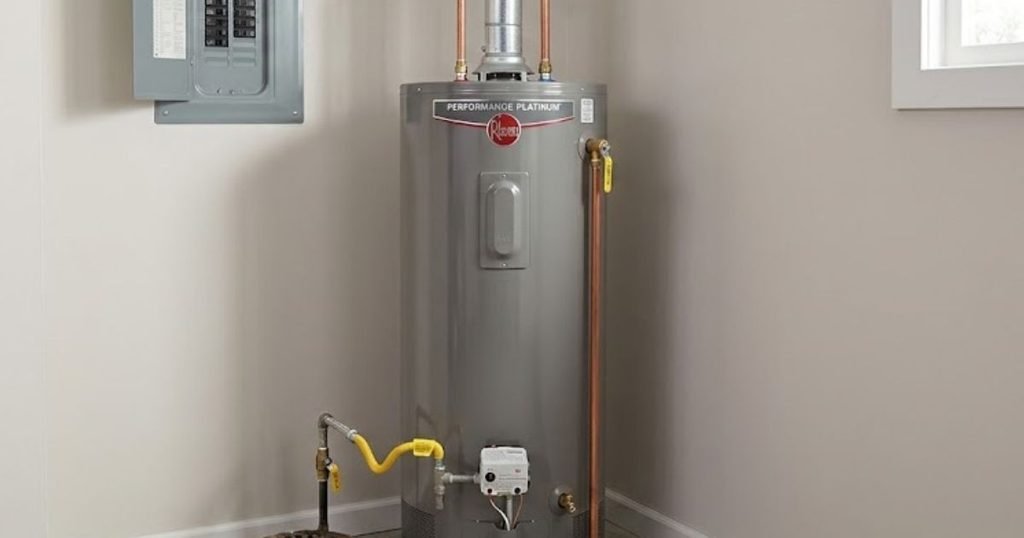
If you have been walking the aisles of your local home improvement store or browsing options online, you have likely come across the Rheem Performance Platinum Gas Water Heater. As Rheem’s top-tier residential retail line, it promises high efficiency, smart diagnostic features, and a premium warranty. But does it actually live up to the “Platinum” name in a real home environment?
As an experienced plumbing professional, I have installed, serviced, and replaced countless water heaters. In this guide, we will break down everything you need to know about the Rheem Performance Platinum series. I’ll explain what sets this model apart from standard units, walk you through its core features, and help you determine if it is the right investment for your home’s plumbing system. Lets deep dive into “Rheem Performance Platinum Gas Water Heater: Review & Buying Guide”
READ MORE: Tankless Gas vs Electric Water Heater: Which Is Right for Your Home?
What Is the Rheem Performance Platinum Gas Water Heater?
To understand where this unit fits into the market, it helps to know how Rheem structures its retail water heaters. The company generally offers three tiers: Performance (good, usually a 6-year warranty), Performance Plus (better, usually a 9-year warranty), and Performance Platinum (best, featuring a 12-year warranty and top-end features).
The Rheem Performance Platinum Gas Water Heater is a traditional storage-tank water heater. Unlike a tankless system, which heats water on demand as it flows through a heat exchanger, a storage-tank heater continuously heats and stores a large volume of water (typically 40 or 50 gallons) so it is ready whenever you turn on a faucet.
The “Platinum” designation means that the specific model comes equipped with Rheem’s highest-grade residential components. This typically includes better tank insulation to prevent heat loss, a premium diagnostic gas valve for easier troubleshooting, and a heavier-duty anode rod to protect the inside of the tank from corrosion over its 12-year warranted lifespan.
However, it is crucial to understand that “Performance Platinum” is a product line, not a single identical water heater. Within this line, you will find variations in:
- Capacity: The most common sizes are the Rheem Performance Platinum 40 gallon gas water heater and the Rheem Performance Platinum 50 gallon gas water heater.
- Venting type: Standard atmospheric venting (which drafts exhaust naturally up a chimney or B-vent) versus power venting (which uses an electric blower fan to push exhaust horizontally through a PVC pipe).
- Physical dimensions: Tall models for standard basements and short/low-boy models for cramped crawlspaces.
Before purchasing, you must check the complete model number to ensure you are getting the exact capacity and venting configuration your home’s plumbing layout requires.
Rheem Performance Platinum Gas Water Heater Specifications
Because specifications vary depending on whether you choose a 40-gallon atmospheric model, a 50-gallon power vent model, or a high-demand unit, a single set of numbers can be misleading. The table below outlines what you can generally expect, but you must verify the exact specifications for your chosen model number via the manufacturer’s documentation.
| Specification | Details |
| Brand | Rheem |
| Product line | Performance Platinum |
| Exact model number | Varies by capacity and venting (Check local retailer or Rheem spec sheet) |
| Fuel type | Natural Gas (Liquid Propane convertible or dedicated LP models available) |
| Tank capacity | Typically 40, 50, or 55 gallons (Model-specific) |
| Venting type | Atmospheric, Power Vent, or Power Direct Vent (Model-specific) |
| First-hour rating (FHR) | Approx. 70–85+ gallons for 40-gal; 85–105+ gallons for 50-gal |
| Energy efficiency (UEF) | Ranges from ~0.64 (Standard Atmospheric) to ~0.73+ (Power Vent). Many models are ENERGY STAR® certified. |
| Ignition system | Electronic ignition or pilot light with diagnostic gas valve (Model-specific) |
| Warranty | 12-year limited tank and parts warranty; 1-year or 3-year in-home labor (Requires registration) |
| Installation requirements | Professional installation highly recommended. Requires proper gas supply, combustion air, venting, and water connections. |
| Best suited for | Medium to large households wanting premium features, a long warranty, and high recovery rates. |
READ MORE: Best Rheem Tankless Gas Water Heater: Review, Cost & Comparison
Key Features of the Rheem Performance Platinum Gas Water Heater
When you pay a premium for the Platinum tier, you are paying for upgraded technology and durability. Here is a breakdown of the key features typically found in this line and what they mean for you as a homeowner.
1. Premium Diagnostic Gas Control Valve
One of the best features for both homeowners and plumbers is the electronic gas control valve. Instead of a traditional mechanical dial, many Platinum models feature a modern valve with an LED status indicator. If the water heater malfunctions, the LED flashes a specific error code. This takes the guesswork out of troubleshooting. Instead of paying a plumber for an hour of diagnostic time, you can often look at the flashing light, check the manual, and know exactly which component needs attention.
2. Upgraded Anode Rod
Inside every storage-tank water heater is a sacrificial anode rod. This metal rod is designed to slowly dissolve, attracting corrosive minerals in the water so they don’t attack the steel tank itself. The Performance Platinum line usually includes a premium, heavy-duty magnesium anode rod designed to last longer than standard rods, which is the primary reason Rheem can confidently offer a 12-year warranty on the tank.
3. High-Performance Burner and Recovery Rate
The burner systems in the Platinum line are designed to be maintenance-free under normal operating conditions. They often boast a higher BTU (British Thermal Unit) input compared to builder-grade models. In practical terms, this means the water heater can recover (reheat a cold tank of water) much faster. If two people take back-to-back showers, a high-recovery burner ensures the third person isn’t left standing in the cold.
4. Enhanced Insulation
Storage tanks lose heat just sitting there—a concept known as standby heat loss. To combat this, Rheem wraps the Platinum tanks in a thicker layer of environmentally friendly polyurethane foam insulation. This keeps the water hotter for longer without the burner needing to cycle on as frequently, lowering your gas bill.
5. 12-Year Limited Warranty
For many homeowners, this is the main selling point. While standard water heaters offer a 6-year warranty, the Platinum doubles that coverage on the tank and functional parts. It provides significant peace of mind, though it is important to note that regular maintenance is still required to keep the warranty valid.
READ MORE: Best Rheem Electric Tankless Water Heater: Reviews, Cost & Comparison
How Well Does It Perform in a Real Home?
Marketing brochures look great, but how does the Rheem Performance Platinum actually perform when your family needs to get out the door on a Tuesday morning?
Everyday hot water performance comes down to a metric called the First-Hour Rating (FHR). The FHR measures how many gallons of fully heated water the tank can deliver in the first hour of heavy use, starting with a completely full, hot tank. Because the Platinum models often feature strong BTU burners, their FHR is excellent.
For example, a typical Rheem Performance Platinum 50 gallon gas water heater might boast a first-hour rating of over 90 gallons.
- A standard shower uses about 2 to 2.5 gallons per minute. A 10-minute shower consumes roughly 25 gallons.
- Running the dishwasher uses about 6 to 10 gallons.
- A load of laundry on warm/hot might use 15 to 20 gallons.
With a high FHR, a family of four can comfortably take morning showers while running a hot water appliance without running out of water.
However, performance is heavily dependent on external factors. If you live in a northern U.S. climate where the incoming city groundwater in January is freezing cold (around 40°F), the water heater has to work much harder and longer to raise that water to 120°F. Conversely, homes in the South with warmer incoming water will experience even faster recovery times. Ultimately, a properly sized Platinum unit installed by a professional will provide robust, reliable, and rapid hot water delivery for standard residential needs.
Pros and Cons of the Rheem Performance Platinum Gas Water Heater
No water heater is perfect for every home. Here is a balanced look at the advantages and disadvantages of choosing this premium model.
| Potential Advantages | Potential Disadvantages |
| 12-Year Warranty: Double the protection of standard models, offering excellent peace of mind. | Higher Upfront Cost: The purchase price is noticeably higher than 6-year builder-grade units. |
| Diagnostic Features: LED gas valve makes troubleshooting faster and easier if problems arise. | Standby Heat Loss: As a storage tank, it will always lose some heat compared to a tankless system. |
| High First-Hour Rating: Excellent recovery speeds to keep up with high-demand households. | Footprint: Still requires significant floor space; 50-gallon models can be quite wide or tall. |
| Familiar Design: Easy swap-out if you are replacing an existing, compatible gas storage tank. | Venting Strictness: Upgrading to a power vent model requires specific PVC venting and an electrical outlet. |
| Energy Efficiency: Thick insulation and efficient burners often qualify for ENERGY STAR ratings. | Maintenance Required: The 12-year lifespan relies on you flushing the tank and checking the anode rod. |
READ MORE: AO Smith vs. Rheem Water Heaters: Comparison & Expert Reviews
Rheem Performance Platinum Gas Water Heater Price
When budgeting for a Rheem gas water heater installation, you need to look at the total cost of ownership, not just the sticker price on the box. Because prices fluctuate based on retail location, ongoing promotions, and the specific capacity or venting type you choose, I cannot provide an exact, universal price.
However, the cost breaks down into four main categories. I recommend getting at least two local quotes from licensed plumbers to understand your complete financial picture.
| Cost Factor | What to Expect |
| Water Heater Purchase Price | As a premium tier, expect to pay significantly more than standard 6-year models. Power-vent models cost considerably more than atmospheric venting models. (Check local retail for current pricing). |
| Professional Installation Labor | Plumbers typically charge a flat rate or hourly fee. This covers bringing the heavy unit into your home, making safe gas and water connections, and testing the system. |
| Old Unit Removal & Disposal | Most plumbers include draining, removing, and recycling your old water heater in their quote, but always verify this. |
| Code Upgrades & Modifications | Your old heater may have been installed before current codes. You may need a thermal expansion tank, new gas shutoff valves, an upgraded drip pan, or modifications to the exhaust flue. These add to the total cost. |
While the upfront cost is higher than a base model, the long-term value balances out. The extended 12-year warranty means you are less likely to face a premature tank replacement, and the high-efficiency insulation lowers your monthly gas consumption.
Is the Rheem Performance Platinum Gas Water Heater Energy Efficient?
Yes, for a storage-tank water heater, the Performance Platinum series is highly efficient. However, efficiency in gas water heaters is a nuanced topic.
Efficiency is measured by the Uniform Energy Factor (UEF). A higher UEF means a greater percentage of the fuel you pay for is converted directly into hot water, rather than being wasted as exhaust heat or lost through the tank walls. Basic atmospheric gas water heaters usually hover around a 0.58 to 0.62 UEF. The Rheem Performance Platinum models frequently achieve UEFs of 0.64 or higher, with some power-vent models exceeding 0.70.
Many specific models in this line are ENERGY STAR® certified, but you must verify the exact model number, as criteria change and not every single size and configuration qualifies.
To maximize the efficiency of this unit:
- Check your thermostat: Setting the water heater to 120°F (the U.S. Department of Energy recommendation) saves gas and prevents scalding, compared to setting it at 140°F.
- Right-size your tank: Buying a 55-gallon tank for a two-person household means you are paying to keep extra water hot 24/7. Match the tank capacity to your genuine household demand.
- Insulate your pipes: Insulating the first few feet of the hot and cold water pipes exiting the tank prevents heat from escaping into the surrounding air.
Rheem Performance Platinum Gas Water Heater Installation
Installing a gas water heater is not a beginner DIY project. It involves highly combustible fuel, carbon monoxide exhaust, and pressurized scalding water. As a plumbing professional, I strongly advise having a qualified, licensed technician handle the installation to ensure it meets all local safety codes.
Here is what you and your installer need to verify before and during installation:
- Fuel and Model Match: Confirm you are buying the correct fuel type (Natural Gas vs. Liquid Propane). They are not safely interchangeable without specific, manufacturer-approved conversion kits.
- Venting Requirements: If you are replacing an atmospheric vent heater with a power vent heater, you cannot use the old metal chimney. A power vent requires a dedicated PVC exhaust pipe routed through a sidewall, plus a standard 110V electrical outlet to run the fan.
- Clearances: Gas water heaters require specific clearances from combustible materials (walls, doors, boxes) and require adequate combustion air to fuel the burner flame.
- Thermal Expansion: Most modern plumbing codes require a thermal expansion tank to be installed above the water heater. When water heats up, it expands. Without an expansion tank, that pressure strains the water heater’s inner lining and can lead to premature failure.
- Safety Devices: The installer must correctly pipe the Temperature and Pressure (T&P) relief valve to a safe discharge location, usually a floor drain or outside, so that if the tank over-pressurizes, it safely releases water rather than exploding.
- Permits: Gas appliance replacements almost always require a permit and a post-installation inspection by your local municipality.
Rheem Performance Platinum Gas Water Heater Maintenance
To ensure your water heater actually lasts the 12 years guaranteed by the warranty, you have to maintain it. Neglect is the number one reason premium water heaters fail early. Here is a practical homeowner maintenance checklist:
- Annual Flushing: Once a year, the tank should be flushed. Minerals in your water (especially if you have hard water) settle at the bottom of the tank as sediment. This sediment creates a barrier between the gas burner at the bottom and the water, forcing the heater to run longer and hotter, eventually damaging the glass lining.
- Anode Rod Inspection: Even the premium anode rod in the Platinum series will eventually deplete. Have a professional inspect it every 3 to 4 years (more frequently if you use a water softener, which eats rods faster). Replacing a $50 anode rod can save a $1,500 water heater.
- T&P Valve Testing: Carefully lift the lever on the Temperature and Pressure relief valve once a year to ensure water discharges freely and the valve snaps fully shut. Warning: The water will be scalding hot. Keep clear of the discharge pipe.
- Visual Inspections: Routinely check around the base of the tank for unexplained puddles or rust streaks. Look up at the venting pipe to ensure it hasn’t disconnected, rusted, or collapsed. Check the burner area for strange ticking or booming noises when it ignites.
Common Rheem Performance Platinum Gas Water Heater Problems
Even premium appliances encounter hiccups. One of the best things about the Platinum series is the diagnostic LED on the gas control valve, which makes it easier to pinpoint the issue. Here are common problems and the recommended next steps.
| Problem | Possible Causes | Recommended Next Step |
| No hot water at all | Gas supply is off, pilot/ignition failure, faulty gas control valve, or the thermopile has failed. | Check the LED diagnostic light on the gas valve. Count the flashes, check the manual for the code, and arrange for professional service. |
| Water is not hot enough | Thermostat set too low, high household demand, or severe sediment buildup at the bottom of the tank. | Verify the temperature dial setting. If it is set correctly and water is still lukewarm, have a professional check for sediment or a faulty valve. |
| Hot water runs out quickly | The tank is undersized for your family, or a broken dip tube is mixing cold incoming water with the hot water at the top. | Evaluate your household usage. If usage hasn’t changed but performance dropped, request a plumber to inspect the internal dip tube. |
| Water takes too long to recover | Extremely cold incoming groundwater, heavy back-to-back usage, or poor burner performance. | Check specifications for your model’s First-Hour Rating. If the unit is failing to meet basic recovery times, contact a qualified technician. |
| Water leaking near the heater | Loose top water connections, a leaking T&P valve, or the internal steel tank has rusted through. | Safely turn off the water supply to the heater. If the leak is from the tank body itself, the unit must be replaced. |
| Unusual burner/venting symptoms | Yellow, lazy burner flames, soot buildup, or the smell of exhaust/gas. | Stop using the unit immediately. Turn off the gas supply if safe to do so, and call a professional. These are signs of improper combustion. |
Important Safety Note: If you ever smell gas near your water heater (a distinct “rotten egg” odor), do not try to troubleshoot the unit. Do not flip electrical switches, light matches, or use your phone nearby. Leave the building immediately and call your gas utility provider or emergency services from a safe location.
Rheem Performance Platinum vs. Other Gas Water Heaters
How does the Platinum stack up against the competition and its own younger siblings? Let’s take a look.
| Feature | Rheem Performance Plus (9-Year) | Rheem Performance Platinum (12-Year) | Competitor Equivalent (e.g., A.O. Smith Signature Premier) |
| Warranty | 9-year tank/parts | 12-year tank/parts | 12-year tank/parts |
| Price Tier | Mid-range | Premium | Premium |
| Diagnostics | Standard valve (often no LED) | Upgraded LED diagnostic valve | Upgraded LED status indicator |
| First-Hour Rating | Good | Excellent (Higher BTU burners) | Excellent (Comparable BTUs) |
| Insulation/UEF | Standard | Thickest insulation, highest UEF | Thick insulation, high UEF |
| Best fit for: | Budget-conscious homeowners wanting decent longevity. | Homeowners who want max warranty protection and fast recovery. | Homeowners loyal to other brands with similar premium needs. |
Who Should Consider the Rheem Performance Platinum Gas Water Heater?
The Rheem Performance Platinum Gas Water Heater is an excellent choice for a specific type of homeowner. You should seriously consider this model if:
- You are replacing a compatible gas heater: If you already have a 40- or 50-gallon gas water heater, swapping it for a Platinum model is a straightforward process for a plumber.
- You plan to stay in your home: The 12-year warranty offers long-term value. If you are flipping a house or moving next year, a standard 6-year model might make more financial sense.
- You have high hot-water demands: The excellent recovery times make it ideal for larger families or homes with high-flow showerheads and large soaking tubs.
- You prioritize efficiency: If you want to lower your gas bill without taking the expensive leap to a fully tankless system, the high UEF and thick insulation of the Platinum line are a great middle ground.
Note: If you are extremely tight on space, frequently run out of hot water despite having a 50-gallon tank, or want endless hot water, it might be time to investigate a Rheem gas tankless water heater instead.
What to Check Before Buying
Don’t buy a water heater on impulse. Use this quick buyer checklist before you make a purchase or sign a contractor’s estimate:
- Confirm the exact model number: Ensure the unit matches your required capacity and fuel type.
- Verify the venting type: Do you need standard atmospheric, or do you have a power vent system?
- Measure your space: Premium tanks have thick insulation; they are often a few inches wider or taller than older models. Measure your closet or basement clearance.
- Compare installed prices: Get comprehensive quotes that include the unit, labor, disposal, permits, and any code upgrades like expansion tanks.
- Check local rebates: Because many Platinum models are ENERGY STAR certified, your local gas utility company might offer a rebate that brings the cost down.
Final Verdict:
Based on my professional experience, the Rheem Performance Platinum Gas Water Heater is one of the best traditional storage-tank water heaters available on the residential market today. It successfully bridges the gap between high-end professional-grade equipment and accessible consumer pricing.
The combination of a 12-year warranty, smart diagnostic features, and excellent hot water recovery makes it a strong, worthwhile investment for most homeowners. While the upfront purchase and installation costs are higher than standard models, the energy savings from a higher UEF and the peace of mind that comes from a durable anode rod and premium gas valve offset that cost over a decade of use.
If your home runs on natural gas or propane, and you need a reliable, high-capacity water heater, the Rheem Performance Platinum should be at the top of your shortlist. Always remember to check the specific model specifications for your exact needs, and consult with a licensed, local plumbing professional to ensure a safe, code-compliant installation.
FAQs
Is the Rheem Performance Platinum gas water heater worth buying?
Yes, it is generally worth the investment for homeowners who plan to stay in their homes long-term. Its 12-year warranty, excellent first-hour recovery rating, and high-efficiency insulation provide better long-term value and reliability compared to standard 6-year builder-grade models, despite the higher upfront cost.
How much does a Rheem Performance Platinum gas water heater cost?
The retail price for the unit varies based on capacity (40 vs. 50 gallons) and venting type (atmospheric vs. power vent). However, the total cost which includes the unit, professional installation, old unit disposal, permits, and necessary code upgrades will be significantly higher than the retail sticker price. Always request a local plumbing quote for accurate pricing.
How long does a Rheem Performance Platinum gas water heater last?
With proper maintenance, a Rheem Performance Platinum gas water heater is designed to last 12 to 15 years. Achieving this lifespan requires annual tank flushing and periodic inspection of the sacrificial anode rod to prevent the internal steel tank from rusting and leaking.
What is the warranty on a Rheem Performance Platinum gas water heater?
The Rheem Performance Platinum line features a 12-year limited warranty on the tank and functional parts, which is double the standard industry warranty. Depending on the exact model and where it was purchased, it also typically includes a 1-year to 3-year in-home labor warranty. Product registration may be required.
Why is my Rheem Performance Platinum gas water heater not heating water?
Lack of hot water is often caused by a tripped gas supply, an extinguished pilot light, or a faulty gas control valve. Check the LED status indicator on the gas valve; if it is flashing, count the flashes and consult your owner’s manual for the specific diagnostic error code before calling a professional plumber.
Sources and Further Reading
- Rheem Manufacturing Company: Official Product Specification Sheets and Use & Care Manuals.
- U.S. Department of Energy (DOE): Guidelines on Water Heater Efficiency and First-Hour Ratings.
- ENERGY STAR®: Residential Water Heaters Certification Criteria.
Homeowner Safety Disclaimer
Gas appliances involve significant safety risks, including fire, explosion, and carbon monoxide poisoning. The information provided in this article is for educational purposes only. All gas water heater installations, repairs, and venting modifications must be performed by a licensed and qualified plumbing professional in strict accordance with the manufacturer’s instructions and all applicable local, state, and national building codes.