Whether you are a high school graduate exploring vocational pathways, a career changer looking for high demand and strong earning potential, or a seasoned journeyman electrician seeking a better-paying local contractor, your search starts with understanding how the market works in your specific area. Across the United States, thousands of electrical contractors, manufacturing plants, commercial builders, and utility companies are actively recruiting qualified talent.
Finding electrician jobs near me requires more than typing a quick query into a search engine. Job availability, licensing prerequisites, pay scales, and training structures vary significantly from state to state and even between neighboring counties. Because electrical systems power everything from modern residential smart homes to sprawling industrial manufacturing complexes, skilled professionals enjoy exceptional job security. According to the U.S. Bureau of Labor Statistics (BLS), the national median annual wage for electricians reached 63,190(30.38 per hour) in May 2025, with employment projected to grow by 9 percent from 2025 to 2035—much faster than the average for all occupations.
In this comprehensive guide, we will explore where to find local electrician job openings, examine the different types of available positions, break down compensation and licensing standards, and provide actionable strategies to help you land your next role. Lets deep dive into “Electrician Jobs Near Me: Local Hiring & Careers”
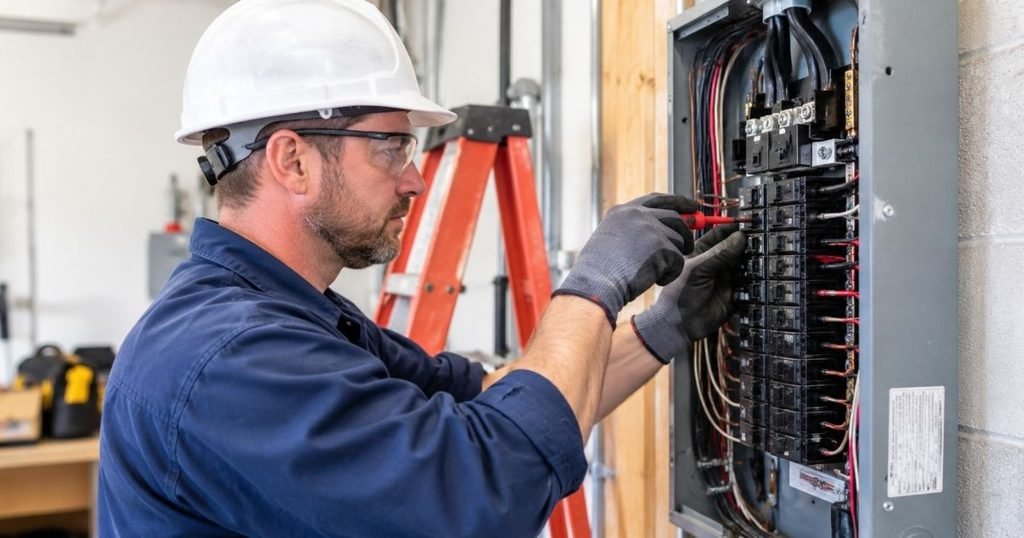
How to Find Electrician Jobs Near Me
Conducting a successful job search in the electrical trade involves tapping into multiple channels rather than relying on a single job board. Local hiring happens through a mix of digital platforms, direct contractor outreach, union halls, and technical school networks.
To maximize your chances of securing employment, utilize a structured, multi-pronged approach:
- Digital Job Platforms: Use dedicated search engines like Google Jobs, Indeed, LinkedIn, and ZipRecruiter. Enter specific search strings combined with your ZIP code or city name to filter out irrelevant listings.
- Employer Career Pages: Identify reputable local electrical contracting firms, regional commercial builders, and industrial facilities in your area. Visit their official “Careers” or “Hiring” pages directly.
- Union Hiring Channels: Connect with local chapters of the International Brotherhood of Electrical Workers (IBEW) and National Electrical Contractors Association (NECA) joint apprenticeship and training committees (JATCs).
- Apprenticeship Sponsors: Explore registered apprenticeship programs via official federal and state workforce portals.
- Electrical Supply Houses and Trade Networks: Visit local electrical wholesale supply houses where electricians congregate. Contractors frequently post job notices on bulletin boards or share hiring needs with counter staff.
- Workforce Development and Technical Schools: Consult local community colleges, vocational high schools, and American Job Centers, which maintain direct pipelines to local employers seeking entry-level workers and helpers.
Local Job Search Methods Comparison
| Job Search Method | Best For | What to Check |
| General job boards | Beginners and experienced workers | Location, pay, qualifications, posting date |
| Employer career pages | Direct applications and established local contractors | Current vacancies, required licenses, benefits |
| Union hiring channels | Union positions, competitive pay, and structured apprenticeships | Membership rules, application windows, aptitude test dates |
| Apprenticeship programs | People entering the trade needing structured training | Eligibility, schooling schedules, starting wages |
| Staffing agencies | Temporary, project-based, and contract work | Pay rate, assignment duration, travel requirements, safety record |
When executing your search, experiment with targeted search phrases to uncover different tiers of openings. Useful search terms include:
- Electrician jobs near me hiring now
- Entry-level electrician jobs near me
- Apprentice electrician jobs near me
- Residential electrician jobs near me
- Journeyman electrician jobs near me
- Commercial electrician jobs near me
- Industrial electrician jobs near me
- Electrician helper jobs near me
Keep in mind that these search terms reflect common user queries and do not guarantee that immediate openings exist in your exact neighborhood. Flexibility in travel radius often unlocks superior employment opportunities.
READ MORE: Electrician Cost Per Hour: How Much Homeowners Pay in the U.S.
Types of Electrician Jobs Available Near You
The electrical industry is remarkably diverse. Depending on your experience level, licensing status, and personal interests, you can specialize in several distinct career paths. Understanding what each role entails will help you target the right electrician jobs hiring near me.
1. Apprentice Electrician Jobs
Apprenticeships combine paid on-the-job training with classroom instruction. As an apprentice, you work under the direct supervision of licensed journeyman or master electricians, learning the practical intricacies of wiring, conduit bending, circuit design, and national electrical codes. Most registered programs last four to five years, with pay increasing incrementally as you accumulate verified work hours and classroom credits.
2. Entry-Level Electrician Jobs
If you have completed a vocational certificate program or possess foundational mechanical skills but lack full field experience, entry-level positions bridge the gap. These roles allow you to work alongside experienced crews, handling less complex installation tasks while building the hours required to qualify for formal apprenticeship or licensing exams.
3. Electrician Helper Jobs
Electrician helpers perform vital support tasks on worksites. Responsibilities include gathering materials, organizing tools, cleaning up job sites, trenching, and assisting qualified electricians with pulling wire and mounting boxes. Helpers do not typically require prior experience, making this an ideal entry point for individuals breaking into the trade with zero background.
4. Residential Electrician Jobs
Residential electricians focus on homes, apartments, and multi-family housing units. Their daily work involves installing new wiring, upgrading electrical service panels, adding lighting fixtures and ceiling fans, troubleshooting tripped breakers, and ensuring compliance with local residential building codes. This sector requires strong customer service skills and regular interaction with homeowners.
5. Commercial Electrician Jobs
Commercial electricians work in office buildings, retail centers, schools, hospitals, restaurants, and warehouses. Commercial systems are typically larger and more complex than residential setups, involving three-phase power, metal conduit installation, complex lighting control systems, security integration, and strict adherence to commercial safety standards.
6. Industrial Electrician Jobs
Industrial electricians operate in manufacturing plants, assembly facilities, wastewater treatment plants, and power generation stations. Their work goes beyond standard wiring to include heavy-duty machinery maintenance, automated manufacturing controls, programmable logic controllers (PLCs), high-voltage systems, electric motors, and complex diagnostic troubleshooting. Industrial roles frequently command higher wages due to specialized technical requirements.
7. Journeyman and Master Electrician Jobs
Journeymen have completed their apprenticeships and passed rigorous state or local licensing examinations, allowing them to work independently without direct supervision. Master electricians represent the pinnacle of the trade, possessing extensive experience, advanced code knowledge, and the qualifications required to pull permits, run contracting businesses, estimate projects, and supervise teams of journeymen and apprentices.
8. Maintenance Electrician and Traveling Electrician Jobs
Maintenance electricians ensure that existing electrical systems and equipment in facilities continue to operate safely and efficiently, handling routine upkeep and emergency repairs. Traveling electricians, on the other hand, work for national contractors, retail chains, or specialized industrial service firms, traveling to different regions or states to execute installations, retrofits, or service rollouts.
READ MORE: Commercial Electrical Contractors: Services, Costs & How to Hire
Electrician Jobs Near Me With No Experience
Entering the trade without prior professional background is entirely possible, though it requires dedication, a willingness to learn, and realistic expectations. Many contractors and training committees actively recruit motivated beginners for helper and entry-level positions.
If you are wondering how to land electrician jobs with no experience, focus on demonstrating foundational attributes that employers value:
- Education and Literacy: A high school diploma or GED is almost universally required to verify basic math and reading comprehension.
- Aptitude in Mathematics: Algebra and geometry are essential for calculating voltage drops, conduit bends, circuit loads, and wire sizing.
- Mechanical Inclination: Comfort using hand and power tools, understanding how mechanical systems operate, and possessing good spatial awareness.
- Safety Consciousness: Electrical work carries inherent hazards. Demonstrating a strict commitment to safety protocols and Occupational Safety and Health Administration (OSHA) guidelines is paramount.
- Reliability and Work Ethic: Showing up on time, possessing a valid driver’s license, and maintaining reliable transportation are critical hiring filters in the trades.
Beginner-Friendly Checklist for Job Seekers
- [ ] Prepare a clean, simple résumé highlighting transferable skills, military service, or vocational coursework.
- [ ] Highlight relevant high school or technical math classes, drafting experience, or mechanical hobbies.
- [ ] Search actively for “electrician helper jobs near me” or entry-level trainee listings.
- [ ] Check minimum age requirements (many employers and insurance policies require applicants to be at least 18).
- [ ] Verify whether your state requires electrical trainee registration or a valid card before stepping onto a job site.
- [ ] Apply through official company portals or union recruitment offices, remaining honest about your experience level.
Electrician Apprenticeships Near Me
For those seeking structured career progression, formal electrician apprenticeship programs represent the gold standard. Registered Apprenticeship programs sponsored by unions (such as the IBEW/NECA JATCs) or non-union merit shop organizations (such as the Independent Electrical Contractors [IEC] or Associated Builders and Contractors [ABC]) provide a proven path to high earnings.
Key characteristics of registered apprenticeships include:
- Earn While You Learn: Apprentices receive a paycheck from day one. Wages start at a percentage of the journeyman rate (typically 40% to 50%) and increase automatically every six months to a year as milestones are achieved.
- Structured Instruction: Programs typically require 8,000 hours of paid on-the-job training paired with 144 to 180 hours of classroom instruction per year, covering electrical theory, blueprint reading, code compliance, and safety.
- Rigorous Selection Process: Because demand is high, applicants often must pass an aptitude test covering algebra and reading comprehension, participate in oral interviews, and pass drug screenings.
- Credentials Upon Completion: Graduating from a registered program awards a nationally recognized Certificate of Completion, making it straightforward to pass state licensing exams.
READ MORE: How Much Money Does a Plumber Earn?
Electrician Jobs Near Me Salary and Pay Rates
Earnings in the electrical trade are among the highest in the construction and maintenance sectors. According to the BLS, the national median annual wage for electricians was $63,190 ($30.38 per hour) in May 2025. The lowest 10 percent earned less than $42,640, while the highest 10 percent earned more than $108,510.
However, actual pay varies considerably based on experience tier, geographic location, industry sector, union representation, and overtime availability.
Position and Pay Comparison Table
| Position | Typical Pay Considerations | Factors Affecting Pay |
| Electrician helper | Entry-level compensation; usually hourly | Local labor market, prior general construction experience |
| Apprentice electrician | Wages increase progressively with hours and school completion | Program tier, local collective bargaining agreements |
| Residential electrician | Varies by experience and local housing market demand | Piece-rate bonuses, service commissions, residential scale |
| Journeyman electrician | Full professional pay rate; overtime opportunities common | State licensing status, commercial/industrial expertise |
| Industrial/Specialized electrician | Higher base wages due to advanced technical demands | Proficiency in PLCs, high voltage, instrumentation, controls |
| Master electrician / Contractor | Highest earning potential; profit-sharing or business ownership | Business acumen, supervisory scope, local contracting volume |
Beyond base hourly pay, total compensation packages often include health insurance, dental and vision coverage, 401(k) matching or pension contributions, paid time off, tool allowances, and company vehicle provisions for service technicians.
What Qualifications Do You Need to Become an Electrician?
Navigating the legal and educational prerequisites for the electrical trade requires distinguishing between employer preferences and mandatory state regulations.
- Education: A high school diploma or GED is the foundational baseline required by nearly all employers, apprenticeship committees, and licensing boards.
- Technical Knowledge & Math: Strong foundational skills in algebra, basic physics, and blueprint reading are necessary for success in technical training.
- Work Experience: Depending on your jurisdiction, working independently requires logging thousands of verified hours under a licensed master or journeyman electrician.
- Licensing: Most U.S. states, counties, and municipalities require electricians to be licensed or registered. Requirements range from registering as an apprentice/trainee before starting work to passing comprehensive exams covering the National Electrical Code (NEC) for journeyman or master status.
- Driver’s License & Transport: Because electricians travel to different job sites, carry tools, and operate service vehicles, a clean driving record and dependable transportation are essential daily requirements.
Always consult your state’s Department of Labor or electrical licensing board to verify local rules, as regulations cannot be generalized across state lines.
READ MORE: Electrical Breaker Box Installation: Costs & Permits
Best Places to Look for Local Electrician Jobs
Finding open positions efficiently means knowing which platforms yield the highest concentration of legitimate opportunities.
- Google Jobs: Aggregates listings from thousands of company websites and job boards, allowing you to search using terms like electrician jobs hiring near me.
- Indeed & ZipRecruiter: Massive job aggregators featuring robust filtering tools for salary ranges, job types (full-time, contract), and distance radii.
- LinkedIn: Excellent for finding commercial and industrial positions with larger regional contractors, engineering firms, and facility management companies.
- Apprenticeship.gov: The official U.S. Department of Labor portal for locating registered apprenticeship sponsors in your local area.
- IBEW Local Union Halls: Contacting local union halls directly provides access to organized apprenticeship applications and union dispatch lists.
- NECA Contractor Directory: The National Electrical Contractors Association directory helps job seekers identify reputable commercial and industrial electrical contractors operating locally.
Simple 5-Step Process for Checking a Listing
- Verify the Employer: Ensure the hiring company is a registered, legitimate business with a physical address and valid contractor license.
- Review Requirements: Match your current qualifications (license, experience level, driver’s license) against the stated prerequisites.
- Evaluate Total Compensation: Look closely at hourly wages, benefits, shift schedules, and potential overtime expectations.
- Check Status: Verify whether the posting is recent and active to avoid applying to expired listings.
- Apply Formally: Submit your application through the official company career portal or verified contact channel.
How to Apply for Electrician Jobs Near Me
Submitting a standout application in the trades requires a clean, professional presentation that highlights hands-on skills, safety training, and reliability. Keep your resume concise, ideally one page focusing heavily on technical competencies.
Key Elements to Include on Your Résumé:
- Contact Information: Clear phone number, professional email address, and city/state.
- Certifications & Licenses: List OSHA 10 or OSHA 30 cards, CPR/first aid certifications, state apprentice cards, or journeyman licenses.
- Technical Skills: Conduit bending (EMT, rigid), wire pulling, panel building, troubleshooting, reading blueprints, and multimeter operation.
- Work History: Focus on achievements, safety records, and reliability in previous roles, even in non-electrical fields if you are a beginner.
Example Résumé Bullet Points
For an Entry-Level Candidate:
“Completed 600 hours of vocational electrical training covering residential wiring, basic circuit theory, and AC/DC fundamentals; earned OSHA 10 certification and demonstrated strong mechanical aptitude in hands-on lab environments.”
For an Experienced Electrician:
“Executed commercial wiring installations, conduit bending, and fixture hookups across 15+ major construction sites while maintaining a zero-incident safety record and adhering strictly to NEC codes.”
When preparing for interviews, emphasize your punctuality, safety mindset, willingness to work in diverse weather conditions or shift hours, and enthusiasm for continuous learning.
READ MORE: Adding Electrical Sub Panel: Cost & Requirements
How to Choose the Right Electrician Job
Evaluating multiple job offers involves looking beyond the headline hourly wage. A position paying slightly less per hour might offer superior long-term growth, health benefits, and retirement security.
When comparing offers, weigh the following factors:
- Overtime and Prevailing Wage Opportunities: Some commercial and public-sector projects pay prevailing wages that significantly exceed standard market rates, often accompanied by lucrative overtime compensation.
- Training and Tuition Support: Does the employer cover apprenticeship school tuition or provide paid time off for classroom attendance?
- Health and Retirement Benefits: Comprehensive medical, dental, and pension or 401(k) matching programs provide immense financial security over a career.
- Safety Culture: A reputable contractor prioritizes safety, provides high-quality Personal Protective Equipment (PPE), and maintains rigorous safety training protocols.
- Advancement Pathways: Look for employers that promote from within and support continuous professional development.
Electrician Job Scams and Warning Signs
Unfortunately, job seekers searching for local work occasionally encounter fraudulent postings and employment scams. Protect yourself by recognizing common warning signs:
- Upfront Fees: Legitimate employers and apprenticeship programs will never ask you to pay money upfront for “application processing,” “training gear,” or “background checks.”
- Check-Cashing Scams: If an employer sends you a check to deposit and asks you to wire a portion of the funds back to a third party, it is a fraudulent scheme.
- Suspicious Contact Details: Be wary of emails sent from free webmail accounts (Gmail, Yahoo) claiming to represent major electrical contractors rather than official corporate domains.
- Unrealistic Promises: Job descriptions promising exorbitant wages for zero experience with no interview process are almost always scams designed to harvest personal data.
- Requests for Sensitive Data: Never share your Social Security number, banking details, or copies of your driver’s license until you have verified the legitimacy of the employer and completed a formal hiring process.
Electrician Career Outlook in the United States
The long-term career outlook for electricians across the United States is exceptionally strong. The U.S. Bureau of Labor Statistics projects overall employment for electricians to grow by 9 percent from 2025 to 2035, adding approximately 72,700 job openings each year.
This growth is driven by several powerful economic and technological trends:
- Energy Transition and Electrification: The rapid expansion of electric vehicle (EV) charging infrastructure, commercial and residential solar power installations, battery storage systems, and energy-efficient building upgrades requires an influx of skilled electrical technicians.
- Infrastructure Modernization: Ongoing investments in upgrading aging commercial buildings, public transit systems, schools, and utility grids sustain continuous construction demand.
- Retirement Replacement Openings: A significant wave of retirements among veteran master and journeyman electricians creates continuous vacancies that must be filled by incoming talent.
While national trends are overwhelmingly positive, local demand varies by region. Rapidly growing metropolitan areas, industrial hubs, and regions investing heavily in green energy infrastructure typically experience the highest volume of open positions.
Frequently Asked Questions
How do I find electrician jobs near me that are hiring now?
To find active openings, utilize specialized job search engines like Google Jobs and Indeed, filtering by your local ZIP code. Simultaneously, visit the career pages of local electrical contractors, check union hiring halls (such as IBEW/NECA), and consult local workforce development centers. Networking at electrical supply houses can also uncover unadvertised helper and entry-level opportunities in your area.
Can I get an electrician job near me with no experience?
Yes, many electrical contractors hire beginners as electrician helpers or entry-level trainees. While prior experience is not strictly required for these entry points, employers generally expect a high school diploma or GED, basic math skills, a valid driver’s license, and a strong commitment to worksite safety. Helpers learn foundational skills on the job while supporting licensed electricians.
How much do electricians make per hour in the United States?
According to the U.S. Bureau of Labor Statistics (BLS), the national median hourly wage for electricians was $30.38 per hour ($63,190 per year) in May 2025. Wages vary depending on your experience level, ranging from entry-level helper rates to well over $50 per hour for experienced master electricians and specialized industrial technicians in high-demand metropolitan markets.
Do I need a license to work as an electrician in my state?
Most U.S. states and many local municipalities require electricians to hold a valid license or trainee registration to perform electrical work legally. Requirements typically include registering as an apprentice before starting work, completing supervised on-the-job training hours, and passing a comprehensive exam covering the National Electrical Code (NEC). Always verify specific rules with your state’s licensing board.
How long does it take to become a licensed electrician?
Becoming a fully licensed journeyman electrician typically takes four to five years. This timeframe aligns with standard registered apprenticeship programs, which combine approximately 8,000 hours of paid on-the-job fieldwork with hundreds of hours of classroom instruction. Once these hours and coursework requirements are successfully fulfilled, candidates are eligible to sit for state or municipal licensing examinations.
Final Thoughts:
Securing a rewarding career in the electrical trade begins with taking proactive, informed steps. Whether you are searching for electrician jobs near me, evaluating local apprenticeship programs, or looking to transition into a higher-paying commercial role, the opportunities in 2026 are robust and expanding.
To set yourself up for success:
- Focus your search locally by using your city or ZIP code across reliable employment platforms.
- Weigh the long-term value of apprenticeships and structured training if you are new to the trade.
- Verify contractor credentials and licensing rules before committing to an employer.
- Apply consistently, maintain a strong safety mindset, and continue sharpening your technical skills.
Take the first step today: explore current local openings, polish your résumé, and connect with reputable electrical employers in your community.
Sources and Further Information
- U.S. Bureau of Labor Statistics (BLS): Occupational Outlook Handbook – Electricians (May 2025 data, published August 2026).
- U.S. Department of Labor: Apprenticeship.gov – Registered Apprenticeship Program Guidelines.
- CareerOneStop: Electrical Trade Career Profiles and Employment Trends.
- National Electrical Contractors Association (NECA) & International Brotherhood of Electrical Workers (IBEW): Joint Apprenticeship and Training Committee (JATC) Standards.
- State and Local Licensing Boards: State-specific Electrical Contractor and Electrician Licensing Regulations.
Disclaimer: Wages, employment availability, benefits, apprenticeship criteria, and licensing requirements vary significantly by geographic location, state, and local municipality. Economic conditions and labor market demands change over time. Job seekers should verify all specific requirements directly with official employers, union halls, and state licensing authorities before making employment or educational decisions.