Your lights flicker when the AC kicks on. A breaker trips every time the microwave and toaster run together. Or you’re adding an EV charger and wondering whether your old panel can handle it. Situations like these are why homeowners start researching electrical breaker box installation.
In plain terms, it means installing a new main service panel (or a subpanel) that receives power and distributes it to the circuits in your home. People replace or upgrade panels because the equipment is damaged or outdated, because there’s no room for new circuits, or because new loads such as heat pumps, induction ranges, and EV chargers call for more capacity. Since the panel is the control center of your home’s wiring, doing the work properly matters for both safety and code compliance.
This guide covers what a breaker box does, when it may need attention, how panel sizes compare, what installation costs look like in 2026, how permits work, and how to choose a qualified electrician. One honest note up front: a new panel won’t automatically lower your electric bill, and flickering lights don’t always point to the panel. The goal is to match your electrical system to your home’s real needs. Lets deep dive into “Electrical Breaker Box Installation: Costs & Permits”
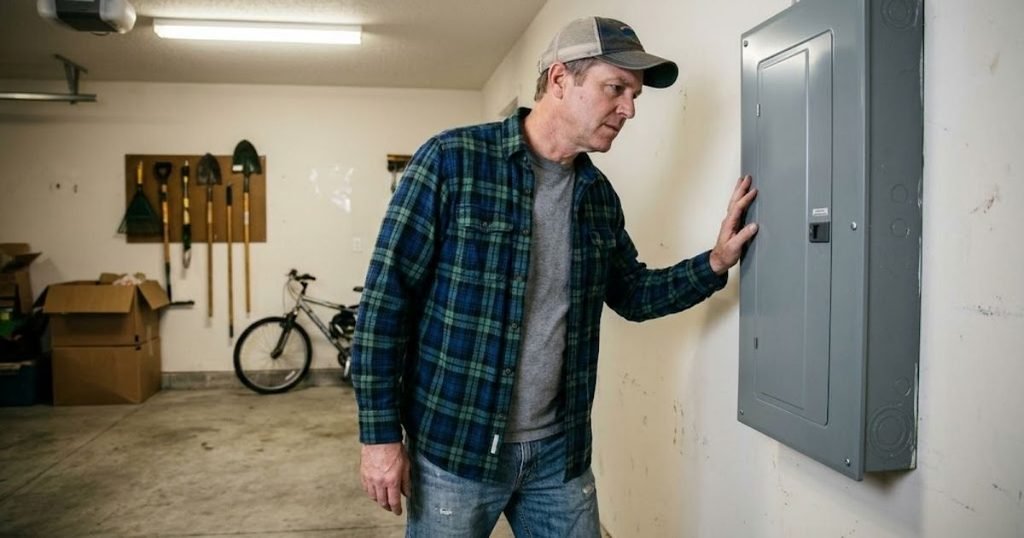
What Is an Electrical Breaker Box?
An electrical breaker box is the metal enclosure that receives electricity from the utility service and divides it into separate circuits for lights, outlets, and appliances. Inside, you’ll typically find:
- Main breaker or service disconnect: the means of shutting off power to the home.
- Individual circuit breakers: one for each branch circuit.
- Bus bars: metal bars that carry power to the breakers.
- Neutral and grounding bars: connection points for return and grounding conductors.
- Branch circuits: the wiring runs that feed rooms and appliances.
- Enclosure and cover: the housing that protects the equipment and the people nearby.
- Service conductors and grounding connections: the heavy cables bringing power in and the connections tying the system to ground.
A circuit breaker is designed to open the circuit during certain overloads or fault conditions. For that protection to work, each breaker must match the panel’s listing, the wire size, and the circuit’s requirements under the applicable code. The wrong breaker can quietly defeat the protection you’re counting on.
READ MORE: Electric Fuse Box: A Complete Homeowner’s Guide
Breaker Box vs. Electrical Panel vs. Subpanel vs. Fuse Box
- Breaker box / electrical panel: everyday names for the same equipment.
- Main service panel: the panel containing the main disconnect for the home.
- Subpanel: a secondary panel fed from the main panel, adding circuit space for a garage, workshop, or addition.
- Fuse box: an older design that uses replaceable fuses instead of breakers.
A subpanel adds distribution, not capacity. The total power available to your home is still set by the service supplied to the house.
When Should You Install or Replace an Electrical Breaker Box?
These signs justify a professional inspection:
- Breakers that trip frequently.
- No open spaces for additional circuits.
- An older fuse box or outdated equipment.
- Burn marks, corrosion, unusual buzzing, or a burning odor.
- Flickering or dimming lights tied to electrical problems.
- Planned additions, major renovations, or new high-demand appliances.
- A new EV charger, electric range, heat pump, or other substantial load.
- A damaged or otherwise unsafe panel identified by a qualified professional.
A tripping breaker doesn’t automatically mean the panel is bad. The cause might be an overloaded circuit, a faulty appliance, or damaged wiring. Tripping is the breaker doing its job, so investigate the cause rather than bypass it.
Safety warning: Stay away from a panel that is hot, smoking, sparking, or visibly damaged. If there is smoke or fire, leave the area and call emergency services. Never remove the panel cover or touch exposed wiring.
Types of Electrical Breaker Boxes for Homes
When planning a new installation or replacement, selecting the right panel size and type is critical.
1. Standard Main Breaker Panel
This is the standard distribution panel found in the vast majority of single-family homes, housing the main service disconnect right inside or adjacent to the box.
2. 100-Amp Electrical Panel
Historically standard for small to medium-sized homes with minimal electrical demand. Today, a 100-amp service is often considered the minimum threshold and may struggle to support modern heating, cooling, and electronic loads without careful energy management.
3. 150-Amp Electrical Panel
An intermediate service size suitable for moderate-sized homes with gas appliances or moderate electrical consumption.
4. 200-Amp Electrical Panel
The modern benchmark for most single-family residential homes. A 200-amp panel comfortably supports contemporary household loads, central air conditioning, modern kitchen suites, and planned home electrification projects like EV chargers.
5. Subpanel
Installed downstream from the main panel when additional circuit capacity is needed in an outbuilding, basement, or garage without running dozens of individual home-run wires all the way back to the main service panel.
| Panel Type or Service Size | Common Application | Potential Advantages | Important Considerations |
| Standard main breaker panel | Typical single-family homes | Whole-panel shutoff; familiar design | Must be sized and listed for the home |
| 100 amp | Smaller homes, modest loads | Lower equipment cost | May be tight for EV charging or electric heat |
| 150 amp | Mid-size homes, some added loads | Middle ground in capacity | Needs a load calculation to confirm fit |
| 200 amp | Larger homes, multiple big appliances | More headroom for future loads | May require service cable, meter base, or utility work |
| Subpanel | Garage, workshop, addition | Adds circuit spaces near the load | Doesn’t increase total service capacity |
Amperage alone doesn’t determine safety or suitability. Service conductors, meter equipment, disconnects, grounding and bonding, and utility arrangements must all be appropriate too.
READ MORE: Hot Tub Wiring Guide: Electrical Requirements & Installation
Electrical Breaker Box Installation Cost in the USA
Prices vary a lot. The estimates below are compiled from several 2026 consumer cost guides, and those guides don’t always agree with each other. Treat them as budgeting guides, not quotes. Your local price depends on labor rates, your existing system, and local rules.
Projects differ in scope, so know what you’re pricing:
- Replacing a panel without increasing capacity: the simplest scenario.
- A new panel as part of a service upgrade: may add a new meter base, service cable, or utility work.
- Upgrading from 100 to 200 amps: common when electrification is planned.
- Subpanel installation: adds circuits but not service capacity.
- Panel relocation: moves the panel and extends conductors.
- Corrective work: fixing outdated wiring or grounding found during the project.
| Installation Type | Estimated Installed Cost (2027) | What May Be Included |
| Standard breaker box replacement (same capacity) | About 1,500–4,000 (broader installed project) | Panel, basic breakers, labor, testing |
| 100-amp panel installation or replacement | About 1,200–3,500 (mostly panel-focused) | Panel work and required connections |
| 200-amp service and panel upgrade | About 1,800–3,500 for panel-focused work; about 2,500–6,000+ with meter base, service cable, and utility coordination (broader project) | Panel, service-related work, coordination as applicable |
| Subpanel installation | About 700–2,500; 2,000–4,500+ for long or detached feeder runs (broader project) | Subpanel, feeder, breaker, labor |
| Electrical panel relocation | About 1,000–4,000; more if service work is needed (broader project) | Relocation labor, conductor extensions, related work |
| Permits and inspections | Often about 75–500; can run higher locally | Required permit and inspection fees |
What moves the final price:
- Panel capacity and equipment type
- Local electrician labor rates
- Condition of existing wiring
- Meter or service entrance changes
- Panel location and accessibility
- Permit and inspection fees
- Grounding and bonding corrections
- Drywall repair and finishing
- Utility coordination, outages, and extra work
To manage cost safely, request two or three itemized estimates, compare equivalent scopes, and ask which repairs are required and which are optional. Never choose a bidder because they offer to skip the permit.
READ MORE: Cost to Upgrade Electrical Panel to 200 Amps
Electrical Breaker Box Installation: What the Professional Process Involves
This overview shows what to expect. It isn’t a how-to, because the work involves live service equipment and should be done only by qualified professionals.
- Initial electrical inspection: The electrician evaluates the panel, wiring, service equipment, and your needs.
- Load calculation: They determine whether the existing service is adequate or an upgrade is justified.
- Panel selection: Listed, compatible equipment and appropriate circuit protection are chosen.
- Permit and utility coordination: Permits, inspections, and utility arrangements are handled before work starts.
- Power disconnection and site preparation: The job is planned to prevent contact with energized conductors and to protect your property.
- Panel replacement or installation: The enclosure, service equipment, breakers, and connections are installed per the manufacturer’s instructions and applicable code.
- Grounding, bonding, and circuit identification: Addressed as required by the system design and code.
- Inspection and testing: Required inspections and electrical tests are completed.
- Labeling and handover: You receive accurate circuit labels and an explanation of the safety features.
Do You Need a Permit for Electrical Breaker Box Installation?
Often, yes. Panel replacements, new installations, and service upgrades commonly require permits and inspections, but the rules depend on your local authority having jurisdiction and the exact scope of work. Don’t assume that swapping an existing panel is exempt.
Before hiring anyone:
- Contact your local building or electrical department to confirm requirements.
- Ask who pulls the permit. Contractors usually do, though homeowner-permit rules vary.
- Ask what inspections will be required and how they’re scheduled.
Inspections matter because a second qualified set of eyes checks the work against code. Unpermitted work can also cause problems with insurance claims or when you sell.
The National Electrical Code (NEC) is a model code. It becomes enforceable only when a jurisdiction adopts it, often with amendments. Adoption varies widely: NFPA reported that 20 states had completed their 2023 NEC updates as of October 2025, while others remain on older editions. The 2026 NEC was published in 2025, and some jurisdictions, such as Texas (effective September 1, 2026), have started adopting it. Ask your local office which edition applies to you.
READ MORE: Electrical Wiring Installation: Costs, Types & How to Plan
Electrical Codes and Safety Requirements
Codes, manufacturer instructions, and listed equipment work together. Here’s what matters to homeowners:
- Locally adopted NEC: sets the installation rules your inspector will use.
- Breaker-panel compatibility: breakers must be listed and approved for the specific panel.
- Conductor sizing and overcurrent protection: the breaker must match the wire it protects.
- Grounding and bonding: required to help clear faults and reduce shock risk.
- GFCI protection: helps protect against electric shock under qualifying ground-fault conditions.
- AFCI protection: helps reduce fire risk from certain arcing faults.
- Working space: clear, adequate space around electrical equipment.
- Labeling and closure of unused openings: keeps the panel safe and serviceable.
Which circuits need AFCI or GFCI protection depends on the adopted code, building type, installation details, and local amendments. Don’t rely on a blanket rule. Your electrician and inspector will apply the right one.
DIY vs. Hiring a Licensed Electrician
| Factor | DIY Approach | Qualified Electrician |
| Electrical hazard exposure | Shock, arc-flash, and fire risks, including energized service parts | Uses professional safety procedures |
| Code compliance | Depends on local rules and the person’s competence | Professional code knowledge and permitting support |
| Equipment compatibility | Risk of choosing the wrong panel or breakers | Can select listed, compatible equipment |
| Permits and inspections | Homeowner may be responsible where allowed | Can coordinate requirements where authorized |
| Testing and documentation | Depends on available skills and requirements | Professional testing and project records |
The safest recommendation is plain: breaker box installation, panel replacement, and service upgrades should be handled by a qualified electrical professional. Turning off the main breaker doesn’t necessarily de-energize every part of a service panel, because the utility-side conductors can remain live.
Some jurisdictions allow homeowners to do certain electrical work on their own home. Even then, a homeowner exemption doesn’t remove the safety and code obligations.
How to Choose the Right Electrical Contractor
- Verify the required state or local electrical license.
- Confirm insurance and any applicable bonding.
- Ask for recent references or relevant residential experience.
- Get a written, itemized estimate.
- Confirm who obtains permits and schedules inspections.
- Ask whether utility coordination is included.
- Confirm the panel brand, model, capacity, and breaker compatibility.
- Ask about workmanship and manufacturer warranties.
- Request clear explanations of required versus optional upgrades.
- Be cautious of pressure tactics, unusually low bids, or any suggestion to bypass permits.
When practical, compare two or three qualified contractors.
READ MORE: 400 Amp Service Panel: What U.S. Homeowners Need to Know
Common Electrical Breaker Box Installation Mistakes
These are the mistakes that cause trouble, listed so you can spot them, not repeat them:
- Choosing a panel based only on price.
- Raising service amperage without checking the existing system.
- Installing incompatible breakers.
- Using oversized breakers on existing conductors.
- Ignoring grounding and bonding.
- Overlooking required AFCI or GFCI protection.
- Skipping permits.
- Poor circuit labeling.
- Blocking required working space.
- Hiring an unqualified installer.
- Treating repeated trips as something to bypass.
Possible consequences include equipment damage, failed inspections, electric shock, and fire.
How to Prepare Your Home for Installation
- Clear access to the panel and remove stored items from the working area.
- Ask how long power will be off.
- Plan for refrigerators, medical equipment, and internet gear.
- Arrange any required utility access or scheduling.
- Keep children and pets away from the work area.
- Ask about noise, wall repairs, cleanup, and inspection timing.
- Request the final invoice, permit information, inspection results, and panel documentation.
Never improvise a power supply or connect a generator to household wiring without properly installed, code-compliant transfer equipment.
Benefits of Proper Breaker Box Installation
Realistic benefits include:
- Better alignment between capacity and household needs.
- Appropriate circuit protection.
- Support for planned appliances when the system is properly sized.
- Clearer circuit organization and labeling.
- Replacement of damaged or unsuitable equipment.
- Potentially easier future upgrades.
A new panel isn’t a guarantee of energy savings, lower insurance premiums, or higher resale value, and it can’t eliminate every electrical hazard. Those outcomes depend on your circumstances.
Electrical Breaker Box Installation FAQs
How much does electrical breaker box installation cost?
Most estimates for replacing a panel fall between about $1,500 and $4,000 installed, with higher totals when meter equipment, service cable, or utility work is involved. A 200-amp service upgrade can exceed $5,000 in some cases. Subpanels and relocations are priced separately. Local labor rates, permit fees, and the condition of your wiring drive the final number, so get two or three itemized quotes.
Do I need a permit to install or replace an electrical breaker box?
Usually yes, but it depends on your local authority and the scope of work. Panel replacements and service upgrades commonly require a permit and inspection. Call your building or electrical department before work begins and ask whether your electrician or you must pull the permit. Don’t assume a like-for-like replacement is exempt, and be wary of anyone who suggests skipping the permit.
Can I install a new breaker box myself?
We don’t recommend it. Panel work involves energized service conductors, and turning off the main breaker doesn’t necessarily de-energize everything. Some jurisdictions allow homeowner electrical work, but code and safety obligations still apply, and many areas require licensed professionals for service work. A qualified electrician can also handle permits, equipment selection, and testing.
How do I know if my house needs a 100-amp or 200-amp electrical panel?
The answer comes from a professional load calculation, not a rule of thumb. The electrician adds up your home’s size, major appliances, heating and cooling, and planned additions such as an EV charger or heat pump. Many smaller homes do fine with 100 amps, while homes with heavy electric loads may justify 200. Service conductors and meter equipment must support the size you choose.
How long does it take to replace an electrical breaker box?
A straightforward replacement is often done in about four to eight hours of on-site work, though power will be off for much of that time. Service upgrades, panel relocation, repairs, or utility coordination can take a day or more. Permit approval, inspection scheduling, and utility reconnection can add days or even weeks to the overall timeline, so ask your electrician for a realistic schedule.
Conclusion:
Proper electrical breaker box installation protects your home’s safety, matches capacity to your needs, and prepares you for future electrical loads. The best outcomes come from a professional assessment, not guesswork.
The next steps are simple:
- Arrange an inspection if your panel shows warning signs.
- Request itemized quotes from qualified electricians.
- Confirm local permit and inspection requirements.
- Choose panel and service capacity based on a load calculation.
When you’re ready, consult a qualified local electrician for an evaluation and a written estimate.
Sources and Further Reading
This article draws on the following. Check each for its most current version, since codes and costs change.
- Electrical Safety Foundation International (ESFI): home electrical safety resources
- National Fire Protection Association (NFPA): NFPA 70, National Electrical Code, 2026 edition, and NFPA’s NEC adoption information (state counts cited as of October 2025)
- U.S. Consumer Product Safety Commission (CPSC): electrical product safety and recall information
- Houston Permitting Center: notice on Texas adoption of the 2026 NEC, effective September 1, 2026
- Your local building or electrical permitting department
- Your state electrical licensing board
- The panel manufacturer’s installation instructions and product documentation
- Your local electric utility: service disconnection and reconnection procedures
- 2026 consumer cost guides reviewed for price ranges: HomeServe (June 2025), Homeyou (2026), ConsumerAffairs, Bob Vila, and Jerry
Disclaimer
“This article is for general educational purposes only and is not a substitute for professional electrical advice, an on-site inspection, or local code guidance. Electrical panel installation and service upgrades can present serious shock and fire hazards. Consult a qualified electrical professional and your local permitting authority before undertaking electrical work.”

Pingback: Electrical Fuse Box vs. Circuit Breaker: Safety & Cost - Plumbing Guider