Walking through the hallways of a charming mid-century home or a historic 1920s craftsman can feel like stepping back in time. But when you open the metal panel door in the basement or utility room and discover a row of screw-in glass fuses instead of modern flip switches, reality sets in. You might find yourself wondering whether your home’s electrical system is safe, how it compares to modern setups, or if you are looking at an expensive circuit breaker panel upgrade in your near future.
Both fuse boxes and circuit breaker panels serve the exact same core purpose: protecting your home’s electrical wiring from dangerous overloads and short circuits. However, the difference between fuses and circuit breakers goes far beyond their outward appearance. How they operate, how they handle electrical demand, and what happens when something goes wrong can significantly impact your daily convenience, home safety, and property insurance.
When evaluating an electrical fuse box vs circuit breaker system, many homeowners assume that older fuse technology is automatically obsolete or hazardous. In reality, a properly maintained fuse box can still supply safe power under specific conditions, but it often struggles to meet the demands of modern household appliances, electronics, and lifestyle needs. This comprehensive guide breaks down how these two electrical systems work, compares their safety and costs, and helps you determine whether it is time for an upgrade. Lets deep dive into “Electrical Fuse Box vs. Circuit Breaker: Safety & Cost”
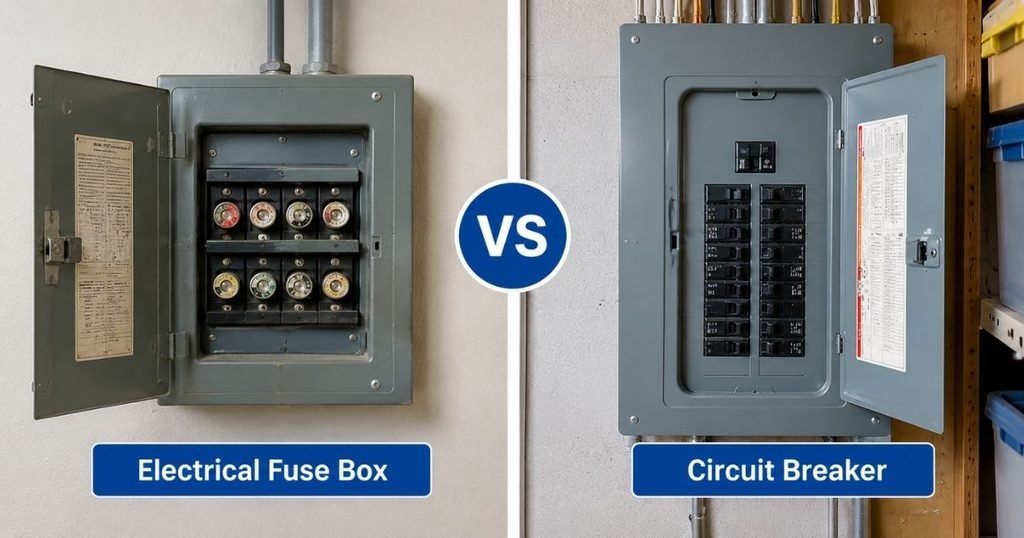
What Is an Electrical Fuse Box?
An electrical fuse box is a centralized overcurrent protection device commonly found in homes built before the mid-1960s. If you live in an older U.S. house, you might locate your fuse box in a basement, hallway, garage, or even a kitchen pantry. These systems were designed during an era when homes used a fraction of the electricity we consume today.
Inside a traditional fuse box, you will find a series of individual fuses that control specific branch circuits throughout the house. Each fuse contains a thin, specially calibrated metallic strip inside. When electricity flows normally through the circuit, the current passes safely through the strip. However, if too many appliances draw power simultaneously or a wire faults, the excessive current causes the internal strip to heat up and melt. This process known as “blowing a fuse” breaks the electrical connection instantly, cutting off power to that circuit before the wires can overheat and start a fire.
Common Fuse Types
- Plug Fuses: These feature a screw-in Edison base that resembles a miniature lightbulb, often topped with a mica window. Common types include standard Edison-base fuses and tamper-resistant Type S fuses, which prevent homeowners from screwing in a higher-amp fuse than the circuit can safely handle.
- Cartridge Fuses: Cylindrical fuses used for heavier residential loads, such as main service disconnects, central air conditioners, electric ranges, and subpanels.
Unlike a modern switch that can be flipped back on, a blown fuse is permanently spent and must be physically unscrewed and replaced with a new one matching the exact amperage rating of that specific circuit. Because older homes typically feature fewer circuits and lower service capacities (often 30 to 60 amps, compared to 100 or 200 amps today), old house fuse box problems frequently revolve around overloaded circuits, blown fuses during routine daily tasks, and a lack of available space for modern appliances.
READ MORE: Electrical Breaker Box Installation: Costs & Permits
What Is a Circuit Breaker Panel?
A circuit breaker panel frequently referred to as a breaker box is the modern standard for residential electrical distribution across the United States. Installed in virtually all homes built over the last several decades, a circuit breaker panel houses individual switches that control and protect every branch circuit in the building.
Unlike a fuse that destroys itself to stop an overcurrent, a circuit breaker uses an electromechanical mechanism designed to be reset. Inside a standard thermal-magnetic breaker, a bimetallic strip bends when exposed to sustained overcurrent (heat), while an electromagnet trips instantly when exposed to a sudden short circuit (magnetic force). When triggered, the internal switch flips into the “tripped” or middle position, disconnecting the circuit safely. Once you unplug the offending appliance or correct the underlying fault, you can simply reset the breaker by flipping it firmly to the “off” position and back to “on.”
Key Features of Breaker Panels
- Main Circuit Breaker: Typically located at the top or center of the panel, this large switch controls power to the entire house, allowing you to shut off electricity to all branch circuits at once.
- Single-Pole vs. Double-Pole Breakers: Single-pole breakers (120 volts) supply standard household outlets and lighting circuits, while double-pole breakers (240 volts) supply heavy-duty appliances like electric water heaters, dryers, and central air conditioning units.
- Modern Expandability: Modern breaker panels are engineered to accommodate specialized safety equipment, including Arc Fault Circuit Interrupters (AFCIs) and Ground Fault Circuit Interrupters (GFCIs), which protect against electrical fires and shock hazards.
While a circuit breaker panel offers superior convenience and safety features, it is not foolproof. Incorrect breaker sizing, loose terminal connections, or faulty manufacturing can still create significant hazards, emphasizing the need for proper installation and maintenance.
Electrical Fuse Box vs. Circuit Breaker: Key Differences
To understand how these two systems compare side by side, review the detailed comparison below:
| Comparison Factor | Fuse Box | Circuit Breaker Panel |
| How it works | A metallic fuse element melts to interrupt excessive current. | A mechanical spring-loaded mechanism trips to interrupt excessive current. |
| After operation | The blown fuse must be physically removed and replaced. | The breaker can generally be reset after the underlying cause is addressed. |
| Convenience | Requires keeping compatible replacement fuses on hand. | Usually easier to restore power with a simple flip of a switch. |
| Maintenance | Requires replacement fuses and periodic attention to system condition. | Requires appropriate inspection, testing, and maintenance. |
| Safety concerns | Incorrectly rated, oversized, or bypassed fuses can create serious hazards. | Incorrect breakers, damaged equipment, and faulty wiring can create serious hazards. |
| Electrical capacity | Depends on the existing service, panel, circuits, and wiring. | Depends on the service rating, panel, circuits, and wiring. |
| Modern protective devices | May have limited upgrade options depending on the equipment. | May support compatible AFCI, GFCI, or dual-function breakers. |
| Expansion | May be limited by existing equipment and available physical space. | May offer more expansion options, subject to calculated electrical load. |
| Initial upgrade cost | Depends on the required repairs or complete system replacement. | Depends on panel size, service work, permits, and installation complexity. |
| Typical application | Existing older installations and certain specialized industrial applications. | Common standard in modern residential construction. |
When looking at a fuse box vs breaker box, the operational differences are stark. Fuses act as single-use safety valves, whereas circuit breakers function as reusable switches. However, neither system can compensate for outdated, deteriorated, or improperly sized wiring hidden behind your walls.
READ MORE: Electric Fuse Box: A Complete Homeowner’s Guide
Which Is Safer: A Fuse Box or a Circuit Breaker Panel?
When asking the question, are fuse boxes safe?, the short answer is that a properly installed, correctly rated, and well-maintained fuse box can provide effective overcurrent protection. The fundamental physics of interrupting an electrical circuit remain sound whether accomplished via a melting metal strip or a mechanical trip lever.
However, safety questions regarding fuse box vs breaker box safety often focus on human behavior and aging infrastructure.
The Core Safety Risks
- Oversized Fuses: The greatest hazard associated with traditional fuse boxes stems from homeowner misuse. If a 15-amp fuse blows repeatedly because too many devices are plugged into a circuit, an untrained homeowner might be tempted to screw in a 30-amp fuse. This allows dangerous levels of current to flow through thin 14-gauge wires designed for only 15 amps, causing the wires inside the walls to overheat and potentially ignite surrounding framing without blowing the fuse.
- Bypassed Protection: Historically, some homeowners used pennies behind blown plug fuses to restore power, a dangerous practice that completely eliminates overcurrent protection.
- Aging Infrastructure: Fuse boxes are decades old. Over time, screw-in fuse sockets can loosen, corrosion can develop on contact points, and insulation on service conductors can become brittle.
- Lack of Modern Safety Devices: Traditional fuse boxes cannot accommodate AFCI (Arc-Fault Circuit Interrupter) protection, which detects dangerous electrical arcing that standard fuses and basic breakers may not catch.
Critical Safety Warning
WARNING: Never bypass a fuse, replace a fuse with an oversized amp rating, or repeatedly reset a breaker that keeps tripping. Doing so removes essential safety safeguards and creates an extreme risk of electrical fire or severe electric shock.
Warning Signs Requiring Prompt Professional Attention
If you notice any of the following warning signs, contact a licensed electrician immediately:
- Burning plastic or ozone smells near the electrical panel.
- Visible scorch marks, melted plastic components, or discoloration around fuses or breakers.
- Buzzing, crackling, humming, or popping sounds coming from inside or near the panel.
- Repeatedly blown fuses or circuit breakers that trip as soon as they are reset.
- Unexplained, frequent light flickering or appliances losing power.
- An electrical panel that feels noticeably warm or hot to the touch.
Note: If you see smoke, open flames, or experience an active electrical fire, evacuate the area immediately, call 911, and do not attempt to touch the electrical panel or remove covers.
READ MORE: Hot Tub Wiring Guide: Electrical Requirements & Installation
Advantages and Disadvantages of a Fuse Box
Advantages of a Fuse Box
- Reliable Basic Protection: When equipped with correctly rated fuses, a fuse box interrupts overcurrent reliably and quickly.
- Inexpensive Replacement Parts: Individual replacement fuses are generally very inexpensive at hardware stores.
- Adequate for Low Demand: In homes with minimal electrical loads and well-maintained wiring, existing equipment may continue to function safely.
- Specialized Uses: Fuses are still utilized in certain industrial settings and specific heavy-duty motor applications because of their extremely fast response to short circuits.
Disadvantages of a Fuse Box
- Inconvenience of Replacement: A blown fuse requires you to find a replacement in the dark, unscrew the old one, and install a new one.
- Risk of Human Error: The temptation to install incorrect or oversized fuses poses a major fire hazard.
- Limited Capacity: Most older fuse panels supply 30 to 60 amps of total service, which is woefully inadequate for modern households running refrigerators, HVAC systems, computers, and kitchen appliances.
- Compatibility Challenges: Finding parts for antique fuse boxes can sometimes be difficult, and integrating modern safety technologies is virtually impossible.
Advantages and Disadvantages of a Circuit Breaker Panel
Advantages of a Circuit Breaker Panel
- Easy Reset: Restoring power after addressing an overload is as simple as flipping a switch.
- Clear Circuit Identification: Breaker panels typically feature a legible directory indicating which breaker controls each room or appliance.
- Modern Safety Integration: Compatible panels support AFCI and GFCI breakers to protect against shocks and electrical fires.
- Greater Capacity & Expansion: Modern 100-amp, 150-amp, or 200-amp service panels offer plenty of capacity for growing households and heavy electrical loads.
Disadvantages of a Circuit Breaker Panel
- Higher Upfront Cost: Replacing an old service panel or upgrading a fuse box requires professional labor, permits, and often utility coordination.
- Potential for Ignorance of Problems: Because breakers reset easily, homeowners may ignore recurring trips rather than investigating the root cause (such as an overloaded circuit or failing appliance).
- Equipment Issues: Certain legacy breaker panels manufactured in past decades (such as specific Zinsco or Federal Pacific Electric panels) have known safety and performance defects that require complete replacement.
READ MORE: SEU Cable Guide: Sizes, Uses, Benefits & Buying Tips
How Much Does It Cost to Replace a Fuse Box With a Circuit Breaker Panel?
Understanding the fuse box replacement cost is essential when planning home improvements. The total investment varies widely depending on the scope of work required. Replacing a single screw-in fuse costs only a few dollars in parts. However, replacing a fuse box with a circuit breaker panel is a major electrical overhaul.
As of current 2026 residential construction and electrical contracting research, estimated costs break down as follows:
| Project Scope | Estimated Cost Range | Factors Affecting Price |
| Replace a blown fuse | $10 – $30 (DIY parts) / $100 – $250 (Service call) | Fuse type, amperage rating, local electrician labor rates |
| Repair an existing fuse box | $150 – $500 | Extent of diagnosis, replacement parts, panel condition |
| Replace fuse box with breaker panel | $2,500 – $4,500+ | Panel size (100A vs 200A), labor, permits, wiring adjustments |
| Upgrade electrical service capacity | $3,000 – $6,500+ | Utility company coordination, new meter socket, service drop, mast |
| Add a subpanel | $1,000 – $2,500 | Physical distance from main panel, feeder wire size, circuit needs |
Factors That Drive Up Costs
Replacing a complete electrical panel is rarely a simple “swap-out.” If your home still has outdated knob-and-tube wiring, cloth-insulated wiring, or an undersized 60-amp service drop, your electrician may need to perform extensive rewiring, upgrade grounding rods, or coordinate with your local utility provider to shut off and upgrade the outdoor service lines. These supplementary updates add to the overall circuit breaker panel upgrade cost but are crucial for ensuring safety and building code compliance.
When Should You Replace an Old Fuse Box?
Not every home with a fuse box needs an immediate emergency replacement, but several clear indicators signal that it is time to transition to a modern circuit breaker panel:
- Physical Damage or Corrosion: If the panel shows rust, water stains, scorched components, or physical damage, it must be evaluated and likely replaced.
- Frequent Blown Fuses: If fuses blow regularly during normal daily activities, your electrical demand exceeds what the existing system can safely handle.
- Home Renovations and Additions: Remodeling a kitchen, finishing a basement, or adding a master suite requires additional circuits that old fuse boxes cannot accommodate.
- High-Demand Appliances: Installing modern high-wattage equipment such as an electric vehicle (EV) charging station, heat pump HVAC system, tankless water heater, or induction range requires a 200-amp breaker service.
- Homeowners Insurance Requirements: Many insurance companies hesitate to issue policies or charge higher premiums for homes with active fuse boxes, particularly if they utilize older wiring methods.
- Real Estate Transactions: If you plan to sell your home, home inspectors and buyers will almost always flag an outdated fuse box as a point of negotiation or a required upgrade.
Keep in mind: Installing a larger breaker panel does not magically increase the amount of electricity your local utility delivers to your house. If your utility drop is rated for 60 amps, your panel upgrade must include a corresponding service upgrade coordinated with your power company.
READ MORE: Electrical Wiring Installation: Costs, Types & How to Plan
Can You Replace a Fuse Box With a Circuit Breaker Panel Yourself?
No. Whole-panel replacement and service upgrades are strictly prohibited as DIY projects.
Electrical work of this magnitude carries extreme, life-threatening risks. Even when the main utility power is shut off, the service entrance cables coming directly from the utility meter into the panel remain live (energized at 120/240 volts with thousands of available amperes), presenting severe risks of electrocution and catastrophic arc flash explosions.
Furthermore, electrical panels are subject to strict National Electrical Code (NEC) standards and local municipal building codes. Improperly sized wires, incorrect torque on terminal lugs, and faulty grounding or bonding can result in hidden electrical fires or code violations that fail home inspections. Always hire a licensed, insured electrical contractor who pulls the necessary permits and schedules local inspections for any panel replacement.
You can safely assist the process by documenting which rooms or appliances each circuit controls, noting any recurring electrical issues, and preparing clear questions for your electrician’s initial consultation.
How to Choose the Right Electrical Panel for Your Home
When planning an electrical upgrade, work with your electrician to evaluate your home using this practical checklist:
- Current Electrical Demand: Review your household’s daily power usage and future electronic needs.
- Existing Service Rating: Determine whether your current utility drop is 100-amp, 150-amp, or 200-amp.
- Circuit Count: Calculate how many branch circuits you currently have and how many spaces you will need for future expansions.
- Heavy Appliances & EV Charging: Factor in plans for an EV charger, heat pump, or hot tub.
- Protective Device Compatibility: Ensure the chosen panel supports required AFCI and GFCI breakers.
- Equipment Quality: Select reputable, code-compliant manufacturer equipment with solid warranties.
- Permits and Local Codes: Verify that all local municipal codes and utility company requirements are met.
- Professional Load Calculation: Rely on a professional NEC standard load calculation rather than guessing panel sizes based solely on physical breaker spaces.
Frequently Asked Questions
Is a fuse box safer than a circuit breaker?
Both systems provide effective overcurrent protection when correctly rated, installed, and maintained. However, circuit breaker panels reduce the human error risks associated with installing oversized replacement fuses, and they accommodate modern safety devices like arc-fault interrupters, making modern breaker panels preferable for contemporary homes.
Should I replace my old fuse box with a circuit breaker panel?
You should consider replacing your old fuse box if it shows signs of damage, if fuses blow frequently due to modern appliance loads, if you are planning home renovations or an EV charger installation, or if your insurance company requires it. Age alone does not dictate replacement, but safety and capacity limitations often do.
How much does it cost to replace a fuse box with a circuit breaker panel?
Replacing an entire fuse box with a modern circuit breaker panel typically ranges from $2,500 to $4,500+ for standard installations. If your project requires a complete electrical service upgrade, new weatherhead equipment, and utility coordination, the total cost can range between $3,000 and $6,500 or more.
Can a fuse box handle modern household appliances?
Most older fuse boxes were designed for 30 to 60 amps of total power and have a limited number of circuits. They struggle to power modern high-demand kitchen appliances, home offices, and HVAC systems safely without overloading, making them poorly suited for contemporary living without significant upgrades.
Can I replace a blown fuse with a higher-amp fuse?
No. Never replace a blown fuse with a higher-amp fuse. Doing so allows excessive electrical current to flow through wires that are too thin to handle it, causing hidden wires inside your walls to overheat and potentially start a house fire. Always match the replacement fuse’s exact amperage rating.
Final Verdict:
When examining the debate between an electrical fuse box vs circuit breaker system, the evolution of residential electrical engineering becomes clear. While a well-maintained fuse box can technically interrupt overcurrent, modern circuit breaker panels offer unmatched convenience, easy resetting, greater electrical capacity, and seamless integration with advanced safety devices like AFCIs and GFCIs.
If your home still relies on an aging fuse box, evaluating its condition, capacity, and safety is a worthwhile investment in your family’s peace of mind. For homes experiencing frequent blown fuses, visible wear, or growing power demands, scheduling a professional panel upgrade is a practical step toward a safer, more reliable home electrical system.
Sources and Further Reading
- U.S. Consumer Product Safety Commission (CPSC) – Electrical Safety Publications
- National Fire Protection Association (NFPA) – National Electrical Code (NEC) Guidelines
- International Association of Electrical Inspectors (IAEI) Standards
Electrical Safety Disclaimer
The information provided in this article is for educational and informational purposes only and does not constitute professional electrical engineering or contracting advice. Working with residential electrical systems involves inherent risks of severe shock, electrocution, and fire. Always consult a qualified, licensed electrician in your local jurisdiction before performing any inspection, repair, or modification to your home’s electrical panel.