There are few kitchen inconveniences quite as frustrating as stepping up to the sink, turning on the faucet, and watching your dirty dishwater pool instead of vanishing down the drain. A garbage disposal clogged issue can instantly halt meal prep, pile up dirty dishes in minutes, and fill your kitchen with an unpleasant, stagnant odor. Whether you are dealing with standing water that refuses to move or a disposal that hums silently when you flip the switch, a clogged unit disrupts the heartbeat of your home.
If you are a US homeowner, renter, or property manager facing this headache, take a deep breath. While a backed-up sink feels like a plumbing emergency, many disposal issues can be diagnosed and safely resolved with a little patience, the right tools, and proper safety practices. In this comprehensive guide, we will walk you through everything you need to know about a clogged garbage disposal from identifying the root causes and executing safe DIY fixes to understanding when it is time to call a licensed professional plumber. Lets deep dive into ‘Garbage Disposal Clogged? Causes, Safe Fixes & When to Call”
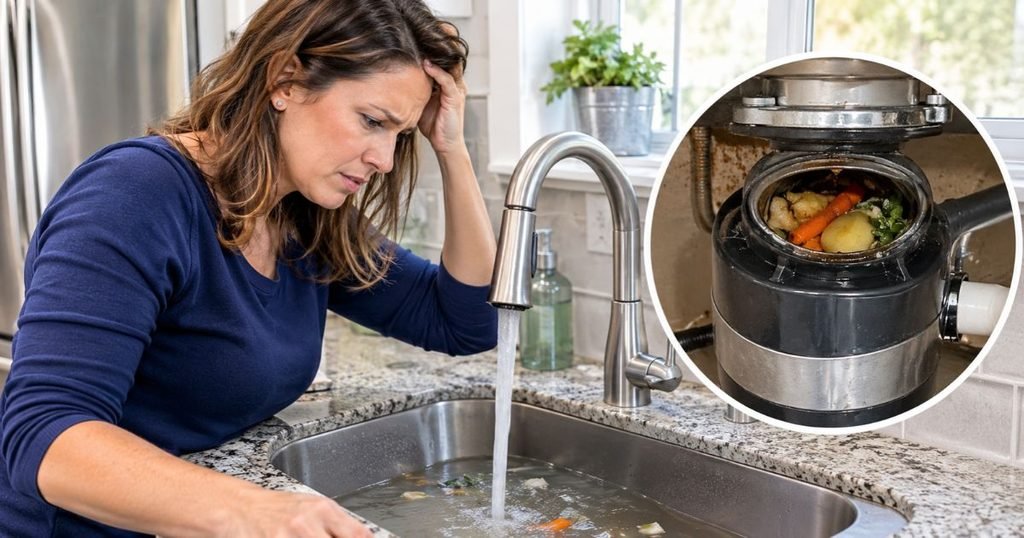
How to Know If Your Garbage Disposal Is Clogged
Before you grab a flashlight or a wrench, it helps to pinpoint exactly what is happening inside your sink. Not every kitchen drainage problem originates directly inside the garbage disposal unit; sometimes, the issue lies further down in the plumbing drain line or the P-trap.
Watch for these primary warning signs that indicate a clogged garbage disposal sink:
- Standing Water in the Sink Basin: Water sits in the sink and refuses to drain, even after you turn off the faucet.
- Water Backing Up into the Opposite Basin: In a double-sink kitchen, running water or turning on the disposal causes gray water to bubble up through the other side.
- Slow-Draining Water: The sink drains sluggishly, creating a lingering whirlpool that takes several minutes to clear.
- Unusual Grinding or Humming Sounds: When you flip the wall switch, you might hear a low hum instead of the crisp, high-speed whir of grinding metal.
- Food Particles Returning into the Sink: Ground-up food debris pushes back up into the sink bowl rather than washing down.
- Foul Odors Coming from the Drain: A persistent, sour, or rotting smell emanates from the disposal, signaling trapped, decomposing food waste buildup.
- Disposal Running Without Draining: The motor spins loudly and smoothly, but the water in the sink doesn’t budge an inch.
It is also important to recognize how a clog differs from a mechanical jam or an electrical malfunction. A garbage disposal jammed condition usually happens when a hard object (like a piece of bone, fruit pit, or silverware) wedges tightly between the impellers and the grinding ring, stopping the motor completely. An electrical issue or tripped garbage disposal reset button, on the other hand, means the motor receives no power at all. A true clog, however, is a physical blockage of food sludge, grease, or debris restricting water flow through the disposal outlet or the disposal drain pipe.
READ MORE: How Much Does It Cost to Replace a Garbage Disposal?
Common Reasons a Garbage Disposal Gets Clogged
Garbage disposals are modern marvels of kitchen convenience, but they are not industrial shredders. Treating them like trash cans is the number one reason homeowners experience a sudden garbage disposal backed up scenario.
Here are the most frequent culprits behind a clogged disposal:
1. Grease, Oil, and Fat Buildup
Pouring hot bacon grease, cooking oil, or melted butter down the drain is a primary recipe for disaster. While liquid grease flows down easily, it cools inside your pipes and solidifies. Over time, it traps food particles, narrowing the pipe diameter until you have a stubborn sink drain blockage.
2. Fibrous Vegetables
Celery, corn husks, onion skins, asparagus, and artichokes have tough, stringy fibers. Instead of breaking down into a fine slurry, these strings wrap tightly around the disposal impeller blades, stalling the motor and tangling into dense mats.
3. Potato Peels and Starchy Scraps
Starch is enemy number one for plumbing lines. Large quantities of potato peels, rice, pasta, and bread dough mix with water to form a thick, glue-like paste that coats the interior walls of your pipes and hardens like cement.
4. Coffee Grounds and Eggshells
While an old urban legend suggests coffee grounds sharpen blades, they actually accumulate in the P-trap and settle into a dense sludge. Eggshells have a thin membrane that can stick to pipe walls, trapping other debris and worsening a kitchen sink garbage disposal clogged problem.
5. Large Food Scraps and Overloading
Stuffing a massive plate of Thanksgiving leftovers down the drain all at once overwhelms the grinding chamber. The disposal cannot process the volume quickly enough, leading to an immediate disposal drain pipe jam.
6. Foreign Objects
Accidentally dropping silverware, bottle caps, small plastic toys, or dish sponges into the disposal creates instant mechanical blockages.
7. Improper Installation and Plumbing Slopes
Sometimes the issue isn’t what you put in, but how the plumbing was put together. An improperly pitched drain line or an incorrectly sized P-trap blockage prevents wastewater from draining efficiently, leading to recurring backups.
READ MORE: How to Fix Clogged Drains: DIY vs Professional Repair
How to Unclog a Garbage Disposal Safely (Step-by-Step)
When your kitchen sink garbage disposal clogged situation demands immediate attention, follow this safe, methodical step-by-step troubleshooting guide.
Crucial Safety Warning: Never put your hands, fingers, or any part of your body inside a garbage disposal. Even when disconnected from power, the sharp impellers and torque-heavy flywheel can cause severe injury.
Step 1: Turn Off Power at the Source
Before touching anything under the sink or inside the unit, turn off the wall switch. For absolute safety, unplug the disposal cord from the wall outlet under the sink. If your unit is hardwired, flip the corresponding circuit breaker in your home’s electrical panel.
Step 2: Check for Standing Water
If your sink is full of water, do not panic. Use a small cup, bowl, or sponge to bail out the standing water into a bucket. Getting rid of the water allows you to see what you are doing and prevents messy spills.
Step 3: Inspect the Disposal Opening
Take a flashlight and peer down the rubber splash guard into the grinding chamber. Look for stray silverware, chicken bones, bottle caps, or dense wads of food waste.
Step 4: Remove Obstructions With Tongs or Pliers
If you spot a foreign object or a clump of fibrous debris, use a pair of long-handled pliers or kitchen tongs to reach in and pull it out. Never use your fingers.
Step 5: Free a Jammed Flywheel With a Hex Wrench
If the disposal is jammed or humming quietly, look at the very bottom center of the disposal unit underneath your sink. Most major brands (like InSinkErator and Moen) feature a hexagonal socket. Insert a quarter-inch hex wrench (Allen wrench) into this socket and wiggle it back and forth. This manually rotates the flywheel and impellers, dislodging whatever is stuck. Once the wrench spins freely a full 360 degrees in both directions, your jam is clear.
Step 6: Press the Reset Button
Once the physical obstruction or jam is resolved, locate the red or black garbage disposal reset button on the bottom or side of the unit housing. Press it firmly until you hear or feel a click. If the button pops right back out, give the motor 10 to 15 minutes to cool down before trying again.
Step 7: Restore Power and Test
Plug the disposal back into the wall outlet or switch the circuit breaker back on.
Step 8: Run Cold Water and Test the Sink
Turn on your kitchen faucet with a steady stream of cold water. Flip the wall switch on. Listen for a smooth, even hum. If the disposal runs cleanly and the water swirls down the drain smoothly, you have successfully cleared the blockage.
READ MORE: Safe Enzyme Drain Cleaners — The Eco-Friendly Way to Keep Drains Clear
How to Unclog a Garbage Disposal With Standing Water
Dealing with standing water is one of the messiest parts of a clogged garbage disposal sink. When water fills the basin, it usually means the blockage is located past the grinding chamber either right at the disposal’s discharge outlet or further down in the P-trap.
Approaching Standing Water Safely
- Bail and Protect: Scoop out as much water as possible. Place an old towel and a bucket directly beneath the sink cabinet before touching any pipes.
- Inspect the Disposal Outlet: The metal elbow pipe (discharge tube) connecting the side of your disposal to the wall drain pipe is a frequent trap for food sludge.
- Check the P-Trap: Place your bucket under the curved U-shaped pipe (P-trap) beneath the sink. Loosen the slip nuts by hand or with channel-lock pliers. Carefully lower the P-trap to drain the trapped water into your bucket. Inspect the interior for greasy buildup or compacted food waste, clean it out thoroughly, and reinstall it securely.
- The Plunger Method (Use With Caution): If the P-trap is clear, your clog may be further down in the branch drain line. You can use a standard cup plunger over the sink drain. If you have a double sink, you must tightly seal the opposite sink drain basin with a wet rag or stopper while plunging. Vigorous plunging forces water pressure down to break up the sink drain blockage.
- When to Stop DIY: If plunging fails or if wastewater is backing up from other household fixtures (like a dishwasher or laundry line), stop immediately. This indicates a main drain line issue requiring professional intervention.
What to Do When a Garbage Disposal Hums but Won’t Drain
A disposal that hums when you flip the switch but refuses to spin or drain is telling you something very specific: the motor is receiving electrical power, but the flywheel is stuck.
Why It Hums
When an object jams the impellers, the motor cannot turn. Electricity continues to flow into the stator windings, causing them to hum and generate rapid heat. If left in this state for more than a few seconds, the motor will quickly overheat and trip its internal thermal overload protector.
Safe Troubleshooting Steps
- Turn off the switch immediately. Do not let the unit hum continuously.
- Let the motor cool for 5 to 10 minutes.
- Use the hex wrench method described earlier on the bottom of the motor housing to manually unfreeze the stuck flywheel.
- Once the flywheel turns freely, press the garbage disposal reset button.
- Test the unit with cold water.
If you clear the jam, press the reset button, and the unit still only hums without spinning, the internal motor windings may have burned out, or the internal bearings have seized. At this stage, attempting further electrical repairs is unsafe, and you should plan to replace the unit or contact a technician.
Garbage Disposal Clogged on Both Sides of the Kitchen Sink
If you have a double-basin kitchen sink and notice that both sides are draining slowly or backing up simultaneously, you are dealing with a garbage disposal clogged on both sides scenario.
This symptom provides a vital plumbing clue: the blockage is located downstream from where the two sink drains meet.
Common Causes:
- Sanitary Tee or Tailpiece Obstruction: The junction piece underneath the sinks where the disposal arm and the second sink drain merge into a single pipe is clogged with grease and food debris.
- P-Trap or Arm Blockage: The curve of the P-trap or the horizontal tailpiece leading into the wall is fully choked off.
- Main Kitchen Branch Drain Clog: The clog has moved past the immediate sink plumbing and entered the vertical or horizontal wall pipe that connects your kitchen sink to your home’s main drainage stack.
Because these blockages sit further down the line, simple troubleshooting at the disposal unit will not solve the problem. Clearing this type of clog usually requires dismantling the slip-joint trap assembly under the sink or using a professional plumbing snake (auger) to clear the wall drain.
READ MORE: How to Install Kitchen Sink Plumbing: Step by Step
DIY Methods to Unclog a Garbage Disposal: What Works and What Doesn’t
When homeowners search for how to unclog a garbage disposal, the internet is flooded with dozens of DIY hacks. Let’s separate effective, manufacturer-approved methods from risky remedies.
What Works:
- Cold Running Water: Running high-pressure cold water lubricates and firms up fats so the blades can chop them cleanly.
- Hex Wrench (Allen Wrench): The gold standard for freeing mechanical jams directly from the motor shaft.
- Sink Plunger: Effective for shifting minor clogs located right in the sink trap assembly.
- Manual Inspection: Removing visible debris with tongs after disconnecting all power.
What Doesn’t Work (or Can Cause Damage):
- Chemical Drain Cleaners (like Drano or Liquid Plumr): Most garbage disposal and plumbing manufacturers strictly advise against pouring harsh chemical drain openers into a disposal. Chemicals can splash back up during use, corrode the aluminum or stainless steel components inside the grinding chamber, damage rubber seals, and create severe chemical hazards if you later need to service the pipes manually.
- Boiling Water: Pouring boiling water directly into a plastic PVC P-trap or a disposal housing can warp plastic fittings, weaken PVC glue joints, and crack rubber gaskets. Stick to warm or cold water.
- Excessive Force: Jamming screwdrivers or broom handles down the top of the disposal without care can puncture the chamber walls or ruin the impellers.
| Method | What It Helps With | Safety Considerations | When to Use It |
| Hex Wrench | Mechanical jams, humming motor, stuck flywheel | Always disconnect power first; do not force excessively. | When the disposal hums or refuses to spin. |
| Sink Plunger | Minor P-trap or tailpiece drain blockages | Seal opposite sink basin tightly; wear eye protection against splashes. | When water is standing in the sink and the motor is clear. |
| P-Trap Cleaning | Sludge, food buildup, and localized pipe clogs | Place a bucket underneath; wear rubber gloves; expect dirty gray water. | When water drains slowly or the P-trap smells and feels heavy. |
| Manual Tongs/Pliers | Foreign objects trapped in the grinding chamber | Never use bare fingers. Confirm power is completely off. | When you see silverware, bottle caps, or fruit pits in the chamber. |
When Should You Call a Professional Plumber?
While DIY troubleshooting handles many minor disposal hiccups, certain situations require the expertise, specialized tools, and safety gear of a licensed professional plumber.
You should call a plumber if you encounter any of the following scenarios:
- Repeated Clogs: If your disposal clogs every few days despite careful usage, you likely have an underlying drainage slope issue, venting problem, or a calcified main line.
- Water Backing Up into Both Basins: This points to a deep branch drain or main stack clog that standard sink plungers cannot reach.
- Persistent Leaks: If water is leaking from the sink flange (where the disposal mounts to the sink bottom) or from cracked housing casing, gaskets must be replaced or the entire unit re-mounted.
- Electrical Problems and Burning Smells: If flipping the switch trips your circuit breaker repeatedly, or if you smell burning electrical insulation, stop immediately. Wiring and motor failures pose fire and shock hazards.
- Disposal Motor Failure: If the motor is completely dead, won’t hum, won’t reset, and is past its warranty period, a professional can install a new, high-efficiency disposal unit safely.
- Sewage Odors or Multiple Affected Drains: If clogs appear in your kitchen sink and your dishwasher or nearby bathroom, you are facing a whole-house or main sewer line backup.
READ MORE: How to Plumb a Dishwasher Drain
How Much Does It Cost to Fix a Garbage Disposal in the USA?
When DIY troubleshooting falls short, hiring a professional is the next logical step. Understanding typical US plumbing costs helps you budget appropriately for repairs or replacements.
Note: Pricing varies based on geographic location, local labor rates, sink accessibility, and the complexity of the plumbing layout.
| Service Type | Typical US Cost Range | What It Involves |
| Basic Clog Removal / P-Trap Cleaning | $125 – $250 | Clearing minor blockages in the tailpiece, P-trap, or disposal outlet. |
| Drain Line Clearing (Snaking) | $175 – $350 | Running a mechanical plumbing auger through the branch drain line behind the wall. |
| Garbage Disposal Repair | $150 – $300 | Fixing electrical connections, resetting internal components, or addressing minor leaks. |
| Garbage Disposal Replacement (Labor & Unit) | $250 – $600+ | Supplying and installing a brand-new residential garbage disposal unit (e.g., 1/2 HP to 3/4 HP model). |
Cost Breakdown Considerations
- Service-Call Fees: Most local plumbers charge a dispatch or diagnostic fee ranging from $75 to $150, which is sometimes rolled into the final repair total.
- Parts and Unit Power: A basic 1/3 horsepower disposal costs less than a heavy-duty, sound-insulated 3/4 or 1 horsepower continuous-feed model or a high-end batch-feed disposal.
- Accessibility: If your under-sink cabinet is cramped, cluttered, or features customized cabinetry, labor time increases slightly.
How to Prevent Your Garbage Disposal From Clogging Again
The best way to handle a garbage disposal clogged emergency is to prevent it from happening in the first place. Adopting healthy kitchen habits protects your plumbing system and extends the lifespan of your appliance.
Essential Prevention Tips:
- Always Use Cold Water: Run a steady stream of cold water for 15 to 30 seconds before, during, and after running your disposal. Cold water keeps fats solidified so the blades slice them rather than letting them liquefy and coat pipe walls.
- Feed Scraps Gradually: Don’t dump an entire dinner plate into the unit at once. Feed food waste in small, manageable amounts.
- Ban Grease and Oil: Never pour cooking oil, bacon fat, or grease down any drain. Wipe greasy pans with a paper towel before washing them.
- Avoid Fibrous and Starchy Foods: Keep celery, onion skins, corn husks, potato peels, rice, and pasta out of the disposal. Toss them into your trash or compost bin.
- Use a Sink Strainer: Place a mesh drain strainer over your secondary sink basin to catch small food bits, coffee grounds, and debris before they enter the plumbing.
- Clean Regularly: Periodically freshen your disposal by grinding ice cubes (which help sharpen and clean debris off the impellers) along with lemon or orange wedges to eliminate lingering odors.
- Follow Manufacturer Instructions: Read your specific unit’s user manual from brands like InSinkErator or Moen to understand its exact horsepower limitations and recommended care guidelines.
Garbage Disposal Clogged vs. Broken: How to Tell the Difference
Is your disposal truly clogged, or is the unit itself broken? Use this quick comparison guide to evaluate your symptoms and determine your next steps.
| Problem Type | Primary Symptoms | Immediate Cause | Recommended Next Steps |
| Drain Blockage | Water stands in sink; disposal runs fine but water won’t exit. | Grease, food sludge, or P-trap obstruction. | Check P-trap, plunge sink, or clear branch drain. |
| Mechanical Jam | Disposal hums, trips reset button, or blades won’t spin at all. | Foreign object or hard food wedged in impellers. | Disconnect power, use hex wrench on bottom shaft, remove object. |
| Electrical Malfunction | Complete silence; no sound, no hum when switch is flipped. | Tripped circuit breaker, loose wiring, or dead wall switch. | Check wall switch, reset circuit breaker, test outlet. |
| Failed Motor | Burning smell, repeatedly trips reset button, completely dead motor. | Burned-out stator windings or worn-out internal bearings. | Replace the garbage disposal unit entirely with a professional plumber. |
Frequently Asked Questions
How do you unclog a garbage disposal that is full of water?
Start by turning off the power at the wall switch or unplugging the unit. Use a cup or sponge to bail out the standing water into a bucket. Look inside the chamber with a flashlight for foreign objects, and use tongs to remove them. If the chamber is clear, check and clean the P-trap underneath the sink or use a sink plunger (making sure to seal the opposite basin) to clear the drain line.
Why is my garbage disposal humming but not draining?
A humming sound means electricity is reaching the motor, but a physical jam is preventing the flywheel and impellers from spinning. Turn off the switch immediately to prevent motor burnout. Use a hex (Allen) wrench on the socket at the bottom center of the unit to manually rotate and free the jammed flywheel, then press the reset button.
Can I use Drano in a clogged garbage disposal?
No, it is strongly recommended that you avoid using chemical drain cleaners like Drano or Liquid Plumr in a garbage disposal. Chemicals can corrode metal internal components, ruin rubber seals, create dangerous splash-back hazards, and complicate manual plumbing work if you need to take apart the P-trap later.
Why is my garbage disposal clogged on both sides of the sink?
When both basins of a double-sink kitchen back up, the blockage is located downstream from where the two drain arms converge into a single pipe—typically in the sanitary tee, the P-trap, or the main branch drain line inside the wall. Clearing this requires dismantling the slip-joint pipes under the sink or using a plumbing snake.
How much does a plumber charge to unclog a garbage disposal?
Professional plumber fees typically range from $125 to $350 depending on whether the job requires simple P-trap cleaning, manual clog removal, or snaking the branch drain line. If the disposal unit itself is burned out and needs replacement, total costs usually run between $250 and $600 including labor and parts.
Final Thoughts:
Dealing with a garbage disposal clogged issue can feel overwhelming when your kitchen sink is overflowing with gray water. However, by staying calm and following a structured approach turning off power, inspecting safely, using a hex wrench for mechanical jams, and checking your P-trap you can often resolve minor clogs safely on your own.
Remember to prioritize your safety above all else: never put your hands inside the unit, avoid harsh chemical drain cleaners, and respect your limits. When faced with persistent backups, electrical burning smells, or deep main-line blockages, do not hesitate to reach out to a licensed professional plumber. A qualified local expert can diagnose the root cause quickly, protect your home’s plumbing infrastructure, and restore full functionality to your kitchen so you can get back to cooking with peace of mind.


Pingback: Dishwasher Not Draining? Causes, Fixes & When to Call Pro - Plumbing Guider