Enter the hot water high pressure cleaner, a powerful cleaning machine that changes the game entirely. By combining high-pressure water streams with elevated temperatures, a hot water pressure washer melts away grease, oil, and grime in a fraction of the time required by cold-water alternatives. While traditionally associated with commercial fleets, heavy industrial workshops, and commercial contract cleaners, advanced compact models and versatile units have become increasingly accessible for dedicated American homeowners, hobbyists, small acreage owners, and automotive enthusiasts.
Whether you are restoring an oil-stained suburban driveway, cleaning farm machinery, prepping a large deck for staining, or maintaining a multi-car garage, understanding how a hot water power washer operates can save you time, physical strain, and money. This comprehensive guide explores everything you need to know about selecting, purchasing, renting, operating, and maintaining a hot water high pressure cleaner for residential and property-maintenance applications. Lets deep dive into “Ultimate Guide to Hot Water High Pressure Cleaners”
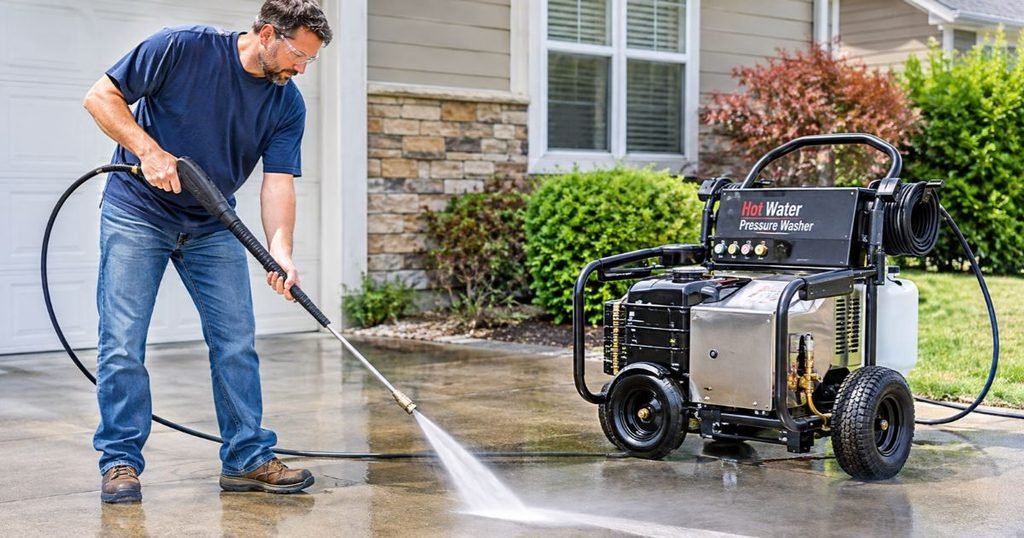
What Is a Hot Water High Pressure Cleaner?
A hot water high pressure cleaner is a heavy-duty cleaning appliance that draws in cold water, passes it through a high-pressure pump, and then routes it through a specialized heating coil system fueled by diesel, kerosene, propane, or electricity. This heating process raises the water temperature anywhere from 140°F to over 200°F (and sometimes into wet steam territory near 250°F), before expelling it through a high-pressure spray nozzle at pressures typically ranging from 2,000 to over 4,000 PSI (Pounds per Square Inch).
How It Combines Heat and Pressure
While a standard pressure washer relies purely on mechanical force blasting water at high velocity to physically chip away dirt, a hot water model adds thermal energy to the equation. Think about how you wash greasy dinner plates in your kitchen sink: you would never use ice-cold water without dish soap because cold water causes grease to solidify and cling stubbornly to the ceramic.
Hot water, on the other hand, melts fats, oils, and greases, breaking their molecular bond to the surface. When combined with the high-velocity kinetic energy of a pressure washer, the heated water lifts contaminants effortlessly, sanitizes surfaces, and evaporates moisture faster after cleaning.
Residential vs. Commercial and Industrial Applications
- Residential & Acreage Use: Homeowners with large properties, heavy machinery, diesel trucks, or severe oil stains on concrete utilize mid-range residential hot water pressure washers or portable units. These machines offer manageable flow rates and temperatures optimized for residential driveways, workshops, and multi-use property upkeep.
- Commercial Use: Designed for everyday contractor use, fleet washing, and restaurant grease trap cleaning. A commercial hot water pressure washer features rugged triplex pumps, larger fuel tanks, and continuous-run capability.
- Industrial Use: Heavy-duty machines built for manufacturing plants, oilfields, and heavy construction equipment maintenance, engineered to run 8 to 10 hours a day under extreme conditions.
READ MORE: Safe Enzyme Drain Cleaners — The Eco-Friendly Way to Keep Drains Clear
How Does a Hot Water Pressure Washer Work?
Understanding the inner workings of a hot water pressure washer helps demystify how these machines generate such intense thermal and mechanical power. While cold-water units simply pressurize incoming water from an outdoor spigot and shoot it out, hot water units incorporate an integrated fuel-fired or electric heating system.
Step-by-Step Cleaning Process
- Water Supply & Inlet Connection: A standard garden hose connects the home’s water spigot to the pressure washer’s water inlet. A built-in water filter or strainer catches sediment, rust, and debris before water enters the pump.
- High-Pressure Pump: Driven by a gas engine or an electric motor, the positive-displacement pump (typically an axial cam or heavy-duty triplex plunger pump) pressurizes the incoming water to thousands of PSI.
- Heating Coil & Heat Exchanger: Once pressurized, the water is diverted through a heavy-gauge steel pipe wound into a tight spiral, known as the heating coil.
- Burner & Fuel Ignition System: Surrounding the heating coil is a combustion chamber. A fuel pump delivers diesel, kerosene, or heating oil (or LP gas in propane models) to a burner nozzle, where an electronic igniter or spark plug lights the fuel. The resulting flame blasts upward through the center of the coil, rapidly heating the water flowing inside the steel tubing to operational temperatures.
- Temperature Control & Thermostat: The operator sets the desired temperature via an adjustable thermostat. A flow switch or pressure switch ensures the burner only ignites when the trigger is squeezed and water is actively flowing, preventing dangerous overheating and steam explosions.
- Pressure Hose, Spray Gun, and Nozzle: The superheated, pressurized water travels through a wire-braided, high-temperature-rated pressure hose to an insulated spray gun. At the tip, an interchangeable spray nozzle shapes the water into a precise fan pattern or concentrated stream.
What Can You Clean With a Hot Water High Pressure Cleaner?
While cold water handles basic mud and loose dirt, a hot water pressure washer for grease and stubborn contaminants opens up an entirely new category of cleaning tasks around American homes and properties.
Practical Cleaning Applications
- Concrete Driveways with Oil Stains: Vehicles leak engine oil, transmission fluid, and power steering fluid onto suburban concrete over time. Cold water barely touches aged petroleum stains. Hot water melts the oil viscosity, allowing soap and pressure to lift it completely out of porous concrete pores.
- Garage Floors and Home Workshops: Spilled grease, rubber tire marks, hydraulic fluid, and sawdust mixed with grime transform garage floors into slippery, stained messes. Hot water cleaning cuts through the film effortlessly.
- Outdoor Patios and Stone Walkways: Flagstone, brick pavers, and concrete patios accumulate stubborn organic growth, mildew, soot from outdoor fireplaces, and grease splatters from nearby grilling stations.
- Greasy Outdoor Equipment & Lawn Machinery: Lawn mowers, riding tractors, tillers, and snowblowers accumulate thick layers of grass clippings, mud, and gear oil. Hot water sanitizes and degreases these mechanical parts without requiring aggressive scraping.
- BBQ Grills and Outdoor Kitchens: Stainless steel smoker racks, grease trays, and stone grill surrounds caked in carbonized fats clean up remarkably fast when exposed to heated water streams.
- Heavy-Duty Outdoor Furniture: Teak, metal, and heavy synthetic resin furniture exposed to seasonal grime and airborne pollutants benefit from warm water washing.
- Vehicles, Trailers, and RVs: When used with lower pressure settings and wide-angle nozzles, warm water washes road grime, bug splatters, and road salt off trucks and trailers much faster than cold water. (Note: Extreme water heat should be avoided on painted vehicle bodies to prevent clear-coat stress).
READ MORE: High Pressure Hydro Jetting for Kitchen Drains: Costs, Benefits & When to Use It
Hot Water vs. Cold Water Pressure Washer: What’s the Difference?
Choosing between cold and heated cleaning equipment depends entirely on the types of messes you encounter. The comparison table below highlights the critical differences.
| Comparison Factor | Hot Water Pressure Washer | Cold Water Pressure Washer |
| Water temperature | Heated water (140°F to 200°F+) | Unheated ambient tap water |
| Grease removal | Particularly effective; melts fats and oils instantly | Often requires more effort, hot water additives, or heavy chemical degreasers |
| Oil stain cleaning | Superior deep-cleaning capability on porous surfaces | Less effective on stubborn, aged oil or fuel stains |
| General dirt removal | Highly effective; cuts cleaning time significantly | Effective for mud, dust, and loose organic debris |
| Initial purchase cost | Generally higher due to complex heating infrastructure | Generally lower and more budget-friendly |
| Maintenance | More complex (requires burner, fuel filter, coil descaling) | Generally simpler (pump and engine/motor upkeep only) |
| Fuel or energy use | Requires diesel, kerosene, propane, or extra electricity | No onboard water heating energy required |
| Typical applications | Heavy-duty grease, oil remediation, sanitization, heavy grime | Everyday car washing, siding rinsing, patio furniture, loose dirt |
Types of Hot Water High Pressure Cleaners
Hot water pressure washers are categorized by their power source and heating method. Understanding these categories ensures you select equipment matching your operational setup.
1. Gas-Powered Hot Water Pressure Washer
A gas-powered hot water pressure washer pairs a gasoline engine (such as a Honda or Kohler powerplant) with a high-pressure pump, while using a diesel- or kerosene-fired burner to heat the water.
- Advantages: Completely portable; requires no electrical outlets, making it ideal for remote areas, large rural properties, and detached outbuildings.
- Disadvantages: Louder operation, requires gasoline engine maintenance, and heavier overall weight.
2. Electric Hot Water Pressure Washer
An electric hot water pressure washer runs on electricity for both the motor and, in some configurations, the heating system (though many electric models still utilize diesel or oil-fired burners for efficiency).
- Advantages: Quieter operation, zero direct exhaust emissions, making them suitable for semi-enclosed spaces with adequate ventilation.
- Limitations: Requires heavy-duty 230V electrical hookups or commercial power sources; limited mobility unless paired with a generator.
3. Diesel or Kerosene-Heated Pressure Washer
Most portable and skid-mounted hot water units use diesel or kerosene burners because liquid fuels generate intense, rapid heat far more efficiently than electric elements. These burners require regular fuel filter changes, nozzle cleaning, and occasional descaling of the heating coil.
4. Commercial and Industrial Hot Water Washers
Heavy-duty units constructed with robust steel frames, belt-drive triplex pumps, and massive fuel capacities. While overkill for occasional weekend homeowners, contractors and small business owners managing fleet trucks or heavy property maintenance rely heavily on these rugged machines.
READ MORE: How to Flush a Tankless Water Heater (Step-by-Step Guide)
Understanding PSI, GPM, and Water Temperature
When shopping for hot water pressure washing equipment, looking only at PSI is a common mistake. Cleaning power is a product of three distinct specifications working in unison.
What Is PSI?
PSI stands for Pounds per Square Inch. It measures the raw force and impact pressure with which water hits a surface. High PSI allows a machine to break the bond of tough, dried-on materials. However, too much PSI can gouge wood, strip paint, or pit concrete.
What Is GPM?
GPM stands for Gallons per Minute. It measures water volume and flow rate. While PSI breaks dirt loose, GPM flushes that loosened dirt away. A machine with high PSI and low GPM (like many cheap consumer washers) cleans very slowly because it lacks the water volume required to rinse surfaces effectively.
Why Does Water Temperature Matter?
Temperature adds the chemical advantage of thermal dynamics. Water heated to 180°F reduces the surface tension of water, increases detergent efficacy, and melts viscous hydrocarbons instantly. A machine balancing adequate PSI, high GPM, and controlled temperature cleans up to 50% faster than a cold-water machine with identical pressure ratings.
How Much Does a Hot Water High Pressure Cleaner Cost?
Because of their intricate heating coils, burners, fuel pumps, and safety controls, hot water units represent a larger investment than cold-water equivalents.
USA Market Price Overview (2026 Estimates)
- Entry-Level & Compact Residential/Light Commercial Units: Ranging from $1,400 to $2,500, these units typically feature 2,500 to 3,000 PSI, 2.5 to 3 GPM, and a compact diesel-fired burner. They suit acreage owners and serious DIYers.
- Mid-Range Commercial Hot Water Washers: Ranging from $3,000 to $6,000, offering 3,500 to 4,000 PSI, 3.5 to 4.5 GPM, Honda or Kohler engines, and heavy-duty triplex pumps.
- Heavy-Duty & Industrial Models: Ranging from $6,500 to $12,000+, built for continuous daily contracting work, trailer-mounted setups, or stationary wash bays.
- Rental Costs: Renting a commercial hot water pressure washer from a local equipment rental yard typically costs $100 to $250 per day, or $400 to $750 per week.
Factors Influencing Cost
- PSI and GPM Ratings: Higher flow and pressure require larger engines and beefier pumps.
- Heating Capacity & Fuel Source: Dual-fuel efficiency and stainless steel coil wrappings increase upfront costs.
- Pump Grade: Axial pumps cost less but wear out faster; commercial-grade ceramic-plunger triplex pumps last thousands of hours and cost significantly more.
Should You Buy or Rent a Hot Water Pressure Washer?
Deciding whether to purchase a unit or seek a hot water pressure washer rental comes down to frequency of use and project scope.
- When to Rent: If you have a one-time major property cleanup such as stripping a massive oil spill off a commercial driveway before selling a home, or deep-cleaning a large workshop floor once a year renting is financially smart. You avoid storage hassles, winterization chores, and long-term maintenance.
- When to Buy: If you manage a farm, run an automotive hobby shop, clean heavy equipment monthly, or maintain commercial rental properties, owning your own residential hot water pressure washer pays for itself over a few seasons compared to repeated daily rental fees.
READ MORE: Best High Efficiency Gas Furnace: Review, Cost & Comparison
How to Choose the Best Hot Water High Pressure Cleaner
Selecting the best hot water pressure washer requires evaluating your specific property needs rather than buying based on flashy marketing claims.
Comprehensive Buying Checklist
- Assess Your Cleaning Tasks: Make a list of what you plan to wash. Driveway oil? Farm tractors? Stucco siding?
- Verify PSI and GPM: Aim for a balanced ratio (e.g., 3,000 PSI at 3 to 4 GPM for versatile property maintenance).
- Check Maximum Operating Temperature: Ensure the machine reaches at least 150°F–180°F for effective grease cutting.
- Evaluate Fuel Type: Choose between gas-engine/diesel-burner units for outdoor portability or electric units for stationary shop use.
- Inspect Pump Quality: Look for brass-manifold triplex pumps with ceramic plungers for maximum longevity.
- Hose Length & Durability: Ensure the included hose is wire-braided and rated for high temperatures (at least 250°F max rating).
- Nozzle Compatibility: Check that the package includes quick-connect nozzles (0°, 15°, 25°, 40°, and a soap nozzle).
- Detergent Injection: Look for downstream chemical injectors that pull soap after the pump to protect internal seals from harsh chemicals.
- Safety Features: Ensure it includes thermal relief valves, flow switches, and pressure relief safeguards.
- Warranty & Parts Availability: Stick to reputable brands with accessible USA-based customer support and replacement parts.
Best Features to Look for in a Hot Water Pressure Washer
When reviewing model specifications, keep an eye out for these premium engineering features:
- Adjustable Thermostat: Allows you to dial back water temperature when washing sensitive surfaces.
- Flow-Actuated Burner Switch: Automatically shuts off the burner when you release the spray gun trigger, saving fuel.
- Thermal Relief Valve: Protects the water pump from overheating when the trigger is left closed for too long.
- Heavy-Gauge Steel Heating Coil: Wrapped tightly to maximize heat transfer efficiency without creating excessive backpressure.
How to Use a Hot Water High Pressure Cleaner Safely
Operating high-pressure, high-temperature machinery requires strict adherence to safety guidelines to prevent severe injuries.
Essential Safety Rules
- Read the Manual: Always review manufacturer operating instructions before startup.
- Wear Personal Protective Equipment (PPE): Always wear ANSI-approved safety glasses, heavy-duty work gloves, ear protection, and closed-toe non-slip footwear (preferably rubber boots).
- Beware of High-Pressure Injection: Never point the spray gun at yourself, other people, or pets. High-pressure streams can pierce human skin instantly, injecting water or bacteria deep into tissue. Seek immediate emergency medical attention for any suspected high-pressure injection injury, even if the surface wound looks minor.
- Manage Thermal Burns: Keep exposed skin away from the hot water spray and exhaust flues, which reach extreme temperatures.
- Maintain Safe Distances: Keep the nozzle 12 to 24 inches away from surfaces, adjusting angle and distance to prevent substrate damage.
- Ventilation is Mandatory: Never operate gas- or diesel-powered pressure washers inside closed garages, sheds, or unventilated spaces. Combustion engines emit deadly carbon monoxide (CO) gas.
- Electrical Precautions: Keep electrical connections elevated and away from puddles when operating electric models outdoors.
READ MORE: Main Sewage Line Clogged: Signs, Causes & Solutions
Common Mistakes to Avoid
- Running the Machine Without Water: Starving the pump of water for even a few seconds generates friction heat that destroys internal packings.
- Using Excessive Pressure: Blasting old wood siding or soft brick at 4,000 PSI causes permanent surface scarring.
- Ignoring Temperature Limits: Forcing boiling water through hoses or attachments not rated for high heat leads to catastrophic blowouts.
- Neglecting Winterization: Leaving water trapped inside pumps and heating coils during freezing winter weather causes metal housings and coils to crack.
Hot Water Pressure Washer Maintenance Tips
Routine maintenance extends the life of your equipment significantly:
- Check Pump Oil: Inspect pump oil levels regularly and change oil according to manufacturer guidelines (typically after the first 50 hours, then annually).
- Descale Heating Coils: Mineral scale from hard water builds up inside heating coils over time. Run a descaling solution through the coil periodically to maintain heating efficiency.
- Clean Fuel Filters: Replace diesel or kerosene fuel filters annually to prevent burner clogs.
- Flush Detergent Lines: Always flush clear water through chemical injectors after using soap to prevent residue buildup.
- Proper Winter Storage: Drain all water completely, blow out residual moisture with compressed air, and pump RV antifreeze through the system if storing in freezing climates.
Is a Hot Water High Pressure Cleaner Worth It for Homeowners?
For standard suburban homeowners who wash their car once a month and rinse dust off patio furniture, a hot water cleaner is generally unnecessary; a standard cold-water electric pressure washer suffices.
However, if you own acreage, maintain heavy equipment, run a home-based auto repair side hustle, or battle recurring grease and oil stains on expansive concrete areas, investing in a residential hot water pressure washer or budgeting for periodic hot water pressure washer rentals transforms daunting weekend chores into quick, satisfying projects.
When to Call a Professional
If oil stains have penetrated deeply into structural concrete foundations, if mold and mildew cover a multi-story roof, or if you feel uncomfortable handling high-pressure gas equipment, hiring a professional mobile pressure-washing contractor is the safest and most efficient path forward.
FAQs
What is a hot water high pressure cleaner used for?
It is primarily used for heavy-duty cleaning tasks that require thermal energy to break down grease, oil, stubborn grime, and biological contaminants. Common uses include cleaning oil-stained concrete driveways, degreasing automotive and farm equipment, stripping heavy mud, and deep-cleaning large commercial or residential outdoor surfaces.
Is a hot water pressure washer better than a cold water pressure washer?
Yes, for grease and oil. While cold water relies purely on physical pressure and chemical detergents, hot water melts viscous fats and petroleum hydrocarbons instantly, reducing cleaning time by up to 50% and sanitizing surfaces more effectively. However, for everyday light rinsing, cold water models are lighter, cheaper, and easier to maintain.
How much does a hot water pressure washer cost in the USA?
Entry-level and residential-grade hot water pressure washers typically range from $1,400 to $2,500. Mid-range commercial units range from $3,000 to $6,000, while industrial-grade machines exceed $6,500 to $12,000+. Daily equipment rentals typically cost between $100 and $250.
Can a hot water pressure washer remove oil and grease from concrete?
Absolutely. Hot water is uniquely effective on oil and grease because thermal heat lowers the viscosity of petroleum products, allowing specialized degreasers and high-pressure water to lift stubborn stains out of porous concrete pores far better than cold water.
Is a hot water pressure washer worth buying for home use?
For average homeowners with light cleaning needs, it is usually not worth the higher upfront cost. However, for rural homeowners, small-acreage property managers, car enthusiasts, and people dealing with heavy equipment or severe oil stains, the time saved and superior cleaning power make it a worthwhile investment.
Conclusion
A hot water high pressure cleaner is the ultimate tool for conquering stubborn grease, oil, and heavy grime that ordinary cold-water equipment cannot touch. By understanding how these machines operate, evaluating your specific property requirements, and practicing rigorous safety and maintenance habits, you can harness professional-grade cleaning performance right at home. Choose the right balance of PSI, GPM, and heating capacity, and enjoy a cleaner, safer, and better-maintained property for years to come.
Sources and References
- Mi-T-M Corporation Technical Resources and Pressure Washer Guides
- Hotsy Commercial Equipment Operator Manuals and Specifications
- Kranzle USA Pressure Washing Equipment Documentation
- Occupational Safety and Health Administration (OSHA) High-Pressure Safety Guidelines
- Environmental Protection Agency (EPA) Wastewater and Outdoor Cleaning Best Management Practices

