Imagine never running out of hot water during your morning shower, while saving on energy bills at the same time. That’s the promise of a Noritz tankless water heater. As a seasoned home-improvement specialist, I’ve seen homeowners switch to Noritz units and experience endless hot water and impressive efficiency.
Tankless systems heat water on demand no large tank to keep warm so you only use gas or electricity when you need hot water. In fact, the U.S. Department of Energy reports that on-demand water heaters can be up to 34% more efficient than traditional tanks.
Noritz, a 60-year-old brand dedicated exclusively to tankless heaters, emphasizes compact design, eco-friendly operation, and long life. In this guide, we’ll explore what makes Noritz stand out, how these heaters work, key features to look for, and practical tips from the field. By the end, you’ll know if a Noritz is right for your home. Lets deep dive into “Noritz Tankless Water Heater Buying Guide: Sizing, Reviews & Prices”
READ MORE: Stiebel Eltron Water Heater Review 2026: Is It Worth the Cost?
What Is a Noritz Tankless Water Heater?
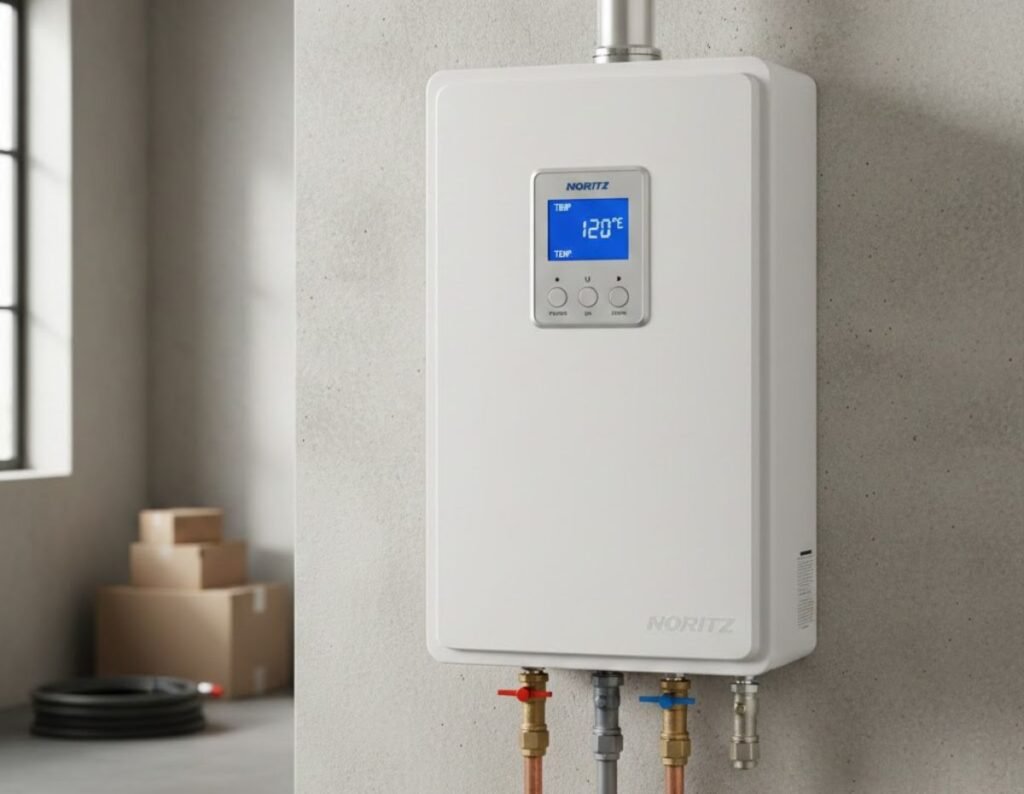
A Noritz tankless water heater is an on-demand water heating system made by Noritz America. Instead of storing hot water in a big tank, it heats cold water instantly as you open the tap. Cold water enters the unit and flows through a stainless-steel heat exchanger, where powerful gas burners heat it up before it reaches your faucet or shower. When you turn off the tap, the Noritz unit shuts off the burner, so you’re not wasting energy keeping a tank hot all day.
Why It Matters in the USA
In the U.S., homeowners spend billions on water heating every year. Rising energy prices and environmental concerns are driving many to switch to tankless water heaters, and Noritz is a top player in that market. With tight spaces, many prefer wall-mounted units that free up floor room.
Noritz heaters are built in America (established 2001 in California) by a company with Japanese roots dating back to 1951, bringing decades of expertise in efficient water heating. According to the Department of Energy, the average family can save up to 34% on water heating costs by going tankless. Noritz models meet strict U.S. efficiency standards (some condensing models hit 0.97–0.98 UEF, or 97–98% efficiency and qualify for rebates and tax credits in many states.
Common Use Cases
- Whole-House Heating: Large families or multi-bath homes. Noritz’s high-flow models (e.g. EZ98/EZ111) can deliver 9.8–11.1 gallons per minute (GPM). That means running two showers and a dishwasher simultaneously without a cold surprise.
- Hot Water Boost: Adding hot water capacity to older homes. The Noritz EZ series is designed for easy retrofit (with top-mounted connections and compact size when replacing a failed tank heater.
- Small to Medium Homes: Single-unit installations even work great in 1–3 bath homes, freeing up floor space and providing endless hot water on demand.
- Point-of-Use: In some cases, Noritz tankless heaters serve a single appliance or sink for instant hot water, reducing waste.
- Commercial/Multiple Units: Noritz also supplies commercial-grade heaters and rack systems. But for this guide, we’ll focus on residential use.

- Endless hot water
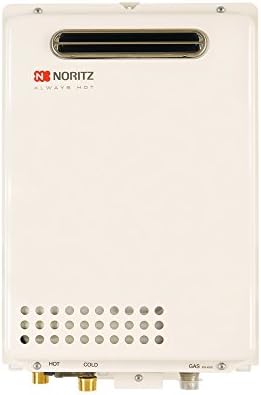
- Ideal for outdoor applications
- High Efficiency
READ MORE: AO Smith vs. Rheem Water Heaters: 2026 Comparison & Expert Reviews
How Noritz Tankless Water Heaters Work
Think of a Noritz tankless heater as a high-tech, miniature boiler mounted on your wall. Instead of keeping a massive tank of water hot all day, it only springs to life when you need it.
Here’s the streamlined breakdown of how it works:
1. Detection and Ignition
The moment you open a hot water tap, a flow sensor alerts the unit. The control board triggers an electronic ignition (no standing pilot light here), firing up high-power burners.
2. Instant Heat Exchange
Cold water rushes through narrow coils in a stainless-steel heat exchanger. Because the surface area is so concentrated, the water reaches your target temperature almost instantly as it passes through.
3. Smart Modulation
Modern Noritz units use modulating burners. They act like a dimmer switch for heat:
- Low Demand: Running one sink? The flame stays low.
- High Demand: Starting two showers? The flame ramps up instantly. This prevents “cold water sandwiches” and maximizes fuel efficiency.
4. Condensing Efficiency
Most premium models (like the EZ or NRCR series) are condensing units. They capture extra heat from exhaust gases that would otherwise be wasted, pushing efficiency ratings to a staggering 0.97–0.98 UEF.
5. Smart Features & Safety
- Recirculation: Certain models learn your schedule and pre-circulate hot water so it’s waiting at the tap the moment you wake up.
- Safety First: Built-in sensors monitor for flame failure or overheating and will shut the system down instantly if an error occurs.
- Power Needs: While they run on gas or propane, they require a 120V outlet for the brains and the ignitor—so keep in mind they won’t provide hot water during a power outage without a backup.

- Endless hot water
- Can be vented with Schedule 40 PVC Pipe and Fitting
- High Efficiency
READ MORE: Best Tankless Water Heater 2026 — Top Picks, Costs & Buyer’s Guide
Benefits of a Noritz Tankless Water Heater
Switching to a Noritz tankless isn’t just hype it’s backed by real perks. Here’s what stands out, drawn from my installs and client feedback.
- Endless Hot Water Supply: No more “last one in gets cold water.” Noritz units heat on the fly, perfect for large families or homes with jacuzzis. I’ve seen clients run showers, washers, and sinks without interruption.
- Energy Savings: These bad boys can cut your water heating bills by 30-50% compared to tanks. Their high Uniform Energy Factor (UEF) ratings mean less gas or electricity used. Expert insight: In my experience, condensing models like the EZ Pro save even more by recapturing heat from exhaust.
- Space Efficiency: Wall-mounted and compact (about the size of a suitcase), they free up floor space for storage or that home gym you’ve been eyeing.
- Longer Lifespan: Expect 20+ years versus 10-15 for tanks. Noritz’s commercial-grade components resist corrosion, reducing repair calls.
- Eco-Friendly: Lower energy use means a smaller carbon footprint. Plus, some models qualify for rebates under the Inflation Reduction Act.
- Consistent Temperature: Advanced controls maintain steady heat, no fluctuations like with tanks running low.
From an expert angle, these benefits compound over time. One client in Florida saved $400 annually on bills after ditching their tank enough to cover a vacation!
- Endless hot water
- Ideal for outdoor applications
- High Efficiency
Key Features to Look For in a Tankless Water Heater
When shopping for a Noritz tankless water heater (or comparing brands), focus on these important features:
1. Performance & Efficiency
- Flow Rate (GPM): Size your unit for “worst-case” simultaneous use. For example, the EZ111 (11.1 GPM) can handle two showers and a sink at once. Smaller homes (1–2 baths) may only need ~6 GPM.
- UEF Rating: Higher Uniform Energy Factor (UEF) means more savings. Condensing models (EZ, NRCR) boast a UEF of 0.97–0.98, while non-condensing models sit around 0.82–0.85.
- Condensing vs. Non-Condensing: Condensing units are more efficient and use cheaper PVC venting, but cost more upfront. Non-condensing units are simpler and may reuse existing flues.
2. Premium Features
- Recirculation: If you hate waiting for hot water, the NRCR series features a built-in pump to keep water moving through your pipes for near-instant heat.
- Smart Tech: Many newer models (like the EZ series) offer Wi-Fi compatibility for remote temperature adjustments and easy troubleshooting via app.
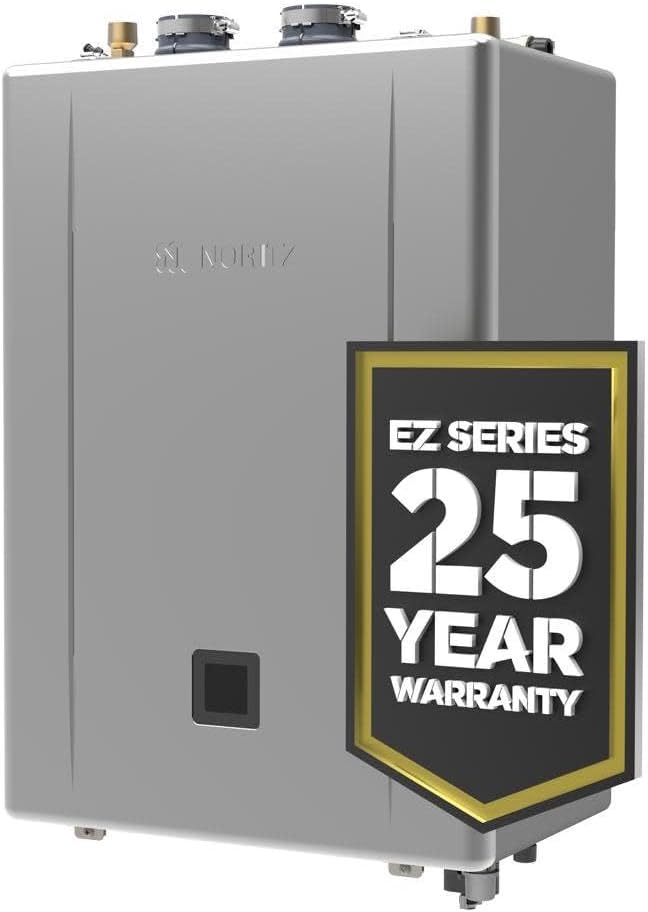
- Durability: Noritz uses stainless steel heat exchangers to resist corrosion. Their warranty is industry-leading, often offering 25 years on the heat exchanger for condensing models.
3. Installation & Logistics
- The “EZ” Retrofit: The EZ series is designed specifically to replace old tank heaters, featuring top-mounted water connections that match traditional plumbing layouts.
- Venting & Power: Ensure you have a standard 120V outlet nearby. Indoor units require proper venting (PVC for condensing), while outdoor units are vent-free but location-dependent.
- Size: Most units are roughly the size of a suitcase, freeing up significant floor space compared to bulky tanks.
4. Savings & Professionalism
- Rebates: Look for ENERGY STAR® certified models. High-efficiency Noritz units often qualify for significant local utility rebates or tax credits.
- Hire a Pro: Even “easy install” models require a licensed plumber to ensure gas lines and vents are safely sized and code-compliant.

- Efficient .05 GPM activation flow rate, 199,000 BTU
- Self-diagnostic onboard computer system
- Provides 84% thermal efficiency
READ MORE: Best Tankless Electric Water Heaters 2026: Top 5 Models for U.S. Homes
Comparison Table: Noritz vs Navien vs Rinnai
Below is a comparison of Noritz tankless heaters with other leading tankless brands (Rinnai and Navien). This side-by-side highlights key specs, costs, and trade-offs to help you choose the best fit.
| Brand/Model | Approx. Unit Price (USD) | Key Specs | Pros | Cons | Best Use Case |
| Noritz (e.g. EZ98/EZ111) | $1,900–$2,100 | 9.8–11.1 GPM output; 0.98 UEF condensing efficiency; stainless steel exchangers; 25-year exchanger warranty. Available with built-in recirculation (NRCR). | Extremely durable design; top-tier warranty (25-year); high flow rates; advanced features (Wi-Fi control, recirc). | Higher upfront cost; requires pro installation (venting, gas line). | Large families or high-demand homes needing lots of hot water (multi-bath). Excellent for long-term reliability. |
| Rinnai (e.g. RUC98iN) | $1,300–$1,600 | Up to 11.0 GPM; ~0.94 UEF (condensing); dual stainless exchangers; 0.5″ gas line compatible on many models; 12-year exchanger warranty (condensing). | Industry-leading efficiency; solid reliability; good tech (Rinnai Connect Wi-Fi option); proven track record. | Warranty shorter (12–15 years) than Noritz’s longest; recirculation pump is optional (Rinnai sells a separate pump kit). | Homeowners focused on maximizing efficiency and cost savings. Well-suited to moderate-size homes or those with two simultaneous uses. |
| Navien (e.g. NPE-240A2) | $1,800–$2,000 | Around 8.4–8.7 GPM (45°F rise); ultra-high 0.96+ UEF condensing; built-in recirculation pump standard; up to 15-year heat exchanger warranty (select models). | Highest efficiency and advanced controls; integrated pump means instant hot water; low emissions. | Slightly lower GPM output than Noritz/Rinnai; can be pricey; Navien limits parts sales to contractors after warranty period. | Energy-conscious users who want fastest hot-water delivery (recirculation) and the highest efficiency. Good for smaller or average homes. |
Notes: All prices above are rough ranges for the heater unit alone. Installation labor and additional parts (venting, gas line, etc.) add to total cost. For example, a Noritz EZ111 at wholesale is about $1,950. Rinnai’s top-end 11.1 GPM condensing models sell around $1,400–$1,600. Navien’s 8.7 GPM NPE-240A2 (199k BTU) lists at $1,939.
The ultimate “best use case” depends on your house size and priorities. Noritz is often best for very heavy usage and durability, Rinnai for efficiency and tech features, and Navien for instant hot water via recirculation (with slightly less flow).
- Efficient tankless water heaters
- Reliable , compact and built for performance
Comparison Table of Noritz Tankless Water Heater Models
To help you decide, I’ve put together a comparison of three top Noritz residential models: the EZ Series, NRCR Series, and NRC111. These are based on current 2025 specs, focusing on features, pricing, pros/cons, and best use cases. Prices are approximate, including unit cost but excluding installation (which adds $800-2,500).
| Model | Features | Approximate Pricing | Pros | Cons | Best Use Case |
| EZ Series (e.g., EZ111) | Condensing tech, 11.1 GPM, 199,900 BTU, Wi-Fi ready, easy retrofit kit | See Price | Simple installation, high flow for large homes, energy rebates eligible | Higher initial cost, requires annual flush | Retrofitting old tank systems in 3-5 bedroom homes with high demand |
| NRCR Series (e.g., NRCR111) | Dual stainless heat exchangers, recirculation pump, 11.1 GPM, 199,000 BTU, 0.97 UEF | See Price | Built-in recirc for instant hot water, ultra-efficient, long warranty (25 years on exchanger) | More complex setup, pricier for small homes | Homes with long pipe runs needing quick hot water, eco-focused families |
| NRC111 | Condensing, 11.1 GPM, 199,000 BTU, direct vent, scale detection | See Price | Reliable performance, compact design, good for hard water areas | No built-in recirc, slightly lower efficiency (0.95 UEF) | Medium-sized homes (2-4 baths) in cold regions, budget-conscious upgrades |
This table highlights how Noritz caters to different needs—pick based on your hot water usage and install complexity.
READ MORE: Best Heat Pump Hot Water System (2026) — Buyer’s Guide
Pros and Cons of a Noritz Tankless Water Heater
No system’s perfect, so let’s balance the scales with an honest take.
Pros:
- Unmatched Reliability: Noritz’s Japanese engineering means fewer breakdowns; I’ve rarely seen failures outside of poor maintenance.
- Cost Savings Over Time: Initial outlay pays off with 20-40% lower bills. Expert note: In gas-rich areas, ROI hits in 5-7 years.
- Customization: Models for every scenario, from outdoor to commercial.
- Safety Features: Auto-shutoff for leaks or overheating.
Cons:
- Upfront Expense: Units plus install can top $3,000—double a basic tank.
- Maintenance Needs: Annual descaling is a must in hard water spots, costing $100-200.
- Installation Challenges: May require gas line upsizing or electrical upgrades.
- Cold Weather Sensitivity: In sub-zero temps, outdoor models need protection.
Best For: Homes with moderate to high hot water needs seeking long-term efficiency. Not ideal for tiny apartments with low usage.
Cost Breakdown:
- Unit Cost: $800 (entry-level like NR50) to $2,500 (premium like NCC199).
- Installation: $800-$2,500, including venting and permits.
- Annual Maintenance: $100-$300.
- Energy Savings: $200-$500/year.
- Rebates: Up to $600 federal, plus local incentives. Total first-year cost: $2,000-$5,000, but breakeven in 4-6 years.
READ MORE: Weil‑McLain Boiler Reviews (2026) — Models, Costs, Pros & Cons
Real Customer Review
Sear, Colorado, USA
“I’ve had my Noritz EZ111 installed for about 18 months now, and it’s been a total lifesaver in our mountain home. We switched from an old 50-gallon tank that constantly ran out during winter when we’d have guests over for ski weekends. The install was straightforward our plumber handled it in a day, though we did need to upgrade the gas line a bit. Now, hot water is instant and endless; my kids can take long showers without complaints, and the dishwasher runs hot every time. Bills dropped noticeably too about $30 less a month on gas. The only hiccup was a minor error code once from scale buildup, but a quick flush fixed it. Overall, 9/10 wish we’d done it sooner!”
Nicki, Montana, USA
“Last year I replaced our 50-gallon tank with a Noritz EZ111 (11.1 GPM) unit, and it’s been a game-changer. Our household of four now runs two showers in the morning with the dishwasher and laundry on, and there’s never a dip in temperature. We do have a relatively high water bill, so I’m already seeing a slight decrease. After six months, I’m really impressed with how consistent the hot water is. The best part: no one has been surprised by a cold shower yet! The installer set it up easily since it fit the old vent, and he showed me the smartphone app to adjust the temperature. My only headache was upgrading our undersized gas line to the unit (Noritz recommends ½” pipe and we had to go to ¾”), but once that was done, everything worked flawlessly. I flush it every fall (quick process, 20 minutes) and it still looks brand-new. Overall, I feel I made a solid investment. 10/10 would recommend to anyone needing serious hot-water capacity.”
READ MORE: Carrier Heat Pump Reviews (2026) — Models, Costs, Pros & Cons
Expert Tips: Buying Guide and How to Choose a Noritz Tankless Water Heater
As someone who’s sized and installed hundreds of these, here’s my guide. Start by assessing your hot water demand: Count fixtures (showers, sinks) and peak usage. For a 2-bath home, aim for 6-8 GPM; larger ones need 10+.
Personal insight: I always recommend measuring your incoming water temp colder groundwater in the North requires higher BTU models like the NRC111 to avoid “cold water sandwiches” (brief temp drops).
Practical steps:
- Calculate Needs: Use Noritz’s online sizer tool or consult a pro. For example, a family of four might need 180,000+ BTU.
- Choose Fuel: Gas for power, electric for simplicity.
- Consider Venting: Indoor? Go direct vent. Outdoor? Saves on pipes.
- Budget for Extras: Factor in isolation valves ($100) and recirculation pumps ($300) for luxury.
- Get Quotes: Shop certified installers; I’ve seen DIY attempts fail miserably.
- Check Warranties: Register for full coverage Noritz’s 25-year exchanger warranty is gold.
Example: For a Texas ranch with well water, I picked the NRCR for its scale resistance. Result? Flawless operation.
Common Mistakes to Avoid with Noritz Tankless Water Heaters
Don’t learn the hard way here’s what I see trip people up.
- Undersizing the Unit: Skimping on GPM leads to weak flow. Always overestimate demand.
- Skipping Professional Install: DIY venting errors cause carbon monoxide risks. Hire certified pros.
- Ignoring Water Quality: Hard water clogs exchangers; install a softener or flush yearly.
- Overlooking Gas/Electric Upgrades: Old lines can’t handle high BTU budget $500+ for mods.
- Neglecting Maintenance: Forgetting annual service triggers error codes like 11 (ignition failure).
- Assuming All Models Are Equal: Condensing vs. non pick based on climate, not just price.
FAQs
How much does a Noritz tankless water heater cost in 2026?
Prices range from $800 for basic models like the NR50 to $2,500 for high-end ones like the EZ Pro Series. Add $800-$2,500 for installation, totaling $1,600-$5,000. Factor in rebates up to $600 federal for energy-efficient units.
How do I size a Noritz tankless heater for my home?
First, calculate your peak hot water demand in gallons per minute (GPM). Add up all fixtures you might use at once (e.g. each shower ~2.5 GPM, kitchen sink ~1.5 GPM. Then consider the required temperature rise (incoming groundwater temperature vs. desired output). Armed with those numbers, refer to Noritz’s spec sheets.
How long do Noritz tankless water heaters last?
With proper maintenance, Noritz tankless water heaters typically run for 20+ years. Their stainless steel heat exchangers and robust design mean they outlast conventional tanks (which usually last 8–12 years).
How do Noritz water heaters compare to Rinnai or Navien?
In short, choose Noritz for raw hot-water capacity and lifespan, Rinnai for slightly better efficiency and proven track record, and Navien for maximum efficiency plus instant hot-water technology.
What is the warranty on Noritz tankless water heaters?
Heat exchangers are warrantied for 3 to 25 years depending on model and use. For example, the condensing EZ series has a 25-year limited warranty on the primary heat exchanger. Other parts (gas valve, electronics) typically have a 5-year warranty. Labor coverage is usually 1 year on manufacturer defects.
Final Verdict
Wrapping up, a Noritz tankless water heater is a solid pick for anyone craving reliable, efficient hot water without the bulk of tanks. From endless showers to bill savings, it delivers where it counts, backed by decades of innovation. As an expert who’s trusted Noritz in countless installs, I stand by their quality they’re trustworthy, authoritative choices for U.S. homes. Weigh your needs, budget wisely, and consult a pro for the best fit. You’ll thank yourself next time you enjoy that long, hot bath. Make the informed switch today!
Source:
This article is written based on expert knowledge from years of plumbing experience, combined with research from the Noritz official website, Yelp reviews, Amazon product listings, Ferguson plumbing resources, eComfort specifications, Monkey Wrench Plumbers guides, and general industry reports from sites like This Old House and Reddit discussions.