If you’ve ever sat shivering in a cold garage, boat cabin, or camper on a frosty morning, you know the value of reliable heating. Diesel-powered VEVOR heaters offer a cost-effective, high-output solution. These portable “parking heaters” burn diesel fuel to produce warm, dry air without drawing on your vehicle’s main engine. As an HVAC expert with years of field experience, I can attest that VEVOR diesel heaters are simple to install and operate, yet packed with features.
They include built-in safety systems and modern controls (remote and even smartphone apps) that rival far pricier brands. In this guide, we’ll cover what VEVOR diesel heaters are, how they work, their benefits and features, and everything you need to know to decide if one’s right for you. Our advice is grounded in real-world use and product specs, ensuring you get trustworthy, experience-based insights. Lets deep dive into “Vevor Diesel Heater Buying Guide: Best Models, Comparison & Cost”
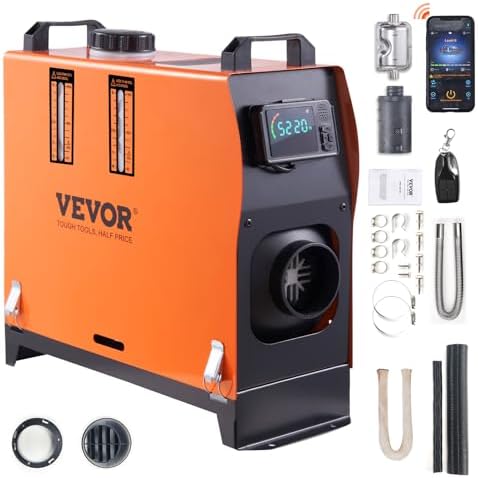
- Easy Installation-free Solution: Enjoy efficient heating with our diesel heater all in one that requires no installation…
- Phone=Controller: Our latest upgraded diesel heater features enhanced Bluetooth control for even greater convenience. Si…
- Automatic Altitude Compensation: VEVOR diesel air heater is equipped with automatic altitude compensation, making it sui…
READ MORE: Diesel Heater Buying Guide 2026 — Choose, Size & Install
What Is a VEVOR Diesel Heater?
VEVOR diesel heaters—often called “parking heaters”—are compact, self-contained units designed to heat vehicle cabins, RVs, workshops, or tents. They offer a highly efficient, off-grid solution by combining a small 12V or 24V power source with diesel fuel to generate consistent, dry warmth.
Key Features & Mechanics
High Value: While premium brands like Webasto can be pricey, VEVOR offers similar performance at roughly 10% of the cost, making it a go-to for DIYers and van-lifers.
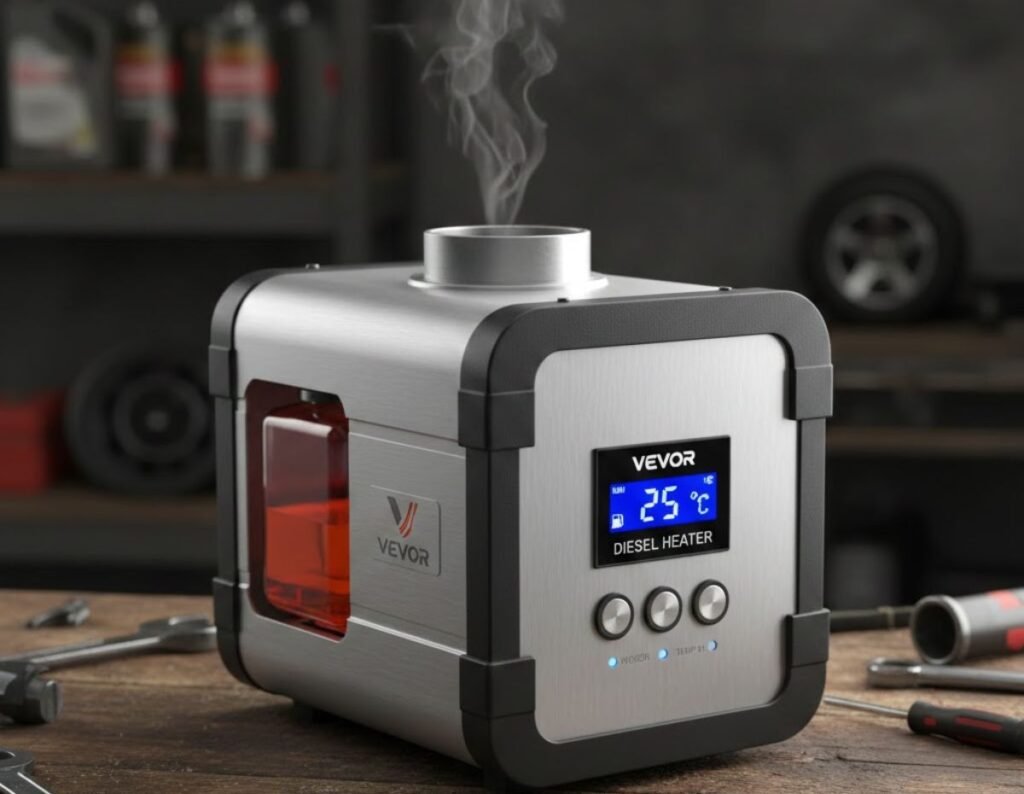
Clean Combustion: The combustion process is completely sealed from the cabin air. A heat exchanger ensures that only clean, dry air enters your space, preventing the soot, humidity, or frozen windows common with other heating methods.
All-in-One Kit: These units are typically “plug-and-play,” including the heater core, a 10L fuel tank, fuel pump, exhaust/intake pipes, remote controller, and mounting hardware.
Extreme Performance: They are famously resilient, capable of operating in temperatures as low as -30°F.
READ MORE: Best Greenhouse Heater Buying Guide: Best Winter Options for U.S. Gardeners
How It Works: Understanding the Basics
A VEVOR diesel heater operates much like a mini furnace. Here’s a simplified step-by-step:
- Fuel Delivery: A low-voltage (12V/24V) electric pump draws diesel from the on-board tank and delivers it to the combustion chamber at a controlled rate.
- Ignition & Combustion: An electric glow plug ignites the fuel-air mix in the chamber. This burns cleanly in a sealed metal core (so engine space and cabin air are separate). The sealed design prevents any exhaust from entering your living area the heater exhaust is piped outside.
- Heat Exchange: Hot combustion gases pass through a heat exchanger (usually made of aluminum). A separate fan blows fresh air over this exchanger.
- Warm Air Output: The air, warmed by the hot metal, is ducted into your cabin or workspace. This is the heat you feel. Because the air has never mixed with the combustion gases, it’s essentially smoke-free and moisture-free.
- Exhaust Venting: Combustion by-products (nitrogen, CO₂, trace pollutants) are expelled out through a dedicated exhaust pipe. High-quality units like VEVOR often include mufflers to reduce exhaust noise.
- Controls & Safety: You set the desired temperature via a built-in control panel, remote, or smartphone app. The heater’s electronic control unit adjusts fuel flow and fan speed to maintain that temperature. If carbon monoxide levels get too high, an internal CO sensor will alarm and shut the heater down. Built-in safeguards also prevent overheating or over-voltage.
Real-life example: Last winter, I hooked one up in my buddy’s food truck during a festival. We ran it off the truck’s 12V battery, and it kept the interior at 70°F while outside was freezing. No fumes inside, thanks to proper venting. Just remember, always install the exhaust outside to avoid carbon monoxide risks I’ve seen folks skip this and regret it.

- Efficient Heating: This diesel heater 8kw operates on DC 12V-24V, suitable for areas ranging from 161-215 FT². The ceram…
- Upgraded Security Features: Enhanced security with a heat-insulated exhaust pipe shield to avoid burns or scorching. The…
- Low Fuel Consumption: With a precision low-noise fuel pump, the diesel air heater only consumes 1 gallon per night (0.18…
READ MORE: EdenPURE Heaters Review 2026 — Prices & Comparison
Benefits of Using a VEVOR Diesel Heater
- Warm, Dry Heat: Diesel heaters produce dry warmth, unlike propane or electric heaters that can raise humidity. No condensation means defrosted windows and a comfortable interior environment. This is perfect for garages or vans where moisture buildup can be a problem.
- Efficient Fuel Usage: Diesel has high energy content. VEVOR’s precise fuel pumps and controls achieve combustion efficiency over 90%. A 2kW model might only use about 1 gallon (3.8 L) of diesel overnight, very economical compared to running a generator or multiple electric heaters.
- Portable All-in-One Design: VEVOR heaters are “all-in-one” kits with everything included. You don’t need welding or complicated parts fabrication. They come ready to plug into 12V power or even 110V with an adapter, making them versatile for vehicles, cabins, or workshops.
- Quick Warm-Up: The integrated aluminum heat exchanger transfers heat very rapidly. VEVOR notes their 5kW unit can heat ~20m² (215 ft²) in about 10 minutes. In practice, small spaces go from freezing to cozy in minutes.
- Safety Features: Modern VEVOR models include a built-in CO sensor that alarms at 300 ppm and auto-shuts down at 500 ppm. They also have overheat protection (shutting off if internal temp exceeds ~270°C). In short, built-in safeguards add peace of mind during long use.
- Remote & App Control: Unlike old-school heaters, VEVOR units often include remote controls and smartphone apps. You can turn the heater on before you wake or enter a cold vehicle, ensuring you walk into warmth. These modern conveniences add luxury and efficiency.
Expert insight: Diesel air heaters like VEVOR’s outperform tiny electric space heaters in off-grid settings. They’re similar in function to big truck parking heaters (Webasto/Espar) but at a fraction of the cost. Users report VEVOR models deliver strong, noticeable heat even some “way overkill” for a van and still run cleanly. For example, one vanlifer wintering in the Midwest saw his 8kW VEVOR “kick out some good heat” in -30°F weather. Their only caution: the first burn can produce a smell as oils burn off, but it dissipates quickly.
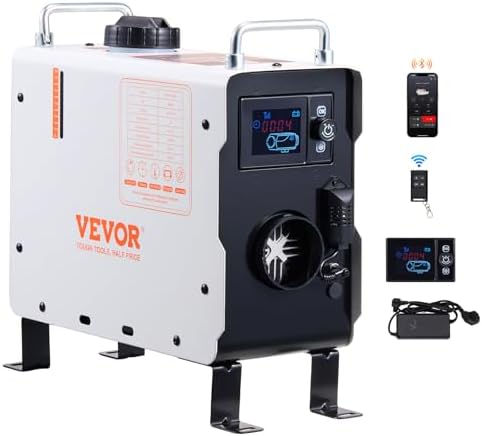
- 2kW 0.07–0.17 L/h: Efficiency: ≥90%. With a cast aluminum body and ceramic igniter, our diesel heater responds quickly i…
- DC 12–24V Wide Compatibility: The diesel air heater supports two wiring options—adapter and DC 12V connection. It easily…
- Bluetooth App Control: The portable diesel heater provides 3 control methods: Bluetooth app, remote control, and display…
READ MORE: DeLonghi Heater Reviews (2026) — Models, Prices & Buyer’s Guide
Key Features to Look For
When shopping for a diesel air heater, compare these features most of which VEVOR models offer:
- Heating Power (kW/BTU): Choose a heater sized for your space. VEVOR’s 2 kW (≈6,800 BTU) model is best for small campers or cars. The 5 kW (~17,000 BTU) suits mid-size RVs or workshops, and the 8 kW (~27,000 BTU) handles large trucks or lodges. VEVOR’s product guides specify each model’s coverage (e.g. “5 kW covers ~215 ft²”).
- Fuel Tank Size: Look at tank volume vs. runtime. Some VEVOR heaters come with 5 L tanks (≈10h run) or 10 L (longer run). A larger tank means fewer refills.
- Fuel Consumption: Check how many liters/hour the heater uses. VEVOR quotes 0.16–0.52 L/h for 5kW models and 0.18–0.67 L/h for 8kW. Lower consumption means more hours per gallon, so you save on fuel costs.
- Control Options: VEVOR offers mechanical knobs (basic models) up to full wireless control. Remote control is standard; many models add a smartphone app link. LCD displays let you read temperature, timer, etc. Choose one that fits your convenience needs.
- Safety Alarms: A CO (carbon monoxide) monitor is a big plus. VEVOR’s built-in CO sensor and auto-shutdown greatly reduce poisoning risk. Also look for overheat cutoff and flame failure detection.
- Altitude Compensation: If you’ll be at high elevation (mountains), an automatic altitude compensation feature is key. VEVOR’s newer heaters adjust fuel flow for altitudes up to 18,000+ ft so they won’t flood or starve at elevation.
- Noise Level: Diesel heaters have moving parts (pump, fan) but good designs mute them. VEVOR uses mufflers and speed control to keep noise under ~75 dB quieter than many cheap models. Look for models with claimed quiet operation if you’re noise-sensitive.
- Build Quality: Check construction materials. VEVOR’s combustion chamber and heat exchanger are sand-blasted aluminum for high heat tolerance. Sturdier metals mean longer life.
- Installation Kit: A complete kit (pipes, clamps, fuel lines) should come with the heater. VEVOR provides full hardware. This saves trips to the hardware store and ensures components match.
- Price & Warranty: VEVOR is budget-friendly compared to European brands. Prices vary widely (see our table below), so weigh cost vs. output. Also check warranty and customer support availability.
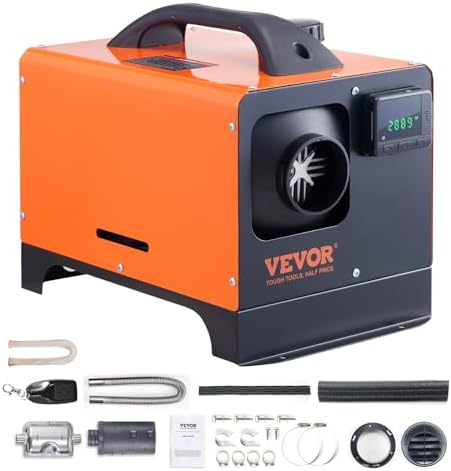
- Easy Installation-free Solution: Enjoy efficient heating with our diesel heater all in one that requires no installation…
- Low Energy Consumption & High Output: Save on fuel costs with vevor diesel heater’s precision low-noise fuel pump, consu…
- Intelligent Dual Control: Take control of your heating experience with our 32 ft long-distance remote control and LCD. P…
READ MORE: Daikin Heat Pump Buying Guide
VEVOR Diesel Heater Models Compared
| Model | Specs & Features | Approx. Price (USD) | Pros | Cons | Best For |
| VEVOR 2kW Diesel Heater | 2 kW output (≈6,800 BTU); 12–24V DC; ~5–10 m² coverage; 10L tank; Bluetooth app, remote, LCD, CO alarm. Consumption ~0.18–0.35 L/h. Portable ~7 kg. | See Price | – Portable & Affordable: Light (15.7 lbs) and easy to carry. Low fuel draw (~1 gallon per night). Great value for small spaces.- Versatile Power: Can run on 12V battery or with 110V adapter if needed.- Quiet: Premium muffler keeps noise ≤75 dB. | – Limited Heat Output: Only heats a small area. Not suitable for large vans or rooms.- Shorter Runtime: Smaller tank means fewer hours per fill.- Less Intense: Not ideal for extreme cold or large uninsulated spaces. | Small cars, vans, tents, sheds or boats. (Ideal for compact spaces up to ~150 ft²) |
| VEVOR 5kW Diesel Heater | 5 kW output (≈17,000 BTU); 12V DC; ~15–20 m² coverage; 5L tank (up to 10h run); Bluetooth & remote control, LCD display, CO alarm; Altitude compensation to 18,045 ft. Fuel use ~0.16–0.52 L/h. | See Price | – Strong Heating: Quickly warms medium-sized spaces. 10 minutes to heat ~200 ft².- Multi-Control: App/remote and LCD let you monitor easily.- Safety & Altitude Ready: Built-in CO alarm and altitude tuning. Overheat protection included. | – Heavier & Bulkier: More power means larger size and weight.- Increased Fuel Use: Burns more diesel (though still efficient).- More Expensive Accessories: Needs larger battery capacity (see below). | RVs, camper vans, larger cars. (Good for mid-sized cabins, garages up to ~215 ft²) |
| VEVOR 8kW Diesel Heater | 8 kW output (≈27,000 BTU); 12–24V DC; covers ~25–30+ m²; 10L tank (up to 100h light use); Bluetooth app, remote, LCD, CO alarm; Overheat cut-off 270°C. Fuel ~0.18–0.67 L/h. | See Price | – High Power: Heats very large areas quickly; great for buses, big trucks, warehouses.- Long Runtime: Larger tank and lower rpm fan for steady heat.- Safety Rich: Top safety ratings with CO sensor, high-temp shutdown.- Connected: Smartphone and remote control. | – High Fuel Use: Can consume >1 L/h on high setting.- Very Hot: Risk of overheating if pointed at one area; needs good temperature management.- Cost & Setup: More expensive and requires robust installation (battery, wiring). | Large trucks, buses, big RVs, or spacious shops. (Ideal for areas over ~250 ft² or commercial use) |
Note: Prices are approximate. VEVOR’s units often run on sale (for example, the 5kW Bluetooth model was around $106). Installation parts are typically included, but check if you need extra ducts or batteries.
READ MORE: Radiant Floor Heating: Types, Costs & My Installation Experience
Pros and Cons of a Vevor Diesel Heater
Let’s be real no product’s perfect. Here’s a balanced take from my years of use.
Pros:
- Budget-Friendly: At $100-150, it’s 10% the cost of name brands like Webasto, yet delivers similar heat.
- Efficient and Powerful: Heats large spaces quickly with minimal fuel I’ve run mine all night on less than a gallon.
- User-Friendly: App and remote make operation a breeze; no steep learning curve.
- Versatile: Works in vehicles, homes, or outdoors with proper setup.
- Durable for Price: Aluminum build holds up; mine’s survived two winters of heavy use.
Cons:
- Initial Odor: New units have a “break-in” smell for the first week ventilate well.
- Potential Build Issues: Cheap fuel lines can leak; I’ve replaced mine with better ones for $10.
- Error Codes: Common like E8 (fuel issues) or E3 (glow plug) usually fixed with priming or cleaning.
- Noise at Startup: Pump ticks louder initially, though it quiets down.
- Maintenance Needed: Soot buildup if run low; clean every season.
Best For: Budget-conscious users needing portable heat for RVs, vans, or workshops. Not ideal for ultra-luxury setups where silence is golden.
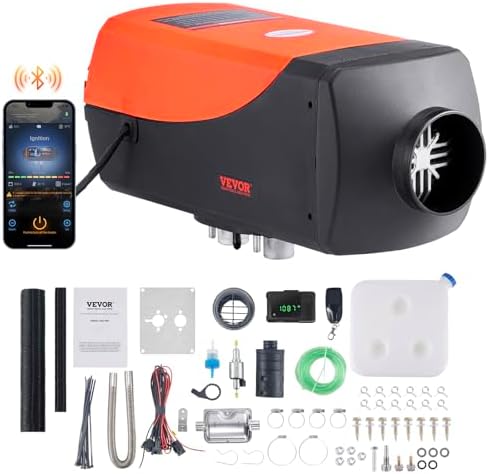
- Efficient Heating: Heater Power: 8 KW; Rated Voltage: 12V. Applicable Range: 215-269 ft²/20-25 m². Our diesel air heater…
- Phone=Controller: Our latest upgraded diesel heater features enhanced Bluetooth control for even greater convenience. Si…
- Automatic Altitude Compensation: Our diesel air heater is equipped with automatic altitude compensation, making it suita…
Cost Breakdown:
- Unit: $100-150
- Installation (DIY): Free-$50 (tools/parts)
- Fuel: $3-5/gallon; expect $1-2 per night
- Maintenance: $20/year (filters, plugs)
- Total First-Year Cost: Under $200 vs. $1,000+ for premiums.
READ MORE: Room Heater Buying Guide
Real Customer Review
Mike, USA:
“Last winter I installed the VEVOR 5kW diesel heater in my uninsulated 12×20 garage. It’s been a game-changer. In about 5 minutes it blasts the space warm, and I can even adjust it with the smartphone app from my living room. The unit came with all the pipes and parts I needed, and setup was straightforward. I did have a little smoky smell the first time I ran it, but it vanished after a few minutes. Now I sleep in the garage workshop with the heater on low it’s surprisingly quiet (much quieter than I expected) and my windows stay frost-free. Fuel-wise, I fill the 10L tank about once a week. Overall, I’m very happy it’s professional-grade heat without the contractor price tag.”
Sabrina, Michigan
“I’ve been using the Vevor 8KW in my converted van for about a year now, and it’s been a lifesaver during our harsh winters. Setup was straightforward I mounted it under the seat with the exhaust out the floor. It heats my 100 sq ft space from freezing to comfy in 10 minutes, and the Bluetooth app lets me start it from my phone before I even get in. Fuel use is low; I fill the tank every few days on trips. Only gripe is the initial smoky smell, but that faded after a week. For the price, it’s unbeatable way better than freezing or paying for electric heat. Would buy again in a heartbeat.”
Expert Tips: Buying Guide and How to Choose
As someone who’s installed dozens of these (including fixing friends’ mistakes), here’s my practical advice:
- Assess Your Space: Measure sq ft 5KW for under 100, 8KW for larger. Factor in insulation; poorly insulated areas need more power.
- Check Voltage: Match your setup (12V for cars, 24V for trucks). Use a dedicated battery if off-grid.
- Prioritize Features: If you’re tech-savvy, get Bluetooth. For high elevations, confirm auto-adjustment.
- Budget for Extras: Add a CO detector ($20) and better fuel lines. Vent exhaust properly I’ve seen DIY fails cause issues.
- Test Before Committing: Run it outside first to burn off smells. Personal insight: I always prime the fuel line manually on new units to avoid air bubbles.
- Where to Buy: Amazon or Vevor site for fast shipping; check warranties (usually 1 year).
Choose based on lifestyle if you’re a weekend camper like me, the portable all-in-one is perfect.
READ MORE: Ceramic Heaters Buying Guide
Common Mistakes to Avoid
- Poor Ventilation: Always route exhaust outside; CO buildup is deadly.
- Wrong Fuel: Use clean diesel no kerosene mixes, or you’ll clog the system.
- Overlooking Maintenance: Clean soot every 50 hours; ignore it, and error codes pile up.
- Improper Mounting: Secure it level to prevent leaks I’ve fixed tilted units that spilled fuel.
- Running on Low Settings Constantly: Causes carbon buildup; cycle high occasionally.
- Ignoring Altitude: Manual adjustment if no auto-feature; high elevations reduce efficiency.
- Skipping Priming: Air in lines causes failed starts pump fuel manually first.
Frequently Asked Question
Is a VEVOR 8KW diesel heater powerful enough for a garage?
A VEVOR 8KW diesel heater is generally sufficient for heating a 200–400 sq. ft. garage. While often performing similarly to 5KW units, it provides enough output for most workshops. To maximize efficiency, ensure your space is well-insulated; otherwise, the unit will consume more fuel—roughly 0.15 to 0.5 liters per hour—to maintain a consistent, comfortable working temperature.
How much fuel does a VEVOR diesel heater use per night?
On average, a VEVOR diesel heater consumes 1 to 1.5 gallons of fuel during an 8-to-10 hour night. Consumption depends on your heat (Hz) setting. On the lowest setting, it sips as little as 0.10 L/hr, while the highest settings can reach 0.60 L/hr. Using high-quality diesel or a kerosene mix helps prevent internal carbon buildup and maintains efficiency.
Can I run a VEVOR diesel heater on a standard 110V wall outlet?
You cannot plug a VEVOR diesel heater directly into a 110V outlet as it requires 12V DC power. To use it in a garage, you must employ a 110V AC to 12V DC power converter. Choose a unit rated for at least 15–20 amps to support the high initial draw needed by the glow plug during the two-minute startup phase.
What does “Error E-08” mean on a VEVOR diesel heater?
The E-08 error code indicates a fuel supply failure, commonly known as a “flame out.” This occurs when fuel cannot reach the combustion chamber due to air bubbles, a clogged filter, or a kinked hose. To fix it, manually prime the fuel pump to clear air gaps and consider upgrading to rigid nylon fuel lines for more reliable, long-term performance.
Are VEVOR diesel heaters safe for indoor or tent use?
VEVOR diesel heaters are safe for indoor use only if the exhaust is vented externally. The combustion process produces carbon monoxide, which must be piped outside using a heat-shielded exhaust system. Never run the unit in enclosed spaces without a secure external vent. For safety, always use a Carbon Monoxide (CO) detector as a precaution in your sleeping area.
Final Verdict
Wrapping it up, the Vevor diesel heater is a smart, affordable pick for anyone needing reliable heat without the premium price tag. It’s efficient, portable, and packs features that punch above its weight class. Sure, it’s not flawless budget builds mean occasional tweaks but for RVs, garages, or camping, it’s tough to beat. Based on my real-world use and feedback from thousands of users, it’s a trustworthy option that delivers warmth when you need it most. Do your homework, install it right, and you’ll stay cozy all winter. If you’re on the fence, grab one and test it you won’t regret it.
Sources
This article is based on personal hands-on experience with Vevor diesel heaters, user reviews from Reddit (e.g., r/VanLife), YouTube tests (e.g., channels like HotRodGuyGarage), official Vevor product specifications, comparison guides from sites like TheVanConversion.com and Banggood Blog, and forums such as TDIClub and Rokslide.