If your household needs a big-tank solution, this plain-English guide walks you through who needs an 80-gallon electric water heater, how they work (including hybrids), real price examples, running costs, installation, and hiring the right pro. You’ll learn:
- Who should consider an 80-gallon tank and how to size by peak hour demand.
- In plain language: electric resistance tanks vs. hybrid (heat-pump) electric tanks.
- Real retailer price examples (checked Feb 3, 2026) and what those prices mean for your budget.
- Step-by-step operating cost arithmetic so you can plug in your electric rate.
- Installation, permit basics, maintenance, and a contractor hiring checklist you can print and bring to bids.
This is written like a helpful neighbor who’s also worked alongside plumbers clear, practical, and focused on what matters to a U.S. homeowner: capacity, reliability, energy cost, serviceability, and total installed cost. Lets deep dive into “Best 80-Gallon Electric Water Heaters of 2026 | Reviews & Deals”
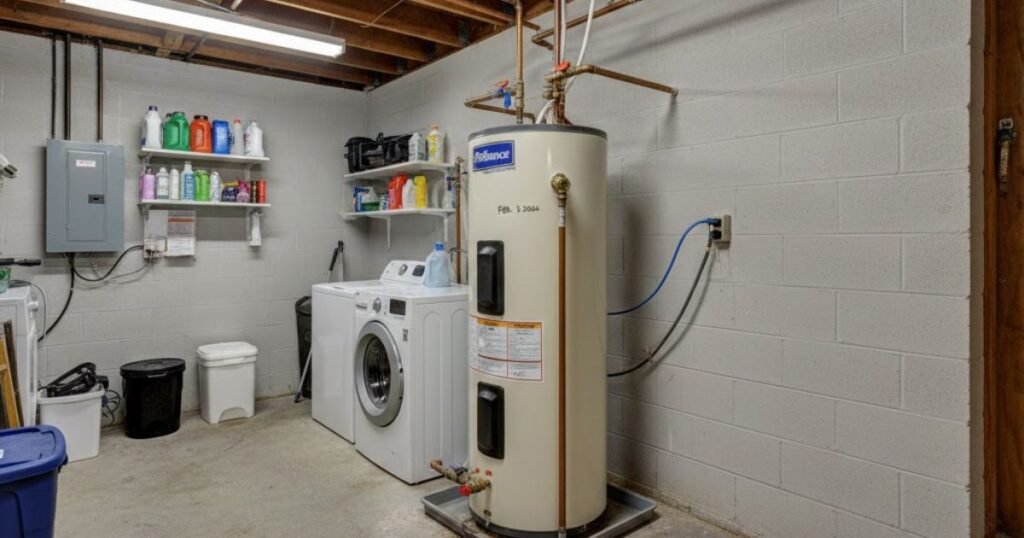
READ MORE: Best Tankless Water Heater 2026 — Top Picks, Costs & Buyer’s Guide
80-gallon units: who needs one?
An 80-gallon tank is a large residential water heater. Think of it as the “big family” or “small multifamily” option. It’s for households that commonly use several hot-water appliances at once: multiple showers during morning rush, full baths plus dishwasher and laundry, or frequent high-volume uses (large tubs, simultaneous long showers). Typical profiles that may need 80 gal:
- 5–7 person families with overlapping morning/evening hot-water use.
- Homes with one or more jetted bathtubs or an on-site salon/laundry room with heavy simultaneous loads.
- Properties that want long recovery buffer between draining and refilling (e.g., vacation rental owners who want lots of ready hot water between turnovers).
Sizing rules (practical quick check): the usual residential sizing method compares First Hour Rating (FHR) of the tank versus your Peak Hour Demand (PHD). If the tank’s FHR meets or exceeds your household PHD, the tank will typically handle your busiest hour. An 80-gallon electric tank often has an FHR large enough for 4–6 people with overlapping use; for larger households or heavy simultaneous loads, choose 80 gal or consider multiple tanks or a commercial-grade solution.
Pros of 80 gal for homeowners: fewer cold-water interruptions, longer recovery windows (useful if you run multiple loads back-to-back), and reduced chance of running out in peak times. Cons: larger footprint, more standby heat loss than a smaller tank (unless you choose a highly insulated model or a hybrid with lower standby losses), and higher initial cost.

- Energy-efficient performance: Energy Star Certified. Extracts heat from ambient air to deliver consistent hot water with…
- High first-hour delivery: Provides up to 91 gallons of hot water in the first hour‚ ideal for households of 5+ people wi…
- Demand-Response Enabled: Saves you money by communicating with local utilities to reduce energy usage during peak hours
READ MORE: AO Smith vs. Rheem Water Heaters: 2026 Comparison & Expert Reviews
How electric (and hybrid) 80-gal water heaters work
Electric resistance tanks (the straightforward kind)
Inside an electric resistance tank you’ll find two electric heating elements (upper and lower) that look like metal rods. Thermostats control each element so the tank heats when temperature drops. The tank stores hot water and delivers it when you open a hot tap.
Key points:
- Elements convert electricity directly to heat efficiency from electricity to water ~ 98% at the point of use (almost all the electric energy becomes heat in the water).
- Standby losses: even a well-insulated tank loses heat through its walls and connections. That’s why insulation (R-value) and location (basement vs. heated room) matter.
- Recovery: how fast a tank can reheat after heavy use depends on element wattage and voltage. Higher element wattage = faster recovery.
Hybrid (heat-pump) electric tanks — what’s different
A hybrid (heat-pump) electric water heater, often called a heat-pump water heater (HPWH), contains an electric heat pump that moves heat from the surrounding air into the water and an electric resistance backup if needed.
How it works in plain terms:
- Instead of converting electricity directly to heat, a heat pump uses electricity to run a compressor and refrigerant loop that extracts heat from the air and deposits it into the water tank.
- Because it moves heat rather than creates it directly, it can deliver 2–3 times the hot water per unit of electricity (this is usually expressed as COP coefficient of performance). Conservative, real-world COPs for residential HPWHs are often in the 2.0–3.0 range depending on conditions.
Practical implications:
- Hybrid units cost more up front but often have much lower operating costs in warm, conditioned spaces because a heat pump uses less electricity per gallon of hot water produced.
- They work best where there’s enough warm air for the heat pump to pull from (basement, garage, or utility space that stays above ~50°F). In very cold spaces, the heat-pump operates less efficiently and may rely more on electric resistance backup.
- Hybrids are typically taller and require more clearance for airflow and maintenance.
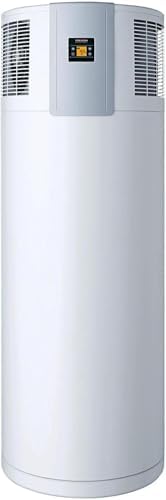
- Large 80-gallon storage tank: supplies up to 74.2 gal first-hour hot water, ideal for family or multi-bathroom homes
- Heat-pump efficiency: 650 W compressor/fan with 1700 W heating output
- Dual heating options: efficient heat pump operation plus 1500 W booster for high-demand periods
READ MORE: 40 Gallon Water Heater Buying Guide
Common uses & sizing rules for 80 gal
Peak-Hour Demand (PHD) basic rule
Peak-Hour Demand is the amount of hot water your household uses during its busiest hour. To estimate:
- List likely uses during the peak hour (e.g., two showers, dishwasher, washing machine).
- Use standard fixture gallons/minute (GPM) estimates or your own metered values.
- Multiply by use duration to get gallons per appliance, sum them to the hour.
If your PHD is close to or less than the tank’s First Hour Rating (FHR), the tank is sized correctly for peak times.
Example household profiles where 80 gal is often chosen:
- Family of 5 with a full-bath plus two showers back-to-back.
- Homes with three bathrooms used in the same hour.
- Properties that host frequent guests or where owners want long stretches of hot water without waiting for recovery.
Recovery & element wattage
An 80-gal electric tank may have elements rated 4,500 W each (or higher depending on model/phase). Recovery time (how fast the tank reheats) follows directly from element wattage:
- The energy required to raise the full tank by a given temperature is fixed (we’ll compute a worked example later). Higher wattage reduces that time proportionally.
- For fast recovery, look for units with higher-watt elements or commercial/light-commercial rated units; these are often sold through supply houses rather than big-box retail.
Space & venting
Electric-only tanks (including hybrids) do not need combustion venting like gas tanks. But hybrids need adequate airflow: allow manufacturer-recommended clearance and install in a space that won’t freeze and where the heat pump’s cooling effect won’t create nuisance cold spots.
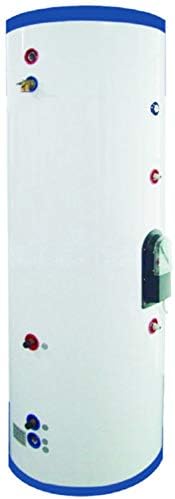
- Inner Tank: Food Grade SUS 304-2B, Outer Tank: Galvanized Steel 0.5 mm thickness
- Insulation: high pressure automatic polyurethane foaming layer, Density of 36 kg/m3, R-Value: 12.5
- In Tank Coil: TU1 copper (Red Copper), thickness: 1mm, Length of Coil:66 ft
READ MORE: Best Heat Pump Hot Water System (2026) — Buyer’s Guide
Comparison table — top brands & real prices (approx., checked, 2026)
| Brand / model (example) | Type | Typical MSRP / Retail (approx.) | Where I checked (retailer) | Notes |
| A. O. Smith — LTE-80D / LTE-80 | Electric (resistive, light-service commercial) | $1,870 – $1,900 (approx.) | SupplyHouse / AF Supply listings. | Popular light-service 80 gal option used in residential & commercial. |
| Bradford White — SLE280T / LE280T | Electric (resistive) | $2,340 – $2,480 (approx.) | ButlerSupply / MastersSupply listings. | Contractor-grade tanks often sold through wholesale channels. |
| Rheem — Performance / ProTerra 80 gal | Hybrid (heat pump) & conventional electric | $2,229 – $2,479 (approx.) | Home Depot (hybrid/residential models). | Hybrid models higher upfront but much lower operating cost in many areas. |
| Rheem — Commercial 80 gal electric (light duty) | Electric (commercial) | $2,206 – $3,820 (approx., varies by model/voltage) | ConsumersPlumbing / Grainger listings. | Commercial listings vary with voltage/phase and features. |
Caption: Prices shown are approximate retail examples and were checked on Feb 3, 2026 (retailer listings cited). Actual prices and availability vary by region, configuration (voltage/phase), and seller.
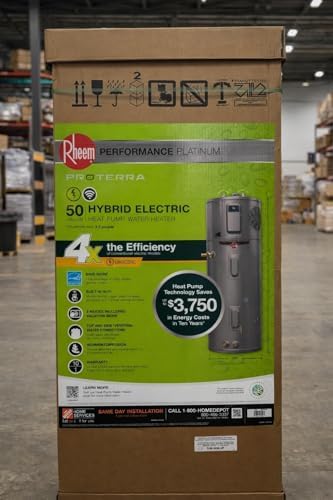
- It must be wired into your home’s electrical system and will typically require a dedicated electrical circuit (similar t…
READ MORE: Noritz Tankless Water Heater Buying Guide
Buying guide: features, warranties, control options & efficiency
When shopping for an 80-gallon electric water heater, compare more than the capacity. Here’s what to prioritize.
1. Type: residential vs. light commercial
- Residential models are optimized for home use: standard elements, consumer warranties, and Home Depot / big-box availability.
- Light commercial / contractor-grade models (AO Smith LTE series, Rheem commercial) can have higher wattage elements, heavier steel, and service-friendly features; they’re often found through supply houses and are worth considering if you need faster recovery or ruggedness.
2. Hybrid (heat pump) vs. pure resistance
- Hybrid / HPWH: higher purchase price but often 2×–3× more efficient (in COP terms) than resistance heating best when installed in a warm, ventilated utility space. See Rheem ProTerra and Performance hybrid lines for consumer HPWH options.
- Resistance tanks: lower purchase price, simpler technology, fewer clearance constraints, and predictable performance in cold spaces.
3. Insulation & Energy Factor
- Look for high insulation thickness and lower standby losses. Check the unit’s Energy Factor (EF) or Uniform Energy Factor (UEF) for comparison. Hybrids will generally show much higher UEFs.
4. Element configuration & voltage
- Many 80-gal tanks are available in 240V single-phase; commercial units may offer 208V, 240V, 277V, or three-phase options. Select the model that matches your home electrical service and the electrician’s plan.
5. Controls & smart features
- Newer models (especially hybrids) may include Wi-Fi, leak detection, vacation mode, or schedule controls. These can save energy (e.g., set to lower temp while away) and provide diagnostics for a plumber.
6. Warranty & serviceability
- Compare tank warranty (typically 6–10 years on consumer models; some commercial models differ) and parts warranty for elements and heat pumps. Check availability of replacement anode rods and element kits commercial/wholesale channels often carry more spares.
7. Sizing & clearance
- Measure the space: 80-gal tanks are tall and wide. Hybrid units need clearances for airflow and service access. Confirm doorway and stair clearance for delivery.
8. Price considerations
- Retail price is only part of the cost. Factor in installation (electrician + plumber), electrical upgrades (e.g., heavier circuit, subpanel), permits, disposal of the old tank, and potential rebates on high-efficiency models in your state or utility territory.

- Includes 4500 watt elements
- Non-simultaneous
- Protective magnesium anode rod – provides added protection against corrosion for long trouble-free service
Installation, permits & code basics for U.S. homeowners
Permits & inspection
Most U.S. localities require a plumbing (and sometimes electrical) permit for replacing a water heater. Rules vary, but permit requirements typically exist because work touches fuel/electrical systems and plumbing fixtures. Always check with your local building department before hiring or DIYing.
Electrical requirements
An 80-gal electric tank, especially higher-wattage or commercial models, may require:
- Dedicated 240V circuits sized to element amperage.
- Proper breakers and wiring gauge (e.g., 30–50A circuits depending on element wattage; your electrician will calculate exact wire size).
- If the model requires 277V or 3-phase, this is usually supply-channel/commercial equipment and may need a panel/upgrades.
Placement & clearances
- Hybrids need airflow: manufacturer instructions specify clearance on all sides for intake and service. Don’t tuck a hybrid into a small, sealed closet unless ventilation is provided.
- Consider drain pan with a drain line or condensate pump for hybrids; local code often requires a pan under the water heater if installed above finished spaces.
Permitted DIY?
Replacing a water heater is sometimes a permitted DIY project for homeowners who are comfortable with plumbing and electrical work, but for an 80-gallon electric tank (especially commercial or hybrid installs), hiring a licensed electrician and plumber is strongly recommended. Complex wiring, breaker changes, and local codes make the job safer and code-compliant when done by pros.
READ MORE: Bradford White Water Heaters
Operating cost & energy comparison
This section shows plain math so you can plug in your electricity rate.
Assumptions for the worked example (you can substitute your own numbers):
- Tank size: 80 gallons.
- Hot water setpoint: 120°F.
- Cold water inlet temperature: 50°F (this is regionally variable).
- Electricity rate: $0.16 / kWh (replace with your local rate).
- Heat pump COP (conservative): 2.5 (HPWH delivers 2.5 kWh heat per 1 kWh electricity).
Step 1 — Energy required to heat a full 80 gal tank from 50°F → 120°F
Use the water heat formula with U.S. customary units:
- One gallon of water requires 8.34 BTU to raise 1°F.
- Temperature rise ΔT = 120 − 50 = 70°F.
- Energy (BTU) = 80 gal × 8.34 BTU/gal°F × 70°F.
- First multiply 8.34 × 70 = 583.8.
- Then 583.8 × 80 = 46,704 BTU.
Step 2 — Convert BTU to kilowatt-hours (kWh)
1 kWh = 3,412 BTU (approx).
- kWh required = 46,704 ÷ 3,412.
- 3,412 × 13 = 44,356.
- 46,704 − 44,356 = 2,348 remainder.
- 2,348 ÷ 3,412 ≈ 0.688.
- So kWh ≈ 13.688 kWh (rounded to 13.69 kWh).
Step 3 — Cost for an electric resistance tank (per full tank)
- Cost = 13.688 kWh × $0.16/kWh.
- 13.688 × 0.16 = 13.688 × 16 ÷ 100.
- 13.688 × 16 = 219.008.
- Divide by 100 → $2.19008, round to $2.19 per full-tank heat.
Step 4 — Cost for a hybrid (COP = 2.5) (per full tank)
- Electrical kWh used = 13.688 ÷ 2.5 = 5.4752 kWh.
- Cost = 5.4752 × $0.16 = 5.4752 × 16 ÷ 100.
- 5.4752 × 16 = 87.6032.
- ÷ 100 → $0.876032, round to $0.88 per full-tank heat.
Step 5 — Annual example (one full tank per day)
- Electric resistance annual = $2.19 × 365 = $799.35.
- (2.19 × 300 = 657.0; 2.19 × 60 = 131.4; 2.19 × 5 = 10.95; sum = 799.35)
- (2.19 × 300 = 657.0; 2.19 × 60 = 131.4; 2.19 × 5 = 10.95; sum = 799.35)
- Hybrid annual (COP 2.5) = $0.88 × 365 = $321.20.
- (0.88 × 300 = 264.0; ×60 = 52.8; ×5 = 4.4; sum = 321.2)
- (0.88 × 300 = 264.0; ×60 = 52.8; ×5 = 4.4; sum = 321.2)
Takeaway: Under these assumptions, the hybrid saves roughly $478/year if you effectively cycle the equivalent of one full tank every day—savings scale with your actual hot-water use and local electricity price. Replace $0.16/kWh and COP 2.5 with your real numbers for a custom estimate.
Maintenance, troubleshooting & lifespan
Typical lifespan
- Electric resistance tanks: 10–15 years depending on water quality, anode rod maintenance, and usage.
- Commercial / contractor-grade tanks and well-maintained units can last longer. Hybrid units often have a tank lifespan similar to resistance tanks, but their heat pumps may need service or replacement sooner (component-level issues) if not maintained.
Routine maintenance (yearly basics)
- Check pressure relief valve (TPR): lift and let it snap back to ensure it operates.
- Flush the tank: drain a few gallons to remove sediment (more often if you have hard water). Sediment reduces efficiency and can damage elements.
- Inspect anode rod: replace when heavily corroded this is the sacrificial part that protects the tank.
- Hybrid check: clear lint and dust from heat pump intake, ensure condensate drain is flowing, and have HVAC/plumbing tech inspect refrigerant circuit if performance drops.
Common troubleshooting
- No hot water: check breakers and element continuity (call electrician if panel or circuit issues).
- Not enough hot water: sediment buildup, failed element, or wrong thermostat setting.
- Strange noises: popping/rumbling often indicates sediment. Hissing or leaks require immediate attention.
- Leaks: tank leaks usually mean replacement; small fittings leaks may be repairable.
READ MORE: Rinnai Tankless Water Heater
Pros & cons by brand / model category
A. O. Smith (LTE series — light commercial)
- Pros: contractor/light-commercial build, faster recovery options, robust elements and service parts available through supply houses.
- Cons: may be taller and heavier; typically sold through supply channel rather than big-box.
Bradford White (LE / SLE series)
- Pros: contractor-grade, widely respected for build quality and warranties; common in professional installs.
- Cons: often pricier and sold through wholesale distributors—may require contractor purchase.
Rheem (residential hybrid & commercial)
- Pros (residential hybrid): consumer-friendly hybrid models with smart features and strong UEFs; available at Home Depot for homeowner purchase.
- Pros (commercial): wide range of voltages and capacities for supply-channel needs.
- Cons: hybrid models require appropriate space/airflow; commercial models vary widely in price depending on specs.
When to repair vs. replace
Choose repair when:
- The tank is under warranty and the problem is a replaceable component (element, thermostat, valve).
- The tank is less than ~8–10 years old and the issue is isolated (element failure, thermostat, small leak at fittings).
- You want a short-term, lower-cost fix and accept possible additional repairs later.
Choose replace when:
- The tank is 10+ years old (age is the strongest single predictor of future failures).
- There’s an actual leak from the tank shell (not a fitting) internal corrosion is likely.
- Recurring issues (repeated element failures or sediment problems) make replacement more economical.
- You want a significant efficiency upgrade (e.g., switching to a hybrid) or a capacity change.
5 FAQs
How much does an 80-gallon electric water heater cost to buy?
Retail prices for 80-gallon electric tanks typically range from roughly $1,800 for light-service commercial units up to $2,400+ for contractor-grade residential or hybrid models (retailer listings checked Feb 3, 2026).
Are hybrid (heat-pump) 80-gallon water heaters worth it?
If your utility rate and space conditions are favorable, hybrids usually have higher upfront cost but substantially lower operating costs often paying back the premium over several years.
Will an 80-gallon tank fit through my door?
Measure height and diameter and compare to door and stair clearances; many tanks are tall have delivery/installation access planned ahead.
How long does an 80-gallon electric water heater last?
Typically 10–15 years for residential tanks, longer for some contractor/commercial models with proper maintenance.
Do I need an electrician to install an 80-gallon electric water heater?
Very likely especially if the unit requires new dedicated circuits, higher amperage breakers, or panel upgrades. Hire a licensed electrician and plumber for safe, code-compliant installs.
Conclusion
An 80-gallon electric water heater can be the right choice for a large family, homes with heavy simultaneous hot-water use, or where longer recovery time between uses is desirable. The key decision points are: pure resistance vs. hybrid (heat-pump) technology; upfront price versus operating cost; and the practicalities of space, electrical capacity, and permit requirements. Use the worked cost example above with your local electricity rate to see the real operating-cost difference for your household. When you’re ready to move forward, print the hiring checklist and get at least two itemized quotes confirm model, voltage, permits, and warranty responsibilities in writing. Need help turning your usage data into a custom cost estimate? Tell me your local electric rate and typical daily hot-water uses and I’ll run the numbers for you.


Pingback: Electric Water Heater Not Working? Causes, Fixes & Troubleshooting Tips - Plumbing Guider