The residential water heating market in the United States has reached a critical inflection point in 2026, transitioning from traditional gas and electric resistance storage tanks toward high-efficiency heat pump technology. Driven by the mandates of the Energy Policy and Conservation Act and the subsequent refinement of Department of Energy standards, heat pump water heaters (HPWH) now represent the primary mechanism for homeowners to achieve significant reductions in household energy consumption. As of February 2026, approximately 18% of a typical American home’s energy expenditure is dedicated to water heating, making the selection of an optimized system paramount for both economic and environmental sustainability. lets deep dive into “
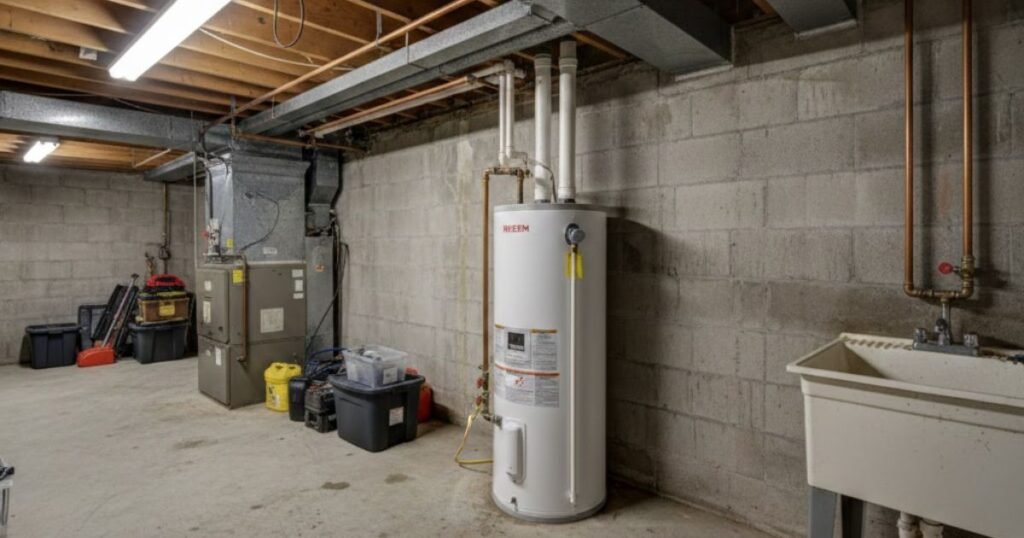
Quick Summary of Best Heat Pump Hot Water System
| Model | Size | UEF | Warranty | Best For |
| Rheem ProTerra | 50 Gal | 3.88 | 10 Year | Smart Home Integration |
| A.O. Smith Voltex AL | 50 Gal | 3.80 | 10 Year | Quietest Operation |
| ACiQ Electric | 50 Gal | 3.75 | 12 Year | Value & Long Warranty |
| Stiebel Eltron | 80 Gal | 3.61 | 10 Year | Large Families/Longevity |
| Rinnai REHP50 | 50 Gal | 3.75 | 10 Year | Grid Connectivity |
READ MORE: Heat Pump Installation Cost in 2026 (Real Prices, Examples & Savings)
How heat pump hot water systems work — in plain English
A heat pump water heater (HPWH) uses a refrigerant cycle (the same basic idea as your fridge or AC) to move heat from the surrounding air into the tank. Instead of burning gas or sending electricity straight to a resistor to generate heat, a compressor + evaporator extracts ambient heat and transfers it to the water.
Visual / step-by-step:
- Fan draws room/garage air over an evaporator coil.
- Refrigerant absorbs heat and becomes a warm gas.
- Compressor raises the refrigerant’s temperature.
- Heat flows through a condenser into the tank water.
- Refrigerant cools, becomes a liquid, repeat.
Result: 3–4× the efficiency (typically) of simple electric resistance heating in favorable conditions more savings, but equipment is larger and needs space & airflow.
Why homeowners are prioritizing heat pumps in 2026
The shift toward heat pump hot water systems is underpinned by three foundational pillars: economic return on investment (ROI), regulatory shifts, and environmental stewardship. For most households, the transition is no longer a matter of “if” but “when,” particularly as legacy gas systems approach the end of their operational lifespan.
- Lower operating cost: HPWHs use far less electricity to produce the same hot water typical annual savings vs. standard electric ~ $100–$500 depending on usage and rates. (Manufacturers quote different numbers; always calculate for your rates.)
- Better for the planet: Lower electricity consumption (especially paired with renewable/clean electricity) reduces your household carbon footprint.
- Good lifespan & warranties: Most major HPWHs come with 10-year tank or parts warranties; long life if maintained.
- Incentives & rebates: Many federal, state and utility programs give rebates or tax credits always verify local programs before purchase (see “Incentives” section).
- Smart features & demand response: Newer models often include Wi-Fi, scheduling and demand-response compatibility (useful for TOU electricity rates).
Sizing and selection criteria for optimal performance
Selecting a heat pump water heater requires more than simply matching the gallon capacity of a previous unit. Because heat pumps recover more slowly than gas burners, proper sizing is essential to prevent “cold shower” scenarios.
Capacity and first hour rating (FHR)
The First Hour Rating (FHR) is the most critical metric for sizing, representing the amount of hot water a unit can deliver in one hour of heavy use starting with a full tank. Homeowners are generally advised to “size up” when transitioning to a heat pump. A household that was previously served by a 40-gallon gas heater will likely require a 50-gallon or 65-gallon heat pump to maintain the same level of comfort.
| Household Size | Recommended Tank Capacity | Expected FHR (Gallons) |
| 1–2 People | 40–50 Gallons | 50–60 |
| 3–4 People | 50–65 Gallons | 65–85 |
| 5+ People | 80 Gallons / Split-System | 85+ |
Space and airflow requirements
Heat pump water heaters require a specific volume of air typically around 1,000 cubic feet to extract enough heat to operate efficiently. If installed in a small closet, the unit must be louvered or ducted to ensure constant airflow. Furthermore, these units produce a “free” dehumidification effect and cool the surrounding air by approximately $5^\circ F$ to $10^\circ F$ during operation, which can be a significant benefit in warm, humid climates but may require strategic ducting in northern winters.
READ MORE: Geothermal Heat Pump Buying Guide
Market comparison: Leading heat pump water heaters (2026)
The following table provides verified retail data and technical specifications for the most popular models available in the U.S. as of February 13, 2026.
| Brand & Model | Capacity (Gal) | UEF Rating | Retail Price (USD) | Warranty (Years) | Best For | Noise (dBA) | Installation Complexity |
| Rheem ProTerra (XE50T10HS45U1) | 50 | 4.07 | See Price | 10 | Quiet Homes & Low Profile | 45 | Medium |
| A.O. Smith Voltex AL (HPTS-50) | 50 | 3.80 | $2,189 – Feb 13, 2026 | 10 | Hard Water Regions | 51 | Medium |
| ACiQ Electric (ACiQ-50G-HP) | 50 | 3.75 | See Price | 10 | Professional Reliability | 49.5 | Medium |
| Stiebel Eltron Accelera 300 E | 80 | 3.61 | See Price | 10 | Large Families | 52 | Complex |
| Rinnai REHP50 Electric Heat Pump Water Heater | 50 | 3.75 | See Price | 10 | Sleek Integration | 45 | Medium |
(Note: Bosch retail pricing fluctuates by distributor; value reflects market average from major retailers).
In-depth Heat Pump brand reviews
Transitioning to a heat pump water heater (HPWH) is one of the smartest upgrades for a modern home, offering energy savings that typically pay for the unit within 3–5 years. In 2026, these models represent the top tier of efficiency and “smart” integration.
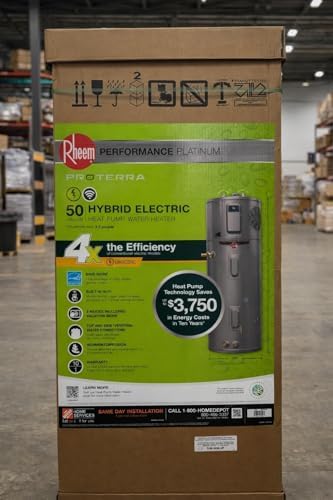
1. Rheem ProTerra (XE50T10HS45U1)
A high-tech, 50-gallon hybrid electric water heater known for its robust “smart” ecosystem. This model includes integrated leak detection and an auto-shutoff valve.
- Key Features: EcoNet® WiFi integration, LeakGuard™ shutoff system, 3.88 UEF (Uniform Energy Factor), and 67-gallon First Hour Rating (FHR).
- Pros:
- Industry-leading app for energy tracking and scheduling.
- Self-cleaning feature helps prevent sediment buildup.
- Built-in leak protection provides peace of mind for indoor installs.
- Cons:
- EcoNet app can occasionally be finicky with connectivity.
- Compressor noise is noticeable compared to “ultra-quiet” competitors.
- Price: $1,700 – $1,850
- Verdict: The best choice for tech-enthusiasts who want granular control over their energy usage and a high level of built-in safety.
Check Product on Amazon-
- It must be wired into your home’s electrical system and will typically require a dedicated electrical circuit (similar t…
2. A.O. Smith Voltex AL (HPTS-50)
Engineered for versatility and silence, the Voltex AL is often cited as the quietest unit in its class. It features a slim profile and flexible venting options.
- Key Features: 3.80 UEF, iCOMM™ Smart Connectivity, ultra-quiet 45 dBA operation, and zero-clearance design on sides/back.
- Pros:
- Remarkably quiet; ideal for closets near living areas.
- Top and front water connections make it easier to install in tight spaces.
- Smart anode rod extends tank life by adapting to water conditions.
- Cons:
- Electronic interface is a bit dated compared to the Rheem.
- Lower First Hour Rating (65-66 gal) than some competitors.
- Price: $1,650 – $1,800
- Verdict: The gold standard for indoor installations where noise and space are the primary concerns.
Check this AO-Smith 120 volts Indoor or Outdoor Liquid Propane/Natural Gas Tankless Water Heater with Conversion Kit-

- A leading manufacturer of water heaters and boilers for residential and commercial applications
- Known for innovative, energy-efficient technologies that improve hot-water performance
3. ACiQ Electric (ACiQ-50G-HP)
A budget-friendly but high-performing hybrid heater that emphasizes ease of installation and a longer-than-average warranty.
- Key Features: 3.75 UEF, 69-gallon FHR, 5 operating modes (including “E-heater” for fast recovery), and a 12-year tank/parts warranty.
- Pros:
- Excellent 12-year warranty (most competitors offer 10).
- Strong cold-climate efficiency rating (CCE 3.0).
- Often available at a lower price point during regional sales.
- Cons:
- Smaller brand presence; finding local authorized service techs can be harder.
- The interface is functional but lacks the “slick” feel of Rheem or AO Smith.
- Price: $1,550 – $1,750
- Verdict: A fantastic value-play for homeowners who want a longer warranty without the premium brand-name markup.
Check Product on Amazon-

- CERTIFIED ACiQ SELLERS: Everything you need for reliable HVAC solutions!
- INDOOR INSTALLATION: It performs best in stable indoor temperatures and should not be installed in unheated spaces below…
- PERFECT LOCATION: Ideal for basements or garages, this 50 gallon hot water heater electric unit requires 700–1,000 cubic…
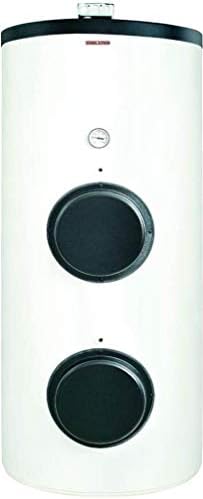
4. Stiebel Eltron Accelera 300 E
A German-engineered “true” heat pump heater. Unlike hybrids that lean on backup elements, the Accelera is designed to let the heat pump do 90% of the heavy lifting. Note: This is an 80-gallon unit.
- Key Features: 3.39–3.61 UEF, 74-gallon FHR, single “booster” element, and massive 80-gallon storage tank.
- Pros:
- Superior build quality and engineering (tank-like durability).
- Minimizes use of expensive resistance heating elements.
- Large capacity ensures hot water even during high-demand mornings.
- Cons:
- Enormous size: It is significantly taller and wider than the 50-gallon models.
- Most expensive unit on this list.
- Price: $2,500 – $2,700
- Verdict: The “premium” choice for large families who have the space (and budget) for a unit that will likely outlast the competition.
Check Product on Amazon-
5. Rinnai REHP50 Electric Heat Pump
Rinnai brings its reputation for reliability to the heat pump market. The REHP50 is a sleek, sustainable solution designed for high efficiency and zero emissions.
- Key Features: 3.75 UEF, 66-gallon FHR, Demand Response enabled (CTA-2045 port), and whisper-quiet variable speed fan.
- Pros:
- Modern, sleek design that fits well in finished basements.
- Grid-ready; can easily participate in utility “peak-shaving” programs for extra savings.
- Very high reliability scores from early 2025-2026 data.
- Cons:
- Professional installation is highly recommended (and often required for full warranty).
- Recovery speed in “Heat Pump Only” mode is slightly slower than the Rheem.
- Price: $1,750 – $1,900
Verdict: Best for new construction or eco-conscious homes looking for a grid-integrated appliance.
Check Product on Amazon-

- Energy-efficient performance: Energy Star Certified. Extracts heat from ambient air to deliver consistent hot water with…
- High first-hour delivery: Provides up to 73 gallons of hot water in the first hour—ideal for households of 3–4 people wi…
- Demand-Response Enabled: Saves you money by communicating with local utilities to reduce energy usage during peak hours
READ MORE: Goodman Heat Pump Review 2026 | Efficiency, Cost, Pros & Cons
Real-world cost analysis: Installation and payback
The economic viability of a heat pump hot water system is determined by the total installed cost versus the long-term energy savings. In 2026, although purchase prices remain higher than traditional tanks, the proliferation of incentives and lower operating costs have shortened the “payback period” significantly.
Breakdown of installation costs
The average cost to install a heat pump water heater in the U.S. in early 2026 is approximately $4,200, with a standard range of $3,200 to $4,700. If the installation requires significant electrical upgrades such as moving from a 120-volt gas unit to a 240-volt electric unit—the cost can rise toward $8,000.
| Cost Component | Typical Range (2026 USD) |
| Heat Pump Unit (50 Gal) | $1,500 – $2,500 |
| Labor (Standard Replacement) | $1,200 – $2,000 |
| Electrical Upgrades (if required) | $800 – $3,000 |
| Permits & Basic Materials | $200 – $500 |
| Total Estimated Project Cost | $3,900 – $8,000 |
Payback calculation and ROI
A simple payback calculation demonstrates the rapid ROI of these systems, particularly in high-electricity-cost states like California or Massachusetts.
- Average Annual Savings: $300 – $550.
- Upfront Price Premium: Approx. $1,500 more than a standard electric heater (including labor).
- Payback without Incentives: $1,500 / 425 \approx 3.5 \text{ years}$.
- Payback with State Rebates: With an average HEAR rebate of $1,750$, the system often becomes cheaper than a standard electric tank at the point of installation, leading to an “instant” payback.
READ MORE: Air to Water Heat Pump — Complete 2026 Buyer’s Guide (costs, brands, pros & cons)
Incentives, rebates, and the 2026 legislative landscape
A critical change in 2026 is the sunset of the federal 25C Energy Efficient Home Improvement Credit, which officially expired on December 31, 2025. Homeowners can no longer claim the 30% tax credit for 2026 installations. However, this has been superseded by the full implementation of state-administered rebate programs funded by the Inflation Reduction Act.
Home Electrification and Appliance Rebates (HEAR)
Formerly known as HEEHRA, the HEAR program provides point-of-sale discounts rather than tax credits. This means the discount is applied directly to the invoice by the contractor, reducing the upfront financial burden.
- Low-Income Households (<80% AMI): Eligible for 100% of the project cost, up to $1,750$ for a heat pump water heater.
- Moderate-Income Households (80%–150% AMI): Eligible for 50% of the project cost, up to $1,750$.
Homeowners are encouraged to use state energy office portals or utility-specific databases to verify current funding levels, as high demand in states like California has led to waitlists in early 2026.
Maintenance, warranties, and longevity expectations
A heat pump water heater is a more complex appliance than a standard resistance tank and requires specific maintenance to reach its expected lifespan of 10 to 15 years.
Critical maintenance tasks
The primary difference in maintaining a heat pump system is the air filter management. Because the unit relies on airflow to extract heat, a dirty filter significantly reduces efficiency and can trigger system error codes. Manufacturers typically recommend cleaning the air filter with mild soap and water every three to six months.
Furthermore, the unit produces condensate during operation. Homeowners must ensure the condensate drain line is clear of obstructions. Annually, the sacrificial anode rod should be inspected and replaced if more than half of its material has been consumed. Failure to maintain the anode rod is the leading cause of premature tank failure in all storage water heaters.
Warranty coverage in 2026
The industry standard for HPWH warranties in 2026 is 10 years for the tank and parts, with a 1-year labor warranty frequently included. Premium brands like Stiebel Eltron and Bradford White emphasize their warranty as a safety net for their higher initial costs, often facilitating easier parts availability through professional supply chains.
READ MORE: Fujitsu Heat Pump Reviews (2026): Models, Costs & Real-World Pros & Cons
Pros and cons summary: Is a heat pump right for you?
Before committing to an upgrade, homeowners should weigh the specific benefits of heat pump technology against the operational requirements.
General pros of HPWH systems
- Extreme Efficiency: Uses 60% to 75% less electricity than standard heaters.
- Substantial Incentives: Access to up to $1,750$ in point-of-sale rebates.
- Dehumidification: Naturally removes moisture from basements and garages.
- Smart Technology: Integrated Wi-Fi and leak detection are standard on most 2026 models.
General cons of HPWH systems
- Upfront Cost: Higher initial price for the unit and professional labor.
- Slow Recovery: Slower to heat water than gas, necessitating larger tank sizes.
- Space Needs: Requires significant airflow and produces cool exhaust.
- Maintenance: Requires periodic filter cleaning and condensate drain monitoring.
Does a heat pump water heater work in a cold basement?
Yes. Modern hybrid units are designed to pull heat from air as cool as $40^\circ F$. If the basement temperature drops below the heat pump’s operational threshold, the unit will automatically switch to standard electric resistance mode to ensure hot water remains available.
Is it worth replacing a gas water heater with a heat pump?
In 2026, the answer is generally yes, especially if the current gas unit is over 10 years old.
How loud is a heat pump water heater?
Operating noise has improved significantly. The best models in 2026, such as the Rheem ProTerra, operate at 45 dBA, which is comparable to the hum of a high-end dishwasher. Older or budget models may reach 55 dBA, similar to a standard window air conditioner.
Do these units require a special drain?
Because heat pumps dehumidify the air, they produce water (condensate). This requires a drain line to a floor drain or a small condensate pump to move the water to a nearby sink or outdoors. This is a standard part of professional installation in 2026.
Can I install a heat pump water heater myself?
While possible for a skilled DIYer, professional installation is strongly recommended and often required to qualify for state rebates and manufacturer warranties. The process involves plumbing, electrical, and sometimes ducting work that must adhere to local building codes.
Final recommendation and strategic next steps
In summary, the Rheem ProTerra is the efficiency and tech king, while the A.O. Smith Voltex AL is the best choice for a quiet home. If you have a large family and the floor space, the Stiebel Eltron is a masterclass in engineering. For those looking for the longest protection, the ACiQ offers a compelling 12-year warranty at a competitive price.
To proceed with an upgrade, homeowners should follow this three-step strategic path:
- Measure and Verify: Confirm that the installation site has at least 1,000 cubic feet of air space or can be ducted. Use the household peak-usage patterns to decide between a 50-gallon or 80-gallon unit.
- Check Local Rebates: Visit the state energy office website or use a rebate finder tool to identify available HEAR or utility discounts. Always get a rebate reservation before purchasing.
- Consult a Professional: Obtain at least two quotes from contractors who are “TECH” certified or enrolled in state electrification programs. These professionals are trained to handle the specific electrical and drainage requirements of heat pump systems, ensuring the unit operates at peak efficiency for its entire 15-year lifecycle.
Author Bio: Marcus Stone. Thorne, P.E.
Marcus is a registered Professional Engineer and building systems consultant specializing in residential electrification and high-performance HVAC systems. With over 10 years of experience in the energy sector, Thorne has served as a technical advisor for the Department of Energy’s Better Buildings initiative and has authored numerous white papers on the thermodynamic efficiency of vapor-compression cycles in domestic appliances. He is currently an industry analyst focusing on the impact of the Inflation Reduction Act on the U.S. plumbing and heating markets.