Buying a new HVAC system is a big deal. It is one of the most expensive things you will do for your home. You want a system that lasts. You want lower energy bills. Most of all, you want to stay comfortable. American Standard has been a top name in home comfort for over 100 years. They are known for making some of the toughest units on the market.
This guide is for U.S. homeowners who are ready to upgrade. We will cover the costs, the models, and the technology. We will also look at the real-world prices for 2026. By the end, you will know if American Standard is the right fit for your budget and your home. Lest deep dive into “American Standard HVAC Systems: Complete Buyer’s Guide for U.S. Homeowners (2026)”
Best HVAC for Home 2026: Quick Winner
- Best for Efficiency: The Platinum 20 with AccuComfort™ technology is the gold standard for low bills and perfect humidity.
- Best for Budget: The Silver Series offers legendary American Standard durability without the premium price tag.
American Standard HVAC Systems: Quick Facts at a Glance
| Feature | Details |
| Typical Price Range | $8,800 – $20,000+ (Full system installed) |
| Best Models | Platinum 20 (AC/Heat Pump), Gold S9V2 (Furnace) |
| Warranty Highlights | 10-year registered parts; 12-year compressor; Lifetime heat exchanger |
| Life Expectancy | 15–25 years (with proper maintenance) |
| Efficiency (SEER2) | Up to 23.6 SEER2 |
READ MORE: Goodman AC Unit Review: Performance, Costs & Which Model to Buy
Why Choose American Standard?
American Standard is often ranked #1 in reliability. Why? Because they build their own parts. While other brands buy “off-the-shelf” parts, American Standard designs their own Spine Fin™ coils and Duration™ compressors.
1. Unmatched Reliability
In the HVAC world, reliability means fewer repairs. American Standard systems are tested in extreme conditions. They run units through “The Butcher” , a testing lab that simulates five years of wear in just a few months. This is why many units last over 20 years.
2. American Standard: The Dealer Network
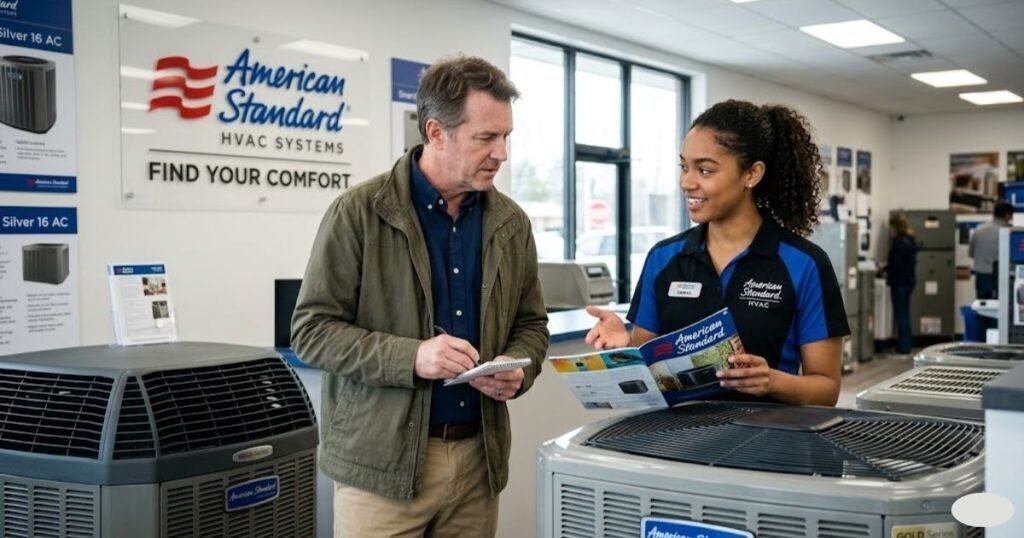
You cannot buy an American Standard unit at a big-box store. You must go through a certified dealer. These technicians undergo strict training. This ensures your system is sized correctly. A system that is too big will “short cycle,” which wastes energy and breaks parts.
3. American Standard AccuComfort™ Technology
This is the “secret sauce” of their premium line. Most HVAC units are either “on” or “off.” Think of it like a light switch. AccuComfort™ is like a dimmer switch. It has up to 750 speeds. It adjusts in 1/10th of 1% increments. This keeps your home within a half-degree of your target temperature.
4. American Standard Warranty basics
American Standard’s warranty structure includes a Base Limited Warranty (automatic) and a Registered Limited Warranty (requires registration, often within 60 days) that extends parts coverage. Labor is usually excluded unless the dealer offers a separate labor warranty. Always read the warranty PDF for the exact product.
How American Standard Lines Compare
Explainer callouts (one-line):
SEER — Seasonal Energy Efficiency Ratio: higher = more efficient cooling.
HSPF — Heating Seasonal Performance Factor: higher = more efficient heat pump heating.
AFUE — Annual Fuel Utilization Efficiency: used for gas furnaces; percent of fuel converted to heat.
Finding the right tier depends on your climate and budget. Use this table to see where you fit.
| Model / Line | Typical SEER2 / HSPF2 | Best For | Estimated Installed Price | Warranty Summary | Who Should Pick It |
| Platinum (AccuComfort) | 18 – 23.6 SEER2 / 10+ HSPF2 | Max Efficiency & Comfort | $15,000 – $22,000 | 10yr Parts / 12yr Compressor | Homeowners in extreme climates (Deep South or North). |
| Gold Series | 16 – 18 SEER2 / 9+ HSPF2 | Balanced Value | $11,000 – $16,000 | 10yr Parts / 10yr Compressor | Those wanting quiet, 2-stage cooling without the top price. |
| Silver Series | 14.3 – 16 SEER2 / 8+ HSPF2 | Budget-Friendly | $8,800 – $11,500 | 10yr Parts / 10yr Compressor | Great for rental properties or moderate climates. |
| Essentials (Value Tier) | 13.4 – 14.3 SEER2 | Minimum Cost | $7,500 – $9,500 | 10yr Parts (standard) | Homeowners on a strict budget needing basic cooling. |
Note: Prices vary by dealer and region. Always get at least three local quotes.
READ MORE: Air Conditioning Companies — Compare, Costs & How to Choose
Best HVAC for Home 2026
1. American Standard AccuComfort™ Platinum 20 (Variable-Speed)
The Platinum 20 is the flagship. It uses a variable-speed compressor. Most units blast cold air and then shut off. This causes “hot spots” in your house. The Platinum 20 stays on at a very low speed. It sips electricity. It is also incredible at removing humidity. If you live in a humid place like Florida or Houston, this unit will make your home feel much cooler at 75°F than a cheaper unit would. It is also the quietest model. You can barely hear it running outside. Pros: best comfort and efficiency. Cons: higher upfront cost and dealer-dependent pricing.
2. American Standard Gold Series (Mid-Range)
The Gold 17 is a two-stage unit. It has a “high” and a “low” setting. It runs on the low setting about 80% of the time. This saves money. When it gets really hot outside, it kicks into high gear. This is the “sweet spot” for many homeowners. You get better comfort than the Silver series, but you save thousands compared to the Platinum.
3. American Standard Silver Series (Budget)
The Silver 14 and 16 are single-stage units. They are simple. Simple is good for reliability. There are fewer electronic boards to break. These models use the same Spine Fin™ coils as the expensive units. They are durable and work well in moderate climates. If you live in a place where you only use the AC for two months a year, a Silver unit is often the smartest choice.
4. American Standard Furnace
American Standard offers 80% AFUE and 95%+ AFUE furnaces.
- 80% AFUE: Good for warm climates where the heater rarely runs.
- 95%+ AFUE: A must-have for the Midwest or Northeast. The Platinum 95 is a modulating furnace. It adjusts the flame height to keep the heat perfectly steady.
5. American Standard Heat Pumps: Where They Fit
Heat pumps (including AccuComfort heat pumps) are increasingly common for whole-home heating and cooling, particularly where winters are mild to moderate. They provide both heating and cooling in one system and can be highly efficient. For cold climates, consider dual-fuel setups (heat pump + gas furnace) for best winter performance.
American Standard AC Cost (As of Mid 2026)
Prices for HVAC systems have risen due to new refrigerant standards (R-454B) and labor costs. Here is what you can expect to pay today.
Current Market Data:
- Estimated full system (AC + Furnace + Install): $8,800 – $21,500.
- Average AC-only replacement (U.S.): $6,200 (Source: Modernize 2026 HVAC Guide).
- Specific Quote Example: A 3-ton Platinum 20 system in Texas was recently quoted at $16,521.86 (Source: Top Gun Air/American Standard Dealer Listing).
- Regional Variation (AC Install only):
- Northeast (NYC/Boston): $7,800 – $9,500.
- South (Miami/Dallas): $5,200 – $7,000.
- West (Seattle/SF): $8,000 – $11,000.
- Furnace Unit Only: $1,250 – $4,900; Total Installed: $2,800 – $9,200 (Source: HomeGuide 2026 Price Index).
READ MORE: Home Depot Air Conditioner: A Complete Buying & Installation Guide for U.S. Homeowners
American Standard AC Pros & Cons
Pros
- Legendary Reliability: Consistently rated as one of the least likely brands to need major repairs.
- Superior Coils: The all-aluminum Spine Fin™ coil resists corrosion better than standard copper/aluminum coils.
- Quiet Operation: Premium models run as low as 54 dB (like a quiet conversation).
- Resale Value: Having a high-end, transferrable warranty system can increase your home’s value.
- Humidity Control: AccuComfort™ models are industry leaders in removing moisture.
- Strong Dealer Network: Easy to find parts and qualified service techs in almost every U.S. city.
Cons
- Higher Upfront Cost: You will pay 10% to 20% more than “value” brands like Goodman.
- Dealer Pricing: Since dealers are independent, price quotes can vary by thousands of dollars for the same unit.
- Proprietary Parts: Some high-end parts must come from American Standard, which can take longer to ship.
- Mandatory Registration: If you forget to register the unit within 60 days, your warranty drops from 10 years to 5 years.
American Standard AC Installation & What Affects Price
The unit itself is only about 40% of the total cost. The rest is labor and materials.
Main drivers of price:
- Contractor/Installer: hourly labor rates and reputation. A high-rated contractor costs more but reduces risks.
- Ductwork repairs: leaky/undersized ducts add thousands. Fix ducts before buying a new unit.
- Tonnage/SEER/HSPF: larger tonnage and higher SEER increase equipment costs.
- Region & permits: local permit fees and labor markets vary by city/state.
- Add-ons: smart thermostats, line sets, drain pans, permits, electrical upgrades (breaker/panel), and moving refrigerant lines can raise costs.
- Old equipment disposal: extra fee for hauling away old units.
Typical add-on costs (ballpark):
- Smart thermostat: $150–$400 (installed).
- Duct sealing / minor repairs: $500–$2,500.
- Major duct rework: $3,000–$7,000+.
- Electrical panel upgrade: $1,000–$3,500.
READ MORE: Lennox Air Conditioners Review
American Standard AC Maintenance & Expected Lifespan
Maintenance schedule (simple):
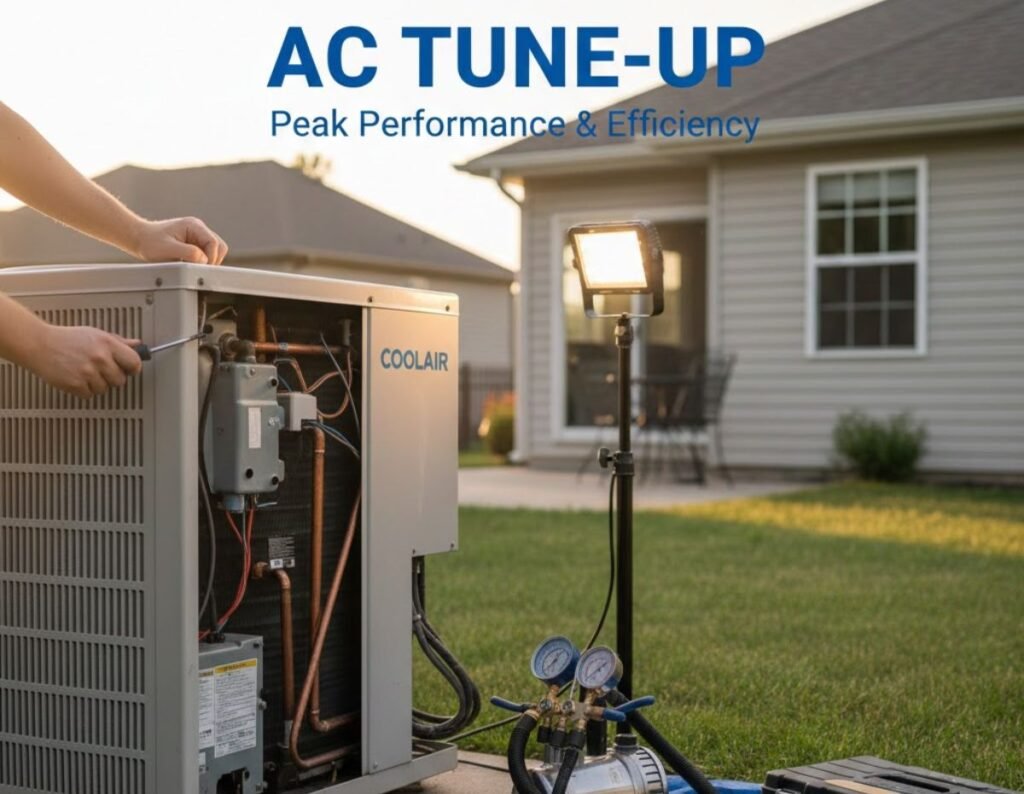
- Annually — professional tune-up (clean coils, check refrigerant, inspect ducts, test controls).
- Every 3–5 years — inspect duct insulation, clean/replace air filters quarterly.
- Keep records — save invoices to keep warranties valid.
Expected lifespan:
12–20 years. Variable-speed and heat-pump systems may last longer with great maintenance. Age, usage, environment (coastal salt air vs dry inland), and maintenance drive longevity.
American Standard Warranty Tips:
- Register equipment within 60 days to get Registered Limited Warranty benefits; otherwise you get Base Limited Warranty.
- Ask dealer to provide warranty paperwork and confirm who handles labor claims.
- Keep installation invoice and serial numbers; warranty lookup tools on the manufacturer site let you verify coverage.
Energy Savings & Running Cost Examples (Short Calculations)
Scenario: Replace a 15-year-old 3-ton central AC (SEER ≈ 10) with an AccuComfort 3-ton (SEER ≈ 18). Electric cost assumed $0.16 / kWh (U.S. average estimate).
Step-by-step calculation (digit-by-digit):
- Cooling load approx: 3 tons = 36,000 BTU/hr.
- Assume 1,000 cooling hours/year (typical-season estimate).
- Annual cooling delivered: 36,000 BTU/hr × 1,000 hr = 36,000,000 BTU/year.
- Convert to kWh using SEER (BTU per watt-hour):
- For SEER 10: kWh = 36,000,000 / (10 × 1000) = 3,600 kWh/year.
- For SEER 18: kWh = 36,000,000 / (18 × 1000) = 2,000 kWh/year.
- Annual kWh saved: 3,600 − 2,000 = 1,600 kWh/year.
- Dollar savings: 1,600 kWh × $0.16/kWh = $256/year.
Bottom line: Replacing a SEER-10 unit with a SEER-18 AccuComfort could save roughly $250–$300/year in electricity for this 3-ton example. Actual savings vary with local electric rates and hours of operation.
READ MORE: Central Air Conditioner
Common Pitfalls & How to Avoid Them
- Wrong sizing — Oversizing short-cycles and hurts humidity control. Avoid: insist on a Manual J load calculation.
- Skipping duct evaluation — Leaky ducts waste efficiency. Avoid: get ducts inspected and sealed if needed.
- Not registering warranty — Missed registration reduces coverage. Avoid: have dealer register or register online within 60 days.
- Buying on price alone — Low price quotes may hide poor installation or missing items. Avoid: get itemized bids.
- Failing to check labor warranty — Manufacturer covers parts; not always labor. Avoid: ask dealer about labor coverage.
- Ignoring local rebates/credits — You may miss rebates or tax credits for efficient heat pumps. Avoid: ask dealer and check ENERGY STAR/utility programs.
American Standard AC Dealers: Near Me
Checklist for evaluating dealers:
- Are they an authorized American Standard dealer? (Use manufacturer dealer search.)
- Do they provide a Manual J load calculation? (Request it in writing.)
- Do they provide an itemized written quote (equipment, labor, permits, ductwork)?
- What warranty registration will they do — will they register for you? (Get a copy of the registration.)
- Ask about labor warranty length and what’s covered.
- Request references and recent installation photos.
- Ask about install schedule (off-season discounts possible) and financing options.
- Confirm permit handling — responsible party for pulling permits.
Paperwork to expect: Itemized contract, permit receipts, equipment serial numbers, warranty paperwork, maintenance/installation checklist.
Financing & incentives: Ask about in-house financing, utility rebates, and any federal tax credits (heat pump rebates/tax credits vary). Dealers often help navigate local incentives.
READ MORE: Trane Air Conditioner
FAQs
How much does an American Standard HVAC system cost?
In 2026, a full system typically costs between $8,800 and $20,000 installed. High-end variable-speed systems average around $16,000, while basic Silver series systems can be found for under $10,000.
Is American Standard HVAC reliable and worth the price?
Yes, it is widely considered one of the top three most reliable brands. While the upfront cost is higher, the lower repair frequency and longer lifespan (up to 25 years) make it a better long-term value for most homeowners.
What is the warranty on American Standard HVAC units?
Most units come with a 10-year registered limited warranty on parts. The compressor warranty ranges from 10 to 12 years depending on the model. Some furnaces also include a lifetime limited warranty on the heat exchanger.
How long do American Standard HVAC systems last?
With annual maintenance, you can expect an American Standard system to last 15 to 25 years. Systems in harsh coastal environments may have a slightly shorter lifespan of 12 to 15 years due to salt air.
How do I get the best price on an American Standard system?
Get at least three quotes from local independent dealers. Ask about “off-season” discounts in the spring or fall. Finally, check for federal HEEHRA rebates and local utility credits which can save you up to $8,000 on high-efficiency heat pumps.
Final Verdict
American Standard is for the homeowner who wants to “set it and forget it.” If you plan to stay in your home for more than five years, the reliability and energy savings are worth the extra cost. If you are on a very tight budget, the Silver series is still a better build than many other brands’ premium lines.
Your next steps:
- Check your household income for HEEHRA rebate eligibility (can save up to $8,000).
- Find 3 “Customer Care” certified American Standard dealers in your area.
- Ask for a Manual J Load Calculation to ensure you get the right size.