Finding a trustworthy HVAC technician shouldn’t feel like a high-stakes gamble with your home’s comfort. When your air conditioner quits in July or your furnace rattles in January, you need help fast. However, moving too quickly can lead to overpaying or hiring someone who isn’t qualified.
This guide is designed to help you navigate the world of local heating and cooling services. We will break down what services actually involve, what you should realistically expect to pay, and how to spot a “pro” versus a “pretender.” By the end of this article, you will have a clear plan for hiring the right team at the right price.
Most homeowners aren’t technical experts, and that is okay. You don’t need to know how a compressor works to know if you are getting a fair deal. You just need the right questions and a little bit of local knowledge. Let’s deep dive into “Heating and Air Conditioning Service Near Me: A Homeowner’s Guide”

HVAC Maintenance Emergency Quick Steps
If your system fails during extreme weather, do these three things immediately:
- Check your breakers: A tripped switch is often the only problem and costs $0 to fix.
- Check your filter: A clogged filter can cause the system to overheat and shut down for safety.
- Turn the system off: If you hear loud grinding or smell burning, shut it off at the thermostat or breaker to prevent further damage while you wait for a tech.
READ MORE: HVAC Near Me
What HVAC Services Actually Cover
HVAC companies do more than just “fix things”; they manage the entire lifecycle of your home’s climate control. Understanding the specific categories of service will help you explain your needs when you call for help.
1. HVAC Service Call / Diagnostic:
This is the initial visit where a technician identifies the problem. They use specialized tools to test electrical components, pressure levels, and airflow.
2. AC Tune-Up / Seasonal Maintenance:
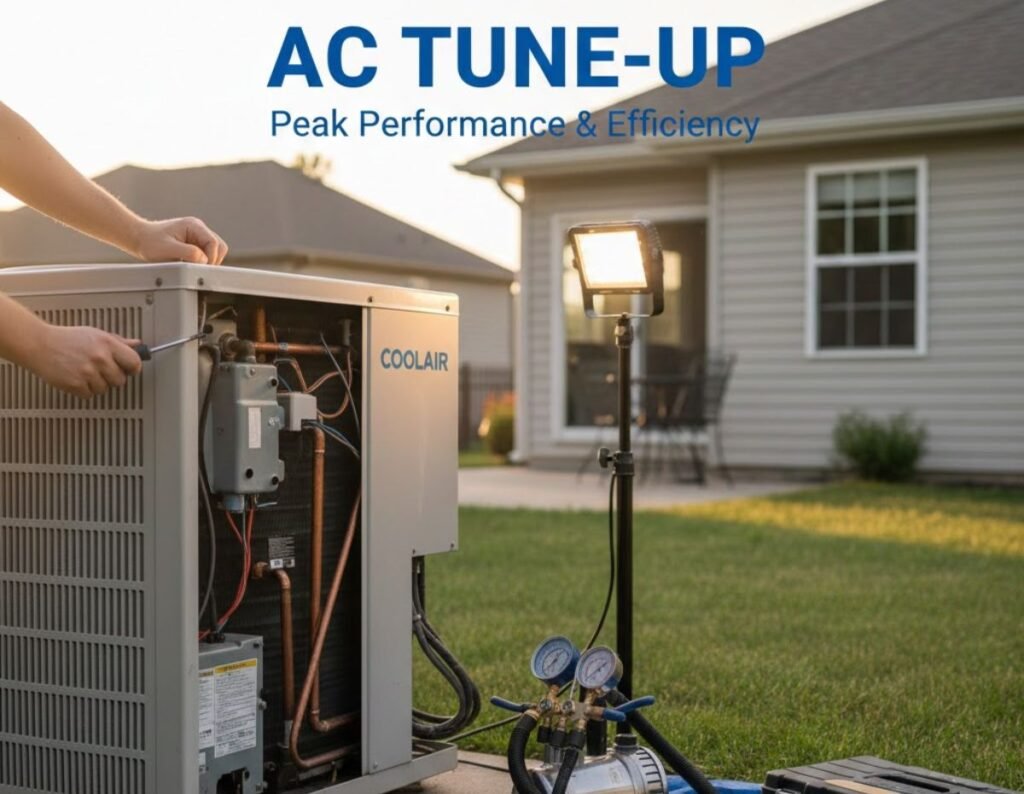
This is a “wellness check” for your system. It usually happens in the spring (for AC) or fall (for heat). It includes cleaning coils, tightening connections, and lubricating moving parts.
3. AC Repairs:
This involves replacing specific broken parts. Common repairs include swapping out capacitors, fan motors, contactors, or control boards.
4. Emergency HVAC Repair Service:
This is a repair requested outside of normal business hours, such as nights, weekends, or holidays.
5. AC Installation / Replacement:
When a system is too old or broken to fix, a crew installs a brand-new indoor and outdoor unit.
6. Ductwork:
Pros check for leaks in your air vents, clean them out, or replace sections that have collapsed or been damaged by rodents.
7. Thermostat / Controls:
Technicians install and calibrate “brains” for your system, ranging from simple digital boxes to advanced smart-home thermostats.
READ MORE: AC Tune-Up
HVAC Service Cost (Real Price Snapshot)
Knowing the average price ranges in the U.S. helps you negotiate with confidence and spot “low-ball” or “gouging” quotes. Prices vary based on your specific region, the size of your home, and how busy the season is.
1. HVAC service call / diagnostic Cost:
$70–$200. What moves the price: Most companies charge more for “after-hours” or emergency calls compared to a scheduled Tuesday morning visit.
2. AC tune-up / seasonal maintenance Cost:
$65–$250. What moves the price: Basic “cleans” are cheap, but premium inspections that include chemical coil cleaning or refrigerant level checks cost more.
3. Typical AC Repair Cost (common parts):
$150–$600. What moves the price: The cost of the part itself and the complexity of the labor involved (like reaching a unit in a tight crawlspace) will change the final bill.
4. Furnace replacement Cost (turnkey):
$2,000–$7,500. What moves the price: The fuel type (gas vs. electric), the efficiency rating (AFUE), and whether you need new venting pipes will drive this cost.
5. Full HVAC replacement / central AC replacement Cost:
$3,000–$15,000+. What moves the price: System size (tonnage), energy efficiency (SEER2 ratings), and whether your existing ductwork needs major repairs.
Comparing Your Local HVAC Service Options
Not all HVAC companies are built the same, and the best choice depends on whether you need a quick fix or a major upgrade. Use this table to compare the four most common types of providers you will find when searching for “HVAC service near me.”
HVAC Provider Comparison Table
| Service Type | What it Covers | Typical Price (US Avg) | Value Rating (1–5) |
| Local Independent Tech | Same-day repair, flexible service | $70–$250 service call; repairs $150–$600 | 4 |
| National Chain | Guarantees, lots of crews, premium pricing | $100–$300 service call; repairs $200–$800 | 3 |
| HVAC Subscription/Plan | Yearly tune-ups, priority scheduling | $100–$400 per year | 4 |
| Manufacturer-Certified Dealer | Best for warranty-covered installs | Install higher; often more expensive | 4 |
Note: Ratings are based on a balance of reliability, price, speed, and long-term warranty support.
READ MORE: Mini Split Air Conditioners
How to Find Local HVAC Pros
Finding a good technician starts with looking in the right places and verifying their credentials before they arrive at your door. Follow these steps to build a shortlist of 2–3 companies.
1. Search Google & Maps: Look for companies with a 4.5-star rating or higher. Read the “Newest” reviews, not just the “Most Relevant” ones, to see how they are performing lately.
2. Check Local Social Media: Post in your town’s Facebook group or on Nextdoor. Neighbors are usually very vocal about who did a great job and who to avoid.
3. Manufacturer Sites: If you have a specific brand like Trane, Carrier, or Lennox, go to their official website and use their “Dealer Locator.” These pros have special training on your specific equipment.
4. Verify Licenses: Almost every state requires an HVAC contractor license. Ask for their license number and check it against your state’s online database.
5. Confirm Insurance: Ensure they carry both general liability insurance and workers’ compensation. This protects you if a tech gets hurt on your property or if they accidentally cause a leak or fire.
What to Ask on the Phone
The first phone call is your best chance to weed out unprofessional companies before they charge you a diagnostic fee. Use this checklist to stay in control of the conversation.
- “Are you licensed and insured in this state?” (Wait for a firm “Yes.”)
- “What is your flat-rate service call fee?”
- “Does that fee get applied to the repair if I hire you?” (Some companies do this as a courtesy.)
- “When is your next available arrival window?”
- “Do you offer a warranty on labor, or just on the parts?”
- “Can you provide 2–3 local references for similar jobs?”
- “Will the technician be wearing a uniform and driving a marked company vehicle?” (This is a safety check.)
READ MORE: Mitsubishi Air Conditioner
Sample Phone Script
“Hi, my name is [Your Name] and my AC is blowing warm air. I have a [Brand, e.g., Rheem] system. What is your standard service call fee to come out and diagnose the problem? Also, do your technicians carry common replacement parts on their trucks for same-day repairs?”
Red Flags: When to Say “No Thanks”
Trust your gut—if a deal seems too good to be true or a technician makes you uncomfortable, stop the process. Avoid any company that exhibits these warning signs:
- Demanding cash upfront: Professional companies might ask for a deposit on large installs, but they never demand “cash only” for service calls.
- Refusing to give a written estimate: Never agree to work based on a verbal “handshake” price. You need it in writing.
- High-pressure sales: If a tech tells you your house will burn down tonight unless you buy a $10,000 unit right now, get a second opinion.
- No physical address: If their “office” is just a P.O. Box and a cell phone number, they might be hard to find if the repair fails.
- Vague “Over the Phone” Quotes: A pro cannot tell you exactly what is wrong without seeing the unit. Avoid anyone who promises a final repair price before arriving.
How to Compare Quotes
The cheapest quote is rarely the best quote; you need to look at the total value offered in the contract. When you have 2 or 3 written estimates, compare them across these five categories:
1. Equipment Specifications: Are they quoting the exact same brand and model number? A “14 SEER” unit is much cheaper than a “20 SEER” unit.
2. Scope of Work: Does the quote include things like a new thermostat, a new “pad” for the outdoor unit, or electrical upgrades? One quote might look higher because it is more complete.
3. Warranties: There are two types. The Manufacturer Warranty covers parts (usually 5–10 years). The Labor Warranty covers the tech’s time (usually 1–2 years). Look for longer labor warranties.
4. Permits and Inspections: Does the price include the cost of local building permits? If a company says “you don’t need a permit,” they are likely cutting corners.
5. Rebate Assistance: Will the company help you file for utility rebates or federal tax credits? This can save you thousands on the back end.
READ MORE: Goodman AC Unit Review: Performance, Costs & Which Model to Buy
Understanding HVAC Warranties and Permits
A warranty is only as good as the paperwork behind it. Most homeowners forget to “register” their new systems, which can cut a 10-year warranty down to 5 years automatically.
- Registration: After a new installation, ensure the contractor registers the unit with the manufacturer, or do it yourself online within 60 days.
- Parts vs. Labor: If a motor breaks in Year 3, the manufacturer sends a free motor. However, you still have to pay the technician $300+ in labor to install it unless you have a labor warranty.
- The Importance of Permits: In many cities, replacing an HVAC system requires a permit. This triggers a third-party inspector to come out and verify the job was done safely. This is a huge “safety net” for you as a homeowner.
HVAC DIY Maintenance Tips
You can prevent expensive “Emergency Service” calls by spending 10 minutes a month on basic upkeep. These simple tasks keep your system running efficiently and extend its lifespan.
- Change the Filter: This is the #1 reason systems fail. Change your 1-inch filters every 30–90 days. If you have pets or allergies, check them every month.
- Clear the Outdoor Unit: Keep grass, weeds, and “junk” at least two feet away from your outdoor AC unit. It needs to “breathe” to release heat.
- Rinse the Coils: Once a year, use a gentle garden hose (no pressure washers!) to rinse dust and pollen off the outdoor fins.
- Check the Drain Line: If you see water pooling around your indoor unit, your “condensate line” might be clogged. A shop-vac can often suck the clog out from the outside.
- Thermostat Batteries: If your screen is blank, try fresh AA batteries before calling a pro. It’s a common $5 fix.
READ MORE: New HVAC System Cost — What It Really Costs to Replace Your Heating & Cooling
Efficiency Ratings Made Simple
When you are looking at new systems, you will see a lot of acronyms. Here is what they actually mean for your wallet:
- SEER2 (Seasonal Energy Efficiency Ratio): This measures AC efficiency. The higher the number, the less electricity it uses. Modern units start around 13.4, but high-end units reach 20+.
+1 - AFUE (Annual Fuel Utilization Efficiency): This is for furnaces. A “95% AFUE” furnace means 95 cents of every dollar spent on gas goes toward heating your home, while 5 cents goes out the chimney.
+1 - EER2: Similar to SEER, but measures how the unit performs on the hottest day of the year specifically.
HVAC Financing and Discounts
An HVAC replacement is one of the most expensive things you will buy for your home, but you don’t always have to pay all at once.
Service Plans: Many companies offer “Maintenance Clubs.” You pay a monthly fee, and they include two tune-ups a year plus a 10–15% discount on any repairs you might need.
Seasonal Offers: Companies are slowest in early spring and late fall. You can often get a better price by booking an installation during these “shoulder seasons.”
Manufacturer Rebates: Brands like Carrier or Trane often run $500–$1,500 rebates during specific months. Ask your dealer if any are active.
Utility & PACE Programs: Check with your local electric or gas company. They often provide low-interest loans or instant rebates for switching to high-efficiency heat pumps.
READ MORE: Air Conditioning Companies — Compare, Costs & How to Choose
Pros & Cons of Different Service Models
Deciding between a “Mom and Pop” shop and a big national name comes down to what you value more: price or protection.
Local Independent Technician
- Pros: Usually the lowest prices. You get to talk directly to the owner. Very fast response times if they live in your neighborhood.
- Cons: They might not have a big “fleet” of trucks, so if their one truck breaks down, they can’t help you. They may lack specialized tools for very high-tech smart systems.
National Chain / Large Franchise
- Pros: They have standardized training and “iron-clad” guarantees. They usually have parts in stock that others have to order.
- Cons: Higher prices to cover their massive advertising budgets. You might feel like just a number, and technicians often have “sales quotas” to meet.
Subscription / Maintenance Plan
- Pros: You get “front of the line” priority during heatwaves. It keeps your warranty valid (manufacturers require proof of maintenance).
- Cons: It’s a recurring cost. If you move or forget about it, you are paying for a service you might not use that year.
Frequently Asked Questions
How much does an HVAC service call cost near me?
A standard diagnostic or service call typically costs between $70 and $200. This fee covers the technician’s time, travel, and the use of their tools to find the problem.
What does an AC tune-up include and how much does it cost?
An AC tune-up costs between $65 and $250 and includes a full system inspection. The tech will clean the coils, check refrigerant levels, tighten electrical connections, and clear the drain line.
How do I choose the best HVAC company near me?
Start by verifying their state license and insurance, then compare at least three written estimates. Look for companies that have been in business for at least five years.
Read reviews
Check certifications
Ask about permits
Is it cheaper to repair or replace my HVAC system?
Repair small issues, but consider replacement if the repair cost is more than 50% of a new system’s price. Also, replace the unit if it is older than 10–15 years.
What should I ask when an HVAC tech gives me a quote?
Ask for a “bottom-line” price that includes labor, parts, and permits. You should also ask specifically what brand of equipment they are installing and what the labor warranty looks like.
Your Homeowner “Call 3 Companies” Checklist
Copy or screenshot this list before you start calling local HVAC companies. Having this data in one place makes it easy to compare your options fairly.
- [ ] Company Name & Phone: _____________________________
- [ ] Service Call Fee: $__________ (Does it apply to the repair? [ ] Yes [ ] No)
- [ ] License Verified? [ ] Yes [ ] No
- [ ] Insurance Verified? [ ] Yes [ ] No
- [ ] Estimated Arrival: _____________________________
- [ ] Labor Warranty Length: _____________________________
- [ ] Total Quote Amount: $_____________________________
Final Thoughts for Homeowners
You have more power in this process than you might think. By doing your research, asking for licenses, and comparing quotes, you ensure that your home stays comfortable without draining your savings account. Remember that a great HVAC technician is a partner in your home’s long-term health. Don’t be afraid to ask questions until you feel 100% comfortable with the plan.
Take a moment to save this guide or screenshot the checklists above. Having them ready when your system eventually needs a “doctor” will save you time, money, and a whole lot of sweat.