There is perhaps no more sinking feeling for a homeowner than waking up on a frigid January morning or a sweltering July afternoon only to realize the house isn’t the temperature it’s supposed to be. You walk over to the thermostat, nudge the settings, and wait. Nothing. Or worse, you hear a frantic grinding noise coming from the backyard.
When your comfort system fails, your first instinct is likely to grab your phone and search for heat pump repair near me. But in the middle of a temperature crisis, how do you separate the high-quality experts from the “fly-by-night” operations? How do you know if you truly need a professional or if there is a simple fix you can handle yourself?
This guide is designed to take the stress out of the situation. We’ll walk you through everything you need to know about diagnosing problems, finding a trustworthy local heat pump repair expert, and making sure you get a fair price for your service. Lets deep dive into “Heat Pump Repair Near Me | Fast & Reliable Local HVAC Service”
READ MORE: Emergency Heat Pump Repair: Signs, Costs & What to Do
What Does a Heat Pump Actually Do?
Before we dive into repairs, it helps to understand what’s going on inside that metal box. Unlike a traditional furnace that creates heat by burning fuel, or an air conditioner that only cools, a heat pump is a dual-threat system.
In the simplest terms, a heat pump is a heat transporter.
- In the Summer: It pulls heat from inside your home and dumps it outside, acting exactly like an air conditioner.
- In the Winter: It reverses the process, extracting heat from the outdoor air (even when it’s cold!) and moving it indoors.
Because these systems run nearly year-round, they experience more “mileage” than a standard furnace. This constant operation is why regular heat pump maintenance is so critical and why, eventually, you will likely need a professional heat pump technician near me to perform a tune-up or repair.
8 Common Signs You Need Heat Pump Repair
Sometimes a heat pump fails completely, but usually, it gives you a few “warnings” before it quits. If you notice any of the following, it’s time to start looking for HVAC repair near me.
1. Weak Airflow
If you feel like the air coming out of your vents is more of a whisper than a gust, you have an airflow issue. This could be a dying blower motor, a clogged filter, or even a leak in your ductwork.
2. Strange and Unusual Noises
Heat pumps aren’t silent, but they should be rhythmic. If you hear:
- Grinding: Likely a motor bearing issue.
- Squealing: Often a belt or motor problem.
- Rattling: Could be loose hardware or a failing compressor.
- Clanging: Often suggests something has fallen into the fan blades.
3. Uneven Heating or Cooling
If your bedroom is a sauna but your living room is an icebox, your heat pump is struggling to distribute air. This often points to a failing “reversing valve” or a zone control issue.
4. Spiking Energy Bills
Have your utility bills suddenly skyrocketed without a change in the weather? When a system is struggling with a failing component, it has to work twice as hard to reach the set temperature, consuming massive amounts of electricity in the process.
5. Short Cycling
If your unit turns on, runs for three minutes, and then shuts off—only to turn back on moments later—it is “short cycling.” This puts immense strain on the compressor and is a common reason for emergency heat pump repair.
6. Ice Buildup
It is normal for a heat pump to have a little frost on it in the winter (which its “defrost mode” handles), but it should never be encased in a block of ice. If you see ice in the summer, you likely have a refrigerant leak or a major airflow restriction.
7. Thermostat Inconsistency
If the thermostat says 72°F but you’re shivering, the communication between your thermostat and the unit is broken. This could be a simple battery issue or a complex wiring fault.
8. Blowing Cold Air in Heat Mode
If your heat pump is not heating, it might be stuck in “cooling mode.” This usually happens when the reversing valve, the part that tells the heat which way to flow gets stuck or loses power.
READ MORE: Heat Pump Service Cost: 2026 Pricing Guide for U.S. Homeowners
The DIY Checklist: What to Check Before Calling a Pro
Before you pay a service call fee, perform these quick heat pump troubleshooting steps. You’d be surprised how many “broken” systems just need a little homeowner TLC.
- Check the Thermostat: Ensure it’s set to the correct mode (Heat or Cool) and that the batteries are fresh.
- Inspect the Air Filter: A clogged filter is the #1 cause of heat pump failure. If it looks like a gray sweater, replace it immediately.
- Check the Breaker: Go to your electrical panel. Did the circuit breaker trip? Flip it all the way off and then back on once. If it trips again, do not keep flipping it—call a pro.
- Clear the Outdoor Unit: Leaves, snow, and tall grass can “choke” your heat pump. Ensure there are at least two feet of clear space around the unit.
- Check the Vents: Make sure furniture or curtains aren’t blocking the supply or return vents inside your home.
If you’ve checked these five things and the system still isn’t working, it’s time to find a heat pump repair service.
READ MORE: Why Is My Heat Pump Blowing Warm Air? Causes, Fix, and Costs
What a Professional Heat Pump Repair Service Can Fix
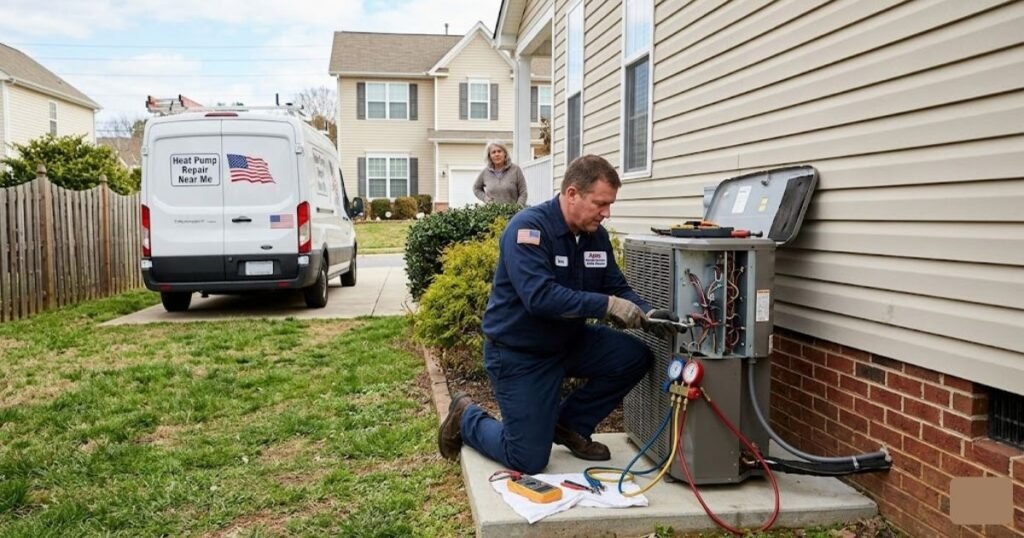
When a local HVAC expert arrives at your home, they have the tools to dig into the components that are off-limits to homeowners. Here are the most common “pro-level” fixes:
1. Refrigerant Leaks
Heat pumps don’t “consume” refrigerant; they circulate it. If you are low, you have a leak. A technician will find the leak, seal it, and “recharge” the system to the correct levels.
2. Failing Capacitors
Think of a capacitor like a giant battery that gives the motors a “kick-start” to get moving. These are very common parts to fail, especially during heatwaves.
3. Reversing Valve Replacement
As mentioned, this is the “brain” that switches the unit from heating to cooling. If it fails, the unit gets stuck in one mode.
4. Board Issues
In the winter, your outdoor unit will naturally frost over. The defrost board tells the unit to temporarily switch modes to melt that ice. If this board fails, the unit will freeze into a solid block.
5. Fan Motor Replacement
If the outdoor fan stops spinning, the heat exchange process stops. This is a common and relatively straightforward local heat pump repair.
READ MORE: Heat Pump Making Noise Outside Unit: Causes, Fixes & When to Call a Pro
How to Choose the Right Local Repair Company
Not all HVAC companies are created equal. When you are searching for heat pump repair near me, look for these specific “green flags” to ensure you’re getting a trustworthy HVAC contractor:
- Licensed and Insured: This is non-negotiable. It protects you if an accident happens on your property.
- Local Experience: A company that has been in your town for 20 years knows the local climate and common issues specific to your area.
- Transparent Pricing: Avoid companies that refuse to give you a quote until the job is done. Look for “flat-rate” or upfront pricing models.
- Positive Reviews: Check Google and Yelp. Don’t just look at the stars—read the comments. Do they show up on time? Are they clean?
- Emergency Availability: HVAC systems never break on a Tuesday at 2:00 PM. They break on Christmas Eve or during a 100-degree heatwave. Look for a company that offers emergency heat pump repair.
- Warranty on Work: A good technician stands by their labor. Ask if they offer a 90-day or 1-year guarantee on the repair.
READ MORE: Heat Pump Running but Not Cooling: Causes, Fixes & When to Call a Pro
How Much Does Heat Pump Repair Usually Cost?
While it’s impossible to give an exact number without seeing the unit, most homeowners can expect a range based on the severity of the issue.
| Repair Type | Estimated Cost Range |
| Service Call / Diagnostic Fee | $75 – $200 |
| Thermostat Replacement | $150 – $500 |
| Capacitor Replacement | $150 – $350 |
| Fan Motor Repair | $300 – $700 |
| Refrigerant Leak Repair & Recharge | $400 – $1,200 |
| Compressor Replacement | $1,500 – $2,500+ |
Pro Tip: If your system is under a manufacturer’s warranty, the parts might be free, and you will only have to pay for the labor!
Repair vs. Replace: What Homeowners Should Consider
Eventually, every heat pump reaches the end of the road. If you find yourself calling for affordable heat pump repair every few months, it might be time to stop throwing “good money after bad.”
Consider replacing if:
- The Unit is 12-15 Years Old: This is the average lifespan of a heat pump.
- The “50% Rule”: If the repair cost is more than 50% of the cost of a brand-new unit, go with the new one.
- R-22 Refrigerant: If your old unit uses R-22 (Freon), it is outdated and incredibly expensive to service. Modern units use eco-friendly R-410A or R-32.
- Frequency of Repairs: If you have the technician on speed dial, your system is telling you it’s tired.
READ MORE: Why Is My Heat Pump Blowing Warm Air? Causes, Fix, and Costs
How to Prevent Future Heat Pump Problems
The best way to avoid a frantic search for emergency heat pump repair is to prevent the breakdown before it happens.
- Change Your Filters: Do this every 30 to 90 days. It is the single best thing you can do for your system’s health.
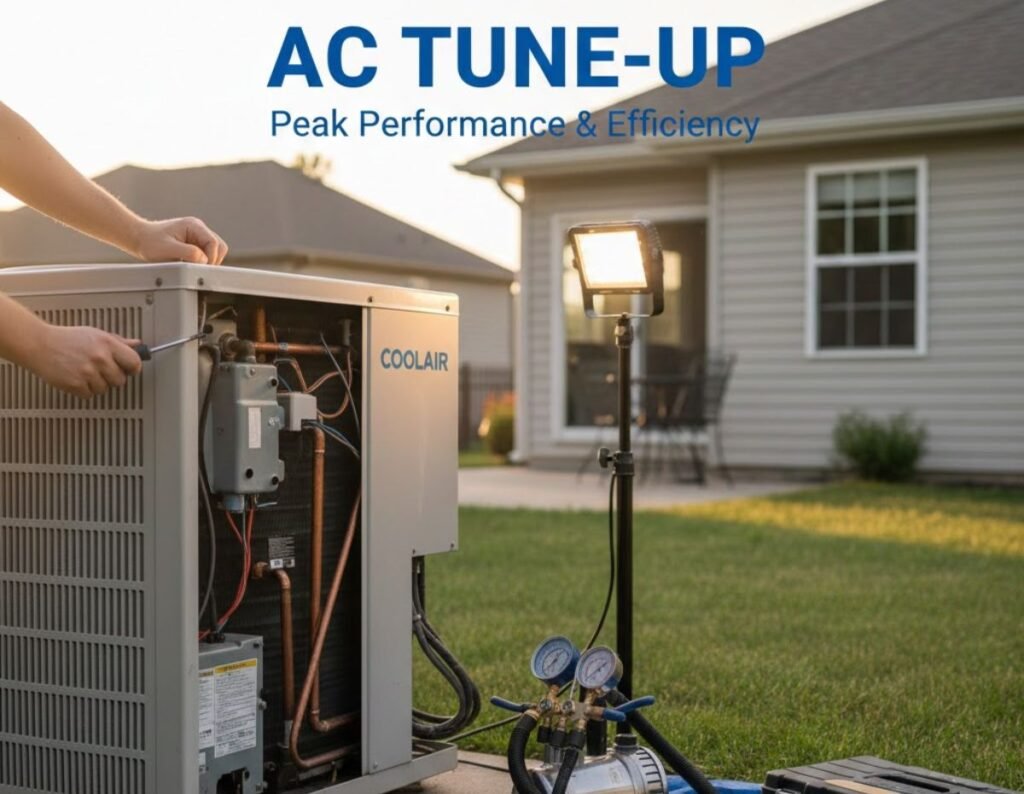
- Schedule Bi-Annual Tune-ups: Have a pro look at your unit once in the Spring (for cooling) and once in the Fall (for heating). These heat pump maintenance visits often catch tiny problems before they become $1,000 disasters.
- Keep the Coils Clean: A quick spray with a garden hose (gently!) can remove dust and pollen from the outdoor coils, improving efficiency.
- Listen to Your System: If it starts making a new noise today, don’t wait until it breaks next week. Catching a “squeak” early is much cheaper than replacing a “seized” motor.
Frequently Asked Questions (FAQ)
How do I know if I need heat pump repair near me?
You likely need repair if your home isn’t reaching the set temperature, you hear unusual grinding or banging noises, your energy bills have spiked unexpectedly, or you see significant ice buildup on the outdoor unit. If the unit is “short cycling” (turning on and off frequently), that is also a major red flag.
What is the most common heat pump problem homeowners face?
The most frequent issue is restricted airflow caused by a dirty air filter. This simple problem can cause the system to overheat, freeze up, or blow lukewarm air. Beyond that, failed capacitors and refrigerant leaks are the most common “technical” repairs.
Can I fix a heat pump myself, or should I call a professional?
You can safely handle basic tasks like changing air filters, clearing debris from the outdoor unit, and checking your thermostat batteries. However, anything involving electricity, refrigerant, or internal motors should be handled by a licensed HVAC contractor for safety and warranty reasons.
How much does local heat pump repair usually cost?
Minor repairs like replacing a capacitor or a thermostat typically cost between $150 and $500. More significant issues, such as a fan motor failure or a refrigerant leak, can range from $500 to $1,200. Major component failures like the compressor can exceed $2,000.
When should I repair my heat pump instead of replacing it?
Repair is usually the best choice if your system is less than 10 years old and the repair is relatively minor. If your system is over 12 years old, requires frequent service calls, or the repair cost is more than half the price of a new unit, investing in a replacement is often the more cost-effective long-term move.
Conclusion:
Your home should be your sanctuary, not a place where you have to wear a parka indoors or melt on the sofa. When your system acts up, finding heat pump repair near me is about more than just a quick fix it’s about finding a partner who will keep your family comfortable and safe.
By performing basic troubleshooting and knowing the signs of trouble, you can stay ahead of major breakdowns. And when the time comes to call in the experts, look for a local HVAC expert with a reputation for honesty, fair pricing, and same-day service.