A swimming pool should feel like a place to relax, not a place you can only enjoy for a few weeks a year. For many USA homeowners, water temperature is the difference between using the pool often and barely using it at all. That is why more people are looking at a swimming pool heat pump as a practical, energy-conscious way to keep pool water comfortable.
Compared with old-style heating options, a pool heat pump can be a smart long-term choice for families who want steady warmth without wasting energy. It is especially appealing for homeowners who want a reliable pool heating solution that works well for regular use, not just occasional heating.
In this guide, you will learn what a swimming pool heat pump is, how it works, what to look for before buying, and which models may be worth considering for different pool sizes and needs. The goal is simple: help you choose the right energy-efficient pool heater for your home with confidence. Lets deep dive into “Best Swimming Pool Heat Pump 2026: Review, Comparison, and Buying Tips”
READ MORE: Heat Pump Installation Cost in 2026 (Real Prices, Examples & Savings)
What Is a Swimming Pool Heat Pump?
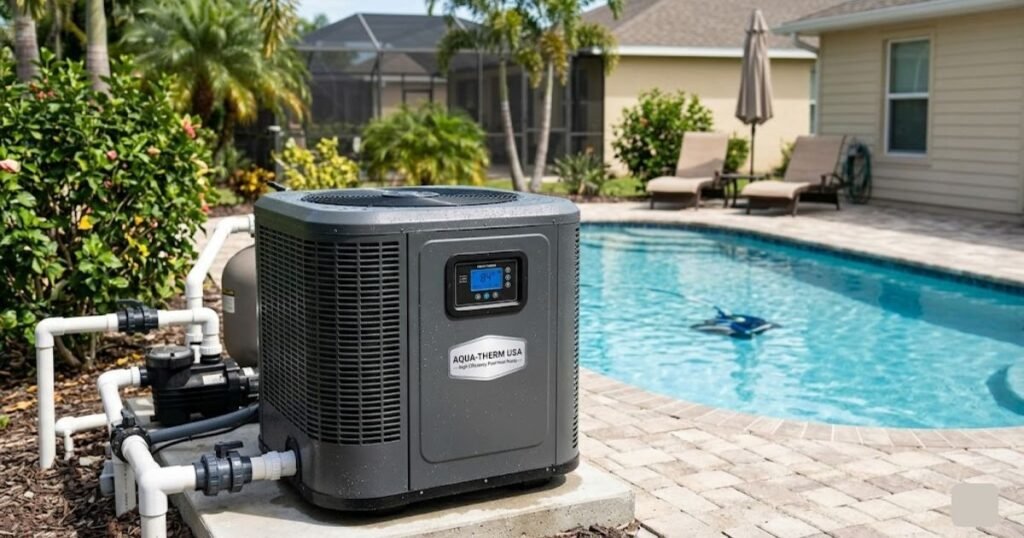
At its simplest, a swimming pool heat pump is a device that uses electricity to move heat from one place to another. Unlike a traditional electric heater that uses a heating element (like a toaster) to create heat, or a gas heater that burns fuel, a heat pump doesn’t actually “generate” heat. Instead, it captures heat from the outside air and transfers it into your pool water.
Think of it like a refrigerator or an air conditioner working in reverse. While an air conditioner takes the heat from inside your house and pushes it outside, a pool heat pump takes the heat from the outside air and pushes it into your pool.
Why It’s a Popular Option for USA Homeowners
In the United States, homeowners are increasingly moving away from gas heaters due to rising fuel costs and environmental concerns. A pool heat pump is widely considered the energy-efficient pool heater of choice because it offers:
- Lower Operating Costs: Because it moves heat rather than creating it, it uses significantly less electricity.
- Eco-Friendliness: It doesn’t emit carbon directly at your home.
- Durability: These units are built to last, often outliving gas alternatives.
READ MORE: Carrier Heat Pump Reviews (2026) — Models, Costs, Pros & Cons
How a Swimming Pool Heat Pump Works
Understanding how these machines work helps you appreciate their efficiency. It’s a bit of a “magic trick” of physics involving a fan, a compressor, and a special liquid called refrigerant.
The Step-by-Step Process:
- Pulling Heat from the Air: A powerful fan draws in the warm outside air across an evaporator coil.
- The Refrigerant Magic: Inside that coil is a liquid refrigerant. Even if the air doesn’t feel “hot” to you, it contains enough thermal energy to turn that liquid refrigerant into a gas.
- Compression: This gas is then pumped into a compressor. When you compress a gas, it gets very hot.
- Heat Transfer: This hot gas passes through a heat exchanger. Meanwhile, your pool pump is circulating water through the unit. The heat from the gas is transferred to the water.
- Return to Pool: The now-warm water flows back into your pool, and the cycle starts all over again.
Pro Tip: Because heat pumps rely on the air temperature, they work most efficiently when the air is 50°F or warmer. If you live in a climate where you want to swim in near-freezing weather, a heat pump will have to work much harder.
READ MORE: Goodman Heat Pump Review 2026 | Efficiency, Cost, Pros & Cons
Things to Consider Before Buying Swimming Pool Heat Pump
Before you click “buy,” you need to ensure the unit matches your specific setup. Not all pool heat pumps are created equal.
1. Pool Size and Type
Are you heating an above ground pool or an in-ground pool? Above ground pools are usually smaller but lose heat faster through their walls. In-ground pools have more thermal mass. You must check the “Gallon Capacity” of the heater.
2. BTU Capacity
BTU stands for British Thermal Unit. In the world of pool heating, more BTUs mean more heating power.
- Small Pools (up to 5,000 gallons): 15,000 to 20,000 BTUs is usually enough.
- Medium Pools (10,000 to 15,000 gallons): Look for 30,000 to 50,000 BTUs.
- Large Pools (20,000+ gallons): You’ll want 65,000 to 100,000+ BTUs.
3. Inverter vs. On/Off Models
Standard heat pumps are either “On” or “Off.” They run at 100% power until the temp is reached, then shut down. Inverter pool heat pumps can adjust their speed. They might run at 20% power just to maintain the temperature, which is much quieter and saves a massive amount of electricity.
4. Installation Needs
Most heat pumps require a dedicated electrical circuit. Smaller units might use a standard 110V/120V plug, but larger, more powerful units usually require 220V/240V wiring, which may necessitate an electrician.
READ MORE: Best Bosch Heat Pump Air Conditioner: Review, Comparison & Buying Guide
Best Swimming Pool Heat Pump Product Reviews
To help you find the best swimming pool heat pump for your specific needs, we’ve analyzed seven popular models currently favored by USA homeowners.
1. AQUASTRONG Swimming Pool Heat Pump (6500 Gallons)
Best for: Small to mid-sized above-ground pools.
Why it stands out: AQUASTRONG is known for building rugged, reliable equipment. This model is specifically designed for the “average” backyard above-ground pool. It’s compact, doesn’t take up much space on your equipment pad, and is relatively easy to DIY install.
- Pros: Very quiet operation; durable outer casing; easy-to-read digital display.
- Cons: Not powerful enough for large in-ground pools.
- Who should consider it: Homeowners with a standard 15-foot or 18-foot round above-ground pool looking for a reliable daily heater.

- All-Season Pool Comfort: Featuring innovative dual-mode temperature control, this heat pump precisely heats water betwee…
- Professional Thermal Performance: Featuring a 18,000 BTU high-output heating module, this 4-season system is designed fo…
- Energy Efficiency Redefined: With a high 5.5 COP, this ultra-efficient heat pump employs a powerful engine to ensure con…
2. H5 Swimming Pool Heat Pump 18,000BTU (5,000 Gal)
Best for: Small pools or “stock tank” pools.
Why it stands out: This is a budget-friendly entry into the world of heat pumps. At 18,000 BTUs, it is optimized for efficiency in smaller volumes of water. It’s a great above ground pool heater for those who don’t want to spend thousands.
- Pros: Highly affordable; lightweight and easy to move; simple plumbing connections.
- Cons: Struggles in very cold climates (below 45°F).
- Who should consider it: Buyers on a budget who have a small pool and live in a generally warm climate.
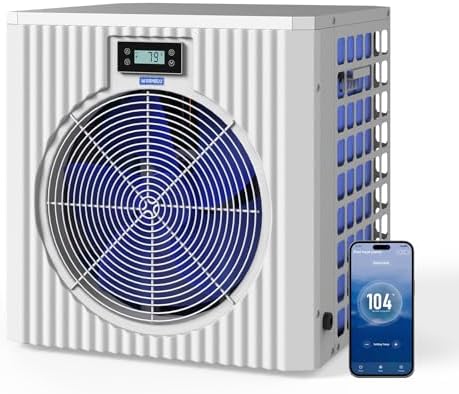
- SpringBreath 1.0 Heating System with Quantifiable Results—Built to efficiently handle large pools up to 5,500 gallons….
- Drastically Cuts Energy Costs—Intelligent Chip and Dynamic Algorithm provide intelligent inverter control, constantly …
- Ultimate Ease of Use & Installation—Simplicity from start to finish. Enjoy a worry-free, straightforward installation …
3. Varpoolfaye 16,000 BTU Swimming Pool Heat Pump
Best for: Portability and ease of use.
Why it stands out: This unit is designed for the homeowner who wants a “set it and forget it” solution. It’s an electric pool heater that focuses on simplicity. It features a straightforward interface that isn’t bogged down by overly complex programming.
- Pros: Fast installation; decent energy efficiency for its size; compact footprint.
- Cons: Limited BTU output for larger water volumes.
- Who should consider it: Owners of temporary or seasonal above-ground pools who want to take the chill off the water.

- Impressive performance: Pool heater pump with a high-power compressor, titanium heat exchanger max output of 16000 BTU f…
- Multi-Season use and WiFi control: Electric pool heater has both heating and cooling mode, allowing us to extend swimmin…
- Energy Efficient and Cost Effective : Our 120v pool heater achieving a COP of 4.3 is an energy-efficient heating system …
READ MORE: Best Cold Climate Heat Pump Review 2026: Top Picks & Buying Guide
4. DR. Infrared Heater DR-650HP Full DC Inverter (65,000 BTU)
Best for: Large pools and maximum energy efficiency.
Why it stands out: This is the “luxury” option on our list. The Full DC Inverter technology is the gold standard. Instead of turning on and off, it ramps its speed up and down. This makes it incredibly quiet and shockingly cheap to run. With 65,000 BTUs, it can handle significant water volume.
- Pros: Incredible energy savings; extremely quiet (almost silent once at temp); works well in cooler air.
- Cons: Higher upfront cost; requires professional electrical setup (240V).
- Who should consider it: Homeowners with large in-ground or above-ground pools who plan on staying in their home long-term and want the best technology available.
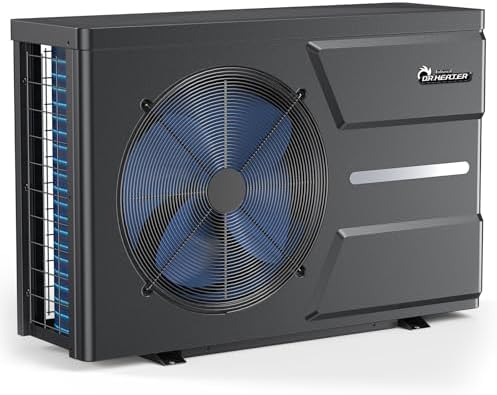
- IN-GROUND and ABOVE-GROUND – The 65,000 BTU inverter swimming pool heat pump is recommended for pool sizes up to 18,000 …
- MARKET LEADING TECHNOLOGY – The Dr. Heater heat pump is designed with industry-leading technology for top performance an…
- EVERLASTING DURABILITY – The Dr. Heater Full Inverter heat pump is certified by CSA and AHRI for the highest quality and…
5. ECOPOOLTECH Swimming Pool Heat Pump (Up to 5200 Gal)
Best for: Eco-conscious homeowners with smaller pools.
Why it stands out: ECOPOOLTECH focuses on maximizing the heat-to-energy ratio. This unit is specifically tuned for above-ground pools, ensuring that heat loss is minimized by providing a steady stream of warm water.
- Pros: Sleek design; very high COP; reliable customer support.
- Cons: Strict 5,200-gallon limit for optimal performance.
- Who should consider it: Someone who wants a high-quality, specialized heater for a smaller permanent above-ground setup.

- 𝐀𝐝𝐝 𝟔 𝐌𝐨𝐧𝐭𝐡𝐬 𝐭𝐨 𝐘𝐨𝐮𝐫 𝐏𝐨𝐨𝐥 𝐒𝐞𝐚𝐬𝐨𝐧: This heat pump features the latest Turbo-X heating system, providing faster heating, e…
- 𝐏𝐚𝐭𝐞𝐧𝐭𝐞𝐝 𝐓𝐞𝐜𝐡𝐧𝐨𝐥𝐨𝐠𝐲 𝐂𝐮𝐭𝐬 𝐇𝐞𝐚𝐭𝐢𝐧𝐠 𝐁𝐢𝐥𝐥𝐬 𝐛𝐲 𝐔𝐩 𝐭𝐨 𝟕𝟎%: As a brand committed to technological innovation in the pool heat p…
- 𝐀𝐈 𝐚𝐥𝐠𝐨𝐫𝐢𝐭𝐡𝐦𝐬, 𝐀𝐮𝐭𝐨𝐦𝐚𝐭𝐢𝐜 𝐃𝐞𝐟𝐫𝐨𝐬𝐭 +𝐖𝐢𝐟𝐢 𝐂𝐨𝐧𝐭𝐫𝐨𝐥: Equipped with the latest Next-Gen AI chip and advanced algorithms, this …
6. VARMINPOOL Electric Pool Heater, 30,000 BTU (7000 Gallons)
Best for: Mid-sized family pools.
Why it stands out: This is a fantastic “middle ground” heater. 30,000 BTUs is a sweet spot it’s powerful enough to heat a 7,000-gallon pool quickly, but it’s not as expensive as the heavy-duty industrial units.
- Pros: Great balance of price and power; robust heat exchanger; easy maintenance.
- Cons: Slightly louder fan than the inverter models.
- Who should consider it: Families with a medium-sized pool who want faster heating times than the 15k BTU models can provide.
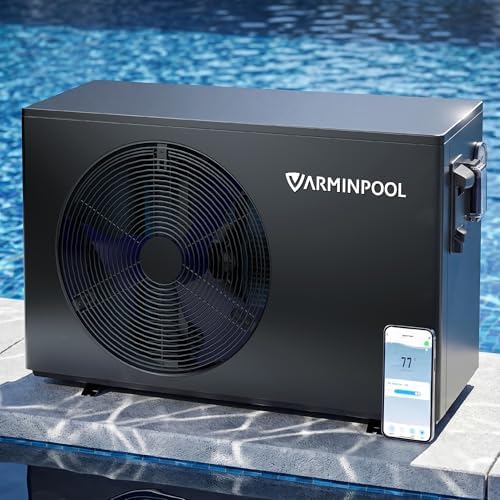
- Perfect Pool Heat Pump for Small Pools up to 7,000 Gallons: Designed for above ground pools and small backyard pools, th…
- 120V Plug & Play Pool Heater – No Professional Installation Needed: Skip the complicated wiring. This 120V electric pool…
- Energy-Efficient Heating to Reduce Electricity Costs: Save on energy bills compared to traditional electric pool heaters…
READ MORE: Air to Water Heat Pump — Complete 2026 Buyer’s Guide (costs, brands, pros & cons)
7. AQUASTRONG Inverter Swimming Pool Heat Pump
Best for: Efficiency seekers with medium-sized pools.
Why it stands out: This combines the reliability of the AQUASTRONG brand with the efficiency of inverter technology. It’s a step up from their base model, offering better performance in fluctuating temperatures and lower noise levels.
- Pros: Smart control features; excellent energy ratings; very smooth operation.
- Cons: More expensive than the non-inverter AQUASTRONG version.
- Who should consider it: Homeowners who want a premium, modern heating experience without needing the massive 65k BTU output of a larger unit.

- Extend Your Swim Season: The pool heat pump features a dual-mode heating and cooling system that maintains optimal water…
- Rapid Heating & APP Control: Engineered for speed and efficiency, it delivers 35,000 BTU warmth in hours, perfect for la…
- Inverter Energy Saving: Intelligent heat pump system featuring full DC variable frequency technology delivers 15.8 COP f…
Swimming Pool Heat Pump Comparison Table
| Product Name | Heating Capacity | Pool Size | Inverter Tech | Best Use Case | Energy Efficiency |
| AQUASTRONG 6500 | ~20,000 BTU | 6,500 Gal | No | Mid Above-Ground | High |
| H5 18,000BTU | 18,000 BTU | 5,000 Gal | No | Small/Budget | Medium |
| Varpoolfaye | 16,000 BTU | 5,000 Gal | No | Portability | Medium |
| DR. Infrared | 65,000 BTU | 15,000+ Gal | Yes (Full DC) | Large/Premium | Excellent |
| ECOPOOLTECH | ~15,000 BTU | 5,200 Gal | No | Small Above-Ground | High |
| VARMINPOOL | 30,000 BTU | 7,000 Gal | No | Mid-Size Family | High |
| AQUASTRONG Inverter | Varies | 7,000+ Gal | Yes | Performance | Excellent |
READ MORE: Best Electric Heat Pump Water Heater: Reviews, Comparison, and Buying Guide
Summary of Recommendations:
- For Smaller Pools: The ECOPOOLTECH or H5 are perfect for those who just want to warm up a standard above-ground pool without overspending.
- For Larger Pools: The DR. Infrared 65,000 BTU is the clear winner for power and technology.
- For Long-Term Value: Any of the Inverter models (DR. Infrared or AQUASTRONG Inverter) will save you the most on your monthly utility bill.
- For Simple Operation: The VARMINPOOL offers a great “plug-and-play” feel with plenty of power for the average family.
Comprehensive Buying Guide: How to Choose Like a Pro
Selecting a pool heating solution isn’t just about picking the highest BTU number. Here is how to think like an expert.
1. Matching Heater Size to Pool Size
Don’t just look at the maximum gallon rating. If your pool is 5,000 gallons and the heater is rated for “up to 5,000 gallons,” that heater will have to work at 100% capacity almost all the time. It is often better to “oversize” your heater. A 30,000 BTU heater on a 5,000-gallon pool will heat the water faster and then shut off, often saving wear and tear on the machine.
2. Why BTU Rating Matters (The Climate Factor)
If you live in a humid, warm area (like Florida), a lower BTU unit will perform better than the same unit in a dry, cooler area (like Arizona or Maine). Heat pumps “eat” humidity and warmth from the air. If the air is thin or cold, you need more BTUs to compensate.
3. The Inverter Advantage
If your budget allows, always go for an inverter model. Why?
- Noise: Standard pumps sound like a loud window AC unit. Inverters sound like a quiet hum.
- Soft Start: They don’t create a massive power surge when they turn on, which is better for your home’s electrical system.
- Stability: They keep the water within 0.1 degree of your target, whereas standard units might let the pool cool down 2 degrees before kicking back on.
READ MORE: Best Heat Pump Hot Water System (2026) — Buyer’s Guide
Benefits of a Swimming Pool Heat Pump
If you are on the fence about whether to invest in an electric pool heater or stick with what you have, here are the primary advantages for the average homeowner:
1. Extreme Energy Efficiency
The efficiency of a heat pump is measured by its COP (Coefficient of Performance). Most high-quality heat pumps have a COP between 5.0 and 6.0. This means for every $1 you spend on electricity, you get $5 or $6 worth of heat. Compare that to a standard electric resistance heater, where $1 of electricity gets you exactly $1 of heat.
2. Consistent Water Temperature
Gas heaters provide a “blast” of heat, but they are expensive to run continuously. A heat pump is designed to maintain a steady, comfortable temperature all day and night. You won’t have to wait hours for the pool to “heat up” before a party if you keep the pump running at a set temperature.
3. Extending Your Swim Season
For homeowners in states like Florida, Texas, or California, a heat pump can make year-round swimming a reality. For those in the Northeast or Midwest, it can easily add two months to your swim season—one month in the spring and one in the fall.
4. Long-Term Savings
While the initial purchase price of a heat pump can be higher than a small gas heater, the long-term investment is much better. You will likely make back the price difference in energy savings within the first two or three seasons.
Swimming Pool Heat Pump Installation and Maintenance Tips
A swimming pool heat pump is a significant investment. Here is how to protect it.
Installation Basics
- Airflow is King: Never install a heat pump under a deck, inside a shed, or tucked tight against a wall. It needs to breathe. It sucks in air from the sides and blows it out the top. If that air can’t circulate, the unit will just “re-breathe” its own cold exhaust.
- Level Ground: Ensure the unit is on a level concrete pad or heavy-duty plastic equipment pad.
- Drainage: Heat pumps produce condensation (like an AC unit). Make sure the water has somewhere to drain so it doesn’t pool around the base.
Maintenance Checklist
- Clean the Coils: Once a year, gently spray the evaporator coils with a garden hose to remove dust, leaves, and “cottonwood” fuzz.
- Check for Obstructions: Ensure no bushes or weeds are growing into the intake vents.
- Winterizing: If you live in a freezing climate, you must drain the water out of the heat pump in the winter. If water freezes inside the heat exchanger, it will crack the pipes and ruin the unit.
- Use a Solar Blanket: This is the “secret weapon.” A heat pump puts heat into the water; a solar blanket keeps it there. Using a blanket at night can reduce your heating costs by 50% or more.
READ MORE: Best 3-Ton Heat Pumps of 2026: Reviews, Prices & Comparison
Common Mistakes to Avoid
- Buying Only Based on Price: A $400 heater that can’t actually heat your pool is just a $400 lawn ornament. Check the gallon capacity!
- Ignoring the Electrical Requirements: Buying a 240V unit when you only have a 110V outlet nearby means you’ll have to pay an electrician an extra $500 to $1,000 for a new line. Know your power!
- Thinking it Works Like Gas: A gas heater is a “furnace.” You turn it on, and 30 minutes later, you can feel the heat. A heat pump is a “maintainer.” It takes 12–24 hours to get a pool up to temperature initially, but then it stays there effortlessly.
- Skipping the Warranty: Ensure the brand has a US-based support team. Some “no-name” brands are impossible to fix if a single sensor goes bad.
FAQs
How does a swimming pool heat pump work?
It uses a fan to pull in warm ambient air, uses a refrigerant and compressor to “concentrate” that heat, and then transfers that heat into your pool water via a heat exchanger. It moves heat rather than creating it.
Is a swimming pool heat pump worth it for homeowners?
Yes, absolutely. While the initial cost is higher than gas, the monthly operating costs are roughly 70% lower. It’s the most cost-effective way to keep a pool warm throughout the season.
What size heat pump do I need for my pool?
As a general rule:
Small Above-Ground: 15,000–25,000 BTU
Large Above-Ground/Small In-Ground: 30,000–50,000 BTU
Large In-Ground: 65,000–110,000+ BTU
Are pool heat pumps energy efficient?
They are the most energy-efficient electric option available. With a COP of 5.0+, they are significantly more efficient than standard electric resistance heaters and far cheaper to run than propane or natural gas.
Can a heat pump work for an above-ground pool?
Yes! In fact, most of the models reviewed above (AQUASTRONG, ECOPOOLTECH, etc.) are specifically designed for the easy-to-install needs of above-ground pool owners.
Conclusion
Investing in a swimming pool heat pump is one of the best ways to ensure you actually get your money’s worth out of your pool. Instead of looking at a beautiful but freezing body of water, you’ll have an inviting, warm oasis ready for you whenever you want it.
When choosing your unit, remember to:
- Size it correctly: It’s better to have a little too much power than not enough.
- Consider your climate: If you live in a cooler area, look for high BTU or Inverter models.
- Don’t forget the solar cover: Keep that heat in the water where it belongs!
Whether you go with a heavy-duty model like the DR. Infrared for your in-ground pool or a reliable AQUASTRONG for your above-ground setup, you are making a smart, long-term decision for your home and your family’s summer fun. Happy swimming!


Pingback: Samsung Heat Pump: Best Models, Reviews, Cost & Comparison - Plumbing Guider