For decades, copper was the undisputed gold standard of residential water-supply plumbing across the United States. It built a reputation for strength, reliability, and long-term durability. However, over the past twenty years, cross-linked polyethylene better known as PEX has rapidly taken over the residential market. Today, millions of American homes rely on flexible plastic tubing to deliver clean drinking water to kitchen sinks, showers, and laundry rooms.
Because both materials are fully approved for potable water delivery under major U.S. building codes, homeowners often wonder which one is actually superior. Is copper worth the higher price tag? Is PEX safe and reliable long term?
Choosing the right pipe involves balancing your home’s layout, local climate, water chemistry, project budget, and applicable building codes. This comprehensive guide breaks down everything you need to know about PEX and copper so you can make a confident, informed decision for your home. Lets deep dive into “PEX vs Copper Piping: Which Is Better for Your Home?”
READ MORE: How to Fix a Copper Pipe Leak at the Joint
What Is PEX Piping?
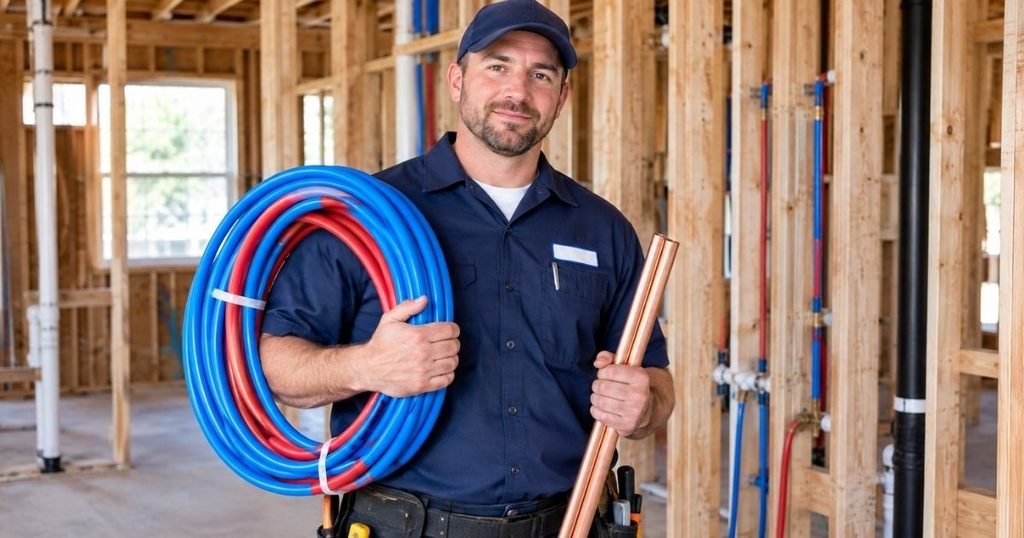
PEX (PolyEthylene X-linked) is a high-density, flexible tubing engineered specifically for pressurized residential hot- and cold-water delivery.
Standard plastic piping breaks down under thermal stress and internal pressure. By chemically or thermally cross-linking polyethylene molecules during production, engineers created a resilient matrix capable of handling typical home operating conditions rated up to 160 psi at 73°F and 100 psi at 180°F.
Core Features & Benefits
- Intuitive Color-Coding: Red (hot), blue (cold), and white/grey (universal) lines streamline installation and simplify future troubleshooting.
- Joint-Free Runs: Flexibility allows single continuous runs from utility mains to second-floor fixtures, bending cleanly around studs and joists without directional elbows.
- Leak-Point Reduction: Fewer fittings inside concealed wall cavities mean fewer potential points of failure over time.
- Flame-Free Connections: Joined mechanically via crimp rings, cinch clamps, expansion rings, or push-fit connectors—eliminating the need for soldering or open torches.
- Scale & Freeze Protection: Smooth internal walls prevent mineral buildup, while elastic thermal memory allows slight expansion during freeze cycles without immediate bursting.
Common Types of PEX: PEX-A, PEX-B, and PEX-C
Not all PEX piping is manufactured the same way. The industry categorizes PEX into three main types based on the cross-linking manufacturing process used. These designations (A, B, and C) reflect the production method not a grade or quality score.
PEX-A (Engel Method):
Manufactured using a peroxide cross-linking process while the polyethylene is in a molten state. This yields the highest degree of cross-linking (around 85%). PEX-A is the most flexible PEX pipe available and possesses remarkable “shape memory.” If PEX-A is kinked during installation, it can be heated gently with a heat gun to restore its original shape. It is typically joined using cold-expansion fittings (like the ProPEX/Expansion system), where the pipe and an expansion ring are expanded together before snapping back tightly over a fitting.
PEX-B (Silane Method):
Produced using a moisture-cure process after the pipe is extruded. PEX-B has a slightly lower cross-linking density (around 65–70%), making it stiffer than PEX-A. However, PEX-B offers higher resistance to chemical degradation from chlorinated municipal water and boasts higher burst-pressure ratings. It is widely available at retail home centers and is commonly installed using copper crimp rings or stainless steel clamps.
PEX-C (Electron Beam Method):
Manufactured using radiation treatment to cross-link the material after extrusion. PEX-C is slightly stiffer and generally less common in full residential supply repiping, though it is used in various specialty heating and plumbing applications.
When planning a project, pay close attention to the specific PEX type and its corresponding fitting system. While fittings and tools for PEX-B are widely interchangeable, PEX-A expansion systems require specific expansion tools and specialized fittings.
READ MORE: How to Clean Copper Plumbing Pipes
What Is Copper Piping?
Copper has been the gold standard of American residential plumbing since post-WWII, when it largely phased out corrosion-prone galvanized iron. Refined and extruded into rigid tubes or flexible coils, this metallic element delivers unmatched structural reliability for water distribution.
Core Features & Performance Advantages
- Proven Durability: Rigid “hard-drawn” copper offers high structural integrity, keeping long runs straight without sagging between supports.
- 100% UV Immunity: Unaffected by solar exposure, making it ideal for sunlit, exterior, or above-ground supply lines where plastics degrade.
- High Thermal Tolerance: Handles extreme heat effortlessly, making it mandatory near high-temperature equipment like water heater flues.
- Natural Antimicrobial Action: Inherent biocide properties help suppress bacterial growth along internal pipe walls.
Installation & Form Factors
- Rigid Straight Lengths: Typically sold in 20-foot sections for interior distribution. Every direction change requires precise cutting, deburring, and joining either through traditional sweat soldering (using flux and a torch) or modern flame-free hydraulic press fittings (e.g., Viega ProPress).
- Flexible Soft Copper: Coiled for seamless bends in specialized applications like underground main water services, gas lines, and tight appliance hookups.
- Standard Grades: Standardized by wall thickness, primarily available as Type M (thin wall/red label) or Type L (medium wall/blue label).
Common Copper Pipe Types: Type M, Type L, and Type K
Copper supply pipes are produced in standardized wall thicknesses, identified by a color-coded printed label running down the side of the pipe:
Type M (Red Printing / Thin Wall):
Type M has the thinnest wall of the three standard residential grades. It is light, easy to work with, and lower in cost than thicker copper options. Type M is widely permitted by local building codes for interior residential supply lines, particularly above-ground branch lines.
Type L (Blue Printing / Medium Wall):
Type L features a thicker wall than Type M and is considered the industry standard for commercial plumbing and high-end residential installations. Because of its extra wall thickness, Type L provides a greater safety margin against internal erosion and localized corrosion. It is required by many local municipal codes for underground water services and exposed interior main lines.
Type K (Green Printing / Heavy Wall):
Type K has the thickest wall available. It is primarily used for heavy-duty commercial work, municipal main water lines, and underground service lines buried under driveways or roadways subject to heavy surface loads. It is rarely used for interior home distribution lines due to its high cost and stiffness.
Always consult your local plumbing inspector or municipal building department before purchasing copper materials. Many local codes dictate precisely where Type M can be used and where Type L is mandatory.
READ MORE: How Long Will PEX Plumbing Last?
PEX vs. Copper: Quick Comparison
The following table offers an side-by-side overview of how PEX and copper compare across key performance categories:
| Feature | PEX Piping | Copper Piping |
| Material Composition | Cross-linked Polyethylene (Plastic) | Pure Refined Copper (Metal) |
| Structural Flexibility | High (bends around framing studs) | Rigid (requires fittings to turn corners) |
| Average Material Cost | Low (approx. $0.40 – $1.20 per linear foot) | High (approx. $2.00 – $5.00+ per linear foot) |
| Installation Labor | Faster; fewer fittings needed | Slower; requires soldering or press tool |
| Connection Methods | Crimp, expansion, cinch clamp, push-fit | Sweat soldering, press fittings, compression |
| Corrosion Resistance | Excellent (completely immune to rust/scale) | Vulnerable to aggressive/acidic water |
| Scale Resistance | High (smooth interior walls) | Moderate (susceptible to mineral buildup) |
| Freeze Behavior | Expands slightly; lower burst rate | Rigid; highly prone to bursting when frozen |
| UV Resistance | Poor (degrades in direct sunlight within days/weeks) | Complete immunity to UV rays |
| Heat Tolerance | Max continuous rating usually 180°F at 100 psi | High tolerance (exceeds typical residential domestic needs) |
| Expected Lifespan | 30 to 50+ years | 50 to 70+ years (water-quality dependent) |
| Noise Characteristics | Quiet (absorbs water hammer shock) | Can transmit water hammer and flow noise |
| Maintenance | Low | Low (unless pinhole leaks occur) |
| Appearance | Functional (red/blue plastic tubing) | Traditional, clean metallic look |
| Recyclability | Low (challenging to recycle cross-linked polymer) | 100% recyclable with high scrap value |
| DIY Friendliness | Moderate to High (crimp/expansion tools) | Moderate to Low (requires torch/soldering skill) |
| Best Applications | Whole-house repiping, enclosed walls, cold climates | Water heater connections, exterior runs, exposed locations |
READ MORE: What Is Polybutylene Plumbing?
PEX vs. Copper Cost
Cost is often the decisive factor in a plumbing overhaul. Total project expenses break down into two main variables: raw materials and installation labor.
| Piping System | Material Cost Profile | Installation Labor Profile | Average Installed Cost (Whole-House Repipe)* |
| PEX System | 60%–80% lower than copper | Fast (1–2 days average) | $4,000 – $9,000 |
| Copper System | High (subject to metal markets) | Intensive (3–5 days average) | $8,000 – $16,000 |
*Estimates reflect a typical 2,000 sq. ft. home; actual pricing varies by layout, wall access, and regional labor rates.
Key Cost Drivers
1. Material Production & Fittings
- PEX: Synthetic polymer manufacturing is significantly less energy-intensive than mining and smelting metal ore. Because flexible tubing bends around corners, a PEX installation eliminates up to 70% of the directional elbows, tees, and couplings required by rigid systems.
- Copper: As a globally traded commodity, copper prices fluctuate with market demand. Beyond the raw pipe, the high cost of solid brass and copper fittings quickly escalates the materials bill on complex layouts.
2. Labor & Installation Velocity
Labor accounts for 60% to 70% of the total invoice on major plumbing projects:
- PEX Efficiency: Snaked through stud cavities much like electrical cable, PEX uses simple mechanical crimp or expansion connections. A two-person crew can complete a whole-house repipe in roughly half the time of a traditional metallic installation.
- Copper Complexity: Every joint demands precise measuring, cutting, deburring, cleaning, fluxing, and soldering with an open-flame torch—or using high-end commercial press tools. The extra time, precision, and fire-safety precautions drive up labor hours
- Here is the comparative breakdown structured into a side-by-side reference table:
Advantages and Disadvantages of PEX
| Feature / Consideration | PEX Advantages | PEX Disadvantages |
| Structural Flexibility | Bends smoothly around framing studs and joists; reduces directional elbows by up to 70%. | Lower structural rigidity; requires supportive strapping to prevent long horizontal sags. |
| Joints & Leak Risk | Long, continuous pipe runs minimize concealed wall fittings, lowering overall leak risks. | Improperly crimped or expanded fittings can fail if tools are not properly calibrated. |
| Chemical & Mineral Resistance | Impervious to corrosion, rust, green oxidation crust, and hard-water scale buildup. | Slightly micro-permeable; standard non-barrier PEX allows oxygen intrusion that can rust boilers. |
| Freeze Performance | Elastic thermal memory allows pipe walls to expand slightly during ice formation and contract post-thaw. | Not completely freeze-proof; fittings and connection rings can still burst or fail under extreme ice pressure. |
| Acoustics & Dampening | Absorbs hydraulic pressure spikes, reducing noise from fast-closing appliance valves (water hammer). | — |
| Wall & Surface Access | Snakes easily behind existing walls and joists during retrofits, reducing necessary drywall cutouts. | — |
| Sunlight & UV Exposure | — | Highly sensitive to UV rays; degrades, cracks, and becomes brittle after 30 to 60 days of direct sunlight. |
| Temperature Limitations | Safe for standard domestic hot water up to 180°F at 100 psi. | Cannot handle extreme heat; building codes mandate an 18-inch metal buffer pipe off gas water heater flues. |
| Physical Vulnerability | Soft, lightweight material is easy to cut and handle during installation. | Softer material is vulnerable to punctures from drywall screws, sharp masonry, or rodent chewing in crawl spaces. |
READ MORE: Concrete Slab Leak Repair Cost: Price Guide for Homeowners
Advantages & Disadvantages of Copper Pipe
| Feature / Category | Copper Advantages | Copper Disadvantages |
| Track Record & Lifespan | Proven 70+ year history of success in U.S. residential plumbing; millions of original systems remain functional. | High replacement and repair costs when systems reach the end of their operational life. |
| UV & Environmental Exposure | 100% immune to ultraviolet (UV) light; safe for outdoor, exterior, or unshaded sunlit runs without degradation. | High raw commodity cost makes exposed exterior runs an increased target for metal theft/scraping. |
| Thermal Performance | Exceptional heat resistance; will not soften or lose structural integrity, making it mandatory for water heater risers and boiler lines. | High thermal conductivity causes rapid heat loss in uninsulated hot lines, reducing energy efficiency compared to plastic. |
| Structural Rigidity & Aesthetics | Maintains straight, crisp horizontal and vertical runs without sagging between supports; ideal for exposed basement/utility setups. | Rigid structure cannot bend around framing obstacles, requiring precise cuts and directional fittings at every corner. |
| Water Quality & Biology | Inherent antimicrobial properties release metal ions that naturally inhibit bacterial, algal, and fungal growth. | Acidic water (pH < 6.5) or aggressive water chemistry causes internal pitting corrosion, leading to pinhole leaks. |
| Sustainability & Value | 100% recyclable with high scrap value; eco-friendly metal that can be repurposed indefinitely without loss of quality. | Mining, smelting, and manufacturing copper carry a higher initial environmental and financial footprint than synthetic tubing. |
| Freeze Behavior | Unyielding metallic strength withstands high internal static pressure in normal temperature ranges. | Zero elasticity during severe cold spells; freezing water expands and splits rigid metallic walls, causing catastrophic bursts. |
| Installation & Safety | Compatible with time-tested sweat soldering or modern hydraulic press fittings (e.g., Viega ProPress). | Sweat soldering requires open-flame torches in dry wood-framed cavities, presenting fire hazards and labor-intensive prep work. |
PEX vs. Copper for Repiping an Older Home
- High Retrofit Disruption: Repiping an occupied home is invasive; material choice should prioritize minimizing wall and framing damage.
- Intrusive Copper Routing: Rigid copper requires long wall trenches and cutouts at every corner so plumbers can access and solder directional joints.
- Minimal PEX Damage: Flexible PEX snakes through small pilot holes inside wall cavities like electrical cable, avoiding major drywall demolition.
- Restoration Savings: Lower wall destruction with PEX saves thousands of dollars in post-plumbing sheetrock, plaster, and paint repairs.
- Targeted Repairs First: If an existing copper system is otherwise healthy, patching isolated leaks in accessible utility areas is smarter than a full repipe.
Which Is Better for Cold Climates?
Every winter, sub-zero temperatures across northern U.S. states lead to frozen pipes and catastrophic indoor flooding. Understanding how PEX and copper react to freezing temperatures is crucial for homeowners in cold regions.
When water freezes, it expands with immense force exerting hydrostatic pressure exceeding 20,000 psi. Rigid metals like copper cannot stretch; once the internal pressure exceeds the tensile strength of the copper wall, the pipe tears open. The damage often goes unnoticed until the ice block thaws, allowing high-pressure water to pour uncontrollably into floors and ceilings.
PEX tubing possesses elastic physical properties. When water freezes inside PEX, the plastic wall can expand to absorb the ice volume increase and contract back toward its original dimensions when the line thaws.
Important Safety Note: PEX is freeze-resistant, not freeze-proof. Repeated freezing cycles, extreme sub-zero temperatures, or ice expansion right next to rigid metal fittings can still rupture PEX tubing or force crimped connections apart.
Practical Winterization Tips for Homeowners
- Insulate Exposed Lines: Wrap all supply pipes running through unheated crawl spaces, attics, or exterior walls with thick foam pipe insulation, regardless of pipe material.
- Maintain Interior Heat: Keep your home thermostat set no lower than 55°F (13°C) during winter absences.
- Seal Air Leaks: Use expanding foam spray or caulk to seal drafts around rim joists and exterior wall penetrations where freezing outdoor air strikes plumbing lines.
- Drip Faucets During Deep Freezes: Allowing a tiny, continuous trickle of water to run through vulnerable faucets keeps water moving and relieves internal pressure build-up.
Which Is Better for Hot Water Lines?
Both PEX and copper are code-approved for hot-water distribution, but they handle thermal stress differently.
Copper excels in high-temperature environments. It maintains structural strength well past boiling temperatures and is unaffected by nearby high-heat sources such as furnace flues, chimney liners, or gas water heater vent stacks.
PEX has a maximum continuous operating limit of 180°F at 100 psi. While typical residential domestic hot water is set between 120°F and 140°F (well within safety limits), PEX can degrade prematurely if subjected to sustained temperatures approaching its maximum rating.
Furthermore, major building codes (including the International Residential Code) strictly require that PEX cannot connect directly to top-inlet gas water heaters. Installers must use at least 18 inches of metallic pipe (such as rigid copper or flexible braided metallic connectors) extending off the top of the water heater before transitioning to PEX. This safety buffer prevents radiant flue heat from damaging or melting the plastic tubing.
PEX vs. Copper for Drinking Water
Homeowners naturally care about the safety, taste, and purity of their family’s drinking water. Both PEX and copper are thoroughly tested and certified for potable water distribution when manufactured and installed according to national health standards.
- NSF/ANSI Standard 61: This strict national standard evaluates all components coming into contact with drinking water to ensure they do not leach harmful levels of contaminants. Look for the “NSF-pw” (potable water) mark stamped along the side of both PEX and copper pipes.
- Copper Considerations: Copper is a natural element with a long history of safe water delivery. However, if your home receives water with a very low pH (acidic water below 6.5), the water can gradually dissolve copper from pipe walls, leaving blue-green stains on porcelain sinks and raising copper concentrations in standing drinking water.
- PEX Considerations: PEX is made from synthetic polymers. When newly installed, some brands of PEX can briefly impart a faint “plastic” taste or odor to water left standing in the pipes overnight. This harmless aesthetic issue typically disappears after a few days or weeks of normal flushing. Furthermore, PEX does not leach lead, whereas vintage copper systems installed prior to 1986 may contain lead-based solder at the joints (modern plumbing solder is 100% lead-free).
For any new plumbing installation, it is good practice to run cold water faucets for 30 to 60 seconds before filling glass bottles or cooking pots to flush standing water from the lines.
PEX vs. Copper and Water Pressure
A common misconception among homeowners is that replacing metal pipes with plastic will automatically boost household water pressure. In reality, static water pressure is governed by your municipal supply or private well pump, while flow rate (gallons per minute) is determined by pipe diameter and friction loss.
Key Plumbing Factors That Affect Pressure
- Inside Pipe Diameter: PEX fittings insert inside the tube, slightly reducing the internal cross-sectional area at every connection point. Copper fittings slip over the outside of the pipe, maintaining a uniform inner diameter. If a plumber undersizes a PEX trunk line or installs numerous insert fittings in series, you might experience a noticeable drop in volume when running multiple fixtures simultaneously.
- Friction Loss: PEX has smoother interior walls than aged copper, which reduces fluid friction over long distances. Additionally, because PEX bends smoothly around framing corners instead of using sharp 90-degree metallic elbows, water experiences less turbulence as it travels through the home.
To ensure robust water pressure throughout a PEX-plumbed home, professional plumbers typically size main distribution lines one size larger (e.g., using 3/4-inch main PEX supply lines before branching off into 1/2-inch fixture runs).
PEX vs. Copper: Which Lasts Longer?
Both materials offer multi-decadal performance, but their real-world longevity depends heavily on water chemistry, installation quality, and environment.
Rather than focusing on theoretical lab maximums, homeowners should consider how each material responds to real-world operating conditions:
- PEX Service Life (30–50+ Years): PEX is unaffected by aggressive soils or acidic water. However, exceptionally high concentrations of chemical disinfectants (like chlorine or chloramines) in municipal water, combined with high water temperatures and continuous pressure, can slowly degrade plastic walls over many decades.
- Copper Service Life (50–70+ Years): In ideal conditions (neutral water pH between 7.0 and 7.8, moderate mineral content, correct water velocity), copper can easily outlast the homeowner. However, in areas with aggressive acidic well water or improper electrical grounding (which can cause galvanic or stray-current electrolysis), copper pipes can develop destructive pinhole leaks in under 15 years.
Ultimately, a professionally installed PEX system in balanced water conditions will comfortably last 40 to 50 years, while a well-maintained copper system in neutral water can serve a home for over half a century.
Can You Mix PEX and Copper Plumbing?
Yes, absolutely. You do not need to tear out every inch of existing copper plumbing in your home just because you want to use PEX for an addition, kitchen remodel, or bathroom update. Joining PEX to existing copper lines is standard practice in modern residential plumbing.
Specialized transition fittings allow plumbers to mate the two materials cleanly and securely:
- Threaded Transition Adapters: A brass fitting soldered onto the copper pipe features male or female pipe threads that screw into a corresponding PEX crimp adapter.
- Sweat-to-PEX Adapters: A single brass fitting that is sweat-soldered onto the clean copper pipe on one side and features a PEX crimp or expansion rib on the other.
- Push-to-Connect Fittings (e.g., SharkBite): For quick repairs or DIY situations, push-fit fittings feature stainless steel grab teeth and an internal EPDM O-ring seal. They slide directly onto clean copper on one side and PEX on the other without needing torches or specialized crimp tools. (Check local codes before enclosing push-fit fittings inside finished walls).
When combining materials, always ensure the metal piping is properly strapped and supported so its physical weight does not stress or kink the attached plastic tubing.
When Copper May Make More Sense
While PEX dominates modern residential repiping, copper remains the preferred choice in specific scenarios:
- Exposed Outdoor or Sunlit Installations: Exterior supply lines, outdoor shower risers, or pipes running through sunlit sunrooms where UV exposure would destroy plastic tubing.
- Direct Water Heater Connections: The first 18 inches of piping coming directly off gas-fired water heaters, where exhaust stack heat requires fireproof metallic piping.
- High-Heat Commercial or Mechanical Loops: Boiler feed lines, commercial steam equipment, or heating loops operating near or above 180°F.
- Structural Rigidity Requirements: Exposed pipe risers in basements, garage utility walls, or commercial spaces where loose, sagging lines would look unsightly or risk physical damage.
- Strict Local Municipal Codes: Select urban jurisdictions whose local building codes still mandate metallic piping for specific residential or multi-family structures.
When PEX May Make More Sense
PEX is typically the smarter, more economical choice in these common home scenarios:
- Whole-House Repiping: Replacing old, corroded, or leaking galvanised or copper pipes throughout an entire occupied home on a budget.
- Remodeling Tight Wall Spaces: Adding a bathroom or kitchen island where fishing flexible lines through existing wall studs saves extensive drywall destruction.
- Unconditioned Crawl Spaces and Cold Climates: Homes in freezing winter climates where added resistance against pipe bursts provides peace of mind.
- Budget-Conscious Renovations: Projects where reducing material costs and labor hours allows the budget to go toward higher-quality fixtures or finishes.
- Aggressive or Acidic Water Conditions: Homes fed by private wells with acidic water (low pH) that would rapidly pit and destroy traditional copper pipes.
How to Choose Between PEX and Copper
- Project Budget: Choose PEX if working with a tight budget to maximize cost efficiency; choose copper for a premium investment in traditional metal piping.
- Home Age & Structural Access: Favor PEX when remodeling inside finished walls to avoid major drywall destruction; either material works well in new construction with open framing.
- Local Climate & Environment: Select PEX for areas prone to severe winter freeze risks due to its expansion flexibility; choose copper for exterior or direct outdoor runs exposed to UV sunlight.
- Water Chemistry: Opt for PEX if your water supply is acidic (low pH) to prevent metal corrosion; both materials perform equally well with neutral, treated municipal water.
- Location Within the Home: Use PEX for main wall and attic distribution lines, but use copper within the first 18 inches of a water heater connection (mandatory by code).
- The Hybrid Solution: You don’t have to choose just one—hybrid systems are extremely common, utilizing rigid copper in utility rooms and heat connections, and flexible PEX throughout the rest of the home’s walls and fixtures.
Final Verdict: PEX vs. Copper
Both PEX and copper are high-quality, code-approved materials capable of delivering clean, safe water throughout your home for decades.
PEX wins on flexibility, installation speed, freeze resistance, and overall cost-efficiency. It is the modern material of choice for whole-house repiping, interior remodels, and budget-conscious homeowners who want reliable performance without paying high metal commodity prices.
Copper wins on structural rigidity, extreme heat tolerance, UV immunity, and a multi-generational track record. It remains the ideal choice for exposed plumbing runs, exterior applications, high-heat boiler loops, and homeowners who prefer traditional metal construction.
Frequently Asked Questions
Is PEX better than copper for home plumbing?
Neither material is universally better. PEX offers superior flexibility, faster installation, lower total project cost, and better resistance to freezing burst damage. Copper offers greater structural rigidity, complete immunity to UV sunlight, higher heat tolerance, and a proven 70-year real-world track record. The right choice depends on your budget, home layout, and local climate.
Is PEX cheaper than copper?
Yes, PEX is significantly cheaper than copper. PEX raw materials typically cost 60% to 80% less per foot than copper pipe. Furthermore, because flexible PEX installs faster and requires far fewer fittings, labor costs for a PEX whole-house repipe are substantially lower—often saving homeowners 30% to 50% on total project costs.
How long does PEX last compared with copper?
In proper operating conditions, quality PEX tubing has an expected service life of 30 to 50+ years. Copper piping can last 50 to 70+ years in ideal conditions with neutral water pH. However, aggressive acidic water can corrode copper pipes in under 20 years, whereas PEX is completely immune to mineral corrosion and acidic water.
Should I replace copper pipes with PEX?
You should not replace healthy, functioning copper pipes simply because PEX is newer. However, if your existing copper plumbing is experiencing frequent pinhole leaks, severe corrosion, mineral clogging, or widespread freeze damage, repiping your home with PEX is a highly cost-effective, durable solution that minimizes drywall damage during installation.
What are the disadvantages of PEX compared with copper?
PEX cannot be exposed to direct UV sunlight, which degrades the plastic. It has lower temperature limits than copper and cannot be connected directly to gas water heaters (requiring an 18-inch metallic buffer line). PEX can also be damaged by rodents or sharp objects, and newly installed lines may temporarily impart a mild plastic taste to standing water.

