Imagine stepping into the shower in the morning, only to be met with a weak trickle of water. Or worse, opening your basement door to find a damp ceiling, soggy drywall, and the unmistakable odor of a fresh plumbing leak. When your home’s plumbing starts showing its age, minor repairs can feel like putting a small bandage on a major problem. You fix one pinhole leak in the upstairs bathroom, only for another to spring up near the water heater a few months later.
At a certain point, every homeowner asks the same question: Does it make more sense to keep paying for individual repairs, or is it time for a full system replacement?
Whole-house repiping is the process of replacing all or most of a home’s existing fresh water-supply pipes with modern, durable piping materials. While the idea of replacing your entire plumbing system might sound overwhelming, understanding how repiping works along with the costs, materials, and timeline can help you make an informed decision for your home and budget. Lets deep dive into “Whole-House Repiping Services: Cost, Signs & Process”
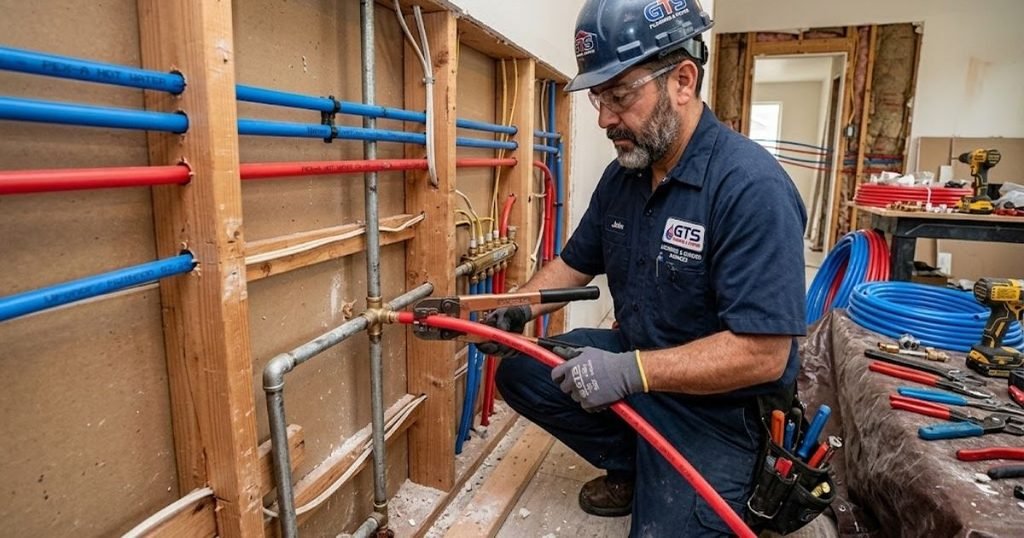
What Are Whole-House Repiping Services?
What is whole-house repiping?
Whole-house repiping is a comprehensive plumbing service that replaces a home’s old, corroded, or damaged fresh water-supply lines with new piping typically PEX or copper. This process installs new hot and cold supply pipes throughout the home, from the main shutoff valve to every indoor sink, shower, toilet, and appliance.
In simple terms, repiping creates a brand-new internal network for your drinking and utility water.
What Is Included in Supply-Line Repiping?
A standard residential repiping project focuses on the clean water-supply system. This typically includes:
- Hot and cold water distribution pipes routed through walls, ceilings, floors, or crawl spaces.
- Connection lines leading to indoor fixtures (faucets, showerheads, toilets).
- Supply lines feeding major appliances (washing machines, water heaters, ice makers).
- New shutoff valves (angle stops) and supply lines directly at fixture connection points.
What Is Excluded?
It is equally important to know what standard whole-house repiping does not include:
- Drain, Waste, and Vent (DWV) Lines: Repiping focuses on incoming clean water. It does not normally replace the larger plastic or cast-iron pipes that carry wastewater out of your home.
- Main Sewer Line: The underground pipe running from your home to the municipal sewer or septic tank is handled through separate main sewer line replacement services.
- Fixtures and Appliances: Faucets, toilets, sinks, and water heaters are usually connected to the new pipes, but the fixtures themselves are not replaced unless specifically added to the project contract.
READ MORE: Best Practices to Prevent Frozen Pipes: A U.S. Homeowner’s Step-by-Step Guide
When Does a House Need Whole-House Repiping?
Pipes don’t last forever. Depending on the material, home plumbing systems generally have an operational lifespan ranging from 20 to 50+ years. However, water quality, installation quality, and local environmental conditions can cause pipes to deteriorate sooner.
Here are the primary warning signs that suggest your home may benefit from a professional plumbing evaluation:
1. Frequent Pipe Leaks
An occasional leak can happen in any home. However, if you are experiencing recurring pinhole leaks or multiple pipe bursts across different areas of your house, the issue is rarely isolated. It usually indicates that the interior walls of your pipes have thinned or corroded throughout the system.
2. Corroded or Damaged Pipes
If you have exposed plumbing in your basement, attic, or crawl space, inspect it visually. Look for:
- Blue-green staining on copper pipes (oxidation).
- White, crusty mineral buildup around joints or fittings.
- Flaking, rust spots, or visible bulging.
3. Low or Inconsistent Water Pressure
If your water pressure drops significantly when someone flushes a toilet while the shower is running, tuberculation or mineral scaling could be restricting water flow. Over decades, minerals in hard water bond to metal pipe walls, reducing the internal diameter of the pipe and choking off water supply.
4. Discolored or Unusual-Tasting Water
Brown, red, or yellow-tinted water especially when running hot water first thing in the morning often points to internal rust inside iron or galvanized steel pipes. While discolored water can occasionally come from municipal water main flushing, persistent discoloration at home often stems from aging interior plumbing.
5. Old or Problematic Plumbing Materials
Homes built between certain eras often contain materials that are prone to premature failure or are no longer recommended by modern plumbing standards:
- Galvanized Steel: Widely used prior to the 1960s, these iron pipes rust from the inside out, leading to severe pressure loss, rusty water, and eventual leaks.
- Polybutylene (PB): Installed extensively from the late 1970s through the mid-1990s, this gray plastic piping reacts negatively to chlorine in municipal water supplies, becoming brittle and prone to sudden catastrophic ruptures.
- Lead Pipes or Lead Solder: Common in homes built before the late 1980s, lead poses serious health risks and should be evaluated by a certified expert.
6. Repeated Plumbing Repairs
Calculating your annual plumbing expense is often an eye-opening exercise. If you are spending thousands of dollars every year on emergency plumber calls, drywall repair, and water damage remediation, investing those funds into a whole-house repipe can offer far better long-term value and peace of mind.
7. Renovating an Older Home
If you are planning a major kitchen or bathroom remodel, your walls will already be opened up. This is often the most cost-effective and convenient time to inspect and replace aging supply lines before installing high-end finishes, tile, and cabinetry.
Practical Checklist: When to Schedule an Inspection
You may want a professional plumbing inspection if you notice:
- Multiple leaks within a short period across different rooms
- Green, blue-green, or heavy white oxidation on exposed metal pipes
- Persistent drops in water pressure across multiple fixtures
- Unexplained water stains on walls, ceilings, or baseboards
- Visibly sagging, flaking, or deteriorated piping in your basement or crawl space
- An older plumbing system with a documented history of leaks or repairs
READ MORE: PEX vs Copper Piping: Which Is Better for Your Home?
Which Types of Pipes Are Commonly Used for Whole-House Repiping?
When repiping a house, modern plumbers typically use one of two main materials: PEX or Copper. In some regions or specific applications, CPVC may also be used.
1. PEX (Cross-Linked Polyethylene)
PEX is a flexible, high-density plastic tubing that has become the industry standard for residential water-supply repiping over the past two decades.
- Flexibility: PEX can bend around corners and through wall studs without requiring elbows or soldering at every turn. This drastically reduces the number of wall cuts needed during installation.
- Corrosion & Scale Resistance: Because it is non-metallic, PEX will not corrode, pit, or develop mineral scaling from hard or acidic water.
- Freeze Resistance: PEX expands slightly if water inside freezes, making it less prone to bursting in cold climates compared to rigid pipes (though proper insulation is still required).
- Installation: PEX systems use specialized crimp, clamp, or expansion fittings, allowing for fast, clean, and quiet installation without open flames.
2. Copper
Copper has been the gold standard for residential plumbing for over half a century and remains a highly popular, trusted choice.
- Durability: High-quality copper piping (Type L or Type M) is exceptionally strong, rigid, and long-lasting when installed in appropriate water conditions.
- Heat & UV Resistance: Copper handles extreme hot water temperatures easily, does not degrade in direct sunlight, and is naturally fire-resistant.
- Biostatic Properties: Copper naturally inhibits the growth of bacteria inside water supply lines.
- Installation: Installing copper requires precise cutting, measuring, and soldering (sweating) joints using a torch, which demands a higher level of manual labor and skill.
3. CPVC (Chlorinated Polyvinyl Chloride)
CPVC is a rigid plastic pipe designed for hot and cold potable water distribution. While widely used in certain regions, it is less common in whole-home retrofit repiping today due to the popularity of PEX.
- Characteristics: It is cost-effective, immune to metal corrosion, and easily joined using chemical solvent cement.
- Considerations: Over time and exposure to high temperatures, CPVC can become brittle, making future modifications or repairs tricky. Local plumbing codes and contractor preference dictate its use.
PEX vs. Copper for Whole-House Repiping
Choosing between PEX and copper comes down to your home’s layout, water chemistry, local climate, personal preferences, and budget.
| Factor | PEX (Cross-Linked Polyethylene) | Copper Piping |
| Material Characteristics | Flexible, lightweight plastic tubing | Rigid, durable non-ferrous metal |
| Corrosion Resistance | Imperial to metallic corrosion and scale buildup | Resistant to rust; susceptible to acidic water or aggressive chemistry |
| Installation | Fast; snaked through walls with minimal access holes | Labor-intensive; requires soldering or press-fitting at rigid angles |
| Labor Considerations | Lower labor time; fewer fittings needed | Higher labor time; requires skilled metalworking and safety precautions |
| Freeze-Related Considerations | Expands slightly under freeze pressure; highly resilient | Can burst if water freezes solid inside the rigid pipe |
| Durability & Lifespan | Rated for 40–50+ years under standard operating conditions | Rated for 50–70+ years under favorable water conditions |
| Maintenance | Low maintenance; quiet operation (reduces water hammer) | Low maintenance; can experience water hammer without arrestors |
| Potential Cost Factors | Lower material cost; lower total labor expense | Higher raw material cost (market commodity); higher labor expense |
| Best Suited Situations | Retrofit installations in existing homes; cold climates; tight budgets | Homeowners preferring traditional metal; exposed pipe areas; high UV areas |
READ MORE: What is CPVC in Plumbing? CPVC vs. PVC Plumbing Explained
How Much Does Whole-House Repiping Cost?
Because every home’s layout, size, and structure are unique, there is no single universal price tag for whole-house repiping.
For a typical single-family home in the United States, whole-house repiping services generally cost between $4,000 and $15,000+. Smaller single-story homes using PEX may fall on the lower end of that scale, while large, multi-story homes using copper can reach or exceed the higher end.
Key Variables That Drive Repiping Costs
- Home Size & Bathroom Count: A 1-bathroom, 1,000-sq.-ft. home requires significantly fewer linear feet of pipe and connection fittings than a 4-bathroom, 3,500-sq.-ft. home.
- Material Choice: Copper material prices fluctuate based on global metal markets and are inherently higher than synthetic PEX materials.
- Foundation & Accessibility: Homes built over an accessible basement, crawl space, or attic allow plumbers to run main supply trunk lines quickly. Conversely, homes built on a concrete slab foundation require routing pipes up through attics or ceilings, which increases time and effort.
- Wall Cuts & Patching: Plumbers cut targeted access holes in drywall or plaster to run new pipes. Some repiping companies include basic drywall patching in their estimate, while others leave drywall repair and painting to a specialized contractor.
- Permits & Local Code Fees: Municipal building permits and required city plumbing inspections vary widely in price depending on your city or county.
Potential Additional Expenses
- Drywall, Texture, and Paint Restoration: $500 – $3,000+ depending on the number of access openings.
- Main Water Shutoff Valve Replacement: $250 – $600.
- Pressure-Reducing Valve (PRV) Installation: $300 – $750.
- Water Heater Line Reconfiguration: $200 – $500.
What Is Included in a Whole-House Repiping Project?
To avoid surprises, homeowners should review their written proposal carefully before work starts. A comprehensive scope of work from a licensed repiping contractor generally includes:
- Comprehensive Site Inspection: Mapping out existing water lines, fixture locations, and access points.
- Permit Acquisition: Pulling necessary municipal building and plumbing permits.
- Property Protection: Placing floor runners, dust barriers, and drop cloths in work zones.
- Installation of Main Trunk & Branch Lines: Running new hot and cold water supply lines throughout the house.
- Fixture Integration: Replacing old supply lines and shutoff valves (angle stops) at sinks, toilets, tubs, and showers.
- System Pressure Testing: Pressurizing the new system with air or water to test for joint integrity before closing walls.
- Sanitization & System Flushing: Flushing lines to ensure clean, debris-free water flow.
- Inspection Scheduling: Coordinating with local city building inspectors for official sign-off.
READ MORE: Signs Your Pipes Need Replacing — When to Repair vs. Replace & Costs
How Does Whole-House Repiping Work? (Step-by-Step)
Understanding the installation process can help reduce anxiety about having contractors working inside your home. Here is the typical workflow:
1. Initial Plumbing Inspection & Plan
The contractor inspects your current plumbing, evaluates water pressure, checks access routes in your crawl space, attic, or basement, and creates a customized layout map for the new pipes.
2. Proposal & Material Selection
You review a detailed written estimate outlining the project scope, timeline, pipe material (PEX or copper), and payment terms.
3. Preparation & Staging
On day one, the crew covers your flooring, furniture, and walkways with protective plastic sheeting and drop cloths to control dust and debris.
4. Targeted Access Cuts
Plumbers mark fixture locations and carefully make small, strategic incisions in drywall or plaster to route new lines with minimal structural disturbance.
5. Pipe Installation & Routing
New trunk lines are anchored and run from the main water line through your home’s framework, connecting to individual branch lines at every water outlet.
6. Old Pipe Decommissioning
The old pipes are either removed where accessible or safely drained, disconnected, and abandoned in place inside the walls to avoid unnecessary demolition.
7. Fixture Hookup & Valve Replacement
New stainless steel braided supply lines and quarter-turn shutoff valves are installed at toilets, faucets, and appliances.
8. Pressure Testing & City Inspection
The crew pressurizes the new system above standard operating limits to verify that every fitting is watertight. A municipal inspector visits to approve the work according to local plumbing codes.
9. Wall Restoration & Clean-Up
Once approved, access openings are patched, textured, and prepped for paint, and all staging materials and debris are removed from the home.
How Long Does Whole-House Repiping Take?
For an average single-family home (1,500 to 2,500 sq. ft., 2 to 3 bathrooms), the active pipe installation usually takes 2 to 5 working days.
Typical Project Timeline
- Day 1: Site prep, floor protection, targeted drywall access cuts
- Day 2–3: Main trunk line installation, branch routing, valve hookups
- Day 4: System pressure testing, municipal plumbing inspection
- Day 5: Drywall patching, texturing, and final cleanup
Factors That Influence Timeline:
- Home Accessibility: Open basements speed up work; complex multi-story layouts take longer.
- Material Choice: PEX installs noticeably faster than copper due to fewer soldered joints.
- Permit & Inspection Delays: City inspector availability can sometimes add a day or two to the schedule before walls can be closed.
READ MORE: Pipe Bursting vs. Pipe Lining Costs: Which Trenchless Option Is Best for Your Home?
Whole-House Repiping vs. Spot Pipe Repairs
When faced with a pipe issue, deciding whether to perform a quick fix or replace the full system comes down to overall pipe health.
- When Spot Repair Makes Sense:
- The plumbing system is relatively young (e.g., under 15–20 years old).
- The pipe material is modern and healthy (e.g., standard copper or PEX).
- The leak was caused by an isolated physical incident (like a accidentally driven nail or localized freeze).
- When Whole-House Repiping Makes Sense:
- Your home has galvanized steel or polybutylene piping.
- You have experienced two or more leaks in different locations over a short timeframe.
- Visible copper pipes show widespread green oxidation or severe pinhole pitting.
- The cost of ongoing leak repairs and water damage restoration is approaching the cost of a full repipe.
Does Repiping Increase Water Pressure?
Repiping can significantly improve water flow if your old pipes were choked with rust, severe mineral scale, or internal corrosion. When restricted 1/2-inch galvanized pipes are replaced with clean, smooth-walled 3/4-inch or 1/2-inch PEX or copper lines, the volume of water reaching your fixtures increases substantially.
However, repiping is not a guaranteed fix for all pressure issues. Overall water pressure is also governed by:
- Municipal water supply pressure from the street.
- Faulty or misadjusted Pressure-Reducing Valves (PRVs).
- Clogged aerators or showerhead restrictors.
- Main water service line restrictions outside the home.
A licensed plumber should measure your home’s incoming static water pressure with a gauge before starting a project to confirm the root cause of low pressure.
Is It Better to Repipe With PEX or Copper?
Neither material is universally “better”—both are high-quality, code-compliant options when installed correctly.
- Choose PEX if you prioritize:
- Lower overall project costs (both materials and labor).
- Faster installation time with minimal wall cuts.
- Excellent freeze resistance in cold weather.
- Quiet operation without “water hammer” pipe bang.
- Choose Copper if you prioritize:
- Proven long-term performance track record spanning 50+ years.
- Traditional rigid metal construction.
- Resistance to UV exposure (for exterior or exposed runs).
- Adding perceived premium resale value for traditional homebuyers.
How to Choose a Whole-House Repiping Contractor
Repiping is a major home mechanical project. Hiring the right contractor ensures high-quality workmanship and protects your property investment.
Key Questions to Ask:
- Are you licensed, bonded, and insured in this state/municipality? (Verify their license on your state’s contractor licensing board website).
- How many whole-home repipes does your team perform annually? (Look for specialized repiping experience, not just general drain cleaning).
- Will you handle pulling the city building permits and scheduling inspections?
- Is drywall patching, texturing, and cleanup explicitly included in this bid?
- How long will our main water supply be turned off during the work day?
- What explicit labor and material warranties do you offer on the installation?
Questions to Ask Before Signing a Repiping Contract
Do not sign a contract until every detail is clearly itemized in writing. Make sure your agreement covers:
- [ ] Total fixed project price (avoid open-ended hourly estimates).
- [ ] Specified piping brand, material type, and pipe diameters.
- [ ] Exact list of fixtures included in the hookup scope.
- [ ] Permit application fees and inspection coordination.
- [ ] Detailed wall restoration scope (drywall, plaster, paint, tile).
- [ ] Protection plan for flooring, furniture, and personal items.
- [ ] Workmanship warranty terms (typically ranging from 1 to 10+ years) and manufacturer warranty registration.
- [ ] Structured payment schedule tied to project milestones (e.g., deposit, rough-in completion, final sign-off).
Does Whole-House Repiping Require a Permit?
Yes. In almost all U.S. jurisdictions, whole-house repiping requires a residential plumbing permit issued by the local municipal or county building authority.
National model codes, such as the International Plumbing Code (IPC) and International Residential Code (IRC), govern safe piping sizing, installation standards, backflow prevention, and material testing. However, local cities and counties adopt and amend these codes independently.
A qualified, licensed plumber will pull the necessary permits and schedule mandatory pressure-test inspections with the local building inspector. Working without a permit can lead to fines, compromise home insurance coverage during a leak claim, and create issues when selling your home in the future.
What Happens to the Old Pipes During Repiping?
Homeowners often wonder if plumbers pull hundreds of feet of old metal pipe out through the walls.
In most retrofit projects, plumbers use an industry-standard method called abandonment:
- Old supply pipes inside walls and ceilings are completely drained, disconnected from the water supply, capped, and safely left in place. This avoids unneeded wall demolition.
- Readily accessible pipes located in open basements, attics, or crawl spaces are typically cut out and removed for proper recycling or disposal.
Can You Live in a House During Repiping?
Yes, most homeowners remain in their home during a repipe.
Because professional crews work in structured phases, they usually restore main water service at the end of each workday so your family can use toilets, sinks, and showers overnight.
What to Expect Day-to-Day:
- Water Shutoff: Water will be turned off during active work hours (typically 8:00 AM to 5:00 PM).
- Noise & Dust: Expect noise from cutting tools, drills, and drywall saws, along with mild dust.
- Work Zones: Contractors will need open access to bathrooms, kitchen sinks, laundry areas, water heaters, and crawl space entries.
If you work from home or have young children or pets sensitive to noise, you may prefer to arrange alternative daytime accommodations during the heavy installation phase.
Common Mistakes Homeowners Make When Hiring Repiping Services
Avoid these common pitfalls when planning your plumbing replacement project:
- Focusing Solely on the Lowest Bid: An unusually low estimate often means the contractor skipped permit fees, uses lower-grade fittings, or left out drywall patching entirely.
- Assuming Drywall Repair Is Included: Always confirm whether wall restoration is handled by the plumbing crew or requires hiring a separate contractor.
- Failing to Verify Licensing & Insurance: Never hire an unlicensed contractor for a major structural mechanical installation.
- Ignoring Local Water Conditions: If your municipal water is highly acidic or hard, discuss how local water chemistry impacts copper vs. PEX longevity with your plumber.
- Not Getting a Written Scope of Work: Verbal promises are impossible to enforce—ensure every detail is itemized in your signed contract.
Is Whole-House Repiping Worth It?
While whole-home repiping represents a significant investment, it yields valuable long-term benefits for your property:
- Eliminates Recurring Leak Expenses: Stops the continuous cycle of paying for emergency plumbing visits and secondary water damage restoration.
- Protects Home Equity: Water damage is one of the leading causes of structural home insurance claims. New pipes provide long-term protection for your property foundation, flooring, and finishes.
- Improves Everyday Living: Clean, discolored-free water and consistent water pressure dramatically improve shower performance and appliance efficiency.
- Increases Buyer Confidence: When selling an older home, having a fully documented, permitted new plumbing system is a powerful selling point that reassures buyers and inspection reports.
Final Takeaway
Whole-house repiping is one of the most effective ways to restore reliability, safety, and performance to an aging residential plumbing system. Whether you choose flexible, cost-effective PEX or traditional, durable copper, replacing deteriorated pipes protects your home from sudden water damage and eliminates the stress of recurring leaks.
If your home is showing signs of plumbing fatigue like pinhole leaks, rusty water, or persistent low pressure don’t wait for a major pipe failure to act.
Frequently Asked Questions (FAQs)
How much does it cost to repipe a whole house?
Whole-house repiping typically costs between $4,000 and $15,000+ for an average U.S. single-family home. Final pricing depends heavily on your home’s overall square footage, number of bathrooms, pipe material selection (PEX vs. copper), foundation type (crawl space vs. concrete slab), and local labor rates.
How do I know if my house needs to be repiped?
Key signs that your home may require repiping include recurring pipe leaks, visible green oxidation or corrosion on exposed metal lines, brownish or rusty tap water, persistent low water pressure, and original plumbing materials known for failure, such as polybutylene or aging galvanized steel.
Is PEX or copper better for whole-house repiping?
Neither material is universally superior; both offer excellent long-term performance when correctly installed. PEX is flexible, highly freeze-resistant, non-corroding, and generally less expensive to install in retrofit projects. Copper is rigid, time-tested over decades, naturally biostatic, and heat-resistant, though it carries higher material and labor costs.
How long does whole-house repiping take?
For a standard single-family home with 2 to 3 bathrooms, active pipe installation usually takes 2 to 5 days. During this time, plumbers typically restore water service at the end of each workday so fixtures remain usable overnight. Project timelines can vary based on home size, wall accessibility, municipal permit inspection schedules, and the extent of drywall patching required.
Is whole-house repiping worth the cost?
Yes, for homes with chronic leaks, low pressure, or failing pipe materials, whole-house repiping is a smart long-term investment. It stops recurring repair bills, protects your home against catastrophic water damage, restores clean water flow, and adds valuable buying confidence if you choose to sell your home in the future.

