Hearing unusual sounds from a home appliance is always unsettling, but when a water heater starts making noise, it is a sign that something requires your attention. Homeowners often wonder: Why is my water heater whistling? While some plumbing sounds are completely harmless, a persistent high-pitched noise or a water heater making a whistling noise should never be ignored. Ignoring these auditory warnings can lead to reduced efficiency, premature component failure, or even dangerous pressure build-ups.
In this comprehensive guide, we will explore why your water heater is whistling, examine the most common mechanical and environmental causes, provide a practical troubleshooting roadmap, break down average repair costs, and help you decide when it is time to call a licensed professional. Lets deep dive into “Why Is My Water Heater Whistling? Causes & Fixes”
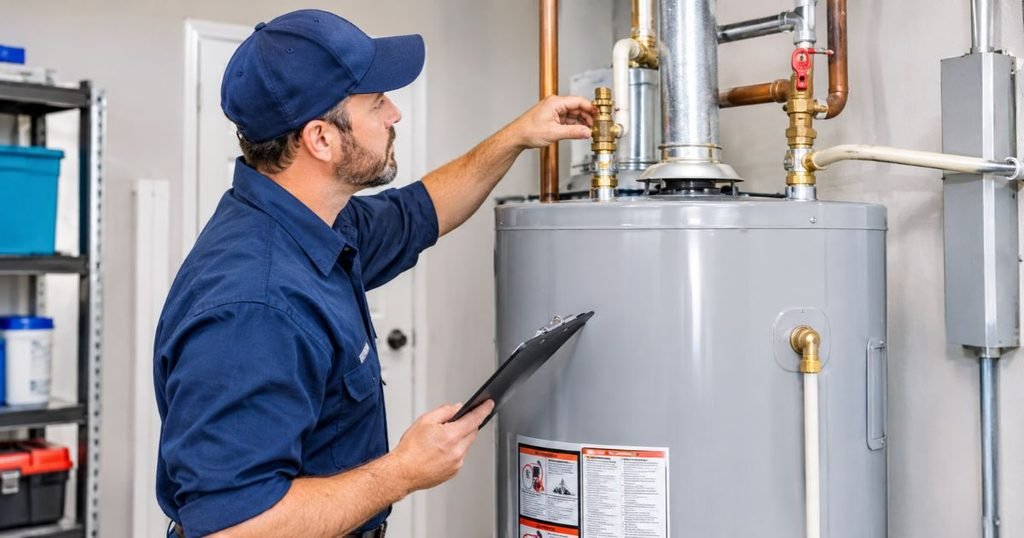
Why Is My Water Heater Whistling?
When investigating a water heater whistling when heating or running, the root cause usually boils down to fluid dynamics and pressure restriction. Water is being forced through a tight space, creating vibration and high-frequency sound waves. The most common reasons include:
- Restricted water flow through partially closed inlet or outlet shut-off valves.
- Excessive municipal or household water pressure exceeding standard safety limits.
- Mineral deposits and sediment buildup restricting internal pathways or coating heating elements.
- A faulty, leaking, or vibrating temperature and pressure (T&P) relief valve.
- Electric heating element scaling, creating a sizzling or high-pitched singing noise.
- Tankless water heater blower motor or venting obstructions.
The exact source of the noise depends heavily on whether you have a gas tank, electric tank, or tankless system, as well as whether the sound occurs constantly, only when heating, or strictly when a hot water faucet is open.
READ MORE: How to Fix Air Pockets in Hot Water Lines: Step by Step DIY Guide
8 Common Reasons Your Water Heater Makes a Whistling Noise
To effectively troubleshoot a high-pitched noise from a water heater, you need to understand the underlying mechanical failures that trigger these sounds. Let’s examine the eight most frequent culprits in detail.
1. Partially Closed Water Supply Valve
The water supply valve (often a gate valve or ball valve located on the cold water inlet pipe at the top of the tank) controls the entry of fresh water into the system. If this valve is accidentally bumped, partially closed, or failing internally, the passage narrows. When high-volume water is forced through this restricted opening, it creates a turbulent jet stream. This fluid friction and vibration produce a distinct, high-pitched whistling noise that often resonates through the entire plumbing network.
2. Faulty Temperature and Pressure Relief Valve
The T&P relief valve is a critical safety component designed to automatically release water if the temperature or pressure inside the tank exceeds safe operating limits (typically 210°F or 150 psi). If the valve spring weakens, mineral scale builds up on the internal seat, or the valve experiences minor pressure fluctuations, it may begin to leak, drip, or emit a sharp whistling sound. A water heater pressure relief valve noise should always be treated with caution, as it indicates the valve is either failing or actively relieving abnormal system stress.
3. Excessive Water Pressure
High municipal water pressure entering a home is a silent destroyer of plumbing fixtures. When incoming water pressure exceeds 80 psi (pounds per square inch), it places continuous strain on the water heater tank, fittings, and thermal expansion relief mechanisms. If your home lacks a properly functioning pressure-reducing valve (PRV) or if a closed plumbing system experiences thermal expansion without an expansion tank, the trapped, high-pressure water can force micro-vulsions through relief mechanisms, resulting in a persistent whistle.
4. Mineral Deposits and Sediment Buildup
Hard water contains dissolved minerals like calcium and magnesium. Over time, these minerals precipitate out of the water and settle at the bottom of a tank-style water heater, creating a layer of water heater sediment buildup. While sediment more commonly causes a deep rumbling, popping, or banging sound as trapped water bubbles boil through the sludge, severe mineral layers can narrow internal flow channels or trap pockets of steam, occasionally generating high-pitched squeals or whines.
5. Damaged or Scaled Electric Heating Element
In an electric water heater making noise, the culprit is frequently the electric heating element. As hard water bakes against the active heating loops, a thick crust of mineral scale accumulates. When the elements energize to heat the water, the rapid expansion against this dense scale barrier creates localized boiling, sizzling, hissing, or high-pitched singing noises. Over time, this thermal stress causes element burnout.
6. Tankless Water Heater Airflow or Blower Problems
A tankless water heater making noise introduces an entirely different set of mechanical factors. Modern tankless units rely on internal combustion blowers and complex exhaust venting systems to expel exhaust gases and draw in combustion air. If the blower wheel becomes coated in dust, lint, or soot, or if the intake/exhaust vent pipe is partially blocked by debris, birds’ nests, or condensation freezing, the forced airflow will produce a high-pitched whistle or whine during operation.
7. Loose Fittings or Restricted Plumbing Connections
Plumbing connections experience continuous expansion and contraction cycles as water heats and cools daily. Over months and years, threaded nipples, dielectric unions, or soldered joints can develop microscopic gaps or internal burrs. When pressurized water rushes past these minor structural imperfections, it acts like air blowing across the top of an open bottle, creating an audible whistle.
8. High-Temperature or Internal Pressure Problems
If your water heater’s thermostat is set dangerously high (above 120°F to 140°F), the water inside the tank can approach boiling points, especially under variable draw conditions. Excessive heat generates localized steam micro-bubbles. When these tiny vapor pockets collapse or escape through restricted pathways, they create sharp, whistling, or shrieking acoustic signatures.
READ MORE: Why Is My Hot Water Heater Not Working: Step by Step
How to Identify the Cause of a Whistling Water Heater
Pinpointing the exact source of a plumbing noise requires a methodical, step-by-step diagnostic approach. Before calling a technician, observe the operating conditions of your unit using the checklist below:
- Location of the Sound: Does the noise originate directly from the top inlet pipes, the side relief valve, the bottom burner assembly, or the internal tank body?
- Timing of the Noise: Does it happen continuously, only when the burners/elements are actively heating, or strictly when someone turns on a hot water tap in the kitchen or bathroom?
- Physical Evidence: Is there water pooling around the base, damp insulation, mineral crusting on fittings, or a slow drip coming from the T&P discharge pipe?
- System Type: Is your unit a gas storage tank, an electric storage tank, or a tankless high-efficiency system?
Troubleshooting Reference Table
| Noise or Symptom | Possible Cause | Recommended Action |
| High-pitched whistling | Restricted water flow or valve restriction | Inspect accessible shut-off valves |
| Whistling near relief valve | Pressure anomaly or failing T&P valve | Contact a licensed plumber for testing |
| Hissing or sizzling | Condensation on burner or scale on element | Identify source safely; check element status |
| Rumbling or popping | Heavy tank sediment accumulation | Schedule professional tank flushing |
| Whining from tankless unit | Blower motor or intake/exhaust blockage | Arrange professional airflow inspection |
Note: Auditory symptoms alone cannot provide a definitive diagnosis. Always verify mechanical conditions before attempting repairs.
READ MORE: How to Empty a Hot Water Heater: Step by Step DIY Guide
Is a Whistling Water Heater Dangerous?
One of the most pressing questions homeowners ask is: Is a whistling water heater dangerous? The answer depends entirely on the root cause. While a partially closed valve is merely an annoying acoustic nuisance, a whistling sound linked to pressure regulation, T&P valve failure, or overheating can signal a legitimate safety hazard.
Potential safety risks associated with noisy water heaters include:
- Excessive Water Pressure: Unchecked pressure can weaken tank seams, leading to catastrophic tank rupture.
- T&P Valve Malfunction: If a relief valve fails to open when pressure spikes, the tank risks exploding under extreme stress.
- Overheating and Steam Generation: Boiling water or steam production can scald users and compromise plumbing joints.
- Electrical Hazards: Leaking water dripping onto electrical control boxes, wiring harnesses, or gas burners creates short circuits or fire risks.
CRITICAL SAFETY WARNING:
- Never block, cap, plug, or disable the Temperature and Pressure (T&P) relief valve. Doing so removes the system’s ultimate safety safeguard against explosion.
- Never touch hot discharge water or the T&P valve outlet pipe during testing.
- Never open electrical access panels or tamper with 240V wiring on electric water heaters unless power is fully disconnected at the breaker box.
- If you smell gas or suspect a gas leak, immediately evacuate the property and contact your local gas utility or emergency services from a safe location.
- If your water heater emits steam, unusually hot water, active structural leaks, or loud, violent banging noises, shut off the power/gas supply immediately and call a professional.
How to Fix a Whistling Water Heater
Once you have identified potential symptoms and ensured safety, you can evaluate the appropriate corrective measures. Some solutions are simple DIY tasks, while others require professional intervention.
Check Accessible Water Supply Valves
If the whistling occurs when hot water is running throughout the house, examine the main cold water supply valve located directly above the water heater. Ensure the valve handle is turned completely parallel to the pipe (indicating it is 100% open). If the valve is partially closed, opening it fully will often eliminate the flow restriction and stop the whistle immediately. Never force a stuck or corroded valve handle, as older gate valves can snap easily.
Check Household Water Pressure
Attach a standard water pressure gauge to an exterior hose bibb or washing machine hookup while all home water fixtures are turned off. If the reading registers above 80 psi, your home has excessive water pressure. While a plumber can install or adjust a whole-house pressure-reducing valve (PRV) to resolve this, consistent high pressure requires professional diagnostic evaluation.
Flush the Water Heater Tank When Appropriate
If your tank-style heater is making noise due to sediment accumulation, scheduling a flush can help clear out mineral debris. Homeowners in hard-water regions should flush their tanks annually. However, if a tank has gone unmaintained for over 5 to 10 years, attempting a DIY flush can dislodge large chunks of scale that might get stuck in the drain valve, causing persistent leaks. Heavily scaled tanks should always be evaluated by a qualified technician.
Inspect the T&P Relief Valve Professionally
If the whistling noise emanates directly from the T&P valve, do not attempt to hammer or tighten it haphazardly. If the valve is dripping or whistling, it may need to be replaced. T&P valve replacement must be performed strictly in accordance with manufacturer guidelines and local plumbing codes, ensuring the discharge pipe routes safely toward a floor drain.
Clean or Replace Heating Elements
For electric water heaters plagued by scale-induced hissing or whistling, a technician can drain the tank, pull the electric heating elements, and clean or replace them. Replacing worn-out 4500W or 5500W elements restores quiet, efficient heat transfer.
Repair Tankless Water Heater Venting or Blower Problems
Tankless units require specialized diagnostic tools. If a tankless blower motor is whining or whistling, a technician must inspect the combustion chamber, clean the blower fan blades, and verify that the PVC or stainless steel concentric venting is free of obstructions and properly sealed.
READ MORE: How to Flush a Rheem Tankless Water Heater: Step-by-Step Guide
Why Does My Water Heater Whistle Only When Heating?
When a water heater whistling when heating occurs, it usually points to thermodynamic reactions inside the tank. As burners fire or electric elements activate, the water temperature rises rapidly. This thermal expansion increases internal pressure. If mineral scale coats the heating elements or if internal circulation ports are restricted by sediment, the localized boiling action creates high-frequency vibration and whistling. Furthermore, as metal tank components and heat exchangers expand under high heat, minor structural gaps or loose fittings can briefly vibrate until operating temperatures stabilize.
Why Does My Water Heater Whistle When Hot Water Is Running?
If your unit remains silent while sitting idle but starts whistling the moment you turn on a shower or sink faucet, the issue is hydrodynamic rather than thermal. When you open a hot water tap, cold water rushes into the tank inlet to replace the outgoing hot water. If the inlet valve is partially restricted, if a plumbing fitting has an internal burr, or if your home’s water pressure fluctuates under demand, water rushing past the restriction generates acoustic resonance much like blowing across the mouth of a glass bottle.
Gas vs. Electric vs. Tankless Water Heater Whistling
Different water heater designs have unique mechanical structures, meaning the source of a whistle varies by fuel type:
| Water Heater Type | Common Noise Sources | Recommended Response |
| Gas Tank Water Heater | Restricted inlet flow, T&P valve fluctuations, burner/venting issues | Inspect accessible valves safely; call a plumber if internal |
| Electric Tank Water Heater | Scaled heating elements, restricted flow, thermostat pressure | Check breaker/power; professional element inspection |
| Tankless Water Heater | Blower motor obstruction, venting restriction, flow sensor vibration | Follow manufacturer guidance; arrange professional service |
How Much Does It Cost to Fix a Whistling Water Heater?
Repair costs vary based on the root cause, labor rates in your region, and whether professional parts replacement is necessary. Below is an overview of estimated U.S. repair costs:
- Diagnostic / Service-Call Fee: $100 – $250 (often credited toward approved repairs)
ConsumerAffairs - Shut-Off Valve Replacement: $150 – $350
- Pressure-Reducing Valve (PRV) Replacement: $250 – $500
- T&P Relief Valve Replacement: $150 – $250
Magnificent Plumbing - Tank Flushing and Maintenance: $150 – $300
- Electric Heating Element Replacement: $200 – $300
Magnificent Plumbing - Tankless Blower or Venting Repair: $250 – $600
Cost Comparison Table
| Repair Service | Estimated U.S. Cost Range (Parts & Labor) | Complexity Level |
| Service Diagnostic Call | $100 – $250 | Low |
| Valve Repair / Replacement | $150 – $350 | Medium |
| T&P Valve Swap | $150 – $250 | Medium |
| Electric Element Service | $200 – $300 | Medium to High |
| PRV Installation | $250 – $500 | High (Plumber required) |
Disclaimer: These figures are approximate estimates reflecting general U.S. national averages. Final pricing depends heavily on local labor rates, equipment accessibility, unit age, and brand-specific part availability.
READ MORE: How Much Does a Slab Leak Cost to Repair?
When Should You Call a Professional Plumber?
While checking your water supply valve or monitoring your water pressure gauge are safe DIY steps, certain warning signs demand immediate professional intervention:
- Persistent, increasingly loud whistling or screeching that does not stop.
Free Construction Cost Estimator - Suspected pressure-relief valve malfunction or active water leakage around the tank.
Free Construction Cost Estimator - Visible steam or scalding-hot water discharging from fixtures.
- Repeated pressure spikes or plumbing hammer.
- Electrical tripping, burning smells, or malfunctioning gas control valves.
- Tankless venting errors, error codes, or blower motor failures.
When contacting a plumber, be prepared to describe the exact sound, when it occurs (during heating vs. water draw), the age and brand of your water heater, and whether you notice any leaks or pressure changes.
How to Prevent Your Water Heater from Making Whistling Noises
Proactive maintenance goes a long way toward keeping your plumbing system quiet and efficient:
- Schedule Annual Inspections: Have a licensed technician service your water heater once a year.
- Follow Manufacturer Guidelines: Adhere strictly to the maintenance schedule outlined in your user manual.
- Flush Your Tank: Drain sediment from tank-style heaters annually (or bi-annually in soft-water areas).
- Monitor Water Pressure: Install a thermal expansion tank if your home has a closed plumbing system, and keep household pressure below 80 psi.
- Soften Hard Water: Consider installing a whole-house water softener to prevent mineral scale accumulation.
- Keep Vents Clear: Ensure tankless air intake and exhaust pipes remain unobstructed by foliage, ice, or debris.
Frequently Asked Questions
Why does my water heater sound like a tea kettle?
A tea kettle sound is caused by water boiling rapidly over a thick layer of mineral scale on heating elements or being forced through a restricted valve opening, creating high-frequency acoustic vibrations.
Is a whistling water heater dangerous?
Not always, but it can be. While a partially closed valve is harmless, a whistle linked to high water pressure, a failing T&P relief valve, or overheating can pose serious safety and structural risks.
Can a bad pressure relief valve make a water heater whistle?
Yes. If the internal spring of a T&P valve weakens or if mineral deposits prevent a tight seal, water or pressure escaping past the valve seat can produce a sharp whistling sound.
How do I stop my water heater from whistling?
First, check if your cold water supply valve is fully open. If the valve is open and the noise persists, test your home water pressure or contact a plumber to inspect for sediment, scale, or a faulty T&P valve.
Should I turn off my water heater if it is making a high-pitched noise?
If the noise is accompanied by violent banging, steam, active leaks, or a burning smell, you should shut off the power breaker (for electric) or the gas control valve (for gas) and call a professional immediately.
Final Thoughts
Hearing a whistling noise from your water heater can be alarming, but understanding the root cause helps you take calm, effective action. Whether the sound stems from a simple valve restriction, high household water pressure, or mineral scale buildup on heating elements, addressing the issue early prevents minor annoyances from turning into costly emergencies. Always prioritize safety, perform only basic visual inspections, and don’t hesitate to call a qualified plumbing professional when dealing with pressure, gas, or electrical components.

