If your gas water heater is over 10 years old, leaking, or suddenly stopped giving you hot showers, you’re probably asking the same question every homeowner does next: how much is this going to cost? Good news: replacing a gas water heater is one of the more predictable home projects and this guide will walk you through the numbers, what drives price variance, whether tankless makes sense, permit and warranty traps, and how to get accurate contractor quotes.
Quick practical promise: by the end you’ll have a realistic budget range, a short checklist of what to check before you call a pro, a contractor-question script, and a comparison table so you can compare options at a glance. Lets deep dive into “Gas Water Heater Replacement Cost (2026) — What Homeowners Pay & Why”
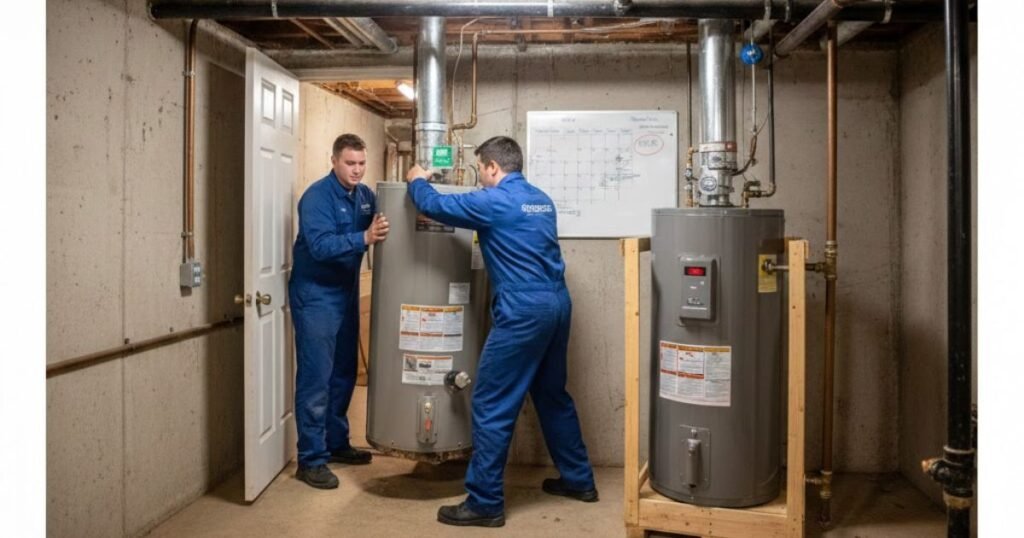
Quick cost snapshot (read before you panic)
- Typical installed cost, standard tank gas: ≈ $600–$2,500 (low → typical → high depending on size, brand, and site work).
- Typical installed cost, tankless gas: ≈ $1,400–$3,900 (can be higher if venting or gas-line upgrades are required).
- Broader market totals (all types, site complexity, premium units): roughly $1,000 up to $4,000–$6,000 or more for specialty or condensing systems.
- Typical labor/installation add-ons: a simple swap might add a few hundred dollars ($150–$1,200); complex tankless installs commonly add $600–$1,850 (or more) for venting, gas-line upsizing, or electrical work.
These are national-level ranges your ZIP code, local codes, how accessible the existing heater is, and whether you switch fuel types will move you up or down.
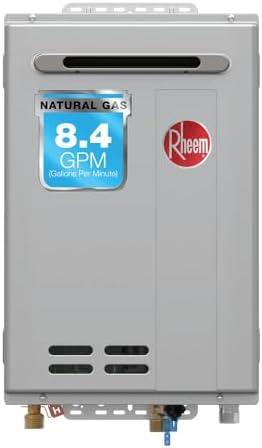
Why replacement costs vary
Costs depend on five big things: (1) the unit type and capacity, (2) whether you’re doing a one-for-one swap or changing location/type (tank → tankless), (3) venting and gas-line needs, (4) local permit and inspection fees, and (5) contractor rates / travel / disposal. I’ll break all of these down, line-by-line, below with concrete example numbers.
Types of gas water heaters (and expected life expectancy)
1. Standard tank (conventional storage) — 40–80 gallons
- How it works: stores hot water in an insulated tank and keeps it hot.
- Lifespan: 8–15 years depending on water quality and maintenance.
- Upside: lowest upfront cost, simple install for an in-place replacement.
- Downside: standby heat loss, footprint, shorter life than some alternatives.
2. High-efficiency tank (condensing or improved-insulation tanks)
- How it works: improved burners, insulation, or condensing technology to squeeze more efficiency out of gas.
- Lifespan: similar to standard tanks, sometimes slightly longer with proper care.
- Upside: lower operating cost.
- Downside: higher upfront cost, may need condensate drain and different venting.
3. Tankless (on-demand) gas
- How it works: heats water only when needed, mounted on the wall (no tank).
- Lifespan: 15–20+ years is common.
- Upside: lower energy use over time, continuous hot water, smaller footprint.
- Downside: higher upfront cost, may need larger gas feed and rework of venting; flow rate limits for large simultaneous demand.
4. Condensing gas / specialty large-capacity systems
- How it works: recovers more heat from exhaust (condensing) or uses specialized tech for efficiency.
- Lifespan: variable; often longer with maintenance.
- Upside: very efficient, especially for colder climates.
- Downside: high unit cost, more complex install.
(Life expectancy depends heavily on local water hardness, maintenance, and whether sacrificial anode rods are checked/changed.)

READ MORE: How Does a Gas Water Heater Work?
Full cost breakdown — unit price + line items
Below I’ll list typical line items you’ll see on a contractor quote and ranges you can expect. Where possible I’ll show low → typical → high numbers so you can map to your situation.
1) Unit (equipment) cost — rough ranges
- Standard tank (gas): $400–$1,800 (unit only; brand, size, and efficiency matters).
- High-efficiency tank: $800–$2,850 (unit only).
- Tankless gas: $1,200–$3,500 (unit only; whole-house systems often toward upper end).
- Condensing / specialty: $2,000–$6,000+ for some models.
2) Labor / installation
- Simple one-to-one swap (same location, same fuel): $150–$1,200 depending on region and accessibility. A common single-family average is a few hundred dollars.
- Tankless installs (venting + gas-line work): $600–$1,850+ is common; if you need major gas-line upsizing or new vent chases it can climb higher.
- Complex installs (move location, platform, seismic strapping, remodel access): $500–$3,000+ depending on the work.
Line-item examples you may see:
- Turn off and disconnect old unit included, small fee
- Vent termination and new vent pipe — $150–$800
- Gas-line upsizing (linear feet + new fittings) — $300–$1,200
- New T&P (temperature & pressure) valve, piping to drain — $50–$200
- Expansion tank (required by some codes) — $80–$250
- Seismic straps (CA or other high-seismic areas) — $30–$150
- Condensate drain for high-efficiency systems — $75–$350
- Electrical conduit / outlet for electronic ignition or controls — $200–$800
3) Permits & inspections
- Typical permit fees: $25–$500 depending on city/county and whether plumbing & gas permits are separate. Many municipalities require a permit and inspection for any replacement or fuel-change.
4) Haul-away & disposal
- $25–$150 — many contractors include it; some charge a disposal fee for the tank or hazardous parts.
5) Miscellaneous: warranty registration, water-line replacements, drip pans
- If your old unit was installed without a pan and you’re above finished space, code may require a drain pan and drain line — $100–$400.
Putting it together: a straightforward tank swap might be unit $600 + labor $300 + permit $75 + disposal $50 = $1,025; a tankless swap with venting and gas-line work might be unit $2,000 + labor $1,200 + gas/vent parts $700 + permit $150 = $4,050. Those sample totals illustrate the low / typical / high spread.
(Remember: national averages and ranges differ by region. See the comparison table below.)

READ MORE: Does a Gas Water Heater Need Electricity?
Comparison table — unit price, installation, pros/cons
| Type | Typical Unit Cost (USD) | Typical Installation / Labor | Total Installed Cost (Typical Range) | Pros (3–6 words) | Cons (3–6 words) | Best For |
| Standard Tank (gas) | $500–$1,800 | $150–$1,200 | $600–$2,500 (typical). (One-for-one swap.) | Low upfront cost | Takes space; standby loss | Budget replacement, rentals |
| High-Efficiency Tank | $800–$2,850 | $500–$1,200 | $1,300–$4,050 (avg) | Lower operating cost | Higher upfront cost | Long-term savings, retrofit |
| Tankless Gas | $1,200–$3,500 | $600–$1,850 | $1,400–$3,900+ (depends heavily). | On-demand hot water | Higher install cost | Energy-conscious households |
| Condensing / Specialty | $2,000–$6,000+ | varies widely | $2,000–$6,000+ | Very efficient, long life | Expensive; complex install | Large homes, efficiency goals |
Note: Ranges vary by brand, region, and site condition. See cost sources (industry cost guides and manufacturer installation notes).
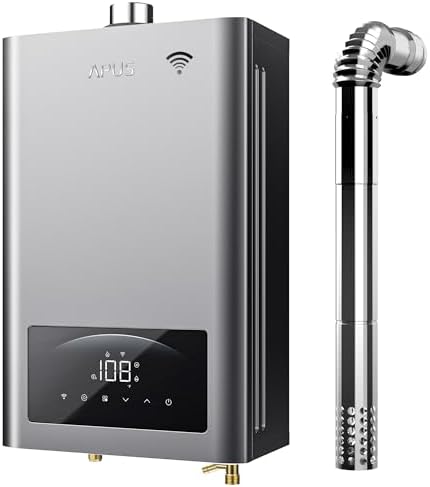
Tank vs Tankless — cost comparison & when tankless makes sense
Upfront cost
- Tank: cheaper to buy & install for like-for-like swaps.
- Tankless: higher initial spend (unit + installation), particularly if gas supply and venting must be upgraded.
Operating cost (long-term)
- Tankless units can be more efficient because they avoid standby losses, so if your household has sustained hot water demand and longevity matters, tankless can save on gas bills over 10–20 years. However, savings depend on usage patterns and the local price of natural gas.
Lifespan & maintenance
- Tank: ~8–15 years.
- Tankless: ~15–20 years with periodic servicing (descaling in hard-water areas).
When tankless makes sense
- You want continuous hot water for large simultaneous use (multiple bathrooms), or you value space saving and long-term efficiency. Also attractive if you’re already renovating and can easily route new venting and gas lines. Conversely, if you have a tight budget and the current tank location and infrastructure are fine, a like-for-like tank swap is often the pragmatic choice.
Regional & site-specific cost drivers
- Urban vs rural: labor rates and permit fees vary. Cities generally charge higher permit fees and contractors may cost more per hour.
- Seismic / code requirements (CA, WA, OR): California and other jurisdictions require seismic straps, pan drains, or other work this can add line items and cost. Manufacturer and local code requirements matter.
- Incentives & rebates: most federal incentives in 2023–2025 target heat pump water heaters (electric), not standard gas units. If you’re considering switching to a heat-pump (electrically-driven) system, there are federal tax credits and often state/local rebates these programs had active credits through 2025 for qualifying HPWHs (Energy Efficient Home Improvement Credit, up to $2,000 for qualifying heat pump water heaters). Local programs (for example San Francisco) have offered additional credits for efficient upgrades. If your heart is set on gas, check utility and state rebate pages some utilities offer low incentives for efficient gas condensing units but most big incentives favor electric heat pumps.

READ MORE: How to Tell if Water Heater is Gas or Electric
DIY vs Licensed Pro — risks, code, and warranty issues
DIY pros: save on labor, control timing.
DIY cons: gas connections and venting mistakes are safety risks (carbon monoxide), may violate local code, and manufacturers often require professional installation for full warranty coverage. Several major manufacturers explicitly warn that improper installation can void warranty or that full warranty is conditioned on code-compliant installation (often by a licensed professional). For gas systems, hiring a licensed plumber or HVAC tech is the safer, generally required route.
Bottom line: for any gas appliance replacement, unless you or someone you trust is a licensed and experienced pro, hire a licensed contractor. Warranty and safety matter.
How to get accurate quotes — what to ask
What to ask a contractor on first contact
- Are you licensed & insured in my city/county? (ask for license number)
- Do you have experience with this make/model or tankless installs?
- Will you obtain permits and schedule inspections? (confirm who pays permit fee)
- What’s included in the price? (unit, labor, venting, gas-line work, permits, disposal)
- Estimated timeline and payment schedule.
- Warranty: what parts/labor warranty do you provide? Will manufacturer warranty remain intact?
- Any recommended upgrades (pan, expansion tank, seismic strap)?
Checklist — what to check before they arrive (helps lower surprise costs)
- Is the current heater leaking, or just showing age? (take photos)
- Where is the heater located? (basement, garage, closet) note accessibility (stairs, tight spaces)
- Are there obvious active gas smells? If yes, call a pro immediately.
- Note electrical breakers or any history of water damage near the heater.
- Measure clearance space and note vent termination location (outside wall vs chimney) take a photo.
- Confirm if you want to switch to tankless or keep like-for-like.
Common gotchas & code/warranty traps
- Upgrading to tankless often triggers gas-line upsizing: many homes with older 3/4″ gas lines need 1″ lines for high-capacity tankless units. That means trenching or interior runs and cost.
- Venting requirements differ: some high-efficiency condensing units need PVC condensate drains; others need stainless steel or special coaxial vent kits.
- Manufacturer warranty conditions: many manufacturer warranties require installation per instructions and may recommend or require licensed installers improper installs can void warranty. Keep installation records & registration.
- Local permits: don’t skip town on permits inspections protect you and future buyers, and unpermitted work can be costly to fix when selling.
5 FAQs
How much does it cost to replace a gas water heater?
Typical national installed costs for a standard gas tank water heater are about $600–$2,500; tankless gas systems typically run $1,400–$3,900 or higher depending on venting and gas-line work. Local factors and permit fees can move those numbers.
Is it cheaper to repair or replace a gas water heater?
If repair costs approach 40–50% of a new unit’s installed cost, replacement is usually the better value. Age matters: if the unit is older than 8–12 years, replacement is typically recommended. Repairs under a few hundred dollars can make sense for younger units. (This is a general rule get a pro’s diagnostic.)
How much does it cost to switch from a tank to a tankless water heater?
Switching to tankless often adds $150–$2,500+ on top of unit and install costs due to venting, gas-line upsizing, and possible electrical work total installed costs commonly land in the $1,400–$4,000+ range.
Do I need a permit to replace a water heater?
In many jurisdictions yes permits and inspections are commonly required for gas appliance replacements; fees typically run $25–$500 depending on local rules. Your contractor should pull the permit.
Will replacing my water heater void the warranty if I install it myself?
Many manufacturers require installation per their instructions and may limit warranty coverage if installation isn’t code-compliant or performed by a licensed professional. Check your unit’s warranty document and consider hiring a licensed installer to preserve coverage.
Final Thoughts:
Replacing a gas water heater isn’t just about buying a new appliance it’s about making a safe, code-compliant upgrade that fits your home, your budget, and your long-term plans. While national averages show that many standard tank replacements fall in a predictable range and tankless systems cost more upfront, the final price always comes down to your home’s layout, local permit rules, venting and gas-line requirements, and the installer you choose.