Looking for a reliable, affordable way to heat a bedroom, garage, small office, or living room? This deep-dive written for U.S. homeowners walks through how Lasko heaters work, which models are worth your money, safety and energy trade-offs, installation and troubleshooting tips, and the best picks for common rooms. If you want fast answers, skip to the TL;DR box. Otherwise settle in: this guide covers the practical details an “electrician-next-door” would tell you, in plain language.
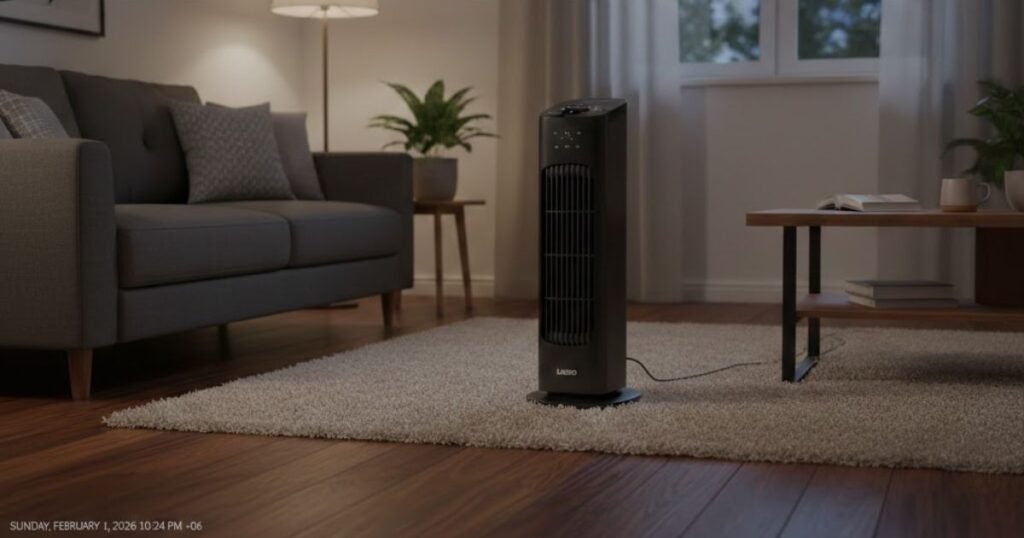
Quick takeaway — Best Lasko models for common needs
- Best small-room budget pick (bedroom / desk): Lasko 754200 — compact desktop ceramic heater, 1500 / 900 W, good for ≤100 sq ft.
- Best quiet bedroom / whole-room tower: Lasko 755320 / 751320 — 1500 W digital/tower units with thermostats, remote and timers (good for 100–150 sq ft).
- Best personal / travel / desk heater: Lasko 100 MyHeat (200 W) — tiny, low-energy personal heater for very small spaces or under-desk warmth.
- Best for a garage / workshop (if you need a portable high-output): For garages consider a designated utility / radiant shop heater (Lasko makes utility-style heaters check Lasko’s heavier-duty catalog) rather than a small tower; utility models differ from 1,500 W ceramic heaters and may require different mounting and electrical considerations. (See safety & code notes.)
- Best bladeless / modern look: Lasko CW105 — bladeless 1500 W tower with long-range heat channels and remote/timer. Good for rooms up to ~150 sq ft.
Why consider a Lasko heater?
Lasko is one of the most recognizable U.S. brands in portable electric heaters long-running product lines, wide distribution (big box stores + online), and many budget-friendly options that focus on ceramic heating elements and user safety features (tip-over protection, overheat cutout, cool-touch housings on many models). If you want a no-frills electric space heater with a familiar warranty and easy replacement parts, Lasko is worth considering. Their product family ranges from ultra-small personal heaters (200–400 W) to 1500 W oscillating towers and bladeless designs.
Why choose Lasko over an unknown brand? Two practical reasons:
- Availability of manuals & specs. Lasko publishes product pages and downloadable manuals for most models handy for troubleshooting, part numbers, and safety info.
- Safety features on mainstream models. Many Lasko heaters include overheat protection and ETL/ETL-listed safety approvals on product pages; that’s important because safe certification matters for portable heaters. (But always check the specific model.)
How Lasko heaters work — types & tech explained
Lasko sells several basic heater types you’ll see in the table of models below. Understanding the difference helps you pick technology best suited to your space.
1. Ceramic heaters
Ceramic heaters use an electrically heated ceramic plate or block plus a fan to move warm air into the room. They heat quickly, are compact, and are very common in Lasko’s line. Typical max output: ~1,500 W for room-sized models. Benefits: fast warm-up, usually lighter weight, and relatively efficient at converting electric energy into heat (nearly 100% of electrical input becomes heat). Drawbacks: fans can make some noise and they move air (so dust can be stirred).
2. Tower and oscillating heaters
Tower heaters are tall, narrow units that oscillate to distribute warm air over a wider area. They often include digital thermostats, timers and remotes. Lasko’s tower heaters combine ceramic elements with oscillation to cover medium-sized rooms more evenly. Expect typical noise in the “quiet” to “moderate” range depending on fan speed.
3. Utility / garage heaters
“Utility” heater designs include fan-forced metal heaters and sometimes infrared or radiant heater options. These are designed for garages, workshops or poorly insulated spaces. They may have higher air-movement and different mounting (floor or wall/ceiling) and sometimes require more careful electrical planning. For heavy workshop use consider a purpose-built utility heater rather than a small 1,500 W ceramic model. (Also check local code and electric circuit capacity.)
READ MORE: Goodman Heat Pump Review 2026 | Efficiency, Cost, Pros & Cons
Key features to understand
- Thermostat: Manual or digital. A thermostat helps maintain a target temperature (and reduces wasteful on/off cycling). Digital thermostats with an accurate display and programmable timers give the best comfort control.
- Tip-over switch: Cuts power if a heater falls essential in bedrooms and homes with pets or kids. Not all Lasko models include this; check the spec page.
- Overheat protection: An internal thermal cutout shuts the unit down if internal temps exceed safe limits a common and important safety feature.
- Timers & remotes: Useful for scheduling and avoiding overnight waste; many Lasko towers include 8–12 hour timers and remote controls.
Buyer’s checklist — how to pick the right Lasko heater for your room
Before buying, run through these quick checks.
1. Calculating coverage (watts → approximate sq ft)
A simple rule of thumb used by many HVAC guides: plan on about 10 watts per square foot for a room with average insulation in a typical U.S. climate. That makes a 1,500 W heater a reasonable fit for roughly 125–150 sq ft under normal conditions; smaller 200–400 W personal heaters are only for a very small area or personal use. Adjust for poorly insulated rooms, tall ceilings, or extreme cold. (This is a rule of thumb for precise sizing in extreme conditions, consult a heating professional.)
Practical example:
- 1500 W × 3.412 = 5,118 BTU/hr (approx). If you prefer BTU guidance, that’s typical for heating a single medium room quickly. Use the 10 W / sq ft rule for quick sizing.
2. Safety features to require
Don’t buy a heater without at least:
- Overheat protection (thermal cutoff).
- Tip-over switch for freestanding units used in living spaces (bedrooms, living rooms).
- A recognized third-party safety listing (ETL, UL or equivalent).
Also always plug heaters directly into a wall outlet never a power strip or extension cord and keep clearances of at least 3 feet from curtains, bedding and combustibles. These are standard safety rules reiterated by CPSC and university EHS offices.
Lasko models compared
Below is a concise comparison table using current/popular Lasko models. (Model specs are pulled from Lasko’s product pages and retailer listings check your local listing because dimensions and noise ratings vary by configuration.)
| Model name | Type | Heating power (Watts) / BTU eq. | Recommended room size (sq ft) | Thermostat / settings | Safety features | Noise level (quiet/moderate/loud) | Size & weight (L×W×H, lbs) | Price range | Best for | Pros (2) | Cons (2) |
| Lasko 754200 | Desktop ceramic | 1500 / (≈5118 BTU) | ~100 sq ft | Manual; 2 heat + fan | Overheat protection | Quiet | 9.2 × 6 × 7 in; ~? lbs | Low | Desk / small bedroom | Compact; adjustable thermostat. | Not digital; basic features. |
| Lasko 755320 | Digital ceramic tower | 900–1500 / ≈5118 BTU | 125–150 sq ft | Digital + remote + timer | Overheat protection; cool-touch | Quiet / Moderate | 23 × 7.25 × 7 in; 7.29 lbs | Mid | Living room / bedroom | Digital controls; timer & remote. | Some versions lack tip-over switch. |
| Lasko 751320 / 715320 | Oscillating ceramic tower | 1500 | ~150 sq ft | Adjustable thermostat; timer | Overheat protection; cool-touch | Quiet | ~22–23 in H; ~6–8 lbs | Mid | Whole-room tower | Widespread oscillation; remote. | Fan noise at high speed. |
| Lasko 5307 | Oscillating ceramic tower | 1500 | ~150 sq ft | Manual thermostat; 3 settings | Overheat protection | Moderate | 16 in tall; portable | Low–Mid | Bedroom / office | Compact; oscillation. | Basic controls. |
| Lasko 100 MyHeat | Personal tabletop | 200 W | ~small personal area | Simple on/off | Overheat protection | Quiet | 6.1 × 3.8 × 4.3 in; 2.8 lbs | Low | Desk / personal use | Very low energy; portable. | Not for whole rooms. |
| Lasko CW105 (bladeless) | Bladeless tower | 1500 | ~150 sq ft | Digital + remote + timer | Overheat protection; cool-touch | Quiet | ~28 in H | Mid | Modern living room / family room | Bladeless; modern airflow; remote. | Can be pricier; larger footprint. |
| Lasko Ellipse CD12950 | Ellipse tabletop ceramic | 1500 | ~150–200 sq ft | Digital + remote | Tip-over switch; overheat cutout | Quiet (<40 dB) | ~11.6 in H | Low–Mid | Bedroom / kitchen | Quiet; wide grill for distribution. | Tabletop only; smaller coverage vs floor tower. |
Table caption: Selected popular Lasko heaters (desktop/personal to tower/bladeless). Specs vary by retailer and model revision check the product manual for exact dimensions and safety listings.
Summary under the table: For single-person rooms and desks, the 754200 and 100 MyHeat are inexpensive and effective. For bedroom or small whole-room use, Lasko’s 1500 W tower models (755320 / 751320 / CW105) provide the best balance of coverage, controls and safety features. For garages or poorly insulated spaces, consider a purpose-built utility heater rather than a standard 1500 W ceramic tower.
READ MORE: Titan Water Heater Review 2026 | Efficiency, Cost, Pros & Real User Experience
Real-world performance: heating speed, noise, energy use, and durability
Heating speed & distribution
Ceramic elements heat quickly you’ll typically feel warmth in a few minutes for close, personal heating and within ~10–20 minutes for modestly sized rooms (depending on room size and insulation). Oscillating towers spread warm air more evenly than a small desktop heater.
Noise
Noise levels vary by fan speed. Many Lasko tower models advertise “quiet” operation (often under 40 dB at lower speeds) check manufacturer dB claims if you need a whisper-quiet bedroom heater. Ellipse and bladeless models are designed to be quieter. Consumer Reports has measured similar tower models and notes that noise is usually moderate on high fan speeds.
Energy use (and cost)
Most room heaters top out at 1,500 W. That’s the practical maximum for many U.S. household circuits and common for Lasko models. Running a 1,500 W heater for one hour uses 1.5 kWh. Multiply by your electricity rate to estimate cost (for instance, at $0.16/kWh, 1.5 kWh × $0.16 = $0.24/hour). Use timers and thermostats to reduce runtime and cost.
Durability
Expect several years of useful life from a Lasko ceramic heater with normal use and proper care. Durability depends on how often the fan runs, dust load, and whether the unit is kept in a dry, clean environment. Readable manuals and replacement part availability are a plus for long-term ownership.
Installation & placement tips (bedroom, living room, garage)
- Placement: Put the heater on a level, non-combustible surface and keep at least 3 feet of clearance on all sides to combustibles (curtains, bedding, papers). Never place on beds or couches.
- Avoid extension cords: Plug directly into a wall outlet. Extension cords and power strips can overheat and create fire risks. If you must use an extension, use one rated for high wattage (but it’s safest to avoid).
- Electrical circuit: Be aware of other appliances on the same circuit a 1,500 W heater draws ~12.5 A on 120 V. Avoid adding heavy loads (microwaves, ovens) on the same circuit. If in doubt, consult an electrician.
- Bedrooms: Choose a unit with tip-over and overheat protection and consider a timer so the heater turns off before you fall asleep. Many Lasko towers offer timers for this reason.
- Garages / Workshops: Use purpose-built utility heaters if you need to heat a poorly insulated garage. Don’t use small ceramic tower heaters for heavy, semi-outdoor tasks they can struggle to produce usable temps and may be less safe in dusty, oily, or damp shop conditions.
Maintenance, troubleshooting & common fixes
- Cleaning: Unplug before cleaning. Remove dust from grills with a vacuum brush attachment and a soft cloth. Dust buildup reduces airflow and raises internal temps, which can cause the unit to trip overheat protection more often.
- Filter care (if present): Some bladeless models include a permanent/reusable filter vacuum or wash according to the manual. The CW105 mentions an easy-vacuum filter on certain SKUs.
- Heater won’t start: Check the outlet (plug another device to verify), inspect the cord for damage, and ensure the unit isn’t in a tripped state. Many Lasko units reset after cooling down if overheat protection tripped. If a tip-over switch tripped, place the unit upright and restart per the manual.
- Strange noise or burning smell: Turn off and unplug immediately. If smell persists or the unit won’t run normally, stop using and contact Lasko support or dispose per the manual do not continue to operate.
Safety & code notes
CPSC & fire safety:
Keep portable heaters at least 3 feet from combustibles and never leave them unattended while on. Plug directly into the wall, not an extension cord or power strip. If you have young children or pets, prefer models with tip-over switches and cool-touch housings. These are standard CPSC recommendations.
When to stop using a heater:
If it trips repeatedly, emits smoke, produces sparks, or smells strongly of burning, unplug and stop using immediately. These are warning signs of internal damage. Contact the manufacturer or a qualified appliance repair professional.
Electric circuits & code:
If you plan to run multiple heaters or install hard-wired garage heaters, consult an electrician to confirm circuit capacity and local code compliance. Large or permanent heating upgrades in garages or workshops may require permits.
READ MORE: Noritz Tankless Water Heater Buying Guide
Alternatives & when a different brand or a permanent HVAC solution makes sense
Other brands:
If you want lab-tested, long-term reliability and professional testing, Consumer Reports and similar testing organizations sometimes prefer different models or brands for specific tests (efficiency, noise, durability). If you need a model with advanced energy management or smart-home integration, check brands that make smart heaters or Wi-Fi-enabled units.
Permanent HVAC solutions:
If you’re repeatedly heating many rooms or a whole house, portable space heaters are a stopgap. For whole-home comfort, invest in proper insulation, a heat pump, or extend central HVAC. Space heaters are best for spot heating and temporary supplemental warmth.
Final verdict
Small bedroom or dorm (quiet overnight use): Lasko 751320 / 755320 — digital tower with thermostat and timer; quiet low settings are bedroom-friendly.
- Desk or very small personal area: Lasko 100 MyHeat — affordable, tiny, low energy.
- Living room / family room for occasional supplemental heat: Lasko CW105 or Elllipse CD12950 — bladeless or wide-grill oscillating towers give better airflow and quieter performance.
- Garage / workshop: Don’t rely on a standard 1500 W tower for sustained garage heating. Use a purpose-built utility heater and consult an electrician for installation.
FAQs
Q1: Are Lasko heaters safe to leave on overnight?
A: In general, manufacturers and safety agencies (CPSC) advise not to leave portable heaters unattended while sleeping. If you must, use models with tip-over and overheat protection and enable a timer so they shut off automatically but avoiding overnight unattended use is safest.
Q2: How many watts do I need to heat a 150 sq ft room?
A: Use roughly 10 watts per sq ft as a rule of thumb so about 1,500 W for 150 sq ft under average insulation and climate conditions. Adjust upwards for poor insulation or very cold climates.
Q3: Can I plug a Lasko heater into a power strip?
A: No — plug directly into a wall outlet. Power strips and extension cords can overheat under the heater’s load and increase fire risk.
Q4: My Lasko heater tripped and won’t turn on — what do I do?
A: Unplug and allow it to cool. Check that a tip-over switch hasn’t engaged and inspect the cord for damage. If it still won’t run after cooling, contact the manufacturer or authorized service; do not continue to use it.
Q5: Which Lasko model is the quietest for a bedroom?
A: Ellipse and bladeless tower models (e.g., CD12950 and CW105) are marketed as quieter (<40 dB on low) and are good picks for bedrooms. Still check the specific model’s dB claims and user reviews for night-time usage.
References
(Use these sources when writing product pages, reviews, or for citation in published guides. I’m listing source names consult the specific product manuals for exact model specs.)
- Lasko product pages and downloadable manuals for model pages (e.g., Lasko 754200, 755320, 751320, 5307, 100 MyHeat, CW105, CD12950).
- U.S. Consumer Product Safety Commission (CPSC) guidance on portable heater safety and recalls.
- Energy.gov Small space heater guidance and how to estimate appliance energy usage.
- Consumer Reports independent heater testing and model reviews (search for specific Lasko model reviews).
- University EHS / occupational safety sheets (MIT EHS, campus safety tips) placement and electrical best practices.