When a Rheem water heater has no hot water, the underlying cause is almost always an ignition issue. Whether you hear the igniter clicking endlessly without catching, notice that the pilot light has gone out, or find that the burner fails to spark at all, dealing with a unit that will not ignite can leave any homeowner feeling frustrated and disrupted.
Ignition problems in Rheem gas water heaters can stem from several distinct issues. It could be as simple as an interrupted gas supply or an extinguished pilot flame. In other instances, a failed electronic igniter, a faulty thermocouple or flame sensor, a blocked combustion chamber, or a malfunctioning gas control valve is to blame. Because Rheem manufactures a wide variety of residential models, understanding why your unit won’t ignite starts with knowing how your specific heater operates.
While certain initial checks such as verifying gas shutoff valves, checking household electrical breakers, or reading status light codes are perfectly safe for homeowners to perform, any repairs involving gas line disassembly, internal gas valve adjustments, or burner modifications must be handled by a licensed plumber or qualified gas technician. Lets deep dive into “Rheem Water Heater Not Lighting? Causes and Fixes”
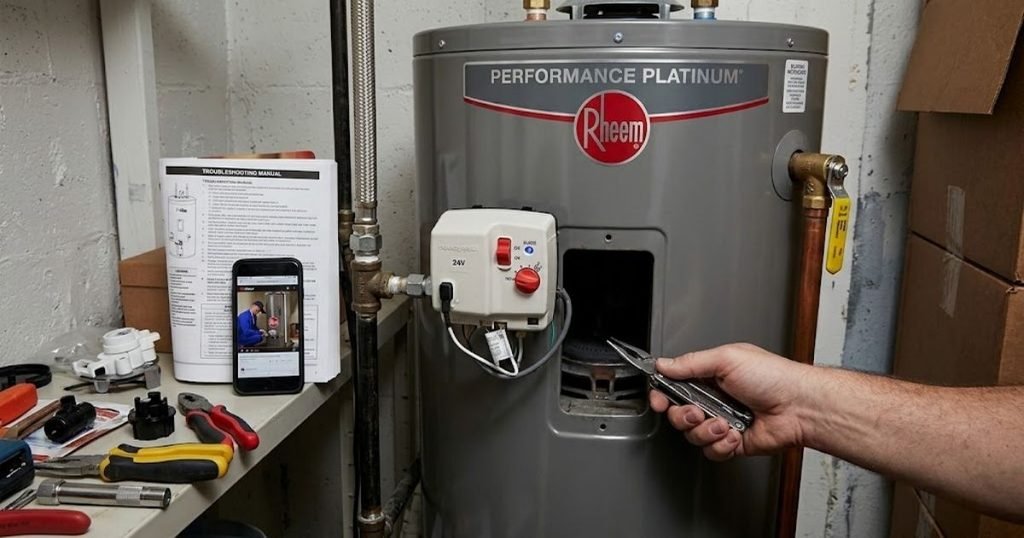
Why Is My Rheem Water Heater Not Lighting?
When experiencing Rheem water heater ignition problems, identifying the root cause requires a systematic approach. Gas water heaters rely on a precise balance of fuel, air, ignition source, and safety controls to operate safely. If any single component in this sequence fails, the system automatically prevents ignition to avoid gas buildup or potential hazards.
Here are the primary reasons a Rheem gas water heater is not igniting:
- Gas Supply Interruption: If the gas shutoff valve leading to the unit is accidentally closed, or if there is a main utility interruption or depleted propane tank, the burner cannot receive fuel.
- Extinguished Pilot Light: On standing-pilot models, a draft, temporary gas pressure drop, or dirty pilot orifice can blow out the small continuous flame needed to light the main burner.
- Faulty or Damaged Electronic Igniter: On models with electronic ignition (such as hot-surface igniters or piezo spark igniters), a cracked igniter element, corroded wire, or weak spark will prevent the gas from lighting.
- Defective Thermocouple or Thermopile: On applicable standing-pilot units, the thermocouple or thermopile senses the pilot flame’s heat and generates a tiny electrical voltage. If it fails or misaligns, the gas control valve shuts off gas flow as a safety precaution.
- Clogged Pilot Burner or Ignition Components: Dust, lint, rust, or spider webs can accumulate around the pilot tube, spark electrode, or main burner ports, blocking fuel flow or impeding the spark.
- Gas Control Valve or Thermostat Malfunction: The main gas control module regulates fuel flow and internal safety circuits. Internal electronic failure or circuit board faults will prevent the valve from opening.
- Insufficient Combustion Air or Venting Restriction: Rheem gas water heaters feature Flammable Vapor Ignition Resistant (FVIR) technology and air intake screens. If the bottom air filter is clogged with lint or dirt, or if the flue pipe is blocked, safety switches will halt ignition.
- Electrical Power Interruption: Power-vent tank units and tankless models require 120V household power for blowers, control boards, and igniters. A tripped breaker or unplugged cord will prevent ignition.
- Faulty Flame Sensor or Safety Sensor: Electronic models use a flame rod to confirm that a flame is present once gas flows. A dirty or oxidized sensor rod cannot detect the flame, causing the control board to immediately shut down fuel delivery.
- Safety Lockout or Diagnostic Error Codes: Modern Rheem units monitor thermal switches, flammable vapor sensors, and pressure switches. If a safety threshold is crossed, the system enters a protective lockout mode.
It is important to keep in mind that Rheem water heaters are not all built identically. A tankless unit does not have a standing pilot light, and an electronic power-vent model uses a hot-surface igniter rather than a manual piezo spark igniter or thermocouple. Recognizing your specific system design will save you time and prevent unnecessary troubleshooting steps.
READ MORE: AO Smith vs. Rheem Water Heaters: Comparison & Expert Reviews
First, Identify Your Rheem Water Heater Type
Before attempting any Rheem water heater troubleshooting steps or reviewing owner manuals, confirm which type of Rheem gas water heater is installed in your home. Look at the unit’s serial label or front panel to determine its category.
Standing-Pilot Gas Water Heater
Traditional atmospheric gas water heaters feature a small, continuous pilot flame that remains lit at all times inside the sealed burner chamber. When the water temperature inside the tank drops below the set point, the gas valve opens, and the pilot flame ignites the main burner. These models typically feature a manual gas control knob with OFF, PILOT, and ON positions, accompanied by a red or black piezo igniter button. If the pilot light goes out, the main Rheem water heater burner not lighting is guaranteed until the pilot is re-established.
Electronic-Ignition Gas Water Heater
Many modern tank-style gas heaters, especially Rheem Performance and Performance Plus power-vent or direct-spark models do not use a standing pilot flame. Instead, they utilize an electronic ignition system. When hot water is required, the electronic control board activates a spark igniter or a hot-surface igniter element to light the burner automatically. These units are plugged into an electrical outlet and often feature an LED status light on the gas control valve that blinks specific diagnostic patterns.
Tankless Gas Water Heater
Rheem tankless gas water heaters heat water instantly on demand as it flows through a heat exchanger. When a hot water faucet is opened inside the home, internal flow sensors signal the electronic control board to initiate an automatic ignition sequence. Tankless systems rely on direct-spark ignition, forced-air blowers, and multiple electronic sensors. They feature digital displays or LED indicators that show operational status and error codes. Tankless units should never be lit manually under any circumstances.
Note: Always locate your specific Rheem model number (found on the rating plate on the side of the tank or cabinet) and consult your official Rheem user manual before performing any operational checks.
READ MORE: How to Flush a Rheem Tankless Water Heater: Step-by-Step Guide
How to Troubleshoot a Rheem Water Heater That Won’t Light
If your Rheem water heater pilot light won’t light or your burner fails to ignite, follow these logical, safety-first troubleshooting steps. Begin with basic external observations before considering professional service.
1. Check for a Gas Supply Problem
A common reason for a water heater failing to light is a simple fuel interruption.
- Locate the manual gas shutoff valve installed on the gas supply line near the water heater. Ensure the valve handle is parallel to the pipe (OPEN position).
- If your home uses natural gas, check whether other gas appliances (such as a gas stove, furnace, or clothes dryer) are operating normally.
- If you use liquid propane (LP), verify with your provider or check the tank gauge to ensure your propane tank is not empty.
- Safety Warning: Do not attempt to loosen gas fittings, adjust line pressure, or dismantle gas valves yourself.
2. Inspect the Water Heater’s External Controls
Examine the gas control valve mounted on the lower front of the water heater tank.
- Confirm that the main temperature dial is turned to a normal operating setting (typically “Hot” or 120°F) rather than “Very Hot” or low/off settings.
- Verify that the main control knob is set to the ON position during normal operation.
- Avoid assuming all Rheem models use identical knobs; electronic models may use push buttons or digital touchpads on the control assembly.
3. Follow the Manufacturer’s Pilot-Lighting Instructions
If you have an eligible standing-pilot model where manual lighting is permitted by the owner’s manual:
- Locate the lighting instruction label affixed directly to the front of the water heater tank.
- Turn the gas control knob to OFF and wait at least 5 minutes to allow any residual gas in the combustion chamber to dissipate completely.
- Turn the knob to PILOT, press and hold the knob down firmly, and repeatedly depress the piezo igniter button while looking through the burner sight glass window.
- Once a small blue pilot flame appears, continue holding the knob down firmly for 30 to 60 seconds to allow the thermocouple to warm up before releasing it and turning the dial to ON.
- If you smell gas at any point during this process, stop immediately!
4. Check the Ignition System Symptoms
Look through the sealed viewing sight glass located at the bottom front of the tank casing to observe what happens when ignition is attempted:
- No spark or click: The piezo igniter or electronic spark module may be loose, dirty, or failed.
- Spark appears, but no pilot flame: Gas is not reaching the pilot orifice (possibly due to a clogged pilot tube or closed gas line).
- Pilot lights while holding knob, but goes out upon release: Indicates a faulty thermocouple, loose wire connection, or tripped thermal safety switch.
- Main burner ignites briefly then shuts down: Points to a dirty flame sensor rod, insufficient airflow, or flue draft blockage.
- Igniter glows or sparks continuously with no main flame: Indicates a main gas valve failure or low gas inlet pressure.
5. Check Electrical Power on Applicable Models
Power-vent tank water heaters and tankless units rely on 120V AC household electrical power.
- Ensure the water heater cord is fully plugged into a grounded GFCI electrical outlet.
- Check your home’s main electrical breaker panel to ensure the dedicated circuit breaker has not tripped.
- If a GFCI outlet is installed near the unit, check whether the outlet’s reset button has popped out.
- Safety Warning: Do not remove electrical junction box covers, touch exposed internal wiring, or repeatedly reset a circuit breaker that continues to trip.
6. Look for an Error Code or Status-Light Pattern
Modern Rheem gas water heaters feature diagnostic status lights built into the Honeywell or White-Rodgers gas valve module, or digital displays on tankless units.
- Observe the LED light on the gas control valve face. Count the number of flashes between brief pauses (for example, 3 blinks, 7 blinks, or a continuous flash pattern).
- Refer directly to the diagnostic code chart printed on the side of your Rheem water heater or inside your specific owner manual.
- For example, a continuous light or “heartbeat” flash generally indicates normal operation, whereas specific blink patterns signal issues like flammable vapor sensor lockout, thermal cutoff opening, or gas control valve internal faults.
7. Stop If the Heater Still Will Not Ignite
If basic safe checks do not restore operation, stop further troubleshooting. Attempting to force ignition on a malfunctioning gas appliance can cause fuel accumulation, component damage, or unsafe conditions. Turn the gas control valve knob to OFF, close the gas shutoff valve, and contact a licensed plumbing professional.
READ MORE: How to Reset Rheem Tankless Water Heater Error Codes
Rheem Water Heater Pilot Light Won’t Stay Lit
A frequent issue reported by homeowners is a Rheem water heater pilot won’t stay lit. There is a distinct functional difference between a pilot light that fails to spark at all and one that lights successfully while you press the pilot knob but extinguishes the moment you let go.
When a pilot flame dies immediately upon releasing the control knob, the issue is almost always tied to the pilot flame sensing circuit:
- Thermocouple or Thermopile Malfunction: On models equipped with a standing pilot, a thermocouple (or thermopile millivolt generator) extends into the pilot flame. When heated, it generates a tiny voltage (typically 20–30 millivolts for thermocouples, or 750 millivolts for thermopiles) that signals the gas valve to stay open. If the thermocouple tip is oxidized, misaligned out of the flame, or burnt out, the gas valve shuts off pilot gas as a safety measure.
- Tripped Thermal Resistance Device (TRD) / Thermal Cutoff: Modern Rheem FVIR water heaters include a thermal cutoff switch or glass vial safety mechanism. If combustion chamber temperatures exceed safe limits due to poor ventilation or lint buildup, this safety device opens the electrical circuit, preventing the pilot from staying lit.
- Dirty or Obstructed Pilot Burner: A weak, yellow, or dancing pilot flame will not generate enough heat to satisfy the thermocouple. A proper pilot flame should be crisp, steady, and predominantly blue. Dust, lint, or spider nests inside the pilot tube can restrict gas flow.
- Clogged Combustion Air Intake Screen: Rheem FVIR tanks pull air through a protective filter screen at the base of the heater. If this screen becomes covered in dust or pet hair, the burner chamber becomes starved of oxygen, causing the pilot flame to suffocate and die.
Clarification: Thermocouples and thermopiles serve similar safety monitoring functions, but they operate at different voltage levels and are not interchangeable parts. Because servicing these components requires opening the sealed combustion chamber gasket and accessing gas tubing, component replacement should be performed by a qualified technician.
Rheem Water Heater Igniter Not Working
On electronic-ignition tank models and tankless systems, a Rheem water heater igniter not working completely prevents the ignition sequence from starting. Depending on your model, the igniter may be a direct-spark electrode or a hot-surface igniter (HSI) element made of silicon carbide or silicon nitride.
Common causes for igniter failure include:
- Loss of Electrical Supply: Electronic ignition systems cannot spark or glow without power. Check for tripped circuit breakers or switched outlets.
- Cracked or Damaged Igniter Element: Hot-surface igniters operate at extremely high temperatures and become fragile over time. A hairline crack in the ceramic or silicon element breaks the electrical circuit.
- Improper Spark Gap or Carbon Accumulation: Direct-spark igniters must maintain a precise gap between the electrode tip and the burner surface. Carbon buildup or corrosion on the tip can short-circuit the spark.
- Loose Wire Connections: Vibration and thermal expansion can loosen the wiring harness connecting the ignition module to the igniter assembly or flame sensor rod.
- Faulty Control Board or Gas Module: If the main control board fails to supply voltage to the ignition module during a call for heat, the igniter will remain completely silent and inactive.
Homeowners should refrain from removing sealed burner access doors, bypassing safety limit switches, or probing high-voltage electronic ignition wires. If simple external power checks do not resolve the issue, professional diagnostic tools are needed to test circuit continuity and voltage outputs safely.
READ MORE: How to Increase Heat Setting on Tankless Rheem Water Heater
Rheem Tankless Water Heater Not Igniting
When a Rheem tankless water heater won’t ignite, the troubleshooting procedure differs significantly from tank-style units. Tankless heaters feature sophisticated electronic controls that govern gas valves, water flow turbines, ignition transformers, and combustion blowers.
Key factors that prevent tankless water heater ignition include:
- Insufficient Water Flow Rate: Tankless units require a minimum water flow rate (usually around 0.4 to 0.5 gallons per minute) to trigger the ignition process. Clogged faucet aerators, restricted inlet water filters, or low house water pressure can prevent the unit from firing up.
- Inadequate Gas Pipe Sizing or Pressure Drop: Tankless heaters require a substantial volume of gas instantly when firing at full capacity. If the gas line is undersized or gas regulator pressure drops during peak demand, the unit will experience ignition failure.
- Exhaust Vent or Intake Air Blockage: Tankless models use concentric or twin PVC/metal venting. Leaves, bird nests, or snow blocking the exterior intake or exhaust termination pipes will trigger a safety shutdown.
- Model-Specific Diagnostic Error Codes: Tankless displays will present clear numerical error codes when ignition fails (such as Code 11 for ignition failure or Code 12 for flame loss).
Never attempt to manually light a Rheem tankless water heater with a match, lighter, or external flame source. If cleaning the cold water inlet filter and checking external vent pipes does not resolve the fault, contact a certified technician.
When Should You Call a Professional?
While basic observations are safe for homeowners, attempting complex DIY repairs on gas appliances carries severe safety risks, including gas leaks, fire, or carbon monoxide exposure.
Contact a qualified plumber or gas technician in the following situations:
- The pilot light repeatedly goes out after following manual lighting instructions.
- The electronic igniter or hot-surface igniter does not spark or glow after confirming power.
- The water heater displays persistent error codes indicating a gas valve failure, flammable vapor sensor lockout, or electronic control fault.
- You observe soot deposits, scorch marks, or discoloration around the burner access door or draft hood.
- The water heater has been exposed to flooding, standing water, or direct moisture damage.
- Internal components such as the gas control valve, burner assembly, thermocouple, or flame rod require replacement.
If you smell gas (a rotten-egg odor), hear a hissing noise near gas lines,
or suspect a gas leak:
1. DO NOT attempt to light any appliance or light a pilot.
2. DO NOT touch any electrical switches, outlets, or appliances.
3. DO NOT use any phone inside your home.
4. EVACUATE all occupants from the building immediately.
5. Call your local gas utility provider or 911/emergency services
from a safe location outside the property.
6. Follow all emergency instructions provided by first responders.
READ MORE: Rheem Water Heater Not Heating? Simple DIY Fixes & Tips
How Much Does It Cost to Fix a Rheem Water Heater That Won’t Light?
Water heater repair costs in the United States vary based on geography, local plumbing labor rates, unit accessibility, and component costs. On average, standard water heater repair costs range between $150 and $700 for tank models and $300 to $1,300 for tankless models.
The table below outlines common repair categories and cost factors:
| Repair Category | Estimated Cost Range (US) | Key Factors Affecting Total Cost |
| Diagnostic Service Call | $80 – $200 | Local plumber hourly rates, trip charges, emergency/after-hours service fees. |
| Thermocouple or Thermopile Replacement | $100 – $325 | Parts (20–50) plus labor; sealed burner door gasket kit replacement. |
| Igniter or Spark Assembly Repair | $75 – $350 | Hot-surface igniter vs. piezo assembly; ease of burner assembly removal. |
| Gas Control Valve / Thermostat Replacement | $300 – $550 | Component price (150–300), gas line disconnection, calibration, and leak checks. |
| Tankless Ignition Diagnosis & Component Repair | $300 – $800+ | Specialized control board, fan motor, or multi-electrode ignition module costs. |
Note: All prices are approximate U.S. national averages based on home service industry industry benchmarks. Actual quotes will vary.
Before authorizing repairs, always check your Rheem product warranty. Rheem water heaters typically come with 6-year, 9-year, or 12-year limited tank and parts warranties. If your unit is still within its warranty coverage window, replacement parts may be provided by Rheem at no cost, reducing your total expense to labor charges.
How to Prevent Rheem Water Heater Ignition Problems
Preventive maintenance is the best way to ensure reliable ignition and extend the operational lifespan of your water heater.
- Clean the Air Intake Screen Annually: Periodically inspect the base of your gas water heater tank. Gently vacuum away dust, pet hair, and lint from the combustion air screen to maintain unrestricted airflow.
- Keep the Surrounding Area Clean: Maintain at least 12 to 18 inches of clear space around your water heater. Never store boxes, chemicals, gasoline, or flammable materials near a gas appliance.
- Inspect the Vent Pipe: Periodically check the flue pipe exhaust connection at the top of the heater to ensure it is securely attached, corrosion-free, and free from external blockages.
- Flush Tank / Descale Tankless Units: Perform annual tank flushing to remove sediment buildup. For tankless models, descale the heat exchanger regularly to prevent mineral scale from overheating sensors.
- Record Model & Serial Numbers: Keep your exact Rheem model number and serial number written in a handy location or saved in your home maintenance log for fast reference during service calls.
- Schedule Annual Professional Inspections: Have a licensed plumber inspect the burner assembly, gas valve calibration, and safety relief systems once a year.
Frequently Asked Questions
Why is my Rheem water heater not lighting?
A Rheem water heater may fail to light due to a closed gas valve, an extinguished pilot light, a failed electronic igniter, a defective thermocouple, dirty flame sensors, clogged combustion air filters, electrical power loss, or safety lockout error codes triggered by internal sensors.
Why won’t my Rheem water heater pilot light stay lit?
If the pilot ignites while holding the control knob but dies when released, the thermocouple or thermopile is usually dirty, misaligned, or defective. A clogged combustion air screen, a dirty pilot orifice, or a tripped thermal cutoff safety switch can also cause the pilot flame to go out.
Why is my Rheem water heater igniter not clicking?
An igniter that does not click typically points to an electrical power interruption on powered models, a worn-out piezo igniter mechanism, a cracked ceramic spark electrode, loose wiring connections, or a malfunctioning electronic gas control board.
Can I manually light a Rheem tankless water heater?
No, you should never attempt to manually light a Rheem tankless water heater with a match or lighter. Tankless units use sealed electronic ignition sequences controlled by internal circuit boards and safety switches. Always follow the manufacturer’s automated operating procedures.
How do I reset a Rheem water heater that won’t ignite?
Reset procedures depend on the exact model. For standard gas valves, turning the main temperature dial to OFF for 5 minutes and back to operational settings may reset simple lockouts. For powered or tankless units, cycling the electrical circuit breaker or pressing the digital reset button clears minor faults. Always consult your owner’s manual before resetting.
Final Thoughts
A Rheem water heater that will not light can stem from a straightforward fix like reopening a gas shutoff valve or resetting a tripped breaker or it may signal a component failure involving the thermocouple, electronic igniter, or gas control valve. By identifying your water heater category and following safe, step-by-step external checks, you can safely narrow down the root cause.
Always prioritize safety above all else. If initial external checks do not resolve your ignition issue, avoid taking apart gas valves or bypassing safety sensors. Consult your specific Rheem owner’s manual, keep your model number handy, and contact a certified plumbing professional to perform a safe, accurate repair.
Sources
- Rheem Manufacturing Company – Residential Gas Water Heater Use & Care Manuals
- Rheem Technical Service Bulletins – Gas Control Valve Diagnostic Flash Codes
- U.S. Consumer Product Safety Commission (CPSC) – Gas Water Heater Safety Guidelines
- HomeGuide & Angi – National Water Heater Repair & Service Cost Data (2026)
Disclaimer
This troubleshooting guide is intended strictly for general educational purposes for U.S. homeowners. Water heater designs and safety procedures vary by model and manufacturing year. Always refer to the official Rheem user manual provided with your specific appliance. Gas appliance repairs should only be performed by qualified, licensed plumbing and heating technicians in accordance with local plumbing and building codes.