A clean AC filter may not be the most exciting part of home maintenance, but it can make a big difference in how your cooling system performs. When the filter gets clogged with dust, pet hair, pollen, and everyday debris, your air conditioner has to work harder to move air through the system. That can lead to weak airflow, higher energy bills, and a home that never quite feels as comfortable as it should.
The good news is that learning how to clean AC filters is usually a simple task for most homeowners. In many cases, it takes only a few minutes, a little care, and the right basic steps. Whether you are doing routine HVAC filter maintenance or trying to solve a dirty AC filter problem before it gets worse, this guide will walk you through the process in a clear, beginner-friendly way. Lets deep dive into “How to Clean AC Filters: A Simple Guide to Better Airflow”
READ MORE: AC Running but Not Cooling? Here’s Why and What to Do
Why Your AC Filter Matters More Than You Think
It’s easy to view an AC filter as just a flimsy piece of mesh or cardboard, but it plays two critical roles in your home’s ecosystem.
1. Protecting the Machinery
First and foremost, the filter is there to protect the HVAC system itself. Without a filter, dust and debris would settle on the evaporator coils, the blower motor, and the internal ductwork. When these components get dirty, they lose efficiency. A dirty evaporator coil can actually freeze over, turning your AC into a literal block of ice that refuses to cool your home. HVAC filter maintenance is the most effective way to extend the lifespan of your expensive equipment.
2. Improving Indoor Air Quality
The second role is protecting you. In the United States, we spend a significant portion of our lives indoors. Filters trap common allergens like:
- Dust mites
- Pollen from your yard
- Pet dander and fur
- Mold spores
- Smoke particles
When you have a dirty AC filter, these particles aren’t being trapped. Instead, they are being recirculated through your living room, bedroom, and kitchen. For families with asthma or allergies, a clean filter isn’t just about comfort—it’s about health.
6 Warning Signs Your AC Filter Needs Cleaning
How do you know it’s time to take action? Your HVAC system will usually tell you, provided you know what to listen and look for. If you notice any of the following, it’s time to look into how to clean AC filters.
- Weak Airflow: Put your hand up to a vent. Does the air feel like a gentle breeze instead of a steady stream? A clogged filter acts like a wall, preventing air from passing through.
- Unusually High Energy Bills: If your utility costs are spiking but your usage habits haven’t changed, your AC is likely running longer cycles to compensate for poor airflow.
- The “Dusty” House Syndrome: Do you find yourself dusting your coffee table every two days? If the filter is full, it can’t grab new dust, so that debris just settles on your furniture.
- Strange Odors: A musty or “stale” smell when the AC turns on often points to a filter that has trapped moisture and organic matter (like skin cells or pet dander), which can start to smell over time.
- Longer Cooling Cycles: If your AC seems to run for an hour just to drop the temperature by one degree, the system is struggling to “breathe.”
- Allergy Flare-ups: Increased sneezing, itchy eyes, or congestion while indoors is a classic sign that your indoor air quality has taken a dip.
READ MORE: Air Conditioner Replacement Cost 2026: What USA Homeowners Should Expect
Tools and Supplies Needed
The beauty of air conditioner filter cleaning is that it doesn’t require a trip to a specialized hardware store. Most of these items are already sitting in your utility closet or under the kitchen sink.
- A Vacuum Cleaner: Ideally one with a hose and a soft brush attachment.
- A Soft-Bristled Brush: An old paintbrush or a soft cleaning brush works great for stubborn dust.
- Warm Water: A garden hose (for outdoors) or a showerhead/sink (for indoors).
- Mild Dish Soap: Avoid harsh chemicals or bleach, which can damage the filter material.
- A Large Basin or Bathtub: For soaking reusable AC filters.
- Microfiber Cloth or Towel: To pat away excess moisture.
- A Screwdriver: (Optional) You might need this to open the return vent grille if it’s screwed shut.
Step-by-Step Guide: How to Clean AC Filters
Ready to get to work? Follow these steps to ensure you clean your filter safely and effectively.
Step 1: Safety First—Power Down
Never attempt to remove or clean a filter while the AC is running. Without a filter in place, the unit will suck raw, unfiltered air (and any loose dust you disturb) directly into the sensitive internal coils. Turn the system off at the thermostat. For extra safety, some homeowners prefer to flip the breaker, though the thermostat “Off” setting is usually sufficient.
Step 2: Locate and Remove the Filter
In a central AC system, the filter is usually located in the return air duct (the large vent on your wall or ceiling) or right next to the furnace/air handler in the attic, basement, or closet. In window or portable units, the filter is usually right behind the front plastic grille. Gently pull the filter out. If it’s stuck, don’t force it to check for any clips or screws holding it in place.
Step 3: Identify the Filter Type (The Most Important Step!)
Before you touch water, look at the frame of the filter.
- Disposable Filters: These usually have a cardboard frame. Do not wash these. If a cardboard filter is dirty, throw it away and buy a new one.
- Reusable/Washable Filters: These typically have a plastic or metal frame and a durable mesh. These are designed for reusable AC filter cleaning.
Step 4: Vacuum Away the Surface Gunk
Before getting the filter wet, use your vacuum’s brush attachment to suck away the thickest layers of dust and pet hair. This prevents the dust from turning into a muddy paste when you add water. Run the vacuum gently across the side of the filter that faces “out” (the side that catches the dust).
Step 5: The Deep Wash
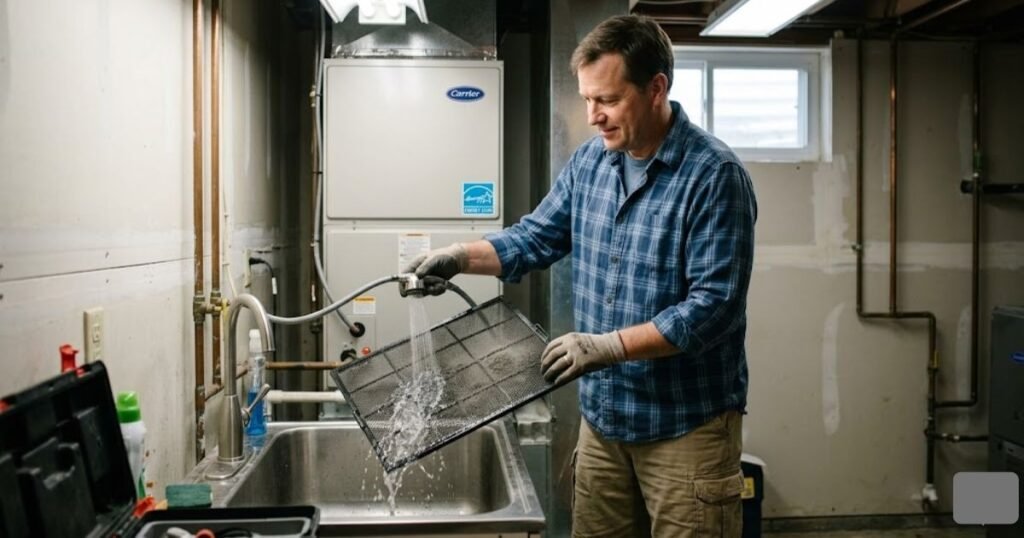
If the filter still looks gray or dingy after vacuuming, it’s time for a wash. Take the filter to a sink, bathtub, or outside.
- Run warm (not hot) water through the filter in the opposite direction of the airflow. This flushes the dirt out rather than pushing it deeper into the mesh.
- If the filter is greasy (common in kitchen-area ACs), mix a few drops of mild dish soap into the water. Use your soft brush to gently agitate the surface.
Step 6: Rinse Thoroughly
Ensure all soap suds are gone. Leftover soap can attract more dust once the filter is back in use.
Step 7: The Most Critical Part—Drying
Never reinstall a wet or damp AC filter. A wet filter is a breeding ground for mold and mildew. Once you turn the AC back on, it will blow those mold spores directly into your home. Shake off the excess water and lean the filter against a wall in a well-ventilated area. It usually takes 6 to 12 hours to dry completely.
Step 8: Reinstall with Care
Slide the dry filter back into its slot. Look for the “Airflow Arrow” printed on the side of the frame. The arrow should point toward the AC unit/furnace and away from the room. Close the grille or cover, and you’re ready to turn the power back on!
READ MORE: How Much Does Air Conditioner Coil Replacement Cost in 2026?
Cleaning Different Types of AC Filters
Not all cooling systems are created equal. Depending on the setup in your American home, your HVAC filter maintenance might look a little different.
Central AC Filter Cleaning
Most central systems use disposable pleated filters. However, if you have a high-efficiency electrostatic washable filter, follow the deep-wash steps above. For central units, the biggest challenge is often just finding all the filters some large homes have two or three return vents, each with its own filter.
Window AC Filter Cleaning
Window units are notorious for getting dirty quickly because they are compact. Most have a plastic mesh filter that slides out from the side or top. Because these units are often in bedrooms, keeping them clean is vital for a good night’s sleep. These can almost always be rinsed under a kitchen faucet.
Portable AC Filter Cleaning
Portable units usually have two filters: one for the air being cooled and one for the air used to cool the condenser. Check the back and sides of the unit. These filters are often very thin and delicate, so use the vacuum method primarily and only wash if absolutely necessary.
7 Common Mistakes to Avoid
Even the most well-intentioned DIYer can make a mistake. Avoid these pitfalls to keep your AC running smoothly:
- Cleaning a Disposable Filter: If it has a cardboard frame, it’s not meant to be washed. Water will weaken the cardboard and cause the filter to collapse into your blower motor.
- Using High-Pressure Water: A high-pressure hose can tear the delicate mesh of a reusable AC filter. Use a gentle stream.
- The “Wet Filter” Blunder: We can’t stress this enough. Reinstalling a damp filter leads to mold growth within hours.
- Forgetting the Power: If you leave the AC on while cleaning, you’re basically inviting dust to coat the internal components of your machine.
- Backward Installation: Filters are designed to trap dust in one direction. Installing it backward reduces efficiency and can cause the filter to buckle.
- Ignoring the Frame: Sometimes dust builds up on the tracks where the filter slides in. Wipe the tracks down with a damp cloth before putting the filter back.
- Over-Cleaning: While regular maintenance is good, scrubbing a filter too hard with a stiff brush can create holes that allow allergens to pass through.
READ MORE: Ultra Quietest Heat Pump for Your Home: Review, Comparison & Cost
How Often Should You Clean or Replace Your Filter?
There is no “one size fits all” answer, but here are some general rules of thumb for the average USA household:
- The Standard Rule: Check your filter every 30 days. If it looks gray and you can’t see the filter material, clean or replace it.
- Pet Owners: If you have shedding dogs or cats, you should be checking every 2–3 weeks. Pet hair builds up incredibly fast.
- Allergy Sufferers: To keep your air as pure as possible, a monthly cleaning is mandatory during peak pollen seasons (Spring and Fall).
- High-Usage Months: In the heat of summer or the dead of winter (if you have a heat pump), the air is moving constantly. Clean more frequently during these months.
- Vacation Homes: If the house is empty and the AC is rarely on, you can go 3–6 months between cleanings.
When to Replace AC Filter Instead of Clean
At a certain point, cleaning isn’t enough. Even a high-quality reusable AC filter has a lifespan. You should buy a new filter if:
- You see physical damage: Any tears, holes, or a warped frame mean the filter is compromised.
- The “Permanent Gray”: If you’ve washed the filter but it still looks dark and clogged, the microscopic pores are likely permanently filled.
- Odor issues: If the filter smells like “wet dog” or mildew even after a soapy wash, it’s time for the trash can.
- It’s a Disposable: If you are using a standard pleated filter, replace it every 90 days regardless of how it looks.
The Big Benefits of Keeping Things Clean
Why go through all this trouble? The rewards are actually quite significant.
- Lower Utility Bills: A clean filter can lower your AC’s energy consumption by 5% to 15%. In some states with high electricity rates, that’s a significant monthly saving.
- Extended System Life: The #1 cause of HVAC failure is dirt. By keeping the filter clean, you prevent the system from overheating and burning out the motor.
- Consistent Comfort: You’ll notice the house cools down faster and the air feels “crisper.”
- Fewer Repairs: Most emergency AC calls in the summer are for frozen coils or tripped breakers—both of which are often caused by a dirty AC filter.
READ MORE: Solar Powered Heat Pump Cost: USA Homeowner Guide to Savings
Extra Homeowner Maintenance Tips
If you want to be a “pro” at home maintenance, add these small tasks to your routine:
- Clear the Return Vents: Make sure furniture, curtains, or decorations aren’t blocking the vents where the air enters the system.
- Outdoor Unit Care: Go outside and make sure there are no weeds, leaves, or debris crowding the outdoor compressor. It needs at least 2 feet of clear space to “breathe” properly.
- Vacuum the Grilles: Every time you vacuum your floors, run the attachment over your AC intake grilles to stop dust before it even hits the filter.
- Schedule a Professional Tune-up: Even with perfect filter care, a professional should inspect your coolant levels and electrical connections once a year.
Conclusion
Learning how to clean AC filters is one of the easiest and most rewarding tasks you can tackle as a homeowner. It doesn’t require a degree in engineering or a toolbox full of specialized equipment—just a bit of time and a little bit of water.
By keeping your air conditioner’s “lungs” clear, you’re ensuring that your home remains a sanctuary of cool, clean air, even during the hottest American summers. Plus, your wallet will thank you when those lower energy bills start rolling in. So, go ahead—check that vent, pull out that filter, and give your AC the breath of fresh air it deserves!
Frequently Asked Questions (FAQ)
How often should I clean my AC filter?
For many homes, checking the filter once a month is a good rule. Clean it monthly if your home is dusty, if you have pets, or if your AC runs heavily during the summer.
Can I wash my AC filter with water?
Yes, but only if the filter is reusable and the manufacturer says it is washable. Disposable filters should not be washed. Always check the label before using water.
What happens if I do not clean my AC filter?
A dirty AC filter can reduce airflow, make your system work harder, raise energy use, and affect indoor air quality. Over time, it can also put extra strain on the AC system.
How do I know if my AC filter is reusable?
Look for the label, product packaging, or owner’s manual. A reusable AC filter is usually marked as washable or permanent. If it is disposable, the instructions will usually say to replace it instead.
Can a dirty AC filter make my AC stop cooling properly?
Yes. A clogged filter can restrict airflow so much that the system struggles to cool the home effectively. If your AC is running but not cooling well, the filter is one of the first things to check.