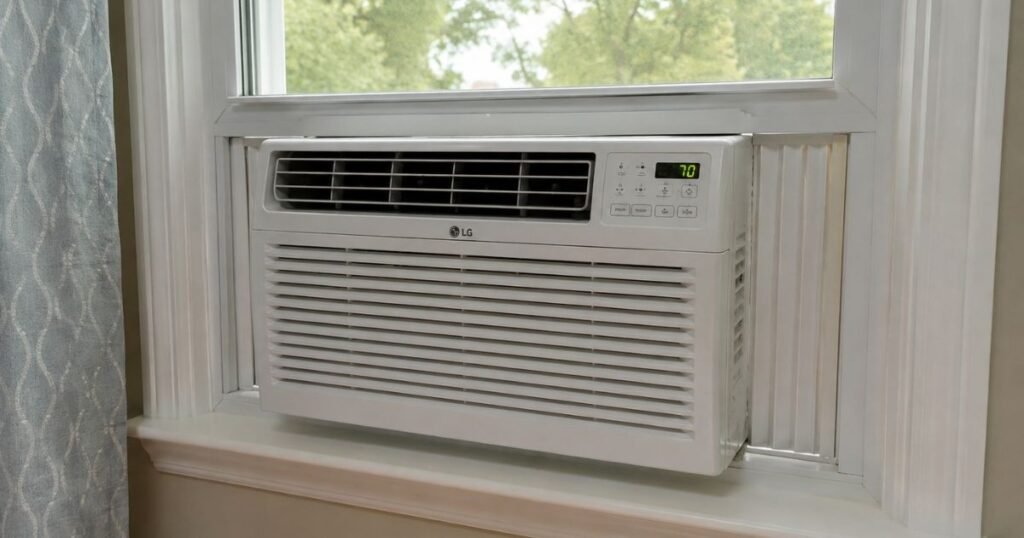
A casement window air conditioner matters because not every U.S. home has the same type of window. Many houses, apartments, and older homes use casement, crank-out, or vertical slider windows, and those openings are usually too narrow or too tall for a standard window AC unit.
Whether you are trying to cool a tight home office, an attic bedroom with narrow sliding windows, or a historic living room with hand-crank glass panes, this comprehensive guide will give you everything you need to know about choosing, sizing, and installing the perfect slider casement window air conditioner for your home. Lets deep dive into “Best 7 Casement Window Air Conditioner: Reviews & Comparison”
READ MORE: Best 10,000 BTU Portable Air Conditioner: Reviews & Comparison
What is a casement window air conditioner?
A standard window AC is usually made for common double-hung windows, where the sash moves vertically and the opening is more rectangular. A casement window air conditioner is different: it is made for windows that open sideways with a crank, or for taller vertical openings that need a narrower cabinet. That is why many product names include words like casement, slider, or vertical window.
Here is the easiest way to think about the terms:
- Standard window AC units are designed for more traditional double-hung windows and are often wider and shorter.
- Casement window AC units are made for casement or crank-out windows, so they are typically tall and narrow.
- Slider window AC units are built for horizontal sliding windows, which is why retailers often pair them with casement-compatible models.
- Vertical window AC units are another way of describing a unit with a taller cabinet for a narrow upright opening. Danby explicitly describes one model as having a unique vertical orientation designed for casement-style windows.
How to Choose the Right Size (BTU Sizing Guide)
Choosing the right best casement window air conditioner requires looking past the aesthetic design and focusing heavily on cooling capacity. In the United States, air conditioner power is measured in British Thermal Units (BTUs). A BTU represents the amount of heat energy required to raise the temperature of one pound of water by one degree Fahrenheit. In practical terms: a higher BTU rating means a larger cooling capacity, allowing the machine to remove more heat from a space every hour.
To help you calculate exactly what your home needs, look at this breakdown of standard U.S. room types matched with their recommended BTU strengths:
- Small bedroom or office: 8,000 BTU usually fits rooms around 300 to 350 square feet.
- Medium bedroom or den: 10,000 BTU is a common match for about 400 to 450 square feet.
- Living room or larger family room: 12,000 BTU is often better for 450 to 550 square feet.
- Open-plan room: 12,000+ BTUs (or multiple specialized units). If your living room flows directly into an open kitchen or features vaulted ceilings, the heat load increases dramatically. Cooking appliances and uninsulated ceiling volume demand maximum BTU output to maintain a comfortable baseline temperature.
READ MORE: Best Mini Split AC for Small Room: Top Picks, Reviews & Comparison
Features homeowners should look for
When shopping for a casement window AC, the details matter as much as the BTU number. A good fit is the first priority, but the right features can make the unit much easier to live with every day. Best Buy’s guide highlights energy efficiency, and the product pages below show the kind of controls many homeowners actually use.
Helpful features include:
- BTU rating for the room size you actually need.
- Energy saver or sleep mode to reduce power use during milder cooling needs or overnight use. Keystone and Danby both include energy-saving modes on their casement-compatible units.
- Remote control so you can adjust settings from the couch or bed.
- Timer for scheduled operation and easier daily routines.
- Multiple fan speeds for better comfort control.
- Washable or easy-to-clean filter if you want simpler upkeep. Frigidaire’s slider/casement style pages and Best Buy listings commonly highlight this.
- Dehumidifier function if your room feels sticky even when it is not extremely hot. Keystone and Danby both mention built-in dehumidification.
- Follow-Me thermostat remote for more accurate room-level comfort. Perfect Aire and Danby both use this feature.
- Installation kit or adjustable side panels to help the unit fit a narrow opening. Danby’s manual includes sliding-window and casement-window installation steps, including foam seals and a window locking bracket.
- Noise level if the unit will sit in a bedroom or home office. Keystone’s Best Buy page lists a maximum noise level of 55 dB adjusted for the 10,000 BTU model.
READ MORE: Small Room Window Air Conditioner: Best Picks, Comparison, & Buying Guide
Best 7 Casement Window AC: Review & Comparison
1. Perfect Aire 10,000 BTU Casement Window AC (4PASC10000)
Up to 450 sq. ft. coverage Custom-engineered for vertical layouts, this heavy-duty unit uses eco-friendly R32 refrigerant for maximum heat absorption. It features a bright LED faceplate, a 24-hour programmable timer, and an intelligent “Follow Me” remote that acts as a mobile thermostat to eliminate uneven room cooling.
- Praise: Rapidly cools awkwardly shaped spaces and includes premium, highly stable mounting hardware.
- Practical Limitation: The high-volume airflow produces noticeable fan noise on max settings, which may disrupt light sleepers.
- Best For: Homeowners wanting a true, high-performance vertical fit without custom carpentry.
- Homeowner Tip: Use the auto-swing louvers in narrow rooms to distribute air evenly instead of blasting a single spot.

2. Keystone 8,000 BTU Casement Window Air Conditioner
Up to 350 sq. ft. coverage Ideal for smaller spaces or historic homes with older wiring, this low-amperage 115V unit focuses on straightforward reliability. Its streamlined control panel offers basic temperature adjustments and dehumidification without unnecessary digital complexity.
- Praise: Excellent power efficiency and a remarkably smooth, quiet compressor startup.
- Practical Limitation: The included foam side panels are basic; expect to buy extra high-density weatherstripping for a perfect seal.
- Best For: Budget-conscious buyers cooling a nursery, guest room, or small office.
- Homeowner Tip: It is light enough for a solo installation, but use a bubble level to ensure a slight backward tilt for proper drainage.
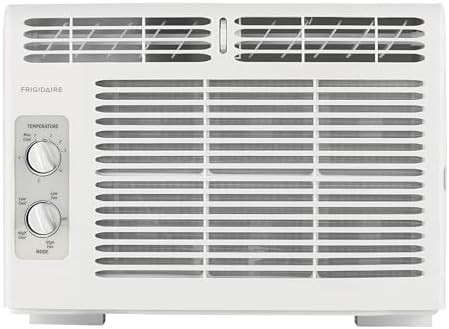
3. Keystone 10,000 BTU Casement Window Air Conditioner
Up to 450 sq. ft. coverage This mid-sized unit balances aggressive cooling with residential convenience. It features three fan speeds, three cooling modes, an intuitive matching LCD remote, and a highly effective dedicated dehumidifier setting.
- Praise: Exceptional moisture removal that rapidly strips away summer stickiness.
- Practical Limitation: The deep steel cabinet projects far outside the window sill, making an exterior support bracket highly recommended.
- Best For: Medium-sized rooms that face harsh afternoon sun or retain heavy structural heat.
- Homeowner Tip: Clean the slide-out mesh filter every two weeks to prevent internal coil icing and maintain top airflow speed.
READ MORE: Ultra Quietest Heat Pump for Your Home: Review, Comparison & Cost
4. Frigidaire 12,000 BTU Slider/Casement Window AC (FFRS1222Q1)
Up to 550 sq. ft. coverage a high-capacity powerhouse built for open-concept layouts and large master suites. Frigidaire equipped this model with customizable 4-way directional louvers and an industrial-grade compressor designed to move massive volumes of chilled air.
- Praise: Unmatched cooling velocity that drops large room temperatures in minutes.
- Practical Limitation: Weighs over 70 pounds—requires two people for safe installation and functions best on a dedicated electrical circuit.
- Best For: Large living spaces requiring commercial-grade cooling power to fight extreme heat.
- Homeowner Tip: Aim the louvers upward toward the ceiling; this allows descending cold air to create natural, comfortable convection currents.

5. Frigidaire 10,000 BTU Slider/Casement Window AC (FRA103KT1)
Engineered around strict clearance boundaries, this unit fits incredibly tight windows, requiring a minimum width opening of just 15.5 inches. It features an antimicrobial mesh filter to inhibit bacterial growth, an eco mode, and a vertical installation kit that extends up to 40 inches.
- Praise: A precise, narrow-profile fit that slides effortlessly into tight window tracks where other models fail.
- Practical Limitation: The instruction manual relies on dense, non-intuitive diagrams that complicate the initial setup.
- Best For: Homes with slim vertical windows requiring a highly specific, secure fitment.
- Homeowner Tip: Take time to dry-fit the empty outer cabinet into your window tracks before drilling any mounting screws.
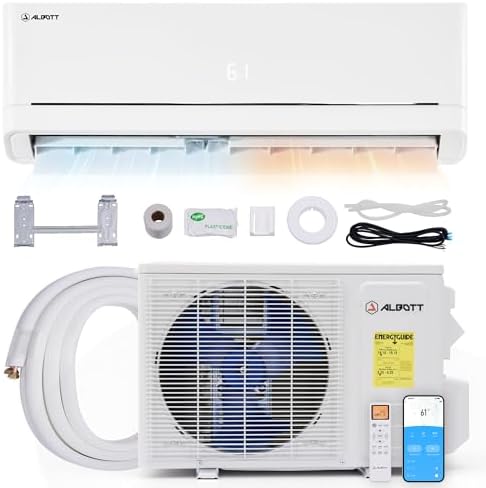
6. Danby 8,000 BTU Vertical Window/Casement AC (DVAC080B2WDB)
Up to 350 sq. ft. an exceptional choice for utility-cost-conscious homeowners, this Danby series boasts full Energy Star compliance. It pairs federal-grade efficiency metrics with quiet performance, 4-way air direction, a 24-hour timer, and a “Follow Me” remote.
- Praise: Whisper-quiet operation on low settings with incredibly smooth compressor transitions.
- Practical Limitation: Sloshes condensation onto the hot coils to maximize efficiency, which can cause a faint splashing sound on humid days.
- Best For: Energy-conscious homeowners seeking a quiet climate control unit for bedrooms.
- Homeowner Tip: Cover the outer frame’s drainage weep holes with porous mesh tape to keep bugs out while allowing water to escape.

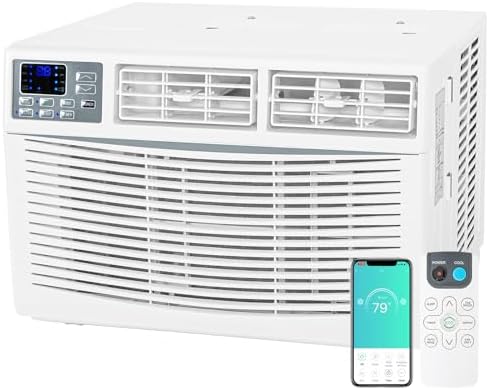
7. Frigidaire 8,000 BTU Slider/Casement Air Conditioner (FFRS0822S1)
A legendary reference baseline in vertical AC engineering, this robust workhorse is renowned for long-term mechanical reliability. While officially transitioned out of primary production by Frigidaire, it remains a heavily sought-after unit on secondary markets and overstock channels.
- Praise: Features an indestructible, weather-resistant steel frame and highly intuitive hybrid controls.
- Practical Limitation: Discontinued retail status makes finding factory-new units rare and replacement parts premium-priced.
- Best For: Value-focused buyers hunting for a time-tested, durable bargain on secondary marketplaces.
- Homeowner Tip: If buying secondhand, double-check that the complete, specialized vertical installation bracket assembly is included in the box.
READ MORE: Best Oscillating Tower Fan: Reviews, Comparison, and Buying Guide
Casement Window AC Comparison
| Product Model | BTU Strength | Ideal Room Size | Fit Configuration Type | Target Value/Niche |
| Perfect Aire 4PASC10000 | 10,000 BTU | Up to 450 sq. ft. | Casement / Slider / Crank | Best True Casement Pick |
| Keystone 8,000 BTU | 8,000 BTU | Up to 350 sq. ft. | Slider / Vertical Opening | Best Budget-Friendly Value |
| Keystone 10,000 BTU | 10,000 BTU | Up to 450 sq. ft. | Slider / Vertical Opening | Best Mid-Size Balance |
| Frigidaire FFRS1222Q1 | 12,000 BTU | Up to 550 sq. ft. | Slider / Large Casement | Best Premium High-Power Pick |
| Frigidaire FRA103KT1 | 10,000 BTU | Up to 450 sq. ft. | Ultra-Narrow Slider (15.5″) | Best for Tight Clearances |
| Danby DVAC080 Series | 8,000 BTU | Up to 350 sq. ft. | Slider / Vertical Opening | Best Eco Energy Star Pick |
| Frigidaire FFRS0822S1 | 8,000 BTU | Up to 350 sq. ft. | Legacy Slider / Casement | Best Secondary Market Reference |
Smart review summary
Here is the quick plain-English take on the seven models:
- Best overall casement-ready pick: Perfect Aire 10,000 BTU, because it combines true casement compatibility, 450 square feet of coverage, Follow Me, and a strong control set.
- Best budget-friendly small-room pick: Keystone 8,000 BTU, because it fits 350 square feet and keeps the controls simple.
- Best medium-room pick: Keystone 10,000 BTU, because it adds more room coverage and still keeps a practical feature list.
- Best large-room pick: Frigidaire 12,000 BTU, because it targets up to 550 square feet.
- Best narrow-fit reference pick: Frigidaire FRA103KT1, because it gives exact opening dimensions.
- Best vertical-window design reference: Danby DVAC080B2WDB, because it is explicitly built for casement-style windows with vertical orientation.
- Best legacy model reference: Frigidaire FFRS0822S1, because it shows a classic slider/casement format, even though it is discontinued.
READ MORE: Best MRCOOL Mini Split Air Conditioners and Heat Pumps: Review & Comparison
Casement AC Installation: Fit & Placement Guide
A successful casement AC installation hinges on precise preparation. Because you are dealing with a non-standard window frame, accurate measurements are essential.
3-Step Installation Checklist
- 1. Measure the Opening: Open your window fully. Use a metal tape measure to find the exact interior width and height of the unobstructed opening. Ensure the width accommodates the AC chassis and the height fits within the manufacturer’s window kit extension range.
- 2. Seal the Gaps: Vertical AC units leave open space above or around them. Line contact boundaries with heavy-duty closed-cell foam weather stripping and secure the vertical filler panel to prevent hot air from entering and cool air from escaping.
- 3. Use Adjustable Kits: Utilize the specialized adjustable frames and sliding panels included with the unit. Secure them with screws or tension brackets to create an airtight, weather-resistant barrier against the elements and insects.
When to Hire a Professional
Consider calling a licensed contractor or HVAC technician in the following scenarios:
| Scenario | Challenge | Professional Solution |
| True Crank-Out Windows | The hinged glass sash cannot close onto the unit and must be entirely removed. | Custom-cuts plexiglass/insulated panels and installs heavy-duty support brackets safely. |
| High-Floor Installations | Balancing a heavy appliance on a second or third story poses a severe safety risk. | Anchors specialized external support brackets directly into structural wall studs. |
FAQs
What is a casement window air conditioner?
It is a window AC designed for casement, crank-out, slider, or other narrow window openings. These units are usually taller and narrower than standard window air conditioners.
Can I install a casement window air conditioner myself?
Sometimes, yes, especially if the opening is straightforward and the unit comes with clear instructions. But casement units often require careful measuring, sealing, and support, and Danby’s manual shows that installation can involve removing the crank handle, using foam seals, and setting the unit with a slight outward tilt.
What size casement AC do I need for my room?
For many homes, 8,000 BTU works for about 300 to 350 square feet, 10,000 BTU for about 400 to 450 square feet, and 12,000 BTU for about 450 to 550 square feet. Room layout, sunlight, and ceiling height can change that recommendation.
Are casement window air conditioners energy efficient?
They can be. Efficiency depends on the specific model, but features like ENERGY STAR certification, EER, sleep mode, and energy saver mode can all help reduce energy use. Best Buy’s guide says higher EER can lower relative energy use.
Can a casement window AC fit a slider window?
Often yes, because many retailers group slider and casement models together. Perfect Aire explicitly says its 4PASC10000 works with casement, crank, and horizontal sliding windows, and several Frigidaire listings are also labeled slider/casement.
Conclusion
A casement window air conditioner is the right choice when your home has a crank-out, slider, or vertical opening that does not work with a standard window unit. For small rooms, an 8,000 BTU model is often enough; for medium rooms, 10,000 BTU is the sweet spot; and for larger rooms, 12,000 BTU is the safer bet. The brand name matters, but fit matters more. A well-matched unit that seals properly will usually beat a bigger unit that does not fit your window correctly.
Among the current and reference models reviewed here, Perfect Aire stands out for feature depth, Keystone gives strong practical value, Danby is a good vertical-window example, and Frigidaire’s slider/casement line shows the size and fit standards many homeowners are still searching for. Just remember to check current stock, because some casement-specific listings are current while others are legacy or discontinued pages.