Today, American homeowners are caught in a massive shift. While traditional natural gas furnaces and heavy-duty radiator boilers remain deeply rooted in colder climates, modern cold-climate heat pumps have broken through technical boundaries.
Deciding on a Heat Pump vs. Furnace vs. Boiler: Cost and Efficiency Comparison requires looking past the upfront sticker price and examining how local utility rates, regional climates, and your home’s existing structural setup alter the math.
This guide breaks down real installed costs, efficiency ratings, monthly operating expenses, and long-term value so you can walk into a quote appointment already knowing what questions to ask. Lets deep dive into “Heat Pump vs. Furnace vs. Boiler: Cost & Efficiency Comparison”
READ MORE: Carrier Heat Pump Reviews — Models, Costs, Pros & Cons
Understanding the Three Heating Systems
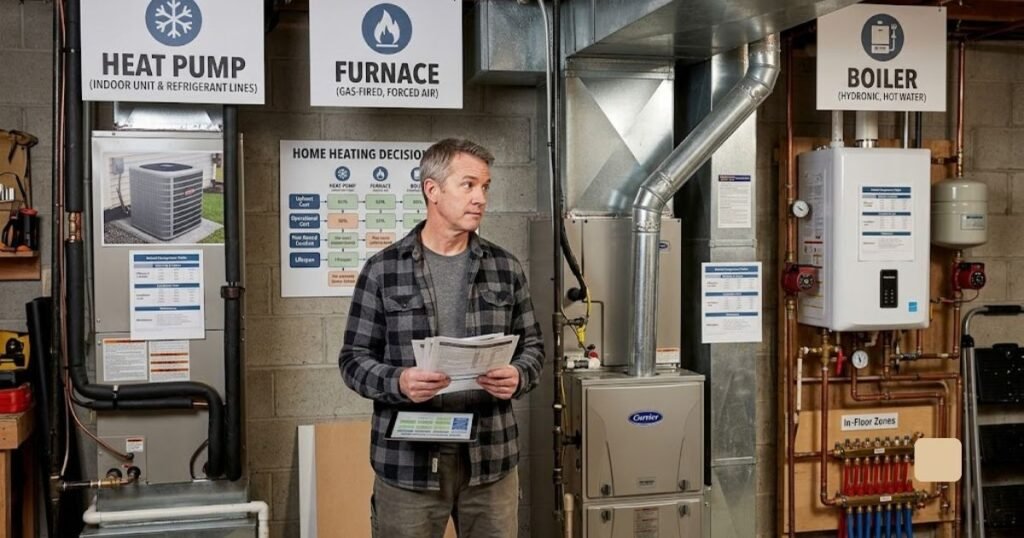
Before diving into real-world pricing and mathematical spreadsheets, let’s break down exactly how these three distinct technologies create or distribute heat.
Heat Pumps
A heat pump is essentially an air conditioner that can run in reverse. Instead of burning a fuel source like gas or oil to create heat, it utilizes advanced chemistry and physics to extract existing thermal energy from the outdoor air (or deep underground) and pump it directly into your home.
During the hot summer months, it extracts indoor heat and dumps it outside to cool your home. In the freezing winter months, the cycle reverses. Even when the air outside feels biting cold, it contains a surprising amount of ambient heat energy. The system uses a specialized compressor and eco-friendly refrigerant loop to absorb that outdoor warmth, pressurize it to raise its temperature, and release it indoors.
- Air-source heat pumps extract heat directly from the outdoor air. They are the most common, affordable, and flexible option for central ducted setups or ductless mini-splits.
- Geothermal (ground-source) heat pumps tap into the stable 50°F to 55°F temperatures found a few feet beneath the earth’s surface using buried loops of pipe. While they offer jaw-dropping efficiency in extreme climates, their intense excavation needs make them far more invasive and expensive upfront.
Furnaces
A furnace is a forced-air heating system that generates heat inside a central unit and uses a powerful motorized blower fan to push that heated air through a network of sheet-metal ducts. Furnaces are highly reliable and are categorized by the specific fuel they burn:
- Natural Gas: The reigning champion of American heating. Gas furnaces provide rapid, high-temperature heat and are incredibly economical if your home is connected to a municipal gas line.
- Propane (LPG): Commonly used in rural areas where natural gas infrastructure does not exist. Propane requires an on-site storage tank and is delivered by local utility trucks.
- Heating Oil: Primarily found in older historic homes throughout the Northeast. Oil provides exceptionally hot air but requires regular deliveries and is subject to volatile oil market pricing.
- Electric Furnaces: These units pass electricity through heavy-duty resistive heating elements (similar to a giant hair dryer). While they are inexpensive to purchase and install, their high electrical consumption makes them incredibly expensive to run in colder regions.
Boilers
A boiler does not warm your air directly; instead, it warms water. Known as a hydronic heating system, a boiler burns fuel (natural gas, propane, oil) or uses electricity to heat water or create steam. A heavy-duty circulator pump then pushes this hot water through a closed loop of copper or PEX pipes to heat emitters distributed throughout your home.
- Radiant Floor Heating: PEX pipes embedded beneath your tile, hardwood, or concrete floors turn your entire subfloor into a slow, gentle heat radiator.
- Cast-Iron Radiators: Classic wall-mounted units found in historic homes that hold thermal energy for long periods.
- Baseboard Radiators: Sleek metal enclosures running along the base of your walls that use convection to pull cool air in, warm it, and rise it back into the living space.
- Steam Systems: Older, high-pressure setups that convert water into boiling steam to heat heavy cast-iron radiators rapidly.
READ MORE: Weil‑McLain Boiler Reviews — Models, Costs, Pros & Cons
Heat Pump vs. Furnace vs. Boiler At a Glance
| Factor | Heat Pump | Furnace | Boiler |
| Upfront cost | Moderate–High | Low–Moderate | Moderate |
| Installation complexity | Moderate (higher for geothermal) | Low–Moderate | Moderate–High |
| Operating cost | Low–Moderate | Moderate | Moderate |
| Energy efficiency | Very high (200–400%+) | High (80–98% AFUE) | High (80–95%+ AFUE) |
| Typical lifespan | 10–20 years | 15–25 years | 15–30+ years |
| Maintenance | Low–Moderate | Moderate | Moderate |
| Comfort | Even, quiet | Fast, can feel dry | Very even, no blown air |
| Heating speed | Moderate | Fast | Slow (radiant lag) |
| Cooling capability | Yes, built in | No (needs separate AC) | No |
| Best climate | Mild to cold (with cold-climate models) | Cold, severe winters | Any, especially with radiators already installed |
| Noise level | Low (outdoor unit hums) | Moderate (blower) | Very low |
| Environmental impact | Lowest (especially on clean grids) | Higher (combustion emissions) | Higher (combustion emissions) |
| Typical fuel source | Electricity | Gas, propane, oil, electric | Gas, propane, oil, electric |
Heat Pump vs. Furnace vs. Boiler Installation Cost Comparison
Installed costs vary widely depending on home size, ductwork condition, electrical capacity, and your region’s labor rates. Here’s what homeowners are actually paying in 2026:
Heat pump Installation Cost:
Most air-source systems run $6,000 to $25,000 installed, with a national average commonly landing between $9,000 and $16,000 for a typical ducted system. Ductless mini-splits run about $2,000–$7,000 per zone. Geothermal systems cost far more upfront typically $15,000 to $35,000+ because of the excavation and ground-loop work involved.
Furnace Installation Cost:
A standard-efficiency gas furnace typically costs $3,800 to $12,000 installed, averaging around $4,800–$7,000 for most homes. High-efficiency condensing models push costs toward the top of that range. Oil furnaces run higher, often $6,750 to $10,000+, while electric furnaces are the cheapest to install at $2,000–$7,000 but pricier to operate.
Boiler Installation Cost:
Expect $4,000 to $11,500 installed, with a typical homeowner paying around $5,750 for a mid-range gas or oil unit. High-efficiency condensing boilers and larger systems sit at the upper end.
What Drives the Final Price
- Home size and heating load (bigger home, bigger system)
- Existing ductwork or radiator condition — repairs or replacement add cost fast
- Electrical panel upgrades (often needed for heat pumps in older homes)
- Gas line installation if you’re switching fuel types
- Brand and efficiency tier
- Regional labor costs, which can shift totals by thousands of dollars
- Permits and removal/disposal of your old system
Pro Tip: Get at least three quotes, and ask each contractor for a Manual J load calculation. An oversized or undersized system wastes money every single month, regardless of which technology you choose.
READ MORE: Tankless Water Heater vs. Combi Boiler: Which Is Right for You?
Heat Pump vs. Furnace vs. Boiler Energy Efficiency Comparison
Each system type is measured differently, which is part of why comparisons get confusing.
- Heat pumps are rated by HSPF2 (heating) and SEER2 (cooling). Because they move heat rather than create it, they can deliver 200–400% effective heating efficiency — meaning for every unit of electricity used, you get two to four units of heat.
- Furnaces are rated by AFUE (Annual Fuel Utilization Efficiency), which tells you what percentage of fuel becomes usable heat. Standard models run 80–89% AFUE, while high-efficiency condensing furnaces reach 90–98%.
- Boilers also use AFUE. Standard units land around 80–85%, while modern condensing boilers reach 90–95%+ by recovering heat from exhaust gases that older boilers simply vented outside.
| System | Efficiency Metric | Typical Range |
| Heat pump | HSPF2 / COP | 200–400%+ effective efficiency |
| Standard furnace | AFUE | 80–89% |
| High-efficiency furnace | AFUE | 90–98% |
| Standard boiler | AFUE | 80–85% |
| Condensing boiler | AFUE | 90–95%+ |
Did You Know? A furnace can never exceed 100% AFUE because it’s converting fuel into heat directly. A heat pump isn’t bound by that ceiling because it’s relocating existing heat rather than generating new heat from combustion which is why the percentages look so different.
Heat Pump vs. Furnace vs. Boiler: Monthly Operating Costs
Efficiency ratings only tell half the story. What you actually pay each month depends heavily on local fuel and electricity prices, your home’s insulation, and your climate.
- Electric heat pumps tend to have the lowest operating costs in regions with moderate electricity rates and mild-to-cold winters, especially compared to oil or propane.
- Natural gas furnaces remain very affordable to run in areas with cheap gas, which is much of the Midwest and parts of the South.
- Propane and oil are consistently the most expensive fuels per BTU, which is why homeowners on these fuels often see the biggest savings from switching to a heat pump.
- Electric resistance furnaces usually cost the most to run of any option, since they don’t have a heat pump’s efficiency multiplier.
A poorly insulated home will inflate monthly costs no matter which system you install. Before comparing systems on price alone, it’s worth confirming your attic and wall insulation are up to par — a $500 insulation upgrade can sometimes save more than a $5,000 equipment upgrade.
Money-Saving Tip: Ask your utility for a home energy audit before replacing your system. Many utilities offer them free or heavily discounted, and the results often qualify you for rebates on top of showing you where you’re losing heat.
READ MORE: Best 5 Navien Combi Boiler: Review, Comparison & Cost
Which Heating System Lasts Longer?
- Heat pumps: 10–15 years typically, up to 20 with excellent maintenance. Geothermal indoor components last 20–25 years, and the underground loops can last 40–60 years.
- Furnaces: 15–25 years, with gas furnaces often on the longer end if properly maintained.
- Boilers: 20–30+ years. Boilers are mechanically simple and tend to outlast both furnaces and heat pumps, which is part of why so many century-old homes still run on their original (or once-replaced) boiler systems.
Common late-life repairs include heat exchanger failures in furnaces, refrigerant leaks or compressor wear in heat pumps, and circulation pump or pressure-relief valve issues in boilers.
Heat Pump vs. Furnace vs. Boiler: Maintenance Comparison
An overlooked system can experience a major drop in efficiency within just a few seasons. Each system requires unique care to stay in top shape.
Heat Pump Maintenance Protocols
Because heat pumps move massive volumes of indoor and outdoor air, they need consistent upkeep:
- Air Filters: Must be swapped out every 1 to 3 months to prevent static pressure drops across the indoor coil.
- Outdoor Coil Cleaning: Dust, grass clippings, and autumn leaves clog the delicate aluminum fins on your outdoor unit, restricting heat transfer.
- Refrigerant Level Checks: A tiny leak can cripple heating performance and cause the compressor to burn out prematurely.
Furnace Maintenance Essentials
Furnace care focuses on keeping combustion safe, clean, and reliable:
- Flame Sensor Cleaning: Carbon buildup on the safety flame sensor can cause the furnace to shut off unexpectedly.
- Heat Exchanger Inspections: Technicians use specialized cameras to look for microscopic cracks or structural weak points.
- Blower Motor Servicing: Keeping the primary fan free of dust ensures proper air circulation and prevents overheating.
Boiler Maintenance Demands
Hydronic boilers are pressurized closed loops that require precise fluid dynamics:
- Bleeding Radiators: Over time, air bubbles can get trapped inside the system, creating cold spots in your home. Opening the valves to purge this air restores proper hot water flow.
- Backflow and Pressure Testing: Ensuring the expansion tank and water pressure valves maintain a steady 12 to 15 PSI.
- Flushing the System: Over several years, mineral scale and dark metallic sludge build up inside the heat exchanger. A chemical flush keeps heat transferring perfectly.
Comfort Comparison
- Warm-up speed: Furnaces heat a room the fastest. Heat pumps are close behind on mild days but can feel slower during extreme cold unless paired with backup heat. Boilers are the slowest due to radiant lag, but once warm, that heat lingers.
- Air quality: Boilers and radiant systems don’t circulate dust and allergens the way forced-air systems do.
- Humidity: Furnaces can dry out indoor air in winter; boilers preserve more natural humidity.
- Even heating: Boilers and geothermal heat pumps tend to produce the most consistent room-to-room temperatures.
- Noise: Heat pumps and boilers both run quieter than a furnace’s blower.
READ MORE: Goodman Heat Pump Review | Efficiency, Cost, Pros & Cons
Heat Pump vs. Furnace vs. Boiler: Best Heating System by U.S. Climate
- Northern states & Midwest: Cold-climate heat pumps now perform well even in sub-zero conditions, but high-efficiency gas furnaces remain a strong, budget-friendly choice where natural gas is cheap and winters are severe.
- Northeast: Many homes already have boilers and radiators — upgrading to a condensing boiler is often more practical than a full system conversion.
- Southern states: Heat pumps shine here. Mild winters mean they rarely need backup heat, and the built-in cooling function is a major bonus.
- Mountain regions: Dual-fuel systems (heat pump plus furnace backup) offer the best of both worlds during extreme cold snaps.
- Pacific Northwest: Moderate winters and relatively clean electricity make heat pumps an easy, efficient choice.
Pros and Cons: Heat Pump vs. Furnace vs. Boiler:
Heat Pump
- ✅ Heats and cools in one system
- ✅ Lowest operating costs in most regions
- ✅ Lower emissions
- ❌ Higher upfront cost than a basic furnace
- ❌ Cold-climate performance depends on choosing the right model
Furnace
- ✅ Lower upfront cost (except oil)
- ✅ Fast, powerful heat in extreme cold
- ✅ Familiar technology, wide contractor availability
- ❌ Needs separate AC for cooling
- ❌ Combustion produces emissions and requires CO safety monitoring
Boiler
- ✅ Extremely even, quiet heat
- ✅ Long lifespan
- ✅ Great for allergy sufferers
- ❌ No cooling capability
- ❌ Expensive to retrofit into a home without existing pipework
READ MORE: Ductless vs. Ducted Heat Pumps: Which One Saves More for Your Home?
Common Mistakes Homeowners Make
- Buying based only on upfront price without factoring in 10–15 years of operating costs
- Ignoring insulation and air sealing, which can undercut even the best equipment
- Choosing oversized equipment, which cycles on and off inefficiently and wears out faster
- Hiring unlicensed contractors to save money upfront, risking unsafe installs and voided warranties
- Skipping annual maintenance, which shortens equipment life and increases the odds of a mid-winter breakdown
- Overlooking rebates, leaving real money on the table
Tips Before Replacing Your Heating System
- Get a professional load calculation instead of guessing at system size
- Ask about dual-fuel/hybrid setups if you’re unsure a heat pump alone can handle your coldest days
- Check your electrical panel capacity before committing to an electric system
- Compare at least three written quotes, not verbal estimates
- Ask what’s included: permits, removal of old equipment, ductwork inspection
- Check current state and utility rebate programs in your area before you sign a contract
Ultimate Decision Summary Matrix
| Category | Heat Pump | Furnace | Boiler |
| Initial cost | $6,000–$25,000+ | $3,800–$12,000 | $4,000–$11,500 |
| Lifetime cost | Often lowest | Moderate | Moderate |
| Efficiency | 200–400%+ effective | 80–98% AFUE | 80–95%+ AFUE |
| Maintenance | Low–Moderate | Moderate | Moderate |
| Lifespan | 10–20 years | 15–25 years | 15–30+ years |
| Cooling ability | Yes | No | No |
| Best climate | Mild to cold | Severe cold | Any (with existing pipework) |
| Energy source | Electricity | Gas/propane/oil/electric | Gas/propane/oil/electric |
| Monthly operating cost | Low–Moderate | Moderate | Moderate |
| Home value impact | Strong, especially with cooling included | Neutral to positive | Positive if system is modern |
A Note on Incentives
Here’s something worth knowing before you budget: the federal Section 25C tax credit, which previously offered up to $2,000 for qualifying heat pump installations, along with the related Section 25D credit for geothermal systems, ended for equipment placed in service after December 31, 2025, under the One Big Beautiful Bill Act. If your system goes in during 2026, it won’t qualify for those specific federal credits.
That doesn’t mean the incentive landscape is empty. State-administered rebate programs funded through the Inflation Reduction Act, along with individual utility rebates, are still rolling out in many states and can be worth $1,500 to $8,000 or more depending on income eligibility and location. Check the DSIRE database (dsireusa.org) and your utility’s website for what’s currently available in your zip code, since this changes frequently.
FAQs
Is a heat pump cheaper to run than a gas furnace?
In most regions, yes — heat pumps typically cost less to operate than gas furnaces because they move heat rather than burn fuel. The exception is areas with very cheap natural gas and expensive electricity, where the gap narrows or reverses.
Which is more energy efficient, a boiler or a heat pump?
A heat pump is more efficient on paper, often delivering 200–400% effective efficiency compared to a boiler’s 80–95% AFUE. However, “efficient” doesn’t always mean “cheapest to run” — local fuel prices still matter.
Is a boiler better than a furnace for home heating?
Boilers provide steadier, quieter heat and don’t circulate dust, while furnaces heat a space faster and typically cost less to install. Neither is universally “better” — it depends on your existing infrastructure and priorities.
Can a heat pump replace a boiler?
Yes, but it usually requires new ductwork or a switch to a ductless mini-split system, since heat pumps don’t use the same hot-water piping as boilers. Some homeowners instead keep the boiler and add a heat pump for cooling and shoulder-season heating.
Which heating system adds the most value to a home?
Heat pumps often add the most perceived value since they include cooling, which buyers actively look for. That said, a well-maintained, modern boiler or furnace won’t hurt resale value either — an aging, unreliable system of any type is the real red flag for buyers.
The Bottom Line
There’s no single winner in the heat pump vs. furnace vs. boiler debate — only the right fit for your climate, your home’s existing infrastructure, and your budget. Heat pumps generally offer the best long-term efficiency and double as air conditioning. Furnaces remain a solid, lower-cost choice in brutally cold regions with cheap natural gas. Boilers deliver unmatched comfort and longevity for homes built around radiators or radiant floors.
Before you decide, get quotes from a few licensed local HVAC professionals who can evaluate your home’s specific ductwork, insulation, and electrical setup — the right answer often becomes obvious once you see real numbers for your house instead of national averages.


Pingback: Why Boiler Pressure Drops: Causes & Fixes - Plumbing Guider
Pingback: Gas vs Electric Water Heater Running Costs 2026 - Plumbing Guider