When your furnace not turning on with thermostat calls for heat, it is more than just an inconvenience; it can quickly become an emergency as indoor temperatures drop. This is one of the most common service calls residential HVAC technicians receive during the heating season. Fortunately, not every heating failure requires an expensive service fee. Many issues stem from simple things like dead batteries, tripped breakers, or dirty air filters that you can safely check and resolve yourself.
In this comprehensive guide, we will break down why your heating system is failing to respond, walk you through a step-by-step troubleshooting checklist, explore specific smart thermostat quirks, outline 2026 repair costs, and explain when it is time to call a professional HVAC technician. Lets deep dive into “Furnace Not Turning On With Thermostat: Causes & Fixes”
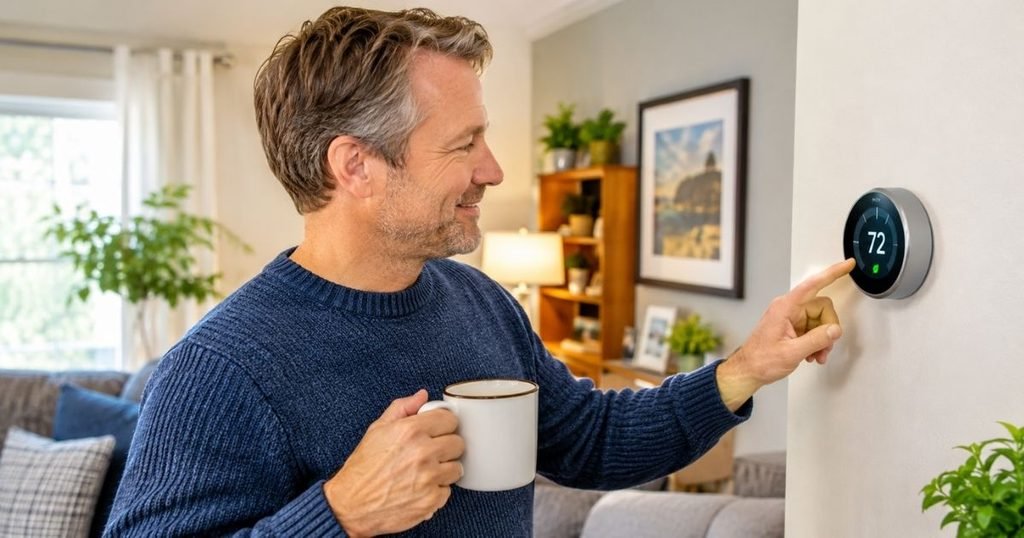
Why Is My Furnace Not Turning On With the Thermostat?
To understand why your furnace isn’t turning on, it helps to know how your heating system actually communicates. Modern residential heating systems rely on a low-voltage electrical circuit (typically 24 volts) running between your thermostat and the furnace control board.
When you adjust your thermostat to a temperature higher than the current room reading, an internal switch closes. This sends an electrical signal down the wire to your furnace control board, effectively saying, “It’s time to make some heat.” The control board then initiates a precise sequence of events: it checks safety switches, fires up the igniter, opens the gas valve, lights the burners, proves the flame, and finally turns on the blower fan to circulate warm air through your ductwork.
If any link in this communication or safety chain breaks, your furnace won’t start. The problem might be as simple as a loose wire or a dead battery, or it could be a safety lockout triggered by a dirty filter, a faulty flame sensor, or a failing control board. Knowing how to diagnose these symptoms correctly saves time, frustration, and money.
READ MORE: Honeywell Thermostat Not Turning On Heat? Causes, Fixes & Troubleshooting Guide
10 Common Reasons Your Furnace Won’t On With the Thermostat
1. Thermostat Is Set to the Wrong Mode
It sounds obvious, but it is one of the most frequent reasons homeowners panic. If your thermostat is accidentally switched to “Cool,” “Off,” or “Auto” without the correct heating parameters set, the unit will not call for heat. Family members, guests, or even pets can bump the switch, leaving your furnace completely dormant when winter arrives.
2. Dead or Weak Thermostat Batteries
Many digital and smart thermostats require batteries to operate their displays and send signals to the furnace control board—even if they are hardwired into your home’s electrical system. When batteries die, the display goes blank, or a low-battery warning appears, breaking the communication bridge between the wall control and your heating system.
3. Tripped Furnace Circuit Breaker
Your furnace is connected to your home’s main electrical panel via a dedicated circuit breaker. Power surges, electrical shorts, or a strained blower motor can cause this breaker to trip. When the breaker trips, your furnace loses all electrical power, meaning it cannot respond when your thermostat calls for heat.
4. Furnace Power Switch Is Turned Off
Most residential furnaces feature a dedicated wall switch—often resembling a standard light switch with a red cover plate—located on or near the furnace unit in the basement, utility closet, or attic. This service switch is frequently knocked into the “Off” position during storage, cleaning, or routine home maintenance, cutting off power to the system.
5. Dirty Furnace Air Filter
A heavily clogged or dirty air filter restricts airflow through the heat exchanger. When airflow drops drastically, internal temperatures skyrocket. To prevent the furnace from cracking the heat exchanger or starting a fire, the high-limit switch trips, shutting down the burners and preventing the furnace from starting.
6. Faulty Thermostat or Wiring Problems
Over time, thermostat wires can loosen behind the wall plate due to vibrations, temperature fluctuations, or accidental tugs. Additionally, corrosion, wire breaks, or internal component failure inside older thermostats can stop the low-voltage signal from reaching the furnace control board entirely.
7. Furnace Door Safety Switch Is Not Engaged
Furnaces feature a safety interlock switch (often called a door switch or blower compartment switch) that cuts power to the unit whenever the access panel or service door is removed or improperly closed. If the panel isn’t snapped firmly into place, the furnace refuses to turn on as a safety precaution.
8. Ignition System or Pilot Light Failure
Older furnaces rely on a continuously burning pilot light, while modern gas furnaces use electronic ignition systems like hot surface igniters or intermittent pilots. If a pilot light blows out, or if a hot surface igniter cracks and fails, the furnace cannot light the gas burners, halting the startup sequence.
9. Faulty Flame Sensor or Control Board
The flame sensor is a vital safety device that detects whether burner flames are actually lit. If the sensor becomes coated in carbon soot or oxidation, it fails to signal the control board, causing the furnace to shut off seconds after trying to start. Similarly, a malfunctioning control board fails to process thermostat commands altogether.
10. Gas Supply or Furnace Safety Lockout
If your gas utility line is interrupted, or if the manual gas shutoff valve near your furnace has been closed, your gas furnace cannot generate heat. Furthermore, if your furnace experiences multiple failed ignition attempts, the control board enters a temporary “safety lockout” mode to prevent gas buildup.
READ MORE: Ecobee vs Honeywell vs Nest: Which Smart Thermostat Is Best?
How to Fix a Furnace Not Turning On With the Thermostat
When you notice your furnace is not responding, work through this practical, homeowner-friendly troubleshooting checklist before calling a professional.
- Check whether the thermostat is set to Heat: Confirm the system switch is firmly positioned on “Heat” rather than “Off” or “Cool.”
- Raise the temperature setting: Adjust the set temperature at least 5°F above the current room temperature to trigger a definitive call for heat.
- Replace thermostat batteries: If your device uses AA or AAA batteries, swap them out with fresh alkaline batteries and wait a few minutes for the unit to reboot.
- Check for thermostat error messages: Look at the screen for low battery icons, configuration warnings, or error codes.
- Allow equipment startup delays: Many modern digital thermostats and furnace control boards have built-in time delays (lasting 2 to 5 minutes) to protect compressor and burner components. Give it a few moments.
- Check the furnace power switch: Ensure the dedicated wall switch or toggle switch on the furnace is in the “On” position.
- Inspect the circuit breaker: Locate your electrical panel and check if the furnace breaker is tripped. If it is tripped, flip it firmly to the “Off” position and back to “On” once. Never repeatedly reset a breaker that trips instantly, as this indicates a dangerous electrical short.
- Check the furnace access door: Make sure the front service panels and blower doors are securely attached and pressing firmly against the door safety switch.
- Inspect the air filter: Pull out your air filter. If it is caked in dust and pet hair, replace it immediately with a clean filter of the correct size.
- Make sure vents are unobstructed: Verify that furniture, rugs, or drapes are not blocking your supply registers and return air vents.
- Check diagnostic LED lights: Look through the viewing window on your furnace lower panel for blinking LED error codes. Consult the sticker on the back of the panel to decode the flash pattern, but do not remove protective panels if you are uncomfortable.
- Contact an HVAC professional: If you have completed these basic checks and your furnace still refuses to start, stop troubleshooting and call a licensed technician.
Furnace Not Turning On With Thermostat: Common Symptoms and Solutions
To help narrow down what might be happening behind the scenes, review this quick symptom guide:
| Symptom | Possible Cause | Recommended Action |
| Thermostat screen is blank | Dead batteries or low-voltage power issue | Check and replace batteries; check breaker |
| Thermostat says “Heat On,” but furnace is silent | Furnace control board or power interruption | Verify main switch/breaker; call technician if unresolved |
| Thermostat clicks, but furnace does not start | Ignition system failure or relay problem | Professional diagnosis required |
| Furnace starts, but shuts off quickly | Restricted airflow, dirty filter, or flame sensor issue | Check and replace air filter; call technician |
| Furnace blower runs, but no heat is produced | Ignition failure, gas valve closed, or safety lockout | Check gas valve; call an HVAC technician |
| Furnace works intermittently | Loose wiring, failing thermostat, or overheating | Arrange professional HVAC diagnostic visit |
Note: These symptoms serve as helpful clues for diagnosing your heating system, but they are not definitive final diagnoses. Internal testing requires specialized tools.
READ MORE: Thermostat Wiring Diagrams Explained: R, C, W, Y, G Guide
Furnace Not Responding to Different Types of Thermostats
Different thermostat brands and models feature unique technical requirements. Here is how specific popular thermostats behave when they fail to communicate with a heating system:
- Honeywell Thermostat: Traditional digital or programmable Honeywell models often fail to communicate when their sub-base contacts get dirty or when battery acid corrodes the terminal springs. Ensure the thermostat unit is securely clicked onto its wall plate.
- Google Nest Thermostat: Nest thermostats rely heavily on a steady 24V power supply. If your home lacks a dedicated common wire (“C-wire”), the Nest battery can drain rapidly, causing it to disconnect from Wi-Fi, lose power, and fail to call for heat. You may need a Nest Power Connector installed at the furnace.
- Ecobee Thermostat: Ecobees require a C-wire for reliable operation. If an Ecobee displays equipment configuration errors or refuses to start the furnace, check the wiring terminals (Rc, C, W1) to ensure secure connections.
- Programmable & Smart Thermostats: Advanced schedules can sometimes override manual adjustments. If your smart thermostat shows “Heat On” on the screen but the furnace remains cold, check the app settings to ensure a vacation hold, eco-temperature mode, or equipment protection delay isn’t currently active.
Never assume every thermostat uses identical wiring configurations. Always refer to your specific manufacturer’s manual when making adjustments.
When Should You Call an HVAC Technician?
While homeowner troubleshooting is great for basic fixes, certain situations demand professional expertise. You should contact a licensed HVAC technician immediately if:
- The furnace circuit breaker trips repeatedly upon resetting.
- Thermostat or internal control wiring appears frayed, chewed, or damaged.
- The furnace displays persistent, recurring error codes.
- The ignition system fails to light burners consistently.
- You suspect a defective gas valve, inducer motor, or internal electrical component.
- The furnace continually enters safety lockout mode.
- You smell natural gas, propane, or notice unusual burning odors.
Critical Homeowner Safety Rules
- Gas Leaks: If you smell natural gas (which smells like rotten eggs) or propane, leave the building immediately. Do not operate light switches, use phones, or turn on appliances inside the home. Once safely outside, call your local gas utility company or emergency services.
- Carbon Monoxide: Install and regularly test carbon monoxide (CO) alarms on every level of your home, especially outside sleeping areas.
- Safety Switches: Never bypass furnace safety switches or operate the system with access panels permanently removed.
- Electrical Safety: Never attempt live electrical voltage testing or internal gas valve repairs unless you are a licensed professional.
READ MORE: Trane Thermostat Manual: Guide to Settings, Programming & Troubleshooting
How Much Does It Cost to Fix a Furnace That Won’t Turn On?
When basic DIY troubleshooting falls short, hiring a professional is the safest path forward. US repair costs vary depending on your geographic region, equipment age, and the specific component failure.
| Service / Repair Item | Estimated National Cost Range (USD) |
| Thermostat Battery Replacement | $10 – $30 (DIY) / $75 – $150 (Service call) |
| Standard HVAC Diagnostic / Service Visit | $75 – $200 |
| Thermostat Replacement & Setup | $150 – $400 |
| Hot Surface Igniter Replacement | $150 – $350 |
| Flame Sensor Cleaning or Replacement | $75 – $250 |
| Control Board Replacement | $400 – $900 |
| Electrical Troubleshooting & Wiring Repair | $150 – $400 |
Note: These figures represent estimated national averages for 2026 and can vary significantly based on local labor rates, equipment brand (e.g., Carrier, Trane, Lennox), and whether the repair is performed during standard business hours or as an emergency after-hours call.
How to Prevent Your Furnace From Not Turning On
Proactive maintenance goes a long way toward keeping your heating system reliable all winter long. Implement these practical tips to minimize unexpected breakdowns:
- Replace air filters regularly: Check your filter every month during peak heating season and replace it every 1 to 3 months.
- Schedule annual maintenance: Have a licensed HVAC technician perform a tune-up and safety inspection every fall before cold weather sets in.
- Keep thermostat batteries fresh: Replace standard thermostat batteries annually, even if they haven’t completely died yet.
- Keep vents clear: Ensure carpets, furniture, and storage boxes do not block return air grilles or supply registers.
- Inspect the furnace area: Keep the space around your furnace clean, dry, and free of flammable items, cardboard boxes, and household chemicals.
- Test CO alarms: Check your carbon monoxide detectors monthly and replace batteries twice a year.
Should You Repair or Replace Your Furnace?
If a service technician diagnoses a major component failure such as a cracked heat exchanger or a failing blower motor you may wonder whether you should pay for the repair or invest in a brand-new heating system. Consider the following factors:
- Furnace Age: Most gas furnaces last between 15 and 20 years. If your unit is over 15 years old and requires a costly repair, replacement is usually the smarter financial choice.
- Frequency of Breakdowns: If your furnace breaks down every winter, repair costs add up quickly. A new system offers reliability and warranty protection.
- Repair vs. Replacement Cost: If the repair cost multiplied by the age of the furnace exceeds the cost of a new unit, replacement is recommended.
- Energy Efficiency: Modern high-efficiency furnaces significantly lower monthly utility bills compared to aging, outdated models.
READ MORE: Step-by-Step DIY Smart Thermostat Installation Guide
FAQs
Why is my furnace not turning on even though the thermostat is set to Heat?
This typically happens due to a loss of power at the furnace, a tripped circuit breaker, a dirty air filter triggering a safety switch, dead thermostat batteries, or a loose low-voltage wire behind the wall. Start by checking your breaker panel and thermostat batteries.
Why does my thermostat say Heat On but my furnace isn’t running?
When your thermostat indicates it is calling for heat but the furnace remains silent, the signal is failing to reach or trigger the furnace control board. This can be caused by a tripped door safety switch, a malfunctioning igniter, or a temporary system safety lockout.
Can a bad thermostat prevent a furnace from turning on?
Yes. If a thermostat’s internal relay fails, its wiring terminals become loose, or its software glitches, it cannot send the 24V electrical signal required to initiate the furnace startup sequence.
Why is my furnace clicking but not starting?
Clicking sounds usually indicate that the thermostat or control board is trying to send a signal, and a relay is attempting to click closed. However, if the igniter fails to glow or the gas valve refuses to open, the startup sequence aborts, leading to repeated clicking without ignition.
How do I reset my furnace when it won’t turn on?
You can safely reset most modern furnaces by turning off the power switch located on the unit, turning off the dedicated furnace breaker in your electrical panel, waiting 60 seconds, and turning them back on. Never attempt to manually reset internal limit switches or gas valves yourself.
Final Thoughts
Dealing with a furnace that refuses to turn on when your thermostat calls for heat can be stressful, but keeping a level head and knowing what to check makes all the difference. Start with the basics: check your thermostat settings, replace dead batteries, verify your circuit breakers, and inspect your air filter.
While DIY checks can solve minor glitches, never compromise on safety. If basic troubleshooting fails, or if you encounter electrical issues, gas odors, or persistent safety lockouts, always partner with a qualified, licensed HVAC professional to keep your home warm, safe, and comfortable all winter long.
Sources & References
- US Department of Energy (DOE): Energy Saver Guide – Heating System Maintenance & Troubleshooting.
- ENERGY STAR: Proper Thermostat Operation and Efficiency Guidelines.
- US Consumer Product Safety Commission (CPSC): Carbon Monoxide Safety and Heating Equipment Guidance.
- National Fire Protection Association (NFPA): Heating Equipment Fire Safety and Maintenance Standards.
- Manufacturer Documentation: Honeywell Home, Google Nest, Ecobee, Carrier, and Trane Technical Installation and Troubleshooting Manuals.
Homeowner Safety Disclaimer
The information provided in this article is for educational and informational purposes only and does not replace professional HVAC diagnosis or repair. Working with electrical wiring, gas lines, and heating equipment carries inherent risks of fire, electrocution, gas leaks, and carbon monoxide poisoning. Always prioritize safety, consult manufacturer manuals, and hire a licensed, insured HVAC technician for advanced repairs and internal component servicing.

