Navigating an unexpected plumbing breakdown requires a cool head, quick thinking, and a solid understanding of when you can safely troubleshoot the issue yourself versus when you need to call in an experienced professional. Whether you are dealing with a tank that has started leaking from the bottom, strange rumbling noises echoing through your pipes, or an electric unit that keeps tripping your home’s circuit breaker, knowing how to react can save your property and your wallet.
In this comprehensive guide, we will walk you through everything you need to know about emergency water heater repair. From identifying true emergencies and executing safe emergency shutdown procedures to understanding average repair costs in the United States and choosing a trusted local technician, this guide is designed to help you navigate a water heater crisis safely and effectively. Lets deep dive into “Emergency Water Heater Repair: What to Do & When to Call”
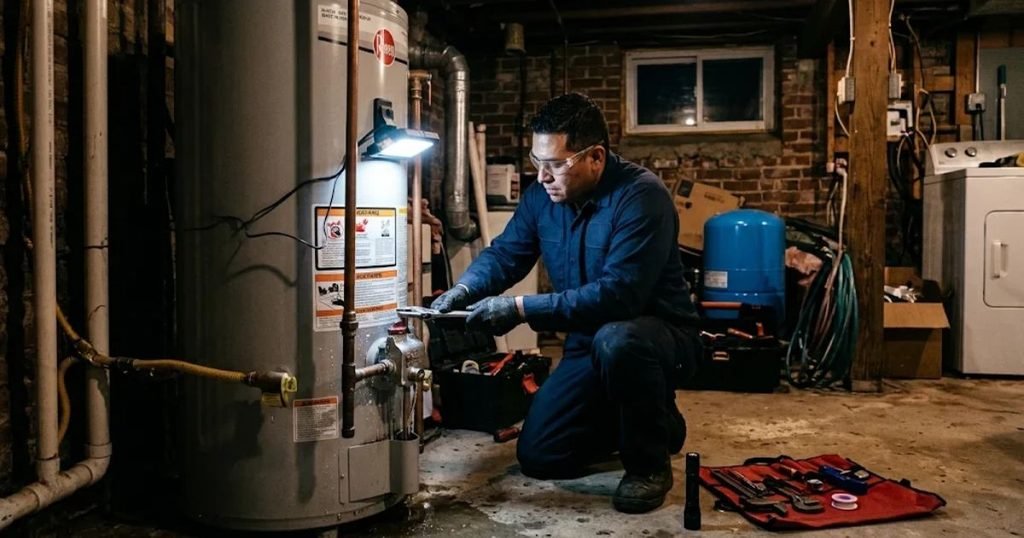
What Is Considered a Water Heater Emergency?
Not every water heater glitch requires a panic-stricken call in the middle of the night. However, certain symptoms indicate an urgent hazard that demands immediate professional intervention. Understanding the difference between ordinary maintenance issues and critical emergencies protects your family and your home.
- Major Water Heater Leaks: A slow drip from a fitting can often wait until normal business hours, but a ruptured tank or a major fitting failure that releases gallons of water across your floor is a true emergency.
- Water Spraying: If water is actively spraying from supply lines, valves, or the body of the tank, it can flood a room within minutes.
- Water Heater Overheating: If the water coming out of your taps is boiling hot, steaming, or scalding, the thermostat or safety controls have failed, creating an immediate burn hazard.
- Gas Smell (Mercaptan Odor): If you smell rotten eggs near a gas water heater, you are dealing with a potential gas leak. This requires immediate evacuation and utility notification.
- Suspected Carbon Monoxide Exposure: Symptoms like sudden headaches, dizziness, nausea, or lethargy in household members while the gas water heater is running can signal improper combustion and dangerous exhaust venting.
- Electrical Burning Smells or Sparks: A burning plastic odor or visible sparks near the electrical junction box or wiring of an electric water heater indicate an electrical fault that can trigger a fire.
- T&P Relief Valve Discharging Steam or Boiling Water: The temperature and pressure relief valve is designed to vent excess pressure, but continuous discharge points to a dangerous system malfunction.
- Complete System Failure in Freezing Weather: Losing hot water during sub-freezing winter temperatures can quickly lead to frozen and burst household pipes, making it an urgent plumbing emergency.
READ MORE: Tankless Water Heater Repair Near Me USA | Cost & Local Guide
What to Do During a Water Heater Emergency
When an emergency strikes, taking fast, structured action minimizes property damage and ensures your physical safety. Follow these step-by-step guidelines carefully:
Step 1: Identify the Immediate Danger
Before touching any equipment, visually assess the situation from a safe distance. Look for active flooding, pooling water near electrical outlets, hissing sounds, gas odors, or heavy steam. If you notice a gas smell, do not operate light switches, flashlights, or cell phones inside the area.
Step 2: Shut Off the Water Supply if Safe
Stopping the flow of water into the tank prevents further flooding. Locate the cold-water shutoff valve, which is typically positioned on the pipe entering the top of the water heater. Turn the valve clockwise until it is fully closed. If the valve is stuck, rusted, or located in an unsafe area, head to your home’s main water shutoff valve and turn off water to the entire house.
Step 3: Turn Off the Power or Gas When Safe
Once the water is off, cut the energy source to prevent the heating elements or burners from dry-firing and destroying the unit or starting a fire.
- Electric Water Heater: Locate your home’s main electrical breaker panel and flip the dedicated circuit breaker labeled for the water heater to the “OFF” position. Never touch electrical switches or breakers if you are standing in water or if the unit is actively leaking onto electrical conduits.
- Gas Water Heater: Locate the gas control valve on the front of the unit and turn the dial from “ON” to “OFF” or “PILOT.” If you cannot safely reach the valve or if you smell gas, leave the equipment alone.
Step 4: Protect Your Home From Water Damage
If water has escaped the unit, take immediate steps to protect your belongings and flooring. Move rugs, cardboard boxes, and electronics away from the pooling water. If you have a wet/dry shop vacuum, use it to extract standing water, or lay down heavy-duty towels to absorb moisture before it seeps into subfloors or drywall.
Step 5: Contact a Qualified Emergency Plumber
Reach out to a licensed emergency water heater plumber who offers 24-hour water heater repair. Be prepared to provide specific details about your system (whether it is gas, electric, or tankless, the approximate age, and the exact symptoms you are observing) so the technician can arrive with the correct replacement parts.
Critical Safety Warning: If you smell gas, evacuate the building immediately. Do not use landlines or cell phones inside the structure, and do not flip any light switches. Call 911 or your local natural gas utility provider from a safe location outside.
READ MORE: Rheem Water Heater Repair: Fixes, Costs & When to Call a Plumber
Common Water Heater Emergencies That Need Immediate Repair
Water heaters consist of complex mechanical, electrical, and plumbing components. Understanding specific failure modes helps you communicate effectively when requesting emergency water heater service.
1. Water Heater Leaking From the Bottom
A leak originating from the base of a traditional tank is one of the most dreaded plumbing scenarios.
- Internal Tank Corrosion: Over time, the glass-lined steel tank can rust from the inside out due to sediment buildup and the breakdown of the sacrificial anode rod. Once the steel wall breaches, the tank cannot be patched and requires immediate replacement.
- Faulty Drain Valve: Sometimes, the plastic or brass drain valve at the bottom of the tank develops a leak or fails to seal completely after flushing. This can often be repaired without replacing the whole unit.
- Condensation vs. Leakage: When a tank is filled with extremely cold water during winter, condensation can form on the outside of the tank and pool at the base. An experienced technician can determine whether you are dealing with harmless condensation or an active structural leak.
2. Water Heater Leaking From the Top
Leaks originating from the top of the water heater are frequently less catastrophic than bottom leaks, but they still require prompt attention. Common culprits include loose water supply connections, corroded inlet and outlet nipples, leaking dielectric unions, or a failing temperature and pressure (T&P) relief valve. Tightening fittings or replacing worn connectors often resolves the issue quickly.
3. No Hot Water Suddenly
When a household completely loses hot water without warning, the root cause depends on the power source. For electric units, a tripped thermal reset button, a burned-out upper or lower heating element, or a failed thermostat is usually to blame. For gas units, a extinguished pilot light, a faulty thermocouple, or a broken gas control valve will instantly halt hot water production. Professional water heater troubleshooting is required to diagnose electrical continuity and gas pressures accurately.
4. Water Heater Making Popping or Rumbling Noises
If your water heater sounds like a kettle boiling rocks or emits loud popping and rumbling noises, you likely have heavy sediment and mineral scale buildup at the bottom of the tank. As hard water minerals settle, a layer of sediment traps water underneath it against the burner or lower element. When that trapped water boils, it forms steam bubbles that rise and pop violently through the sediment layer. This not only disturbs households with disruptive noises but also causes overheating, tank stress, and premature failure.
5. Temperature and Pressure Relief Valve Discharging Water
The T&P relief valve is a vital safety device designed to open and release water if the pressure or temperature inside the tank exceeds safe operating limits (typically 150 PSI or 210°F). If this valve is constantly discharging water, it indicates dangerously high system pressure, a malfunctioning thermal expansion tank, or a failing valve that no longer seats properly.
- Important Safety Rule: Never cap, plug, block, or tie off the T&P discharge pipe. Doing so turns the water heater into an unvented pressure vessel, creating a severe explosion hazard.
6. Gas Water Heater Not Working
Gas units rely on proper combustion and venting to operate safely. Emergencies often stem from pilot light failure, a clogged burner orifice, a defective thermocouple that fails to keep the gas valve open, or back-drafting exhaust fumes caused by a blocked flue pipe. Because gas appliances involve carbon monoxide risks, any combustion failure should be inspected by a certified professional.
7. Electric Water Heater Not Working
Electric models rely on 240-volt circuits, dual thermostats, and heavy-duty resistive heating elements. When an electric unit fails completely, a professional technician will test the upper and lower thermostats for continuity, check for shorted heating elements, and verify that the dedicated dual-pole breaker hasn’t suffered internal damage or overheating at the service panel.
8. Tankless Water Heater Emergency Problems
Tankless systems offer endless hot water and high energy efficiency, but they can experience unique electronic emergencies. Common issues include ignition failure, restricted water flow sensors, error codes flashing on digital control panels, and severe mineral scale blockages in the heat exchanger especially in regions with hard water. Professional tankless water heater emergency repair often involves specialized descaling flushes and electronic sensor diagnostics.
Emergency Water Heater Repair for Different Types of Systems
Different water heater technologies have distinct engineering designs, meaning emergency procedures and repair complexities vary significantly.
| System Type | Common Emergency Problems | Typical Professional Repair Considerations |
| Traditional Tank (Gas) | Pilot light outages, gas valve failure, bottom leaks, rumbling sediment. | Thermocouple replacement, gas control valve servicing, burner cleaning, or full tank replacement. |
| Traditional Tank (Electric) | Tripped breakers, burned elements, thermostat failure, top/bottom leaks. | Element replacement, thermostat wiring diagnosis, circuit testing, breaker evaluation. |
| Tankless Water Heater | Error codes, ignition lockout, flow sensor faults, scale restriction. | Heat exchanger descaling, igniter assembly replacement, flow meter cleaning, PCB reset. |
| Hybrid Heat Pump | Compressor faults, condensation line clogs, evaporator coil icing, sensor errors. | Refrigerant checks, condensate pump repair, electronic control board troubleshooting, filter cleaning. |
READ MORE: Ultimate Guide to Hot Water High Pressure Cleaners
How Much Does Emergency Water Heater Repair Cost in the USA?
Cost is naturally one of the primary concerns for homeowners facing an urgent plumbing problem. Understanding average market pricing helps you evaluate contractor estimates realistically.
Standard Repair Costs vs. Emergency Fees
Emergency repairs typically cost more than scheduled appointments due to after-hours dispatching, overtime labor rates, and immediate parts sourcing.
- Standard Diagnostic/Service Call Fee: $75 – $200
- Emergency After-Hours / Weekend Dispatch Fee: $150 – $350 (often added on top of repair labor)
- Standard Water Heater Repair Labor: $150 – $400 per hour
Component-Specific Repair Estimates
- Heating Element Replacement (Electric): $200 – $450 (parts and labor)
- Thermostat Replacement: $150 – $350
- Gas Control Valve / Burner Assembly: $300 – $700
- T&P Relief Valve Replacement: $150 – $300
- Anode Rod Replacement: $200 – $400
- Tankless Descaling Service: $200 – $400
Water Heater Replacement Costs
If the tank has ruptured or is beyond economical repair, a full water heater replacement becomes necessary.
- Standard 40–50 Gallon Gas Tank Replacement: $1,200 – $2,800 installed
- Standard 40–50 Gallon Electric Tank Replacement: $1,000 – $2,500 installed
- Tankless Water Heater Installation / Replacement: $2,500 – $5,000+ installed (depending on gas line and venting upgrades)
Note: These figures represent national averages across the United States. Final pricing varies based on geographic location, local labor rates, accessibility of the unit (e.g., tight crawlspaces or attic installations), permit fees, and specific code compliance requirements mandated by your municipality.
Emergency Water Heater Repair vs. Replacement: Which Is Better?
When a technician arrives and evaluates your failing unit, you will face a critical decision: should you invest in an emergency water heater repair or replace the appliance entirely? To make the right choice, consider the following factors:
- Age of the Equipment: Traditional tank water heaters have an average lifespan of 8 to 12 years, while tankless units typically last 15 to 20 years. If your tank is past its expected lifespan and experiences a major component failure, replacement is usually the smarter financial investment.
- Extent of Corrosion: If water is leaking from the steel tank body itself due to rust perforation, repair is impossible. Tank replacement is mandatory.
- Frequency of Breakdowns: If you have already repaired the thermostat, pilot assembly, and valves over the past two years, pouring more money into an aging unit is inefficient.
- Repair Cost vs. Replacement Cost: A reliable rule of thumb in the plumbing industry is the “50% Rule.” If the repair cost exceeds 50% of the cost of a brand-new unit—and the unit is more than half-way through its expected lifespan—replacement is recommended.
- Energy Efficiency: Modern water heaters feature significantly higher Energy Factor (EF) ratings and stricter federal efficiency standards than units manufactured a decade ago, meaning a new installation can lower monthly utility bills.
| Feature | Emergency Repair | Water Heater Replacement |
| Best For | Units under 8 years old with minor part failures (elements, valves, thermostats). | Units over 10 years old, leaking tanks, or failing heat exchangers. |
| Initial Cost | Lower ($150 – $600) | Higher ($1,000 – $4,000+) |
| Downtime | Typically resolved in 1–2 hours | Usually completed in 3–6 hours |
| Long-Term Reliability | Moderate (fixes the immediate issue) | High (includes new manufacturer warranties) |
READ MORE: Rusty Water From Hot Water Heater: Causes, Fixes & Replacement
Can You Fix a Water Heater Emergency Yourself?
While DIY home improvement projects are popular, water heater emergencies combine water, electricity, and combustible gas under high pressure. Attempting complex repairs without professional training is dangerous and can violate local plumbing codes or void equipment warranties.
Safe Homeowner Actions
- Locating and turning off the cold-water supply valve.
- Flipping the dedicated circuit breaker for an electric water heater (provided the area is dry).
- Moving furniture, rugs, and valuables away from standing water.
- Reading error codes on digital tankless displays without opening internal electrical casings.
- Documenting visible symptoms and communicating clearly with a dispatched technician.
Repairs That Require a Professional
- Gas Line & Gas Control Valve Work: Working with natural gas or propane requires specialized licensing and leak-testing equipment to prevent asphyxiation, fire, or explosion hazards.
- Internal Electrical Wiring: Troubleshooting 240-volt circuits and replacing heating elements carries a high risk of severe electrical shock or arc flashes.
- T&P Valve and Pressure Diagnostics: Diagnosing why relief valves are discharging requires pressure gauge testing and thermal expansion knowledge.
- Internal Tank Welding or Patching: Once a tank leaks from the pressure shell, it cannot be safely repaired.
How to Choose a Reliable Emergency Water Heater Repair Plumber
When your home is flooding or you are shivering without hot water, you need to hire a contractor quickly. However, panic can lead to hiring predatory or unqualified operators. Keep these vetting criteria in mind:
- Licensing and Insurance: Ensure the plumbing contractor holds a valid state or local plumbing license and carries comprehensive general liability and workers’ compensation insurance.
- 24/7 Availability: Confirm that the company has actual technicians on call for emergency plumbing service near me rather than merely routing calls to an unmonitored voicemail service.
- Transparent Pricing: Look for upfront diagnostic fees and clear, flat-rate pricing before any physical repair work begins. Avoid companies that refuse to provide estimates over the phone or quote suspiciously low rates that balloon later.
- Brand Familiarity: Ask whether the technician has experience servicing your specific water heater brand (e.g., Rheem, Bradford White, A.O. Smith, Rinnai, Navien).
- Warranties: Reputable plumbers stand behind their workmanship by offering labor warranties alongside manufacturer parts warranties.
- Customer Reputation: Check recent reviews on independent platforms to verify local trustworthiness and prompt response times.
How to Prevent Future Water Heater Emergencies
While not all emergencies can be avoided, proactive maintenance dramatically reduces the likelihood of sudden catastrophic failure.
- Annual Flush and Sediment Removal: Flush your traditional tank once a year to clear out hard water mineral sediment that causes rumbling and tank stress.
- Inspect the Anode Rod: Have a plumber check and replace the sacrificial anode rod every 3 to 5 years to prevent internal tank corrosion.
- Test the T&P Relief Valve: Periodically lift and release the test lever on the T&P valve to ensure it operates smoothly and allows water to flow freely into the discharge pipe.
- Check Surrounding Plumbing: Regularly inspect supply lines, valves, and surrounding flooring for early signs of dampness or mineral crusting.
- Monitor Water Temperature: Keep your thermostat set to 120°F to prevent scalding injuries, reduce standby energy loss, and slow down mineral scale accumulation.
- Install a Leak Detection Device: Consider installing a smart water leak detector or an automatic water shutoff valve near the base of the unit to cut off the water supply instantly if a leak is detected.
READ MORE: Rinnai Tankless Water Heater Problems: Common Issues & Fixes
When Should You Call a 24-Hour Emergency Water Heater Repair Service?
Knowing when to pick up the phone in the middle of the night can protect your property from thousands of dollars in water damage. Do not wait for normal business hours if you encounter:
- Active, uncontrolled flooding in your utility room or finished basement.
- A strong smell of natural gas or propane near the appliance.
- Visible electrical sparks, smoke, or a burning plastic odor coming from the unit.
- Continuous high-pressure steam discharge from the T&P relief valve.
- Complete system failure during sub-freezing winter weather when pipe freezing is an imminent threat.
Frequently Asked Questions
How much does emergency water heater repair cost?
Emergency water heater repairs typically range from $150 to $700 depending on the specific part replaced (such as a heating element, thermocouple, or gas valve). However, emergency after-hours or weekend dispatch fees usually add an extra $150 to $350 to the final bill. If the tank has completely ruptured, a full replacement can cost between $1,000 and $4,000 installed.
Can I use my water heater if it is leaking?
You should never continue operating a water heater that is leaking from the bottom tank shell, as structural failure is imminent. If the leak is a minor drip from a top water fitting, you may temporarily contain it with a bucket while arranging service, but you should turn off the power or gas supply if the water begins pooling near electrical components or wiring.
Who should I call for emergency water heater repair?
You should call a licensed, insured local plumbing contractor that explicitly offers 24-hour emergency water heater services. Check their customer reviews, verify that their technicians are certified to work on both gas and electric residential systems, and ask for upfront pricing and warranty details before authorizing any repair work.
Is it safe to turn off a leaking water heater?
Yes, turning off a leaking water heater is both safe and necessary. You should first close the cold-water supply valve above the tank to stop incoming water, and then switch off the dedicated electrical breaker or turn the gas control valve to the “OFF” position. Never touch electrical panels if you are standing in water.
Should I repair or replace an emergency water heater?
Deciding whether to repair or replace depends primarily on the age of the unit and the cost of the repair. If your traditional tank is under 8 years old and suffers from a minor component failure like a bad thermostat, repair is usually cost-effective. If the tank is over 10 years old, leaking from the body, or requires repeated repairs, replacement is the wiser investment.
Final Thoughts
Dealing with a broken water heater is never convenient, but approaching the situation with a clear understanding of safety protocols, troubleshooting steps, and repair options can make all the difference. By acting quickly when leaks or failures occur, shutting off water and power sources safely, and partnering with a trusted local professional, you can protect your home from extensive water damage and restore reliable hot water to your household in no time. If you are currently facing a water heater crisis, don’t wait for the damage to escalate contact a certified emergency plumbing expert today to secure professional diagnosis and repair.
Sources
- U.S. Department of Energy (DOE): Residential Water Heater Guidelines and Efficiency Standards.
- U.S. Consumer Product Safety Commission (CPSC): Water Heater Safety, Scald Prevention, and Gas Appliance Guidelines.
- Environmental Protection Agency (EPA): WaterSense Residential Plumbing Efficiency Recommendations.
- Uniform Plumbing Code (UPC) & International Plumbing Code (IPC): T&P Valve Regulations and Safety Compliance Standards.
Safety Disclaimer
The information provided in this article is for educational and informational purposes only. Plumbing systems involve high water pressure, electricity, and combustible gas. Working on gas lines, electrical circuits, or pressurized vessels carries inherent risks of severe injury, electrocution, gas explosions, or property damage. Homeowners should limit their emergency response to safe shutdown procedures (such as turning off water valves and circuit breakers) and leave all diagnostic and repair work to licensed, qualified plumbing professionals.

